
Daily Current Affairs

Day: June 17, 2026
Anti-Defection

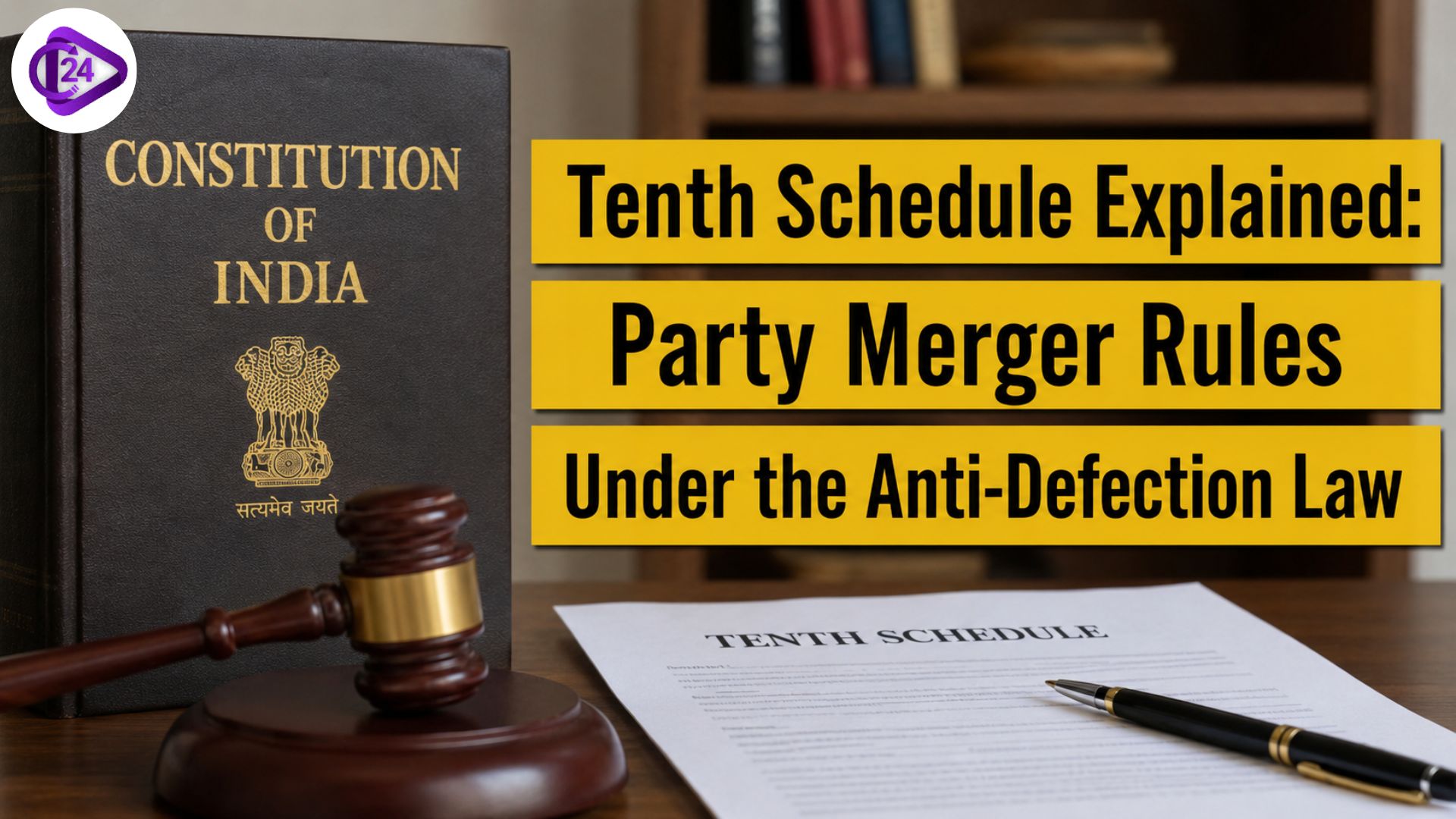
Tenth Schedule Explained: Party Merger Rules Under the Anti-Defection Law

Anti-Defection Law: The Tenth Schedule Explained article offers a comprehensive perspective on the anti-defection provisions of the Constitution and the regulations related to the amalgamation of political parties in India. The Tenth Schedule, added to the Constitution by the 52nd Constitutional Amendment Act, 1985, has been included to prevent political defections and provide stability in the elected governments.

Over the years, the anti-defection law has played a crucial role in maintaining party discipline. But it has also stimulated discussions of the effect on legislative independence and presiding officers’ powers. The use of the provisions concerning mergers of parties should be understood, since they are frequently key to a government’s success at both the federal and state levels.

Important Points To Remember About Tenth Schedule

  • The Tenth Schedule was inserted in the Constitution by the 52nd Constitutional Amendment Act, 1985.
  • It has provisions about the anti-defection law.
  • The purpose of the law is to stop elected representatives from switching parties for personal or political gain.
  • Disqualification cases are decided by the Speaker or Chairman.
  • A merger is valid when two-thirds of a party in the legislature agree.
  • In 2003, the exemption for splits was removed by the 91st Constitutional Amendment Act.
  • The Speaker’s decision is, however, subject to judicial review.

Tenth Schedule Explained: Overview Table

Particulars Details
Constitutional Provision Tenth Schedule
Added By 52nd Constitutional Amendment Act, 1985
Popular Name Anti-Defection Law
Amendment Strengthening the Law 91st Constitutional Amendment Act, 2003
Objective Prevent political defections
Decision-Making Authority Speaker of Lok Sabha/Legislative Assembly or Chairman of Rajya Sabha/Legislative Council
Merger Requirement Support of at least two-thirds of legislators
Judicial Review Permitted by courts
Applies To Members of Parliament and State Legislatures

What Is the Tenth Schedule?

The section and Tenth Schedule Explained starts from the Constitutional foundation.

The Constitution was amended to insert the Tenth Schedule in a bid to deter legislators from changing political parties after elections. Constant floor crossing had caused political regimes to wobble and citizens to lose faith in democracy.

Final Version: The anti-defection law is a detailed provision that applies to Members of Parliament (MPs) and Members of State Legislatures (MLAs and MLCs).

The legislators under this act will be disqualified from their membership if they leave the membership of their political party or vote contrary to the vote cast by him/her against a party whip without permission

Why Was the Anti-Defection Law Introduced?

  • Before 1985, India experienced regular political desertion, disturbing vote-based solidarity.
  • Personal gain also means ministerial posts and power: individual legislators frequently switched allegiance.
  • This trend of constant party switching was summed up in the phrase “Aaya Ram Gaya Ram.”
  • These fickle choices induced shaky governments and the persistent crumbling of country assemblies.
  • Opportunistic coalition-building trumped loyalty to any politics
  • In response to this, Parliament enacted the Tenth Schedule (Anti-Defection Law) by the 52nd Constitutional Amendment Act (1985).
  • It was meant to help foster political stability and strengthen party discipline.
  • One of the main things that law prohibits is corruption, horse-trading and immoral political bargaining.
  • It preserves the mandate entrusted to it by voters and sustains a parliamentary democracy.

PYQs Table: Tenth Schedule (Anti-Defection Law)

Year Exam Question Options Answer
2023 UPSC Prelims Who decides disqualification under the Tenth Schedule? (a) President (b) PM (c) Speaker/Chairman (d) EC (c) Speaker/Chairman
2022 UPSC Prelims Valid merger condition under the Tenth Schedule? (a) 1/2 members (b) 1/3 members (c) 2/3 members (d) Unanimous (c) 2/3 members
2021 UPSC Prelims Speaker’s decision on disqualification can be: (a) Final (b) Challenged in SC (c) Approved by President (d) EC review (b) Challenged in SC
2020 UPSC Prelims Main objective of Anti-Defection Law? (a) Coalition growth (b) Independence (c) Stability & discipline (d) More parties (c) Stability & discipline
2019 UPSC Prelims Which amendment removed the split provision? (a) 42nd (b) 52nd (c) 91st (d) 97th (c) 91st Amendment
2018 State PCS Disqualification happens when? (a) Follows whip (b) Votes with party (c) Voluntarily gives up party (d) Takes permission (c) Voluntarily gives up party
Anti-Defection
Anti-Defection

India and Slovakia Elevate Ties to Comprehensive Partnership

Landmark Judgments on the Anti-Defection Law (Tenth Schedule)

Kihoto Hollohan v. Zachillhu (1992)

The Tenth Schedule has also been held to be constitutionally valid by the Supreme Court, and the need for the Anti-Defection Law as a check against political perversion is imperative for maintaining stability in India and party discipline. The Court also clarified that the Speaker has no final authority over it and is subject to judicial review by the High Courts and the Supreme Court in case of mala-fide, bias or violation of procedure.

Swami Prasad Maurya v. Rajendra Singh Rana (2007)

In its judgment, the Supreme Court stated that a Speaker acts as a quasi-judicial authority under the Tenth Schedule, which should not be influenced by pre-determined conclusions and work with complete neutrality. The Court held that matters relating to defection should be determined only by reference to constitutional principles to resist political pressure and ensure neutrality between the parties.

Keisham Meghachandra Singh v. Speaker, Manipur Legislative Assembly (2020)

The Supreme Court tackled the issue of procrastination in disqualification cases. The move pointed out that this kind of delay defeats the very purpose for which an Anti-Defection Law has been enacted. For this reason, Speakers are to decide on defection petitions within a reasonably rational time-frame (preferably three months).

Conclusion: Tenth Schedule Anti-Defection Law Explained

The Anti-Defection Law was incorporated in the national constitution under the Tenth Schedule for not only political stability but also due to ethical concerns of compartmentalising vote banks. It deters self-interested behaviour and frees up representatives to toe the party line. The law enforces the will of the voters, ensuring that legislators remain true to their political party or risk disqualification. In the long run, it has been better defined by the judgment of the Supreme Court through judicial review, impartiality of the Speaker and decisions in a timely manner. In a nutshell, the Tenth Schedule performs an important function in ensuring stability and integrity of India’s parliamentary system.

Frequently Asked Questions (FAQs)

The Tenth Schedule contains provisions related to the anti-defection law and seeks to prevent elected representatives from changing political parties.
Savarkar Mercy

Savarkar Mercy 10 Petitions: History, Facts & Controversy

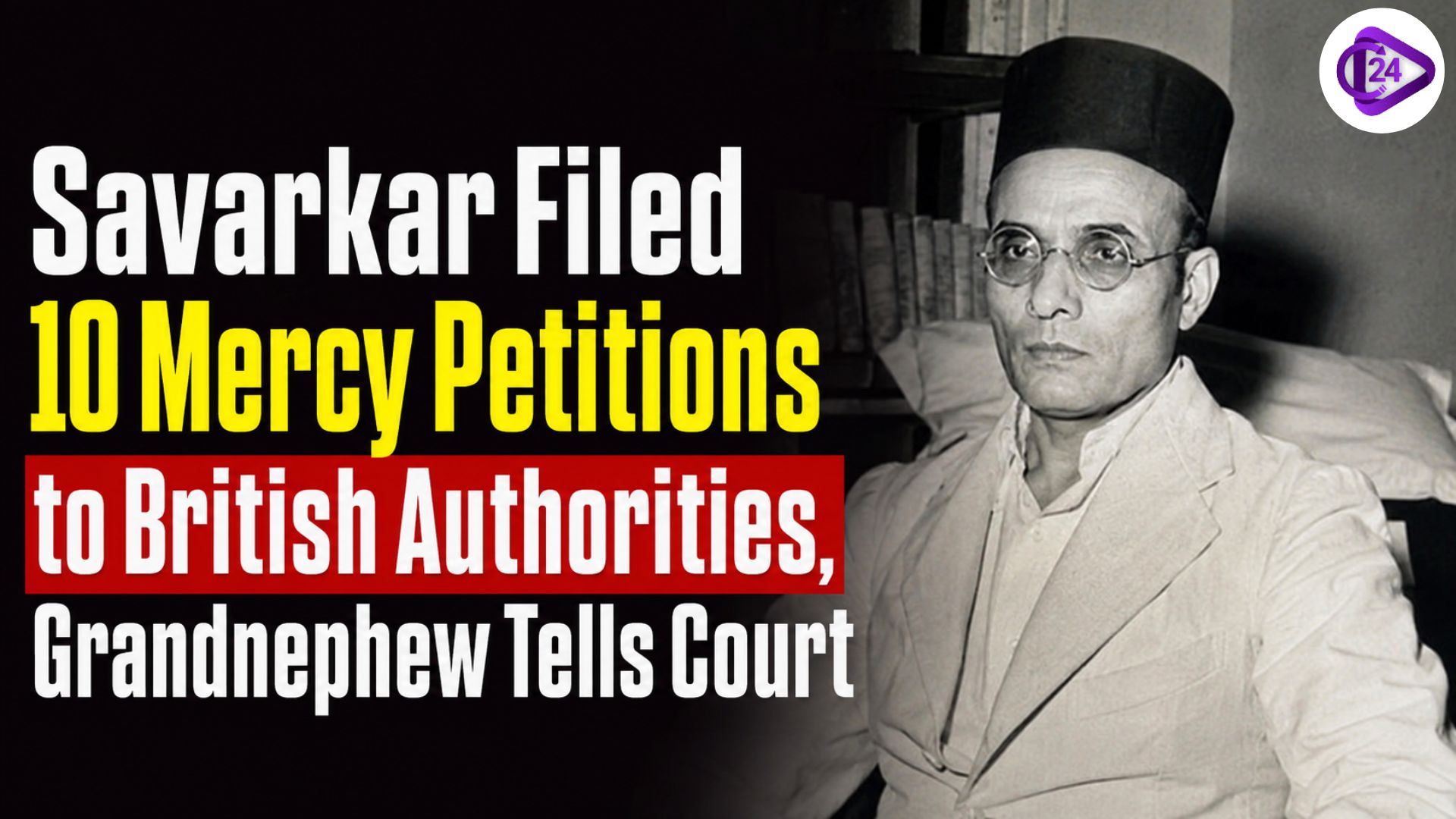
Savarkar Mercy: On Monday (June 15), a Pune-based member of the Congress and a former minister, Khatron Lalji Kalyane, at a special MP/MLA court in Pune, said that Savarkar had to have submitted 10 mercy petitions to the British government to have his sentence reduced.

Satyaki Savarkar Mercy, the grandnephew of Savarkar, who has filed a defamation case against Lok Sabha leader of opposition Rahul Gandhi, also told Special Judge Amol Shinde during cross-examination that other freedom fighters refused to file clemency petitions before the British, reported

Savarkar Mercy submitted Petitions to British Authorities: Key Highlights

  • A court has been told that Savarkar had filed 10 mercy petitions while under the British during his lifetime, at his grandson’s hands.
  • It was made in the midst of ongoing legal proceedings with regard to Savarkar’s legacy.
  • The issue has raised a long-standing historical and political debate once again.
  • The reasons and impact of the petitions is controversial among historians.
  • But this time, the petitions are said to be planned and have been protested against differently by supporters and critics.
  • The controversy has left its imprint on the running of public discourse concerning the freedom movement in India.

Who Was Vinayak Damodar Savarkar Mercy?

Vinayak Damodar Savarkar, popularly known as Veer Savarkar, was a freedom fighter, author, social reformer, and political ideologue.

Key Facts About Savarkar

Particulars Details
Full Name Vinayak Damodar Savarkar
Popular Name Veer Savarkar
Born 28 May 1883
Birthplace Bhagur, Maharashtra
Organisation Abhinav Bharat Society
Imprisonment Cellular Jail, Andaman and Nicobar Islands
Year of Release 1924 (with restrictions)
Notable Work Hindutva: Who Is a Hindu?
Died 26 February 1966

Why Did Savarkar Mercy Petitions to British Authorities?

  • In 1911, Vinayak Damodar Savarkar Mercy was sentenced twice to two years each in the Cellular Jail, Andaman & Nicobar Islands.
  • He was subjected to extreme treatment in prison, which consisted of solitary confinement and forced labour.
  • Savarkar had made many mercy petitions from 1911 to 1920 for the “release” and the “relaxation” of his sentence.
  • Savarkar’s petitions contained a plea for his release to assist him to make a constructive contribution to society and public life.
  • Supporters believe the petitions were a tactic to keep the nationalists’ movement going beyond prison.
  • They are seen by critics as pleas to be let off and work with British officials.
  • In 2020, the Ministry of Culture had informed Parliament that the copies of these petitions were not available with the Andaman administration but that they were available in the archival sources.

Previous Year Questions (PYQs) on Veer Savarkar Mercy

Year Exam Question Answer
2020 NDA (GAT) Who among the following organised, in 1904, a secret society of revolutionaries named ‘Abhinav Bharat’?

(a) Khudiram Bose

(b) Shyamji Krishna Verma

(c) Har Dayal

(d) V. D. Savarkar

(d) V. D. Savarkar
2023 UPSC CDS (General Studies) Who among the following is the author of the book The Indian Struggle, 1920–1942?

(a) Vinayak Damodar Savarkar

(b) Subhas Chandra Bose

(c) Vallabhbhai Patel

(d) Sarat Chandra Bose

(b) Subhas Chandra Bose
2019 MPSC Who authored the book The First War of Indian Independence, 1857?

(a) R. C. Majumdar

(b) V. D. Savarkar

(c) Bipin Chandra

(d) S. N. Sen

(b) V. D. Savarkar
2018 MPSC Which organisation was founded by Vinayak Damodar Savarkar and Ganesh Damodar Savarkar?

(a) Anushilan Samiti

(b) Ghadar Party

(c) Abhinav Bharat Society

(d) Hindustan Republican Association

(c) Abhinav Bharat Society
2017 State PSC Vinayak Damodar Savarkar was imprisoned in which of the following jails during British rule?

(a) Yerwada Jail

(b) Cellular Jail

(c) Alipore Jail

(d) Mandalay Jail

(b) Cellular Jail

Savarkar Mercy

India’s Goods Exports Hit Record $45.2 Billion in May 2026

Conclusion: Savarkar Mercy Petitions to British Authorities

Debates on the reasons for Savarkar to approach the British authorities with mercy petitions have sparked considerable historical and political debate. Blanket opinion on the objectionable purpose of the petitions submitted by Vinayak Damodar Savarkar during his incarceration at the Cellular Jail seems to vary. These petitions see interesting support as a means to secure liberalisation and engage in National activities outside the prison, while their critics see it as a plea for clemency.

With the court statement by the grand nephew of Savarkar’s recent, there has been an interest in revisiting history and comprehending what was happening around the entire colonial period. Finally, a dispassionate evaluation calls for a careful study of the historical record, the conditions in prison and the intricacies of the freedom movement in India.

FAQs: Savarkar Mercy

According to historical records cited during recent court proceedings, Vinayak Damodar Savarkar submitted 10 mercy petitions during his imprisonment under British rule.
GRAPES-3

GRAPES-3 Telescope: Aim, Features, Location and Key Discoveries

GRAPES-3 Telescope is one of the most modern and sophisticated cosmic ray observatories for observing cosmic ray of high energy source in outer space. Located in Ooty, Tamil Nadu, India, this scientific facility plays a crucial role in understanding cosmic rays, solar activity, and space weather.

The GRAPES-3 Telescope is a telescope constructed by the Tata Institute of Fundamental Research (TIFR) and is being developed and operated by the TIFR team. GRAPES-3 is a massive air shower detector and muon telescope which is being used to study some of the highest-energy phenomena in the universe. It has made important contributions to global research on cosmic rays and improved India’s position in astroparticle physics over the years.

Key Characteristics of GRAPES-3 Telescope

  • At Ooty in Tamil Nadu, India.
  • Tata Institute of Fundamental Research (TIFR) operates it.
  • It is the third generation in 2000 of the GRAPES experiment.
  • Researches phenomena and high-energy cosmic rays.
  • Constructs the world’s largest muon telescope.
  • Picks up large air showers produced by cosmic rays.
  • Assists in observing space weather and geomagnetic storms.
  • Supports research in astrophysics at the international level.

What is the GRAPES-3 Telescope?

GRAPES is a Gamma-Ray Astronomy Phase-3, with an emphasis on peV energy. The observatory is especially suited to explore teraelectronvolt (TeV) to petaelectronvolts (PeV) cosmic rays.

Primary high-energy cosmic particles penetrate the atmosphere and collide with molecules of the air, creating cascades of secondary particles called extensive air showers. The GRAPES-3 Telescope is able to detect and analyse these showers to trace back the origin, energy and properties of cosmic rays.

It combines cutting-edge particle detection technologies with sophisticated data analysis systems, allowing scientists to conduct research with precision on galactic and solar phenomena.

GRAPES-3 Telescope: Overview Table

Particulars Details
Full Name Gamma Ray Astronomy PeV EnergieS Phase-3
Popular Name GRAPES-3 Telescope
Location Ooty, Tamil Nadu, India
Altitude Approximately 2,200 metres above sea level
Operating Institution Tata Institute of Fundamental Research (TIFR)
Year of Commissioning 2000
Primary Objective Study of cosmic rays and space weather
Major Components Air shower array and muon telescope
Detection Range TeV to PeV energy range
Scientific Field Astroparticle Physics

The goal and objectives of the GRAPES-3 Telescope

The first goal of the GRAPES-3 Telescope is to gain knowledge about high energy cosmic rays nature and origin. Besides that, it aims at enhancing the understanding of the nature of solar activity and how it affects the Earth.

Major Objectives of GRAPES-3 Telescope

  • Explore the sources and acceleration mechanisms of cosmic rays.
  • Observe the distribution of energy and types of cosmic particles.
  • Study extensive air showers produced in Earth’s atmosphere.
  • Observe solar flare/geomagnetic storm variations.
  • Discuss space weather phenomena that can impact satellites and power systems.
  • Look for signatures of physics that are new to theory.

Previous Year Questions (PYQs) 

Year Exam Question Answer
2024 UPSC CSE Prelims With reference to the Giant Metrewave Radio Telescope (GMRT), consider the following statements:1. It is located near Pune in Maharashtra.2. It is operated by the National Centre for Radio Astrophysics.3. It is used for observing radio waves from celestial objects. Which of the statements given above are correct? (a) 1 and 2 only(b) 2 and 3 only(c) 1 and 3 only(d) 1, 2 and 3 (d) 1, 2 and 3
2020 UPSC CSE Prelims The term “Thirty Meter Telescope” sometimes seen in the news refers to:(a) A space-based infrared observatory(b) A next-generation ground-based optical telescope(c) A radar system used for asteroid tracking(d) A deep-sea observatory (b) A next-generation ground-based optical telescope
2016 UPSC CSE Prelims The term ‘Event Horizon’, often seen in the news, is associated with:(a) Black holes(b) Exoplanets(c) Asteroids(d) Comets (a) Black holes
2015 UPSC CSE Prelims LIGO, which is often in the news, is associated with the detection of:(a) Neutrinos(b) Dark matter(c) Gravitational waves(d) Cosmic rays (c) Gravitational waves
2013 UPSC CSE Prelims Which of the following pairs is/are correctly matched? 1. Astronomical Observatory — Kodaikanal2. Radio Telescope — Arecibo3. Optical Telescope — Mount Abu Select the correct answer using the code given below:(a) 1 only(b) 1 and 2 only(c) 2 and 3 only(d) 1, 2 and 3 (d) 1, 2 and 3

GRAPES-3

US-Iran Deal Ends War; Strait of Hormuz Set to Reopen

Conclusion on GRAPES-3 Cosmic Ray Telescope

GRAPES-3 Telescope is an unprecedented scientific facility which revolutionized cosmic ray research in India. Due to its strategic location, sophisticated muon detector system, and 24/7 monitoring, it is one of the indispensable observatories for measuring and tracking space weather and high-energy particles. The GRAPES-3 Telescope is poised to be a key player in the field of cosmic ray studies and our understanding of solar-terrestrial interactions in the coming years as scientists delve deeper into the secrets of the universe.

FAQs-GRAPES-3 Observatory Frequently Asked Questions 

GRAPES-3 stands for Gamma Ray Astronomy PeV EnergieS Phase-3.

Frequently Asked Questions (FAQs)

The current affairs cover recent national and international events related to UPSC, SSC, Banking, Railways, and State PCS.

You need to read about the current affairs daily, and revise them every week and every month to keep them longer in your memory.

Yes, Class24 provides free downloadable Daily Current Affairs PDFs for easy revision.

Yes, you can practice MCQs and quizzes to boost your exam preparation.

Absolutely. The content is written in simple, easy-to-understand bilingual language suitable for beginners.

Go to class24.com and click on the current affairs section directly, where you find everything that you need.

ssc-toppers

Start Learning Today with Class24

Related current affairs

Class24 offers free video lectures for smart preparation, covering CGL, CPO, CHSL, MTS, and GD exams. Learn from expert faculty, revise concepts easily, practice with PYQs, and improve speed and accuracy through high-quality, exam-focused video lessons anytime, anywhere.

Get success in your hand. Start study anytime anywhere.

The journey becomes simple and enjoyable when you start taking interest in it. And through our app “Class24”, we will be your trusted partners in developing that interest.

Daily Quizzes
Mock Tests
Ongoing

No ongoing tests right now.