
Day: April 27, 2026
Skyroot Vikram-1

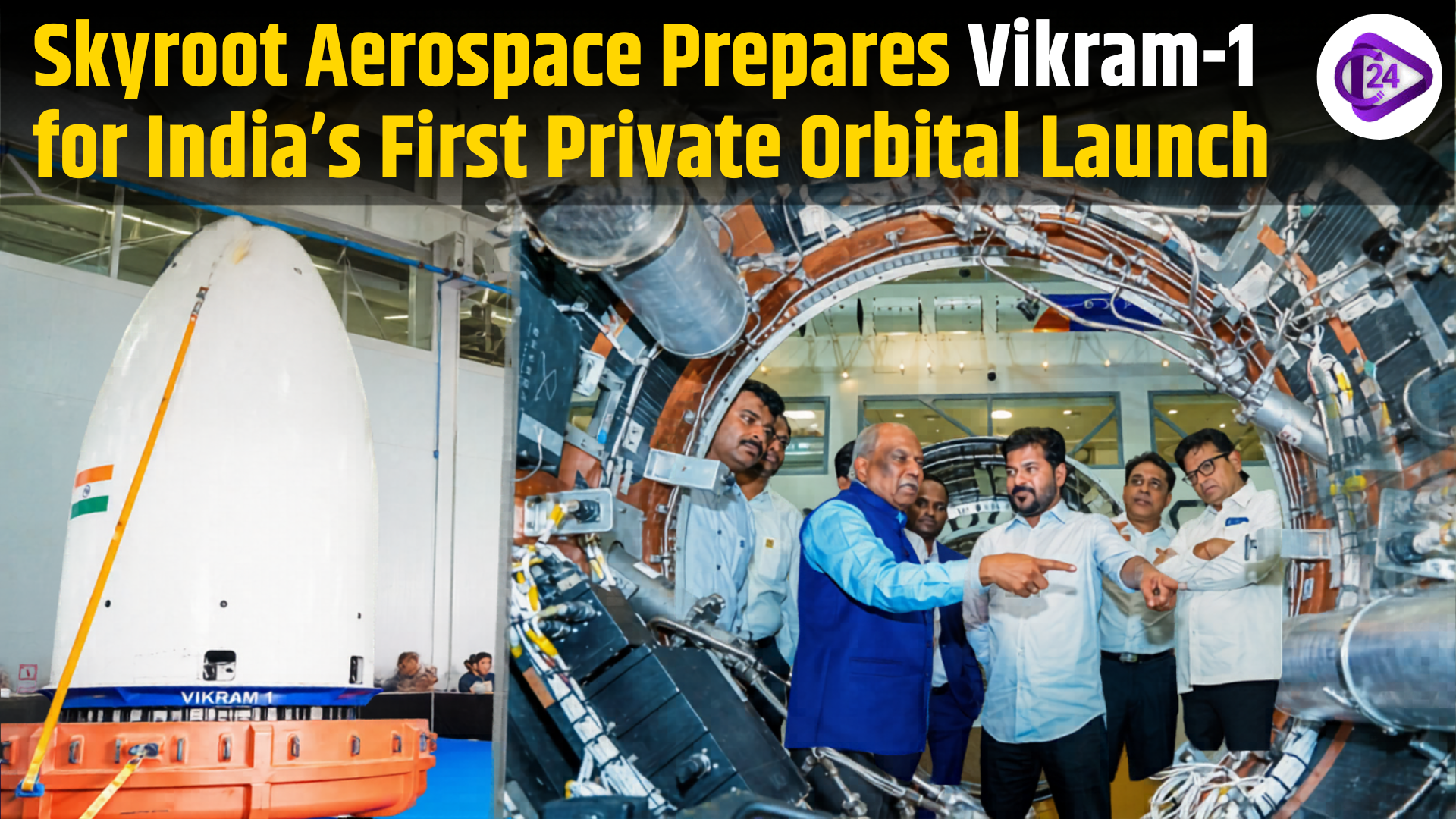
Skyroot Aerospace Prepares Vikram-1 for India’s First Private Orbital Launch

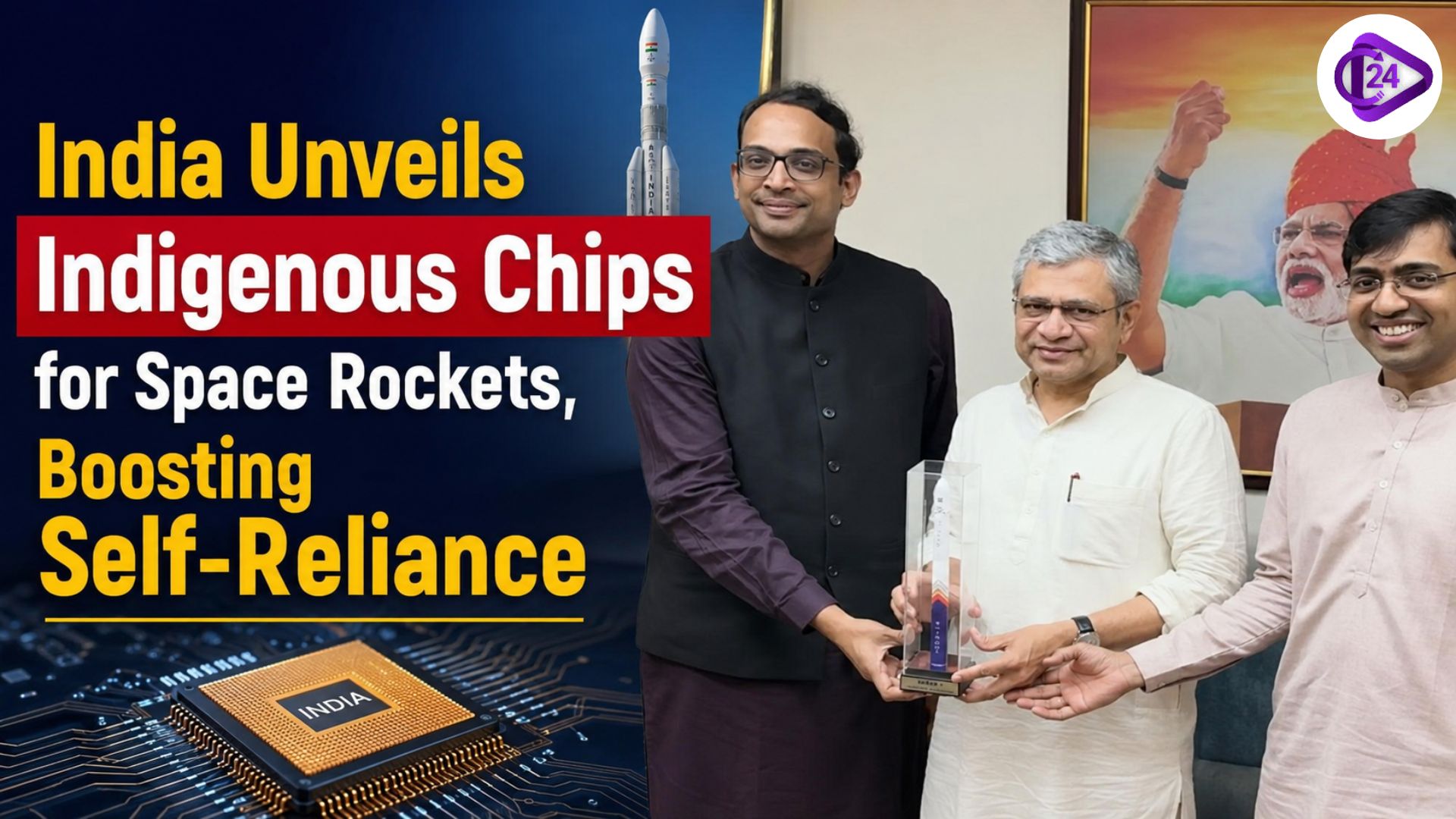
Skyroot Aerospace launches its Vikram-1 rocket, the nation’s first privately built rocket to reach orbit. The rocket has been shipped to the Satish Dhawan Space Centre for integration and launch preparations, marking a key milestone in the transition from the lab to the launch pad. The rocket is built to launch small satellites into low Earth orbit, paving the way for commercial space activity in the country. This launch exemplifies the increasing contributions of startups in driving India’s space and innovation agenda.

Vikram-1 Launch 2026 – Key Highlights of India’s First Private Orbital Mission

  • Skyroot Aerospace’s Vikram-1 is a significant achievement in the Indian space industry, as it is the first privately developed orbital rocket in India.

  • The rocket has been shipped to the Satish Dhawan Space Centre (SDSC) for integration, testing, and launch.

  • It is a three-stage rocket that will place a satellite weighing up to 350 kg into low Earth orbit.

  • Vikram-1 features carbon-composite structures and 3D-printed engines, enhancing performance and affordability.

  • It will be launched in 2026 after integration and regulatory clearances.

  • The launch is taking place under the approval of India’s private space regulator (IN-SPACe) and with the facilities of the Indian Space Research Organisation (ISRO).

  • The Vikram-1 mission aims to provide dedicated and demand-driven launches of satellites, with an emphasis on the global small-satellite market.

  • The rocket is a member of the Vikram family, named after the father of the Indian space programme, Vikram Sarabhai.

  • Skyroot has already successfully demonstrated its technology with the suborbital Vikram-S rocket in 2022.

  • The mission will see Skyroot become India’s first private firm to shut down a rocket in space and will create opportunities for other companies.

  • The launch reflects the move towards affordable commercial launches in India.

  • The launch of Vikram-1 will take India’s space economy to new heights and enhance its private aerospace sector.

Previous Year Questions on Space Technology

Q. What is the primary function of a geostationary satellite?
A. Weather forecasting
B. Remains fixed over one point on Earth
C. Moves from pole to pole
D. Used only for navigation

Answer: B
Explanation: A geostationary satellite orbits at the same rotational speed as Earth, appearing stationary over a fixed location.

Q. The Indian Space Research Organisation (ISRO) was established in which year?
A. 1962
B. 1969
C. 1975
D. 1980

Answer: B
Explanation: ISRO was established in 1969, replacing INCOSPAR.

Q. Which of the following is India’s navigation satellite system?
A. GPS
B. GLONASS
C. NavIC
D. Galileo

Answer: C
Explanation: NavIC (Navigation with Indian Constellation) is India’s regional navigation system.

Q. Which orbit is best suited for Earth observation satellites?
A. Geostationary Orbit
B. Polar Orbit
C. Elliptical Orbit
D. Transfer Orbit

Answer: B
Explanation: Polar orbits allow satellites to scan the entire Earth as the planet rotates.

Q. What is the full form of PSLV?
A. Polar Satellite Launch Vehicle
B. Public Satellite Launch Vehicle
C. Primary Space Launch Vehicle
D. Polar Space Launch Vessel

Answer: A
Explanation: PSLV is one of ISRO’s most reliable launch vehicles.

Q. Which mission made India the first country to reach Mars orbit in its first attempt?
A. Chandrayaan-1
B. Mangalyaan
C. Gaganyaan
D. Aditya-L1

Answer: B
Explanation: Mangalyaan (Mars Orbiter Mission) achieved this milestone in 2014.

Q. Skyroot Aerospace is associated with which rocket?
A. PSLV
B. GSLV
C. Vikram-1
D. LVM3

Answer: C
Explanation: Skyroot Aerospace is developing Vikram series rockets, including Vikram-1 for orbital launches.

Q. What is the purpose of reusable launch vehicles (RLVs)?
A. Increase satellite size
B. Reduce launch cost
C. Improve communication speed
D. Replace astronauts

Answer: B
Explanation: Reusable rockets reduce the cost of space missions significantly.

Q. IN-SPACe is related to:
A. Defence satellites
B. Private sector participation in space
C. Weather monitoring
D. Nuclear research

Answer: B
Explanation: IN-SPACe promotes and regulates private sector involvement in India’s space sector.

Q. Which of the following is a solar mission of India?
A. Chandrayaan-3
B. Aditya-L1
C. RISAT
D. GSAT

Answer: B
Explanation: Aditya-L1 studies the Sun and is India’s first solar mission.

Home Ministry Notifies 14 More Seaports for E-Visa Entry

Conclusion – Skyroot Vikram-1 Set for India’s First Private Orbital Launch

Skyroot Aerospace’s Vikram-1 launch is a milestone in India’s space sector, ushering in the era of private involvement in space activities. With India nearing its first private rocket launch, this achievement symbolises increased innovation, cost-effectiveness and competitiveness. Backed by the Indian Space Research Organisation and regulatory authorities, Vikram-1 has the potential to enable satellite launches and boost India’s presence in the global space sector.

NITI Aayog

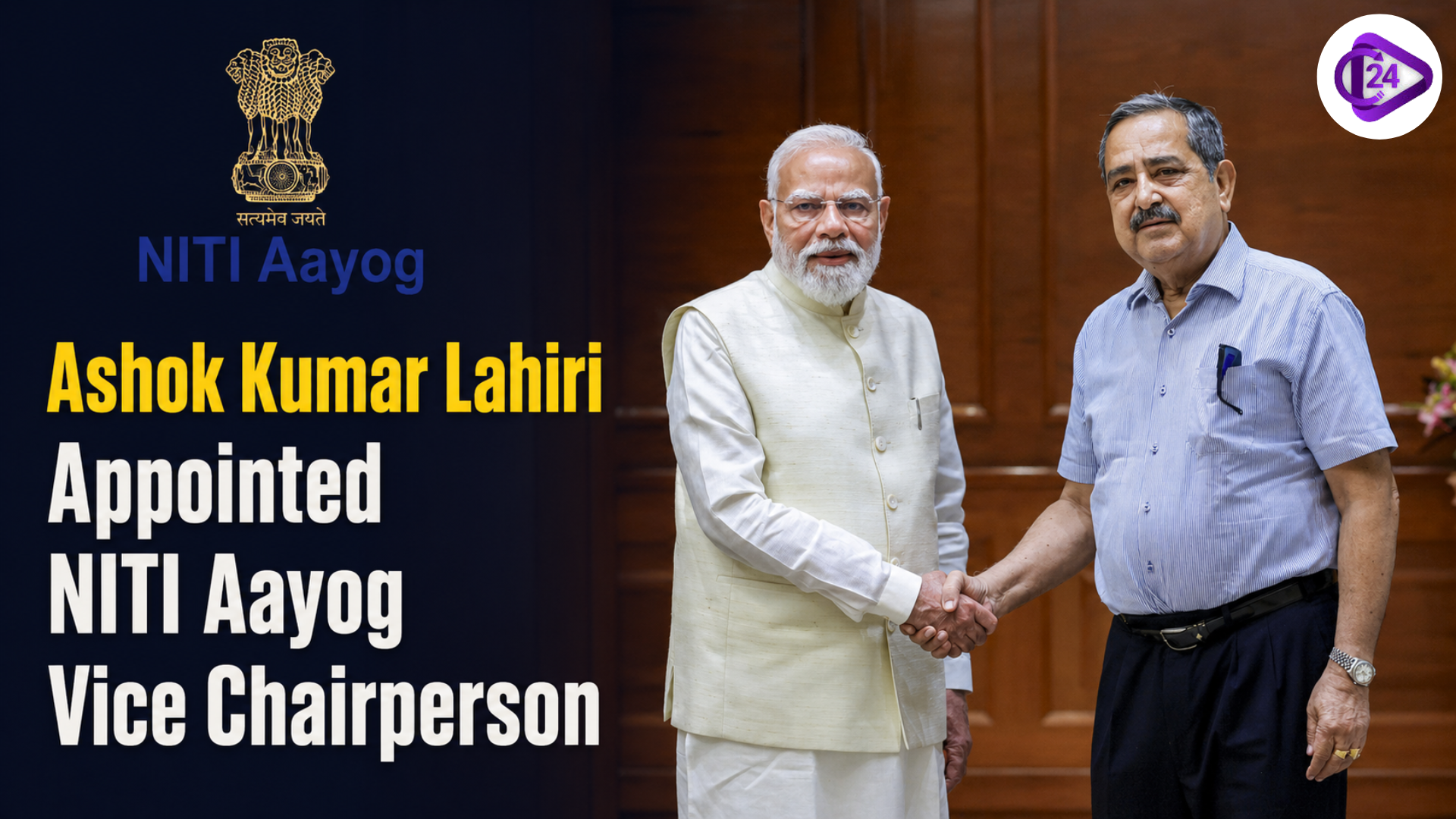
Ashok Kumar Lahiri Appointed NITI Aayog Vice Chairperson

Ashok Kumar Lahiri has been appointed as the next vice chairperson of the National Institution for Transforming India (NITI Aayog), signalling a change in the leadership of the apex policy commission of the country. Lahiri, who previously served as the chief economic adviser and a member of the Fifteenth Finance Commission, has a strong background in economic governance and international financial organisations. Lahiri takes over from Suman Bery, with changes to the commission intended to enhance policy coordination and planning. Lahiri’s appointment underscores the government’s priorities of economic reform, planning, and sustainable growth in India.

Ashok Lahiri as NITI Aayog Vice Chairperson – Key Point

  • NITI Aayog, India’s Policy Commission, has a new vice chairperson, Ashok Kumar Lahiri.

  • He replaces Suman Bery, bringing in a new face in the organisation.

  • This appointment is part of the government’s efforts to bring in fresh faces and new leadership at NITI Aayog.

  • Lahiri has a financial background, as he has also been the Chief Economic Adviser (CEA) of the Government of India.

  • He is also a former member of the Fifteenth Finance Commission, an important influence on India’s economic planning.

  • His four-decade career has seen him in academia, government and international organisations.

  • He is the second-most-senior person in NITI Aayog, after the Prime Minister, as its Vice Chairperson.

  • Lahiri will help bridge the gap between the Centre and the states.

  • This decision is likely to boost the country’s economic policy and developmental blueprint.

  • Prime Minister Narendra Modi has congratulated him on his appointment, stating his trust in Lahiri’s abilities.

  • Lahiri will be joined by new full-time members to improve the effectiveness of the institution.

  • The reforms seek to bring policy-making in sync with India’s goal of sustained development.

Who is Ashok Kumar Lahiri?

Ashok Kumar Lahiri is a distinguished Indian economist and policymaker with both administrative and political credentials. Aside from being the Chief Economic Adviser and a member of the Fifteenth Finance Commission, he has had political experience. Lahiri has also been active in West Bengal’s politics and has run as an election candidate of the Bharatiya Janata Party (BJP). He was nominated as the vice chairperson of the NITI Aayog in 2026, where his policy and political experience are applied to economic governance.

PYQs on NITI Aayog

Q. Which of the following statements about NITI Aayog is correct?
A. It was established to replace the Planning Commission
B. It prepares Five-Year Plans
C. It has constitutional status
D. It allocates funds to states

Answer: A
Explanation: NITI Aayog replaced the Planning Commission in 2015. It is a policy think tank and does not allocate funds or prepare Five-Year Plans.

Q. NITI Aayog was established in which year?
A. 2014
B. 2015
C. 2016
D. 2017

Answer: B
Explanation: NITI Aayog was formed on 1 January 2015 by a Cabinet resolution.

Q. Who is the Chairperson of NITI Aayog?
A. President of India
B. Prime Minister of India
C. Finance Minister
D. Vice President

Answer: B
Explanation: The Prime Minister of India is the ex officio chairperson of NITI Aayog.

Q. Who was the first vice-chairperson of NITI Aayog?
A. Arvind Panagariya
B. Rajiv Kumar
C. Suman Bery
D. Montek Singh Ahluwalia

Answer: A
Explanation: Arvind Panagariya was the first vice chairperson of NITI Aayog, appointed in 2015 after it replaced the Planning Commission.

Q. What is the primary role of NITI Aayog?
A. Policy formulation and advisory
B. Law making
C. Judiciary functions
D. Tax collection

Answer: A
Explanation: NITI Aayog acts as a think tank providing strategic and technical advice to the government.

Q. Where is the headquarters of NITI Aayog located?
A. Mumbai
B. New Delhi
C. Kolkata
D. Chennai

Answer: B
Explanation: NITI Aayog is headquartered in New Delhi.

Q. Which concept is promoted by NITI Aayog?
A. Centralised Planning
B. Cooperative Federalism
C. Judicial Activism
D. Emergency Powers

Answer: B
Explanation: NITI Aayog promotes cooperative and competitive federalism between states and the Centre.

Q. Which body was replaced by NITI Aayog?
A. Finance Commission
B. Planning Commission
C. Election Commission
D. UPSC

Answer: B
Explanation: NITI Aayog replaced the Planning Commission in 2015.

Q. NITI Aayog was formed by which type of authority?
A. Constitutional amendment
B. Parliamentary law
C. Cabinet resolution
D. Supreme Court order

Answer: C
Explanation: It was established through a cabinet resolution, not by law or the Constitution.

Q. What is the full form of NITI Aayog?
A. National Institution for Transforming India
B. National Institute for Trade and Industry
C. New India Transformation Initiative
D. National Internal Trade Authority

Answer: A
Explanation: NITI stands for the National Institution for Transforming India.

Govt Targets One Blood Centre in Every District by December 2026

Conclusion – Ashok Kumar Lahiri Named NITI Aayog Vice Chairperson

Ashok Kumar Lahiri’s appointment as vice chairperson of the National Institution for Transforming India (NITI) Aayog is a major policy boost for India. Lahiri’s background in economic policy, public finance and even politics provides a good mix of experiences. His appointment is expected to drive better strategic planning, collaborative federalism, sustainability and economic reforms to ensure coordinated efforts between the central and state governments for India’s sustainable development and inclusive growth.

Sebastian

Kenya’s Sebastian Sawe Makes History with First Sub-2-Hour Marathon

Kenyan runner Sabastian Sawe has made history by officially finishing the marathon in less than two hours. In the 2026 London Marathon, Sawe completed the race in an incredible 1:59:30, smashing a barrier previously thought to be unbreakable. His achievement not only broke the world record but also represented a significant milestone in sports history. The sub-two-hour barrier had long been a target for marathon runners, and Sawe’s achievement was a significant milestone in world sports.

Sebastian Sawe’s Sub-2-Hour Marathon Record – Key Significance

  • Sawe clocked the marathon in 1 hour, 59 minutes, and 30 seconds, officially running the first sub-two-hour marathon in a race.

  • The achievement was made at the 2026 London Marathon in one of the world’s most prestigious races.

  • Sawe’s new record cut over a minute from the previous world record (2:00:35).

  • This is the first official sub-two-hour marathon, compared to previous attempts that were not within the regulations.

  • Another runner, Ethiopian Yomif Kejelcha, also broke two hours (1:59:41) during the race, making it a historic occasion.

  • The marathon brought about a paradigm shift in running by validating that there is a possibility of breaking two hours in the marathon when run under regular conditions.

  • Sawe played the race smartly and sprinted in the final stages, finishing with a strong final kick.

  • The event featured favourable weather and a fast track, leading to world record times.

  • This result is likened to other historic accomplishments such as the four-minute mile barrier, underscoring its significance.

  • This achievement has pushed the boundaries of human endurance and provided a new standard for marathon runners around the world.

  • Sawe’s success not only earned him the marathon victory but also the world record for the marathon.

Who is Sebastian Sawe?

  • Sebastian Sawe is a Kenyan marathon and road race runner.

  • He became a world star following his record-breaking performance at the 2026 London Marathon 2026.

  • Sawe excels in long distances, such as the 42.195 km marathon.

  • He hails from Kenya, known for its top marathon runners.

  • He had a breakthrough in 2026 by establishing a new record of 1:59:30.

  • This time established him as one of the world’s top marathon runners.

  • Sawe is a well-paced and speedy finisher.

  • He is a member of the next generation of African elite distance runners.

  • He helped to reset the marathon world records.

Shekha Jheel, India, 99th Ramsar site 2026

Conclusion – Sebastian Sawe Completes First Ever Sub-2-Hour Marathon

Sebastian Sawe’s remarkable feat is a pivotal moment in marathon running. With his official sub-two-hour marathon, he has achieved the seemingly unachievable in official marathon conditions. Thus, he not only breaks the world record but also provides inspiration to runners around the world to continue to challenge the boundaries of human capability. This feat will join the pantheon of sporting achievements, setting a new standard for endurance and determination. In the new era of marathon running, Sawe’s record is a representation of excellence, triumph, and human potential.

Frequently Asked Questions (FAQs)

The current affairs cover recent national and international events related to UPSC, SSC, Banking, Railways, and State PCS.

You need to read about the current affairs daily, and revise them every week and every month to keep them longer in your memory.

Yes, Class24 provides free downloadable Daily Current Affairs PDFs for easy revision.

Yes, you can practice MCQs and quizzes to boost your exam preparation.

Absolutely. The content is written in simple, easy-to-understand bilingual language suitable for beginners.

Go to class24.com and click on the current affairs section directly, where you find everything that you need.

ssc-toppers

Start Learning Today with Class24

Related current affairs

Class24 offers free video lectures for smart preparation, covering CGL, CPO, CHSL, MTS, and GD exams. Learn from expert faculty, revise concepts easily, practice with PYQs, and improve speed and accuracy through high-quality, exam-focused video lessons anytime, anywhere.

Get success in your hand. Start study anytime anywhere.

The journey becomes simple and enjoyable when you start taking interest in it. And through our app “Class24”, we will be your trusted partners in developing that interest.

Daily Quizzes
Mock Tests
Ongoing

No ongoing tests right now.