Day: April 20, 2026
Franklin Mission

NASA Begins Work on ESA’s Rosalind Franklin Mission to Mars

NASA has also found a way to collaborate with the European Space Agency’s support on the Rosalind Franklin mission, which is one of the major components of the ExoMars programme to investigate the Mars surface. The cooperation is achieved following the redesign of the mission by ESA following the delays and the termination of the cooperation with Russia. To guarantee mission success, NASA will offer vital components, launch support, and technical expertise. The rover, which is set to be launched in 2028, will explore evidence of life on Earth in the past on Mars through advanced onboard laboratory and drilling capabilities, representing a big stride in international space cooperation.

Rosalind Franklin Mars Mission – Key Roles & Objectives

  • The Rosalind Franklin rover is also an initiative of the ExoMars programme, under the leadership of ESA, to explore life on Mars.

  • The main goal of the mission is to find out whether or not there was ever life on Mars.

  • The rover will be able to drill as deep as 2 metres into the surface of Mars, which is deeper than ever before.

  • The presence of organic molecules and biosignatures is more likely to be discovered in subsurface exploration.

  • To supply the mission with a launch vehicle, hardware and technical services, NASA has granted support for the project.

  • It is projected that the rover will be launched in 2028 on the SpaceX Falcon Heavy, located in the United States.

  • The attendance of NASA follows the termination of Russia as a partner of ESA and its attempts to engage in new relationships with other countries.

  • The mission comprises a carrier module, descent module and landing platform to safely land on Mars.

  • The rover will touch down in the Oxia Planum area, where there are great deposits of ancient clay.

  • It will have an onboard laboratory that is the most advanced to examine samples of soil on Mars itself.

  • The mission is based on previous ExoMars successful flights, such as Trace Gas Orbiter, which was launched in 2016.

  • NASA will also supply radioisotope heater units to enable the rover to withstand the harsh conditions of the Martian environment.

  • The rover also has state-of-the-art navigation systems that have allowed it to move independently on the Martian surface.

  • This partnership underlines the international collaboration in the exploration of deep spaces and contributes to the advancement of scientific investigation.

Space Missions – PYQs

Question: Which organisation launched the Mars Orbiter Mission (Mangalyaan)? (UPSC Prelims)
A. NASA
B. ESA
C. ISRO
D. Roscosmos

Answer: C. ISRO
Explanation: ISRO launched Mangalyaan in 2013, making India the first Asian country to reach Mars orbit.

Question: The Artemis Program is associated with which space agency? (SSC CGL)
A. ISRO
B. NASA
C. CNSA
D. ESA

Answer: B. NASA
Explanation: NASA leads the Artemis programme, aiming to send humans back to the Moon.

Question: Chandrayaan-3 mission is related to: (SSC CHSL)
A. Mars
B. Venus
C. Moon
D. Jupiter

Answer: C. Moon
Explanation: Chandrayaan-3 is India’s mission to achieve a soft landing on the Moon.

Question: ExoMars mission is developed by which organisation? (UPSC)
A. NASA
B. ISRO
C. ESA
D. CNSA

Answer: C. ESA
Explanation: The European Space Agency developed the ExoMars programme to search for signs of life on Mars.

Question: Aditya-L1 mission is related to the study of: (UPSC Prelims)
A. Moon
B. Sun
C. Mars
D. Asteroids

Answer: B. Sun
Explanation: Aditya-L1 is India’s first solar mission to study the Sun’s corona and solar activity.

Question: Tianwen-1 mission was launched by which country? (SSC GD)
A. USA
B. Russia
C. China
D. Japan

Answer: C. China
Explanation: China National Space Administration launched Tianwen-1, China’s first Mars exploration mission.

Question: The James Webb Space Telescope is a joint project of: (UPSC)
A. NASA, ESA, JAXA
B. NASA, ESA, CSA
C. ISRO, NASA, ESA
D. NASA, Roscosmos, ESA

Answer: B. NASA, ESA, CSA
Explanation: It is a collaboration between NASA, European Space Agency, and Canadian Space Agency.

Question: Perseverance rover is part of which mission? (SSC CPO)
A. Apollo
B. Artemis
C. Mars 2020
D. Viking

Answer: C. Mars 2020
Explanation: NASA’s Mars 2020 mission successfully landed the Perseverance rover on Mars.

Question: Gaganyaan mission is related to: (UPSC/SSC)
A. Satellite launch
B. Human spaceflight
C. Moon landing
D. Space telescope

Answer: B. Human spaceflight
Explanation: Gaganyaan is India’s first human spaceflight mission.

Question: Chandrayaan-1 is known for which major discovery? (UPSC Prelims)
A. Helium-3
B. Water molecules on Moon
C. Oxygen on Mars
D. Ice on Jupiter

Answer: B. Water molecules on the Moon
Explanation: Chandrayaan-1 confirmed the presence of water molecules on the Moon.

Question: Parker Solar Probe studies: (UPSC)
A. Mars
B. Moon
C. Sun
D. Venus

Answer: C. Sun
Explanation: NASA’s Parker Solar Probe studies the Sun’s outer atmosphere (corona).

Question: Which country achieved the first soft landing on the Moon? (SSC MTS)
A. USA
B. USSR
C. China
D. India

Answer: B. USSR
Explanation: The Soviet Union achieved the first soft landing with Luna 9 in 1966.

Black Hole Becomes Active After 100 Million Years

Conclusion – Rosalind Franklin Mars Mission

The Rosalind Franklin Mars Mission belongs to the ExoMars project, which is managed by the European Space Agency under the supervision of NASA. The mission will be designed to look at evidence of the existence of life in the past on Mars via drilling up to two metres beneath the surface, where organic matter has the potential to be preserved. The rover will examine soil samples on Mars with advanced scientific equipment. Planned to launch in 2028, it will be a significant advancement in space exploration and scientific cooperation around the globe.

Chip Packaging

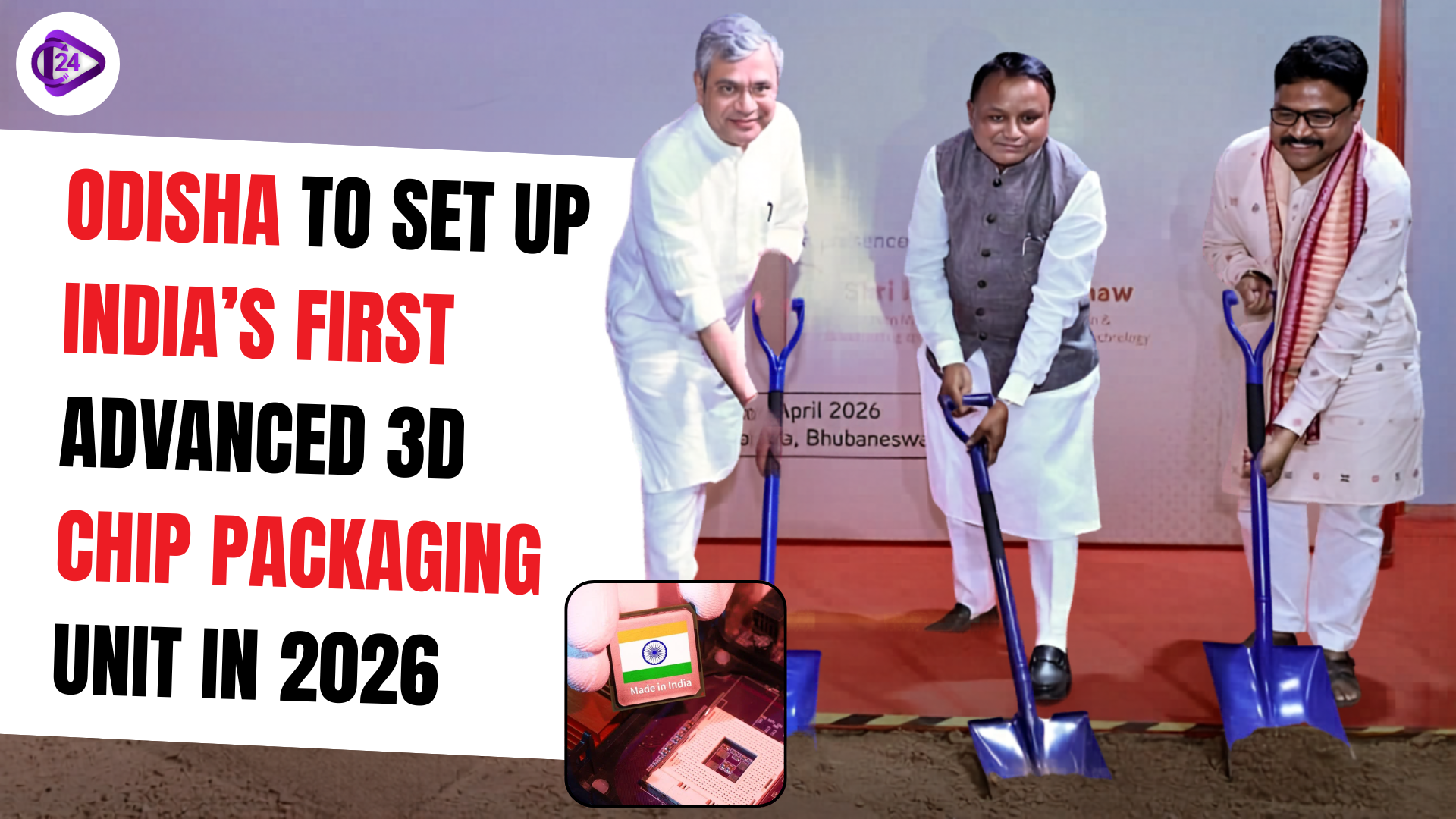
Odisha to Set Up India’s First Advanced 3D Chip Packaging Unit in 2026

The state of Odisha is to create the first highly effective chip packaging plant in India, and this act will be a significant milestone in the semiconductor journey in India. This is an ongoing project backed by the Government of India and encompasses state-of-the-art 3D heterogeneous integration technology, and is supposed to reinforce the domestic manufacturing of electronics in the country. It was started in Bhubaneswar with the involvement of Bhubaneswar leaders such as Ashwini Vaishnaw. The facility will help drive innovation, curtail import dependence, and make India a competitive entity in the global semiconductor market by making substantial investments and partnering with the world.

Odisha’s 3D Chip Packaging Unit: Key Highlights, Capacity & Economic Impact

  • It is the first and the latest 3D chip packaging project in India, designed on the basis of the glass substrate.

  • It is under development in Bhubaneswar, rendering Bhubaneswar an important hub of semiconductors.

  • The facility employs new semiconductor packaging technology that is the next generation, 3D heterogeneous integration (3DHI).

  • The investment in the project is approximately 1,943 crore, which is aided by the central and state governments.

  • It is being done by 3D Glass Solutions in its Indian subsidiary.

  • The semiconductor unit production will be 50 million assembled units per year.

  • It will also manufacture 70,000 glass panels in a year and improve 3D modules of incorporation.

  • Approximately 2,500 direct and indirect jobs are projected to be created with the project, which will enhance local employment.

  • The chips produced will be applied in industries such as AI, 5G/6G, aerospace, defence and data centres.

  • The project complies with the government’s vision of Atmanirbhar Bharat.

  • Odisha is the first Indian state to have a semiconductor fabrication and a 3D packaging plant.

  • The project enhances the semiconductor value chain in India and minimises importation.

  • It will be appealing to international technology investments and collaborations ahead.

  • The facility will enable new technologies such as artificial intelligence and high-performance computing.

Recently Asked PYQs on Semiconductor

Question: Which of the following materials is commonly used as a semiconductor? (UPSC Prelims)
A. Copper
B. Silicon
C. Aluminium
D. Iron

Answer: B. Silicon
Explanation: Silicon is the most widely used semiconductor material due to its suitable electrical conductivity and abundance.

Question: The conductivity of a semiconductor increases with: (SSC CGL)
A. Decrease in temperature
B. Increase in temperature
C. Constant temperature
D. No relation

Answer: B. Increase in temperature
Explanation: In semiconductors, higher temperature increases charge carriers, thus increasing conductivity.

Question: Which of the following is an example of a p-type semiconductor? (RRB NTPC)
A. Pure Silicon
B. Silicon doped with Boron
C. Germanium only
D. Copper

Answer: B. Silicon doped with Boron
Explanation: P-type semiconductors are formed by doping with trivalent elements like boron.

Question: What is the function of a diode in semiconductor devices? (SSC CHSL)
A. Amplify signal
B. Store energy
C. Allow current in one direction
D. Increase resistance

Answer: C. Allow current in one direction
Explanation: Diodes permit current flow in only one direction, used in rectification.

Question: Which element is used for n-type doping? (UPSC CDS)
A. Boron
B. Gallium
C. Phosphorus
D. Aluminium

Answer: C. Phosphorus
Explanation: Pentavalent elements like phosphorus provide extra electrons, forming n-type semiconductors.

Question: Semiconductor devices are widely used in: (SSC GD)
A. Agriculture only
B. Electronics
C. Construction
D. Textile

Answer: B. Electronics
Explanation: Semiconductors are the backbone of all electronic devices like mobiles, computers, chips.

Question: Which of the following has the highest conductivity? (UPSC Prelims)
A. Insulator
B. Semiconductor
C. Conductor
D. None

Answer: C. Conductor
Explanation: Conductors have maximum free electrons, hence highest conductivity.

Question: What is the band gap in semiconductors? (UPSC)
A. Zero
B. Very large
C. Small
D. Infinite

Answer: C. Small
Explanation: Semiconductors have a small band gap, allowing controlled conductivity.

Question: Which device is made using semiconductors? (RRB Group D)
A. Transformer
B. Transistor
C. Generator
D. Motor

Answer: B. Transistor
Explanation: Transistors are semiconductor devices used for amplification and switching.

Question: India’s semiconductor mission is related to?
A. Agriculture
B. Electronics manufacturing
C. Defence only
D. Space research

Answer: B. Electronics manufacturing
Explanation: India Semiconductor Mission focuses on chip manufacturing and reducing import dependency.

India Targets Cocoa Self-Sufficiency by 2040 

Conclusion – India’s First 3D Chip Packaging Unit in Odisha

The first state-of-the-art 3D chip packing plant in Odisha will be a breakthrough in the Indian ecosystem of semiconductors. The project will increase domestic production through the use of cutting-edge packaging technology and decrease the dependence on imports. It is anticipated to enhance innovation, generate jobs and draw in overseas investments. All in all, this project offers India more strength in the world electronics value network and relates to the dream of technological independence and economic prosperity.

AICTE VAANI

AICTE VAANI 3.0 Scheme 2026 Launched: Key Features & Benefits

The All India Council for Technical Education has introduced the AICTE VAANI 3.0 Scheme 2026, which encourages the use of Indian languages in higher and technical education. The VAANI (Vibrant Advocacy of Advancement and Nurturing of Indian Language) does this to bridge the language gap in technical education and to provide education to more people. The newest version is aimed at the spread of the regional language usage, giving institutions the financial support and promoting research on the native languages. The scheme aims to enable greater accessibility, innovation and collaboration in both academic and professional spheres in India by incorporating Indian languages into new technology disciplines.

Benefits of AICTE VAANI 3.0 Scheme 2026

  • The VAANI scheme is a project of the All India Council of Technical Education in an endeavour to promote Indian languages in technical education.

  • It offers funding to institutions accredited by AICTE to hold conferences, seminars and workshops in the regional languages.

  • The institutions are also encouraged to participate in each of the selected events that have an average fund of ₹ 2 lakh.

  • The programme sponsors 2-3 day academic conferences, which guarantee intensive transfer of knowledge in the emerging areas in the technical sector.

  • Starting with Hindi, Punjabi, Tamil, and Bengali, among others, VAANI advocates education in regional languages (up to 22 languages).

  • It concentrates on 16+ emerging technologies that comprise artificial intelligence, quantum technology, cybersecurity, space and defence, and agritech.

  • The plan will help provide access to language divides and technical expertise for more students.

  • It promotes the publication of research works in the local languages, enhancing local knowledge systems.

  • VAANI creates partnerships and connections between the academic community and the industry, enhancing innovation and real-world learning.

  • The scheme is applied and managed using a special online portal (ATAL platform).

  • The programme is part of the vision of inclusive education and Viksit Bharat 2047, with a focus on linguistic diversity.

  • It aids in the development of a source of knowledge in indigenous languages, which serves learners other than the English language.

  • The teaching-learning ecosystem is further empowered by faculty members, researchers and industry experts who are actively involved.

Samrat Choudhary Takes Oath as Bihar’s First BJP Chief Minister

Conclusion – AICTE VAANI 3.0 Scheme 2026

AICTE VAANI 3.0 Scheme 2026 will be an important move towards enhancing linguistic diversity and inclusivity in the Indian higher education system. The scheme assists in closing the gap between knowledge and accessibility by promoting the use of Indian languages in technical education, research and discussion in academics. Its emphasis on new tech and regional involvement, as well as institutional facilitation, guarantees broader reach and significance. Over time, VAANI 3.0 could become more innovative, empower silenced students, and help create a more inclusive, knowledge-driven and self-reliant educational ecosystem congruent with national development objectives.

Anti-Sacrilege Bill

Punjab Anti-Sacrilege Bill 2026 Becomes Law After Governor’s Approval

The Punjab anti-sacrilege bill-2026 has been officially signed as the governor gave its approval, and this is a milestone significance in the law of the land. The law was previously passed by the Punjab Assembly in a special session unanimously and called the Jaagat Jot Sri Guru Granth Sahib Satkar (Amendment) Bill, 2026. By his permission, the governor, the act provides much stricter measures to prevent sacrilege, especially of the Guru Granth Sahib. The legislation is directed to provide more protection of religious sentiments, quicker investigation, and harsher punishment. This is also in reaction to incidents of sacrilege that occurred in the past and the desire of the people to see a criminal justice system that is more severe.

Key Features of Punjab Anti-Sacrilege Law 2026

  • In Punjab, the legislative process has been completed with the bill being signed by thegovernor..

  • Formally known as Jaagat Jot Sri Guru Granth Sahib Satkar, 2026 (Amendment), it aims at safeguarding the sanctity of the Guru Granth Sahib.

  • The bill was passed with unanimous support at the Punjab Assembly, which has not been witnessed before in terms of political unanimity.

  • The minimum punishment this law stipulates is 7 years, which cannot exceed life imprisonment depending on the nature of the offence committed.

  • Criminals can also be fined a lot, not to mention that such fines can even increase to ₹10 lakh or higher in severe instances.

  • The offences committed against the provisions of this Act are classified as cognisable, non-bailable and non-compoundable, and therefore, the law is tougher than the earlier provision.

  • Cases will all be tried in the sessions courts, making the judicial processes quicker.

  • The seniors (a rank of DSP/ACP or higher) should investigate similar cases with a sense of accountability and responsibility attached to investigations.

  • There are also laws touching on digital sacrilege, which is any offence that is executed via social media or an online platform.

  • It brings some control over the printing and distribution of Sikh scriptures in the form of Guru Granth Sahib saroops with relevant authorities authorised, such as the SGPC.

  • The need to chiefly keep a central registry system to control the distribution of religious scriptures to avoid abuse.

  • The act is backgrounded by previous incidents, such as the sacrilege cases experienced in 2015 that elicited mass protests.

  • The government has also made SOPs on investigation, such as handling of digital evidence and protection of the witness.

  • The move has been well received by political leaders of all parties, but many say it will have no real impact without stricter implementation.

PYQs (Geography, Dance, Festival & Culture)

Exam Year Question Options Answer
UPSC Prelims 2018 Which river flows through Punjab and is known as the “lifeline of Punjab”? (A) Yamuna (B) Sutlej (C) Narmada (D) Tapti B) Sutlej
SSC CGL 2020 Bhangra dance is associated with which Indian state? (A) Haryana (B) Punjab (C) Gujarat (D) Rajasthan B) Punjab
RRB NTPC 2021 Which of the following festivals is mainly celebrated in Punjab? (A) Pongal (B) Bihu (C) Lohri (D) Onam C) Lohri
UPSC Prelims 2016 The five rivers of Punjab include which of the following? (A) Ganga (B) Beas (C) Godavari (D) Kaveri B) Beas
SSC CHSL 2019 Which city is known as the “Golden City of Punjab”? (A) Ludhiana (B) Amritsar (C) Jalandhar (D) Patiala B) Amritsar
PPSC 2017 Which is the state animal of Punjab? (A) Blackbuck (B) Tiger (C) Lion (D) Elephant A) Blackbuck
RPSC 2022 Which crop is most widely grown in Punjab? (A) Rice (B) Wheat (C) Cotton (D) Sugarcane B) Wheat
SSC GD 2021 Giddha is a traditional dance form of which state? (A) Punjab (B) Bihar (C) Odisha (D) Assam A) Punjab
UPSC Prelims 2019 Which among the following rivers is a tributary of the Indus and flows through Punjab? (A) Ravi (B) Krishna (C) Mahanadi (D) Sabarmati A) Ravi
RRB Group D 2018 Which festival marks the harvest season in Punjab? (A) Diwali (B) Holi (C) Baisakhi (D) Eid C) Baisakhi
SSC MTS 2022 The famous Golden Temple is located in which city? (A) Chandigarh (B) Amritsar (C) Patiala (D) Bathinda B) Amritsar
PPSC 2020 Which river is also called “Vipasha” in ancient texts? (A) Ravi (B) Beas (C) Sutlej (D) Chenab B) Beas
UPSC CDS 2021 Punjab shares international border with which country? (A) Nepal (B) Bhutan (C) Pakistan (D) China C) Pakistan
SSC CPO 2019 Which folk dance is performed by Punjabi men? (A) Garba (B) Bhangra (C) Kathak (D) Yakshagana B) Bhangra
RRB NTPC 2020 Which is the capital of Punjab? (A) Amritsar (B) Chandigarh (C) Patiala (D) Ludhiana B) Chandigarh

Food Worth ₹1.55 Lakh Crore Wasted Annually

Conclusion – Punjab Assembly Anti-Sacrilege Bill Becomes Law

The passage of the Anti-Sacrilege Bill by the Punjab Assembly is a big step towards safeguarding the religious sentiments and a much tougher legal slapstick against the desecration. The law ensures that the state takes the issue of communal harmony seriously, with the included provisions such as severe punishment, speedy trials, and coverage of digital offences. Nevertheless, it will only be effective through its implementation and impartial execution. On the whole, the law is a response to decades of social demands and will reinforce respect for religious institutions throughout Punjab.

Frequently Asked Questions (FAQs)

The current affairs cover recent national and international events related to UPSC, SSC, Banking, Railways, and State PCS.

You need to read about the current affairs daily, and revise them every week and every month to keep them longer in your memory.

Yes, Class24 provides free downloadable Daily Current Affairs PDFs for easy revision.

Yes, you can practice MCQs and quizzes to boost your exam preparation.

Absolutely. The content is written in simple, easy-to-understand bilingual language suitable for beginners.

Go to class24.com and click on the current affairs section directly, where you find everything that you need.

ssc-toppers

Start Learning Today with Class24

Related current affairs

Class24 offers free video lectures for smart preparation, covering CGL, CPO, CHSL, MTS, and GD exams. Learn from expert faculty, revise concepts easily, practice with PYQs, and improve speed and accuracy through high-quality, exam-focused video lessons anytime, anywhere.

Get success in your hand. Start study anytime anywhere.

The journey becomes simple and enjoyable when you start taking interest in it. And through our app “Class24”, we will be your trusted partners in developing that interest.

Daily Quizzes
Mock Tests
Ongoing

No ongoing tests right now.