
Day: February 2, 2026

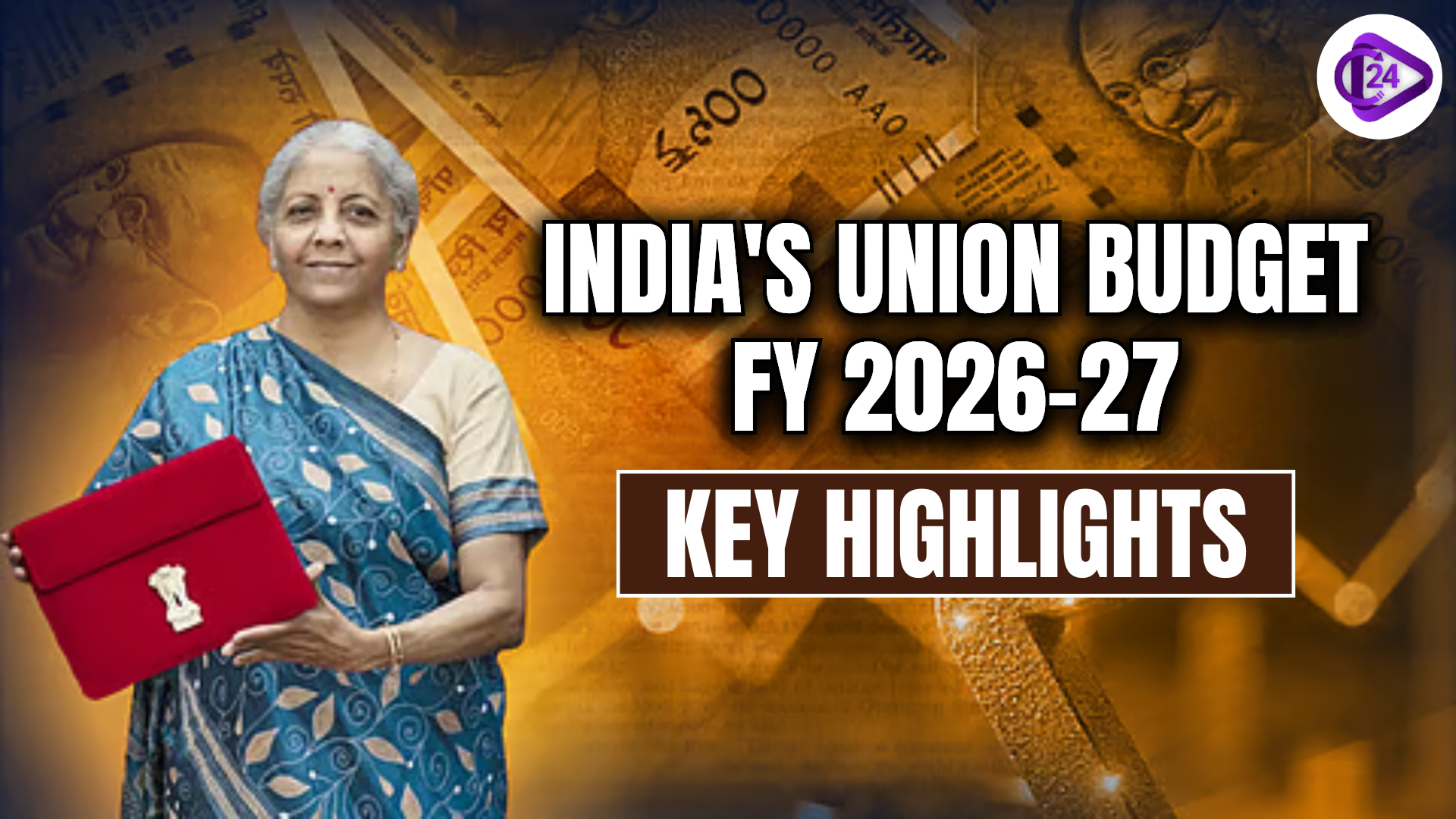
India’s Union Budget FY 2026-27: Key highlights

The latest Union Budget 2026-27, laid down on 1 February 2026, puts sustainable economic development, infrastructure development, and inclusive development in the first line. It underlines the promotion of large-scale production in the strategic and frontier industries through improved investments in the health sector, in logistics and technology, and simplifying customs and central excise to help the domestic industry. The Budget supports an extensive allocation in capital expenditure by the government for the populace, improves social welfare programmes, and also proposes tariff reforms to enhance ease of doing business. Some of the important initiatives taken are enhancing the coastal fisheries value chain, developing biopharma capabilities, developing employment-based textile development, and establishing medical hubs to promote medical value tourism.

History of the Indian Union Budget

  • The Indian Union Budget was first presented in 1860 when it was ruled by the British.

  • It was presented by James Wilson, who was the first Finance Member at the Viceroy Council.

  • R.K. Shanmukham Chetty was the first person to introduce the first Budget of independent India on 26 November 1947.

  • Article 112 of the Indian Constitution, which is called the Annual Financial Statement, introduces the Union Budget annually.

  • It states the estimated government revenues, government spending, fiscal deficit and policy priorities during the financial year.

  • The Budget is a very important element in the planning and development strategy of the economic plans of India.

Vision of Union Budget 2026-27

  • Viksit Bharat works on behalf of both ambition and inclusivity towards a long-term national development.

  • Core approach gives priority to Action rather than to Ambivalence, Reform rather than to Rhetoric and people rather than to Populism.

  • Intention should be to turn desire into a reality and the potential into performance.

  • The economic framework is on the basis of Stability, Fiscal Discipline, Sustained Growth and Moderate Inflation.

  • A high growth rate of about 7% is aimed at facilitating development.

  • Intensifying the domestic production capability in order to increase self-reliance.

  • Improving energy security and severing the dependence on vital imports.

  • Carrying out deep-seated structural reforms to resilience.

  • Facilitating so that citizens directly benefit from the actions of the government.


Sustainable Economic Growth 

  • Focus on maintaining economic growth through manufacturing-led development.

  • Strategic and Frontier Sectors that should be prioritised to be competitive in the long run.

  • India Semiconductor Mission (ISM) 2.0 was launched to increase chip production.

  • Biopharma SHAKTI to enhance pharmaceutical products and innovation.

  • Having Hi-Tech Tool Rooms at CPSEs to assist in skills and technology.

  • Scheme of Rare Earth Permanent Magnets, including research, mining, processing, and manufacturing.

  • Separate parksare used to manufacture locally.

  • Push Electronics Components Manufacturing Scheme.

  • Programme on Textiles to increase value chains.

  • Sponsoring cheap sports equipment, 200 industrial clusters and manufacturing of high-value construction and infrastructure equipment.


Service Sector in Budget 2026-27

  • The revised focus on the Services Sector as one of the Viksit Bharat.

  • Constitution of a High-Powered Education, Employment and Enterprise Standing Committee to give emphasis on service-led growth.

  • Administrative Upgrading and the formation of Allied Health Professionals (AHPs) facilities in the chosen disciplines.

  • Empowering the Care Ecosystem by using NSQF-congruent programmes to educate 1.5 lakh medical professionals.

  • Support Programs to start five Medical Value Tourism hubs in collaboration with the private sector.

  • AYUSH enhance with the efforts of upgrading the laboratories, testing the drugs, and certification, depending on the WHO guidelines.

  • Increased AVGC Centres of Excellence in 15,000 schools and 500 colleges to market the Orange Economy.

  • Established in the eastern region, a National Institute of Design in the Challenge Route.

  • Khelo India Mission to unite talent, international exposure, sports science and infrastructure.


Enhancing the Agriculture Sector in Union Budget 2026-27

  • Put emphasis on boosting the income level of farmers through the improvement of productivity in allied industries like agriculture.

  • Encouragement of organic farming, low-input farming and natural farming, such as millets and oilseeds.

  • Horticulture to upgrade this through an Intensive Programme.

  • Enhancing Animal husbandry and promoting entrepreneurship in dairy, poultry, fisheries and livestock.

  • Value Chains and post-harvest management promoting High-Value Agriculture.

  • Specialised cashew programme that focuses on the Indian cashews in order to enhance processing and exportation.

  • Combined development of Fisheries including inland and marine, as well as aquaculture.

  • Sandalwood farming and processing.

  • Increased Bharat VISTAR to rural regional growth that is technologically oriented.

  • Tax proposals in support of fisheries and cooperative societies, such as challenge-free duties and exemptions on income tax.


What are the Receipts and Expenditures in the Union Budget 2026-27?

  • Capital and Revenue Receipt increases are gradually increasing over recent years, as indicated by the receipts.

  • Capital Receipts went up to ₹18.1 lakh crore (2026-27 BE) as compared to ₹16.2 lakh crore (2024-25 Actuals).

  • Revenue Receipts increased to 35.3 lakh crore (2026-27BE), compared to 30.4 lakh crore(2024-25Actuals).

  • On the expenditure aspect, emphasis is on productive expenditure.

  • There was an increase in effective Capital Expenditure by 13.2 lakh crore to 17.1 lakh crore, which focused on an infrastructure push.

  • Revenue Expenditure grew by 2026-27 BE by 2.3 lakh crore to 36.0 lakh crore.

  • The pattern indicates a trade-off between capital expenditure that is geared towards growth and the crucial revenue expenditure.

Conclusion (Union Budget 2026-27)

Union Budget 2026-27 has charted out a firm and progressive roadmap on how to construct a Viksit Bharat based on stability, inclusiveness, and long-term growth. The Budget strikes a balance between fiscal discipline and development of an economy that has a major focus on manufacturing, services, agriculture and infrastructure. Specific focus on technology, healthcare, education, and the well-being of farmers is supposed to transform the dreams into tangible results. Enhancing the resilience of the long-term economic growth, the Budget strengthens domestic capacity, backs innovation, and makes sure that citizens are enjoying the fruit of the policy actions. Unity Union Budget 202627, in general, provides a strong platform in ensuring the high growth, creation of jobs and equal national development.

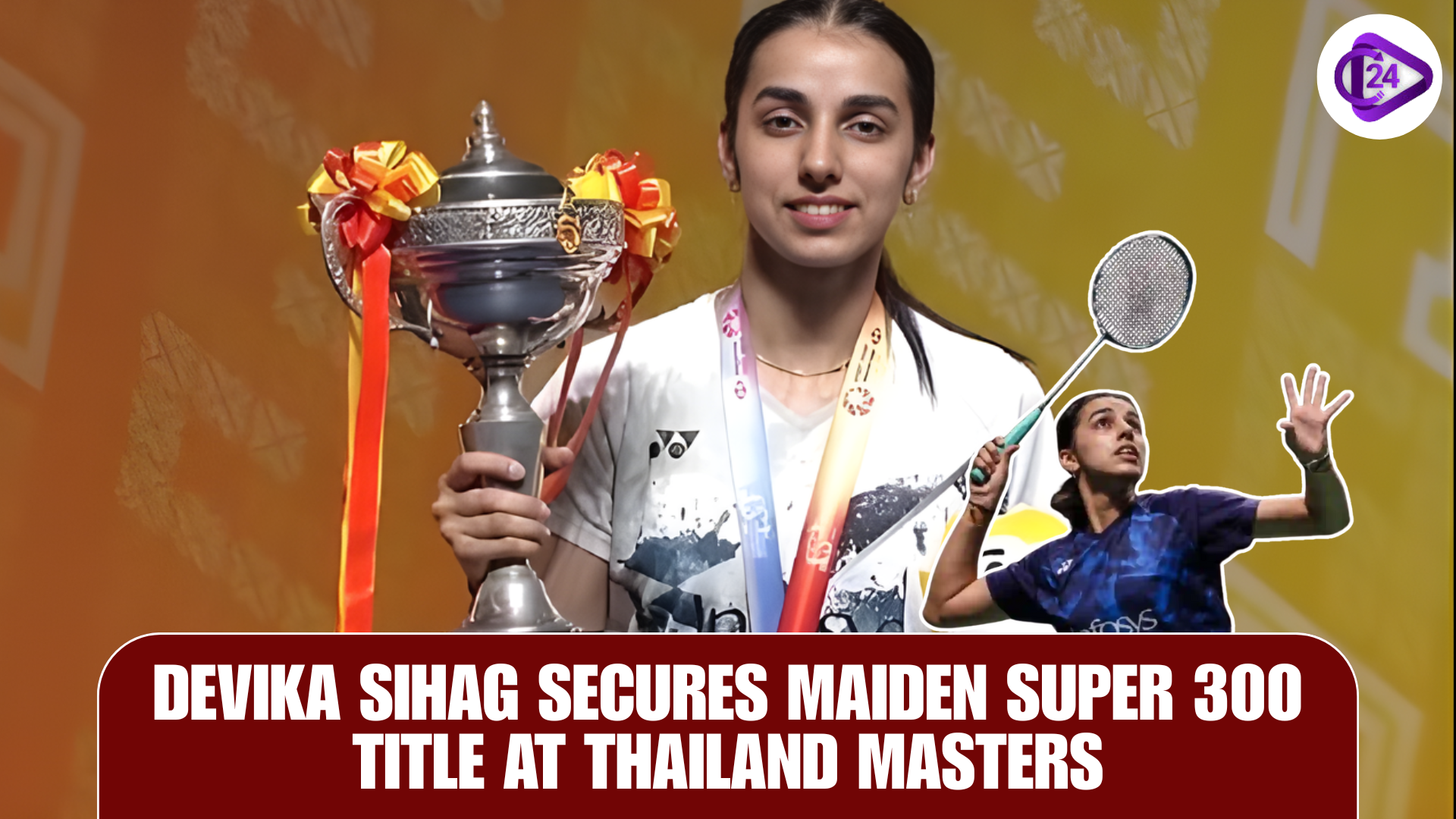
Devika Sihag Secures Maiden Super 300 Title at Thailand Masters

A breakthrough in the career of the Indian shuttler Devika Sihag was her maiden BWF Super 300 title in the Thailand Masters 2026 in Bangkok. The Haryana-based 20 years old got the women's singles title after Malaysia Goh Jin Wei pulled out in the middle of the final as Devika started dominating her. She was ranked world No. 63 and showed great consistency and a sense of tactics all through the tournament without losing a single game on her way to the title. Such an accomplishment has put her among the top three Indian women to have secured a Super 300 singles title, joining a list of PV Sindhu and Saina Nehwal.

Sports Journey of Devika Sihag

  • Initial potential and national achievement: Devika Sihag has already shown a high level of national achievement in winning Women's Senior singles Gold in the 86 th seniors badminton championships in 2024 and has demonstrated the potential to compete with the best domestic players in the country.

  • At the regional level: She won a silver medal at the Haryana State Badminton Championship, which depicts the development of her contests at the state level.

  • International breakthrough: Devika made her first international breakthrough in August 2025 when she won the BWF International Challenge held in Malaysia after facing international players, which served to prove her competence in the international arena.

  • Constant improvement in Europe: She has been able to win two consecutive women's singles championships in European tournaments such as the Portuguese international championships, which shows a steady development and international exposure

  • Super 300 milestone: Devika became the first Indian female to win a maiden BWF Super 300 at Thailand Masters 2026, besides being the third Indian female to do so in the BWF World Tour.

  • Training and mentorship: During her career, she has trained under the best coaches, as well as with the best players, which has led to good support and strict training.

Conclusion (Devika Sihag Secures Maiden Super 300 Title)

The victory of Devika Sihag at the Thailand Masters 2026, where she won her maiden BWF Super 300, is a historical landmark in her career and Indian badminton. The regularity of the performance of the 20-year-old, mental stability, and tactical age at the tournament can be seen as indicators of the increasing influence of the girl on the international scene. This was not only a win that made her one of the most promising young shuttlers in India, but also an inspiration to a new generation of sportsmen. Devika has proven that Indian women have the potential to become badminton champions in the world by becoming an elite member of PV Sindhu and Saina Nehwal, and this is a promise of better times to come.

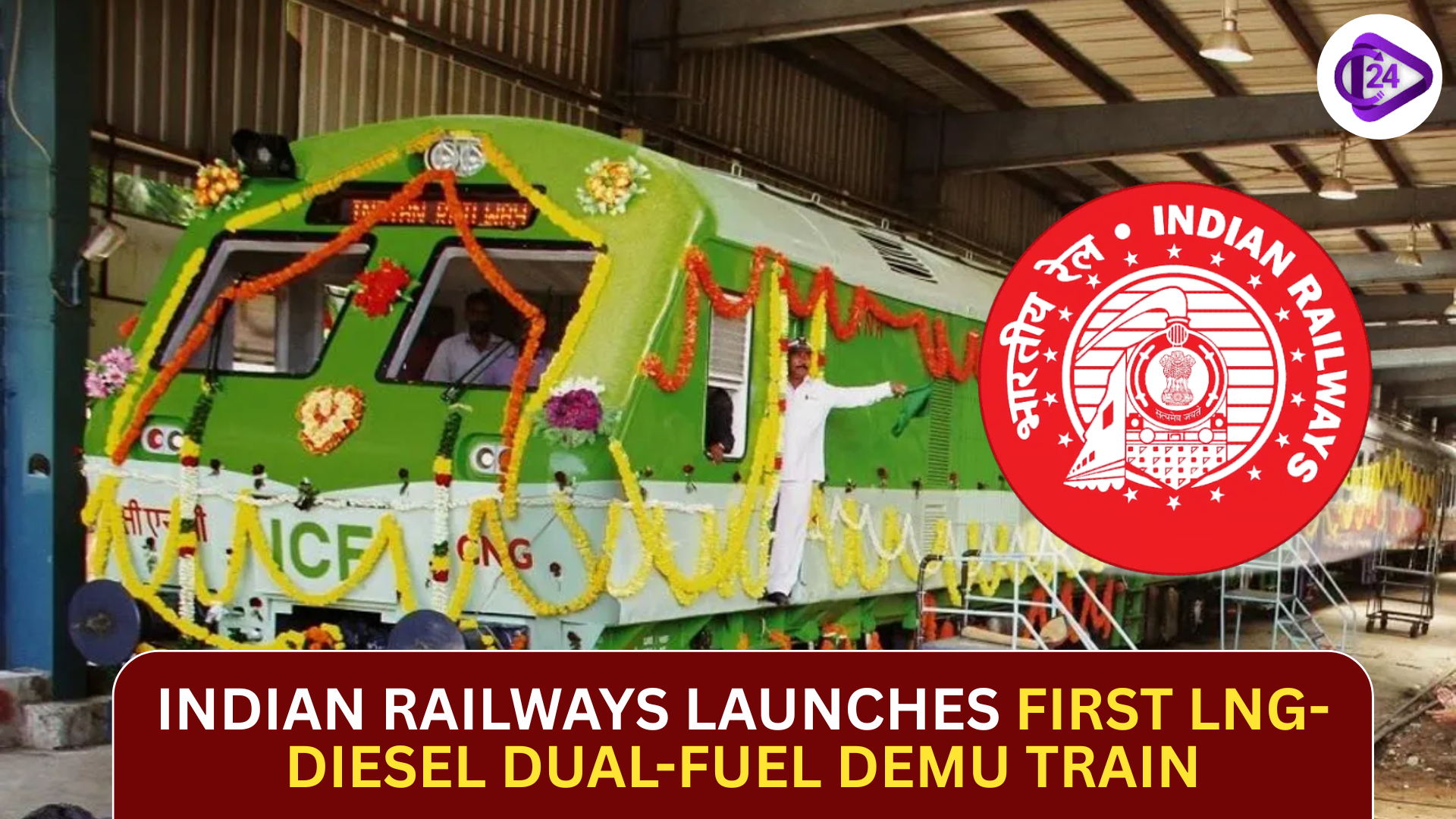
Indian Railways Launches First-Ever LNG-Diesel Dual-Fuel DEMU Train in Ahmedabad

The first LNG-Diesel dual-fuel Diesel Electric Multiple Unit (DEMU) train in the country at Sabarmati, Ahmedabad, by Indian Railways, is a significant move to make rail transport more eco-friendly. Within this project, the driving power cars of a 1,400 HP DEMU were modified to run on a mix of liquefied natural gas (LNG) and diesel instead of approximately 40 per cent of the traditional diesel intake without any effect on performance. The dual-fuel train has since gone into regular passenger service following successful field trials of more than 2,000 km. The project should help in cutting down the emissions and reducing the fuel expenses, which will promote the sustainability of Indian Railways.

LNG-Diesel Dual-Fuel DEMU Train by Indian Railways: Key Highlights

  • The Indian Railways has unveiled the first LNG-based dual-fuel Diesel Electric Multiple Unit (DEMU) train, which is also a major step towards sustainable rail transport.

  • The project consists of modifying Driving Power Cars (DPCs) so that the cars can perform on a blend consisting of Liquefied Natural Gas (LNG) and diesel without affecting performance.

  • The LNG replaces about 40 per cent of the diesel consumption and leads to high efficiency in terms of fuel consumption.

  • DEMU, which operates on 1,400 HP engines, is capable of fueling on non-electrified routes.

  • There were extensive field trials covering over 2,000 km, and then the train was introduced into the passenger service.

  • The train has a range of 2,200km using one LNG tank, which makes the train more flexible.

  • LNG consumption results in a decrease of carbon emissions, nitrogen oxides, and that of the particulate matter in favour of clean mobility.

  • The system can automatically change LNG to diesel and vice versa, which has made the operations continuous.

  • Indian Railways anticipates that this will save it a lot of money on fuel costs every year, with a lot of savings on a power car.

  • The project is in line with the vision of the Indian Railways project of having no carbon emission and enhancing environmentally friendly options for future rail running.

Important PYQs on Indian Railway

Exam Name Year Question Options Correct Answer
UPSC Prelims 2015 Indian Railways was separated from the Public Works Department (PWD) in which year? A) 1853
B) 1905
C) 1924
D) 1951
C) 1924
SSC CGL 2017 Indian Railways was nationalised in which year? A) 1947
B) 1951
C) 1957
D) 1965
B) 1951
RRB NTPC 2019 Which is the headquarters of Indian Railways? A) Mumbai
B) New Delhi
C) Kolkata
D) Chennai
B) New Delhi
SSC CHSL 2018 The first railway line in India was opened between A) Bombay–Thane
B) Howrah–Delhi
C) Madras–Arcot
D) Mumbai–Pune
A) Bombay–Thane
RRB Group D 2018 Which gauge has the maximum railway network in India? A) Narrow Gauge
B) Meter Gauge
C) Broad Gauge
D) Standard Gauge
C) Broad Gauge
SSC GD 2020 Which is the longest railway zone in India by route length? A) Northern Railway
B) Central Railway
C) Eastern Railway
D) Western Railway
A) Northern Railway
RRB JE 2021 What is the full form of RDSO? A) Railway Development Safety Org.
B) Research Design & Standards Organisation
C) Rail Design Service Office
D) Regional Development Safety Org.
B) Research Design & Standards Organisation
SSC MTS 2021 Indian Railways comes under which ministry? A) Ministry of Transport
B) Ministry of Civil Aviation
C) Ministry of Railways
D) Ministry of Home Affairs
C) Ministry of Railways
SSC CGL 2022 Which railway station has the longest platform in India? A) Kharagpur
B) Gorakhpur
C) Prayagraj
D) Howrah
B) Gorakhpur

Conclusion (Indian Railways’ First-Ever LNG-Diesel Dual-Fuel DEMU Train)

The LNG-diesel dual-fuel DEMU train at Indian Railways is a big step towards cost-effective and sustainable rail transportation. The innovation helps meet green mobility targets and works toward the purpose of making India ready to operate its railroads more cleanly, as the reduced consumption of diesel and generated emissions do not impair the performance of the vehicle.

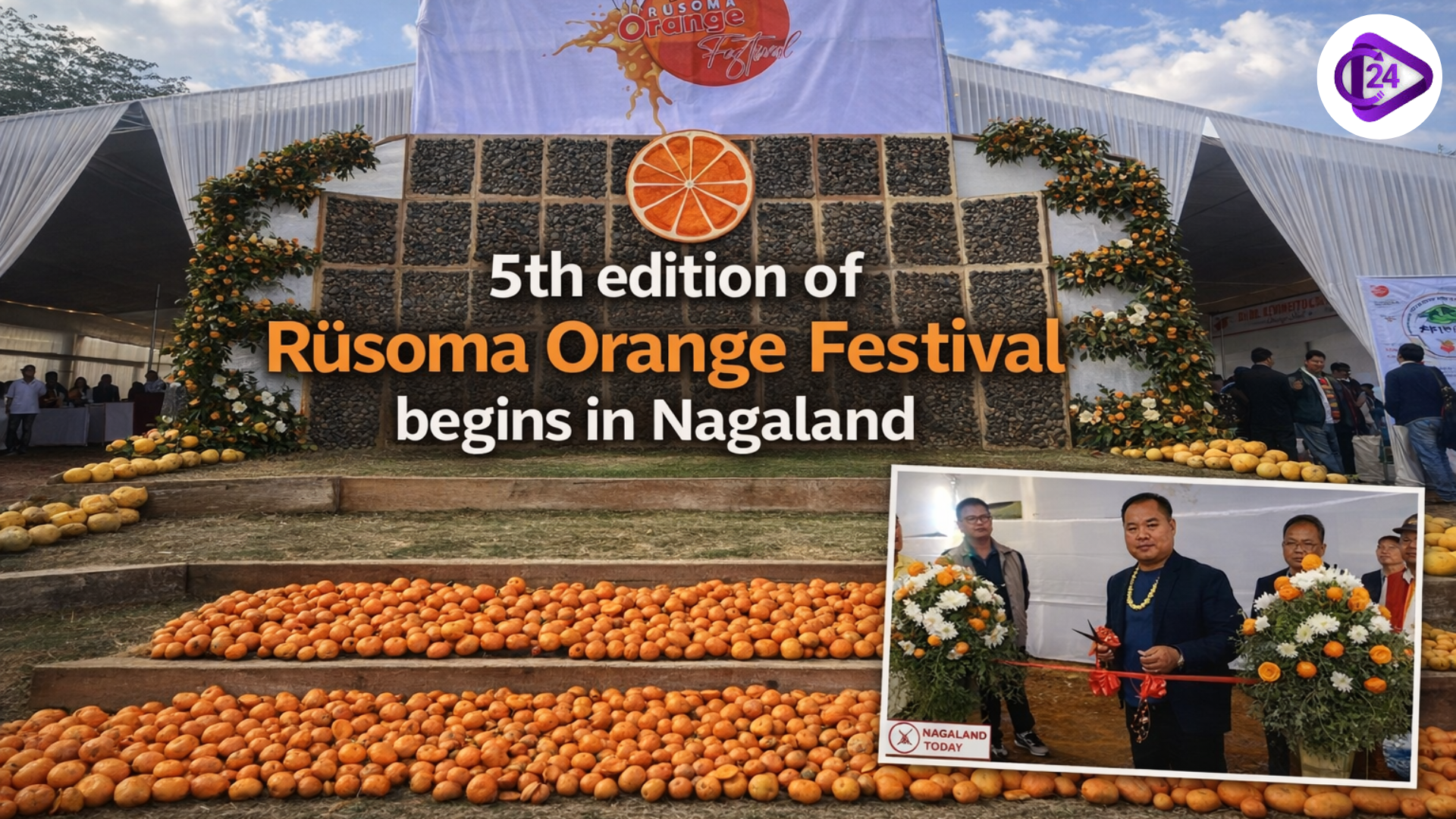
5th edition of Rüsoma Orange Festival begins in Nagaland

The 5th edition of the Rüsoma Orange Festival was inaugurated on 30 January 2026, in Rusoma village, which is approximately 10 km away from Kohima, Nagaland. Under the theme of Abundance of Ruesoma, the two-day festival honours the presence of the flourishing orange culture of the village and targets the welfare of rural people, entrepreneurship and horticulture development that relies on the village. The event provides 470 out of 570 households that work with orange farming, and as a result, cultural performances, community games, stalls selling local cuisine, and orange saplings. The event promotes a unique taste and quality of Rusuma oranges. The festival also promotes agritourism, as well as forming community involvement in rural development.

Object and Theme of Rüsoma Orange Festival

Festival Theme: Festival 5 RU Orange Festival (2026 will be done in the theme Abundance of RUsoma, based on the rich orange garden and agricultural tradition of the village.

Foster Village Welfare: The festival will promote the welfare of the village by identifying hardworking orange cultivators in the village and making them well-known as contributors to the country's economy.

Boost Rural Entrepreneurship: It is a site where rural entrepreneurship is promoted by assisting local farmers, self-help groups and organisations dealing with orange production and other related processes.

Showcase Local Produce: The event grants exposure to Ruyama oranges, saplings, handicraft works, and local food products in order to enable the farmers to get exposure to the market.

Encourage Agri-Tourism: A significant goal is to encourage agri-tourism, which involves visiting the rural Nagaland and presenting the Nagaland culture and traditions.

Community Participation: The festival equally indicates community participation and spirit of cooperation in the operations of the agricultural growth, given that 470 out of 570 households are involved in orange farming activities.

Asked Important Previous Year Questions

Exam Question Options Correct Answer
UPSC RO/ARO Prelims Match the festival to the state: Hornbill Festival A) Andhra Pradesh
B) Manipur
C) Ladakh
D) Nagaland
D) Nagaland
SSC GD Constable The Hornbill Festival is celebrated in the state of ________. A) Haryana
B) Sikkim
C) Nagaland
D) Punjab
C) Nagaland
SSC GD Constable Sekrenyi, a major festival of Nagaland, is celebrated for how many days? A) 10–15 days
B) 9–13 days
C) 7–8 days
D) 8–10 days
A) 10–15 days
SSC CGL / GK Which river flows through Nagaland? A) Ganges
B) Yamuna
C) Doyang
D) Brahmaputra
C) Doyang
UPSC / SSC / RRB Which is the highest peak in Nagaland? A) Mount Everest
B) Mount Saramati
C) Mount Japfu
D) Mount Trishul
B) Mount Saramati
UPSC / SSC / RRB Which mountain range runs along Nagaland? A) Himalayas
B) Patkai Range
C) Aravalli
D) Western Ghats
B) Patkai Range

Conclusion (Rüsoma Orange Festival)

The festival also fosters welfare in the rural areas, encourages entrepreneurship locally and increases the market potential of the farmers by reminding those centred on the village about the rich production of oranges in the village. The local produce exhibitions, cultural performances, and traditional games promote the tourism industry and uphold local traditions. The large-scale involvement of the community enhances social cohesiveness in the community and the promotion of sustainable agriculture practices within the community through the festival. All in all, Rüsoma Orange Festival not only represent the distinct identity of the village but also helps the economic development, culture and agri-tourism in Nagaland.

Frequently Asked Questions (FAQs)

The current affairs cover recent national and international events related to UPSC, SSC, Banking, Railways, and State PCS.

You need to read about the current affairs daily, and revise them every week and every month to keep them longer in your memory.

Yes, Class24 provides free downloadable Daily Current Affairs PDFs for easy revision.

Yes, you can practice MCQs and quizzes to boost your exam preparation.

Absolutely. The content is written in simple, easy-to-understand bilingual language suitable for beginners.

Go to class24.com and click on the current affairs section directly, where you find everything that you need.

ssc-toppers

Start Learning Today with Class24

Related current affairs

Class24 offers free video lectures for smart preparation, covering CGL, CPO, CHSL, MTS, and GD exams. Learn from expert faculty, revise concepts easily, practice with PYQs, and improve speed and accuracy through high-quality, exam-focused video lessons anytime, anywhere.

Get success in your hand. Start study anytime anywhere.

The journey becomes simple and enjoyable when you start taking interest in it. And through our app “Class24”, we will be your trusted partners in developing that interest.

Daily Quizzes
Mock Tests
Ongoing

No ongoing tests right now.