

Day: July 9, 2025

India-Brazil Partnership: A Pillar of Global Diplomacy and Stability, Says Modi

On his visit to Brasilia, Prime Minister Narendra Modi pointed to the significance of the India-Brazil partnership. He pointed out the mutual desire of the two countries to solve the worldwide problems with the help of talks and diplomacy. The strategic alliance, especially in protection of the interests of the Global South is an important element in enhancing world stability. These words came along after a bilateral meeting in Brasilia between Modi and Brazilian President Lula da Silva, which further enhanced the relationship between the two big democracies. An amount of six major agreements was signed as a result of this visit, and it is another chapter to cooperation.

Context

  • Prime minister Modi emphasized the point of strategic essence to India Brazil partnership noting that it would help the world solve complex problems diplomatically. 

  • Both countries voted to improve relations, and new six agreements were made in such significant spheres as energy, terrorism as well as trade.

Details:

  • Strategic Partnership:

    • Modi mentioned that the India-Brazil interaction is one of the main guardrails of world stability.

    • Although cooperation is characterized as essential to the Global South, it is also in the interest of the entire world.

  • Diplomacy and Dialogue:

    • Both countries affirmed that peaceful resolution of problems experienced in the world should be adopted by embracing dialogue and diplomacy.

    • There is no tolerance and no double standards to terrorism, and it is an issue of close cooperation.

  • Diplomatic Honors:

    • President Lula awarded Prime Minister Modi the Grand Collar (Brazilian highest state order), the National Order of the Southern Cross.

  • Target in Bilateral Trade:

    • Another major move towards the development of economic ties was the declaration by both sides of the desire to develop two-way trade to the level of $20 billion within five years.

  • Six Main Agreements:

    • Drawn agreements incorporated such spheres as renewable energy, war on terrorism, intellectual property, agriculture, and classified information protection.

    • Pay attention to collaborating in the domain of defense industries and implement UPI (Unified Payments Interface) in Brazil.

Key areas of cooperation

Institutional-Level Engagements:

  • Strategic Dialogue: The central body involving the role of National Security Advisors in trying to have common interests regarding worldly and local interests.

  • India-Brazil Business Leaders Forum: It is concerned with economic cooperation, investment and trade.

  • Trade Monitoring Mechanism (TMM): Trade related issues are trailed and solved.

  • Joint Defence Commission: This body which allows cooperation in the field of defence in terms of joint exercises and sharing of intelligence.

  • Joint Committee on Science & Technology: Advocates research and exchange of knowledge.

Trade and Investment:

  • Bilateral trade was USD 15.2 billion in 2022 and India was the 5 th largest trading partner of Brazil.

  • India and Brazil have put money in the motor industry, IT, energy, biofuel, and footwear.

  • MERCOSUR PTA: In 2004, India signed a Preferential Trade Agreement with MERCOSUR (Brazil, Argentina, Uruguay and Paraguay).

  • The main exports are agrochemicals, auto parts, and synthetic yarn; meanwhile, the following are some of the imports: crude oil, gold, and sugar.

Defense and Security Cooperation:

  • In 2003 signed a defense cooperation agreement, and institutionalized liaison with Joint Defence Committees.

  • Cyber Security MoU: On the one hand, with Brazil, signed in 2020 with its counterpart.

Cooperation in Science and Technology:

  • Cooperation in space, launching of Amazonia-1 satellite.

  • Ayurveda and Yoga have been recognised in the health policy of Brazil, and in 2020 an MoU on Traditional Medicine was signed.

Energy Security and Biofuel Cooperation:

  • Indian oil corporation and the CNPEM of Brazil entered into a MoU in 2020 to establish a research institution on bioenergy.

  • Technological backing of Brazil in the ethanol blending program of India that would see India achieve 15.83 % ethanol blending, by 2024 and 20 % by 2025.

Obstacles on India-Brazil Relationships:

  • Trade deficit and competition:

    • India is always faced by a trade deficit since it relies on Brazilian agricultural products, which are soybeans and sugar.

    • The policies of prevention such as Tariffs and Subsidies obstruct bilateral trade.

  • Restrained People-to-People contact:

    • The bilateral ties are also constrained by the fact that there is a deficiency of adequate cultural, business, and education interactions amongst the two nations.

  • China influence:

    • China has been Brazil's largest trading partner and this might influence the relations between India and Brazil (particularly in terms of trade and investment).

Cooperation Enhancing Strategies:

  • Economic Cooperation:

    • Varietize trade by trading in greater value added product services and technology. Attention should be paid to the favorable investment atmosphere establishment with the help of joint ventures and agreements.

    • Make infrastructure investments such as the transportation system or logistics to enhance connectivity and increase bilateral trade.

  • People to People Exchange:

    • Encourage cultural diplomacy, student-exchange and tourism as a way of enhancing understanding between the two people and likewise harnessing people-to-people linkages.

    • Encourage education partnership and provide direct flight connectivity, so it will not be hard to travel.

  • Enhance Strategic Alliance:

    • Increase defense coordination by conducting combined military-training, technology-sharing, and intelligence-sharing.

    • Collaborate on international platforms such as the UN, G20, and the World Trade Organization in order to pursue mutual goals in international governance, climate change, and safety.

  • Cross-Technology and Innovation:

    • Invest in research and development on renewable energy, biotechnology and IT to achieve new technological innovation.

    • There should be more promotion of the skill development programs and the training of the workforce in both countries to make the workforce more competitive.

  • Cultivate Sustainable Development:

    • Reinforce collaboration on climate change activity, especially on the front of biofuels and renewable energy. A partnership between India and Brazil may improve sustainability and attain the requirements of the Global South.

    • Collaborate in encouraging policies which are aimed at both environmental protection and economic growth, particularly in areas such as agriculture, biofuels and renewable energy.

Conclusion

India- Brazil collaboration could be referred to as the beacon of international relations since it is a relationship that focuses more on dialogue, joint work, and shared values. The enhancement of relations in various fields, including defense and the power sector as well as renewable energy, prepares a path towards a balanced and stable world order, in which the two countries contribute significantly to the future of the Global South.

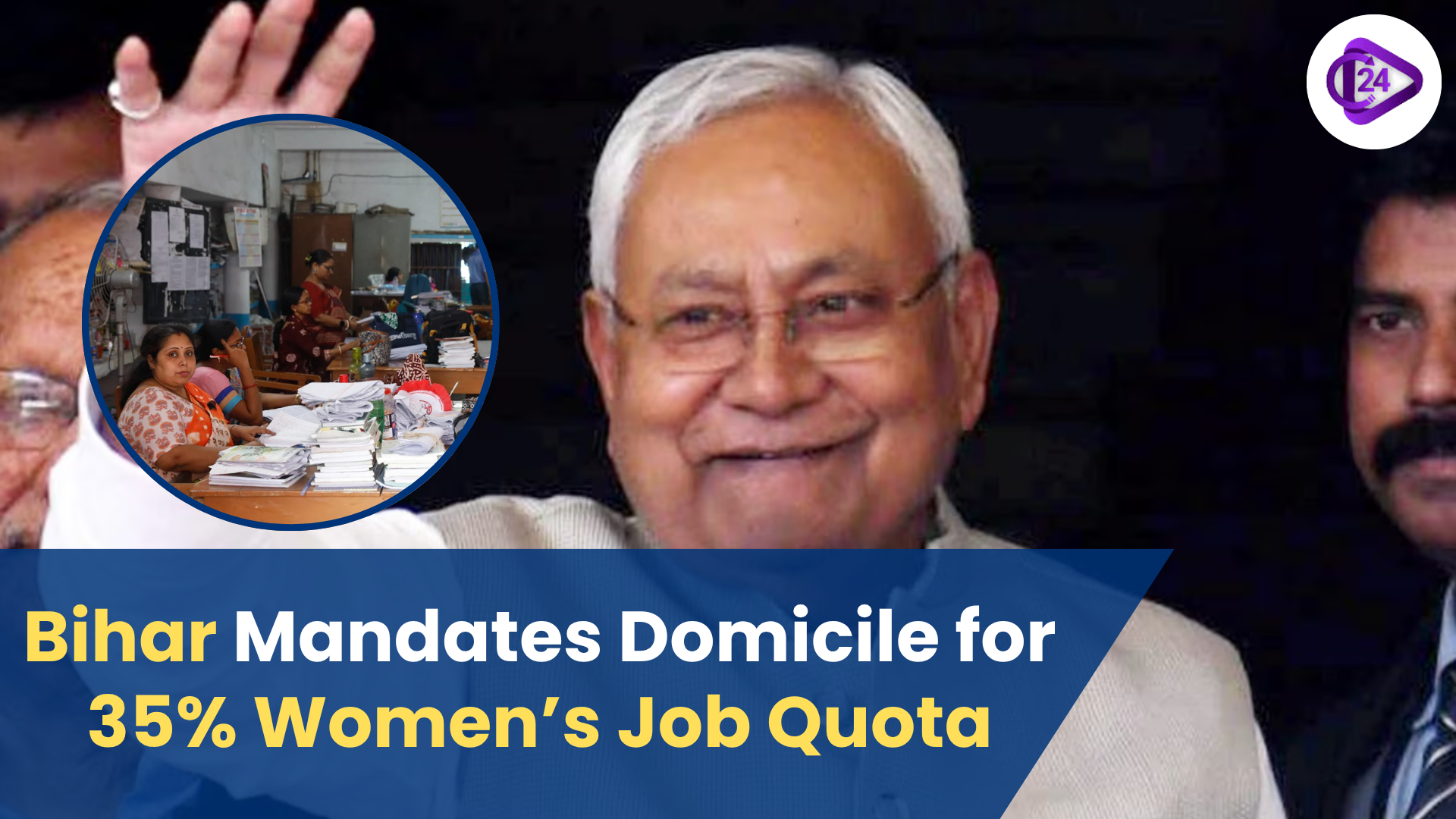
Bihar Cabinet Makes Domicile Mandatory for Women to Access 35% Reservation in State Govt. Jobs

It is one such move by the Bihar Cabinet whereby women in need of the 35 % quota in state government jobs will need to be domiciled in Bihar in the first place. Earlier on, this reservation (introduced in 2016) could be utilized by women of other states as well. This move came in advance of state elections which will take place in future so as to make sure that the reservation benefits are restricted to people living in Bihar. The state has also passed another novel project, the Bihar Youth Commission, which would allow supporting, nurturing youth and creating jobs within the state.

Context

  • The 35% reservation given to women to work in government jobs has now been limited by the Bihar Cabinet to those who are domiciled in Bihar. 

  • It was also decided by the Cabinet to constitute the Bihar Youth Commission to orient on the youth development and skill and employment.

Key Points 

  • Women Domicile Requirement:

    • The new rule stipulates that women will be allowed to utilize the 35% reservation offered on state government jobs only to women of Bihar.

    • Females in other states will be now treated as general category applicants.

  • Policy background:

    • In Bihar, a 35% quota of women jobs in the government was brought in 2016.

    • The rest of the benefit is now restricted to women resident of Bihar because of the change in domicile policy.

  • Bihar Youth Commission:

    • The Bihar Cabinet authorized establishment of a "Bihar Youth Commission."

    • The commission shall also be geared at empowering youths to be self-reliant, skillful and job-oriented offering them training and employment opportunities.

  • Youth Empowerment Projects:

    • The commission will be offering advice to the government in areas that regard youth such as education and employment.

    • It will further make sure that the young people in Bihar enjoy priority in securing a job in the privately held organizations in the state.

    • The commission will as well deal with the youths drinking and drug abuse.

Women reservation in Government Jobs

Economic Participation and Gender Equality:

  • When economically participating in the 2024 Global Gender Gap Report, India is placed at rank 142 of 146 countries.

  • Almost 50 % of the population is women and yet their contribution to GDP is only 18 %.

  • This policy will help to get a considerable output of women in the job market, which will have the estimated benefit of enhancing India ranking.

Advantages of Reservation:

  • Social Empowerment: Guarantees the representation of women in the positions of working in the range of public sector jobs breaking the traditional gender stereotypes.

  • Economic Growth: Enhancing the number of women in the economy is capable of enhancing the economy and eradicating gender disparities in matters concerning leadership.

  • Policy Focus: Since women will be given major positions, there will be additional pressure to have policies that favor women which includes better maternity days, childcare, and safety at work.

Social and Cultural Challenges:

  • These may include possible resentment because the policy would take away choice opportunities available to men particularly in times of peak unemployment and there would be social tensions.

  • Infrastructural changes: Places of work would require infrastructural changes such as crutches and flexible time.

  • Patriarchal Resistance: To the extent that society still has deeply rooted attitudes towards women, implementation may be associated with some resistance unless it is accompanied with more comprehensive cultural changes.

Implementation Concerns:

  • Logistical issues: The transition into such a massive distinction of employment regulations can cause management stagnation and legal issues.

  • When being fair: The policy must introduce stringent measures to curb nepotism and corruption besides discouraging charity of merit.

Conclusion

Making domicile a requisite to access the 35% reservation employment entitlement means that the Bihar government is concerned about giving the advantage to those residing in the state. With this, it is notable that there has been a concerted effort of uplifting the youth in the state through the creation of the Bihar Youth Commission that will lead to skills development and new employment opportunities and help the youth in all aspects including their overall well being.

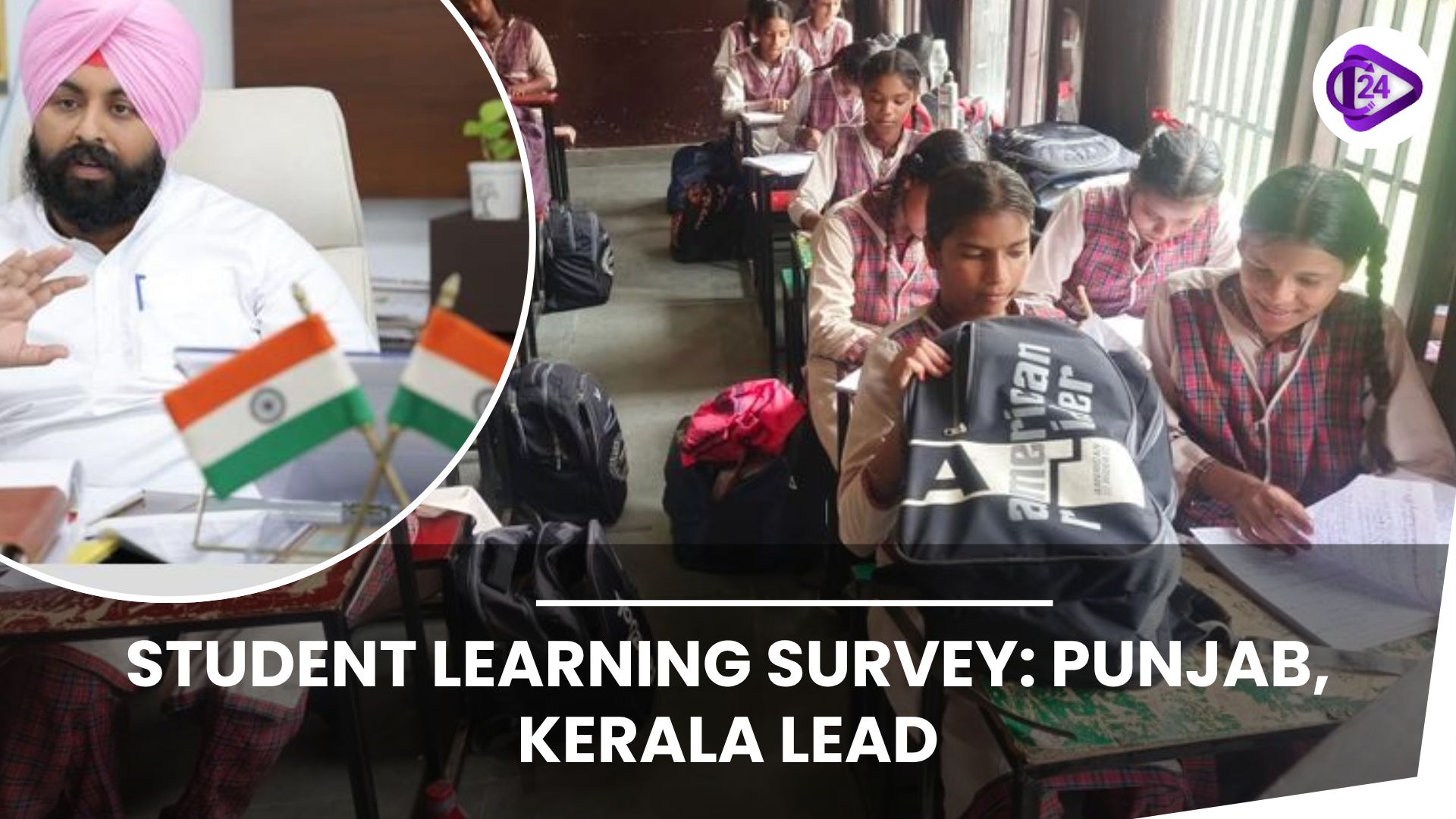
Countrywide Survey Highlights Deficits in Student Learning; Punjab and Kerala Among Top Performers

New Results of the Performance Assessment, Review, and Analysis of Knowledge for Holistic Development Rashtriya Sarvekshen (PARAKH RS) survey have disclosed serious learning gaps in major subjects like language and mathematics at different grade levels in India. Although other states such as Punjab, Kerala and Himachal Pradesh showed a good performance, there were proven gaps in the learning of the students, especially in solving mathematical problems and in languages understanding. The survey evaluated more than 21 lakh students in 781 districts and pointed at the necessity of filling such educational gaps.

Context

  • The PARAKH RS survey names a grade-level learning gap, revealing that students have difficulties in such subjects as mathematics or language. 

  • The best performing states include Punjab, Kerala and Himachal Pradesh, and the weaknesses were displayed in some other states especially the government-aided schools.

Details

Top Performers:

  • Grade 3 had the best performing states as Punjab, Himachal Pradesh and Kerala.

  • In the Grade 6, Kerala, Punjab, and Dadra Nagar Haveli and Daman & Diu topped the list.

  • At Grade 9, Punjab, Kerala and Chandigarh were the best performers.

Performance/Key subjects:

Grade 3:

  • Two-thirds of learners were able to utilize words in doing everyday communication.

  • 68% of the subjects were able to categorize objects with respect to more than one property and identify simple rules.

  • A low 55% were also able to sort numbers up to 99 either in a descending or an ascending order.

Grade 6:

  • The numbers in the place value system could be read by 54% using the Indian number system.

  • The level of people who could solve multi-step mathematical problems in everyday life is only 38 %.

  • 38% of students performed poorly in simple environmental pattern forecasting.

Grade 9:

  • Only 45% of students were able to describe the origins of the Constitution and what indeed it had to do with the civilizational heritage of India.

  • 54% were able to learn key points on texts, including news articles.

  • They had difficulty in appreciating the complex mathematical concepts like rational numbers and the characteristics of rational numbers; only 31% could understand these seemingly elementary mathematical issues.

Weakest Areas:

  • Kendriya Vidyalayas did the worst in mathematics in Grade 3.

  • There was a poor performance in grade 6 mathematics in a government aided school and a state school.

  • The 9th grade students got in trouble with comprehending combinations of numbers and higher mathematical items.

Conclusion

The PARAKH RS survey demonstrates that there is an emergency to eliminate the learning deficits in key subjects such as mathematics and language. Although those states that show the highest results (Punjab and Kerala) can serve as an example of how to succeed, the general findings indicate the necessity to take significant steps to improve educational levels and to make sure that students in every part of the country can achieve the grade-level results.

Frequently Asked Questions (FAQs)

The current affairs cover recent national and international events related to UPSC, SSC, Banking, Railways, and State PCS.

You need to read about the current affairs daily, and revise them every week and every month to keep them longer in your memory.

Yes, Class24 provides free downloadable Daily Current Affairs PDFs for easy revision.

Yes, you can practice MCQs and quizzes to boost your exam preparation.

Absolutely. The content is written in simple, easy-to-understand bilingual language suitable for beginners.

Go to class24.com and click on the current affairs section directly, where you find everything that you need.

ssc-toppers

Start Learning Today with Class24

Related current affairs

Class24 offers free video lectures for smart preparation, covering CGL, CPO, CHSL, MTS, and GD exams. Learn from expert faculty, revise concepts easily, practice with PYQs, and improve speed and accuracy through high-quality, exam-focused video lessons anytime, anywhere.

Get success in your hand. Start study anytime anywhere.

The journey becomes simple and enjoyable when you start taking interest in it. And through our app “Class24”, we will be your trusted partners in developing that interest.

Daily Quizzes
Mock Tests
Ongoing

No ongoing tests right now.