Day: July 2, 2025

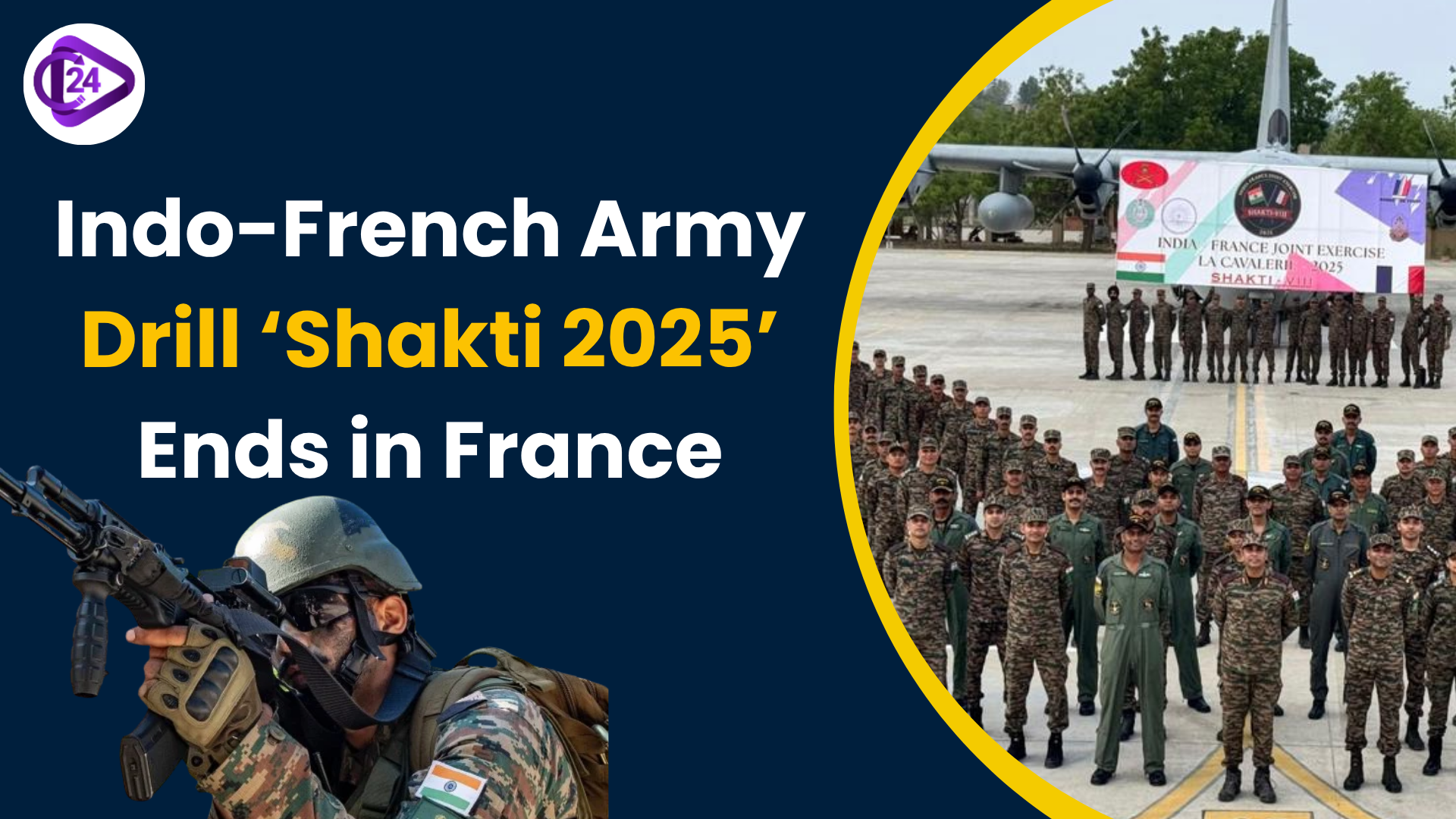
Indo-French Army Exercise ‘Shakti 2025’ Concludes in France

Indo-French Army exercise Shakti 2025 on Tuesday ended in France after 8 days of hard work and learning. The drill was meant to improve the working readiness as well as the interoperability of the Indian and French Armed Forces. It implied the involvement of the employees of the different branches of two armies and was a critical move towards increasing security cooperation among the two countries.

Context

In ‘Shakti 2025, more than 500 French soldiers together with 90 Indian forces were involved. The drill was aimed at improving joint operational preparedness between and strengthening the Indo-French military relations.

Key Details:

Exercise Overview:

  • The ongoing operation was called Shakti 2025 and attracted over 500 troops of multiple units of the French Army, Foreign Legion, French Air and Space Force, and French Navy.

  • 90 soldiers of Jammu and Kashmir Rifles were also part of the Indian contingent together with other service personnel.

Objectives:

  • The main objective was to increase the level of readiness of joint operations, as well as to improve the level of interoperability of the armed forces of India and France.

Time and Places:

  • The training started on June 18 and ended on Tuesday in France.

Significance:

  • The exercise became a very important platform where both nations can enhance their joint defense efforts.

Other exercises between India and France

Exercise Name

Domain

Recent Edition

Exercise Shakti

Army

Shakti-VIII, held in June–July 2025 in France

Exercise Garuda

Air Force

Garuda-VII, conducted in 2022 in India

Exercise Varuna

Navy

Varuna 2025, held in March 2025 off Goa, India

Exercise Tarang Shakti

Air Force

Tarang Shakti 2024, held in August and September 2024 in India

Exercise La Perouse

Multinational Naval Exercise

La Perouse 2025, held in January 2025 in the Indo-Pacific

Conclusion

The end of ‘Shakti 2025’ is one more milestone of Indo-French military relations building. The training enhanced closer coordinated readiness and the expanding strategic defence cooperation between the two countries.

Indian Railways Launches RailOne Super App to Simplify Passenger Services

Indian Railways has introduced the RailOne app, an all-purpose super app designed to simplify and enhance passenger amenities. This unified platform aims to bring together all essential train-related services such as ticket booking, live train tracking, platform ticket purchase, and food ordering into a single, seamless interface. With a focus on user comfort and digital convenience, the app eliminates the need for multiple railway applications. Passengers can now access services like PNR status, coach location, and onboard catering through one platform, improving the overall travel experience. RailOne also supports single sign-on, biometric login, and integration with IRCTC services to streamline operations and save time.

Context

RailOne is a unified app and it comprises multiple railway services that include ticket booking, PNR status, and order food. It automates passenger experience by making it easy to control with a convenient interface and single sign-on capabilities without having to use numerous applications.

Key Details:

App Features:

  • Ticket Booking: Reserve, unreserved and platform tickets can be booked via the app.

  • Train Tracking: Get the status of PNR, position of train and coach location.

  • Food & Services: You can order food online with the help of the IRCTC eCatering; you can also leave a feedback via Rail Madad, and avail other travel services.

User Convenience:

  • All these services have been incorporated under the same app yet they have different apps and consume a lot of storage space.

  • It accommodates single sign in, such as accessing the same through mPIN or biometrics.

Integration with the existing Services:

  • RailOne has collaborated with IRCTC, and this has enabled the easy step of booking a ticket.

  • It is also able to log-in using existing RailConnect and UTS credentials.

Availability:

  • It comes as an application to be found on Android and iOS.

  • The user registration is short and takes less information and the guest can wander around by giving a mobile number/OTP.

Recent Development in ticket booking via IRCTC

  • Tatkal Booking: Tatkal bookings will be given to verified users only, and OTP verification will be introduced by the end of July.

  • Chart Preparation: The waitlist chart preparation will be adjusted to 8 hours before the train leaves, which would be beneficial in enhancing the updates of passengers.

  • Improved Reservation System: Indian railways intends to extend its reservation system to accommodate 150,000 bookings and 4 million enquiries in a minute by December 2025.

Conclusion

RailOne app is another move towards enhancing the ease of people by having all the services on one platform, which is a railway car. It also facilitates future developments in train ticket booking and reservation systems to improve the entire travel process to its passengers in Indian Railways.

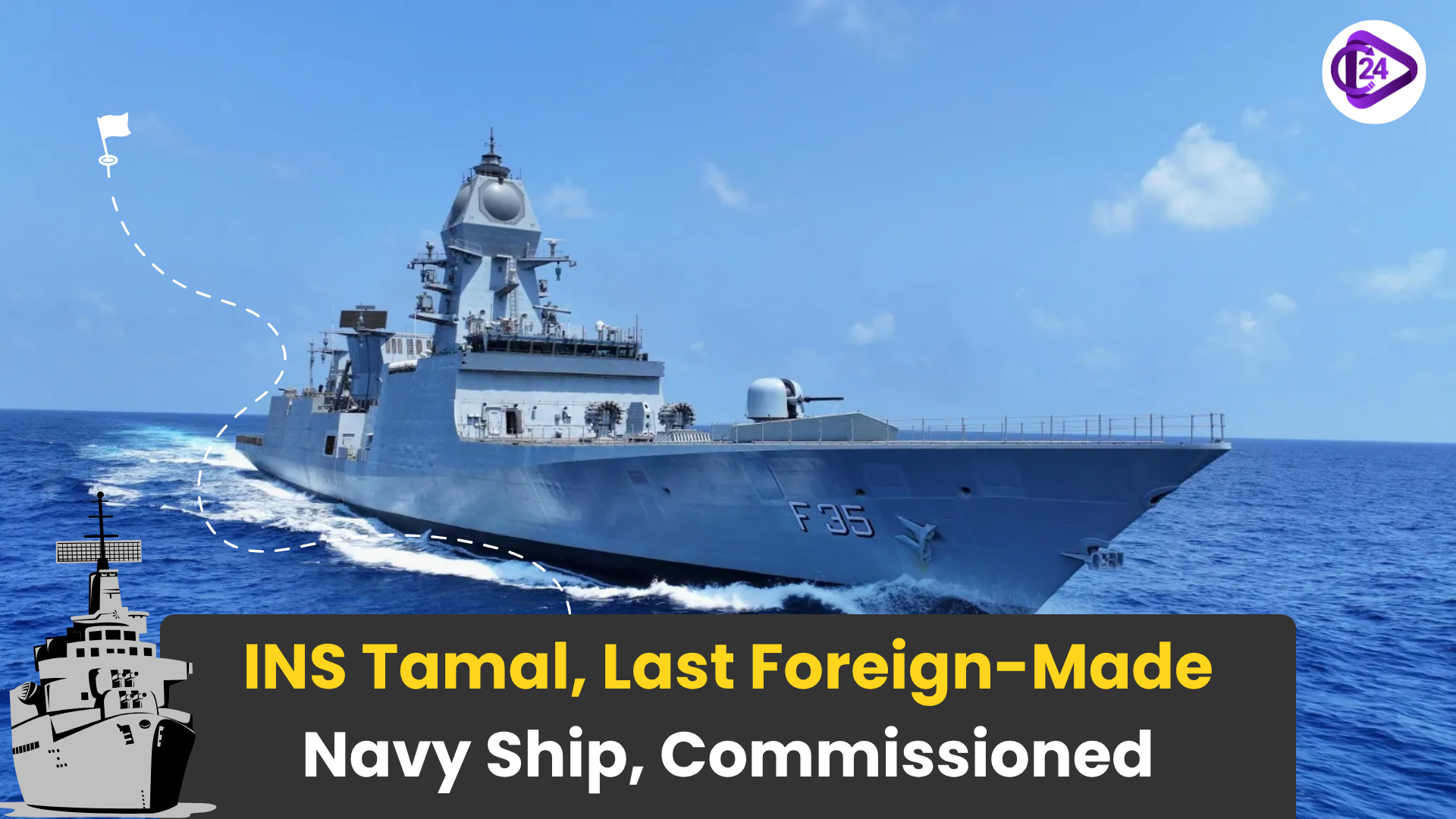
INS Tamal, Last Foreign-Built Navy Ship, Commissioned

Multi-role stealth guided missile frigate INS Tamal (F71) has been commissioned by the Indian Navy in the Yantar Shipyard at Kaliningrad in Russia. This vessel will be the final foreign made large warship to join the Indian navy reflecting the move towards indigenisation with the governments Aatmanirbhar Bharat and Make in India policy. INS Tamal is the eight container of Talwar class and further enhances the marine security of India.

Context

  • The INS Tamal is the final world-constructed big vessel in the Indian Navy, thus boosting the Indian navy. 

  • It has modern weapons and portrays the level of Indo-Russian defence relations.

Key Details:

Ship Commissioning:

  • Guided missile frigate INS Tamal was inducted in Yantar Shipyard, Kaliningrad, Russia.

  • It also becomes the last to be inducted as a major warship built abroad by the Indian Navy and thus ushers an end to an era of the Indian Navy which operated foreign built fleets.

Indigenisation Focus:

  • The Introduction of Tamal is closely linked to the indigenisation drive that India has taken with Aatmanirbhar Bharat and Make in India initiatives.

Ship Specifications:

  • Tamal belongs to Project 1135.6 (Talwar class) and is armed with modern weapons, BrahMos supersonic cruise missiles.

  • It also has the capability to do fort-sea operations and can fight against threats in the air, on the surface, in the submarine, and in electronic warfare.

Indo-Russian Cooperation:

  • The commissioning of the ship underlines the long story of maritime cooperation between India and Russia who have jointly manufactured 51 ships in the last 65 years.

Leadership and Meaning:

  • Captain Sridhar Tata a gunnery expert and expert in missile warfare is the commanding officer of the warship.

  • It became a great moment in the advances in the defence capabilities of India and in securing bilateral relationships between India and Russia with Vice Admiral R. Swaminathan, and Vice Admiral Sanjay Jasjit Singh.

Other similar Foreign built navy ships

Prior to the INS Tamal various other warships based on foreign construction were inducted into the Indian navy mostly of the series of Talwar, built at Russian ship building factories. These include:

  • INS Talwar (F40): The pack leader of the group that was commissioned on June 18, 2003. 

  • INS Trikand (F51): It was commissioned June 29, 2013. 

  • INS Tarkash (F50): Commissioned: 9 November 2012 

  • INS Tabar ( F44 ) Commissioned on April 19, 2004.

Conclusion:

The commissioning of INS Tamal, not only enhances Indian naval strength, but also marks the importance of the Indo-Russian defence relations which happens to be long-standing. This is one step towards propelling India into self-reliance in production of defence.

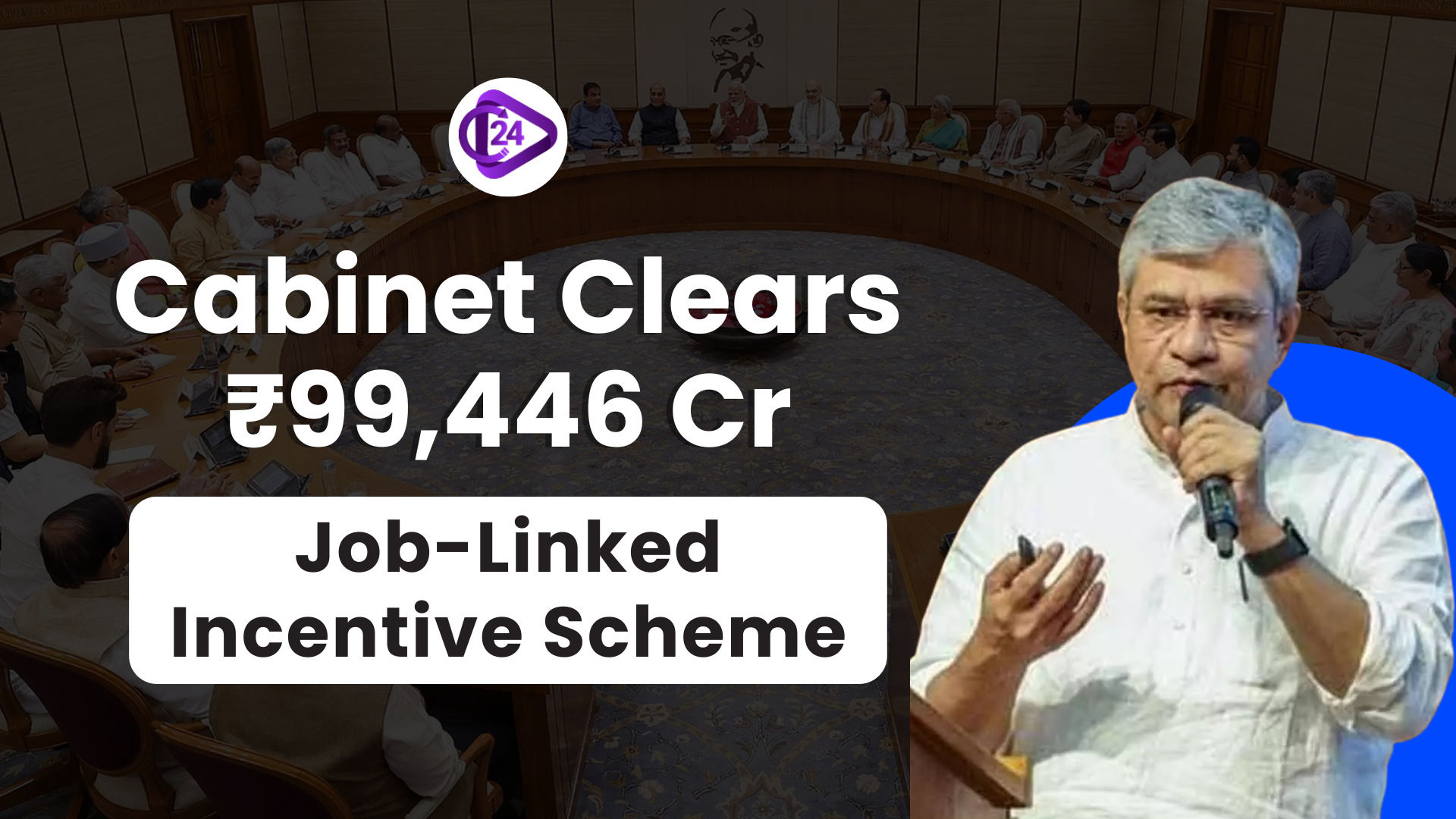
Cabinet Approves ₹99,446 Crore Employment-Linked Incentive Scheme

The Union Cabinet has accepted an employment-linked incentive (ELI) scheme to the tune of 99,446 crore with the view to increase employment in the manufacturing sector. This plan aims at offering motivation to the employer and the first-time employee. In a bid to provide jobs, the government plans to generate more than 3.5 crores of jobs and youth employment has to be given special attention. The advantages of the scheme will continue over two years and incentives will be provided to the industries which would hire more workforce.

Context

  • The ELI scheme aims at creating 3.5 crore employment opportunities, especially among first time job seekers. 

  • It provides financial incentives to both the employers and employees with special measures to the manufacturing industry.

Key Details:

Key Points of the ELI Scheme:

Scheme Objective:

  • The plan is to create over 3.5 crore new jobs in a span of 2 years having a total outlay of 99446 crore of rupees.

  • It is aimed at the new job applicants and employers, rewarding them for creating more jobs.

Segments of the Scheme:

  • Part A (Bonus to the First-Timers Employees):

    • The new workers will be paid one month salary (up to 15,000 rupees) in two parts after 6 months and 12 months of employment.

    • Eligibility: The employees whose monthly salary is less than or equal to 1 lakh, and the initial installment will also be an initiative associated with a program of financial literacy.

  • Part B (Due Employer Support):

    • Up to 3,000 per month will be the incentive by the employers to hire more employees who are going to work at least 6 months.

    • Concentrate on the manufacturing industry as the incentives thereof will be increased by two years.

    • Employers who have less than 50 employees are required to take at least two workers and those who have 50 and above are required to take up five workers to engage in long-term employment.

Incentive Structure:

  • Depending on the salary of the new employee employed, the incentives to the employer varies.

  • EPF wage up to 10000: 1000

  • 10001 – 20000 EPF salary: 2000

  • EPF wage of 3,000 rupees per month: 20,001 rupees to 1 Lakh

Payment Mechanism:

  • Direct Benefit Transfer (DBT) shall be applicable using Aadhar Bridge Payment System (ABPS) to pay the employees, who are new to the job place.

  • The employers will be directly paid into their accounts that are linked with PAN.

Eligibility Criteria:

  • The employees whose salary ranges up to 1 lakh can apply.

  • The plan will be beneficial to the jobs made between August 1, 2025, and July 31, 2027.

Scheme Budget:

  • The scheme as a whole costs 99,446 crores.

  • This is a component of the larger plan of the 2024-25 Union Budget, the allocation of which comprises 2 lakh crore on the generation of employment.

Effect of the Employment-Linked Incentive Scheme:

  • Employment: Would create more than 3.5 crore jobs, most expectedly in the manufacturing industry.

  • Youth Empowerment: Builds up on young people who are seeking jobs on their first time, and they are wooed towards employment.

  • Employer Incentives: Gives money to employers to take up more employees.

  • Social Security: Provides additional social security benefits to a broader number of persons in the workforce.

  • Economic Growth: Economic growth stimulates improve employability and low unemployment.

  • The legal research on Aging Skills: Promotes skills development among first-time associates and employees by creating financial literacy programs.

  • Emphasis on Manufacturing: Brings about employment generation in manufacturing industry and hence growth in industry.

Need of Employment-Linked Incentive Scheme:

  • Conquering the Unemployment: Seeks to meet the high unemployment rates through encouraging creation of employment.

  • Aatmanirbhar Bharat: Assists in self-reliance vision in India by laying an emphasis on creating internal employment.

  • Increase in Industrial Growth: It gives the right dose of incentives in manufacturing which is a primary area of growth in terms of employment.

  • Encouraging formalization of the workforce: Assists in formalizing a good proportion of the workforce and expands the social security cover.

Conclusion:

The ELI plan is one of the major government initiatives in addressing the unemployment issue, especially among the young population and encouraging the manufacturing industry. It will however be effective when it uses transparent implementation and ensures that the employers utilize the incentives to actualize creation of sustainable jobs.

Frequently Asked Questions (FAQs)

The current affairs cover recent national and international events related to UPSC, SSC, Banking, Railways, and State PCS.

You need to read about the current affairs daily, and revise them every week and every month to keep them longer in your memory.

Yes, Class24 provides free downloadable Daily Current Affairs PDFs for easy revision.

Yes, you can practice MCQs and quizzes to boost your exam preparation.

Absolutely. The content is written in simple, easy-to-understand bilingual language suitable for beginners.

Go to class24.com and click on the current affairs section directly, where you find everything that you need.

ssc-toppers

Start Learning Today with Class24

Related current affairs

Class24 offers free video lectures for smart preparation, covering CGL, CPO, CHSL, MTS, and GD exams. Learn from expert faculty, revise concepts easily, practice with PYQs, and improve speed and accuracy through high-quality, exam-focused video lessons anytime, anywhere.

Get success in your hand. Start study anytime anywhere.

The journey becomes simple and enjoyable when you start taking interest in it. And through our app “Class24”, we will be your trusted partners in developing that interest.

Daily Quizzes
Mock Tests
Ongoing

No ongoing tests right now.