
Day: April 25, 2025

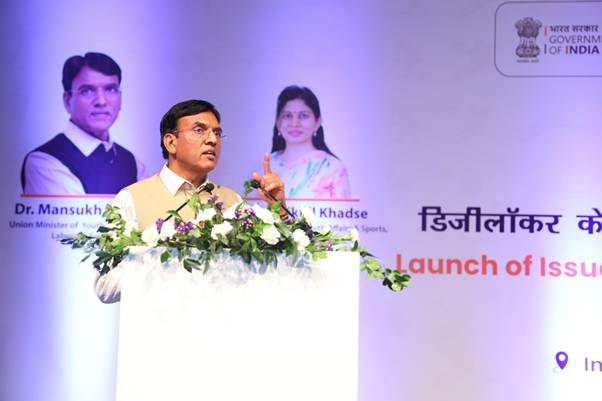
Union Minister Dr. Mansukh Mandaviya Launches Issuance of Sports Certificates via DigiLocker and Inaugurates NCSSR

As a continuation of the Modi government's sports ecosystem advancement strategy this announcement emerges. The government works towards preparing digital systems that will eliminate administrative obstacles for athletes while making benefits more accessible. These initiatives assist athletes by simplifying their processes and improving sports governance as India prepares itself for future sporting visions, including its bid for the 2036 Olympics.

Context:

  • Dr. Mansukh Mandaviya, as the Union Minister of Youth Affairs & Sports conducted two important initiatives by launching sports certificate issuance through DigiLocker and opening the National Centre for Sports Science and Research (NCSSR) at IG Stadium in New Delhi.

  • The National Centre for Sports Science and Research (NCSSR) will serve as a fundamental tool to boost the athletic performance capabilities of talented athletes.

Key Points:

Launch of DigiLocker for Sports Certificates

  • Digital Initiative: Launched by Dr. Mandaviya at IG Stadium, New Delhi.

  • The system enables electronic sports certificates as part of National Sports Repository System (NSRS) with automatic payout functionality that removes the requirement for filing manual claims.

  • The athlete benefit system simplifies reward processing which decreases the need for paperwork along with shortening payment durations.

Inauguration of NCSSR

  • The National Centre of Sports Science Research concentrates its efforts on developing sports science research and innovation, which enhances the performance levels of elite athletes.

  • The organization aims to support India’s goal of becoming a global sports leader by 2047 through the Viksit Bharat 2047 plan.

Key Sports Policy Updates

Draft Frameworks Introduced:

  • National Sports Governance Bill 2024

  • National Sports Policy 2024

  • National Code Against Age Fraud in Sports (2025)

  • Transparency & Fair Practices: NCSSR ensures athlete protection and governance.

India’s Global Sports Aspirations

  • Indian authorities move ahead to seek governance support behind a bid for hosting the 2036 Olympic Games.

  • India has demonstrated an interest in bidding for the Commonwealth Games 2030.

Olympic Training Centres

  • Sports training facilities of high priority will be developed through the Public-Private Partnerships (PPP) model.

Athlete Endorsements

  • The DigiLocker initiative received praise from Mirabai Chanu because it enables athletes to handle their official documents better for job applications and visa processing and official purposes.

Conclusion:

The introduction of the DigiLocker-based sports certificate issuance system and the founding of NCSSR mark important strategic steps by Dr. Mansukh Mandaviya to advance sports management in India. The joint efforts of athlete welfare programs with governance reforms and infrastructure development will enhance India's position in international sports rankings. India strives to develop a favorable environment for athletes which will boost talent development while promoting sports science innovation.

IIA Achieves Breakthrough in Measuring Helium Abundance in the Sun

Scientific research at the Indian Institute of Astrophysics achieved its first direct determination of Helium abundance in the solar photosphere. The discovery represents a significant progress in Sun photosphere opacity studies while breaking traditional measurement techniques. This study delivers important information about both the Sun's basic substance makeup and the star observation approaches.

Context:

  • Astronomers struggled throughout multiple decades to detect Helium elements in the Sun's photosphere directly because the Helium spectral lines remain invisible within the visible light spectrum.
  • Solar scientists have depended on extrapolation from other stars combined with solar seismology to conduct their studies during historical times.
  • Research scientists at the Indian Institute of Astrophysics (IIA) established a new methodology that depends on Magnesium and Carbon characteristics found in the Sun's spectrum to determine Helium compositions within the Sun.

Challenges in Measuring Helium Abundance

  • The Sun does not display Helium spectral lines because Helium produces no visible wavelength features from the photosphere therefore direct observation becomes impossible.

  • Scientists used information from hotter stars, together with helioseismology data, to perform their estimates.

New Technique by IIA

  • The research analyzes Mg and C spectral lines of neutral atoms alongside MgH and CH and C₂ molecular lines at very high resolution.

  • Scientists aimed to measure the Helium-to-Hydrogen ratio present in the Sun's photospheric region.

Methodology

  • Spectral Analysis relies on the analysis of Magnesium and Carbon atoms along with molecular lines to determine elemental concentrations.

  • The abundance of Magnesium and Carbon for various values of the Helium-to-Hydrogen ratio concentrations allows the establishment of the He/H relationship for calculating He abundance.

  • The experimental findings demonstrate alignment with findings derived from helioseismological examination, which state an He/H ratio of 0.1.

Implications

  • Solar opacity receives a better understanding through accurate measurements of He abundance because it helps analyze energy transport in our Sun.

  • Better Models: Enhances the modeling of the Sun and other stars' structure and evolution.

Team & Contribution

  • Institution: Indian Institute of Astrophysics (IIA).

  • Researchers: Satyajeet Moharana (also from IISER Berhampur), B.P. Hema, and Gajendra Pandey.

  • This study created a path toward using atomic and molecular spectral lines to address a major issue within solar physics.

Composition of the Sun:

  • Hydrogen: About 74% by mass.

  • Helium: About 24% by mass.

  • Other Elements: Amounts of carbon, nitrogen, oxygen, and heavier elements like iron.

  • Nuclear Fusion:

    • The core of the Sun experiences hydrogen nuclei fusion reactions which produce helium nuclei.

Conclusion:

Researchers achieved a breakthrough in astrophysical research by establishing successful Helium abundance measurement in our Sun. Using Magnesium and Carbon spectral lines as part of a new methodology the Indian Institute of Astrophysics obtained improved measurements of Helium content in the Sun. The research findings enhance Sun science understanding alongside providing fundamental knowledge for developing precise stellar formulas that enable other stars' scientific assessments.

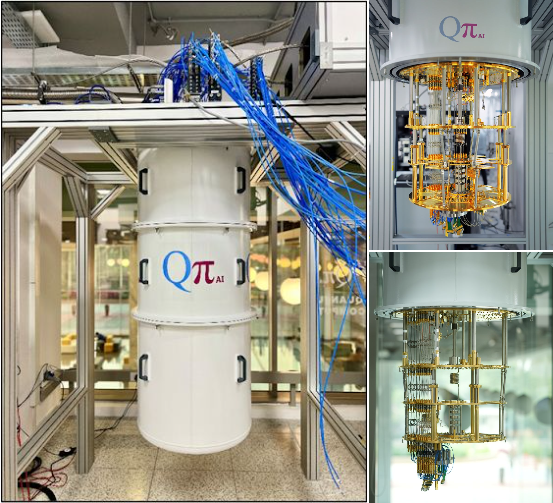
QpiAI Launches India’s First Full-Stack Quantum Computer, QpiAI-Indus, on World Quantum Day

QpiAI-Indus became the first full-stack quantum computer from India to be presented by Bengaluru-based QpiAI at World Quantum Day on April 14, 2025 hence making a notable impact in National Quantum Mission (NQM). The quantum computer comprises software and hardware elements to support demanding calculations in science applications throughout life sciences and materials science and logistics operations.

Context of News:

  • India established itself as a major participant in the worldwide quantum revolution by releasing QpiAI-Indus on World Quantum Day. 

  • India’s National Quantum Mission supports this development to boost India’s quantum science and technology capabilities.

Key Points:

About QpiAI-Indus:

  • The nation's inaugural full-stack quantum computer came into being when scientists created the system from end to end within Indian research facilities through both hardware development and fundamental software programming which utilizes artificial intelligence.

  • The integrated system uses AI tools to enhance quantum application optimization and research and development.

Performance & Features:

  • 25 Qubits: Enables high-performance quantum computations with enhanced accuracy.

  • Advanced Processor: Provides better stability and error management over classical systems.

Applications of QpiAI-Indus:

  • Life Sciences: Aids in drug discovery and genomics through precise molecular simulations.

  • Materials Science: Utilizes QpiAI-Indus to design advanced materials that benefit the energy sector as well as technological industries.

  • The system enables logistics providers to enhance their route management operations as well as supply chain efficiency.

World Quantum Day (April 14):

  • The launch of QpiAI-Indus marked a significant event, which honored Planck’s constant (4.14 × 10⁻¹⁵ eVs during its inception in 2021.

  • The main purpose is to create understanding about quantum science along with its technological effects.

International Year of Quantum Science – 2025:

  • UN officials declared the year to focus on quantum technologies that will define the future.

India’s Quantum Mission:

  • National Quantum Mission (NQM) supports QpiAI-Indus because it helps India establish leadership in quantum innovation alongside industrial applications on a global scale.

Conclusion:

India's technological progress took a major step forward through QpiAI-Indus because this launch demonstrates both Indian capabilities and national leadership in quantum revolution development. The system establishes applications in various industries like life sciences and materials science and logistics which prepare India to pursue its National Quantum Mission goals. The World Quantum Day launch timing helps increase worldwide understanding of quantum science as an innovative technology field.

China Launches Shenzhou-20 Mission to Tiangong Space Station on Space Day

The Shenzhou-20 flight from China will be prepared for launch on April 24, 2025, to observe the 10th anniversary of Space Day. The Shenzhou-20 mission will transport three people onboard to Tiangong space station and replace the existing Shenzhou-19 personnel while executing diverse scientific investigations. China's space ambitions become more evident through this mission because the Tiangong station will be the sole operational space station after the retirement of the International Space Station (ISS).

Context:

  • China carries out the Shenzhou-20 mission as part of its major space program which marks its 10th Space Day celebration. 

  • China’s growing space exploration capabilities are demonstrated through the establishment of the Tiangong space station as highlighted by this mission. 

  • The Chinese space program seeks to take the lead in space exploration by filling the void that will be created when the ISS retires.

Key Points:

Shenzhou-20 Mission Objectives:

  • Crew Rotation: Replaces Shenzhou-19 crew aboard Tiangong station.

  • Research experiments in space biology involved studying zebrafish together with planarians and streptomyces specimens.

  • Tiangong Station's protection against space debris will be accomplished through the installation of a debris protection device.

  • The crew plans to conduct extravehicular activities, which serve dual functions of maintaining the station and conducting research.

Significance of Space Day (April 24):

  • Chinese representatives achieved a historical milestone by launching their inaugural satellite, Dongfanghong-1, in 1970.

  • This event enables national pride to rise while promotinga  scientific spirit across the country.

Future of China’s Space Programme:

  • Tiangong Station is designated to become the only functioning orbital outpost after the decommissioning of the International Space Station.

  • At present, China demonstrates its increasing dominance in space exploration through its ongoing missions and technological achievements.

International Relations and Collaborations:

  • The dual-purpose functionality of technological resources generates military-oriented misgivings among institutions.

  • The space program includes joint efforts with Pakistan as well as future astronaut programs that will accept participants from both Hong Kong and Macau.

Tiangong Space Station Highlights:

  • Modular Design: Three modules – Tianhe (core), Wentian, Mengtian (labs).

  • Timeline: Operational since 2021, expected to continue till 2028.

  • The platform maintains its self-sustainability, and it conducts repairs and maintenance for the Xuntian telescope within its structure.

China’s Space Milestones:

  • China achieved two universal space achievements by becoming the third nation following America and Russia to launch human space missions independently while developing its independent space station network.

Conclusion:

Shenzhou-20 constitutes an important advancement in China's space capabilities as it supports the national agenda for space leadership. China takes a leading position in space science development as the Tiangong space station emerges to replace the retiring International Space Station. The Shenzhou-20 crew members carried out scientific studies to prove China’s support for space research progress alongside international cooperation as Space Day commemorates national achievements in space innovations.

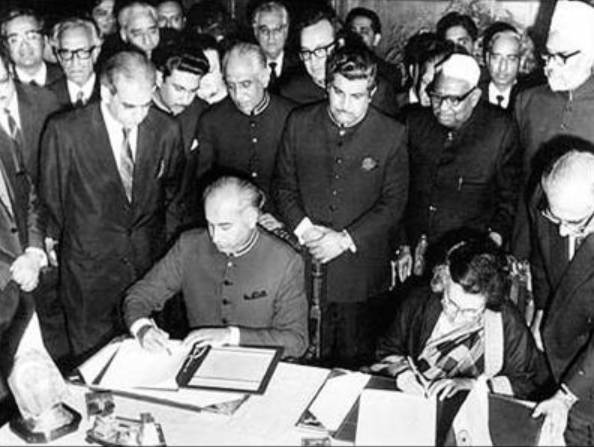
Pakistan suspends the 1972 Simla Agreement: Impact on LOC and India

The government of Pakistan took action by suspending the 1972 Simla Agreement after India implemented security measures following a terrorist attack at Pahalgam. After the 1971 Indo-Pakistani war, parties signed the Simla Agreement to create bilateral peace while establishing provisions for peaceful resolutions along with the LoC border permissions. This decision to suspend the Simla Agreement seriously affects the relations between nations, principally through its influence on Kashmir conflict management and LoC stability.

Context:

  • The Simla Agreement suspension made by Pakistan emerged during an already tense period between the nations because of the repeal of Article 370 in 2019.
  • Mediation through bilateral dialogue and LoC status preservation both stand endangered because the suspension dissolves previously established obligations of the Simla Agreement.

Key Points

What is the Simla Agreement?

  • Date & Signatories:

    • Signed on July 2, 1972, in Shimla.

    • Between PM Indira Gandhi (India) and President Zulfikar Ali Bhutto (Pakistan).

  • Objective:

    • Both governments used this agreement to establish peaceful connections between their nations and heal the wounds from the 1971 war that produced Bangladesh.

Key Provisions of the Simla Agreement:

  • The agreement stipulated no outside mediation since both parties needed to solve all matters through direct communication only.

  • The Jammu & Kashmir region received its permanent demarcated border status as the Line of Control (LoC) while both sides agreed against changing it unilaterally.

  • Commitment to sovereignty, territorial integrity, and political independence.

Key Outcomes of the Simla Agreement:

  • Establishing the LoC brought an official border status to J&K territory, which limited widespread military confrontations between both nations.

  • India exchanged territorial land totalling 13,000+ km² and maintained key defense locations of Turtuk and Chalunka.

  • Bangladesh Recognition: Paved way for Pakistan’s eventual recognition of Bangladesh.

Impact of Pakistan’s Suspension:

  • The diplomatic shift caused by this development presents the potential for the UN, OIC, and China to become involved in the Kashmir issue.

  • Suspension of talks creates tension that damages trust factors and violates bilateral conversation standards as it raises potential confrontational risks.

Implications for LoC:

  • The Levied Area Will Face Increased Tensions Because the Number of Ceasefire Violations and Cross-Border Shelling Is Expected to Grow.

  • Marginal strategic changes are present, yet intensifying conflicts between nations remain a danger to the stability of the region.

What Lies Ahead:

  • The closure of diplomatic channels could occur together with increased foreign intervention in this situation.

  • Professionals switched by unstable conditions along the Line of Control threaten regional peace throughout South Asia's security framework.

Conclusion:

The Pakistani government suspended the 1972 Simla Agreement as part of its new policy for dealing with its principal international issues with India, specifically concerning Kashmir. The suspension threatens to destabilize the Line of Control and intensify hostility between both nations while also making future peaceful negotiations demanding. The continued suspension between these nations may cause their relationship to worsen, which will create more regional chaos to make peace unattainable.

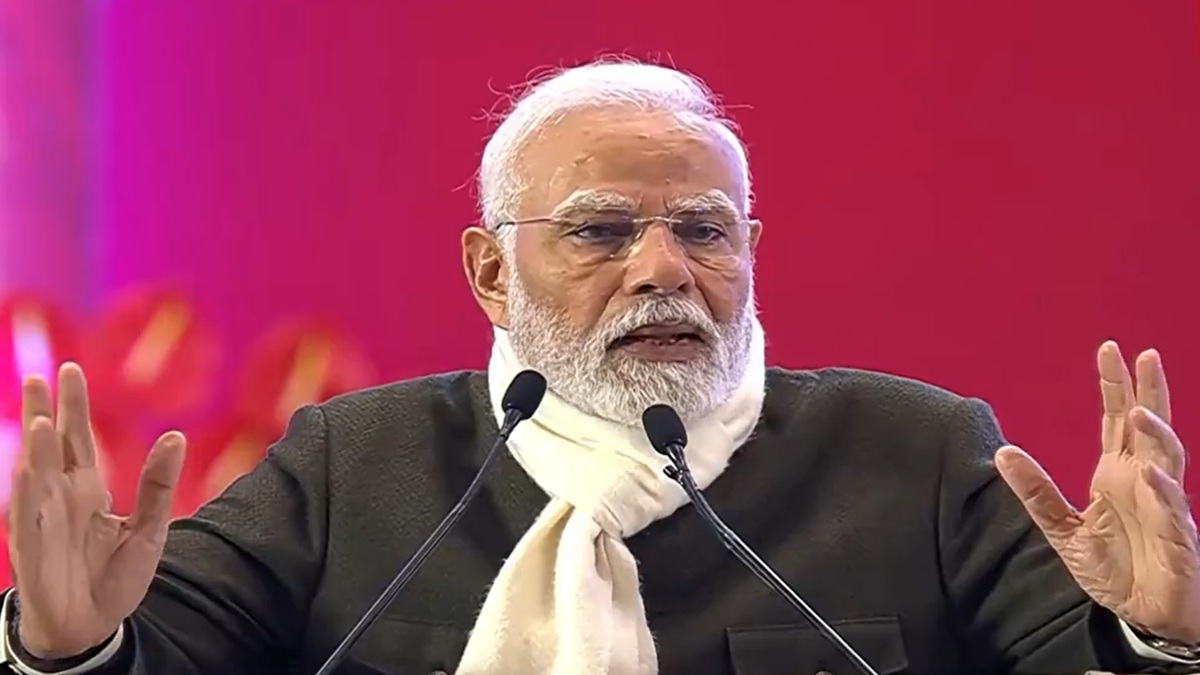
PM Modi Addresses India Steel 2025: Paving the Way for a Steel-Strong India

Prime Minister Narendra Modi provided a speech to attendees of India Steel 2025 while focusing on the steel sector's vital function for India's forthcoming development. He declared that India ranked as the second-largest steel-producing nation worldwide while presenting detailed plans to enhance production output and decrease steel imports, and advance sector effectiveness. Prime Minister Modi underlined three key factors of future-ready growth alongside innovation and global competitiveness, so India can lead the world market of steel production.

Context:

  • The India Steel 2025 program, hosted in Mumbai, provided Prime Minister Modi with an opportunity to deliver a vital address that serves as a key development in Indian industrial policy. 

  • India Steel 2025 concentrates on accelerating the growth of the steel sector by establishing domestic self-reliance capabilities while maximizing export potential to fulfill national infrastructure and defense requirements. 

  • The Prime Minister emphasized steel maintains a central role for economic growth while defining upcoming national objectives for 2030 and future development periods.

Key Points:

Steel: Backbone of Modern Economies

  • Prime Minister Modi declared steel as a fundamental enabler of infrastructure development which supports skyscrapers construction together with highways projects and smart cities projects and industrial corridors.

  • India needs the steel sector to achieve its $5 trillion economy status to fulfill its economic ambitions.

India’s Current Position & Targets

  • The steel production of India places it in the 2nd position globally.

  • The goal for 2030 is to increase the steel production capability to 300 million tonnes.

  • Steel use across Indian society is expected to increase from 98 kg per person by 2030 to reach 160 kg per person.

Government Initiatives

  • PM Gati Shakti Plan, enhances logistics and infrastructure for the steel sector, especially in eastern India.

  • The National Infrastructure Pipeline (NIP) receives $1.3 trillion to advance construction, including both road and sea infrastructure and residential projects (such as PM Awas Yojana and Jal Jeevan Mission).

  • Under the ‘Made in India’ policy, the use of domestic steel products became mandatory for all public infrastructure projects.

Self-Reliance & Export Focus

  • CCEI Emerges as a Futuristic Vision Decreeing the Mission for Net Export of 25 Million Tonnes While Building Capacity Up to 500 Million Tonnes by 2047.

  • Local steel from India has been strategically chosen to build the INS Vikrant and Chandrayaan missions.

Innovation & Future Readiness

  • The push for advanced technology development includes novel steel manufacturing technologies alongside AI capabilities and industrial automation systems and advanced steel recycling techniques.

  • The promotion of low-emission technologies combined with coal gasification and DRI aims to decrease dependency on coking coal.

Challenges & Opportunities

  • Raw Material Security faces challenges because India depends on imports of nickel and coking coal, and manganese; hence nation requires enhanced partnerships for global materials distribution.

  • The government focuses on mining reforms through expedited implementations of greenfield mines and improved operational efficiency in the mining sector.

Global Competitiveness

  • The standards for global competitiveness require organizations to achieve both high production quality standards and operational efficiency excellence.

  • India can become a worldwide steel center by implementing multi-modal transport systems, which decrease expenses through logistics improvements.

Conclusion:

The India Steel 2025 program received direction from Prime Minister Modi in his keynote address, which outlines a specific vision for steel developments across India. India intends to dominate the worldwide steel market through specific production targets and technological transformations, and independent production goals. Future economic growth will be strengthened through two significant government plans, including the PM-Gati Shakti plan and the National Infrastructure Pipeline. India is building its resilient, revolutionary steel-strong future through innovation-based collaboration with modern strategies.

ISRO to Send Tardigrades on Axiom-4 Mission: A Step Towards Advancing Space Research

As part of the Axiom-4 mission, India advances its space exploration capabilities by studying how tardigrades survive space conditions, which are harsh for living organisms. Scientific data collected from this mission will help understand the molecular strength of these tiny animals as well as their value for space exploration and astronaut medical research. The Indian Gaganyaan Mission, which aims to establish a manned space program, requires this initiative to make further progress.

Context:

  • ISRO, the Indian space agency, plans to launch tardigrades, also known as water bears, through the Axiom-4 mission toward the International Space Station (ISS). 

  • The Indian space agency conducts its initial human experiment in microgravity by using these highly durable micro-animal species. 

  • The mission, with involvement from ISRO, NASA, and ESA functions to research tardigrade capabilities during spaceflight conditions and improve long-duration spaceflight knowledge.

Key Points:

About the Axiom-4 Mission:

  • The International Space Station (ISS) under the Axiom-4 mission will support crewed operations for fourteen days to undertake leading-edge research about microgravity biology, biotechnology, and sustainability.

  • Several organizations jointly participated in this mission through ISRO (India) and NASA (USA), and ESA (European Space Agency), with the Indian astronaut Group Captain Shubhanshu Shukla representing his country.

Mission Objectives:

  • Scientists seek to study multiple life science fields, as well as the investigation of growing crops in space conditions and human body reactions to zero-gravity environments.

  • Scientists aim to study microbial resistance against space conditions and muscle tissue renewal, as well as food cultivation under zero gravity.

  • The research aims to deliver important data that benefits both the upcoming Gaganyaan Mission of India, together with future extended space operations.

About Tardigrades (Water Bears):

  • What are Tardigrades?

    • Water bears or moss piglets represent the scientific name for the microscopic creature, tardigrades, which possess extraordinary survival traits.
    • The physical size of tardigrades ranges from 0.3 to 0.5 mm which makes them visible only under microscope examination.
    • Dieppe served as the location where zoologist Johann Goeze made the first discovery of tardigrades in 1773.

Key Characteristics:

  • Tardigrades survive across every extreme location, from freezing polar areas to underwater ocean depths.

  • All tardigrades display eight clawed legs alongside segmented body segments, along with a strong external protective covering.

  • The remarkable survival abilities of tardigrades extend to their ability to endure vacuum conditions in space together with radiation exposure as well as extreme dryness and hot and cold temperature environments.

  • Tardigrades become cryptobiotic by halting their metabolic functioning and use this condition to live through difficult environmental conditions.

Importance of the Experiment:

  • The Voyager Tardigrades Experiment has two main investigative areas:

    • Revival and reproduction of tardigrades in microgravity environments.

    • Changes in gene expression patterns exist between tardigrades that experience space conditions compared to those living on Earth.

Why It Matters:

  • Scientists hope to discover the molecular basis of tardigrades' strong resistance through this experiment to advance biotechnology developments.

  • Better protection strategies for extended space missions will benefit from the learned knowledge.

  • This investigation will result in breakthroughs regarding bio-preservation techniques for supporting future space exploration goals.

Conclusion:

Space research makes a breakthrough through the combined efforts of the Axiom-4 mission and the Voyager Tardigrades Experiment. The study of tardigrade survival strategies on the Axiom-4 mission provides both deeper knowledge of extreme ecosystem survival as well as opportunities to develop new space health solutions and biotechnological advancements. The involvement of ISRO in this worldwide mission yields essential results that could boost India's upcoming Gaganyaan Mission and its space exploration goals.

Pahalgam Terror Attack 2025: About Pahalgam and India’s 5-Point Action Plan Against Pakistan

Pahalgam stands out as a captivating Jammu and Kashmir hill station, both because of its lovely scenery and because of the fatal terror attack that occurred in 2025. Baisaran Valley's terrorist incident threatened safety, yet it further proved this region holds the position as one of Kashmir's main tourist attractions. The official reaction to the terrorist act and its forceful plan against Pakistan strengthened the international political framework of the region.

Context:

  • Pahalgam stands out as a captivating Jammu and Kashmir hill station, both because of its lovely scenery and because of the fatal terror attack that occurred in 2025. 

Pahalgam Terror Attack 2025:

  • A group of militants launched an assault against tourists on April 22, 2025 at Baisaran Valley near Pahalgam, which resulted in 28 fatalities and above 20 injured victims. 

  • A militant group named The Resistance Front attacked in the region where they committed violent activities.

  • The incident caused Indian security authorities to implement extra defensive programs, together with India to take aggressive countermeasures by canceling the Indus Waters Treaty and blocking entry through the Attari-Wagah border.

Key Points:

Location of Pahalgam Hill Station:

  • Geographical location: 

    • Pahalgam exists in the Anantnag district of Jammu and Kashmir, within a 45-kilometer distance from Anantnag city.

  • Elevation and Landscape: 

    • The town rests at an altitude of 2,200 meters while forested valleys encircle this elevation. 

    • The town stretches through the Lidder River valley, which presents spellbinding natural scenery.

Meaning of Pahalgam:

  • Etymology: 

    • Derived from local Kashmiri words “Puheyl” meaning "shepherd” and “Goam” meaning “shepherd village”.

  • Cultural Significance: 

    • Hindus often call it Bailgaon because Lord Shiva left his bull to rest in Pahalgam during his pilgrimage to touch the Amarnath Cave.

Tourist Attractions in Pahalgam:

  • Betaab Valley: The Betaab Valley stands out because it displays magnificent green scenery that captivates visitors.

  • Baisaran: Baisaran boasts the nickname Mini Switzerland on account of its delightful scenic landscapes.

  • Kolahoi Glacier: Hiking allows travelers to reach the Kolahoi Glacier.

  • Amarnath Yatra Base Camp: Amarnath Yatra Base Camp serves as the pilgrim gateway to the Amarnath Cave because it welcomes religious travelers every year.

  • Pahalgam Golf Course: A renowned 18-hole golf course in the region.

India’s 5-Point Action Plan Against Pakistan:


  • Suspension of Indus Valley Treaty: India stopped all treaty activities under the Indus Waters Treaty while waiting for Pakistan to end its sponsorship of cross-border terrorist operations.

  • Border Closure: The closure of the Attari-Wagah border prevented all passenger and trade activity through the sole road connection between India and Pakistan.

  • Suspension of SAARC Visa Exemption: The suspension of the SAARC Visa Exemption Scheme affected regional cooperation by preventing Pakistani nationals from taking advantage of this scheme.

  • Expulsion of Pakistani military advisors: India forced all Pakistani military advisors resident in the country to depart within seven days, since their presence was considered unacceptable.

  • Diplomatic downsizing in Pakistan: India accomplished diplomatic downsizing in Pakistan by removing staff and other personnel from its High Commission in Islamabad.

Conclusion:

Pahalgam maintains its status as a visually pleasing historical hill resort despite active security problems. Visitors are drawn to the region because of its beautiful nature, along with its essential status as the Amarnath Yatra base camp. The 2025 tragic attack created new security challenges, yet India responded firmly to fight terrorism and maintain Pahalgam's position as a vital tourism hotspot.

Frequently Asked Questions (FAQs)

The current affairs cover recent national and international events related to UPSC, SSC, Banking, Railways, and State PCS.

You need to read about the current affairs daily, and revise them every week and every month to keep them longer in your memory.

Yes, Class24 provides free downloadable Daily Current Affairs PDFs for easy revision.

Yes, you can practice MCQs and quizzes to boost your exam preparation.

Absolutely. The content is written in simple, easy-to-understand bilingual language suitable for beginners.

Go to class24.com and click on the current affairs section directly, where you find everything that you need.

ssc-toppers

Start Learning Today with Class24

Related current affairs

Class24 offers free video lectures for smart preparation, covering CGL, CPO, CHSL, MTS, and GD exams. Learn from expert faculty, revise concepts easily, practice with PYQs, and improve speed and accuracy through high-quality, exam-focused video lessons anytime, anywhere.

Get success in your hand. Start study anytime anywhere.

The journey becomes simple and enjoyable when you start taking interest in it. And through our app “Class24”, we will be your trusted partners in developing that interest.

Daily Quizzes
Mock Tests
Ongoing

No ongoing tests right now.