
Day: April 19, 2025

Kalam & Kavach 2.0: Defence Literature Festival Highlights India’s Push for Technological and Strategic Reforms

The Indian defence policy has entered a transformational period due to its multiple modernization efforts focused on producing domestic capabilities and utilizing technological progress in military operational practices. The Kalam & Kavach festival creates opportunities for strategic discussions and brings military command with government policy and industry specialists as well as educational experts into a cohesive space. The event demonstrates how India plans to defend itself in the 21st century.

Context:

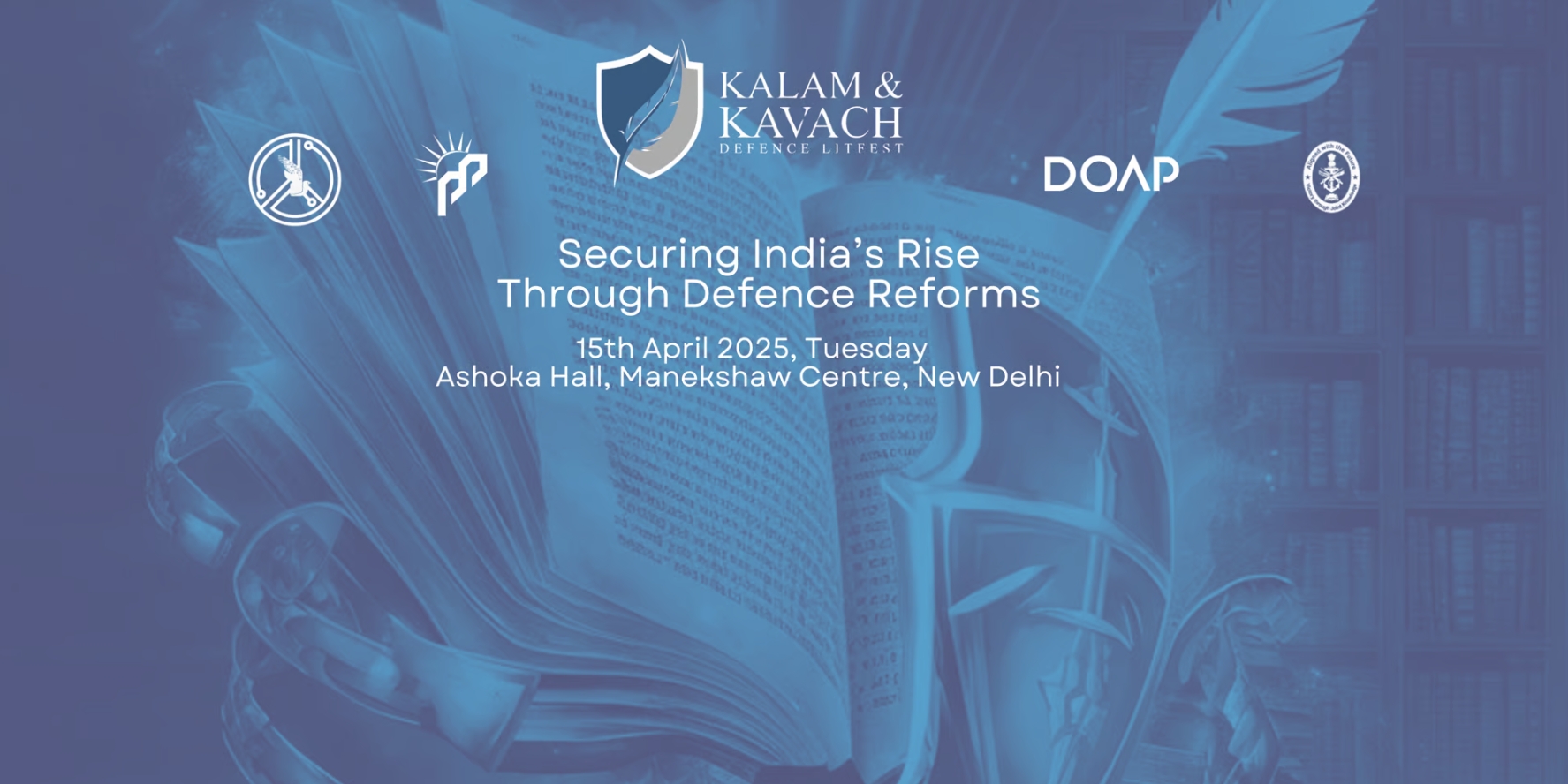
  • The Defence Literature Festival – ‘Kalam & Kavach 2.0’ organized its second edition by the Centre for Joint Warfare Studies (CENJOWS) from the Headquarters Integrated Defence Staff (HQ IDS) together with the Ministry of Defence on April 15, 2025 in New Delhi. 

  • The festival used “Securing India’s Rise through Defence Reforms” as its theme while exploring India’s strategic infrastructure for upcoming warfare technologies along with defensive manufacturing goals which mirrored the national initiative of Aatmanirbhar Bharat.

Key Points:

Organizers and Theme:

  • Organised by: The festival operated under the organizational direction of Centre for Joint Warfare Studies (CENJOWS)

  • Supported by: The event received backing from HQ Integrated Defence Staff together with the Ministry of Defence.

  • Partner: Pentagon Press

  • Venue: Manekshaw Centre, New Delhi

  • Theme (2025): “Securing India’s Rise through Defence Reforms”

Key Focus Areas:

  • Defence Technology & Future Warfare

  • Defence Manufacturing and Aatmanirbharta (Self-reliance)

  • Acquisition and Procurement Reforms

  • Emerging Technologies in Warfare:

    • Artificial Intelligence (AI)

    • Cyber and Quantum Technologies

    • Drones and Unmanned Systems

    • Space Technology

    • Semiconductors

Strategic Significance:

  • Defence reforms receive a mission-oriented operational approach through this initiative

  • The initiative enables public and private sectors to collaborate for technology sharing purposes.

  • The program enhances military operational coverage across four platforms that combine land, sea, air, cyber and space.

  • Addresses maritime security and strategic challenges in the Indo-Pacific

  • Focuses on combat readiness through modernization and integrated operations

Notable Announcements:

  • Raksha Mantri Rajnath Singh announced that 2025 would become the ‘Year of Reforms’.

  • The Armed Forces require a total transformation into a combat-prepared technological force.

  • Emphasis on multi-domain integration and future conflict preparedness

Conclusion:

The strategic defense direction of India became visible at ‘Kalam & Kavach 2.0’ when literature united with thought leadership and national security objectives. The government dedicated itself to defence innovation alongside indigenization and reform-based modernization. The festival unified stakeholders to develop a unified vision of India emerging as a secure and independent technologically-advanced world power.

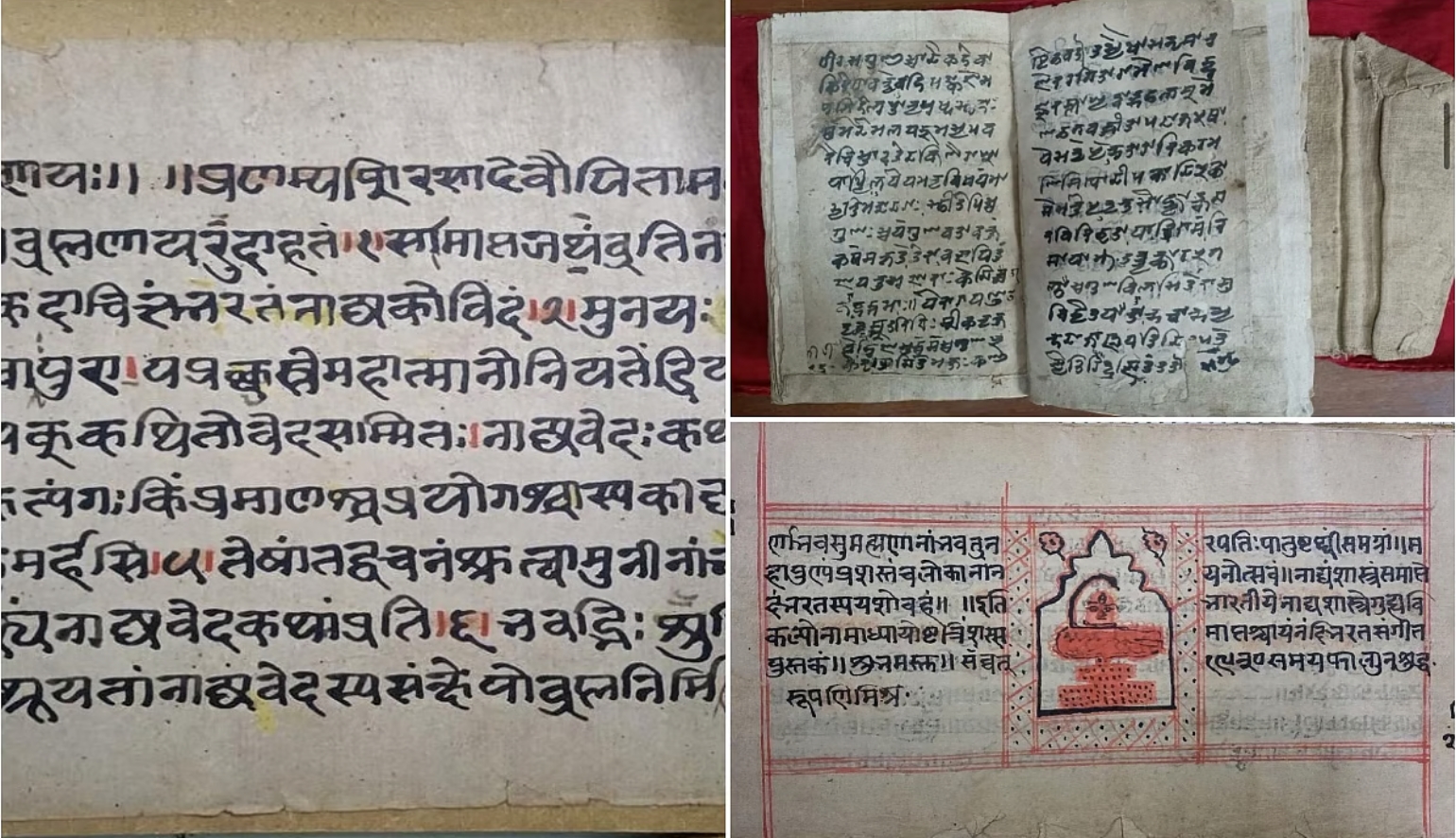
Bhagavad Gita and Natyashastra Inscribed in UNESCO’s Memory of the World Register

UNESCO established the Memory of the World Programme under its mission to preserve important world documents worldwide during 1992. The register works to protect the preservation along with public access to rare manuscripts and archival documents and written works because these materials hold the collective memory of humankind. The recognition on the register signifies the scientific importance of preserving objects from cultural and historical eras.

Context:

  • The UNESCO's "Memory of the World program" now includes both the Bhagavad Gita manuscripts and the Natyashastra manuscripts as part of its enriched collection honoring Indian cultural heritage. 

  • These ancient texts possess profound philosophical and spiritual and artistic value which reveal India’s long-lasting history. 

  • India maintains 14 registered entries in the UNESCO Memory of the World which enhances its worldwide role in preserving significant documentary heritage.

Key Points

About the UNESCO Memory of the World Register:

  • Established by: UNESCO in 1992

  • Purpose: 

    • UNESCO established its Memory of the World Register to preserve documents from damage along with deliberate destruction and decaying.

  • Goals:

    • Promote preservation of original materials

    • Improve accessibility and awareness

    • The international community should create global partnerships which support the preservation of documentary heritage

  • Criteria for Inclusion:

    • Universal value

    • Historical, cultural, or social significance

    • Authenticity, integrity, and rarity

  • India’s Contribution and Recognition:

    • The MoW Register now contains a total of 14 Indian entries with the inclusion of Bhagavad Gita and Natyashastra.

    • Other notable recent additions (2024 MOWCAP Regional Register):

      • Ramcharitmanas

      • Panchatantra

      • Sahrdayāloka-Locana

About the Inscribed Texts:

  • Bhagavad Gita:

    • Author: Attributed to Sage Vyasa

    • Content: 700 verses, part of the Mahabharata (Bhishma Parva)

    • Significance:

      • Philosophical discourse between Krishna and Arjuna on the battlefield of Kurukshetra

      • Deals with concepts like Dharma (duty), Bhakti (devotion), Karma (action), and Jnana (knowledge)

      • The book represents an ethical and spiritual guide that people worldwide respect.

  • Natyashastra:

    • Author: Bharat Muni

    • Bharat Muni established the Natyashastra as a comprehensive manual about drama along with dance and music and theatrical arts.

    • Significance:

      • Foundation of Indian classical performing arts

      • Rasa (aesthetic emotion) together with Bhava (expression) mark important concepts that Bharat Muni introduced in his work.

      • These principles direct artistic practices in their present-day applications throughout the entire territory of India.

Conclusion:

The UNESCO Memory of the World Register has admitted both the Bhagavad Gita and Natyashastra which demonstrates the continuous powerful impact of Indian intellectual traditions worldwide. The texts form an essential part of Indian spiritual and artistic practices and produce contributions to worldwide thinking about ethics and aesthetics as well as human expression. Both acts will help scholars access these texts more widely while strengthening cultural pride and encouraging global recognition of ancient Indian knowledge.

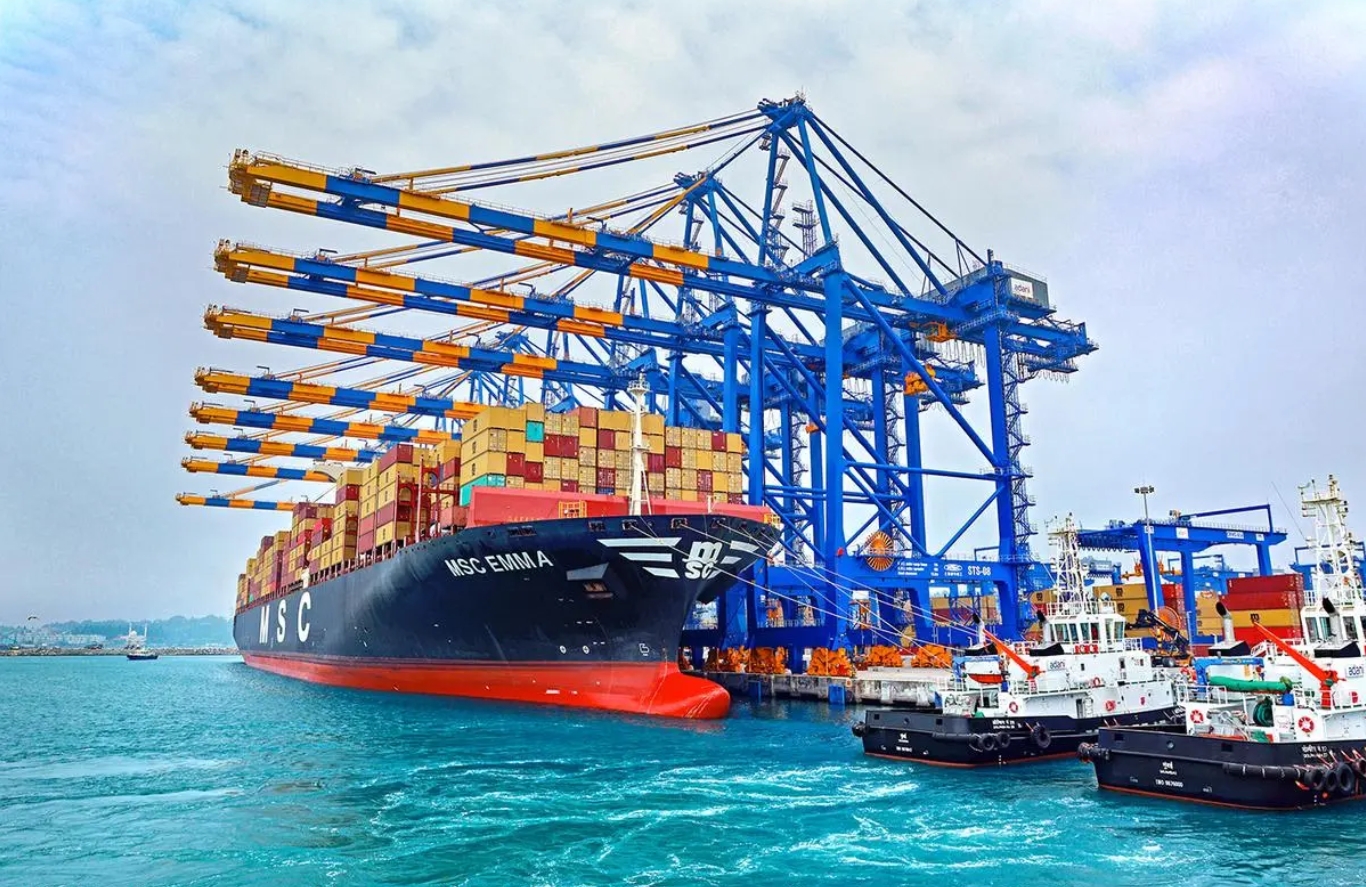
PM Narendra Modi to Inaugurate Vizhinjam International Seaport: Boosting India’s Maritime Growth

The country of India maintains a maritime territory spanning more than 7500 km as it works to improve its maritime infrastructure to facilitate international trade while reducing logistics costs while promoting industrial development. A landmark initiative founded by Kerala’s state government with the private sector and central agencies comes forth as the Vizhinjam International Seaport. The project development follows the priorities established by the PM Gati Shakti programme and Sagarmala initiative.

Context:

  • Prime Minister Narendra Modi will initiate the Vizhinjam International Seaport near Thiruvananthapuram, Kerala during May 2, 2025. 

  • The port is India's initial deep-water international container transshipment terminal which emerged from a Public-Private Partnership (PPP) model. 

  • The key shipping route proximity enables the port to transform India's trade capability and fuel both regional economic development and increase national maritime influence.

Key Points

Inauguration Details:

  • Date: May 2, 2025

  • By: Prime Minister Narendra Modi

  • Location: Vizhinjam, near Thiruvananthapuram, Kerala

Project Overview:

The project functions as a semi-automated international container transshipment terminal built at deep waters.

  • Mode of Development: Public-Private Partnership (PPP)

  • Partners: Government of Kerala and Adani Vizhinjam Port Private Ltd. (AVPPL)

  • Concession Agreement Signed: 2015

  • Total Investment: Over ₹18,000 crores

Operational Milestones:

  • The first mother ship decided to dock at the facility will arrive at MV San Fernando during July 2024.

  • The terminal has received 265 ships that handled 5.48 lakh TEUs as of now.

Strategic and Economic Importance:

  • Location Advantage: Proximity to East-West international shipping lanes

  • Natural Depth: Capable of handling large vessels without extensive dredging

  • Reduces Dependence: The faster transit times at the port system boost both export and import volumes by reducing the need for foreign ports.

  • Regional Impact: Job creation, industrial growth, and enhanced logistics in Kerala

  • Supports Indigenous Policies: The terminal serves as a support mechanism for "Make in India" and strengthens the self-reliance of Atmanirbhar Bharat by facilitating trade operations.

Role of Adani Group:

  • The company manages many national and international ports which control 27% of India's total port target volumes.

  • The company brings international operational skills through its teams at Haifa Israel, Colombo in Sri Lanka and Dar es Salaam in Tanzania.

Conclusion:

India's maritime history makes a significant advancement with Prime Minister Narendra Modi conducting the Vizhinjam International Seaport inauguration ceremony. The establishment marks a landmark moment for India because it unites strategic objectives with government direction through private sector operational excellence. Vizhinjam International Seaport will transform India's position in maritime trade while stimulating southern economic growth along with enhancing the national shipping infrastructure.

Frequently Asked Questions (FAQs)

The current affairs cover recent national and international events related to UPSC, SSC, Banking, Railways, and State PCS.

You need to read about the current affairs daily, and revise them every week and every month to keep them longer in your memory.

Yes, Class24 provides free downloadable Daily Current Affairs PDFs for easy revision.

Yes, you can practice MCQs and quizzes to boost your exam preparation.

Absolutely. The content is written in simple, easy-to-understand bilingual language suitable for beginners.

Go to class24.com and click on the current affairs section directly, where you find everything that you need.

ssc-toppers

Start Learning Today with Class24

Related current affairs

Class24 offers free video lectures for smart preparation, covering CGL, CPO, CHSL, MTS, and GD exams. Learn from expert faculty, revise concepts easily, practice with PYQs, and improve speed and accuracy through high-quality, exam-focused video lessons anytime, anywhere.

Get success in your hand. Start study anytime anywhere.

The journey becomes simple and enjoyable when you start taking interest in it. And through our app “Class24”, we will be your trusted partners in developing that interest.

Daily Quizzes
Mock Tests
Ongoing

No ongoing tests right now.