
Day: April 17, 2025

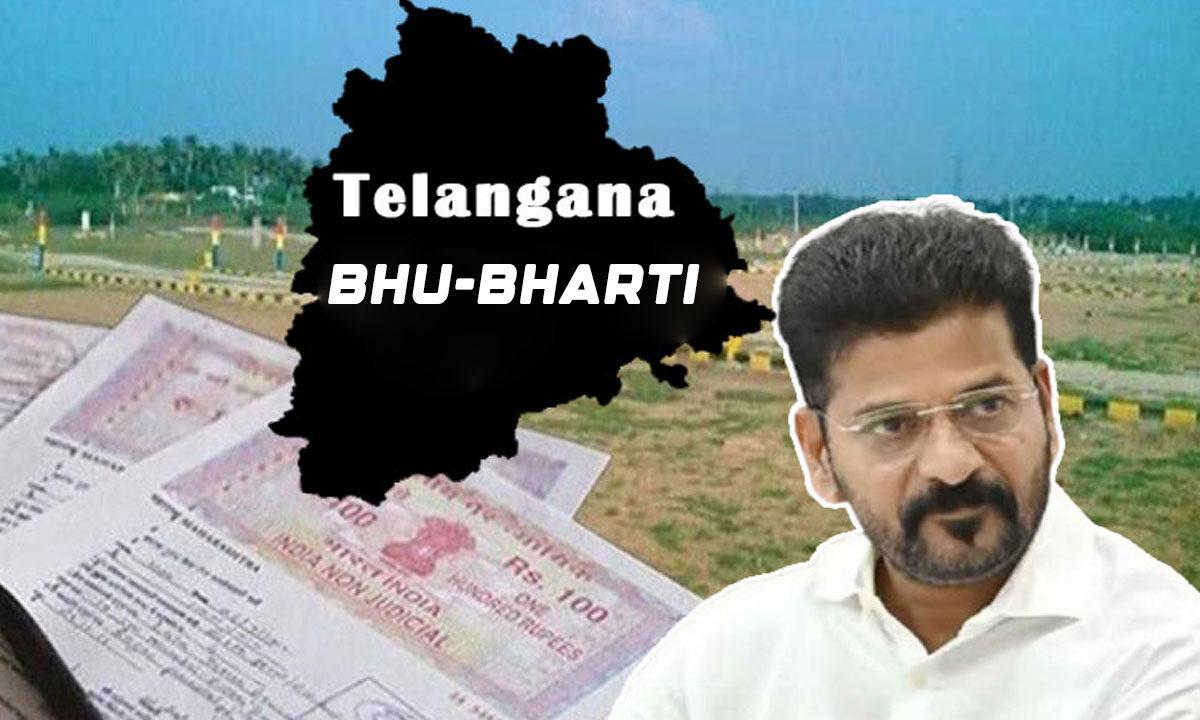
Telangana Bhu Bharathi Portal 2025: Revolutionizing Land Governance

Land governance underwent a significant transformation as Telangana State Government started the Bhu Bharathi Portal 2025. A modern information portal which enables citizens and farmers to access their property records seeks to resolve property disputes and increase transparency for land protection. The portal launched on 14th April 2025 perfectly fit Dr. B.R. Ambedkar's birth anniversary date represents an important development in Telangana's land management approach.

Key Features of Bhu Bharathi Portal

  • The portal provides real-time mobile updates that deliver essential land records information when it is needed immediately.

  • Every land parcel under Bhu Bharathi will obtain its own unique marker which simplifies the process of land management and documentation.

  • Through its features the system enables easy access for public citizens to view land records thus enhancing accountability and transparency.

  • The platform features an intuitive interface with convenient navigation to serve its users easily.

Legal Framework

  • The Bhu Bharathi Portal derives its legal authority from the Record of Rights in Land Act of 2024 to establish credible and enforceable land record management in Telangana. 

  • With statutory support the platform acquires additional capabilities to handle ownership disputes and verify rightful land ownership.

Objectives of the Bhu Bharathi Portal

  • The portal advances land record management by introducing updated systems that replace the Dharani framework.

  • Bhu Bharathi interfaces streamline both the land information retrieval process and updating procedures to benefit farmers while securing landowners.

  • The system functions as a dispute resolution tool that tackles both modern and ancient land disputes by providing an open and computerized system.

  • The platform functions to protect ownership rights particularly for disadvantaged communities by providing them with legal proof of ownership.

  • The state government performs a complete land survey to develop a trustworthy land database that is available to everyone.

Impact of the Bhu Bharathi Portal

The Bhu Bharathi Portal 2025 aims to change Telangana land governance through improved access to transparent land records which enhances security protocols. The platform makes land record access easy for citizens to effectively solve disputes in an efficient manner.

Conclusion

The Bhu Bharathi Portal 2025 represents a major advancement in the way Telangana manages land governance operations. Through its digital initiative Telangana establishes advanced public service standards which protect citizens' land rights while making procedures easier to understand and increasing transparency for all users. The portal enables Telangana farmers together with landowners and residents to access land records simplifying the management process through a few clicks on a computer.

Blue Origin’s First All-Women Crew Returns After Historic Space Launch

Blue Origin became the first space flight operator to send an exchange group composed entirely of women into space after April 14, 2025. CBS Mornings co-host Gayle King marched alongside celebrities Katy Perry and Lauren Sánchez and scientists Aisha Bowe, Amanda Nguyen, and movie maker Kerianne Flynn to achieve the Kármán line positional mark at the recognized space limit of 62 miles above planetary surface. Blue Origin implemented their New Shepard program through the flight which served as its eleventh mission transporting human passengers.

Crew Members and Their Achievements

  • Gayle King: She who anchors CBS News marked her 70th birthday by conquering her phobia of flying.

  • Katy Perry: Through her musical performance Katy Perry dedicated tribute songs offering a message about planet earth protection.

  • Lauren Sánchez: She joined Jeff Bezos in organizing the mission because she serves as journalist and philanthropist and Bezos' fiancée.

  • Aisha Bowe: First Bahamian woman in space and a former NASA rocket scientist.

  • Amanda Nguyen: As the first person of Vietnamese and Southeast Asian descent Amanda Nguyen traveled to space while performing two laboratory experiments.

  • Kerianne Flynn: Achieved the dream of space travel since her early years spent in Michigan while working as a film producer.

The Impact of the Flight

  • This space mission established new history by becoming the first female-only crew to fly in space during a 60-year interval since Valentina Tereshkova's solo spaceflight in 1963.

  • The spaceflight required Nguyen to perform studies analyzing plant disease responses alongside women's health research which advanced both scientific discovery and exploration of space.

  • In their reflections about the flight the crew members highlighted that the space mission let them conquer their individual personal limitations. 

Blue Origin's New Shepard Spacecraft

  • The autonomous New Shepard spacecraft has the capability to accommodate six crew members through suborbital space missions. The boosters use liquid hydrogen fuel to propel the vehicle to 2,200 mph maximum speed.

  • The space journey begins as the crew capsule breaks from the booster then proceeds into space before the booster returns for reuse touchdown on Earth.

  • The flight duration amounts to 11 minutes while crew members experience weightlessness during the 4-minute apex.

Conclusion

The historic achievement of NS-31 demonstrates that an all-women crew can perform space missions as demonstrated by Blue Origin. The mission simultaneously showcases progress in space technology together with creating worldwide inspiration for women to demonstrate that all goals can be attained. The successful flight confirms a pivotal spot in the space exploration timeline thanks to the remarkable accomplishments by the crew.

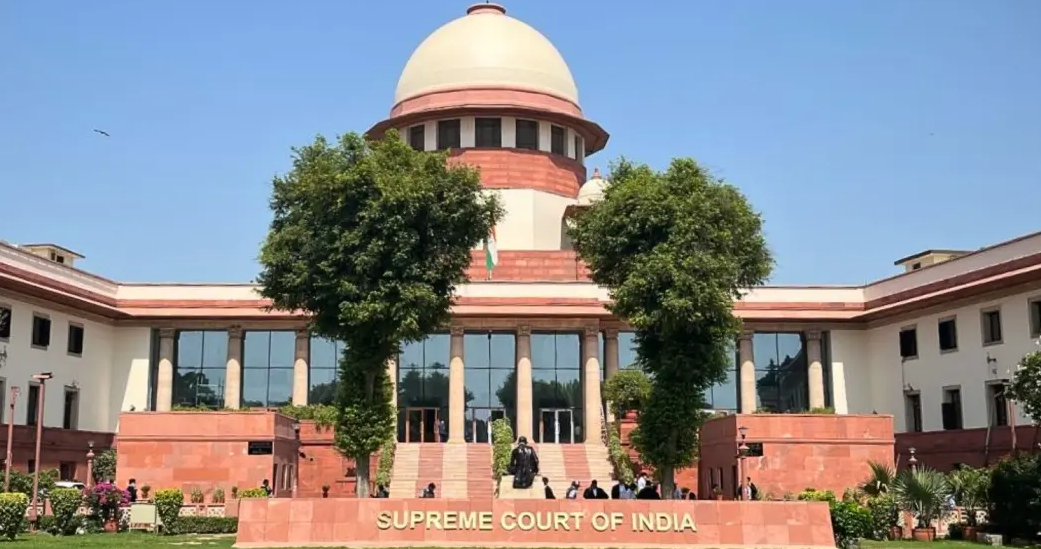
Supreme Court Declares Urdu as Symbol of India’s Composite Culture

In a major ruling the Indian Supreme Court stated that Urdu demonstrates "finest specimen of Ganga-Jamuni tahzeeb" while expressing the diverse ethnic heritage of India. The Supreme Court issued this ruling because one party filed an appeal to stop using Urdu on the new Patur Municipal Council building signboard located in Akola district Maharashtra. The Court explicitly stated to reject the correlation of languages with religious associations because languages serve communication functions instead of indicating religious beliefs.

Key highlights of Supreme Court Judgement on Urdu

  • The judicial body declared language exists as an integral mental and emotional feature of communities throughout regions and nations since it represents their cultural heritage. 

  • The ruling asserted Urdu belongs to the same category as all languages because it exists in the same manner as other linguistic expressions regardless of religion.

  • According to the Court Urdu exists as a naturally developed language of India. 

  • The language developed fully within India as intellectuals selected it to express their thoughts which enhanced the country's multicultural character.

The Misconception Around Urdu

  • According to Court analysis the negative perceptions toward Urdu emerged due to false beliefs that the language does not belong to India. 

  • Justice Dhulia explained Urdu is an Indo-Aryan language just like Hindi and Marathi which counters the false religious distinction between Urdu and other languages.

  • The judicial author points out that everyday Hindi uses Urdu words frequently alongside saying the word Hindi actually derives from the Persian word 'Hindavi' thus revealing the linguistic connection between the two languages.

Urdu’s Role in Indian States

  • The Indian states of Andhra Pradesh and Bihar and Jharkhand, Telangana, Uttar Pradesh along with West Bengal use Urdu as their second official language under Article 345 of the Constitution. 

  • This language status also applies to Union Territories including Jammu and Kashmir and Delhi.

Origin of Urdu Language: Overview

  • Native Urdu speakers total over 70 million people throughout the world and second language speakers exceed 100 million individuals who speak this language. 

  • The main geographic area where people speak Urdu is Pakistan and India because Urdu holds fundamental importance in cultural society there.

  • Besides its strong position within South Asian territories Urdu maintains speaking communities throughout different global regions. 

  • The United Arab Emirates hosts many Muslim communities who speak Urdu and thus the language has become prominent as well as Europeans in the United States and United Kingdom where populations grew through immigration activities.

  • The origin of Urdu language appeared in the 12th century CE through its development from Apabhramsha which people used to speak in northeastern India.

  • The author Amir Khusrow established Urdu as a literary language through poetry and other works while using Hindvi as his initial poetic basis before Hindvi evolved to become the elegant Urdu language form.

Historical Significance of Urdu Language

  • The development of Urdu as a language received significant influence from the cultural and linguistic patterns under both Delhi Sultanate (1206–1526) and Mughal Empire rule (1526–1878). 

  • The Mughal Empire specifically used its rule to create Urdu into a poetic and prose language by combining Persian Turkish and Arabic language elements.

  • The 18th and 19th centuries mark the peak glory era for Urdu poetry which historians recognize as its golden age. 

  • The Mughal rule brought out the full potential of Urdu language development beyond which it became a highly refined literary language featuring sophisticated poetic and written literature structures during this time.

  • The expansion of the Delhi Sultanate into the Deccan plateau caused Haryanvi and Punjabi languages to be incorporated into Urdu which strengthened both its vocabulary and writing practices.

Development of Urdu Language

  • Urdu originates from the same grammatical roots as Hindi making the two languages closely related siblings. The Devanagari script serves as Urdu's writing system although Hindi uses the same writing system. At the same time Urdu writers use the Nastaliq script which traces its history back to Persian writing scripts. 

  • The basic elements of word arrangement along with language structure remain essentially identical across both languages.

  • The vocabulary foundations of Urdu derived chiefly from Persian and Arabic as well as Turkish although both languages possess the same grammatical system.

  • Most of the Urdu literature produced during its early days addressed religious subjects primarily among Muslims who engaged in its production. New secular Urdu literature emerged in the nineteenth century and developed into an essential component of cultural communication between India and Pakistan and their literary traditions.

Cultural and Literary Significance of Urdu

  • Urdu literature together with its poetry upholds central significance within the cultural traditions of South Asia. 

  • The Urdu literary tradition grew through substantial contributions of writers who belonged to Sikhism, Hinduism and Islam.

  • The Indian subcontinent uses Urdu language as a connection that enables diverse communities to relate with one another. 

  • Urdu exists today as a principal cultural and linguistic element that guides the musical expressions and literary creations and media content in both Pakistan and India.

Conclusion 

Through their ruling the Supreme Court demonstrates that Urdu represents India's multicultural heritage thus supporting the obligation to protect every linguistic expression in the nation. Urdu as a language which originated from the Indian subcontinent showcases the national multicultural essence of the country. The court decision reveals that language functions as a connecting force between different communities rather than creating separation.

Kerala Becomes First State to Achieve Total Digital Literacy

Total digital literacy has reached India through Kerala becoming its initial state to fully educate its population. Digi Kerala enabled the LSG Department to train 21 lakh people who were categorized as 'digitally illiterate' through its 'Digi Kerala' program. People now have the capability to call using voice and video functions in addition to accessing public services and executing Internet banking activities and social media tasks through this initiative. State officials receive national recognition for their digital literacy programs which serve as an example for the whole nation.

Features of Digi Kerala Initiative:

  • The program launched its initial session during 2022 as a test project within Pullampara Grama Panchayat situated in Thiruvananthapuram.

  • A total of 21 lakh individuals consisting of older citizens and new users of technology completed training for smartphone operation and digital service usage.

  • The initiative established a program which provided essential skills to population members who need competency in technology-based communication and access to public services and social media.

  • Training events run by volunteers took place at both MGNREGS work sites and households and libraries and community group venues.

Expansion and Participation

  • The statewide program reached 21.88 lakh participants who were previously unable to use digital technologies.

  • The training sessions were organized by 2.57 lakh volunteers which included NSS members as well as Kudumbashree workers and Kerala State Literacy Mission Preraks and various other members who joined this force.

  • The National Digital Literacy Mission had set age limitations to 60 years but the Kerala initiative included all population stages in its program.

Evaluation and Impact

  • The training consisted of a passing rate of 98% among the participants following training completion.

  • The Statistics Department performed third-party verification to verify numerical accuracy through which they conducted re-training for areas with unverified data.

  • To help those who lacked internet access the government arranged offline training sessions for all affected population points.

Official Recognition

  • The Kerala government waits for official confirmation from the President of India to declare the state has become digitally literate throughout all districts.

Conclusion 

The state of Kerala demonstrated remarkable progress by becoming completely digital literate thus achieving a milestone to eliminate digital disparities while giving all people access to digital resources. The 'Digi Kerala' initiative enlightened a vast number of people regarding valuable digital skills as it established a motivational model for digital empowerment that other states can adopt.

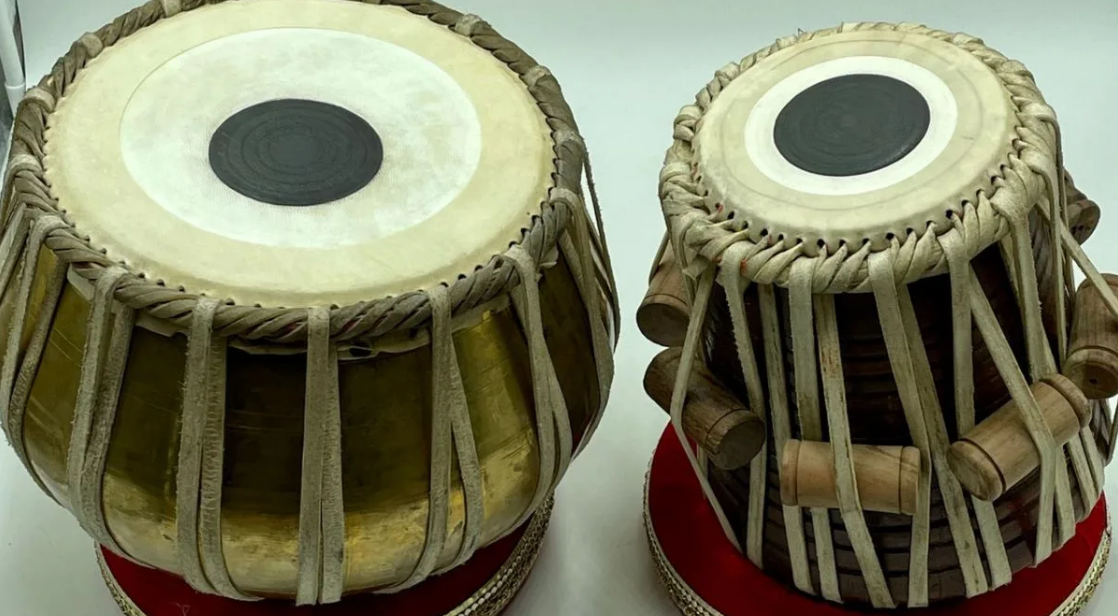
Banarasi Shehnai and Tabla Receive GI Tags: Varanasi’s Musical Heritage Honoured

The Geographical Indication labels given to Banarasi Shehnai and Banarasi Tabla strengthened Varanasi's prestigious musical heritage. The GI tag status establishes both the exclusive artistry of Varanasi and official defenses for its famous musical instruments. Indian shehnai history received new significance when Ustad Bismillah Khan used his masterful instrument to perform at the first Independence Day celebration at the Red Fort.

Key Points

Banarasi Shehnai

  • The Banarasi Shehnai stands as a fundamental wind instrument for the Banaras Gharana which forms part of Indian classical music traditions.

  • Shehnai maestro Ustad Bismillah Khan gained worldwide recognition for performing the instrument at the first Indian Independence Day celebrations held at the Red Fort.

  • The instrumental form of the shehnai has been designated as not only sacred but also fortunate because musicians use it to perform at weddings and religious ceremonies as well as temple functions.

  • The shehnai instrument embodies the spiritual essence along with musical expression of the sacred city of Varanasi.

Banarasi Tabla

  • Founded in Varanasi, the Banaras Tabla Gharana serves as a leading institution through which students learn tabla.

  • Unlike standard tabla styles this type uses pakhawaj-style vocals known as bols with complex rhythmic details.

  • Since it delivers emotional expression the Banarasi Gharana serves well as an accompaniment to Kathak dance performances.

  • The three main representatives of the shehnai art are Pandit Anokhelal Mishra and Pandit Kishan Maharaj as well as Pandit Samta Prasad.

  • Within Indian classical music tradition there are six main tabla gharanas with Banaras Gharana standing as one of them.

Famous Banarasi Shehnai Artists:

  • Ustad Bismillah Khan: He is widely recognized as the most renowned shehnai maestro of India who succeeded in making shehnai performance mainstream and earned international recognition. Awarded Bharat Ratna in 2001.

  • Ali Ahmad Hussain Khan: A noted shehnai player from the Benares gharana, recipient of Sangeet Natak Akademi Award.

  • Anant Lal: He stands as a distinguished shehnai performer who continues to deliver classical concerts alongside working with artists from around the world.

Famous Banaras Tabla Gharana Artists:

  • Pandit Anokhelal Mishra: Revered for his powerful playing and clarity of sound; a legendary figure of the gharana.

  • Pandit Kishan Maharaj: Known for his speed, grace, and accompaniment, especially with Kathak dance; one of the greatest tabla players of the 20th century.

  • Pandit Samta Prasad: He received his "Gudai Maharaj" name due to his quick fingers and distinctive playing style which made him an ideal tablist for leading classical musicians and dancers.

About  Geographical Indication (GI) Tag

  • Products featuring geographic origins which obtain their qualities and reputation due to their place of origin qualify for a GI tag.

  • Authorized users in the specified territorial area are the only ones who can utilize the registered name under this restriction.

  • The legal mark safeguards items against wrongful use or fake production together with deceptive product descriptions.

Validity and Authority:

  • The validity period for GI tags amounts to ten years but registration holders can extend their certification without limits.

  • The Department for Promotion of Industry and Internal Trade under the Ministry of Commerce and Industry controls both registration processes along with regulatory functions.

Legal Framework:

  • The laws that regulate the protection of Geographical Indications of Goods are specified in the Geographical Indications of Goods (Registration and Protection) Act, 1999.

  • These GI products operate with compliance to the WTO Agreement on Trade-Related Aspects of Intellectual Property Rights (TRIPS).

Conclusion 

By receiving the GI tag recognition for both the Banarasi Shehnai and Tabla traditional artisans and musicians in Varanasi obtain cultural protection together with sustainable career opportunities. The system demonstrates national and international dedication from India for protecting its cultural heritage practices.

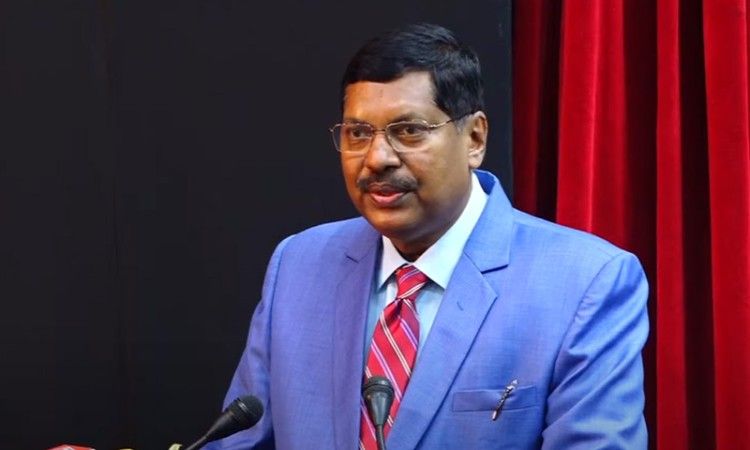
Justice BR Gavai to be appointed as 52nd Chief Justice of India

The Chief Justice of India Sanjiv Khanna officially nominated Justice B R Gavai to follow him in his position by sending him to the Union Law Ministry. The approval process will establish Justice Gavai as the 52nd Chief Justice of India before he takes office after CJI Khanna's retirement date of May 13 2025. The appointment of Justice B R Gavai as CJI will span from May 13, 2025 until his retirement date on November 23, 2025. The President chooses Supreme Court judges according to Article 124(2) of the Indian Constitution.

Summary 

  • Justice B R Gavai will be the 52nd Chief Justice of India after the retirement of current serving CJI Sanjiv Khanna.

Background and Legal Career

  • Justice Gavai hails from Amravati, Maharashtra.

  • Justice Gavai established his legal practice in 1985 by focusing on constitutional and administrative law cases at the Nagpur Bench of the Bombay High Court until his retirement as Additional Judge.

  • During his career he worked as Assistant Government Pleader before becoming Additional Public Prosecutor and eventually taking the position of Government Pleader for the state.

  • Judge Gavai received promotion as additional judge of Bombay High Court during 2003 before becoming permanent in 2005.

  • His appointment to the Supreme Court took place on May 24th of 2019.

Detailed Judicial Contributions

  • Article 370 Verdict

    • In his role on the Constitution Bench Justice Gavai sanctioned the Center's decision to revoke Article 370 thus strengthening national ties between India and Jammu and Kashmir.

  • Electoral Bonds Scheme

    • The judge joined the historic decision which invalidated the political funding scheme because of its insufficient transparency.

  • Demonetisation Ruling (2023)

    • Justice Gavai ruled in favor of the central government when it rendered Rs 500 and Rs 1,000 currency notes invalid in 2016.

  • Reservation and Creamy Layer

    • Justice Gavai presented a proposal in August 2024 to sub-divide the SC/ST groups by removing the creamy layer category for ensuring genuine equality.

  • Bulldozer Demolitions (November 2024)

    • The bench under his leadership decided that property demolitions executed unlawfully breach legal principles.

    • The influence of Article 124(2) funds the appointment of Chief Justices of India through Presidential selection.

Constitutional Provision of Judges in the Supreme Court of India

Appointment

  • Article 124(2) within the Constitution allows the President to nominate Supreme Court judges.

  • The President obtains advice from judges from the Supreme Court and high courts he believes are necessary for selecting the CJI.

  • In court tradition the most senior Supreme Court Judge becomes entitled for the position of CJI.

  • A consultation with the CJI becomes mandatory whenever anyone is being selected as a Supreme Court judge after the position of Chief Justice.

Historical Note:

  • The law was followed during 1950 to 1973 which always brought the most senior judge to the role of CJI.

  • The custom to appoint the senior-most judge as CJI ended in 1973 (A N Ray) and a second time in 1977 (M U Beg).

  • Through the Second Judges Case (1993) judicial decision the executive branch emphasized that selection of CJI must always fall to the senior most Supreme Court judge.

Qualifications

  • Must be a citizen of India.

  • A candidate should fulfill either one of these conditions: 

    • They should have been a high court judge for 5 years or;

    • They should have practiced law as a high court advocate for 10 years.

  • Additional requirements: 

    • Must be a jurist recognized as distinguished by the President.

  • The President selects a distinguished jurist through his own judgment.

  • The Constitution does not set any requirements for age eligibility to serve as the Chief Justice of India.

Role and Powers

  • The top judge maintains full authority to distribute cases to specific benches as well as regulate hearing dates.

  • As Supreme Court head of the Collegium he functions as the primary advisor for High Court and Supreme Court judicial selection.

  • Through Article 127 the Justice of India serves as an appointing authority for temporary Supreme Court judges.

  • A presidential approval allows the SC to relocate its seat from Delhi to another location.

Removal

  • The President requires Parliament to pass a special address following which he can remove the CJI through the process. 

  • This requires both Houses to achieve a special majority based on total membership and two-third of present voting members.

Appointment of Judges

  • The President holds the responsibility to appoint judges who work in the Supreme Court.

  • Before making any judicial appointments the President obtains mandatory feedback from the Chief Justice of India together with necessary additional advice from judges.

  • The Chief Justice of India holds an obligatory advisory role during appointee selection procedures that focus on positions beyond the top judicial position.

Collegium System

  • The Supreme Court introduced this procedure during the Three Judges Cases.

  • The collegium system has functioned in higher judicial appointments since 1998.

  • The Constitution and all its amendments fail to mention this procedure.

  • A panel of judges presided over by the CJI contains five members that include himself along with the next senior Supreme Court judges.

  • The appointment structure of Supreme Court collegium mirrors that of Indian High Court collegia.

  • The government can present names to the Collegium yet the final decision belongs to the body if it reaffirms approval.

  • The Supreme Court invalidated the NJAC proposal (2014) because it found the body unconstitutional.

Oath or affirmation

  • A judge must swear to demonstrate absolute loyalty toward the Constitution of India.

  • Indian sovereignty together with its national integrity requires the highest level of defense.

  • Execution of duties applies direct and unyielding loyalty through commitment to maximum ability regardless of bias or contrary relationships.

  • The Constitution along with its laws require full protection.

Tenure of Judges

  • No fixed term; hold office until the age of 65.

  • The judiciary service ends through written notification to the President.

  • The President can discharge a judge after receiving parliamentary approval.

Removal of Judges

  • By Presidential order after an address by Parliament.

  • Both Houses must pass the decision with their clearance as a special majority.

  • Grounds: proved misbehaviour or incapacity.

  • The Judges Enquiry Act (1968) specifies the complete procedures to follow.

  • Till now, there have been no successful Supreme Court judge impeachment attempts to date.

Salaries and Allowances

  • Determined by Parliament.

  • The judge’s salary becomes unaffected by reductions unless a financial emergency exists after appointment.

  • The 2021 Bill modified the 1954 and 1958 Acts to alter the period of service for High Court as well as Supreme Court judges.

Conclusion 

Justice B R Gavai creates a pivotal chapter in history by succeeding Chief Justice of India through his demonstrated commitment to constitutional values and equitable law enforcement. Through his defining decisions he proved dedication to judicial accountability and governance transparency alongside protection of citizen rights. The 52nd Chief Justice of India will determine key judicial progress during his upcoming term of office.

Frequently Asked Questions (FAQs)

The current affairs cover recent national and international events related to UPSC, SSC, Banking, Railways, and State PCS.

You need to read about the current affairs daily, and revise them every week and every month to keep them longer in your memory.

Yes, Class24 provides free downloadable Daily Current Affairs PDFs for easy revision.

Yes, you can practice MCQs and quizzes to boost your exam preparation.

Absolutely. The content is written in simple, easy-to-understand bilingual language suitable for beginners.

Go to class24.com and click on the current affairs section directly, where you find everything that you need.

ssc-toppers

Start Learning Today with Class24

Related current affairs

Class24 offers free video lectures for smart preparation, covering CGL, CPO, CHSL, MTS, and GD exams. Learn from expert faculty, revise concepts easily, practice with PYQs, and improve speed and accuracy through high-quality, exam-focused video lessons anytime, anywhere.

Get success in your hand. Start study anytime anywhere.

The journey becomes simple and enjoyable when you start taking interest in it. And through our app “Class24”, we will be your trusted partners in developing that interest.

Daily Quizzes
Mock Tests
Ongoing

No ongoing tests right now.