

Day: February 28, 2025

Israel Refuses to Withdraw from Gaza Corridor Amid Ceasefire Tensions

A global political crisis is unfolding across the Middle East since Israel failed to meet its obligations under the ceasefire agreement by keeping its forces in the vital Philadelphi Corridor region of land which borders Egypt and Gaza. The decision by Israel to remain in position in the Philadelphi Corridor has raised widespread anxiety among all parties including Hamas and Egypt together with international governing bodies about losing the tenuous truce. Under the first phase of the ceasefire agreement the corridor had to become vacant no later than March 1, 2025 but Israel maintained its presence through continued surveillance of arms smuggling. Israel sustains that its forces remain in the corridor because it wants to avoid security risks and stop Hamas from becoming stronger.

The latest development occurs during continuous hostage-prisoner trades where Hamas freed remains of four Israeli hostages for over 600 Palestinian detainees. The United Nations along with the Red Cross collaborate with major global powers to supervise the evolving situation because the future of the ceasefire remains unclear. Failure of peace talks may trigger new conflict which would severely affect the stability of the region.

Key Developments

Israel’s Stance on the Philadelphi Corridor

  • Israel continues to occupy the Philadelphi Corridor because officials claim security needs and apprehension about Gaza weapons trafficking.

  • Agency officials from Israel state that Hamas previously used underground tunnel networks along with smuggling channels to restore its combat capabilities.

  • The scheduled withdrawal for March 1, 2025 was supposed to take eight days to complete according to the agreement yet Israel refuses to follow this schedule.

Hostage-Prisoner Exchange: Key Highlights

  • On February 27 2025 Hamas delivered four Israeli hostages whose identities proved to be Ohad Yahalomi Itzhak Elgarat and Shlomo Mantzur (85) who died during the October 7 2023 attack and Tsachi Idan.

  • Ohad Yahalomi

  • Itzhak Elgarat

  • The remains of Shlomo Mantzur (85) reached Gaza following the October 7, 2023 attack until his death.

  • Poignantly Tsachi Idan's circumstances of passing stay shrouded in mystery.

Israel conducted a simultaneous prisoner exchange that freed up to 600 Palestinian detainees among them 445 adult males together with 21 teenagers and one female.

The released prisoners shed or set fire to the shirts provided by Israeli prisons as a dedicated protest against their imprisonment.

The prisoner exchange finished the initial stage of the ceasefire framework but failed to outline end dates for the subsequent phase.

Hamas' Response & Warning

  • The militant group declared that Israel's failure to remove troops from the corridor might make additional hostage agreements unfeasible.

  • According to the militant group their agreement failure would trigger additional hardships upon hostages together with their families.

  • Hamas maintains that continued talks and sustained ceasefire agreements remain the single pathway to secure the release of current hostages.

Background: The Israel-Hamas Conflict & Ceasefire

  • The conflict started when Hamas militants executed their October 7, 2023 offensive against southern Israel and caused 1,200 Israeli fatalities as well as removing 250 hostages.

  • After Israel executed its large-scale military offensive the Palestinian health officials confirmed the death toll exceeded 48,000. The reported death toll does not differentiate who was a civilian or militant in the fight.

  • The U.S.-led Egypt-Qatar agreement established a brief agreement to liberate both prisoners and hostages.

  • Both sides continue to show high tension since the truce exists although Israel aims to destroy Hamas and Hamas maintains control of hostages for negotiation purposes.

International Reactions & Future Prospects

International Community's Response

  • French President Emmanuel Macron delivered his sympathies to Ohad Yahalomi after he passed away as a dual French-Israeli national.

  • Steve Witkoff, who represents U.S. President Donald Trump for Middle East affairs, advocated the start of second phase peace negotiations.

  • The UN and Red Cross announced their opposition to Hamas' captivity protocol because the organization forced hostages to endure public scrutiny through forced camera appearances.

  • Egypt has raised serious worries about regional stability because the non implementation of the ceasefire terms will create instability.

Challenges & Uncertain Future

  • Israel keeps its determination to erase Hamas from existence leading to fears that military operations may restart.

  • A permanent ceasefire agreement is required for Hamas to surrender the remaining hostages.

  • Future negotiation stages exist in a state of uncertainty because many anticipate military confrontations will resume if talks fail.

Relevance for Competitive Exams

The subject holds essential weight for examination candidates who take UPSC and SSC government assessments and similar testing bodies.

✅ International Relations – Israel-Palestine conflict, role of mediators like Egypt, U.S., and Qatar

✅ Current Affairs – Ceasefire negotiations, humanitarian crisis, hostage exchanges

✅ Geopolitics & Diplomacy – Two key aspects between nations involve border conflicts and security issues together with diplomatic agreements.

✅ Security & Defense – Terrorism, counterinsurgency, hostage diplomacy

Conclusion 

Israel's continued occupation of the Philadelphi Corridor after the ceasefire violates the peace agreement and now threatens the entire diplomatic truce. The present situation remains unstable because Hamas employs hostages as bargaining tools while Israel pursues weakening Hamas' military strength. Time over the next several weeks will decide the future of peace talks as negotiations continue or if the conflict starts again.

Middle Eastern geopolitics joins with humanitarian conditions as well as global diplomatic efforts in holding significant consequences from this development. The complexity of the issue maintains its important status as both a major international matter and a crucial competitive exam topic.

Amazon Unveils ‘Ocelot’: A Major Breakthrough in Quantum Computing

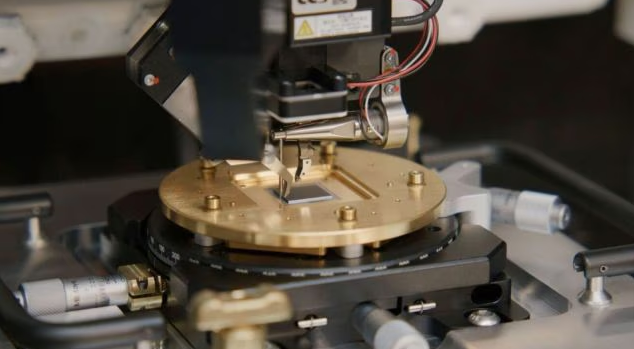
Amazon launched its first in-house quantum chip entitled Ocelot which became public on February 27, 2025 during the quantum computing revolution. Through its development by Amazon Web Services (AWS) Ocelot serves as a nine-qubit processor which improves quantum computing while offering better error correction and enhanced computational efficiency and reduced hardware costs for practical operating systems.

Amazon made its debut in the quantum technology field to challenge Microsoft and Google and IBM in quantum computing. Microsoft adopted its high-scalable quantum chip 'Majorana 1' into the market a week after its debut in the quantum race. The pursuit of quantum supremacy between organizations drives novel breakthroughs which may transform artificial intelligence (AI), cryptography, material science, finance and medical research domains.

Understanding Amazon’s ‘Ocelot’ Quantum Chip

Quantum computing represents the top-tier technological breakthrough because it handles complex problems at an exponential speed beyond the capabilities of standard computing systems. The two principal difficulties which hinder quantum computing development are scalability and error correction.

Key Features of ‘Ocelot’

✅ Nine-Qubit Processor – The technology delivers enhanced system stability together with accurate calculations while raising computational capability.

✅ Advanced Quantum Error Correction – The reduction reaches 90% which ensures calculation reliability.

✅ Cost-Effective Architecture – The technology offers potential price reductions of approximately 80% for quantum computing equipment.

✅ Integration of ‘Cat Qubits’ – The qubits based on Schrödinger’s cat concept automatically minimize errors.

✅ Scalable and Efficient Design – According to Amazon, the Ocelot technology has the potential to speed up the development of practical quantum computing by five years.

Amazon has established a platform for error resistance since the beginning as it resolves a fundamental limitation that affects qubits at scale. Qubits in quantum computing systems are the basic components that require intense protection from environmental disturbances and thus tend to produce errors through temperature fluctuations and pressure changes. The 'cat qubits' design from Ocelot creates fewer errors thus extending quantum computer stability periods.

Quantum Computing: A Game-Changer for the Future

How Quantum Computing Works

The operational principle of quantum computers deviates from classical machines which work through 0s and 1s since quantum computers leverage qubits as their processing components. Quantum superposition lets qubits maintain multiple states simultaneously thus allowing quantum systems to handle enormous information simultaneously. Due to their ability to process data simultaneously in various states quantum computers achieve exponential power compared to ordinary computers for particular operations.

The principal restriction for quantum computing emerged as quantum decoherence which drives qubits to lose their quantum state due to environmental disturbances. The success of quantum error correction methods is important to minimize this issue. The Ocelot chip developed by Amazon embeds inherent error-resilience elements that enable profitable quantum computing deployments on a large scale.

Amazon vs Microsoft: The Global Quantum Race Intensifies

Amazon’s Ocelot launch has occurred immediately following Microsoft’s unveiling of Majorana 1 which aims to scale quantum computing up to one million qubits. The two businesses use separate strategies for their development.

Feature Amazon ‘Ocelot’ Microsoft ‘Majorana 1’
Qubit Count Nine-Qubit Potentially scalable to 1M+
Error Correction Advanced, Cat Qubits-Based Microsoft’s Topological Qubits
Primary Goal Cost-Effective, Practical Computing High Scalability & Long-Term Advancements
Impact on Quantum Race Faster Adoption & Deployment Future-Proof for Large-Scale Applications

Major competitors in the worldwide quantum computing competition extend beyond Amazon and Microsoft as additional key performers in this field are active at present.

🔹 Google – Working on ‘Bristlecone’, a 72-qubit processor.

🔹 IBM –  Developing ‘Condor’, a 1,000-qubit quantum processor.

🔹 China –  Alpha Group continues to invest substantially into developments of quantum cryptography and communication technologies.

The competition within the quantum sector drives researchers to develop real-world technologies by speeding up discoveries applicable to AI and defense, drugs and supercomputing systems.

Amazon’s Quantum Roadmap: Braket & Future Plans

The company started its quantum computing investment strategy multiple years ago. Amazon debuted Amazon Braket during 2020 as its quantum computing platform through which users can try out quantum processors made by IonQ and Rigetti and D-Wave. Amazon is taking a new direction through the development of Ocelot technology to construct quantum computing hardware which could determine the path of quantum computing development.

Amazon envisions quantum computing revolutionizing:

📌 Artificial Intelligence (AI) & Machine Learning – The platform makes model training processes quicker and allows processing complex data structures.

📌 Cybersecurity & Encryption –  The company works on developing cryptographic methods that use quantum technologies to secure important data.

📌 Pharmaceutical & Medical Research –  The process of simulating molecular interactions becomes faster for drug discovery purposes.

📌 Financial Modeling & Market Predictions –  The company strives to improve both operational risk evaluations and financial investment management.

📌 Climate Science & Material Discovery – The company works to address climate-related computational obstacles as it creates next-generation materials.

Relevance for UPSC, SSC, and Other Competitive Exams

This development is extremely pertinent for UPSC, SSC, Banking, and other government exams with topics pertaining to Science & Technology, International Relations, and Economic Impact.

Why is this Important for Exams?

✅ Science & Technology – Comprehensively addresses developments in quantum computing, AI, and cryptography.

✅ International Relations –  The technology race between Amazon, Microsoft, Google, IBM, and China.

✅ Economic & Industrial Impact – How industries such as finance, pharmaceuticals, and defense can be disrupted by quantum computing.

✅ Government Policies – India's National Quantum Mission (NQM) and worldwide efforts in quantum research.

India’s Role in Quantum Research

The Government of India introduced the National Quantum Mission (NQM) in 2023, investing ₹6,000 crore to augment quantum research. The mission targets:

  • Indigenous quantum computing technology development.
  • Quantum-safe encryption for bolstering cybersecurity.
  • Quantum communication network establishment.

India's increasing investment in quantum computing may enhance its status in the global tech community, and thus it is an important sector for government policies and future research.

Conclusion

Amazon's Ocelot quantum chip is a breakthrough, bringing stronger error correction, cost-effectiveness, and quantum computing scalability nearer to the future. While technology companies such as Amazon, Microsoft, Google, and IBM engage in a competition, quantum computing is ready to transform sectors like cybersecurity, AI, finance, and pharmaceutical research.

With quick development, quantum technology is likely to be a revolutionizing influence over the next ten years, so it is a must-learn subject for competitive exams, policymaking, and future technological advancement.

Olive Ridley Turtle Population Growing, But Climate Change Poses Long-Term Risks

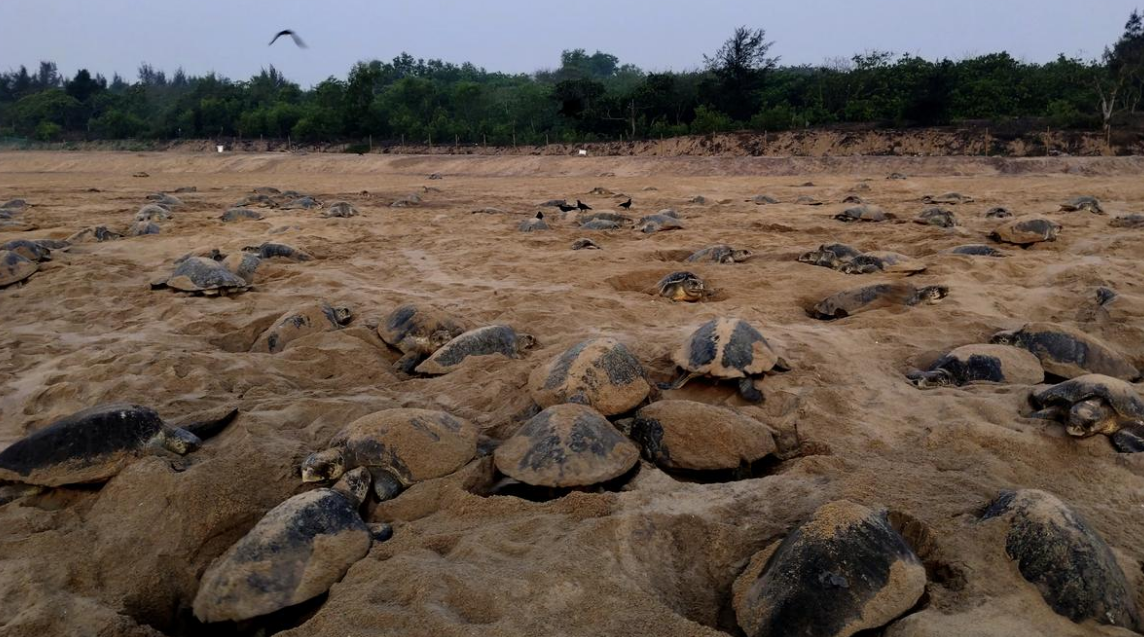
The Dakshin Foundation together with the Indian Institute of Science (IISc) from Bengaluru conducted 16 years of research that showed either stable or growing Olive Ridley turtle populations on the Indian coastline. Research results suggest long-term survival concerns for the species since increasing sand temperatures cause changes in the sex ratio towards female offspring. Gender balance between males and females faces risks for species sustainability because of the unbalanced sexual proportion. The research observes many turtles in offshore areas but does not understand why mass nesting does not take place regularly each year.

Key Findings of the Report

  • The research took place across India’s mainland and island coasts from 2008 to 2024 to document turtle population changes along with conservation progress and danger assessments.

  • The research assessed the Olive Ridley along with leatherback turtles from Andaman and Nicobar Islands and green turtles in Lakshadweep.

  • The study documented a massive mass nests event at Rushikulya rookery in Odisha as 400,000 to 500,000 Olive Ridley turtles laid their eggs over a few days.

  • Scientific observations show that large offshore turtle concentrations fail to produce mass nesting events in certain years without explanation regarding their breeding behavior.

  • The number of leatherback turtles who nest on Little Andaman has significantly increased after the 2004 Indian Ocean tsunami.

  • The increasing population of green turtles in Lakshadweep leads to disturbances of ecological equilibrium due to overgrazing of seagrass meadows.

Major Threats to Sea Turtles

Olive Ridley turtles along with other marine species within growing populations endure various ecological dangers together with human-made threats including:

  • ✅ Climate Change: The increase in sand temperatures causes an imbalance in population dynamics because they result in female hatchlings instead of male ones.

  • ✅ Coastal Development: The development of real estate without regulations together with uncontrolled urban sprawl around coastline areas disrupts the places where turtles lay their eggs.

  • ✅ Marine Pollution: Plastic waste along with oil spills and industrial pollution endanger turtle settlement areas and their prey.

  • ✅ Fisheries-Related Threats: Commercial fishing activities intersect with prime territorial areas of sea turtles and fishing nets unintentionally capture the animals (bycatch) before resulting in deaths.

  • ✅ Illegal Poaching: Turtle meat and eggs continue to be obtained against the law for human consumption in certain areas.

Community Involvement in Conservation

The document stresses the fundamental position of local communities in ensuring sea turtle conservation. The coordination between fishermen and researchers and policymakers produces beneficial results when they unite their efforts.

  • Reducing human-turtle conflicts,

  • Sustaining local livelihoods, and

  • Ensuring marine biodiversity conservation.

Government Conservation Efforts in India

Indian government protection programs regarding marine turtle populations consist of several conservation initiatives:

  1. Operation Olivia – The Indian Coast Guard started this program to guard nesting areas against illegal hunting activities while breeding turtles are present.

  2. Gahirmatha Marine Sanctuary – A protected environment in Odisha exists to preserve the Olive Ridley turtle population.

  3. Seasonal Fishing Ban – The program functions across Odisha along with other coastal states in order to safeguard turtles during their breeding period.

  4. Marine Protected Areas (MPAs) – The Indian coastline features multiple MPAs which serve as protective measures for significant marine species together with their habitats.

Why Is This Important for Competitive Exams?

The information holds significant importance for UPSC and SSC exam candidates and other government exam aspirants because it belongs to essential test subjects including:

✅ Environment & Ecology – Marine conservation, climate change impact on species

✅ Geography – Coastal ecosystems, sea turtle migration routes

✅ Government Schemes & Policies – Wildlife protection laws and sustainable fishing practices

✅ Current Affairs – Indian and global conservation efforts

Conclusion

The Olive Ridley turtle population stays at a stable level but their future survival becomes endangered by escalating human influence alongside worsening climate change. The preservation of India’s rich marine biodiversity demands sustainable conservation methods which combine scientific monitoring, community engagement and stricter establishment of regulations for future protection.

One Nation-One Port’ Initiative Launched to Enhance Maritime Efficiency

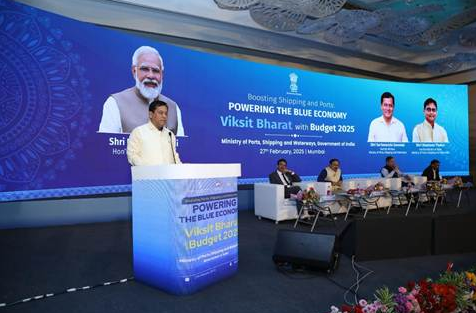
Union Minister Sarbananda Sonowal of Ports Shipping and Waterways revealed multiple groundbreaking maritime actions which target contemporary port framework building as well as global trade strengthening along with business simplification in maritime operations. The initiatives work to establish port operation standards while implementing digital systems that boost logistics performance to enhance global competitiveness in Indian ports. During a Mumbai-based high-level stakeholder meeting convened on February 27, 2025 industry leaders teamed up with maritime experts and policymakers to discuss port and shipping sector reforms and future strategies which led to major announcement releases.

Key Announcements & Their Significance

One Nation-One Port Process (ONOP) – Standardization of Indian Ports

The One Nation-One Port Process initiative introduced by the government aimed to improve business operational ease. The ONOP initiative will establish standard procedures and digital systems for Indian ports which aims to decrease operational troubles stemming from varied documentation practices and complicated procedures.

Key Features of ONOP:

  • Reduction in Documentation:

    • The number of paperwork used for container operations decreased by 33% from 143 to 96 documents.

    • The number of bulk cargo operation documents decreased by 29% as operations went from 150 to 106.

  • The implementation of International Standards as part of cargo clearance and turnaround optimization.

  • The enhanced transparency measures with digitalization methods help decrease paperwork while shortening operational delays.

  • The implementation of these changes positions India better in maritime international trade and creates better performance from port facilities.

ONOP represents an essential component for Maritime Amrit Kaal Vision 2047 which enables sustainable port management of international standards.

Sagar Ankalan – Logistics Port Performance Index (LPPI) for FY 2023-24

The introduction of the Logistics Port Performance Index (LPPI) became necessary for enhancing India's port competitive stance on the global scale. LPPI functions to establish performance standards for ports through international benchmarking processes.

Key Highlights of LPPI:

  • The assessment encompasses major along with non-major ports through three evaluation categories.

    • Dry Bulk

    • Liquid Bulk

    • Container Cargo

  • Performance Indicators:

    • Cargo handling efficiency

    • Turnaround time of vessels

    • Berth idle time & ship berth-day output

    • Container dwell time (time taken for containers to move in/out of ports)


  • The ranking evaluation process uses data-based criteria to establish clear visibility throughout the port assessment procedure.

The measures are intended to enhance India's logistics infrastructure for better placement on the World Bank’s Logistics Performance Index and the current standing of 22nd (2023) in "International Shipments".

Bharat Ports Global Consortium – Expanding India’s Maritime Presence

The Government formed the Bharat Ports Global Consortium to enhance international trade infrastructure and maritime port development operations.

Objectives:

  • India should enhance its maritime trade partnerships to develop better global supply chains.

  • Investment should be promoted to develop and operate ports.

  • The 'Make in India' program needs support through improvements to shipping logistics systems for export purposes.

The consortium brings together:

  • IPGL (Indian Ports Global Limited) – Operational Management

  • SDCL (Sagarmala Development Company Limited) operates as a financial investment entity.

  • The Indian Port Rail & Ropeway Corporation Limited operates as the organization responsible for developing infrastructure through IPRCL (Indian Port Rail & Ropeway Corporation Limited).

India will rise as a major international maritime trading nation through an initiative that decreases expenses and improves transportation systems.
 

MAITRI – Digital Transformation in Trade through AI & Blockchain

Indian industries gained improved trade efficiency through the introduction of MAITRI (Master Application for International Trade and Regulatory Interface) platform which decreased bureaucratic delays.

Key Features of MAITRI:

  • AI & Blockchain-based trade integration for faster customs clearance.

  • The initiation of Virtual Trade Corridors (VTCs) establishes strong international logistics systems.

  • First implementation: India-UAE VTC, later expanding to BIMSTEC & ASEAN nations.

  • Digital trade documents improve export-import speed through their implementation for transactions.

MAITRI supports the implementation of India-Middle East-Europe Economic Corridor (IMEEC) and cuts both processing time and trade expenses.

India Maritime Week (October 27-31, 2025, Mumbai)

The India Maritime Week event in India will display both the maritime history and development achievements of the country.

Event Highlights:

  • India has selected 'Maritime Virasat (Heritage) and Maritime Vikas (Development)' as its main focus.

  • Representation from 100 countries with participation of 100,000 delegates.

  • Hosting of:

    • 4th Global Maritime India Summit (GMIS).

    • 2nd Sagarmanthan – The Great Oceans Dialogue (strategic maritime discussions).

The initiative seeks to establish India as a leading force in maritime policies and infrastructure together with a trade facilitation framework.

Maritime Budget Reforms – ₹25,000 Crore for Modernization

The government dedicated ₹25,000 crore to maritime development within Union Budget 2025.

Key Budget Provisions:

  • Maritime Development Fund (MDF):

    • The MaritimeDevelopment Fund delivers extended financial resources to support port and shipping private investments.

  • Shipbuilding Financial Assistance Policy (SBFAP 2.0):

    • The policy delivers financial backing for Indian shipbuilding enterprises to contend against international companies in global markets.

  • Ship Breaking Credit Note Scheme:

    • The scheme promotes enduring sustainable ship recycling through green shipbreaking practices.

  • Customs Duty Exemption for 10 Years:

    • Supports domestic shipbuilding and port infrastructure.

  • Tonnage Tax Regime Extension for Inland Vessels:

    • River transport serves as an environmentally friendly logistics choice that receives promotional support under this policy.


National Centre of Excellence in Green Port & Shipping (NCoEGPS) Launched

NASA launched the National Centre of Excellence in Green Port & Shipping (NCoEGPS) website to increase sustainability in maritime operations.

Objectives:

  • The ports and shipping industries will achieve lower carbon emissions.

  • The use of green technology must develop eco-friendly structures for port infrastructure.

  • The adoption of LNG along with hydrogen-based alternative fuels for promotion purposes.

This aligns with India’s commitment to Net-Zero Emissions and Sustainable Maritime Growth.

Conclusion

Strategic reforms position India to be a prominent maritime power at the international level. All the contemplated actions meet the criteria of Atmanirbhar Bharat and PM Gati Shakti and Viksit Bharat 2047. India is transforming global commerce through efficiency policies and sustainable solutions and digital change to be a global maritime leadership force.

Frequently Asked Questions (FAQs)

The current affairs cover recent national and international events related to UPSC, SSC, Banking, Railways, and State PCS.

You need to read about the current affairs daily, and revise them every week and every month to keep them longer in your memory.

Yes, Class24 provides free downloadable Daily Current Affairs PDFs for easy revision.

Yes, you can practice MCQs and quizzes to boost your exam preparation.

Absolutely. The content is written in simple, easy-to-understand bilingual language suitable for beginners.

Go to class24.com and click on the current affairs section directly, where you find everything that you need.

ssc-toppers

Start Learning Today with Class24

Related current affairs

Class24 offers free video lectures for smart preparation, covering CGL, CPO, CHSL, MTS, and GD exams. Learn from expert faculty, revise concepts easily, practice with PYQs, and improve speed and accuracy through high-quality, exam-focused video lessons anytime, anywhere.

Get success in your hand. Start study anytime anywhere.

The journey becomes simple and enjoyable when you start taking interest in it. And through our app “Class24”, we will be your trusted partners in developing that interest.

Daily Quizzes
Mock Tests
Ongoing

No ongoing tests right now.