

Day: January 24, 2025

Bombay High Court Tightens Noise Rules: Loudspeakers Not Essential for Religious Practices

The Bombay High Court has declared that loudspeakers are not essential to religious practices, bolstering the enforcement of noise pollution rules in places of worship. The court emphasized that public health and harmony outweigh the use of loudspeakers under the guise of religious freedom. It directed the Maharashtra government to strengthen noise control measures and ensure adherence to the Noise Pollution Rules, 2000. This ruling aligns with protecting citizens' rights while maintaining the sanctity of religious liberty.

About

Through the Mumbai and Maharashtra Police Act, the police maintain full power to enforce both the Environment (Protection) Act and Noise Pollution Rules within religious worship spaces.

The Bombay High Court issued a directive to the Maharashtra government to establish control methods that limit public address systems and sound-emitting equipment usage at religious facilities regardless of religious affiliation.

Key Observations

  • A 2016 High Court decision from two years prior established guidelines for the stronger enforcement of Noise Pollution (Regulations and Control) Rules, 2000.

  • The court declared that loudspeakers serve no essential religious purpose so religious institutions lack protection under Article 25 of the Constitution, and freedom of religion provisions when they break noise pollution rules.

  • The court acknowledged the healthcare risks faced by busy Mumbai while adopting restrictions on using loudspeakers in religious venues because these rules afford protection of everyone's rights.

Action on Complaints and Enforcement

  • Voluntary complaints received by police will be addressed while safeguarding the complainant's safety from retribution the court emphasized.

  • Police must handle noise complaints and they have the power to rescind loudspeaker permissions from institutions that fail to comply with noise regulations.

  • The advisory panel proposed using smartphone apps with built-in decibel meters as a way to measure noise levels effectively.

Case Background

  • The Jaago Nehru Nagar Residents Welfare Association submitted a legal petition to fight the loudspeaker noise emanating from mosques and madrasas situated in Chunabhatti and Nehru Nagar Kurla East.

  • The petitioners claimed the loudspeakers operated during prohibited hours, starting as early as 5:00 am. The mosques and madrasas violate permitted noise regulations because loudspeakers operate from 5:00 AM until 1:30 AM during festivities in both locations.

Political Impact

  • A ruling exists that harmonizes religious freedom protections with noise pollution prevention and establishes public health enforcement by state institutions. The judicial decision might start a debate about creating religious regulations that protect citizens' rights.

  • Local governments could start establishing stricter noise regulations which will redefine urban policies about religious practices in public spaces.

Geographical Impact

  • Cities such as Mumbai stand to benefit from life quality improvements through reduced residential area noise pollution that affects mosques and madrasas.

  • Rural areas will likely experience minimal modifications while the decision establishes national uniformity in noise regulations thus creating a separation in enforcement between urban and rural zones.

Conclusion

Through its recent ruling, the Bombay High Court established framework for improved noise control at religious establishments by promoting public health alongside religious liberty standards. Public welfare stands as the main priority for this ruling which has the potential to drive nationwide changes in noise pollution management in India despite expected opposition.

Rajnath Singh Unveils SANJAY Battlefield Surveillance System for Advanced Military Monitoring

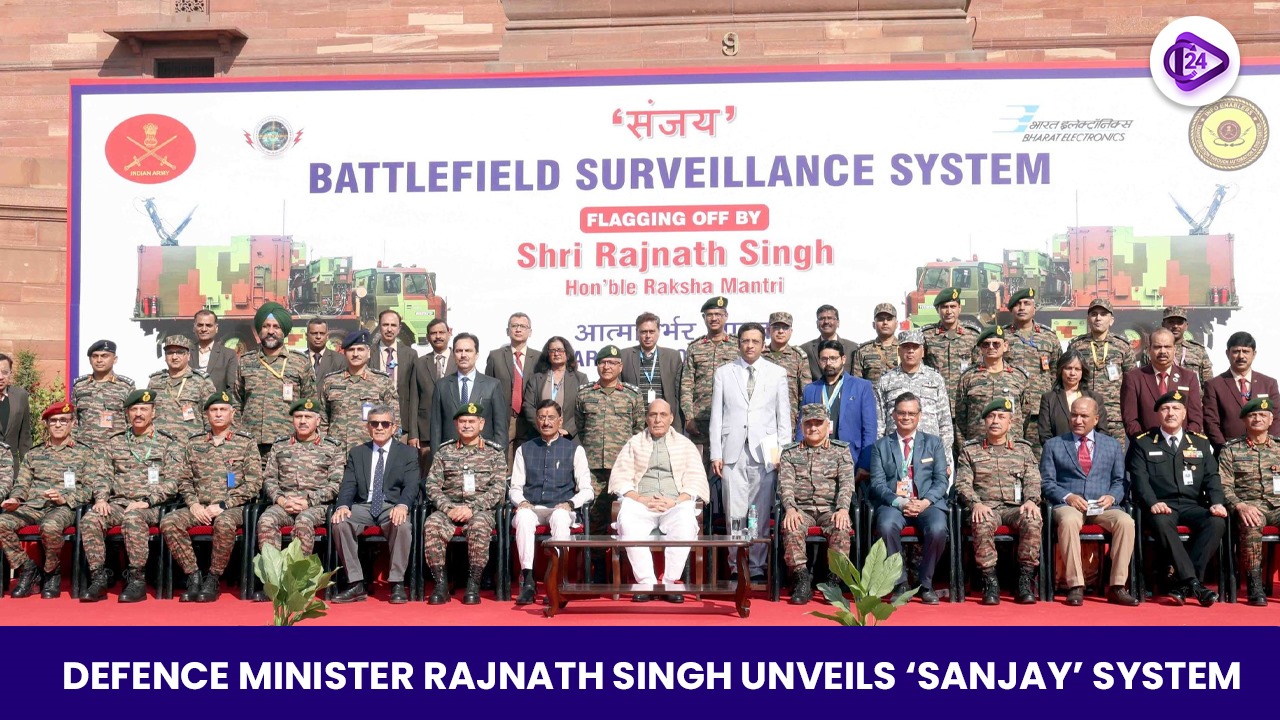
During the launch ceremony on January 24th, 2025 Defence Minister Rajnath Singh activated the ‘SANJAY’ Battlefield Surveillance System (BSS) which automates sensor data fusion from aerial and ground platforms. The joint effort between Bharat Electronics Limited and the Indian Army developed SANJAY which acts as a fusion platform for awareness surveillance while detecting unauthorized access to support the network-centric battlefield. The Rs 2,402 crore investment helps India advance towards defense self-reliance. India will deploy this system through multiple stages across March to October 2025 which will enhance its capabilities to address various security threats.

The Battlefield Surveillance System’ (BSS)

Flagging-Off Ceremony

  • Date: January 24, 2025

  • Official: From South Block in New Delhi Shri Rajnath Singh of the Raksha Mantri Department launched the ‘SANJAY – The Battlefield Surveillance System’ (BSS).

System Overview

  • Purpose: SANJAY is an automated system that uses operational data from battlefield sensors through aerial and ground surveillance to create comprehensive battlefield surveillance pictures.

  • Capabilities:

    • Fusing Inputs: The system delivers profound battlefield intelligence by combining sensor data processing with verification tasks to build an accurate overall battlefield picture.

    • Communication Networks: Secure real-time data transmission occurs through Army Data Network and Satellite Communication Network systems.

    • Enhancement of Transparency: The system enhances field visibility for commanders who use this data to make decisions within Command headquarters and Army elite divisions.

Technology and Features

  • Advanced Sensors: The system incorporates modern battlefield sensing capabilities together with leading analytical technologies.

  • Applications:

    • Intrusion Detection: Monitoring extends across extensive border areas to block unauthorized access through land boundaries.

    • Situational Awareness: The system delivers exceptional precision into battlefield situation detection which boosts Intelligence Surveillance and Reconnaissance capabilities as an intelligence multiplier.

    • Network-Centric Operations: Commanders use this technology to execute both conventional and sub-conventional operations from within a Network-Centric Environment.

Indigenous Development

  • Joint Development: Indian Army developers produced SANJAY through joint work with Bharat Electronics Limited (BEL).

  • Aatmanirbharta: Under the ‘Aatmanirbharta’ initiative SANJAY represents a foundational element for India’s progress towards defense technological independence.

  • Cost: This system required an investment of Rs 2,402 crore using the Buy Indian program.

Phased Induction

  • Deployment Timeline: The Indian Army plans to integrate this system at Brigades, Divisions, and Corps in stages between March 2025 and October 2025.

  • Strategic Significance: The Ministry of Defence (MoD) designated 2025 as the ‘Year of Reforms’.

Conclusion

SANJAY introduced at its inauguration brings important progress to modernize Indian Army forces through technological advancements. This Indian breakthrough platform enhances battlefield monitoring together with operational knowledge collection while boosting military technological independence for network-centric defense operations. The gradual deployment of operational forces will improve India’s ability to confront both conventional and non-conventional defense threats across the future horizon.


Stargate Project: $500 Billion AI Infrastructure Initiative for U.S. Technological Dominance

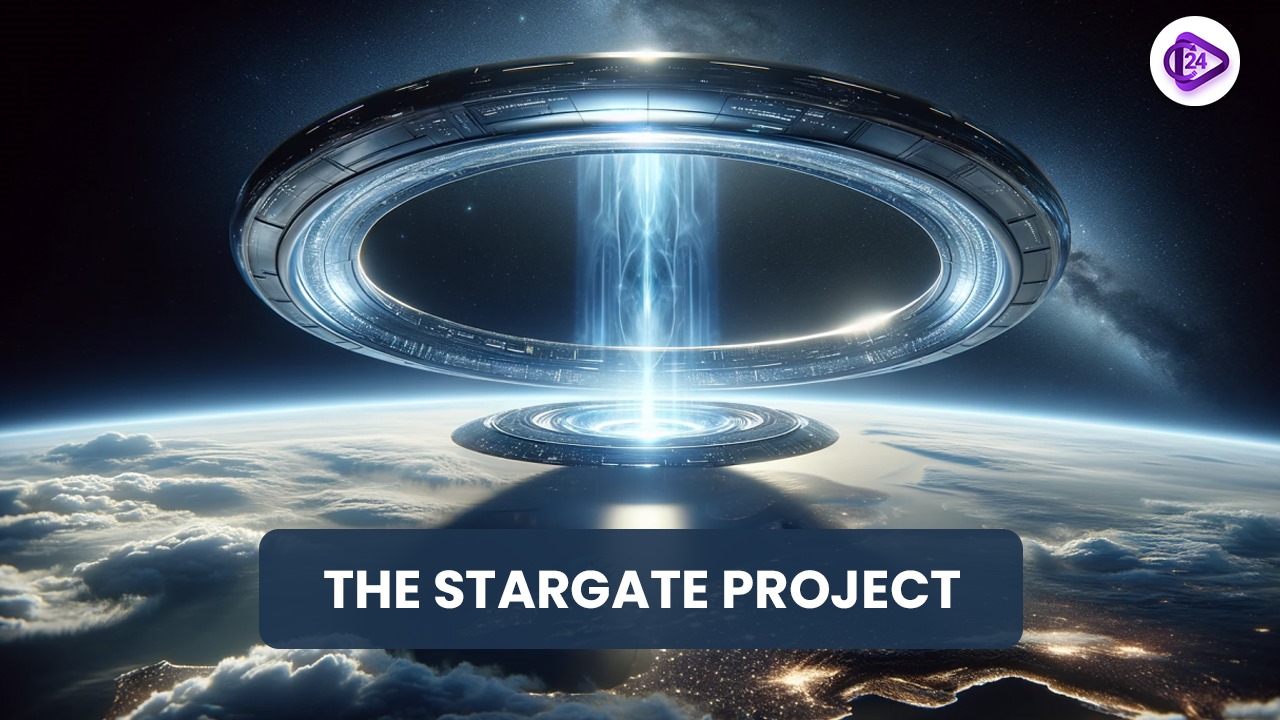
President Donald Trump announced Stargate which represents an extensive AI infrastructure venture between OpenAI and strategic partners Oracle and SoftBank. The proposed infrastructure development through this project will receive funding between $500 billion and $500 billion across four consecutive years to establish requisite facilities for AI processing and data centers along with power generation capabilities. According to experts, this project stands as the biggest AI infrastructure initiative ever attempted with $100 billion in starting funds.

Key Stakeholders and Involvement

  • OpenAI: ChatGPT's developer company leads the way as a leading AI solution provider in the market.

  • Oracle: In addition to its work in cloud technology Oracle ranks as a principal entity in database engineering.

  • SoftBank: The Japanese company SoftBank maintains a reputation for its extensive technology investments.

  • Leaders Present: Key partners OpenAI CEO Sam Altman with SoftBank CEO Masayoshi Son joined Oracle Chairman Larry Ellison for discussions about the initiative at the White House alongside President Trump.

Project Vision

  • Purpose: Stargate functions as the cornerstone initiative to maintain U.S. domination in artificial intelligence capabilities alongside current national security requirements.

  • Economic Impact: The initiative will generate widespread economic advantages throughout the worldwide sphere while creating hundreds of thousands of employment opportunities within the United States. As part of this initiative, the development aims to bring back U.S. industrial manufacturing capacity.

  • National Security: The Stargate initiative exists to safeguard American technological dominance in AI during both global technological competitions and the defense of U.S. national interests.

Controversies and Criticisms

  • Scale and Transparency: People have questioned not just the spending plan for this $500 billion investment but also its organizational capability and long-term economic feasibility.

  • Political Ramifications: The heavy public and private financial investment has ignited discourse about the political objectives of using such significant funding for AI initiatives because it supports Trump's efforts to push technological advancement in the United States.

  • Geopolitical Implications: Critics fear the Stargate project could shape worldwide power structure while it accelerates U.S. control over forthcoming AI technical developments.

Stargate's Potential Impact

  • Global AI Leadership: The proponents believe Stargate will make the United States dominate AI technology worldwide including its competition against China and additional AI capabilities in developing countries.

  • Strategic Infrastructure: The establishment of AI processing infrastructure has become vital as the centerpiece for sustaining both America's military position and its advances in technological superiority during the next several decades.

Conclusion

The Stargate project stands as an ambitious outline for the US's future AI infrastructure development although its execution faces ongoing debate about funding needs national security goals and political intentions. Observers will continue to evaluate the initiative through equal examinations from technology professionals and independent experts while constant attention follows the project's ability to convert its enormous funding into meaningful results for security needs and economic development alongside technological advancement.

Indian Army Inaugurates Bailey Bridges Over Shyok River, Enhancing Connectivity in Ladakh

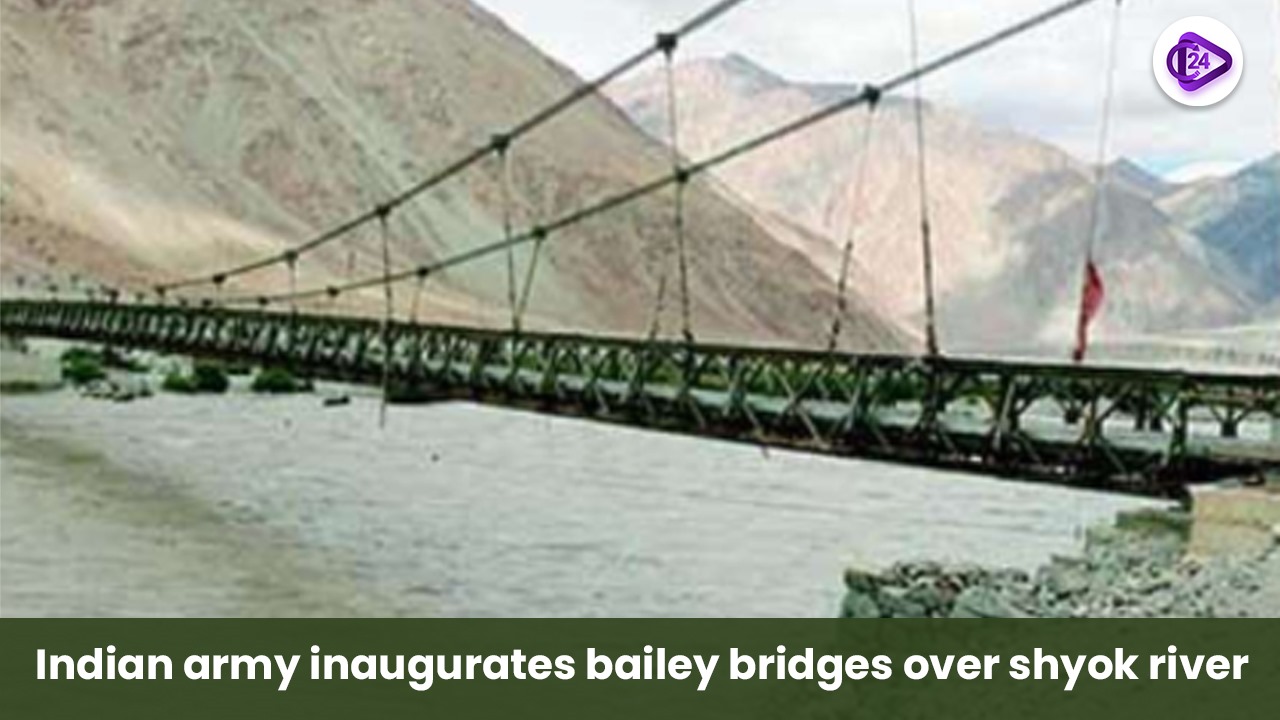
The Indian Army has inaugurated two new Bailey bridges over the Shyok River in Ladakh, connecting the Shyok and Nubra valleys with better road access. Built by the Fire and Fury Corps Engineers, these bridges aim to improve connectivity, especially during the severe winter months, by reducing travel distances by 40 kilometers and saving around two hours of travel time. This infrastructure development will significantly benefit local residents and enhance strategic military operations in the region.

Two new bailey bridges built by the Indian Army over the Shyok River in Ladakh now connect the Shyok and Nubra valleys through better road access. Both bridges were built by the Fire and Fury Corps Engineers to improve connectivity while connected to enhanced functionality during severe winter months.

Key Highlights

  • Inauguration Details: The inauguration occurred at Shatse Taknak within the Diskit sub-division of Leh district under the direction of Brigadier V S Salaria.

  • Bridge Specifications: Bailey bridges control dimensions of 50 feet length by 100 feet width to provide efficient entry for remote locations.

  • Enhanced Connectivity: The complete network of new bridges shortens travel distances by 40 kilometers which in turn reduces commuting time by approximately two hours for residents residing in Nubra and Shyok valleys.

Importance of the Bailey Bridges

  • These pathway connections enhance local communities’ access to important public resources by creating more effective transportation systems while sustaining vital service delivery throughout harsh winter conditions.

  • Such enhanced infrastructure provides vital strategic military operations alongside essential civilian access and plays an essential role in both civilian welfare and regional defense.

The Shyok River Overview

  • Tributary of the Indus: The Shyok River emerges from the Rimo Glacier to become an essential Indus River tributary that travels 550 kilometers across northern Ladakh and Gilgit–Baltistan Pakistan.

  • Geography: From its source, the river follows two distinct path patterns before shifting towards the northwestern direction near the Pangong Range.

Geographical Features of the Shyok Valley

  • At the meeting point of Shyok with Nubra River, the region expands but afterward, the valley becomes a crevassed terrain above Yagulung before moving through multiple towns until reaching Baltistan.

  • Strategic importance exists within this region because of how the valley geography joins with the Saltoro River which boosts defense capabilities along with communication abilities.

The Nubra River’s Characteristics

  • The Nubra River proceeds in a manner equivalent to the Shyok River starting at Siachen Glacier’s source.
  • Both rivers begin flowing southeast before steering northwest while converging as the geology seems to direct their paths.

What is a Bailey Bridge?

The bailey bridge serves as a modular system that functions for swift assembly through using prefabricated parts to require minimum construction workload. The standardized manufacturing of parts lets the bridge assemble speedily to serve communities during both armed conflict operations and emergency aid scenarios.

Historical Context of Bailey Bridges

  • Invented During WWII: English civil engineer Donald Coleman Bailey created the Bailey Bridge during World War II as an answer to military logistical difficulties.
  • Due to its simplified construction setup and transport capabilities, this design specifically serves, fields in remote areas where construction emergencies occur.

Conclusion

The deployment of these bailey bridges represents a major milestone that enhances infrastructure while providing joint advantages to defense services together with local inhabitants in Ladakh. Accommodating the engineering structure together with its landmark value proves Bailey Bridges as a means to increase the penetration of isolated regions across tough environmental contexts.

India to deploy 1st human-operated underwater submersible by 2026

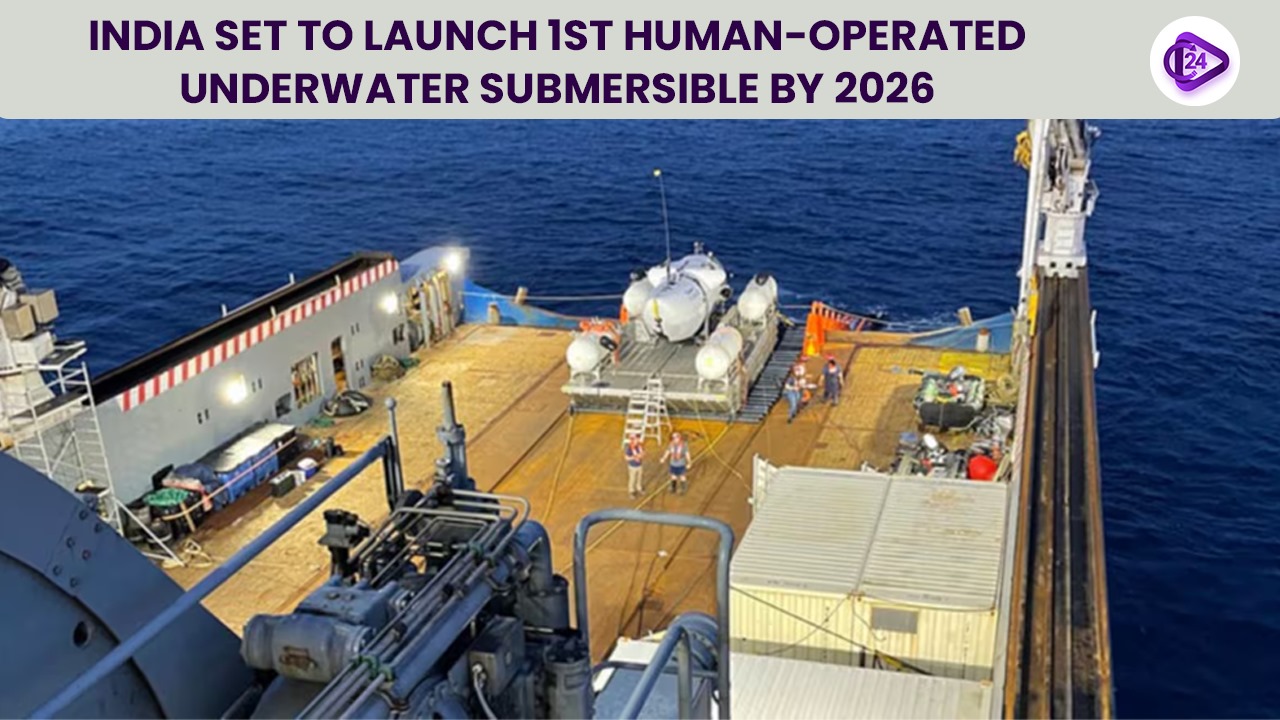
India is set to make history with the deployment of its first human-operated underwater submersible by 2026 under the ambitious Deep Ocean Mission. This initiative aims to extend India's deep-sea exploration capabilities from 500 meters to an astonishing 6,000 meters. Union Minister Jitendra Singh announced that the mission will strengthen India's leadership in marine research and technological innovation. The focus will be on exploring rare minerals and studying marine biodiversity to boost economic growth and sustainable practices.

About

Union Minister Jitendra Singh stated the initial submersible can reach depths of 500 meters now while they have scheduled development to reach 6,000 meters by 2026. Deep-sea exploration technological leadership will position India among a limited group of nations through this ambitious mission.
The mission's research targets both rare minerals and marine biodiversity at depths that the minister described as crucial for India's economic development environmental sustainability and resource utilization.

Significance

The mission represents a historic undertaking to establish a durable blue economic model capable of creating long-term advantages from sustainable fisheries activities and mineral extraction and biodiversity protection.

  • Technology & Innovation: Indian scientists have created all systems components for this mission using self-developed indigenous technology at each step of development and manufacturing establishing India as a global leader in research and technology independence.
  • Economic and Environmental Impact: The ocean depth exploration enables India to recover essential resources that strengthen its financial base while advancing sustainable marine practices for environmental protection.

Other Government Initiatives in the Maritime Sector:

Maritime India Vision (MIV) 2030

  • Objective: India aims to enhance its maritime sector development by creating advanced mega ports and transshipment facilities and updating port facilities nationwide.
  • Goal: India's maritime trade leadership position will emerge through ports expanding their capacity and upgrading their connections and operational abilities.

Sagarmala Programme

  • Flagship Initiative: Launched under the direction of the Ministry of Ports Shipping and Waterways.
  • Focus Areas: The maritime development initiative harnesses the potential of India's 7,500 km shoreline together with its 14,500 km waterways system.
  • The development of port infrastructure together with expanded connectivity and reduced logistics costs remains a fundamental objective.

Inland Waterways Development

  • Action: IWAI identified 26 national waterways that require navigable status as part of its operations.
  • Benefits: The new transportation routes reduce street and rail congestion by creating sustainable cost-efficient mobility alternatives.

Major Port Authorities Act, 2021

  • Impact: Major ports gain operational independence under this new bill, which provides them maximum flexibility to work more efficiently thus boosting their competitiveness and operational effectiveness.

Decarbonisation of Shipping Sector

  • Focus: Green hydrogen production hubs should establish at Paradip, Tuticorin and Kandla major ports to expand sustainable maritime energy supply systems.

Green Tug Transition Program (GTTP):

  • Goal: Indian ports should over an upcoming period abolish their conventional fleet of tugboats that use petroleum fuels and begin adapting to propulsion systems with renewable environmentally-friendly energy sources.
  • Timeline: Full transition to an eco-friendly fleet by 2040.

National Logistics Portal (Marine)

  • Objective: This exclusive digital platform integrates operations between cargo providers banking institutions financial organizations and government regulatory bodies creating enhanced coordination throughout maritime disciplines.

Sagar Setu App

  • Purpose: The use of this platform enhances business operations through optimized port operations that simplify cargo production and supply along with open monitoring systems that minimize delivery times.

Challenges in the Maritime Sector

Infrastructural Issues

  • Port Congestion: The insufficient equipment needed to handle big container volumes at ports creates operational delays and reduced performance.
  • Sub-optimal Transport Modal Mix: Both large and minor ports suffer from insufficient infrastructure to link shipping with land transportation which leads to lower transportation efficiency.

Sustainability and Emissions

  • Fuel Transition: Implementation of sustainable fuels in maritime operations remains complex because of difficulties in reducing carbon pollution and realizing net-zero missions beyond current time frames.

Pollution and Environmental Concerns

  • Oil Spills and Pollution: During cargo loading and unloading procedures spills and leaks regularly occur which leads to environmental polluting effects.

Conclusion

The Deep Ocean Mission will bring India ahead of other nations because it aims to launch its first underwater submersible vessel by 2026. The mission targets explorations of rare minerals together with studies of marine biodiversity through sustainable practices as part of India's Maritime India Vision 2030 initiatives. The project faces current barriers including infrastructure deficiencies as well as sustainable practices but demonstrates potential for generating both environmental advantages and lasting economic impacts while improving India's maritime technology autonomy and sustainability efforts.
 

Frequently Asked Questions (FAQs)

The current affairs cover recent national and international events related to UPSC, SSC, Banking, Railways, and State PCS.

You need to read about the current affairs daily, and revise them every week and every month to keep them longer in your memory.

Yes, Class24 provides free downloadable Daily Current Affairs PDFs for easy revision.

Yes, you can practice MCQs and quizzes to boost your exam preparation.

Absolutely. The content is written in simple, easy-to-understand bilingual language suitable for beginners.

Go to class24.com and click on the current affairs section directly, where you find everything that you need.

ssc-toppers

Start Learning Today with Class24

Related current affairs

Class24 offers free video lectures for smart preparation, covering CGL, CPO, CHSL, MTS, and GD exams. Learn from expert faculty, revise concepts easily, practice with PYQs, and improve speed and accuracy through high-quality, exam-focused video lessons anytime, anywhere.

Get success in your hand. Start study anytime anywhere.

The journey becomes simple and enjoyable when you start taking interest in it. And through our app “Class24”, we will be your trusted partners in developing that interest.

Daily Quizzes
Mock Tests
Ongoing

No ongoing tests right now.