


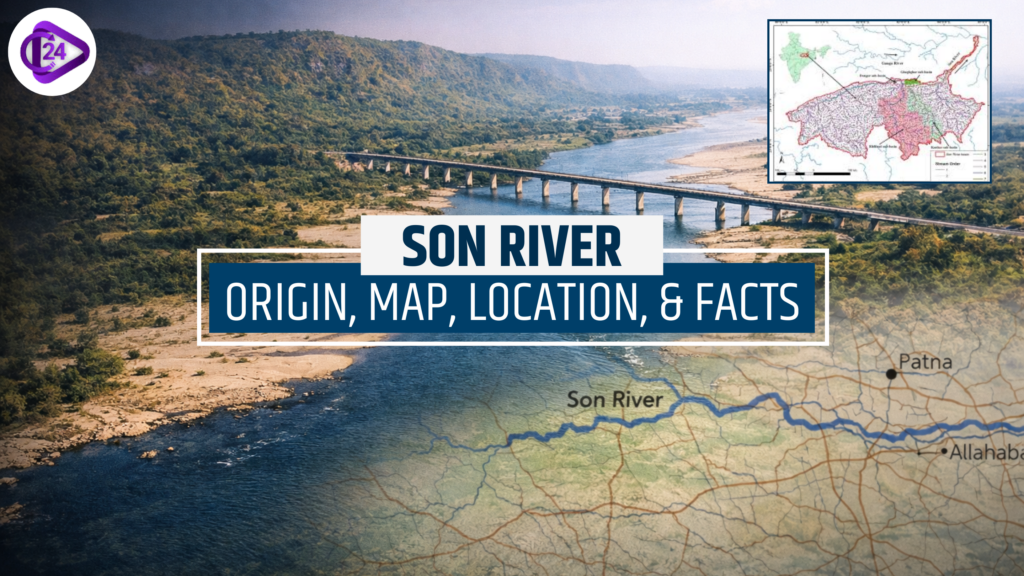
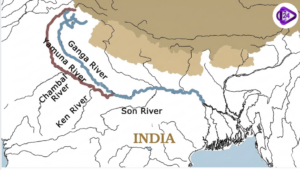
The Son River is one of the major right-bank tributaries of the Ganga River, known for its wide valley and seasonal flow characteristics. It originates near the Amarkantak Plateau at an elevation of about 600 meters. Flowing through Madhya Pradesh, Uttar Pradesh, Jharkhand, and Bihar, it joins the Ganga near Patna. The river follows a unique eastward course along the Kaimur Range and is important for irrigation, sand deposits, and regional hydrology in central India.
What are the characteristics of Son River?
- Right-Bank Tributary: One of the major southern tributaries of the Ganga River
- Origin: Rises from the Amarkantak Plateau, near the source of the Narmada
- Seasonal Nature: Primarily rain-fed with fluctuating discharge, especially during the monsoon
- Wide Valley: Known for its exceptionally broad and shallow river valley
- Course: Flows eastward parallel to the Kaimur Range before joining the Ganga near Patna
- Low Sediment Load: Compared to Himalayan tributaries, it carries relatively less alluvium
- Sand Deposits: Rich in sand, making it important for construction activities
- Irrigation Role: Supports agriculture in central and eastern India
- Tributaries: Includes rivers like Rihand and Kanhar
- Hydrological Importance: Contributes to basin drainage and regional water balance
Important Dams on Son River
| Dam Name | Location (State/City) | River / Tributary | Project | Purpose |
| Bansagar Dam | Madhya Pradesh (Shahdol/Rewa region) | Son River | Bansagar Project | Irrigation, hydropower, water supply |
| Indrapuri Barrage | Bihar (Dehri-on-Sone) | Son River | Sone Canal System | Irrigation, water diversion |
| Rihand Dam (Govind Ballabh Pant Sagar) | Uttar Pradesh (Sonbhadra) | Rihand River | Rihand Project | Hydropower, irrigation, and industrial water supply |
| Obra Dam | Uttar Pradesh | Rihand River | Obra Project | Power generation |
| Bansagar Canal System | MP/UP/Bihar | Son River | Bansagar Canal Project | Irrigation distribution |
The Importance of Son River and Challenges
The Son River is a significant right-bank tributary of the Ganga River, playing an important role in the hydrology and economy of central and eastern India. Originating from the Amarkantak Plateau, it flows through mineral-rich regions, contributing to irrigation, water supply, and industrial development. The river’s wide valley and sandy bed make it valuable for construction materials, while projects like the Bansagar Dam enhance agricultural productivity and regional development.
Key Challenges Faced by the Son River
Despite its importance, the Son River faces several environmental and management challenges. Being largely rain-fed, it shows significant seasonal variation, leading to water scarcity during dry periods. Excessive sand mining has disrupted its natural flow and riverbed stability. Deforestation in the catchment area increases soil erosion, while unregulated water usage affects downstream availability. Additionally, lack of effective river basin management and climate variability further stress the river system. Sustainable practices, strict regulation of mining, and efficient water resource management are essential to ensure its long-term ecological and economic sustainability.
Conclusion – Son River
The Son River is an important component of the Ganga River system, contributing to regional irrigation, water resources, and economic activities across central and eastern India. Its wide valley and seasonal flow make it unique among peninsular tributaries. However, challenges such as irregular discharge, excessive sand mining, and environmental degradation require urgent attention. Sustainable management, conservation efforts, and efficient utilization of water resources are essential to maintain the ecological balance and long-term significance of the Son River system.