


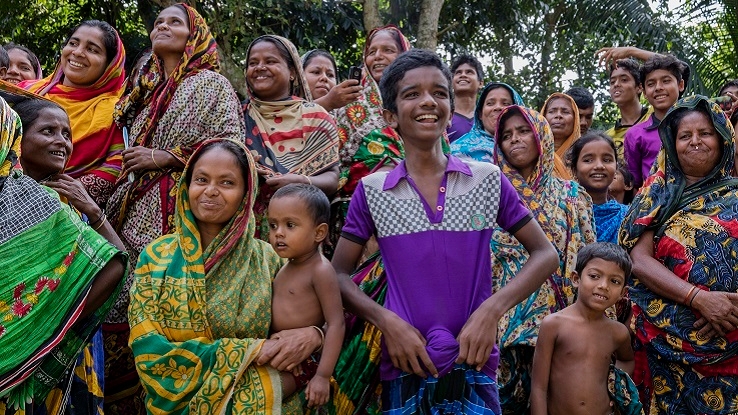
State of the World’s Indigenous Peoples Report: Climate Change and Indigenous Communities

The United Nations Department of Economic and Social Affairs (UN-DESA) issued a detailed research paper about how climate change affects Indigenous peoples. 6% of the world population identified as Indigenous peoples face exceptional challenges from climate change, although they comprise a small segment of global inhabitants. Due to their lack...

State of the World’s Indigenous Peoples Report: Climate Change and Indigenous Communities

The United Nations Department of Economic and Social Affairs (UN-DESA) issued a detailed research paper about how climate change affects Indigenous peoples. 6% of the world population identified as Indigenous peoples face exceptional challenges from climate change, although they comprise a small segment of global inhabitants. Due to their lack of involvement in international climate funding decisions, their adverse experiences have become worse. Through the report, researchers establish that Indigenous ways of knowing, along with sustainable traditions, serve as essential tools for maintaining biodiversity and ecological integrity. 

Summary:

  • The data shows that climate change mostly affects Indigenous communities because these groups only get less than 1% of global climate funds.

  • You will find evidence showing Indigenous peoples' valuable efforts to protect biodiversity and their lack of recognition for climate action work.

  • Climate policy leaders should include Indigenous representation when making policy decisions at a global level, according to the report.

Key Points:

  • Economic Vulnerability: Indigenous people experience economic risk because the sustainable practices of farming and fishing, together with forest management, have become unstable.

  • Disruption of land and resources: The erosion of ancestral land, combined with natural resource loss, occurs because of climate change.

  • Health challenges: Hard-to-reach healthcare services elevate their exposure to health problems generated by climate change.

  • Cultural Erosion: The loss of cultural heritage, along with traditional languages and cultural customs, occurs because of environmental damage.

  • Biodiversity Role: Much biodiversity exists around the world due to traditional peoples who occupy only 6% of Earth's population but guard 80% of its biodiversity.

  • Traditional Knowledge Systems: Eco-friendly ecosystem management is possible for sustainable development based on the ancient wisdom of Traditional Knowledge Systems.

  • Cultural Wisdoms: Traditional preservation concepts of indigenous populations emerge from spoken instructions and sacred restrictions, and wise sayings.

Constitutional Provisions:

Fifth and Sixth Schedules enable scheduled and tribal areas to follow separate administrative systems.

  • Article 342: Recognizes Scheduled Tribes.

  • Article 244 (Part X): Grants special administrative provisions for Scheduled Areas.

PESA Act, 1996:

  • The PESA Act provides Scheduled Areas with the opportunity for government through local assemblies of residents known as Gram Sabhas.

  • Local communities acquire the power to administer their minor resources together with their development projects and their traditional institutions under this structure.

Tribal Panchsheel Policy by Jawaharlal Nehru:

  • All development programs must match the indigenous culture and native intelligence of the tribal groups.

  • The protection of land ownership rights together with the preservation of forest privileges stands as a priority.

  • Tribals must have their full participation in administration processes.

  • Avoid over-administration and over-scheming.

  • Human development serves as a superior measurement criterion than numeric statistics alone.

Other Legislations:

  • Protection of Aboriginal Tribe Regulation (1956): Restricts access to certain tribal zones in A&N Islands.

  • Through Forest Rights Act (2006) the Indian government provides legal recognition to traditional communities inhabiting forests with their access to land and natural resources.

Way Forward:

  • Watch how the Sámi parliaments within Nordic countries operate to defend their people from forced cultural absorption.

  • Multiple Tribes and Organizations should commit to the ILO’s Indigenous and Tribal Peoples Convention (1989) for inclusive dialogue and consultation.

  • Countries should follow the UN Declaration on the Rights of Indigenous Peoples to obtain indigenous people's permission prior to resource and knowledge usage.

  • Tribal knowledge systems serve as sustainable living bases when the Jharkhand Government conducts the Adi Darshan program as an example of progressing awareness.

Conclusion

This publication serves as an important notice that reinforces the need to implement Indigenous visions throughout climate management efforts. The traditional attitude toward nature stewardship of Indigenous Peoples provides adaptable community-based solutions to worldwide ecological catastrophes. Indigenous peoples should receive equal opportunities to obtain funds and express representation as an essential part of climate justice initiatives. The planet needs their involvement not only because it is ethical but because it represents a key requirement for sustainability.


Rising Global Tensions 2026: Opportunities & Risks for India’s Economy
IMD Issues Big Warning: More Heatwave Days, Higher Minimum Temperatures
Artemis II Mission: NASA’s First Crewed Lunar Flyby in 50 Years Explained
India Hosts IONS Maritime Exercise 2026 in Kochi Port
India’s Major Share in Global Maternal Deaths
Japan Launches World’s First Freight-Only Bullet Train: Revolutionising High-Speed Logistics
01 April 2026
30 March 2026
28 March 2026
23 March 2026
20 March 2026
19 March 2026
18 March 2026
17 March 2026
16 March 2026
14 March 2026

Start Learning Today with Class24

Buy a course

SSC

Railway

Banking

Teaching Exams

Rajasthan Exams

K12 Courses

Class24 Mobile Application

Class24 also has a mobile application so that it becomes easily accessible and convenient. This can be downloaded on an Android device. Users have appreciated this app and the content provided as 4.1 out of 5 is its rating in the App Store. People loved it because Class24 is giving content which is extremely rich in every sense. The app comprises a wide variety of features for smooth learning:

  • User-Friendly Interface: The app is categorized into various sections so that students can navigate and access various resources with ease.
  • Offline Access: The study materials can be downloaded and the student can access them even when not connected to the internet.
  • Inbuilt eBook Reader: There is a lightning-fast reader for eBooks within the app, so reading is seamless.
  • Progress Tracking: The app tracks student’s progress in preparation and keeps them organized and focused.

Courses and Subjects Offered

The total syllabus will be covered, and there are in-depth practice materials so as to give deep preparation in the courses designed to each one of them. All the subjects come under the aegis of courses offered by Class24 to meet different needs of various aspirants such as:

Preparation Tips for All Exams

Preparation tips for all exams mentioned below:

  • Previous Year Papers: Try to attempt at least 5-10 years of question papers to know the pattern of questions, how much difficulty one would face while answering, and how many frequently asked topics were in the examination.
  • Take Mock Tests: Attempt Mock Tests regularly in order to time and accuracy. You may analyze the performance and make an improvement for weak areas.
  • Focus on Time Management: Solve questions in the given time to make a habit of having speed and efficiency. Allocate time sensibly between Paper 1 and Paper 2, while appearing in the examination.
  • Current Affairs: For Current Affairs and TET exams, be updated about current affairs, teaching aptitude, and general awareness.
  • Regular Revision: Spend your daily and weekly time for revisions to not forget concepts and formulas. Use flashcards or do self-summary notes for quick revisions.
  • Understand the Exam Pattern and Syllabus: Understand the pattern of your exam paper and syllabus very well. Both Current Affairs and CSIR NET examinations are two-tier ones and involve both Paper 1, which consists of general aptitude and Paper 2 that involves specific aptitude subjects.
  • Make a Study Plan: Divide the preparation time into three phases of concept building, revision, and mock tests. Allocate more time to weaker areas while maintaining equilibrium with stronger sections.
  • Online Coaching or Study Groups: Enroll in online coaching programs like Class24 to get proper guidance and a structured approach to the study. Study groups will be useful to discuss doubts and share resources.
  • Stay Consistent and Motivated: Maintain a steady study schedule. Stay motivated by making small achievable goals.
  • Use Quality Study Materials: Suggested study material refers to a textbook, a set of previously published question papers, and web sources such as Class24.

Conclusion

Class24 is a one stop solution for aspirants preparing for Current Affairs, CSIR NET, SET, UP PGT English, UP TGT PGT, UPHESC Assistant Professor, TET, IGNOU B.Ed and other competitive exams. There are structured courses, live classes, mock tests along with the guidance of experts to assist candidates in achieving success in their respective fields.

Get success in your hand. Start study anytime anywhere.

The journey becomes simple and enjoyable when you start taking interest in it. And through our app “Class24”, we will be your trusted partners in developing that interest.

Daily Quizzes
Mock Tests
Ongoing

No ongoing tests right now.