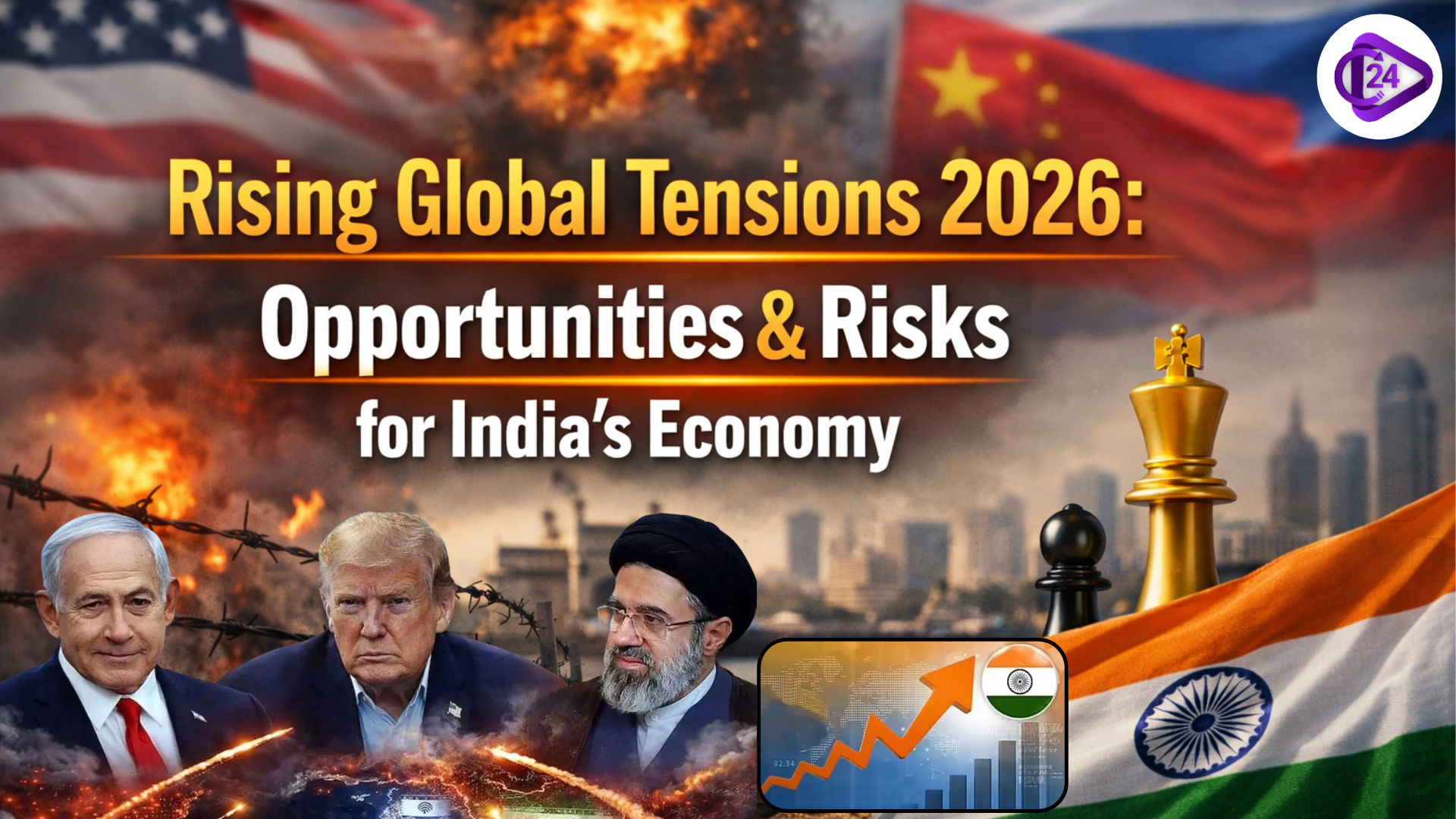


Global tensions continue to grow in 2016 due to geopolitical tensions, trade restrictions and economic uncertainty, which are affecting the global economy. These trends pose opportunities and challenges for India. India, being a rapidly developing economy, needs to manage trade, energy and supply chain challenges and take advantage of evolving opportunities. Organisations such as the International Monetary Fund and the World Bank have called for resilience in emerging markets. India’s policy and reform measures will be vital in shaping its response to risks and embracing opportunities.
Impact of Global Tensions on India’s Economy
- Geopolitical uncertainty may create supply chain disruptions, affecting India’s exports, imports, and manufacturing.
- Fluctuating oil prices can lead to higher imports and exacerbate inflation and current account deficits.
- India may reap gains from the China+1 policy, with foreign companies relocating production.
- IT, pharma and textiles, among other export-based industries, may find new markets.
- Foreign exchange rates may result in rupee depreciation, impacting imports and investments.
- Global interest rates may lead to outflows from emerging markets such as India.
- Defence and energy, among other strategic sectors, may see government investments and reforms.
- India’s emphasis on Atmanirbhar Bharat may stimulate domestic manufacturing and decrease imports.
- Trade shifts can provide opportunities for new bilateral and multilateral trade pacts.
- India could increase food and energy security measures by boosting domestic production.
- Geopolitical tensions might create a haven for investment in India.
- Transportation bottlenecks may lead to higher costs and delays.
- Global uncertainty may not affect India’s digital economic growth.
- Political alliances can ensure access to resources and technology.
Elon Musk Launches Terafab AI Chip Project to Challenge NVIDIA
Conclusion – Rising Global Tensions 2026
The escalating geopolitical tensions in 2026 hold both challenges and opportunities for the Indian economy. The risks of inflation, supply chain issues, and volatile energy prices are significant, but India also has opportunities from changing global trade and capital flows. Increasing domestic capacity, diversified trading relationships and macroeconomic stability will be critical. Through effective policy intervention and proactive planning, India can not only survive but thrive in the face of global uncertainty and position itself as a strong and attractive destination for growth in a changing global economy.