

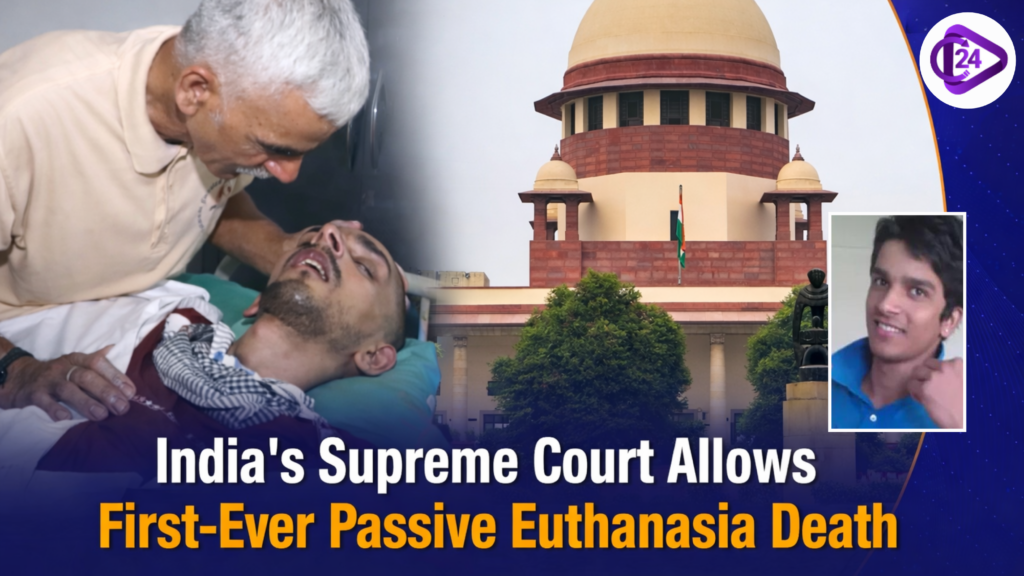
India’s legal and ethical landscape witnessed a historic moment when the Supreme Court of India permitted the country’s first case of passive euthanasia to be carried out under judicial oversight. Passive euthanasia refers to withdrawing or withholding life-sustaining treatment from a terminally ill patient who has little or no chance of recovery. The decision highlights the growing recognition of patient autonomy, dignity in death, and compassionate medical care. India had earlier recognized the concept through landmark rulings, but this case marks the first time the procedure has been practically implemented with court approval. The development has sparked nationwide debate on medical ethics, legal safeguards, and the rights of patients and families.
Legal and Ethical Significance of Passive Euthanasia in India
-
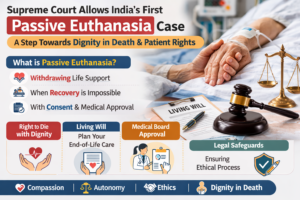
Passive euthanasia involves the withdrawal or withholding of life-sustaining medical treatment such as ventilators, artificial feeding, or other life-support systems when recovery is deemed impossible.
-
The legal basis for passive euthanasia in India was established by the Aruna Shanbaug Case, where the court allowed passive euthanasia under strict guidelines and judicial supervision.
-
Later, the Common Cause vs Union of India recognized the right to die with dignity as part of the fundamental right to life under Article 21 of the Constitution.
-
The court also legalized the concept of a “living will,” allowing individuals to state in advance whether they wish to receive life-support treatment if they become terminally ill.
-
In the recent case, the court allowed the withdrawal of life support after verifying medical reports and the consent of family members.
-
A medical board evaluated the patient’s condition and confirmed that recovery was medically impossible.
-
Strict procedural safeguards were followed to ensure that the decision was voluntary, ethical, and not influenced by financial or social pressure.
-
The ruling sets an important precedent for hospitals, doctors, and families dealing with terminal illness cases.
-
It also emphasizes the importance of palliative care and compassionate end-of-life decisions in the healthcare system.
-
The case may encourage more awareness about living wills and patients’ rights in India.
Best MCQs in Euthanasia
Which country became the first in the world to legalize euthanasia?
A. Belgium
B. Netherlands
C. Switzerland
D. Canada
Answer: B. Netherlands
Explanation: The Netherlands became the first country to legalize euthanasia in 2002 under strict medical and legal conditions.
Which country was the second in the world to legalize euthanasia?
A. Belgium
B. Luxembourg
C. Canada
D. Spain
Answer: A. Belgium
Explanation: Belgium legalized euthanasia in 2002, shortly after the Netherlands, and later extended the law to include minors under strict safeguards.
Which type of euthanasia is legal in India under specific conditions?
A. Active euthanasia
B. Passive euthanasia
C. Voluntary euthanasia
D. Physician-assisted suicide
Answer: B. Passive euthanasia
Explanation: In 2018, the Supreme Court of India allowed passive euthanasia and recognized the right to die with dignity.
Which landmark case in India first allowed passive euthanasia under strict guidelines?
A. Vishaka Case
B. Maneka Gandhi Case
C. Aruna Shanbaug Case
D. Kesavananda Bharati Case
Answer: C. Aruna Shanbaug Case
Explanation: The Aruna Shanbaug Case allowed passive euthanasia for the first time in India with court approval.
Which Indian case legalized the concept of a “living will”?
A. Shreya Singhal Case
B. Common Cause Case
C. Nirbhaya Case
D. Minerva Mills Case
Answer: B. Common Cause Case
Explanation: In the Common Cause vs Union of India, the Supreme Court recognized living wills and the right to die with dignity.
In euthanasia, what does “passive euthanasia” mean?
A. Administering a lethal injection
B. Withdrawing or withholding life-support treatment
C. Providing painkillers to end life quickly
D. Assisted suicide by doctors
Answer: B. Withdrawing or withholding life-support treatment
Explanation: Passive euthanasia involves stopping life-sustaining treatment like ventilators when recovery is impossible.
Which country legalized euthanasia for minors (children) under certain conditions?
A. Canada
B. Spain
C. Belgium
D. Germany
Answer: C. Belgium
Explanation: Belgium became the first country to allow euthanasia for children of all ages with parental consent and strict medical approval.
Which European country is known for allowing assisted suicide but not active euthanasia?
A. Switzerland
B. Italy
C. Portugal
D. Greece
Answer: A. Switzerland
Explanation: Switzerland allows assisted suicide if the person helping has no selfish motive.
The right to die with dignity in India is linked to which article of the Constitution?
A. Article 14
B. Article 19
C. Article 21
D. Article 32
Answer: C. Article 21
Explanation: Article 21 guarantees the Right to Life, which the Supreme Court interpreted to include dignity in death.
Which country in North America legalized medical assistance in dying (MAiD) in 2016?
A. United States
B. Mexico
C. Canada
D. Cuba
Answer: C. Canada
Explanation: Canada legalized Medical Assistance in Dying (MAiD) in 2016, allowing doctors to assist terminally ill patients.
Amit Shah Unveils ‘Pragati’, ‘Vikas’
Conclusion
The decision of the Supreme Court of India to allow the country’s first passive euthanasia marks a significant step in recognizing the right to die with dignity. Building on earlier rulings such as the Aruna Shanbaug Case and the Common Cause vs Union of India, the move highlights evolving legal and ethical perspectives on end-of-life care while emphasizing strict safeguards, patient autonomy, and compassionate medical decision-making.