

Daily Current Affairs

Day: June 20, 2026
Supreme Court

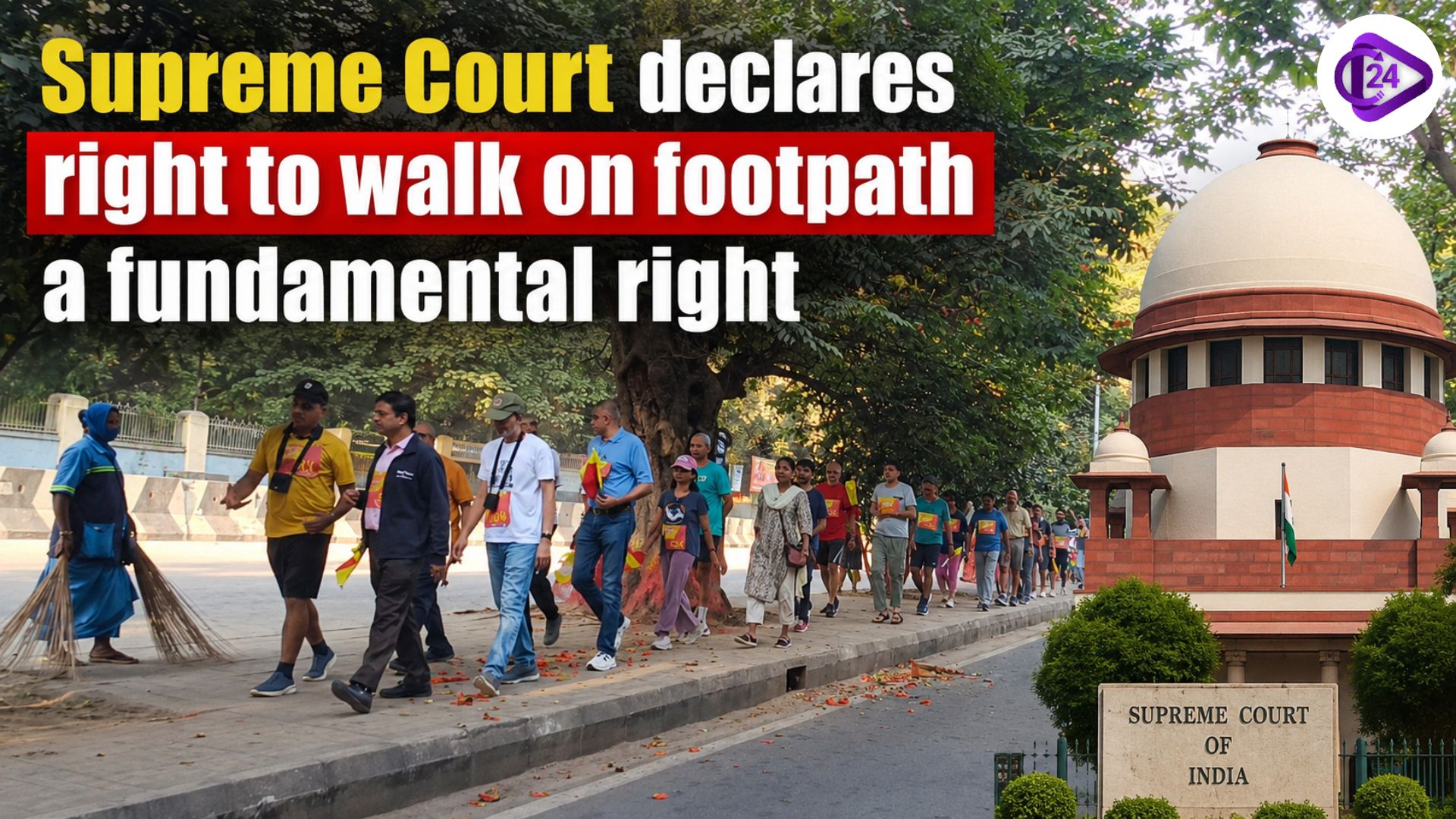
Supreme Court declares right to walk on footpath a fundamental right

The Supreme Court decision on the right to walk on a footpath is a key step towards better pedestrian rights and urban governance in India. In a precedent-setting decision, the Supreme Court decided that citizens have a basic entitlement to walking safely and freely on footpaths without obstruction. The court said that Article 21 of the Constitution guarantees people the right to life and personal freedom, including the right to stroll freely on the pavement.

The ruling underscores the fact that roads are not just for cars. Rather, urban infrastructure should be accessible to walkers and include people of all ages, in particular children and senior citizens, disabled persons and other vulnerable sections of society. The Supreme Court walk-on-the-path decision will impact urban planning, traffic control and public safety policies throughout the country going forward.

Key Highlights: Supreme Court Right to Walk on Footpath

  • Ensures that the public has the right to walk on a footpath.
  • Safe access to footpaths was identified as a right in Article 21 by the Supreme Court.
  • The decision says that Public Highway Paths are solely for pedestrian use and cannot be blocked.
  • The state governments and local authorities are responsible for providing uncrowded footpaths.
  • The ruling reveres inclusiveness as a form of urban planning and pedestrian-friendly infrastructure.
  • A safe environment for children, senior citizens, and persons with disabilities is given the highest priority.
  • Municipalities could find their responsibilities for providing walkable public places surrounding them raised.

What Did the SC Say About the Right to Walk on the Footpath?

The Supreme Court ruling in the case of ‘right to walk on footpath’ only reaffirms the constitutional right to life, which is not limited to survival. The court stated that mobility is important to a dignified life and that it was important for them to move in a safe manner.

The judgment provides, “footpaths are public spaces in which walking is expected. The neglect of maintaining forests and infrastructure, illegal encroachments and unauthorised parking infringe citizens’ constitutional rights. The court also noted the government’s responsibility to develop and maintain accessible, seamless pathways for all citizens to be present.

Fundamental Rights (PYQs) 

Year Exam Question Options Correct Answer
2025 UPSC Prelims Which Article of the Constitution guarantees the Right to Constitutional Remedies? (A) Article 19

(B) Article 21

(C) Article 32

(D) Article 368

(C) Article 32
2024 SSC CGL The Right against Exploitation prohibits which of the following? (A) Child labour in hazardous industries

(B) Human trafficking

(C) Forced labour

(D) All of the above

(D) All of the above
2023 UPSC Prelims Article 19 of the Constitution guarantees how many freedoms to citizens? (A) Four

(B) Five

(C) Six

(D) Seven

(C) Six
2023 RRB NTPC Which Article abolishes untouchability? (A) Article 15

(B) Article 16

(C) Article 17

(D) Article 18

(C) Article 17
2022 SSC CHSL Equality of opportunity in matters of public employment is guaranteed under which Article? (A) Article 14

(B) Article 15

(C) Article 16

(D) Article 17

(C) Article 16
2022 UPSC Prelims Protection in respect of conviction for offences is provided under which Article? (A) Article 19

(B) Article 20

(C) Article 21

(D) Article 22

(B) Article 20
2021 State PSC Which of the following Fundamental Rights is available only to citizens of India? (A) Article 14

(B) Article 19

(C) Article 21

(D) Article 22

(B) Article 19
2021 SSC CGL Which Article prohibits discrimination on grounds of religion, race, caste, sex, or place of birth? (A) Article 14

(B) Article 15

(C) Article 16

(D) Article 17

(B) Article 15
2020 UPSC Prelims The Right to Education is guaranteed under which Article? (A) Article 19A

(B) Article 20A

(C) Article 21A

(D) Article 22A

(C) Article 21A
2020 RRB Group D Which Article guarantees protection of life and personal liberty? (A) Article 19

(B) Article 20

(C) Article 21

(D) Article 22

(C) Article 21
2019 SSC CHSL Freedom of speech and expression is guaranteed under which Article? (A) Article 19(1)(a)

(B) Article 20

(C) Article 21

(D) Article 25

(A) Article 19(1)(a)
2019 UPSC Prelims Cultural and Educational Rights are covered under which Articles? (A) Articles 25–28

(B) Articles 29–30

(C) Articles 32–35

(D) Articles 14–18

(B) Articles 29–30
2018 State PSC Which Fundamental Right was described by Dr. B.R. Ambedkar as the “heart and soul” of the Constitution? (A) Article 14

(B) Article 19

(C) Article 21

(D) Article 32

(D) Article 32
2017 SSC CGL Freedom of religion is guaranteed under which Articles? (A) Articles 19–22

(B) Articles 23–24

(C) Articles 25–28

(D) Articles 29–30

(C) Articles 25–28
2016 UPSC Prelims Which of the following Fundamental Rights is available to both citizens and non-citizens? (A) Article 19

(B) Article 29

(C) Article 30

(D) Article 21

(D) Article 21

World Sickle Cell Day 2026: Date, Theme, History and Significance

Conclusion on Right to Safe Footpaths Is a Fundamental Right

The Supreme Court’s right to walk on a footpath ruling is a monumental stride toward making Indian cities safe and accessible. Acknowledging pedestrian access as a fundamental right under Article 21, the Supreme Court has reiterated that `urban infrastructure must be for people and not for vehicles. Governments and local councils now have a clear responsibility to clear footpaths, ensuring they are safe, accessible and free from obstructions. Overall, the Supreme Court’s right to walk on the footpath decision may change urban planning, enhance public safety and encourage a more equitable use of public spaces throughout the nation.

FAQs – Supreme Court Right to Safe Footpaths

The Supreme Court held that citizens have a fundamental right to walk safely on footpaths as part of the right to life under Article 21.
Wolf Prize

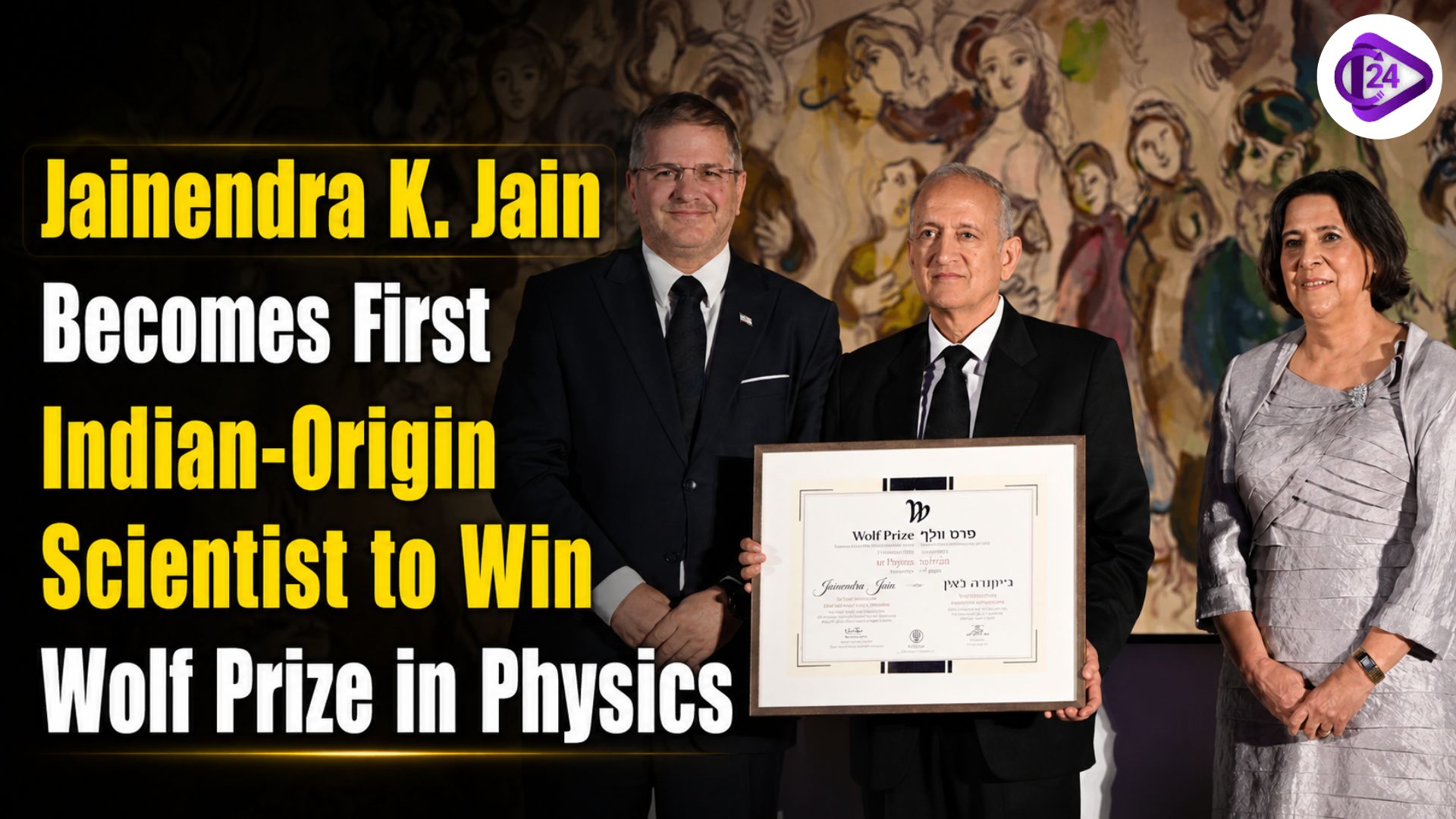
Jainendra K. Jain Becomes First Indian-Origin Scientist to Win Wolf Prize in Physics

In a significant achievement for the global scientific community, Jainendra K. Jain’s Wolf Prize in Physics is one of the most talked-about subjects in Physics and academia at large. Jainendra K. Jain, a celebrated scientist in the field of theoretical physics from India, has won the prestigious Wolf Prize in Physics for his groundbreaking contributions to condensed matter physics, becoming the first Indian scientist of Indian origin to win the prestigious Wolf Prize.

The prize honours his pioneering contributions to the fractional quantum Hall effect and the development of the composite fermion theory on the fundamental aspects of strongly interacting electron systems. This is a recognition of India’s increasing outreach in cutting-edge science and consolidates India’s role of India in the international physics arena.

Key Highlights: Jainendra K. Jain Wolf Prize in Physics

  • Dr Jainendra K. Jain is an Indian-origin Physicist who has been awarded the Wolf Prize in Physics for his work.
  • This honour was given to him for the composite fermion theory.
  • His research helped to unravel the fractional quantum Hall effect.
  • Today, Jain is a distinguished professor at Penn State University.
  • The Wolf Prize is considered one of the topmost scientific prizes in the world.
  • A number of the Wolf Prize winners have followed the path to the Nobel Prize.

Who is Jainendra K. Jain?

Jainendra K. Jain is an Indian-American theoretical physicist whose work in condensed matter physics had a significant impact. He was born in India and earned his PhD in physics before developing an international reputation by conducting research in the United States.

He is a Professor of Physics at Pennsylvania State University and has spent decades working on the problem of quantum many-body systems. He has contributed greatly to the understanding of electron behaviour in extreme situations.

Educational Background and Career

Particulars Details
Full Name Jainendra Kumar Jain
Profession Theoretical Physicist
Current Position Professor of Physics, Pennsylvania State University
Field of Research Condensed Matter Physics
Major Contribution Composite Fermion Theory
Notable Achievement First Indian-origin recipient of the Wolf Prize in Physics

India Inducts First Indigenous Hovercraft

What is the Wolf Prize in Physics?

The Wolf Prize is an international recognition prize which rewards people for outstanding achievement in science and the arts. The prize was founded by the Wolf Foundation in 1978 for people who make contributions for the benefit of mankind and the advancement of knowledge.

One of the most well-respected honours in the scientific field is the physics award. So many have later won the Nobel Prize.

Importance of the Wolf Prize

  • Knows and appreciates breakthroughs in science.
  • Honours accomplishments of a lifetime (research).
  • Promotes creativity and quality.
  • Encourages science cooperation and science diplomacy.
  • Recognises and celebrates those long-term contributions to the globe with high impact.

Why Did Jainendra K. Jain Receive the Wolf Prize in Physics?

He is the author of the groundbreaking explanation of the fractional quantum Hall effect using the concept of the composite fermion, which led to the Wolf Prize in Physics.

Before Jain’s studies, researchers had not fully understood what happens in a two-dimensional system under such conditions of extremely low temperatures and strong magnetic fields. Experimental observations of fractional electrical charges was unexpected, and existing theories were unable to fully explain.

Jain hypothesised that the magnetic flux quanta may be able to join with an electron to create composite particles, called composite fermions. The fundamental, although powerful, notion helped delineate an extremely complicated problem. His theory accounted for many of the experimental facts and set the framework for future studies in the field of quantum physics.

What is the significance of This Achievement for India?

The achievement of Jainendra K. Jain is very significant towards India and the Indian scientific community. It highlights the ongoing contribution of Indian-origin scientists and their work for world-class scientific advancements. Moreover, it stimulates the interest of students who want to take up a profession in basic sciences. With India’s research ecosystem growing and the focus on investing in higher education, it’s time to inspire the next generation of physicists and innovators with a success like the Jainendra K. Jain Wolf Prize in Physics.

Conclusion on Rajasthan Jainendra Jain Awarded Wolf Prize

The Jainendra K. Jain Wolf Prize in Physics is an historic occasion in the Physics world. Dr Jainendra K. Jain is the first Indian-origin scientist to get this prestigious award and has solidified his name as one of the most prominent scientists in the field of theoretical physics in his generation. His composite fermion theory has been the single most important advance in the understanding of the fractional quantum Hall effect and has influenced the entire field of condensed matter physics. Beyond the individual recognition, the Jnanendra K. Jain Wolf Prize in Physics reflects the ever-increasing influence of the work of Indian-origin scientists in topics of research and innovation around the world.

Physicist Jainendra Jain Earns Wolf Prize (FAQs)

Jainendra K. Jain received the Wolf Prize in Physics for developing the composite fermion theory, which explains the fractional quantum Hall effect.

Frequently Asked Questions (FAQs)

The current affairs cover recent national and international events related to UPSC, SSC, Banking, Railways, and State PCS.

You need to read about the current affairs daily, and revise them every week and every month to keep them longer in your memory.

Yes, Class24 provides free downloadable Daily Current Affairs PDFs for easy revision.

Yes, you can practice MCQs and quizzes to boost your exam preparation.

Absolutely. The content is written in simple, easy-to-understand bilingual language suitable for beginners.

Go to class24.com and click on the current affairs section directly, where you find everything that you need.

ssc-toppers

Start Learning Today with Class24

Related current affairs

Class24 offers free video lectures for smart preparation, covering CGL, CPO, CHSL, MTS, and GD exams. Learn from expert faculty, revise concepts easily, practice with PYQs, and improve speed and accuracy through high-quality, exam-focused video lessons anytime, anywhere.

Get success in your hand. Start study anytime anywhere.

The journey becomes simple and enjoyable when you start taking interest in it. And through our app “Class24”, we will be your trusted partners in developing that interest.

Daily Quizzes
Mock Tests
Ongoing

No ongoing tests right now.