
Day: April 25, 2026
Free Trade

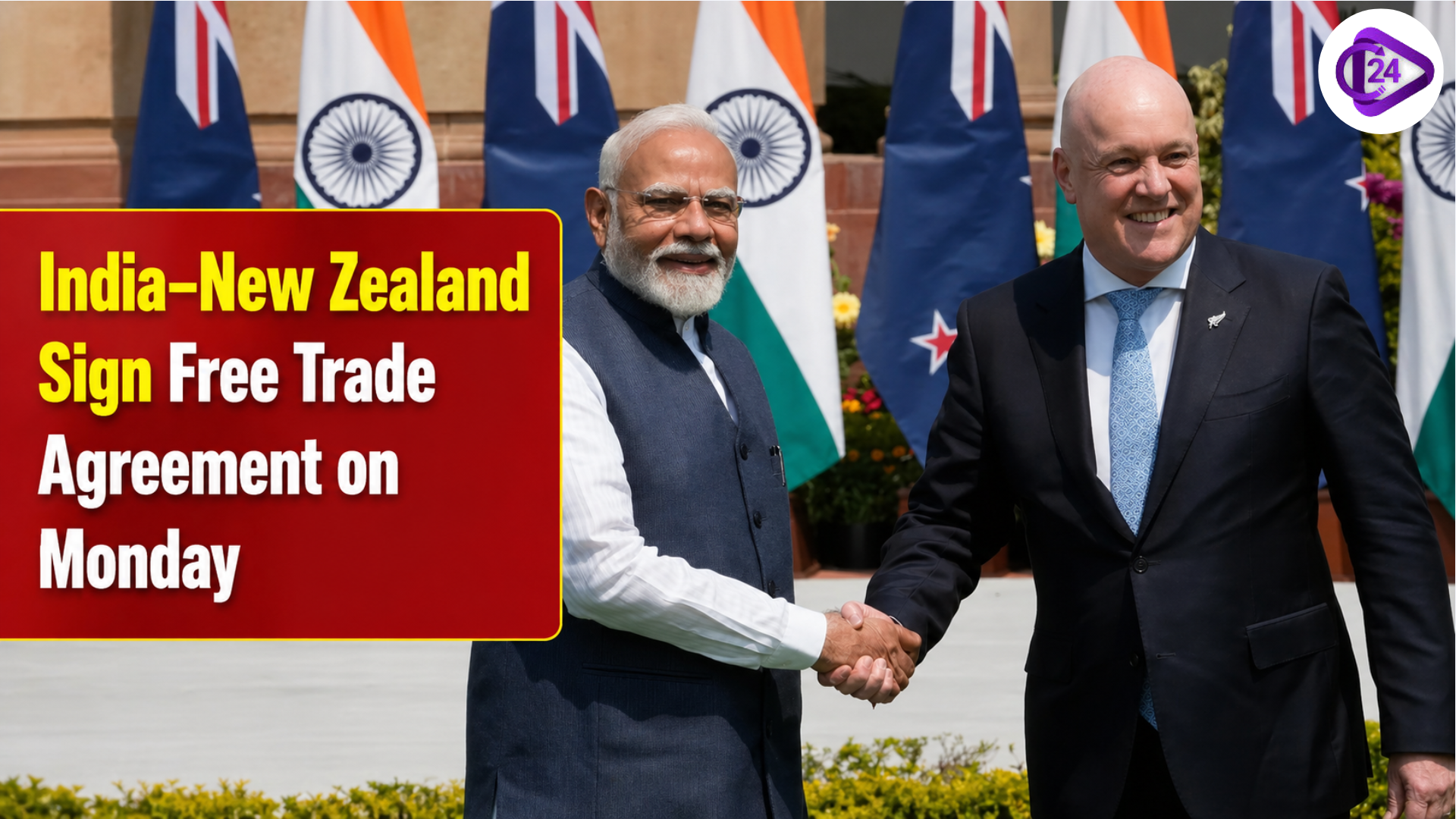
India–New Zealand Sign Free Trade Agreement on Monday

India and New Zealand are on track to ink a landmark Free Trade Agreement (FTA), heralding a new era for their economic partnership. This pact culminates the successful negotiation of a deal in December 2025, and is expected to substantially enhance trade and investment flows and promote market access. The accord is expected to help double trade between the two countries to $5 billion in five years and enhance strategic partnerships. The agreement is part of India’s strategy to strengthen international trade relations and economic engagements in the Indo-Pacific.

India and New Zealand FTA 2026: Key Highlights, Benefits & Trade Impact

  • The India-New Zealand FTA negotiations were finalised on 22 December 2025, leading to the agreement.

  • The FTA will be signed in New Delhi on 27 April 2026 (Monday).

  • The FTA will double trade between the two countries in five years to $5 billion in value, enhancing collaboration.

  • It will offer duty-free or concessional tariff access for most goods, facilitating exports.

  • Nearly 95% of goods exported from New Zealand to India will be subject to reduced or eliminated tariffs, with many being duty-free on day one.

  • India will, in turn, gain duty-free access to New Zealand for products such as textiles, pharmaceuticals and engineering products.

  • The deal is set to bring in $20 billion of investment to India over the next 15 years, aiding long-term trade relations.

  • Critically sensitive areas like dairy and agricultural products are safeguarded, maintaining India’s industry.

  • The agreement will boost trade in services, human resource exchanges and business opportunities in both countries.

  • It is also part of India’s efforts to diversify FTAs around the world and move away from a few markets.

  • This pact boosts India’s connectivity in the Indo-Pacific trade zone and enhances strategic alliances.

  • The agreement has been embraced by businesses and exporters in both countries, with anticipated growth and opportunities.

Japan Approves Missile and Defence Exports

Conclusion – India and New Zealand Sign FTA on Monday

The recent signing of the Free Trade Agreement (FTA) between India and New Zealand is a milestone in enhancing economic relations between the two countries and promoting international trade. This FTA will drive exports and improve investment opportunities while opening up opportunities for companies in India and New Zealand. The FTA, with its enhanced market opportunities and reduced trade impediments, demonstrates a commitment to grow and trade together. Ultimately, this will shape trade in the region and promote sustainable growth in the Indo-Pacific Bengal.

RBI

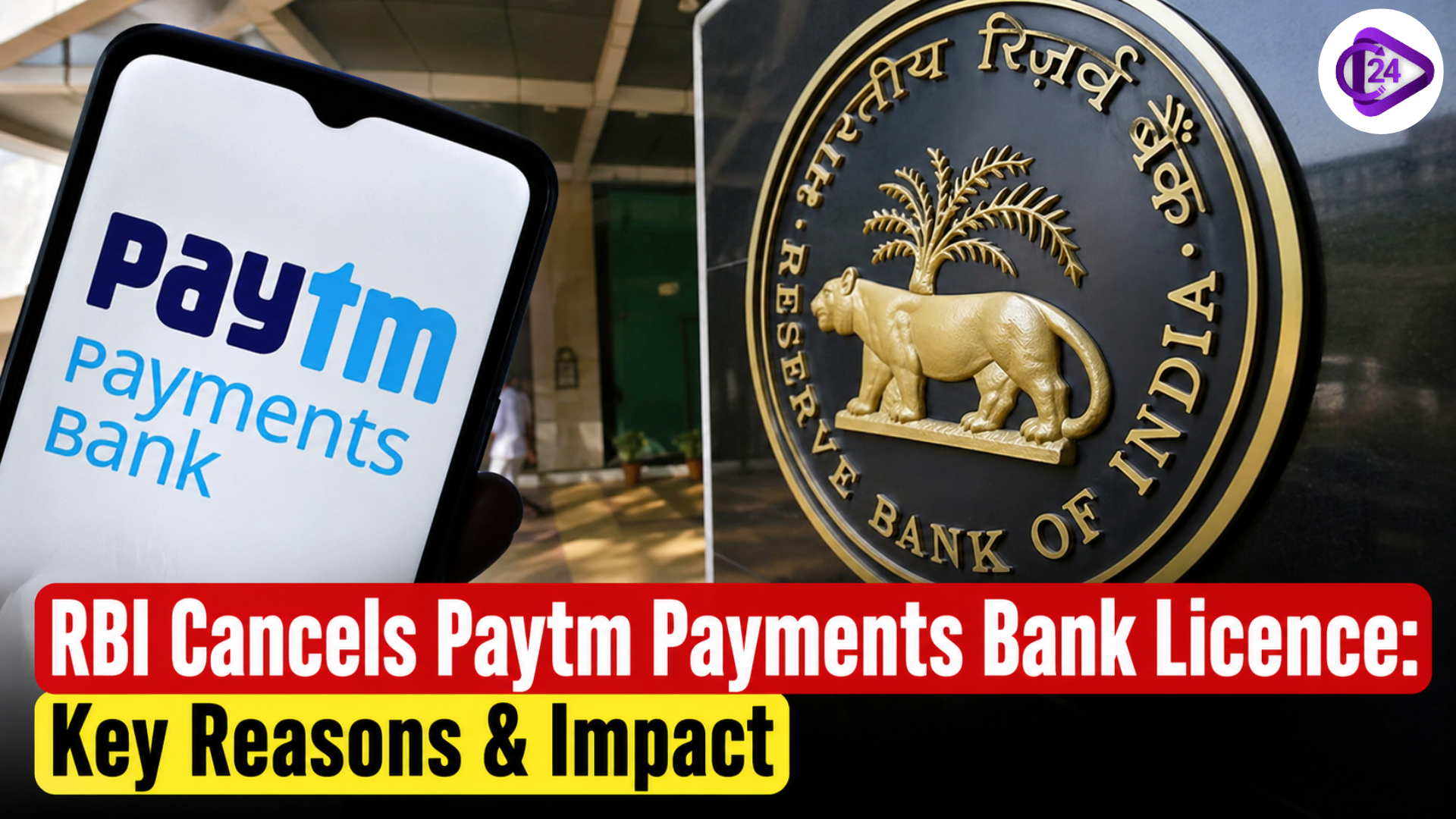
RBI Cancels Paytm Payments Bank Licence: Key Reasons & Impact

The Reserve Bank of India just made a big announcement of revoking the licence of Paytm Payments Bank with immediate effect. The bank was taken down via a press release on the grounds of failure to observe regulatory norms, governance issues, and the safety of depositors’ money. This has now prohibited the bank from conducting any banking business under the Banking Regulation Act, 1949. RBI has also started the process of winding up the bank through the High Court. The decision is amongst the firmest measures by the regulator in the fintech and digital banking ecosystem in India.

RBI Action on Paytm Payments Bank: Reasons, Violations & Customer Impact

  • The Reserve Bank of India (RBI) revoked the bank’s licence as per the Banking Regulation Act on 24 April 2026.

  • Paytm Payments Bank is now barred from carrying out banking operations, effective immediately.

  • RBI claims “the banking business of the bank is prejudicial to the interest of depositors and public interest”.

  • This move comes after years of alleged failure to adhere to regulatory norms and licence conditions.

  • Key concerns related to KYC, customer due diligence and governance.

  • RBI had previously placed restrictions on the bank in 2024, such as a moratorium on deposits.

  • The other concerns included misuse of accounts, linking one PAN to multiple accounts, and transaction anomalies.

  • The central bank said it has enough cash to pay off depositors during the winding-up process.

  • RBI will seek the High Court’s approval to wind the bank up.

  • Deposits will be allowed to be withdrawn, but operations will be phased out.

  • The decision reflects high regulatory standards, resilience and consumer comfort expectations by RBI.

  • This move is one of the toughest regulatory moves on a payments bank in India.

PYQs on Indian Banking & History

Exam Year Question Options Correct Answer
RBI Grade B 2021 Reserve Bank of India was established in which year? A. 1930 B. 1934 C. 1935 D. 1947 C. 1935
SSC CGL 2022 Who was the first Governor of RBI? A. C.D. Deshmukh B. Osborne Smith C. B. Rama Rau D. Hilton Young B. Osborne Smith
UPSC Prelims 2020 The Hilton Young Commission (1926) was related to the establishment of which institution? A. SBI B. RBI C. NABARD D. SEBI B. RBI
SSC CHSL 2021 Which institution is known as the “Banker’s Bank” in India? A. SBI B. RBI C. PNB D. ICICI B. RBI
RBI Assistant 2019 State Bank of India was established in which year? A. 1949 B. 1955 C. 1969 D. 1980 B. 1955
SSC CGL 2023 The first major bank nationalization in India took place in which year? A. 1955 B. 1969 C. 1975 D. 1980 B. 1969
UPSC Prelims 2018 Hilton Young Commission was set up in which year? A. 1921 B. 1926 C. 1930 D. 1935 B. 1926
SSC MTS 2020 Which was the first commercial bank in India? A. SBI B. Bank of Hindustan C. PNB D. RBI B. Bank of Hindustan
RBI Grade B 2022 What is the full form of CRR in banking? A. Cash Reserve Ratio B. Credit Risk Ratio C. Capital Reserve Ratio D. Currency Reserve Rate A. Cash Reserve Ratio
SSC CPO 2021 The Reserve Bank of India operates under which Act? A. Banking Regulation Act 1949 B. RBI Act 1934 C. Finance Act 1947 D. Companies Act 2013 B. RBI Act 1934

World Earth Day 2026

Conclusion – Paytm Payments Bank Licence Cancelled by RBI

The Reserve Bank of India’s revocation of Paytm Payments Bank’s licence is a crucial milestone in enforcing high compliance standards in the Indian banking industry. The move reflects the central bank’s commitment to strong governance standards and customer protection. It might affect users clinically, but it will boost confidence in banking. Looking ahead, fintech companies will have to enhance compliance measures to meet regulatory standards and promote sustainability.

Meta

Meta Automatically Blocks Flagged Content in India

Meta Automatically Blocks on 25 April 2026, media reports detailing Meta Platforms’ transparency reports showed the company is capable of automatically taking down content that has been flagged in bulk in some regions, including India. This feature is mainly intended to adhere to national regulations and government orders, which often mandate the immediate removal of illegal or sensitive content. India has been one of the main areas where these measures have been applied due to India’s stringent IT laws. Automated processes allow Meta to quickly process multiple flagged contents, but also invite concerns about excessiveness, visibility and the impacts on freedom of speech.

Meta Automatic Content Blocking in India: Official Rules & System Explained

  • Meta’s official reports on integrity recently noted the platform might be “required to automatically restrict content at scale” in certain countries for legal reasons.

  • These restrictions in India may stem from government requests, court orders, or legal provisions under IT laws.

  • As per data released by Meta, thousands of items are restricted in India at the request of official authorities.

  • Meta blocks content if it is illegal in India, even if it does not breach Meta’s community standards.

  • Automation is essential for Meta to act fast and at scale, especially in high-volume markets such as India, where more than a billion people are connected to the internet.

  • India’s new IT rules mandate quicker take-down of unlawful content (as short as three hours), increasing the need for automation.

  • In India, requests for content to be restricted have reportedly increased drastically.

  • Meta has admitted difficulties in adhering to stringent time frames, particularly for manual review.

  • The approach aims to maintain compliance with the law, security of the state, and maintenance of public order.

  • But critics say automated blocking can result in over-censorship and freedom of expression issues, and it remains an important issue in India’s digital landscape.

Conclusion – Meta Automatic Content Blocking in India

Meta’s automated content blocking in India is a growing trend at the convergence of technology, regulation and governance. Responding to rigorous legal standards and government mandates, automation enables rapid, mass-scale responses in the world’s second-biggest market. This leads to more rapid detection and takedown of illegal content, but also calls attention to issues of transparency and fairness, as well as over-censorship. The controversy underlines the trade-off between compliance and free speech. In the ever-changing landscape of India’s digital regulations, companies such as Meta will continue to fine-tune their content moderation practices to comply with laws and user expectations.

Raghav Chadha

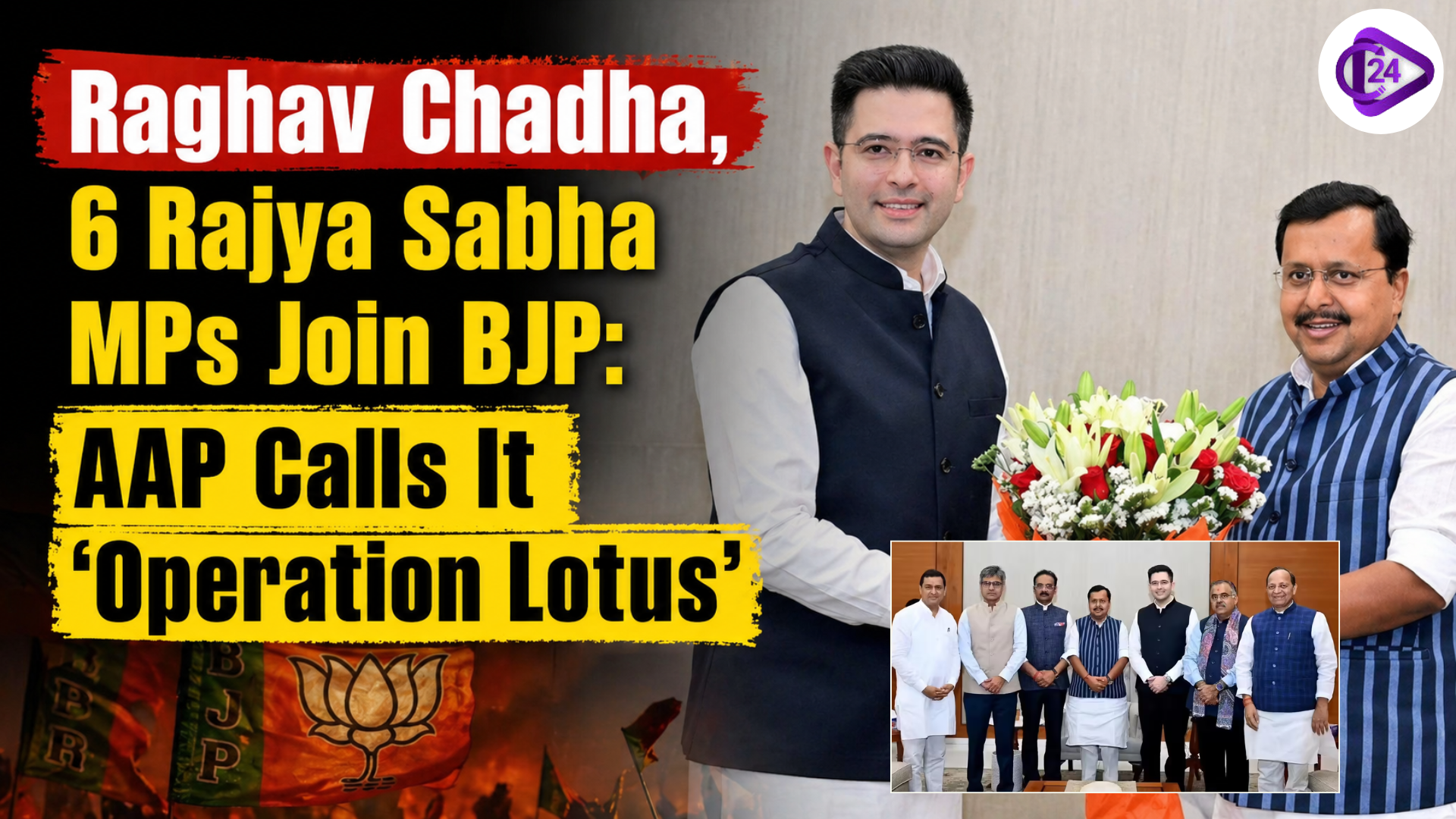
Raghav Chadha, 6 Rajya Sabha MPs Join BJP: AAP Calls It ‘Operation Lotus’

Indian politics witnessed a significant event on 25 April 2026, with Raghav Chadha and six other MPs in Rajya Sabha resigning from the Aam Aadmi Party (AAP) and joining the Bharatiya Janata Party (BJP). This was AAP’s largest-ever such merger in the House, with sources claiming that 7 of the 10 AAP MPs in the Rajya Sabha voted in favour of the merger. This move has had a major impact on the Upper House numbers and has drawn ire from AAP leadership, describing this as “Operation Lotus”.

Raghav Chadha Joins BJP: Key Highlights of Rajya Sabha MPs’ Shift

  • Raghav Chadha and six other AAP MPs formally resigned and joined the BJP on 24-25 April 2026 due to ideological differences.

  • They alleged that over two-thirds of AAP Rajya Sabha MPs backed this move and provided merger papers to the chairman of the Upper House.

  • The resignation of 7 out of 10 AAP MPs in the Rajya Sabha made this move a merger on constitutional grounds.

  • Key leaders include Sandeep Pathak, Ashok Mittal, Harbhajan Singh, Swati Maliwal, and more.

  • AAP has denounced the move as “Operation Lotus”, suggesting the BJP applied political pressure to coax defections.

  • BJP welcomed the MPs, saying it is a testament to the NDA’s popularity and policies.

  • This move is set to boost the NDA’s numbers in the Rajya Sabha, influencing policy-making.

  • The move is deemed one of the biggest walkouts in the Rajya Sabha in recent decades, ushering in a political transition.

  • AAP had issues, such as leadership and ideological differences, as reasons for their split.

  • This move has escalated the political battle between AAP and BJP, with both hurling accusations at each other.

Political and Educational Background of Raghav Chadha

  • Raghav Chadha was born on 11 November 1988 in Delhi and did his commerce at the University of Delhi, and is a chartered accountant.

  • He had a career in big firms such as Deloitte and was attracted to public service with the India Against Corruption movement.

  • Then joined the Aam Aadmi Party, one of the young leaders.

  • Acted as MLA from Rajinder Nagar (2020 – 2022) & vice chairman at Delhi Jal Board.

  • Elected to the Rajya Sabha in 2022, becoming one of the youngest MPs from Punjab.

  • Played a pivotal role in the Punjab elections and parliamentary politics.

  • He defected from AAP and joined the Bharatiya Janata Party in April 2026.

Operation Lotus (Kamala): Meaning & Political Controversy

  • Operation Lotus (or Operation Kamala) is a political term that has been used in India since 2008, primarily by the Bharatiya Janata Party.

  • The term “Kamala” (lotus) is derived from the BJP’s official election symbol.

  • It meant actions to acquire a majority by convincing or forcing opposition MLAs/MPs to cross sides.

  • Popularised in Karnataka in 2008.

  • Also known as “poaching” or “defection politics” by the opposition.

  • The term is often denied by BJP leaders, who claim it lacks credibility.

  • It is a common term used in political discourse, particularly in the formation of governments or crises.

  • In April 2019, AAP once again charged “Operation Lotus” with MPs like Raghav Chadha defecting to the BJP.

  • It continues to be a controversial and debated aspect of Indian politics.

All-Women Cohort Wins Goldman Environmental Prize 2026

Conclusion – 7 Rajya Sabha MPs Shift, AAP Alleges

Seven Rajya Sabha MPs are a pivotal moment in Indian politics, bringing into question questions of party cohesion and intra-parliamentary politics. The opposition AAP has charged the move as part of an “Operation Lotus”, adding to the politico-ideological tension, while the BJP considers this shift a vote of confidence. The move will have implications for future Rajya Sabha legislation and upcoming political moves. The fallout and responses underline the shifting alliances and dynamics in Indian politics.

Frequently Asked Questions (FAQs)

The current affairs cover recent national and international events related to UPSC, SSC, Banking, Railways, and State PCS.

You need to read about the current affairs daily, and revise them every week and every month to keep them longer in your memory.

Yes, Class24 provides free downloadable Daily Current Affairs PDFs for easy revision.

Yes, you can practice MCQs and quizzes to boost your exam preparation.

Absolutely. The content is written in simple, easy-to-understand bilingual language suitable for beginners.

Go to class24.com and click on the current affairs section directly, where you find everything that you need.

ssc-toppers

Start Learning Today with Class24

Related current affairs

Class24 offers free video lectures for smart preparation, covering CGL, CPO, CHSL, MTS, and GD exams. Learn from expert faculty, revise concepts easily, practice with PYQs, and improve speed and accuracy through high-quality, exam-focused video lessons anytime, anywhere.

Get success in your hand. Start study anytime anywhere.

The journey becomes simple and enjoyable when you start taking interest in it. And through our app “Class24”, we will be your trusted partners in developing that interest.

Daily Quizzes
Mock Tests
Ongoing

No ongoing tests right now.