Day: April 23, 2026
ILO Report

Toxic Workplaces Cause 8.4 Lakh Deaths Annually: ILO Report

The International Labour Organization, toxic workplaces have a severe health impact on the world. The results reveal that the causes of almost 8.4 lakh deaths each year are related to harmful working conditions that involve long working hours, stress, and hazardous substances. The report belongs to the bigger ILO studies on occupational safety and indicates that annually, millions of workers lose their lives because of dangerous working conditions and occupational illnesses. It highlights parts of the urgency of healthier and safer workplaces and bolsters labour policies in defence of the physical and mental health of workers across the globe.

Toxic Workplaces Cause 8.4 Lakh Deaths Annually: ILO Report

  • The International Labour Organization report mentions that the toxic conditions of the workplace contribute to an age figure of a minimum of 8.4 lakh deaths every year, particularly as a result of stress and long working hours.

  • On an international level, the total number of deaths annually caused by work has reached approximately 2.9 to 3 million, and it demonstrates the much more global perspective of the problem.

  • Most of them (approximately 2.6 million) die due to a work-related illness and not an accident.

  • Major risk factors are extreme working hours, psychological stress, occupational exposure to chemicals, and hazardous conditions.

  • A significant occupational risk is that long working hours alone have been a cause of hundreds of thousands of deaths worldwide.

  • Poisoning, cancer risks, and respiratory diseases are highly imminent risks of hazardous substances such as toxic chemicals, dust, and fumes.

  • It is also brought to light in the report that the highest number of work-related deaths go to the Asia-Pacific region, a region with a vast workforce.

  • The extensive impact of the unsafe working conditions is evidenced by the number of about 395 million non-fatal injuries to workers per year.

  • The causes of death are mainly cardiovascular diseases, cancer, and respiratory diseases, which are caused by occupation.

  • Mental health, productivity, and work-life balance are other areas that are impacted by toxic work culture and put strain on burnout and stress levels.

  • The ILO stresses the importance of good labour laws, standards of safety, and accountability of the employer in minimising risks.

  • Enhancement of the work conditions is a way of ensuring sustainable economic growth and the welfare of the workers in most parts of the world.

About International Labour Organisation

  • World War I was followed by the Treaty of Versailles in 1919, which led to the formation of the International Labour Organization.

  • It has its head office in Geneva, Switzerland.

  • The primary objective is to enhance social justice, labour rights, and decent work worldwide.

  • In 1946, it assumed the status of the first specialised United Nations agency.

  • Albert Thomas (1919) became the first director-general.

  • This is held by Gilbert F. Houngbo, the present director-general (since 2022).

  • There are 187 member countries of the ILO.

  • It takes a distinct tripartite form with the governments, employers, and workers.

  • One of the latest members (joined in 2015) is the Cook Islands.

  • The organisation is inspired by the effort of enhancing working circumstances, job prospects, and social security all over the world.

AICTE VAANI 3.0 Scheme 2026 Launched

Conclusion – Toxic Workplaces Lead to 8.4 Lakh Deaths Every Year

The International Labour Organization points to the pressing nature of the necessity to address unsafe and unhealthy working environments on the international level. They not only cause decreased productivity but also a high penalty to the physical and mental well-being of employees. Enhancement of labour legislation and safe practice, as well as the responsibility of the employers, should be enabled. By making the workplace conditions better, it will reduce the number of preventable deaths and make the workforce worldwide healthier and more sustainable.

Seaports

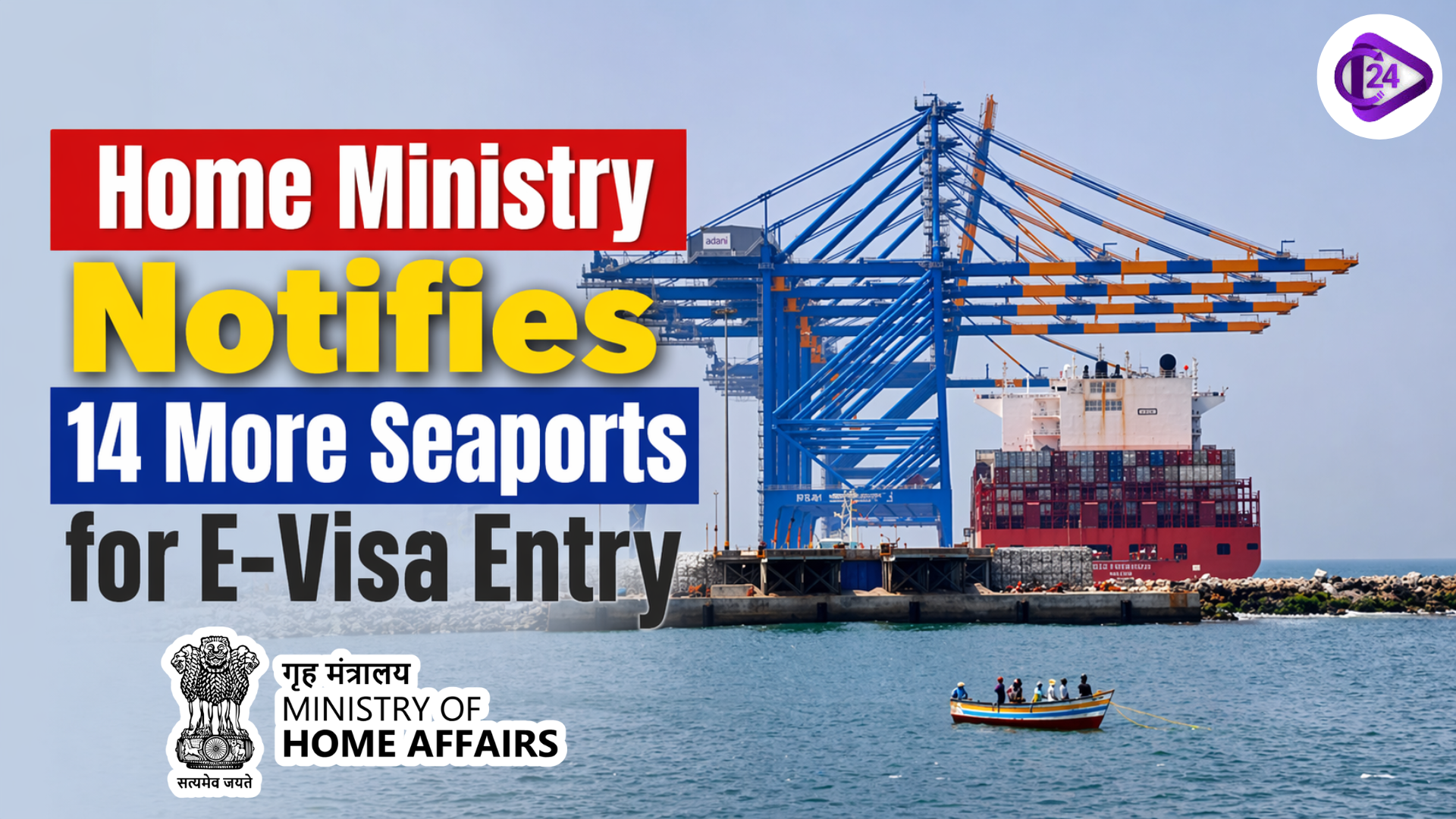
Home Ministry Notifies 14 More Seaports for E-Visa Entry

The Government of India, via the Ministry of Home Affairs, has announced 14 other seaports as entry points into India, which can be utilised as part of the e-Visa e-ticket for users and thereby create a big international accessibility via sea transport routes. The rationale behind this action is to increase cruise tourism, facilitate immigration procedures and make the movement of foreign nationals easier. The new notification enhances international connectivity in India, as previously, e-Visa entry was restricted to selected airports and a small number of seaports. The growth is in line with the continued modernisation of the immigration infrastructure without compromising security and compliance at ports of entry in the entire country.

Govt Notifies 14 More Seaports for E-Visa Entry – Key Highlights & Benefits

  • E-Visa entry to 14 more ports has been appointed by the Ministry of Home Affairs as immigration check posts (ICPs).

  • This move enables foreigners with valid e- Visas to travel to India via additional sea routes, enhancing accessibility.

  • In the past, e-Visa entry was limited to a few seaports and large airports, which presented bottlenecks to the cruise passengers.

  • The growth is expected to increase cruise tourism and increase the number of international tourists to the coastal areas of India.

  • IPCs’ seaports will enjoy improved facilities in immigration with verification and security systems.

  • The step goes hand in hand with the Indian policy of streamlining and liberalising visa procedures, facilitating travel.

  • It facilitates the emerging culture of maritime tourism and international cruise tourism in India.

  • The programme also promotes enhanced border security and compliance with national security at seaports.

  • And with increased entry points, there are currently more access options in India e-visa service available by air, sea, and land.

  • The policy also increases the ease of conducting tourism business, which is a benefit to coastal states and local economies.

  • Enhanced connectivity will aid in building port infrastructure and regional tourism centres.

  • On the whole, the step will enhance the competitiveness of India as one of the global tourist destinations with new immigration frameworks.

Important Ports of India

Port Name Location Importance
Deendayal Port (Kandla) Gujarat (West Coast) Major port for crude oil, chemicals & dry cargo; key trade gateway
Jawaharlal Nehru Port (JNPT) Maharashtra India’s largest container port; handles maximum container traffic
Mumbai Port Maharashtra Oldest natural port; handles petroleum and general cargo
Mundra Port Gujarat India’s largest private port; handles coal, containers & crude
Cochin Port Kerala Important for spice trade, shipbuilding & naval base
Chennai Port Tamil Nadu Major artificial port; automobile export hub
Visakhapatnam Port Andhra Pradesh Deepest landlocked port; key for iron ore export
Paradip Port Odisha Major port for coal & mineral exports
Syama Prasad Mookerjee Port (Kolkata Port) West Bengal Only riverine major port; gateway to East & Northeast India
Kamarajar Port (Ennore) Tamil Nadu First corporate port; handles coal & automobiles
V.O. Chidambaranar Port Tamil Nadu Key southern port for container & bulk cargo
New Mangalore Port Karnataka Handles crude oil, LPG & fertilizers

Punjab Anti-Sacrilege Bill 2026

Conclusion – India Allows E-Visa Entry at 14 More Seaports

India’s increasing e-visa entry to 14 other seaports portrays a push factor as it endeavours to improve global connectivity and promote cruise tourism. The move takes place under the leadership of the Ministry of Home Affairs, and as a result, it eases travel processes among foreign visitors and underpins the maritime infrastructures. It will boost tourism along the coast, aid the local economies, and enhance ease of conducting tourism business, making India a more friendly and accessible destination to tourists at a global scale.

Blood Centre

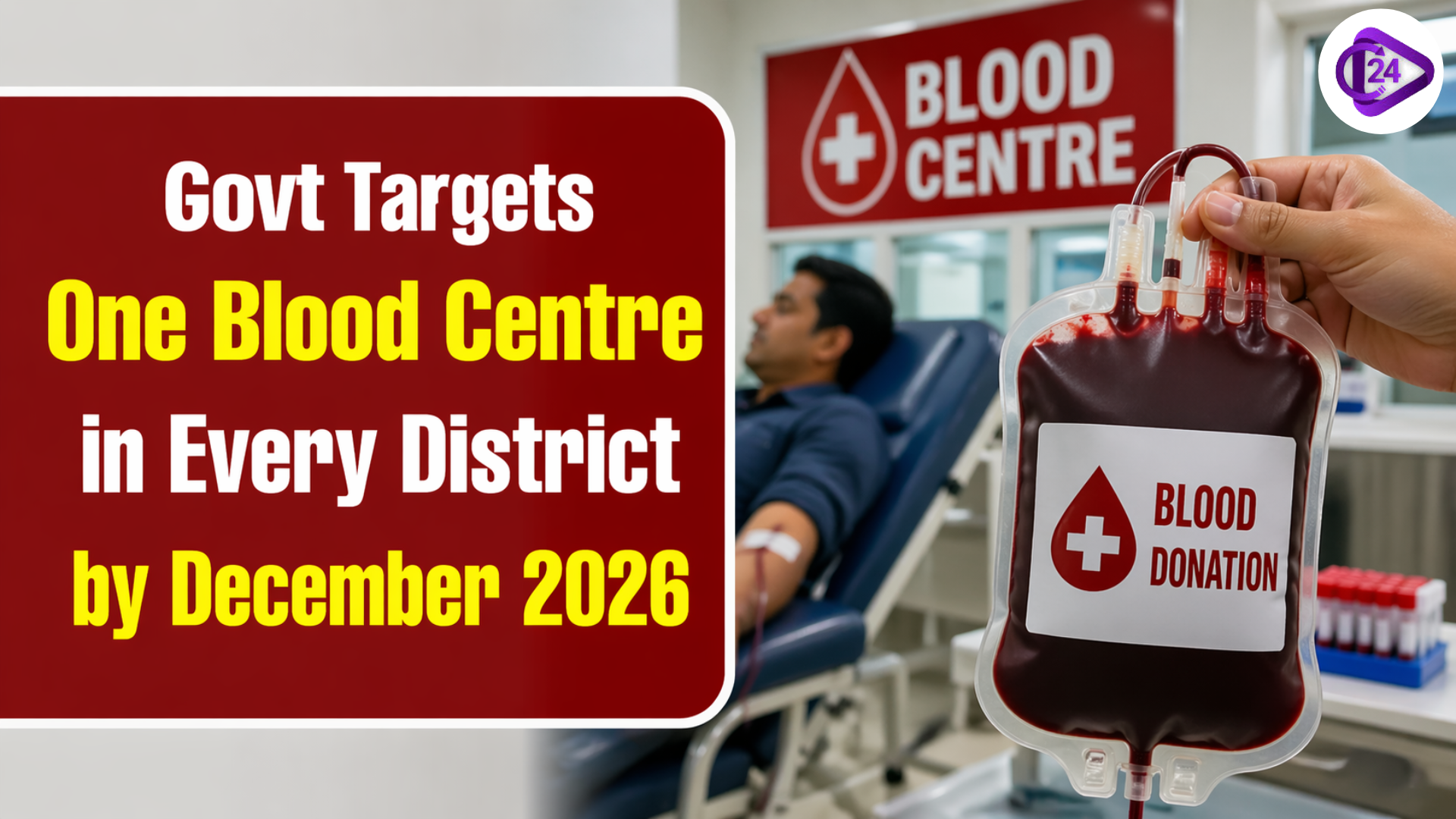
Govt Targets One Blood Centre in Every District by December 2026

The Government of India has established at least one blood centre in all districts by December 2026. This program is an initiative by the Ministry of Health and Family Welfare to ensure that people have access to safe blood within the stipulated time and minimise life-threatening delays in emergencies. A national audit of blood transfusion service provision revealed that almost 1 in 10 districts still failed to have adequate blood centre facilities, creating a critical infrastructure and service delivery gap. The plan is focused on enhancing accessibility, safety and efficiency in blood services around the nation and is in tandem with the National Blood Policy.

Significance of One Blood Centre in Every District

  • The Ministry of Health is striving to make sure that there is a minimum of one blood centre per district by December 2026 to access universal access to safe blood.

  • This goal is included in the National Blood Policy, which aims at ensuring there is a safe, sufficient, and timely blood supply within India.

  • A recent national survey of blood centres has shown that about 10 per cent of districts are currently lacking in blood centres, resulting in gaps in accessibility.

  • The programme insists on the implementation of zero transfusion-transmitted infections (TTIs) by the introduction of improved screening and testing approaches.

  • The authorities are struggling to enhance licensing compliance and standard operating procedures in every one of the blood centres.

  • To increase the digital integration, the government intends to make improvements through digital platforms such as eRaktKosh and the Blood Bank Management System (BBMS) to monitor in real-time.

  • One of the priorities is to strengthen voluntary blood donation campaigns, which will help to preserve sufficient blood levels in the country.

  • The programme will enhance emergency medical care, particularly in the underserved areas and rural territories.

  • Coordination will be established between the National and State Blood Transfusion Councils to ensure effective implementation and monitoring.

  • The government will have periodic reviews and performance monitoring to make sure that the target meets the deadline.

  • The expansion of blood centre infrastructure will help curb problems such as uneven distribution and blood shortages in some areas.

  • Generally, the project is supposed to establish an effective, transparent, and strong blood transfusion system within India.

Important PYQs on Blood

Exam Name Year Question Options Answer
NEET 2023 Person with blood group AB is called universal recipient because: (A) Both antibodies present
(B) No antigen
(C) Both antigens but no antibodies
(D) No antigen & antibody
C
NEET 2024 Plasma proteins include: (A) Albumin
(B) Globulin
(C) Fibrinogen
(D) All of these
D
NEET 2022 The most active phagocytic WBC is: (A) Lymphocyte
(B) Neutrophil
(C) Basophil
(D) Eosinophil
B
CUET 2023 A child of A (mother) and AB (father) cannot have which blood group? (A) A
(B) B
(C) AB
(D) O
D
SSC CGL 2022 Blood is classified as: (A) Tissue
(B) Fluid connective tissue
(C) Organ
(D) Cell
B
RRB NTPC 2021 Which component helps in clotting of blood? (A) RBC
(B) WBC
(C) Platelets
(D) Plasma
C
SSC CHSL 2020 Which blood cells are responsible for immunity? (A) RBC
(B) WBC
(C) Platelets
(D) Plasma
B
RRB Group D 2019 Red blood cells are formed in: (A) Liver
(B) Bone marrow
(C) Kidney
(D) Heart
B
SSC CPO 2021 Hemoglobin is found in: (A) Plasma
(B) RBC
(C) WBC
(D) Platelets
B

Myanmar Cuts Suu Kyi Sentence, Frees Ex-President

Conclusion – India Targets One Blood Centre in Every District

The Indian objective of establishing one blood centre per district by 2026 is a strong move in enhancing the healthcare system in the country. This initiative, headed by the Ministry of Health and Family Welfare, would help in enhancing access to safe blood on time, predominantly in rural and underserved regions. It will decrease emergency wait time, increase the safety of transfusion and encourage voluntary donation, which will eventually create a more equal and efficient healthcare system in the country.

Shekha Jheel

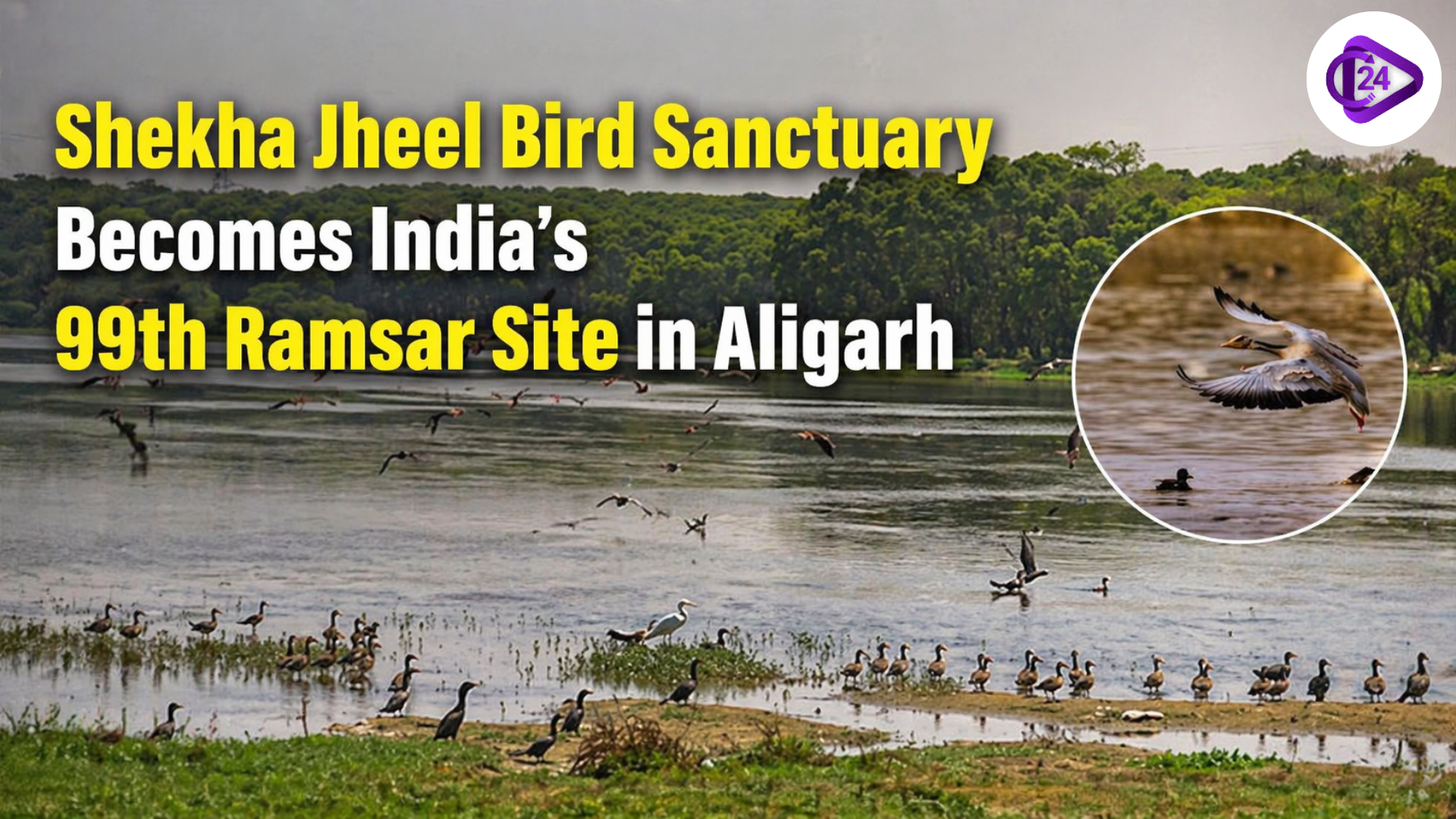
Shekha Jheel Bird Sanctuary Becomes India’s 99th Ramsar Site in Aligarh

The Shekha Jheel Bird Sanctuary in Aligarh, Uttar Pradesh, has received official designation as the 99th Ramsar site in India, which is a significant step towards protecting wetlands in India. Union Environment Minister Bhupender Yadav announced it, saying the sanctuary had ecological significance. Such a recognition is not only a reinforcement of global environmental commitments but also increases conservation of biodiversity and water security, and the livelihoods of the locals. This addition brings the total Ramsar sites in Uttar Pradesh to 12, and India is one step closer to a historic 100 Ramsar sites worldwide.

Importance of – Shekha Jheel Bird Sanctuary: India’s 99th Ramsar Site

  • Shekha Jheel Bird Sanctuary is a wetland in the Aligarh district, Uttar Pradesh, and it is currently listed under the Ramsar Convention as an internationally significant wetland.

  • The declaration adds up to 99 sites in India, which demonstrates the high enthusiasm of India towards preserving wetlands.

  • The state of Uttar Pradesh has been one of the biggest contributors to the wetland network in India, with it being the 12th Ramsar site.

  • Environment Minister Bhupender Yadav announced it, highlighting such benefits as biodiversity protection and climate security.

  • Shekha Jheel is an important area where migrating birds can be found on the Central Asian flyway, such as the bar-headed goose and the painted stork.

  • The wetland is a habitat for a rich ecosystem and is a source of ecological balance and preservation, as well as supporting many species of birds.

  • The Ramsar recognition aids in managing wetlands in a sustainable manner and securing wetlands against environmental risks such as pollution and habitat destruction.

  • It will enhance eco-tourism in the area, which will offer new possibilities to locals and economic development.

  • Wetlands such as Shekha Jheel play a crucial role in sustaining groundwater, flood management, and climatic stability.

  • It is a milestone that India is moving towards 100 Ramsar sites, strengthening its leadership in global environmental conservation efforts.

List of Latest Ramsar Sites in India (2025-2026)

Name of Ramsar Site Location Purpose / Importance Year
Shekha Jheel Bird Sanctuary Aligarh, Uttar Pradesh Important wetland for migratory birds, biodiversity conservation, supports water & climate security 2026
Patna Bird Sanctuary Etah, Uttar Pradesh Habitat for migratory & resident birds, ecological balance 2026
Chhari-Dhand Wetland Kutch, Gujarat Supports desert ecosystem, wildlife habitat including rare species 2026
Gokul Jalashay Bihar Wetland ecosystem supporting biodiversity and water conservation 2025
Menar Wetland Complex Udaipur, Rajasthan Bird habitat, supports local biodiversity & eco-tourism 2025
Khichan Wetland Phalodi, Rajasthan Famous for migratory birds (Demoiselle cranes), ecological importance 2025
Siliserh Lake Alwar, Rajasthan Freshwater wetland supporting biodiversity and tourism 2025
Khachoedpalri Wetland (Khecheopalri) Sikkim Sacred lake, ecological and cultural importance 2025

Purpose and About Ramsar

  • The Ramsar Convention on wetlands is a treaty that is international in nature and is commendable in protecting the sustainability of wetlands across the world.

  • On 2 February 1971, it was adopted in Ramsar and came into force in 1975.

  • This is primarily intended to safeguard wetlands because of their contribution to the conservation of biodiversity, water security, and climatic conditions.

  • Ramsar wetlands are declared wetlands of International Importance.

  • The convention enhances prudent utilization of wetlands, resulting in ecological equilibrium and sustainable growth.

  • India was a signatory in 1982 and further enhanced its commitment towards wetlands conservation.

  • The earliest Ramsar sites in India were the Keoladeo National Park (Rajasthan) and Chilika Lake (Odisha) in 1981.

  • Ramsar recognition assists in international collaboration and funding as well as conservation planning.

  • Wetlands promote migratory birds, fisheries, flood control, and groundwater recharge.

  • The convention is celebrated globally on World Wetlands Day, which is celebrated annually.

India Achieves 1,000-km Quantum Communication Breakthrough

Conclusion – Shekha Jheel Bird Sanctuary

The 99th Ramsar site in India, Shekha Jheel Bird Sanctuary, reinforces the actions taken by India towards the protection of wetlands. This awareness will enhance the protection of biodiversity, assist migratory birds, and also improve ecotourism in the area. It is also an indicator of the Indian sustainability towards environmental management and global conservation, long-term ecological stability, and societal gain.

Frequently Asked Questions (FAQs)

The current affairs cover recent national and international events related to UPSC, SSC, Banking, Railways, and State PCS.

You need to read about the current affairs daily, and revise them every week and every month to keep them longer in your memory.

Yes, Class24 provides free downloadable Daily Current Affairs PDFs for easy revision.

Yes, you can practice MCQs and quizzes to boost your exam preparation.

Absolutely. The content is written in simple, easy-to-understand bilingual language suitable for beginners.

Go to class24.com and click on the current affairs section directly, where you find everything that you need.

ssc-toppers

Start Learning Today with Class24

Related current affairs

Class24 offers free video lectures for smart preparation, covering CGL, CPO, CHSL, MTS, and GD exams. Learn from expert faculty, revise concepts easily, practice with PYQs, and improve speed and accuracy through high-quality, exam-focused video lessons anytime, anywhere.

Get success in your hand. Start study anytime anywhere.

The journey becomes simple and enjoyable when you start taking interest in it. And through our app “Class24”, we will be your trusted partners in developing that interest.

Daily Quizzes
Mock Tests
Ongoing

No ongoing tests right now.