Day: April 21, 2026
tobacco

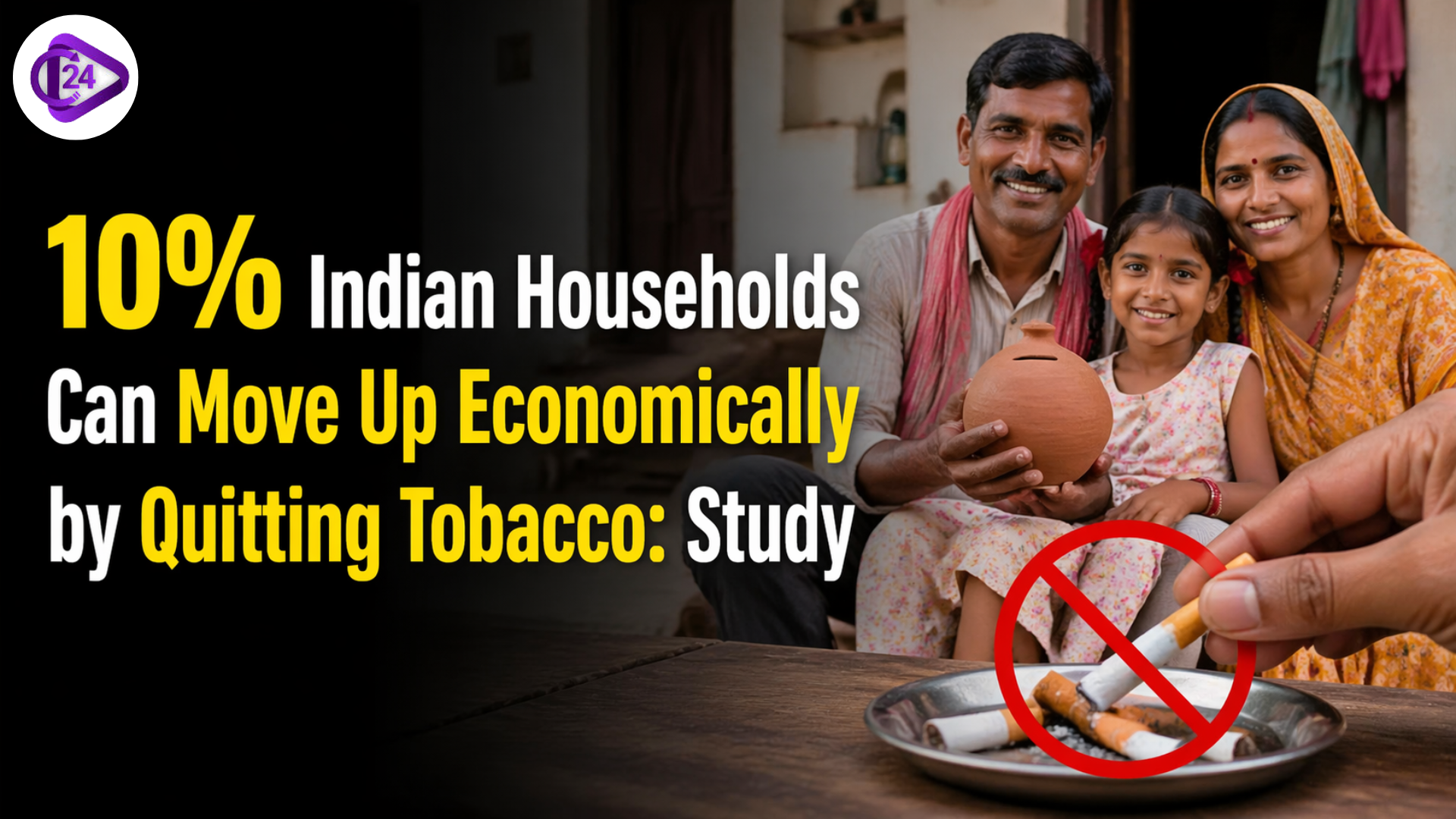
10% Indian Households Can Move Up Economically by Quitting Tobacco

Recent research in BMJ Global Health has shown that just by stopping the consumption of tobacco, almost ten per cent of Indian households can better their economic standing. The study makes it clear that tobacco use is more than a health problem but also a significant expense, particularly to households with low income levels. Having millions of households experience economic mobility upward by reallocating money used on tobacco to other basic needs, such as food, education, and healthcare. The analysis, founded on national consumption statistics, indicates that tobacco consumption is closely correlated with poverty, and there is a likelihood that tobacco cessation will become an important factor in enhancing the standards of living in India.

How Quitting Tobacco Can Improve Economic Status in India

  • In India, approximately 20.49 million (10.6) households would be able to shift to a higher economic status by giving up tobacco.
  • The author relies on the 2022-23 Household Consumption Expenditure Survey, comprising more than 2.6 lakh households across the country, therefore making it very reliable.
  • There is disproportionate spending on tobacco among poor households; in poor households, it shares 6.4 per cent of income compared to only 2 per cent in the richest.
  • Spending on tobacco in the rural areas is even greater at 6.6% of income, exacerbating financial stress and the lack of safety nets.
  • The economic effect on the rural population has the potential to target almost 17 million households, versus 3.5 million urban households, meaning it has a more significant rural effect.
  • Of the most impoverished households, 12.4 per cent were able to become completely spearheaded by abandoning tobacco.
  • Tobacco expenditure takes away finances that can be used to purchase other basic needs such as food, education and health services, further supporting poverty cycles.
  • Researchers point out that tobacco is a sort of so-called poverty trap because it inhibits economic mobility among millions of Indian families.
  • It may also benefit the poor, as around 5 million middle-income households would shift to higher revenue levels.
  • According to the study, there is no extra government spending needed; it is just necessary to better incorporate tobacco control into existing poverty and welfare programmes.
  • According to experts, tobacco cessation needs to be viewed as an economic initiative rather than a community health campaign.

MHA Revises Citizenship Rules

Conclusion – 10% Indian Households Can Benefit

It is evident in the research that cessation of the use of tobacco can be an effective move towards the economic betterment of millions of Indian households. Families will be able to turn their income towards other useful needs such as nutrition, education, and healthcare as a result of cutting the waste expenses spent on tobacco, and gradually advance their quality of life. The revelation that close to 10 per cent of households are capable of advancing economically underlines the intertwining between tobacco consumption and poverty. It further argues for the importance of viewing tobacco cessation as both an economic and a public health policy. Awareness and tobacco control as part of welfare policies can be an important part in creating a healthier, financially prudent India.

Rosalind Franklin

NASA Begins Work on ESA’s Rosalind Franklin Mission to Mars

NASA has also found a way to collaborate with the European Space Agency’s support on the Rosalind Franklin mission, which is one of the major components of the ExoMars programme to investigate the Mars surface. The cooperation is achieved following the redesign of the mission by ESA following the delays and the termination of the cooperation with Russia. To guarantee mission success, NASA will offer vital components, launch support, and technical expertise. The rover, which is set to be launched in 2028, will explore evidence of life on Earth in the past on Mars through advanced onboard laboratory and drilling capabilities, representing a big stride in international space cooperation.

Rosalind Franklin Mars Mission – Key Roles & Objectives

  • The Rosalind Franklin rover is also an initiative of the ExoMars programme, under the leadership of ESA, to explore life on Mars.

  • The main goal of the mission is to find out whether or not there was ever life on Mars.

  • The rover will be able to drill as deep as 2 metres into the surface of Mars, which is deeper than ever before.

  • The presence of organic molecules and biosignatures is more likely to be discovered in subsurface exploration.

  • To supply the mission with a launch vehicle, hardware and technical services, NASA has granted support for the project.

  • It is projected that the rover will be launched in 2028 on the SpaceX Falcon Heavy, located in the United States.

  • The attendance of NASA follows the termination of Russia as a partner of ESA and its attempts to engage in new relationships with other countries.

  • The mission comprises a carrier module, descent module and landing platform to safely land on Mars.

  • The rover will touch down in the Oxia Planum area, where there are great deposits of ancient clay.

  • It will have an onboard laboratory that is the most advanced to examine samples of soil on Mars itself.

  • The mission is based on previous ExoMars successful flights, such as Trace Gas Orbiter, which was launched in 2016.

  • NASA will also supply radioisotope heater units to enable the rover to withstand the harsh conditions of the Martian environment.

  • The rover also has state-of-the-art navigation systems that have allowed it to move independently on the Martian surface.

  • This partnership underlines the international collaboration in the exploration of deep spaces and contributes to the advancement of scientific investigation.

Space Missions – PYQs

Question: Which organisation launched the Mars Orbiter Mission (Mangalyaan)? (UPSC Prelims)
A. NASA
B. ESA
C. ISRO
D. Roscosmos

Answer: C. ISRO
Explanation: ISRO launched Mangalyaan in 2013, making India the first Asian country to reach Mars orbit.

Question: The Artemis Program is associated with which space agency? (SSC CGL)
A. ISRO
B. NASA
C. CNSA
D. ESA

Answer: B. NASA
Explanation: NASA leads the Artemis programme, aiming to send humans back to the Moon.

Question: Chandrayaan-3 mission is related to: (SSC CHSL)
A. Mars
B. Venus
C. Moon
D. Jupiter

Answer: C. Moon
Explanation: Chandrayaan-3 is India’s mission to achieve a soft landing on the Moon.

Question: ExoMars mission is developed by which organisation? (UPSC)
A. NASA
B. ISRO
C. ESA
D. CNSA

Answer: C. ESA
Explanation: The European Space Agency developed the ExoMars programme to search for signs of life on Mars.

Question: Aditya-L1 mission is related to the study of: (UPSC Prelims)
A. Moon
B. Sun
C. Mars
D. Asteroids

Answer: B. Sun
Explanation: Aditya-L1 is India’s first solar mission to study the Sun’s corona and solar activity.

Question: Tianwen-1 mission was launched by which country? (SSC GD)
A. USA
B. Russia
C. China
D. Japan

Answer: C. China
Explanation: China National Space Administration launched Tianwen-1, China’s first Mars exploration mission.

Question: The James Webb Space Telescope is a joint project of: (UPSC)
A. NASA, ESA, JAXA
B. NASA, ESA, CSA
C. ISRO, NASA, ESA
D. NASA, Roscosmos, ESA

Answer: B. NASA, ESA, CSA
Explanation: It is a collaboration between NASA, European Space Agency, and Canadian Space Agency.

Question: Perseverance rover is part of which mission? (SSC CPO)
A. Apollo
B. Artemis
C. Mars 2020
D. Viking

Answer: C. Mars 2020
Explanation: NASA’s Mars 2020 mission successfully landed the Perseverance rover on Mars.

Question: Gaganyaan mission is related to: (UPSC/SSC)
A. Satellite launch
B. Human spaceflight
C. Moon landing
D. Space telescope

Answer: B. Human spaceflight
Explanation: Gaganyaan is India’s first human spaceflight mission.

Question: Chandrayaan-1 is known for which major discovery? (UPSC Prelims)
A. Helium-3
B. Water molecules on Moon
C. Oxygen on Mars
D. Ice on Jupiter

Answer: B. Water molecules on the Moon
Explanation: Chandrayaan-1 confirmed the presence of water molecules on the Moon.

Question: Parker Solar Probe studies: (UPSC)
A. Mars
B. Moon
C. Sun
D. Venus

Answer: C. Sun
Explanation: NASA’s Parker Solar Probe studies the Sun’s outer atmosphere (corona).

Question: Which country achieved the first soft landing on the Moon? (SSC MTS)
A. USA
B. USSR
C. China
D. India

Answer: B. USSR
Explanation: The Soviet Union achieved the first soft landing with Luna 9 in 1966.

Black Hole Becomes Active After 100 Million Years

Conclusion – Rosalind Franklin Mars Mission

The Rosalind Franklin Mars Mission belongs to the ExoMars project, which is managed by the European Space Agency under the supervision of NASA. The mission will be designed to look at evidence of the existence of life in the past on Mars via drilling up to two metres beneath the surface, where organic matter has the potential to be preserved. The rover will examine soil samples on Mars with advanced scientific equipment. Planned to launch in 2028, it will be a significant advancement in space exploration and scientific cooperation around the globe.

Carbon

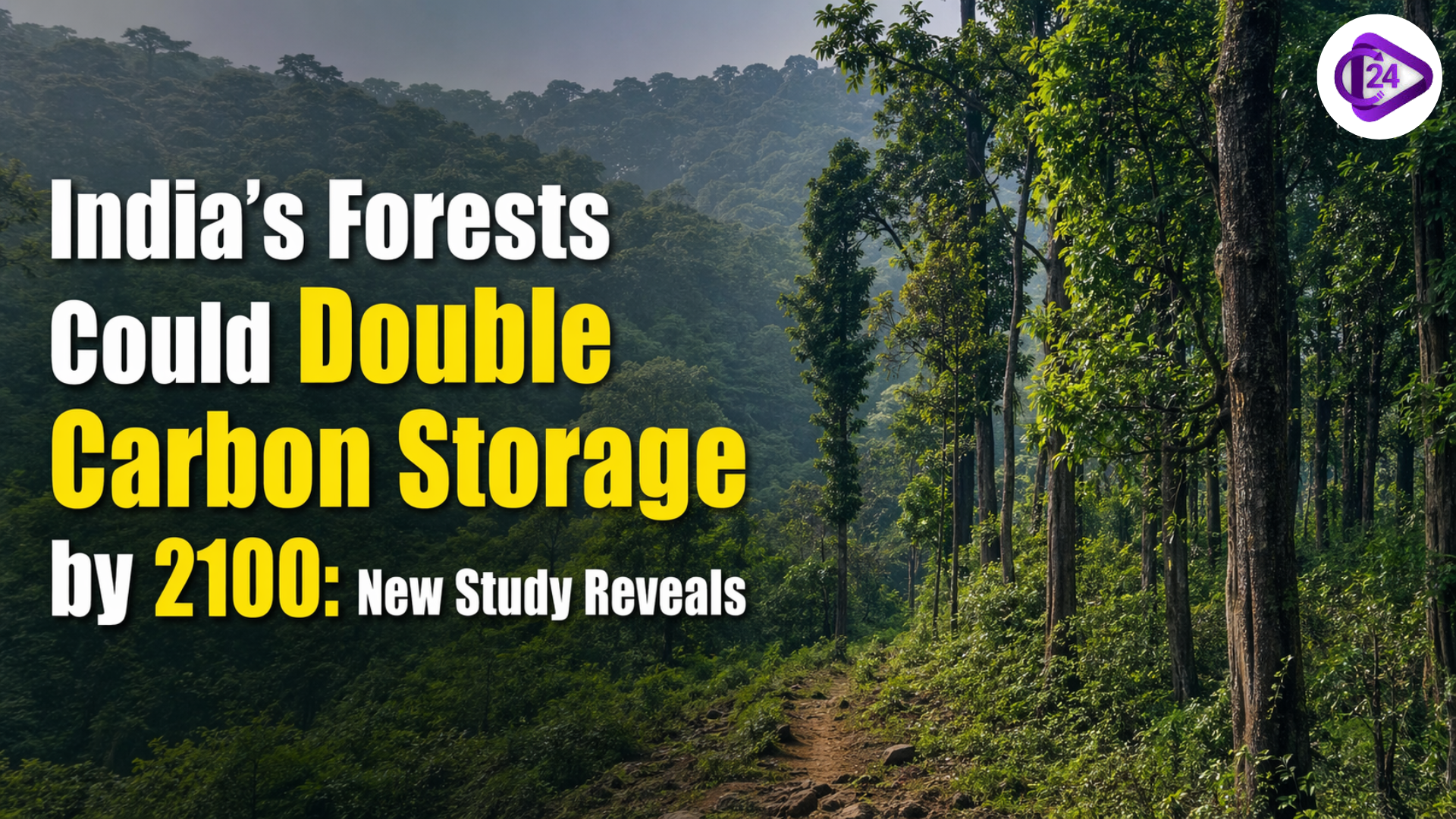
India’s Forests Could Double Carbon Storage by 2100: New Study Reveals

A recent scientific study, the forests of India may add to the global carbon storage capacity by the end of the century. As per the investigations by some of the latest institutions, the amount of carbon contained in forests can increase up to 97 per cent by 2100 under the subsequent weather conditions. Forests are considered important carbon sinks, which absorb carbon dioxide and aid in addressing climate change. But researchers warn that this increase might not necessarily represent the presence of healthier ecosystems because climatic stress factors, increased temperatures and irregular rainfalls might be undermining major areas of forests. The results bring out the potential as well as the risk that the forest ecosystems in India have on the warming world.

India’s Forest Carbon Storage Growth and Climate Impact

  • According to a new study, it is estimated that stored carbon in Indian forests can grow by 35 to 97 per cent by 2100, based on the level of greenhouse gas emissions.
  • The carbon density in forests can change to almost 13.67 kg/sqm in comparison with 7.74 kg/sqm, which is indicative of a high degree of carbon absorption.
  • This study was scientifically sound in that it used dynamic global vegetation models, which were informed by IPCC climate projections.
  • Forests are very important because they are carbon sinks, helping absorb atmospheric CO2 and mitigate the effects of global warming.
  • The amount of carbon stored is projected to be disproportionately higher in some regions, and desert and semi-arid regions will be the most experienced gainers.
  • Such biodiversity hotspots as the Western Ghats and Eastern Himalayas might experience relatively small increases, raising the question of ecosystem fragility.
  • Scientists also caution that there might be no direct correlation between increased carbon storage and healthier forests because a change in climate can decrease forest resilience.
  • Forests will be severely affected by issues of rainfall, increase in temperature, drought and wildfire in the future.
  • The research points out that rainfall is one of the important factors of carbon growth in the forest, but that effect could diminish in cases of severe warming.
  • The application of real-world risks, such as land-use change and deforestation, is not reflected fully in the model, and thus actual outcomes can be different.
  • The forests in India play important roles in climate mitigation plans, which need to be planned and dedicated to the region.
  • Researchers point out that there should be climate-conscious forestry to ensure that carbon sequestration is balanced with ecosystem sustainability.

Previous Year Questions on Carbon

Exam & Year Question Options Answer
UPSC 2019 What is meant by ‘Carbon Sequestration’? (A) Release of CO₂ (B) Capture and storage of CO₂ (C) Conversion into oxygen (D) Burning fossil fuels (B) Capture and storage of CO₂
UPSC 2018 Which of the following are major carbon sinks? (A) Forests (B) Oceans (C) Soil (D) All of the above (D) All of the above
UPSC 2021 Biochar is primarily used for what purpose? (A) Soil improvement and carbon storage (B) Fuel (C) Water purification (D) Cooling systems (A) Soil improvement and carbon storage
SSC CGL 2021 Which gas is primarily responsible for global warming? (A) Oxygen (B) Nitrogen (C) Carbon Dioxide (D) Hydrogen (C) Carbon Dioxide
SSC CHSL 2020 Which process reduces carbon dioxide in the atmosphere? (A) Respiration (B) Photosynthesis (C) Combustion (D) Decomposition (B) Photosynthesis
RRB NTPC 2019 What does the term ‘Carbon Footprint’ refer to? (A) Carbon in soil (B) Total carbon emissions by humans (C) Ocean carbon (D) Fossil fuels only (B) Total carbon emissions by humans
UPSC 2017 Why are mangroves important in climate change mitigation? (A) High carbon storage (B) Tourism (C) Fishing only (D) None (A) High carbon storage
SSC GD 2022 What is the main cause of the greenhouse effect? (A) Carbon dioxide (B) Oxygen (C) Nitrogen (D) Hydrogen (A) Carbon dioxide
RRB Group D 2022 Which process absorbs carbon dioxide naturally? (A) Combustion (B) Photosynthesis (C) Respiration (D) Decomposition (B) Photosynthesis
UPSC 2020 What role do forests play in climate change mitigation? (A) Absorb CO₂ (B) Increase CO₂ (C) No role (D) Only produce oxygen (A) Absorb CO₂

Conclusion

The forests in India can contribute a significant benefit of 2100 increase in carbon storage by the year 2100, which will provide a great lever to the battle against climate change. Nevertheless, the process of absorbing carbon more does not necessarily lead to healthier ecosystems, climate stress, and area imbalances still being the major concerns. The study highlights the need for sustainable forest management, conservation efforts, and climate-resilient policies. Conservation and restoration of forest ecosystems will be essential in a bid to secure long term environmental stability and leverage their effectiveness as effective carbon sinks in the Indian climate plan.

Frequently Asked Questions (FAQs)

The current affairs cover recent national and international events related to UPSC, SSC, Banking, Railways, and State PCS.

You need to read about the current affairs daily, and revise them every week and every month to keep them longer in your memory.

Yes, Class24 provides free downloadable Daily Current Affairs PDFs for easy revision.

Yes, you can practice MCQs and quizzes to boost your exam preparation.

Absolutely. The content is written in simple, easy-to-understand bilingual language suitable for beginners.

Go to class24.com and click on the current affairs section directly, where you find everything that you need.

ssc-toppers

Start Learning Today with Class24

Related current affairs

Class24 offers free video lectures for smart preparation, covering CGL, CPO, CHSL, MTS, and GD exams. Learn from expert faculty, revise concepts easily, practice with PYQs, and improve speed and accuracy through high-quality, exam-focused video lessons anytime, anywhere.

Get success in your hand. Start study anytime anywhere.

The journey becomes simple and enjoyable when you start taking interest in it. And through our app “Class24”, we will be your trusted partners in developing that interest.

Daily Quizzes
Mock Tests
Ongoing

No ongoing tests right now.