Day: August 13, 2025

India’s Largest ‘Tinkering’ Event by Atal Innovation Mission Unites 10,000 Schools in Live National Innovation Movement

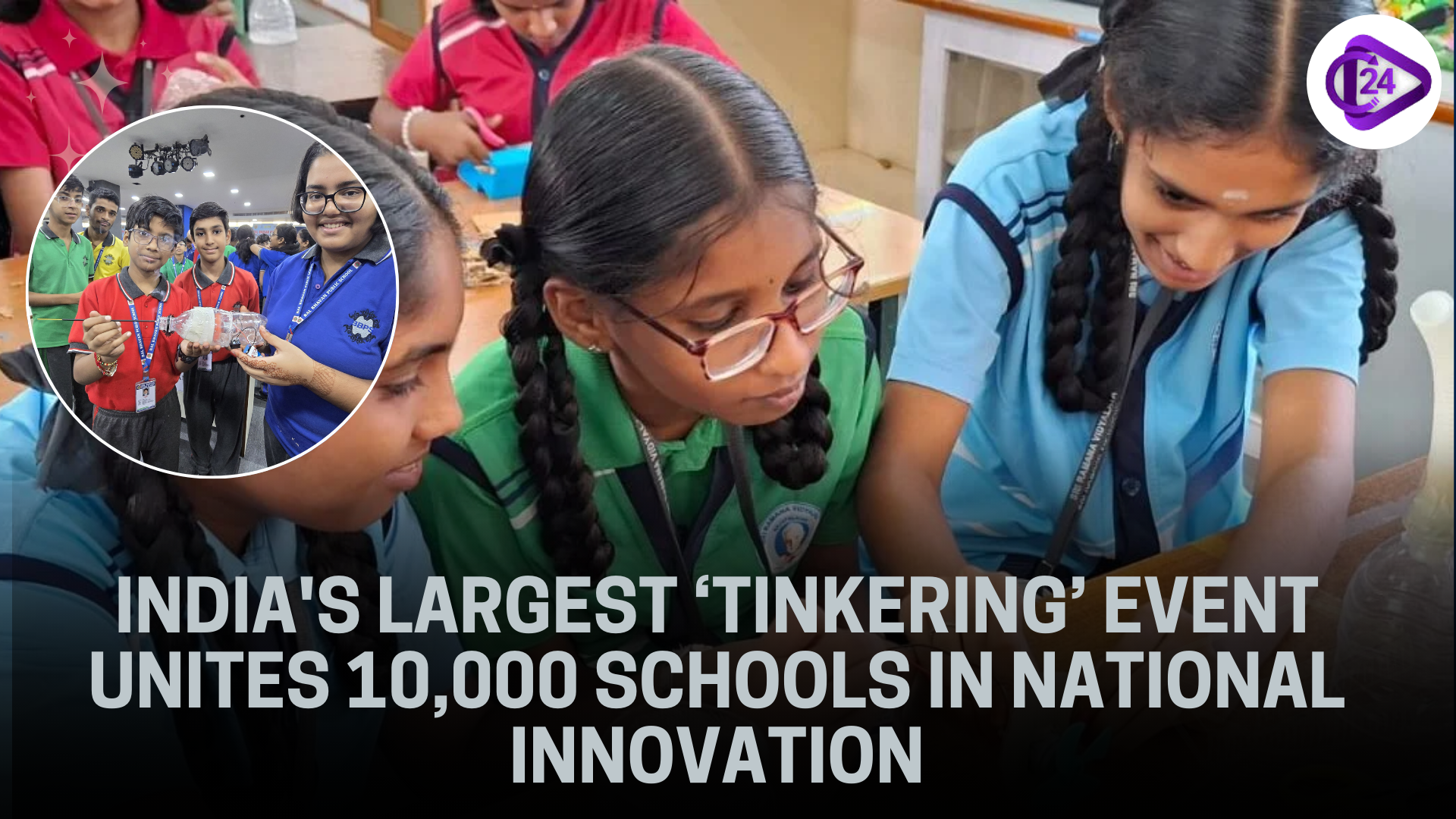
Under NITI Aayog, the Atal Innovation Mission (AIM) has managed to coordinate the largest scale school based innovation event ever to be held in India, called the Mega Tinkering Day. The initiative involved the involvement of over 10,000 Atal Tinkering Labs (ATLs) in each of the 35 states and union territories which have engaged over 4.73 lakh students in 9467 schools all around India.

Key Highlights:

  • Real-Time Collaboration: Sustained learning and innovation with students across many different regions of India, including those students in Leh, Ladakh, Kashmir, and the most distant villages of the Aspirational Districts, reaching all other parts of India, including the northeastern States and the south, could collaborate in real-time and learn, irrespective of the geographical location.

  • Hands-on Project: Students over the course of the DIY vacuum cleaner designing and construction project worked with typically available materials in their labs. This practical project also helped to understand the concepts of science in a practical way yet very creatively.

  • Step By Step Learning: An online streamed live instructional lesson directed the students in building the projects and this made the experience not only engaging but also a learning process.

Inclusive India:

  • A large number of regions turned out to be involved including the even the northernmost places within India that included Leh and Ladakh, far-flung provinces such as Virudhunagar in Tamil Nadu and even the most distant ends of the Northeast that encompassed Manipur, Mizoram and Arunachal Pradesh.

  • Students were engaged in the tinkering process where the Atal Innovation Mission (AIM) team was involved so that the process was based on collaboration and practical immersion in the country.

Power to the Future

  • AIM has set up more than 10,000 ATLs in India with 3D printers, robotics kits and IoT devices, exposing middle- and high-school teachers and students to the latest in new technology.

  • It is not just an exhibition of innovation but also a launch of future academic activities which will result in shaping a generation of creative minds, innovators, and entrepreneurs to contribute to the growth of India.

Conclusion

It is an ambitious and meaningful initiative in the direction of establishing the future of India by allowing the youth of innovative, cooperative, and learning people of India. Its occurrence demonstrates the devotion of the Indian side to form future leaders who would help to bring solutions to problems experienced in the global arena and instill a spirit of innovation within the nation.

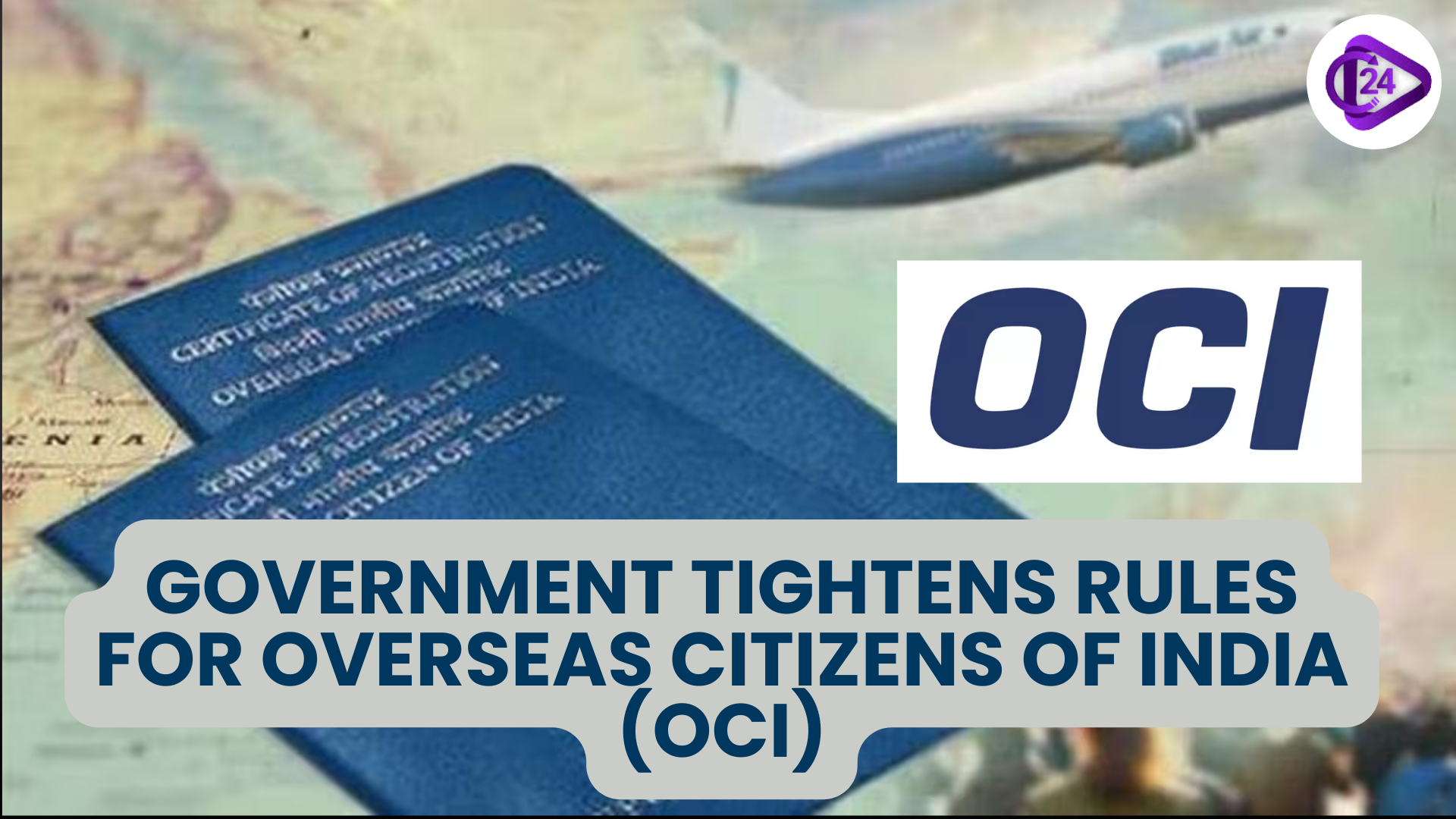
Government Tightens Rules Governing Overseas Citizens of India (OCI)

MoHA has come up with a tightened standard for Overseas Citizens of India (OCI) certificate holders. The new provisions will also have the consequence of canceling OCI registration when a person is sentenced to imprisonment of two years or more, or is charged-sheeted with offenses not less than 7 years which in case both such situations arise domestically or abroad. However, it requires the condition that the offence should be recognized under Indian law.

Context

  • The OCI scheme that was introduced in 2005 gives non-Indians of Indian origin, and their spouses, the right to reside, work, and travel freely in India without having the dual citizenship. 

  • The OCI cardholder has many privileges available, which include the lifetime Multi-purpose visas, economic, educational entitlements, and equality to the Non-Residence Indian (NRI) in some areas.

Key Changes in OCI Rules

  • Criminal Offenses: The newly established modifications are to strengthen the lawful structure that governs the OCI status. In case any OCI holder gets convicted of a crime that is known to carry two or more years imprisonment term, or is charge-sheeted of an offense that is known to have a penalty of seven years or above, such a person's OCI system will be destroyed. This is regardless of whether the offense was committed in India or outside the country so long as the offense is recognizable in the Indian law.

  • Prevention of Misuse: This action is an attempt by the government to stop misuse of OCI status in the wake of cases where OCI holders engaged in criminal or anti-national acts. The government does not consider OCI to be a right that it owes, which is why it holds the privilege to revoke the status in case of the breaching of laws.

Brief description of the OCI Scheme

  • The OCI scheme enables people of Indian origin to avail some privileges, of which 40.68 lakh OCI cards were issued by Jan 2022. The card entitles:

  • Visa Privileges: Lifetime multiple entry, multi-purpose visa to visit India where a person would not have to apply newly every time.

  • Parental Parity: OCI The OCI holders have the rights as Non-Resident Indians (NRIs) regarding financial, economic and educational industries but they are not allowed to invest in agricultural or plantation lands in India or adopt Indian children abroad.

Eligibility Criteria

  • Foreign Nationals (except of Pakistan and Bangladesh) and who were citizens of India on or after 26 th January 1950, or descendants (children, grandchildren and great-grandchildren) of such a citizen.

  • Spouses: Foreign spouses of Indian citizens or already possessing OCI cards; the spouses must be married at least two years with a foreign citizen.

  • Exclusions: People serving in foreign military services or those retired cannot be granted OCI.

Key Limitations

  • Privileges to OCI card owners are quite high though there are a number of restraints:

  • No Dual Citizenship: OCI is not a dual citizenship per se since India does not permit people to have a dual nationality.

  • Political and Legislative Ineligible: OCI holders are not allowed to vote, constitutional offices (e.g. President, Vice-President), or be a member of a legislative assembly (e.g. Lok Sabha, Rajya Sabha or States Legislatures).

  • Public Employment: A holder of an OCI is not permitted to take an ordinary government job, this permission is expressly given by the Central Government.

  • Activity-Based Restrictions: Some activities such as research, missionary work and mountaineering will need special permission whereas there are restrictions in travel to protected areas.

Revocation of OCI

  • There are particular grounds on which registration as an OCI can be canceled as provided under the Citizenship Act, 1955 and the Citizenship Rules, 2009:

  • Fraud or Misrepresentation: Misrepresentation of information at the time of application.

  • Anti- India Acts: Commitment of an act that goes against Indian law like a crime or any activity against the security of the country.

Conclusion

The stricter regulation of rules on OCI registration serves to highlight the seriousness given by the government on preserving integrity of the OCI scheme without letting it be misused. By entangling the OCI status as one conditioned by compliance with the Indian law, the government allows only those who uphold the legal system of the country to have the privileges associated with the OCI status.

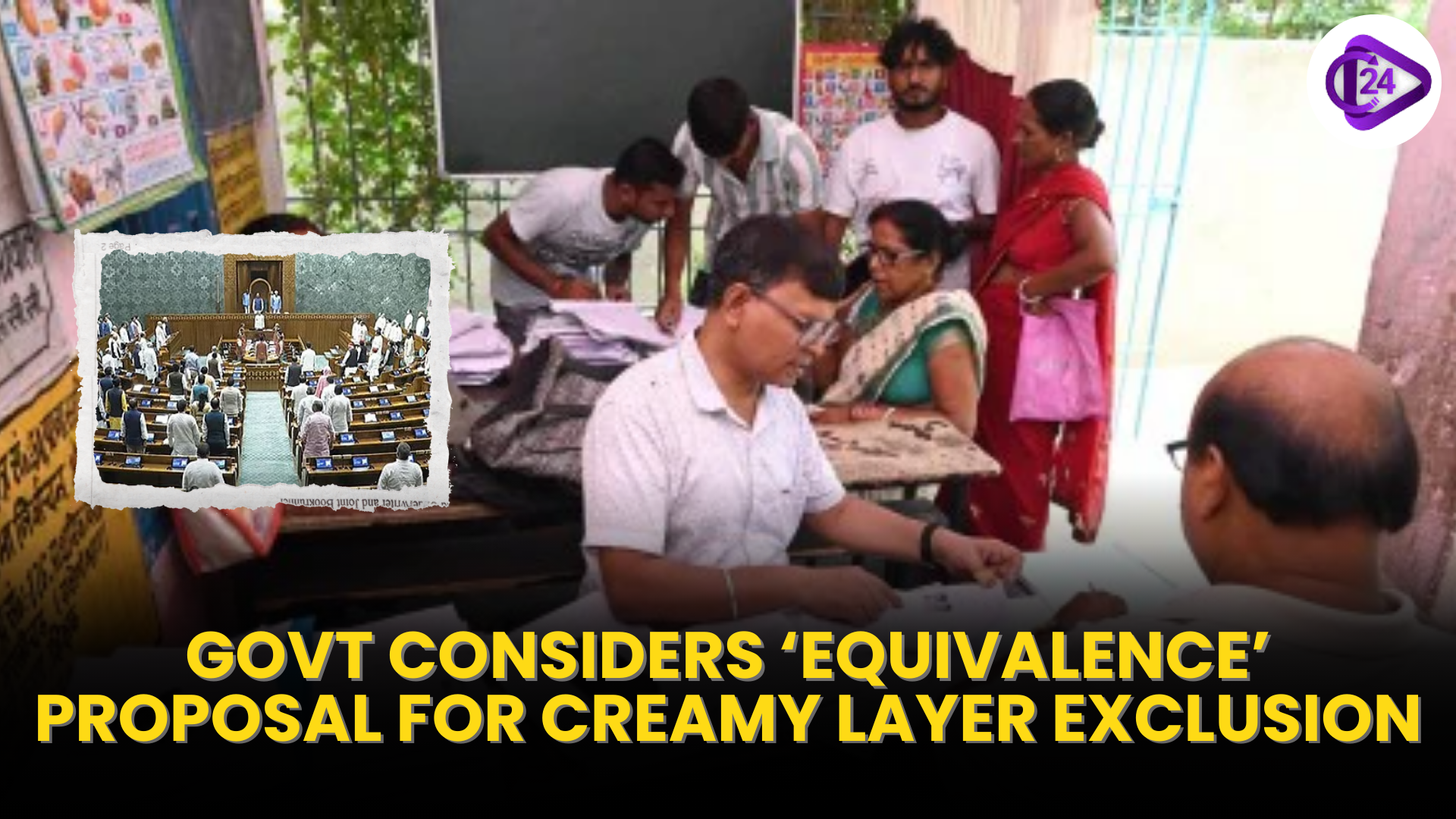
Govt Considers Proposal for ‘Equivalence’ in Creamy Layer Exclusion Across Various Sectors

It is also considering an offer to expand the creamy layer exception in the Other Backward Classes (OBC) policy of reservation of posts. This has been done in such a way that only the OBCs that need the reservation in government employment and educational institutions get the reservation that can fulfill their needs completely. This exclusion would be applicable to several categories such as central and state-level government organizations, public sector enterprises (PSUs), private organizations, and learning institutions with the proposal.

Context

  • The government is seriously considering a move of expanding the creamy layer exemption in the reservation policy of the Other Backward Classes (OBC reservation). 

  • Such exclusion, that applies to OBCs whose annual income exceeds a certain limit, is to make reservation in government offices and academics accessible only to those in real need.

Background

  • In India, the concept of a creamy layer was employed as an aftermath of the Indra Sawhney vs Union Of India (also called the Mandal verdict) case in the year 1992. 

  • With this verdict, the creamy layer was constituted as the OBCs who are socio-economically placed higher usually in terms of wealth, income or status. 

  • Such people do not qualify under the 27 percent reservation of OBCs in educational institutes and government employment.

The income limit of creamy layer is created and revised several times:

  • Year 1993: Rs 1 lakh per annum was fixed

  • 2004, 2008, 2013: Increased and raised

  • 2017: It was pegged at Rs 8 lakh per annum and that has been unchanged ever since.

At present, the creamy layer does not include some OBC groups such as constitutional office holders, officers in Group-A/ Class-I, PSUs employees, professionals, property owners and those whose income or wealth level is above the set levels.

The Proposal

Some of the major factors that the government is taking into account in the proposal are as follows:

  • Central and State Government Organizations: In Central PSUs, the creamy layer exclusion has already been effected. Nevertheless, the proposal would make it more formal in the sphere of the whole private sector, universities and state government organizations.

  • Private Sector: The impossibility of defining equivalent status in the very broad scope of employment and pay grades in the private sector makes it impossible. The proposal involves application of income/wealth criteria as a method of segregating employees and identifying those that should receive OBC benefits.

  • Universities and Education Institutions: Teachers like professor, assistant professor and associate professors are entitled to a salary which is equal to or more than that of the Group-A posts endowed in governmental services. They could be in such positions where they could be defined as creamy layer, i.e. their children would not be OBC reservations.

  • Non-Teaching University Staff: The non-teaching staff in the universities will also fall in the creamy layer depending on the scale of the pay they receive and on level.

  • State PSUs: As in the central PSUs, the proposal would require the executive-level positions as well as the positions of managers to be treated as creamy layer. But this comes with a rider executive whose income is less than Rs 8 lakh (the existing threshold in case of a personal taxpayer) will not fall in the creamy layer.

  • Government-Aided Institutions: The students could be classified by equivalence of staff of institutions (funded by government but run autonomously (such as the private colleges)) to central or state government rates of pay and grades.

  • Legal Clarity: The suggestion is targeted at dealing with the contradictions which have resulted in the pending matters in Supreme Court as well as other high courts over the specifications of creamy layer. Through this explanation, the government tries to create a more transparent implementation of the criteria in the various sectors to be more uniform and fair.

Expected Outcomes

  • Broadening jobs to the OBCs: There is an attempt by the government to widen the employment scope of the creamy layer provisions so as to increase the OBCs in different spheres which mainly include government jobs, in the private sector and in education.

  • Equity and Empowerment: The proposal is also gearing to give more privileges to OBC empowerment through consistent implementation of creamy layer income exclusion at all sectors so as to make the fruits of reservation more specific and easy to access.

  • Promoting Atmanirbhar Bharat: The given proposal is supposed to assist the government with further self-sufficiency (Atmanirbhar Bharat) and empowerment of the marginalized population as by augmenting OBC participation in the various spheres the given proposal can contribute to the whole process of self-sustaining.

Conclusion

The creamy layer exclusion across all sectors through the proposal of the government is an effort to make the reservation system simpler and understandable to the OBCs. It attempts to provide a fairer system where the reservation benefits will be available to those who need it rather than being wasted by those who do not need it and at the same time, minimizing the confusion and maximizing the possibilities of employment of OBCs at the central, state and private establishments.

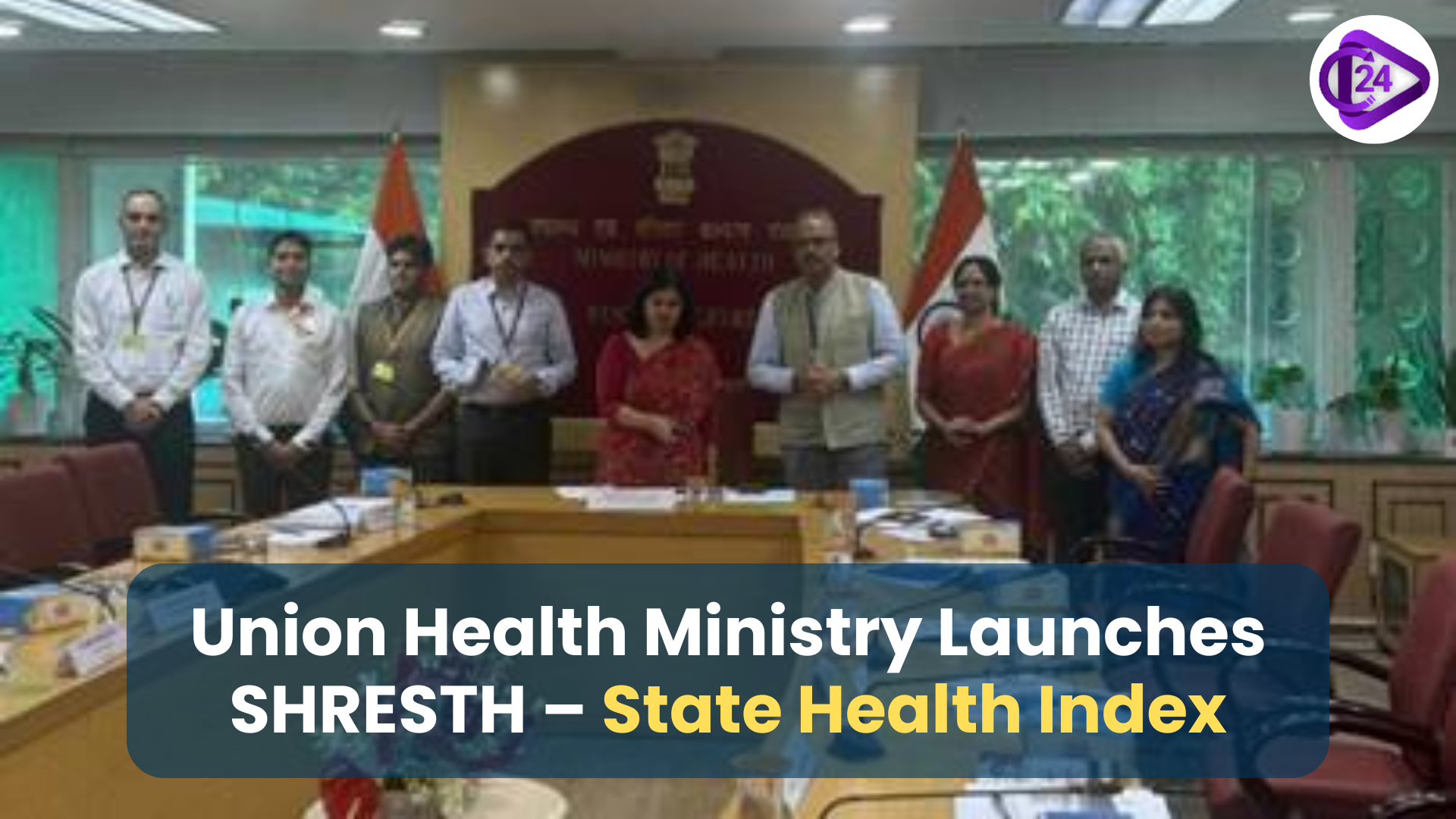
Union Health Ministry Launches SHRESTH – State Health Regulatory Excellence Index

The first-ever national effort to benchmark and reinforce state drug regulatory systems by using a transparent, data-horrendous framework. The wellbeing of the Indian populace is dependent on the quality, effectiveness, and safety of the medicines that they take in. One of the promises of the Indian Government is to safeguard its citizens by ensuring the quality of drugs.  Aligned with this, the Union Health Ministry has introduced the State Health Regulatory Excellence Index (SHRESTH) so as to enhance state drug regulatory systems.

Context

  • A new project aimed at enhancing drug regulatory systems in the states is the State Health Regulatory Excellence Index (SHRESTH) as initiated by the Union Health Ministry.

Key Points

What is SHRESTH?

  • SHRESTH is an Indian attempt at harmonizing and improving the performance of state drug regulators throughout India. It is an open source, data-driven model that is aimed at:

  • Empower state drug control machinery

  • Protect the safety and quality of drugs at a high level all the time

  • The benefits were directed towards the enhancement of human resources, infrastructure, and digitalization

  • SHRESTH is a virtual state gap assessment system, which makes states acquire a picture of the current state of their regulations and direct them towards maturity certification.

Characteristics of SHRESTH:

  • States are assessed on various parameters using the index, which use human resources, infrastructure, licensing activities, surveillance activities, and responsiveness.

  • States will be divided into two categories; Manufacturing States and Primarily Distribution States/UTs.

  • The index comprises 27 manufacturing state indices and 23 distribution state indices that will be rated through the monthly data presented by states.

Why SHRESTH Is Significant to India

  • National Drug Safety:

    • Quality of medicines is pertinent to the health of all Indian citizens. SHRESTH helps to keep drug safety in the country and makes the regulation activities and standards better.

  • Global Recognition:

    • With India having received the WHO ML3 status of vaccines, the current impetus is to advance medicines to the same light as WHO. 

    • SHRESTH also plays a role in international harmonization as it enhances India regulation procedures and serves to ensure that the country becomes the Pharmacy of the World.

  • Cooperative Approach:

    • The project is significant due to its focus on the collaborative effort made by the Centre and the States where the role of state offices can not be overestimated in the process of high-quality manufacturing and distribution. 

    • It also helps in sharing the best practices among the states which further reinforces the general regulatory environment.

Merits of SHRESTH

  • Enhanced Human Resources: States will also be able to concentrate on the growth of human resources so that they can take care of the regulatory challenges effectively.

  • Infrastructure Development: States will be assisted to increase investments in improved laboratories, testing capabilities and IT infrastructure to sharpen up their regulatory capabilities.

  • Digitization: The index compels states to better digitize the processes of approval, licenses and inspection.

  • Intense Surveillance: Surveillance activities will be intense since intensive evaluations will be regularly undertaken to guard against arising weaknesses.

Key Outcomes:

  • Knowledge Sharing-States will be able to learn what other higher performing states are doing because the best practices will be revealed under CDSCO.

  • Targeted Development: It will be focused on the results of the SHRESTH assessments, according to which the careful advice will be given to the further work of the state in each of them to support those parts which are insufficiently fortified.

Conclusion

SHRESTH transforms the drug regulation in India. The former results in safety of drugs being ensured among all Indians irrespective of geography as it facilitates focused enhancements. This project will enhance India as a manufacturing and distributing centre of the global pharmaceutical industry, and protect the health of all citizens.

Frequently Asked Questions (FAQs)

The current affairs cover recent national and international events related to UPSC, SSC, Banking, Railways, and State PCS.

You need to read about the current affairs daily, and revise them every week and every month to keep them longer in your memory.

Yes, Class24 provides free downloadable Daily Current Affairs PDFs for easy revision.

Yes, you can practice MCQs and quizzes to boost your exam preparation.

Absolutely. The content is written in simple, easy-to-understand bilingual language suitable for beginners.

Go to class24.com and click on the current affairs section directly, where you find everything that you need.

ssc-toppers

Start Learning Today with Class24

Related current affairs

Class24 offers free video lectures for smart preparation, covering CGL, CPO, CHSL, MTS, and GD exams. Learn from expert faculty, revise concepts easily, practice with PYQs, and improve speed and accuracy through high-quality, exam-focused video lessons anytime, anywhere.

Get success in your hand. Start study anytime anywhere.

The journey becomes simple and enjoyable when you start taking interest in it. And through our app “Class24”, we will be your trusted partners in developing that interest.

Daily Quizzes
Mock Tests
Ongoing

No ongoing tests right now.