

Day: July 1, 2025

Railway Fare Hikes Effective from July 1: 2 Paise per Km for AC, 1 Paise for Non-AC Travel

The Ministry of Railways has declared an increase in the fare of different classes of traveling such as AC, sleeper class and second classes, which has been increased in five years. The fares will start operating on July 1, 2025. Many other classes such as the AC and non-AC should witness 2 paise per kilometre increase in price of AC classes and 1 paise in the case of non-AC travel and suburban and monthly season tickets will not be impacted. The Ministry relies on the increase of prices to earn huge revenue since the rail industry projects that the number of passengers will increase.

Context

  • Fare increments by the Ministry of Railways have been effected on July 1 2025, wherein the AC modes of travel are increased at a rate of 2 paise per kilometre and non AC travel is increased by 1 paise per kilometre. 

  • The fare adjustment would earn an extra income and be helpful in developing the financial status associated with the railway industry.

Key Points

Information about Fare Hike:

  • AC Travel:

    • The AC1, AC2 and AC3 fares will be hiked by 2 paise per km.

  • Non-AC Travel:

    • Fares of other sleeper classes, without AC, second class and in mail/express trains will increase by 1 paise every kilometre.

  • Fare Rise through Distance:

    • In ranges between 501 km and 1,500 km, there will be an increase of 5 rupees in fares.

    • On the distance 1,501km to 2,500km, the mutual fares will increase by 10 Rs.

    • The fares will increase by 15% in the distance category 2,501 kms to 3,000 kms.

Passenger Revenue and Forecasts:

  • AC Classes:

    • AC1: 480 passengers, estimated revenue is 1,527 crores.

    • AC2: 4,657 passengers, estimated income 8,776 crore.

    • AC3: 26,688 passengers, estimated revenue of 11 715 crore.

    • Executive Class : 235 customers, estimated turnover 987 crore.

  • Non-AC Classes:

    • AC Chair Car: 2,822 passengers, estimated earnings 5,626 0crore.

    • Sleeper Class: 25,923 people, estimated revenue 11582 crore.

    • Second Class (Mail/Express): 17,511 passengers, estimated income rupees 5,065 crore.

Revenue Impact:

  • It is projected that the fare revision will add greatly towards the revenue of Indian Railways as even the increases in the fares by themselves will amount to a 9.6 crore extra income.

  • The Railway Ministry has the target of raising the total passenger revenue to 92,800 crore as a result of the improving passenger traffic.

Past Fare Increase:

  • The most recent increase was in January 2020, in which there was an increment of 2 paise per kilometre in non-AC mail/express mails/expresses and 4 paise per kilometre in AC mail/express.

Additional Charges:

  • The new fare system will not change such ancillary payments as reservations fees and superfast surcharges.

Revenue Generation and Forecasts of finance:

  • The Railway Ministry estimates that the financial year (2025-26) revenue collection through fare increments will mean 1,100 crore.

  • Hiking of fares will enhance financial sustainability of Indian Railways in the next few years.

Conclusion

Projection is that, the increase of fare by the Ministry of Railways will generate more passenger income thereby boosting the financial growth in the sector. Though there will be no change in the pricing of the suburban and season ticketing fares, increased fares of non-AC and conveyance fares will give the necessary finances to the railway industry in the development and sustainability of the industry.

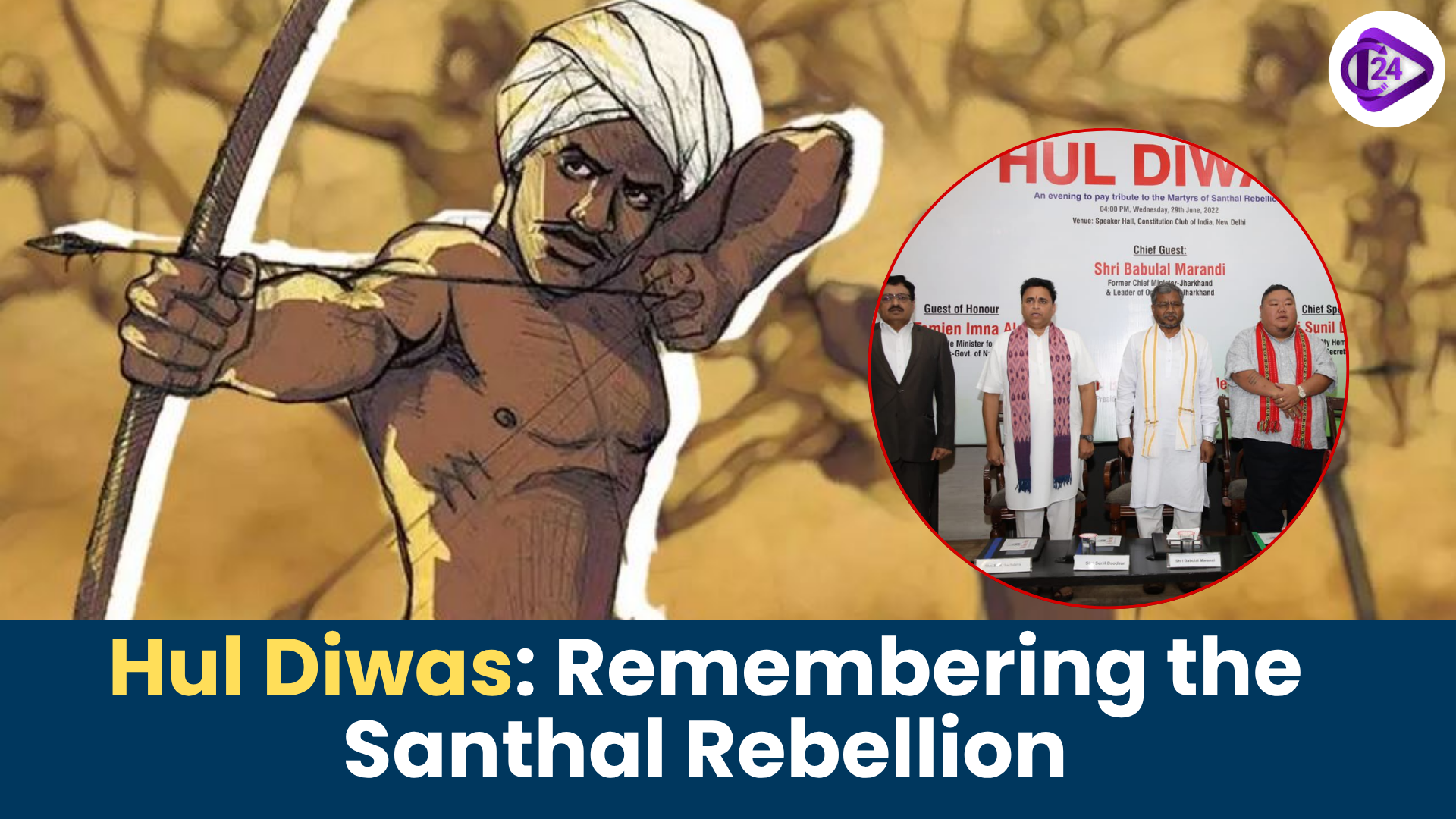
Understanding Hul Diwas: The Legacy of the Santhal Rebellion

created by leaders of tribal community Sidha and Kanhu Murmu. The day represents the resistance by the tribe and their struggle towards justice. Although the rebellion was crushed, this became a basis to future fights on tribal rights and freedom. The after-effect of this movement is seen to reign amongst the tribal tribes in India, particularly in states of Jharkhand, West Bengal, Odisha, Assam, and Bihar.

Context:

  • In the annual Hul Diwas tribal village protest against the removal of the stage that was used to recall the 1855 Santhal rebellion, the police clashed against tribal villagers. 

  • It is a politically controversial case where there is a singling out of police brutality against the tribal community.

Key Points

What is Hul Diwas?

  • The Hul Diwas is celebrated on 30 th June every year in remembrance of the Santhal Rebellion in 1855.

  • It is also the rebellion of Santhal people, mainly Sidho Murmu and Kanhu Murmu, against British colonialism and those policies of exploitation which existed in their local societies.

Meaning of “Hul”

  • The word, Hul in Santhali means revolution, uprising or resistance in Santhali language.

  • It is a battle against wrong, against the British government as well as local landlords, and moneylenders.

When or Where the Santhal Hul Occurred?

  • This revolt started on 30 th June of the year 1855 in Bhognadih which is now the Sahibganj district of Jharkhand.

  • It spread to some regions of Jharkhand, Bihar and West Bengal and continued till January 3 in 1856.

Important Personalities of Rebellion:

  • Main leaders, Sidho Murmu and Kanhu Murmu.

  • They have brothers (named) Chand Murmu and Bhairav Murmu.

  • Their sisters Phulo Murmu and Jhano Murmu who were instrumental in militant resistance as well.

The Women in the Period of Hul Diwas:

  • Women led some of the revolts and their leaders were Phulo Murmu and Jhano Murmu who joined men in the fight.

  • Their courage is now getting more popular and it has been an example to tribal women and girls.

Causes of Santhal Rebellion:

  • The Santhals were evicted on their native lands: Alienation of land.

  • Economic exploitation A large part of earnings got taken out by taxes and usurious loans by local moneylenders and zamindars.

  • Compulsory work and deprivation of self-control over tribal organization and law.

  • Indifference of the British on the tribal wrongs.

What was the nature of the Rebellion?

  • An estimated 60000 Santhals fought the rebellion armed with bows, arrows, axes, and spears.

  • The uprising established its government and proclaimed itself independent.

  • Successful at the start, it was later squashed by the British leading to the loss of thousands of lives amongst the tribals.

Legacy of the Hul Rebellion

  • The Hul Rebellion acted as a foreshadow to the 1857 Sepoy Mutiny.

  • It was a representation of tribal claim, courage and sacrifice.

  • The revolt also resulted in the creation of Santhal Pargana district in 1855 which was a significant administrative reform.

What is the Hul Diwas Celebration these Days?

  • Homage is also done at Sidho-Kanhu Memorial Park in Bhognadih and the statues of the leaders are also garlanded.

  • Santhali cultural programs with music and dances.

  • Demonstrations and marches of tribal groups.

  • Government organized a fair in Ranchi and Bhognadih.

Acknowledgement of Hul Diwas:

  • Considered a Government recognized State holiday by the Government of Jharkhand.

  • Growing national awareness because of programs geared towards the welfare of tribals.

India as a Modern Case:

  • Hul Diwas is a reminder of how the tribals resisted and gave their contribution to India becoming freely independent.

  • It talks about tribal rights, defense of land, language, and culture.

  • It highlights current issues affecting tribal communities such as displacement, marginality and exclusion of access to basic services such as education and healthcare.

Monuments on Hul Leaders:

  • Sidho-Kanhu Memorial Park at Bhognadih.

  • Monuments and statues in Ranchi, Dumka and Jharkhand.

  • The university is named Sidho-Kanhu University in Dumka, after them.

Conclusion

Hul Diwas is the day of cultural pride and opposition of tribal people, especially Jharkhand and it is a reminder of their fight towards justice and equality. Today, the Santhal Rebellion remains a source of inspiration to movements in India in the cause of tribal rights and social justice.

India’s Secular Constitution, Even Without the Word

The use of the word secular in the Indian Constitution was brought about by a 42 nd Amendment in 1976. Nevertheless, the subject of secularism is entrenched in the Constitution in one way or another like the right to equality under Articles 14 and 15. Vice President Jagdeep Dhankhar recently referred to this edition of the word secular as a controversial decision and this view has been echoed by some politicians such as the Union Minister, Shivraj Singh Chouhan and Chief of RSS, Dattatreya Hosabale. Nevertheless, in spite of that, the key to secularism has never been forgotten, and the Constitution always tried to stress the distinction between state and religious life.

Context

  • The supplement of the term secular to the Constitution of India, 1976 was not regarded as necessary but also a major step out of totality, because under the Constitution of India even then it had provisions that guaranteed secularism. 

  • Secularism has always been a major aspect with laws that facilitate equality and non-discrimination.

Key points

Preamble 42th Amendment:

  • During the amendment of 1976 the 42 nd Amendment was taken into the Preamble of the Constitution at the rearrangement of the term in respect of secular and socialist.

  • In the Preamble prior to the 42nd Amendment it was stressed how India was a Sovereign Democratic Republic.

The Constitution and Secularism:

  • Another major value implied by the Constitution termed as Secularism can be found in Article 14, which gives equal rights, and Article 15 which does not allow discrimination grounds on the basis of religion, race, caste, sex or place of birth.

  • A clarification of this notion has been further strengthened by the Supreme Court which in a series of judgments has interpreted secularism as a constitutional characteristic.

Secularism the World As it Suddenly Happened:

  • In the regime of Indira Gandhi, a new term of secularism was inserted to signify adherence to the economic plan and vision of social justice of the Prime Minister in the country.

  • The same year in 1973, secularism was re-emphasised in the case of Kesavananda Bharati in which it was declared as being a basic structure of the Constitution.

The Mystery behind the changes:

  • The historical choice of including the term secular has been politically determinant as there was an inclination to include more political precipice on account of increased prevalence of Bharatiya Janata Sangh (the progenitor of the BJP).

  • Secularism is actually supposed to confront the increasing role of religion in politics at that time.

Effect and Legal Value of Law:

  • Minerva Mills v Union of India of 1980, in the Supreme Court, reaffirmed the significance of secularism.

  • The case of 1993 on Centre-State relations reiterated secularism as to be central to the Constitution by the Supreme Court.

About Secularism 

Secularism:

  • Secularism is the elimination of religion in state processes so that the government is impartial towards religious beliefs.

It consists of two important aspects:

  • Dharm Nirpekshta (The withdrawal of religion and the state).

  • One religion is Sarva Dharma Sambhava (Equal respect of all religions).

Secularism in Indian Constitution:

  • Article 14: Ensures equivalence before the law and equal protection of laws to any citizen.

  • Article 16(1): Aims at giving equality of opportunity in employment under the state, which does not discriminate against a person based on religion, race, caste, sex, descent, place of birth and residence.

  • Article 25: Imparts the freedom of conscience that gives each individual the right to freely profess, practice and propagate his or her religion.

  • Article 26: It guards the rights of religious communities to formulate and manage religious and charity institutions and run their affairs in religious complexities.

  • Article 27: provides that no tax should be charged in promotion or upkeep of one specific religion or religious organisation.

  • Article 28: Permits educational establishments of religious affiliations to give religious teachings.

  • Articles 29 & 30: Present cultural and educational rights to minorities, as they can retain their culture, and obtain an education, without discrimination.

  • Article 51A: Harvardises duties, imposes on the citizens the obligation to upholding harmony and fraternal attitude of common brotherhood and protective care of the heritage of rich cultural heritage of composite Indian culture.

The 42nd Constitutional Amendment Act (1976):

  • The term secular found itself in the preamble of the Indian constitution which stated that India is a secular republic where no religion or religion was treated with inferiority.

Interpretation of Secularism in the courts:

  • Kesavanada Bharati v. State of Kerala (1973): The court found out that secularism is an element of basic structure of the Constitution and, thus cannot be changed or have its destruction through amendments.

  • Bommai v. Union of India (1994): The Court explained the concept of secularism to mean treatment of all religions equally and indicated that secularism has become a part of Indian governance.

Conclusion

The term secular that was introduced to the Constitution of India as the 42 nd Amendment is symbolically treated. Secularism thinking was not new in the Constitution as it was, in part, incorporated into the Constitution with concepts encouraging equality, and banning any form of discrimination. Nevertheless, even after the changes, secularism is one of the central principles of the Indian judicial and political system that focuses on the division of the religious order and state affairs.

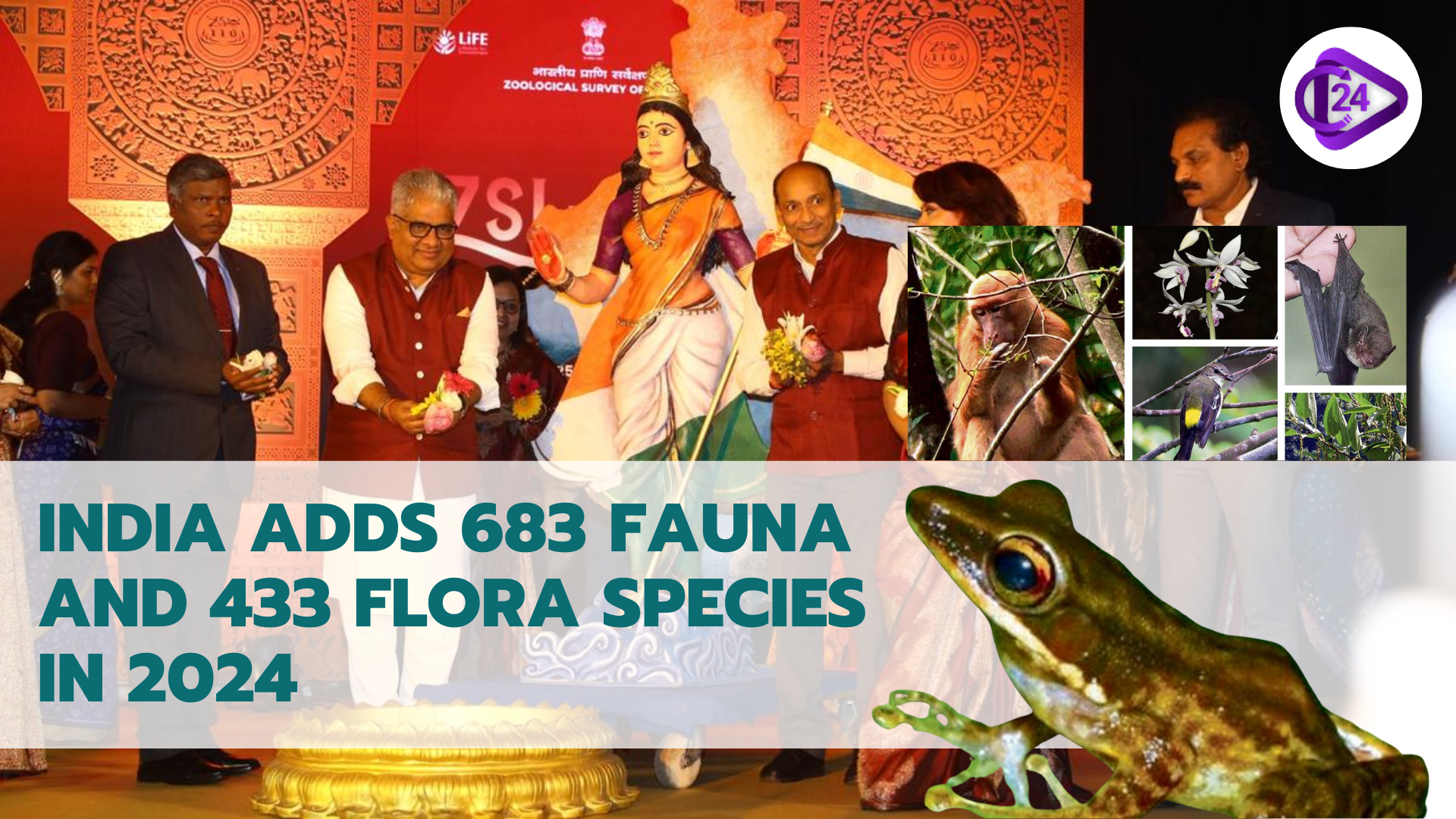
India Adds 683 New Fauna Species and 433 Flora Taxa in 2024

India achieved an impressive step in the growth of its biodiversity with an indication of 683 new species being added into its fauna consisting of 459 novel species and 224 new records in 2024. Also the country had 433 new taxa of the flora that comprise of 410 new species and 23 infra-specific taxons. Union Minister for environment forest and climate change, Bhupender Yadav has announced these discoveries through a release event in Kolkata. The findings are indicative of the rich diversity of India with the major role of the Western Ghats and the Northeast.

Context

  • In 2024, India made impressive advances in the enlargement of its biodiversity: 683 new species were discovered in its fauna, 433 taxa in its flora. 

  • Fauna findings were the highest in Kerala, Karnataka and Tamil Nadu whereas plants findings were the highest in Kerala, Maharashtra and Uttarakhand.

Key Points

Fauna Discoveries:

  • Of this number 683 were new species added to the fauna of India, thus including:

    • 459 new species

    • 224 new items.

Best Faunal States:

  • Kerala: 101 discoveries (80 new, 21 new records species).

  • Karnataka 82: (68 new species, 14 new records).

  • Tamil Nadu: 63 find (50 new species, 13 new records).

  • Arunachal Pradesh: hypotheses

  • Meghalaya: 42 distributions (25 new species, 17 new records).

  • West Bengal: 56 records ( 25 new species, 31 re-discovered).

  • Andaman and Nicobar Islands: 43 finds (14 new species, 29 new records).

Best Faunal Species:

  • Two new genus of reptiles, with Dravidoseps gouensis.

  • 5 new reptile species and 37 new amphibian ones.

  • Anguiculus dicaprioi, a snake species named after Hollywood actor Leonardo DiCaprio.

Flora Discoveries:

  • 433 new taxa were introduced to Indian flora, and they consisted of:

  • four hundred and ten new forms.

  • 23 taxa on infra-specific levels.

Best Flora States:

  • Kerala: 58 findings.

  • Maharashtra: 45 findings.

  • Uttarakhand: 40 findings.

It was found out:

  • 154 angiosperms.

  • 4 pteridophytes.

  • 15 bryophytes.

  • 63 lichens.

  • 156 fungi.

  • 32 algae.

  • 9 microbes.

Important Flora Discoveries:

  • Major species of the orchids such as:

    • Bulbophyllum gopalianum.

    • Coelogyne tripurensis.

    • Gastrodia sikkimensis, Gastrodia indica.

Hotspot Regions:

  • The Northeastern and the Western Ghats had contributed 35% of the total discoveries.

Total Flora Documentation:

  • India has given a record of 56,177 plant species, angiosperm, gymnosperms, pteridophytes, bryophytes, lichens, fungus, algae.

Conclusion:

India is making a giant stride in terms of biodiversity in the year 2024 due to the contribution of various states in growth of fauna and flora in the country. Such findings demonstrate the ecological wealth of the country and it is important to maintain these biodiversity hotspots as the biodiversity hotspots so that the coming generations would learn of its greatness. 

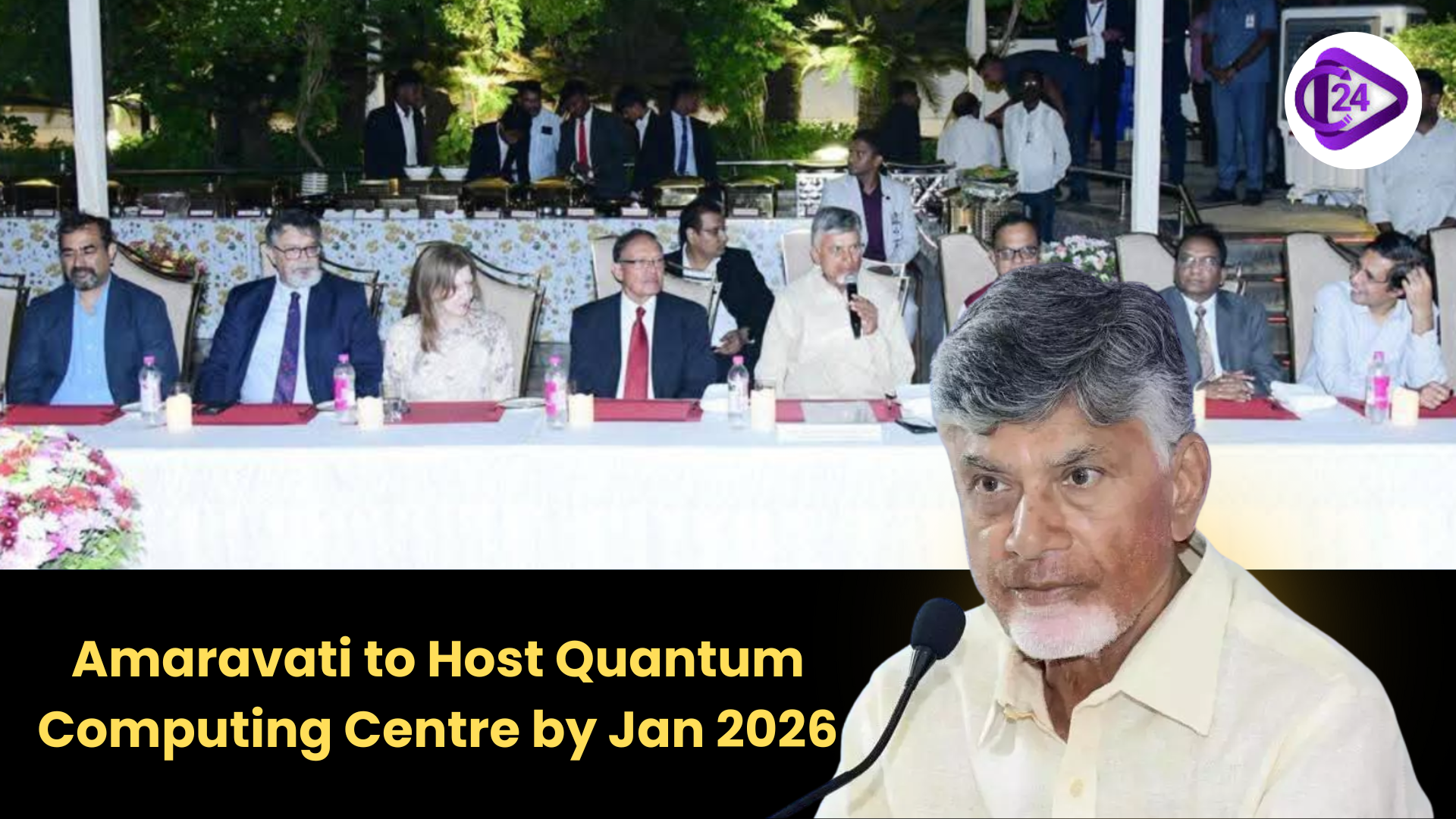
Amaravati to Host Operational Quantum Computing Centre by January 1, 2026, Announces Naidu

Andhra Pradesh Chief Minister N. Chandrababu Naidu has declared that the Quantum Computing Centre at Amaravati will come on stream on January 1,2026. The project will have significant tech corporations such as IBM, Tata Consultancy Services and Larsen and Toubro backing it to create a quantum valley like the Silicon Valley in the U.S. The plan of the state government is to generate 100 use cases by 2026 (August) and make Andhra Pradesh one of the leading countries in the global Quantum-AI movement.

Context

  • Andhra Pradesh is starting a Quantum Computing Centre before January 2026 with a view to forming a “Quantum Valley” in Amaravati sponsored by the biggest technology firms. 

  • To be one of the core participants in the international Quantum-AI movement, the state intends to develop 100 use cases by the middle of 2026.

Key Points

  • Timeline of Quantum Computing Centre

    • The Amaravati centre of Quantum Computing will go live as of January 1, 2026.

    • This plan will target the creation of a cultural identity, that is, a “Quantum Valley” like the renowned U.S. Silicon Valley.

  • Corporate Forecast:

    • IBM, Tata Consultancy Services (TCS) and Larsen & Toubro (L&T) will support the project.

  • 100 Use cases Goal:

    • Andhra Pradesh targets to create 100 components of the 100 use case by August 15, 2026, which shows the desire of the state to become a strong member of the global Quantum-AI trend.

  • Past Technological contributions:

    • Naidu first pointed to his prior achievement when he turned the HITEC City in Hyderabad into a global information technology hub during the 1990s.

  • WhatsApp Governance:

    • Naidu presented that 100% of the services delivered by the state government would soon be in the form of the WhatsApp platform in a bid to have better governance and efficiency.

  • Central Government support:

    • Naidu also applauded the far-sighted vision of Prime Minister Narendra Modi and explained that the Indian government was giving all possible encouragement to the endeavours in Andhra Pradesh in making progress in the quantum revolution.

What is Quantum Computing?

  • Quantum computing is a state-of-the-art discipline in the field of computers, in which the principles of quantum theory are applied to do atomic-levels and subatomic-levels computations. 

  • In contrast to classical computers which operate with information in the form of binary bits (0 or 1), quantum computers make use of the quantum bits (qubits). 

  • The most outstanding characteristic of ubiquitous is the ability to represent many states, which is possible due to such effects as superposition and entanglement.

Key features of quantum computing

  • Superposition:

    • Unlike a classical bit, qubit can be 0 and 1 simultaneously. It is what allows quantum computers to handle data in parallel, in amounts that are gigantic by current standards.

  • Entanglement:

    • Once the qubits are entangled, the state of the qubit has direct influence on the state of another qubit, despite the space between them being wide. This enables greater speed and more complex relations in calculation.

  • Interference:

    • With the capability of interference, quantum computers are more efficient when it comes to solving certain given problems as compared to regular computers because correct answers can be worked on and enhanced to effective state and a wrong solution can be countered.

Conclusion

Quantum Computing Centre in Amaravati is another giant step of the Andhra Pradesh state in quantum computing and artificial intelligence. Supporting all the innovations, the global tech giants and the interest of the Indian government in these cutting-edge technologies should see its state as a leader by 2026.

Frequently Asked Questions (FAQs)

The current affairs cover recent national and international events related to UPSC, SSC, Banking, Railways, and State PCS.

You need to read about the current affairs daily, and revise them every week and every month to keep them longer in your memory.

Yes, Class24 provides free downloadable Daily Current Affairs PDFs for easy revision.

Yes, you can practice MCQs and quizzes to boost your exam preparation.

Absolutely. The content is written in simple, easy-to-understand bilingual language suitable for beginners.

Go to class24.com and click on the current affairs section directly, where you find everything that you need.

ssc-toppers

Start Learning Today with Class24

Related current affairs

Class24 offers free video lectures for smart preparation, covering CGL, CPO, CHSL, MTS, and GD exams. Learn from expert faculty, revise concepts easily, practice with PYQs, and improve speed and accuracy through high-quality, exam-focused video lessons anytime, anywhere.

Get success in your hand. Start study anytime anywhere.

The journey becomes simple and enjoyable when you start taking interest in it. And through our app “Class24”, we will be your trusted partners in developing that interest.

Daily Quizzes
Mock Tests
Ongoing

No ongoing tests right now.