Day: May 24, 2025

Centre Launches Nationwide Drive to Make Educational Institutions Tobacco-Free

The Ministry has begun a campaign to prohibit smoking around every school and college in the nation. It is hoped that this action will shield students from tobacco, alcohol and drug use by making tough anti-tobacco laws and actively educating the community. It follows in line with important holidays known as World No Tobacco Day and International Day Against Drug Abuse.

Context

  • The ToFEI drive acts under strong rules and laws to prevent tobacco sales and use by students in educational institutions.

  • From May 31 to June 26, 2025, the campaign is working on awareness, enforcement and including all stakeholders.

Key Points

Background:

  • Due to its large number of youth, many of them are at risk of smoking tobacco; 8.5% of students in that group are known to use tobacco.

  • More than 5,500 children start smoking every day, sometimes ending up using other dangerous substances.

ToFEI Guidelines:

  • There are nine main activities in the work done.

    • Putting ‘Tobacco-Free’ signs in areas where everyone can see them both inside and outside buildings.

    • There is no permitted tobacco use or sales on campus at all and none is allowed within 100 yards (the yellow line lines the area).

    • Practicing tobacco control activities every six months.

    • Having Tobacco Monitors at each school.

    • Ensuring that tobacco-free rules are part of the rules at school.

Enforcement Focus:

  • Mark with a yellow line a 100-yard zone around all buildings to indicate they are tobacco-free.

  • Close tobacco vendors and stores found within this area.

  • Carrying out the part of COTPA, 2003 that prohibits the sale of tobacco near schools and to minors.

Specific Activities Within the Campaign’s Duration

  • The focus is placed from World No Tobacco Day on May 31 through International Day Against Drug Abuse on June 26.

  • The government encourages participation using quizzes on MyGov and by getting more people involved.

Tobacco Use in India data

  • About half of tobacco users die from using the product if they do not quit.

  • In total, deaths from tobacco amount to more than 8 million every year and 1.3 million of these are victims of second-hand smoke.

  • Almost 1.35 million people lose their lives in India each year because of diseases caused by tobacco.

  • Around 80% of the world’s 1.3 billion people who smoke tobacco live in low- and middle-income countries.

  • As many as 22.3% of people worldwide used tobacco in 2020.

Effects of Tobacco on Personal Health

  • Smoking is responsible for many cancers, heart problems, respiratory issues and stroke.

  • The Economic Effects: Smoking-related conditions result in high treatment costs and lost earnings, since they cause fetal deaths and leave people disabled earlier than usual.

  • Children and vulnerable individuals have a higher chance of getting respiratory diseases from breathing second-hand smoke.

Challenges

  • Tragically, lots of individuals in low-income regions rely on tobacco, as these regions lack access to helpful information and resources.

  • Offering tobacco to young people early in life causes them to become addicted which further spreads harm related to tobacco.

  • Illegal trading of tobacco lowers the impact of controls and makes it easier for people to get them.

  • The activities of the tobacco industry make it extra hard to create and pass legislation regarding public health.

  • Problems with addiction, being accepted in society and culture can make cessation more difficult for people.

Way Forward

  • Strong Rules: Strict application of the COTPA Act to stop the sale of tobacco anywhere near schools.

  • It is important for public health campaigns reaching young people and at-risk communities to focus on the dangers of tobacco.

  • Help for Quitting Smoking: Set up tobacco cessation resources and counseling everywhere in the country.

  • You should make tobacco products less affordable and less liked by increasing taxes on them.

  • Have schools, families, and local organizations partner in building tobacco-free areas.

  • By cooperating under the WHO FCTC (Framework Convention on Tobacco Control), share efforts to address the threats from illicit trade and industry involvement.

Conclusion:

India’s Tobacco-Free Educational Institutions effort sets out to cut youth tobacco usage and make educational settings safer. The initiative works to protect children and teens from tobacco and substance harm by giving more chances for people in the community to participate.

UPSC Prelims Practice Question

Q: What is the primary objective of the Tobacco-Free Educational Institutions (ToFEI) campaign launched by the Ministry of Education?

  • A) Promote awareness about alcohol abuse in colleges
  • B) Prohibit tobacco use and sales near educational institutions to protect students
  • C) Encourage the use of electronic cigarettes in schools
  • D) Reduce drug trafficking near universities

FAQs

The ToFEI campaign aims to prohibit tobacco use and sales near educational institutions to protect students from tobacco, alcohol, and drug exposure.

Activities include placing ‘Tobacco-Free’ signs, marking a 100-yard yellow line around schools, banning tobacco sales/use within this zone, appointing Tobacco Monitors, and conducting tobacco control activities biannually.

Tobacco use causes cancers, heart diseases, respiratory issues, strokes, and increases risk for second-hand smoke victims, especially children.

Enforce strict tobacco laws near schools, increase taxes on tobacco products, provide cessation support, raise awareness, and collaborate internationally to combat illicit trade.

PM Modi Declares Successful Production of India’s First Chip at a Semiconductor Factory in the Northeast

According to the Prime Minister, the first semiconductor chip designed and built in India could be produced soon by the plant in Assam in the Northeast. Officials highlighted that the region has moved to the forefront in energy and semiconductors at the Rising Northeast Investors Summit 2025. Last year, the Tata Group started building the semiconductor facility, investing Rs 27,000 crore to move India closer to making its own high-tech devices.

Context:

  • Soon, the Northeast will see the first Indian-made semiconductor chip manufactured at the Tata Group’s plant. 

  • Because of impressive infrastructure and trade growth in the region, investors are likely to be drawn to the Northeast and help make it an important gateway for India’s trade with ASEAN.

Key Details

Looking at Semiconductor Plant & Investment:

  • The Tata Group broke ground on a Rs 27,000 crore semiconductor plant in Assam in August of last year.

  • The plant will create the first Indian semiconductor chip.

  • It creates new chances for advanced technology industries in the area.

Energy Sector Growth

  • They are putting a lot of money into hydro and solar energy projects in the Northeast.

  • Focus on producing solar modules, cells, storage systems and doing research to replace importing them.

Infrastructure Development:

  • Over the past decade, the Northeast has seen over 11,000 kilometers of new highways and many more miles of rail lines.

  • Industrial growth depends on the strong development of roads, power and logistics systems.

Growing Trade with ASEAN:

  • Right now, trade between India and the ASEAN countries is valued at $1.25 billion and is expected to reach more than $200 billion shortly.

  • Northeast is recognized as an important link between India and Southeast Asia.

Major new projects have been confirmed.

  • Adani Group wants to pour another Rs 50,000 crore into development projects in the Northeast over the next 10 years.

  • The group will invest twice as much, aiming to achieve Rs 75,000 crore of investments over five years.

  • They demonstrate that companies are confident about the region’s future progress.

Current Status

  • India’s semiconductor market stands at $45 billion in 2023 and is expected to grow by 13% annually, exceeding $100 billion in 2030.

  • As of early 2024, China is the biggest market for 5G smartphones followed by India, a sign that many products in India are being purchased domestically.

Opportunities

  • We have access to a large local market in China.

  • Large numbers of people are now using electronics and digital devices and the trend includes 5G smartphones and IoT equipment the most.

Help from the Government:

  • The Government announced the launch of the India Semiconductor Mission (ISM) with an investment of Rs 76,000 crore, to assist semiconductor and display production.

  • Fab, display, compound semiconductor and related designs receive up to half of their cost as tax incentives under several schemes.

Infrastructure Development:

  • Having semiconductor fabs, assembly, testing, marking and packaging facilities is creating a powerful ecosystem.

Strategic Partnerships:

  • Working together with US and Japanese companies in the semiconductor field helps India advance its technology and train up staff.

Government Initiatives

  • The India Semiconductor Mission (ISM) offers financial as well as policy assistance to develop semiconductor and display ecosystems.

  • For the Modified Scheme for Semiconductor Fabs and Display Fabs, capital investment receives 50% financial assistance.

  • Up to 50% incentives can be received for design expenses through the Semicon India Future Design Linked Incentive.*

  • SPECS supports the domestic growth of electronic parts and increases local industrial value.

  • For producing electronics on a big scale and manufacturing IT hardware, there are Production Linked Incentive (PLI) Schemes.

  • Modified Electronics Manufacturing Clusters (EMC 2.0): Boosts the quality and speed of infrastructure and the supply chain.

Why Semiconductor Is Important to Global Strategy 

  • It leads to producing high-paid jobs, further investments in the boom’s fields and growth in electronics production.

  • Thanks to Technological Sovereignty, India does not have to highly depend on other countries for its electronic needs and remains secure.

  • Configuration: Photonics and semiconductor companies find India to be an important global player.

  • Encourages discoveries in science and technology useful for emerging industries such as AI, quantum computing and Industry 4.0.

Conclusion:

The opening of the semiconductor plant in Assam represents India’s goals for technological independence and turning the Northeast into an economic powerhouse. Alongside big infrastructure development and higher investments from leading corporations, the region will help power India’s expansion, creativity and strong trade links with Southeast Asian nations in the upcoming decade.

UPSC Prelims Practice Question

Q.1 Which Indian state houses the Tata Group’s semiconductor plant, expected to produce the country’s first indigenous semiconductor chip?

A) Sikkim

B) Assam

C) Meghalaya

D) Tripura

FAQs about Semiconductor UPSC

The first Indian-made semiconductor chip will be produced at the Tata Group’s plant in Assam, Northeast India.

The India Semiconductor Mission (ISM) supports semiconductor and display ecosystem development with financial and policy assistance.

The Tata Group has invested Rs 27,000 crore in building the semiconductor plant in Assam.

The Northeast is strategically positioned as a gateway to Southeast Asia, with growing infrastructure and trade potential to boost India-ASEAN economic ties.

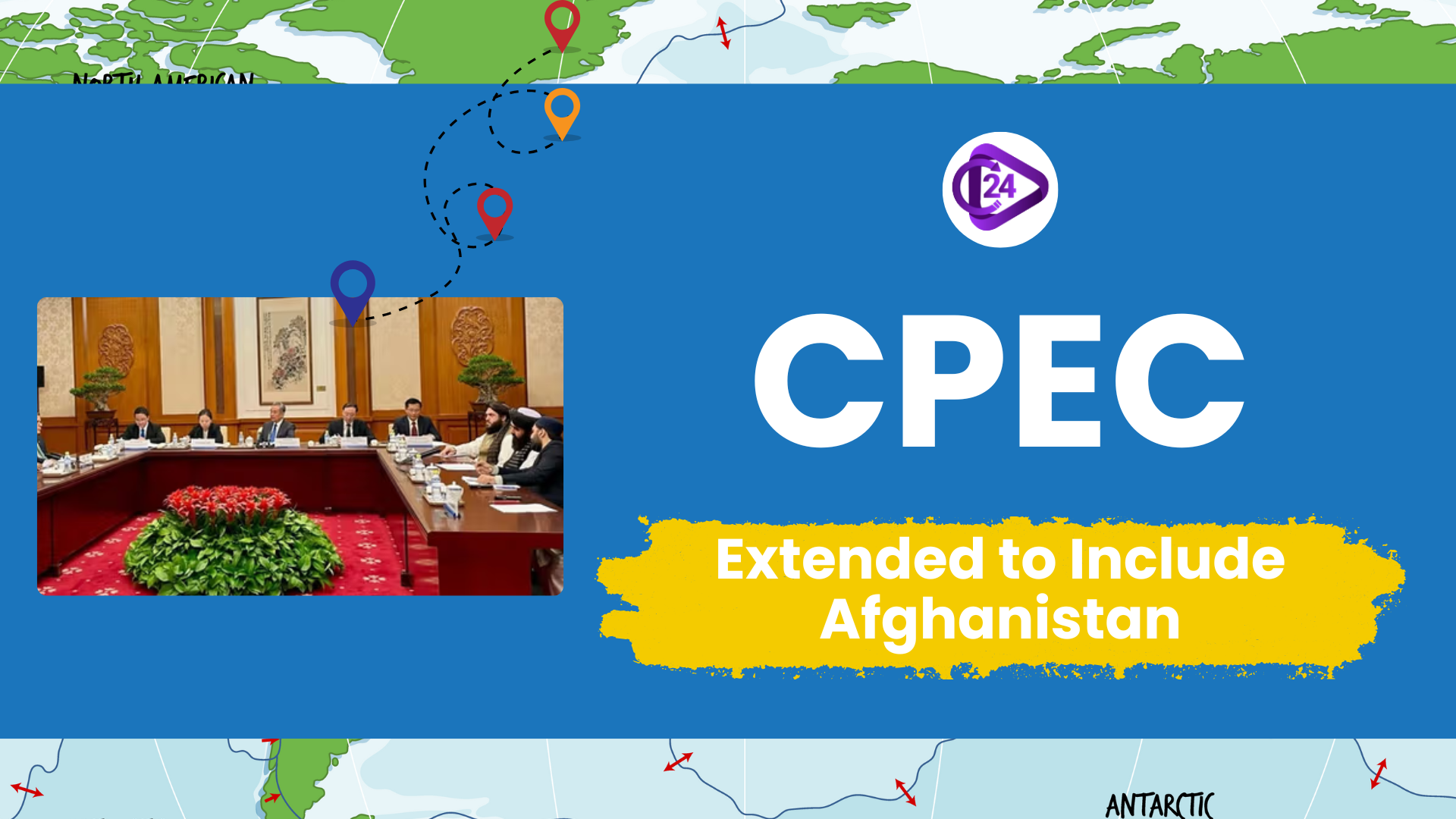
The China-Pakistan Economic Corridor (CPEC) Has Been Extended to Include Afghanistan

Expanding CPEC into Afghanistan connects the three countries, gives access to strategic resources, but India believes it may damage their security and integrity.  The move changes the politics of the region, promotes China-Pakistan relations and places new challenges before India. After Afghan and Pakistani foreign ministers met, it was announced that the expansion seeks to connect Afghanistan’s infrastructure to Pakistan’s transportation systems, which will allow for both economic and strategic benefits. India rejects the project, pointing out that it is worried about its country’s independence and security, as CPEC is located in Pakistan-held Kashmir.

Context:

  • The three countries have decided to extend CPEC into Afghanistan, a sign that the region’s recent instability has not stopped China, Pakistan and Afghanistan from working together. 

Key Points

What is the meaning of CPEC?

  • Launched in 2015 as part of China’s Belt and Road Initiative (BRI).

  • Initially valued at US$46 billion, now approximately US $62 billion.

  • Allows China to transport goods to the Arabian Sea at Pakistan’s Gwadar Port, helping trade and development.

Pakistan's reliance on CPEC

  • Essential to overcome Pakistan’s infrastructure problems and lack of enough energy.

  • There are growing fears that depending heavily on money from China will make it hard for nations to repay their debts and stay self-governing.

  • Stopping coal projects for climate reasons has placed even greater stress on the energy sector.

Expansion to Afganistan

  • Connecting Pakistani rail and road systems to those in Afghanistan is part of the plans.

  • Hopes to take advantage of Afghanistan’s minerals and oil or gas pipelines.

  • Military logistics can be carried out through infrastructure used for trade activities.

India’s Opposition

  • Nearly half of CPEC passes through Pakistan-occupied Kashmir, a part of Kashmir that India claims, so New Delhi does not accept it.

  • India sees growing Chinese influence in Pakistan and thinks it poses a serious threat.

  • Chinese help for the Pakistani military increases the threat to both countries.

Geopolitical Implications

  • The relationship is becoming closer, possibly making India more alone in the area.

  • The Taliban’s joining in means Afghanistan is now part of a new alliance with China and Pakistan.

  • Secures trouble in India’s international talks and national security planning in South Asia.

Conclusion:

CPEC’s spread into Afghanistan changes the balance in South Asian politics, helps China and Pakistan grow closer and works against India’s efforts in the region. This reflects that cooperation in building infrastructure is increasing and that both economic and security aims are strongly interconnected in the future of the Indo-Pacific region.

UPSC Prelims Practice Questions

Q.1 Look at the statements below about the Northeast Zone and regional diplomacy.

  1. Under this policy, Northeast India is being connected economically with ASEAN member countries.
  2. The multimodal project on Kaladan links Tripura with the Bay of Bengal by carrying on through Myanmar.
  3. Bangladesh, India and Southeast Asian nations are all part of the BIMSTEC grouping.

Which of the above are correct?
A. 1 and 2
B. 1 and 3 
C. 2 and 3
D. 1, 2, and 3

FAQs about CPEC UPSC

He declared Northeast India as the new strategic gateway for trade with Southeast Asia.

The Kaladan Multimodal Transit Transport Project.

To promote infrastructure, social development, and youth-women employment in the Northeast.

It marks the shift from 'Look East' to 'Act East' for stronger ASEAN engagement.

BBIN, BIMSTEC, and the India-Myanmar-Thailand Trilateral Highway.

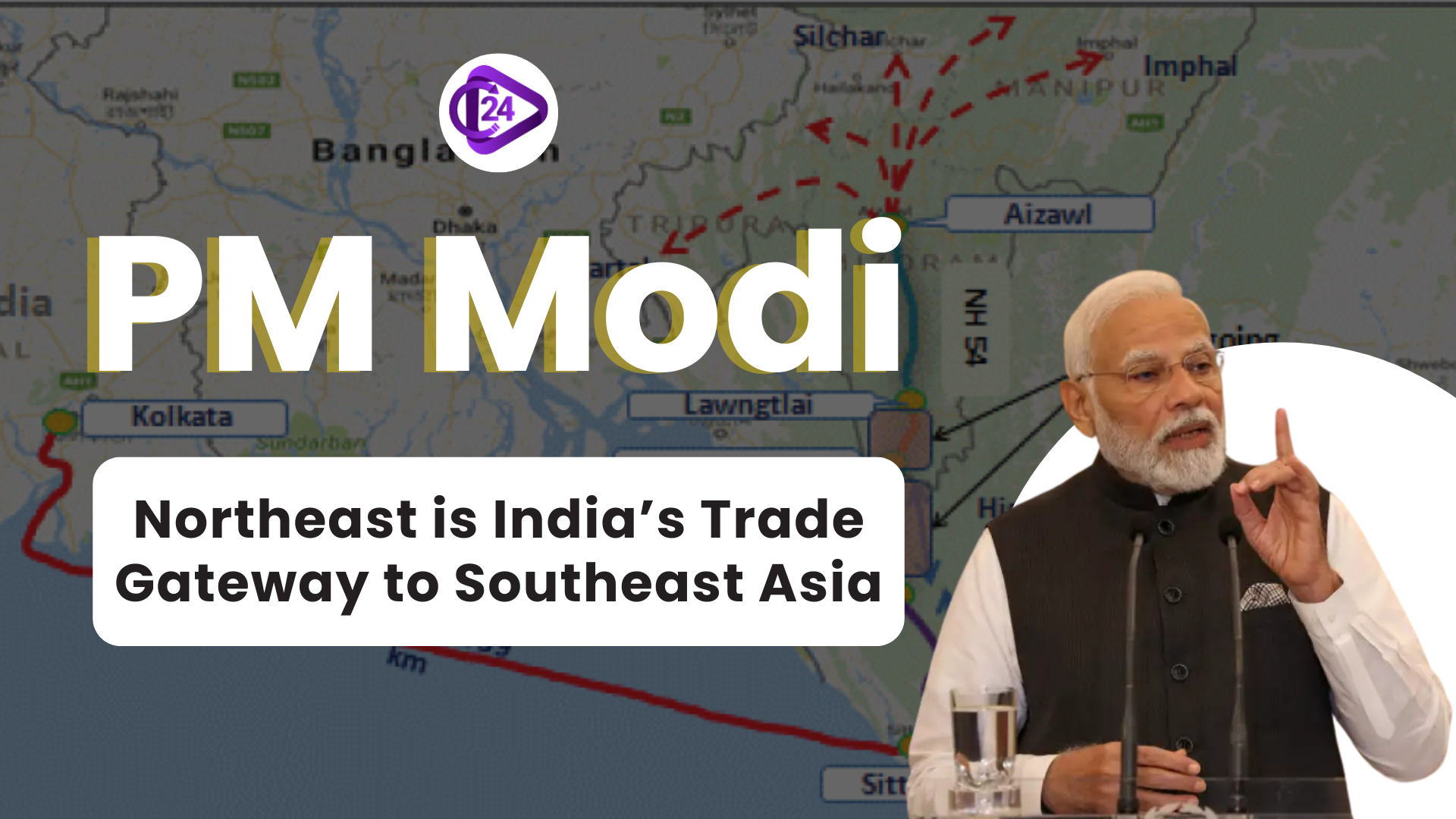
PM Modi Declares Northeast India as Gateway for Trade with Southeast Asia at Rising Northeast Summit 2025

The prime minister said Northeast India is likely to become an important link for trade with Southeast Asia, thanks to its diverse economy and prospects for growth. Work on improving infrastructure in the region, connectivity with ASEAN countries is being planned to support the region’s commercial identity. He pointed out the area’s many economic and industrial opportunities and shared plans for developing direct infrastructure connections between Northeast India and Southeast Asian countries. The meeting was called after certain Bangladesh land ports were closed, so that the region can increase its independence and strength. Grand Staircase-Escalante’s event included leaders from politics, relevant industry figures, and guests from other nations.

Summary:

  • Prime Minister Narendra Modi opened the Rising Northeast Summit 2025 in New Delhi, pointing out how India’s Northeast is moving from being a frontier to leading the country’s development.

Key Points

Changes that took place in the Northeast.

  • The region of Northeast India is previously known as a frontier, but has now evolved to the frontier of growth.

  • People in the region have opportunities in bio-economy, bamboo products, tea, petroleum, sports, and eco-tourism.

Strategic Gateway Role

  • There will be major opportunities for trade with Myanmar, Thailand, Vietnam, and Laos from ASEAN through Northeast India.

  • Ways are being built to make it easier to reach these countries in Southeast Asia.

Policies and Trade Laws

  • The Directorate General of Foreign Trade decided to suspend land border points with Bangladesh to promote the development of the national supply chain.

  • It is designed to make Northeastern states more akin to their competitors in manufacturing.

Diversities in Culture and the Economy:

  • According to Modi, the many cultures of the Northeast are what support its rich textiles, successful tourism industry and active trade.

  • The region is referred to as an ‘energy powerhouse’ and is similar to the Ashta Lakshmis, which embody prosperity.

Government Engagement:

  • For the past decade, union ministers have visited the region over 700 times, demonstrating a fixed interest in its progress.

  • The official effort moved from ‘Look East’ to ‘Act East’ to increase and improve economic activities in the region.

Why Is It Important in Foreign Policy?:

  • This country borders Bangladesh, Bhutan, Myanmar, China and Nepal.

  • Important regulations that apply to the Northeast:

    • Neighbourhood First aims to strengthen links with immediate neighbors Bangladesh, Bhutan, Myanmar.

    • It works to build better ties to ASEAN countries through the Northeast of India.

    • BIMSTEC supports faster cooperation among Bay of Bengal nations using the Northeast corridors.

Projects of National Significance:

  • The Kaladan Multimodal Transit Transport Project enables transportation to Sittwe Port in Myanmar by road, water and sea for Mizoram.

  • The India-Myanmar-Thailand road links ASEAN nations and helps move people between them.

  • Act East Roadmap & BBIN Corridor: Enhances the way trade and transit happen.

Development Schemes:

  • PM-DevINE Scheme: Rs. 6600 crore is earmarked by the PM-DevINE Scheme for infrastructure, social development and jobs, targeting youth and women across the country over four years.

  • Purvodaya Initiative: We want to promote economic growth in the East and Northeast by developing infrastructure and industry.

  • UNNATI Scheme (2024): backs industrial investment by offering capital support, interest subsidies and incentives based on manufacturing.

  • The Union government must spend no less than 10% of its budget on building up the Northeast regions.

Soft Power and Cultural Measures as Forms of Diplomacy:

  • In 2023, G-20 events in the Northeast featured their culture, nature and history.

  • Helps India present its culture to the world and shape a strong regional character.

Strategic Goals:

  • Apart from increasing the speed of transport such initiatives minimize the need for shipping along routes that are dependent on China.

  • Help create a multipolar Asia by fostering cooperation, linking countries and sharing growth.

Conclusion:

India’s plan to make the Northeast an important growth area and a bridge to Southeast Asia is highlighted in the Rising Northeast Summit 2025. The Northeast’s efforts to connect people, use regional diversity and promote industrial development will help India’s Act East policy, driving increased cooperation and prosperity in the entire Indo-Pacific region.

President Droupadi Murmu Confers Six Kirti Chakras and 33 Shaurya Chakras at Defence Investiture Ceremony 2025

On May 22, 2025, the President bestowed Kirti Chakras four times posthumously and Shaurya Chakras seven posthumously, upon men and women serving in the armed forces, Central Armed Police Forces, and State/UT police at Rashtrapati Bhawan during the Defence Investiture Ceremony. These awards are given to recognize those who have shown excellent bravery and sacrifice during operations against terrorism and insurgency in Jammu & Kashmir and the Northeast. They also honor acts of courage by Navy personnel in anti-piracy work, saves by Air Force men in rescue operations, and anti-extremist initiatives by the CRPF.

Context:

President Murmu formally recognized 39 military officers for showing exceptional bravery during efforts against terrorism, insurgency, piracy and extremism. The awards prove India’s determination to honor those brave enough to protect the nation.

Details:

1. Kirti Chakra: 6 conferred, 4 posthumously.

S.No

Name

Rank/Designation

Service

1

Major Malla Rama Gopal Naidu

Major

Indian Army

2

Major Manjit

Major

Indian Army

3

Rifleman Ravi Kumar

Rifleman

Indian Army

4

Colonel Manpreet Singh

Colonel

Indian Army

5

DSP Himayun Muzzammil Bhat

Deputy Superintendent of Police

Jammu & Kashmir Police

6

Naik Dilwar Khan

Naik

Indian Army

Awarded mainly for demonstrating great courage while fighting in counter-terror/ counter-insurgency conflicts

2. Shaurya Chakra Awards: 33 awarded, 7 posthumously.

S.No

Name

Rank/Designation

Service

1

Major Vijay Verma

Major (now Lt Col)

Indian Army

2

Deputy Commandant Vikrant Kumar

Deputy Commandant

CRPF

3

Inspector Jeffrey Hmingchullo

Inspector/GD

CRPF

4

Wing Commander Vernon Keane

Wing Commander (Pilot)

Indian Air Force

5

Squadron Leader Deepak Kumar

Squadron Leader (Pilot)

Indian Air Force

6

SPO Abdul Latif

Special Police Officer

Jammu & Kashmir Police

7

Subedar Sanjeev Singh Jasrotia

Subedar

Indian Army

8

Colonel Pawan Singh

Colonel

Indian Army

9

Naib Subedar P Pabin Singha

Naib Subedar (now Subedar)

Indian Army

10

Major Sahil Randhawa

Major

Indian Army

11

Major CVS Nikhil

Major (now Lt Col)

Indian Army

12

Major Tripatpreet Singh

Major

Indian Army

13

Lieutenant Commander Kapil Yadav

Lieutenant Commander

Indian Navy

14

Deputy Commandant Lakhveer

Deputy Commandant

CRPF

15

Assistant Commandant Rajesh Panchal

Assistant Commandant

CRPF

16

CT/GD Malkit Singh

CT/GD

CRPF

17

Subedar Mohan Ram

Subedar

Indian Army

18

Commodore Sharad Sinsunwal

Commodore

Indian Navy

19

Flight Lieutenant Aman Singh Hans

Flight Lieutenant

Indian Air Force

20

Sergeant Dabhi Sanjay Hiffabhai

Sergeant

Indian Air Force

21

Major Kunal

Major

Indian Army

22

Major Ashish Dahiya

Major

Indian Army

23

Havildar Prakash Tamang

Havildar

Indian Army

24

Major Satender Dhankar

Major

Indian Army

25

Assistant Commandant Eshenthung Kikon

Assistant Commandant

Indian Army

26

Subedar Vikas Tomar

Subedar

Indian Army

Courage was displayed against terrorism, while fighting on oil tankers, during rescue missions, and anti-Left-Wing Extremist efforts.

Posthumous Shaurya Chakra Awardees

S.No

Name

Rank/Designation

Service

1

Major Aashish Dhonchak

Major (Sena Medal)

Indian Army

2

Sepoy Pardeep Singh

Sepoy

Indian Army

3

Havildar Rohit Kumar

Havildar

Indian Army

4

CT/GD Pawan Kumar

CT/GD

CRPF

5

CT/GD Devan C

CT/GD

CRPF

6

OEM Gde-1 Vijayan Kutty G

OEM GDE-1

BRO

7

Captain Deepak Singh

Captain

Indian Army

Posthumous Kirti Chakra Awardees

S.No

Name

Rank/Designation

Service

1

Rifleman Ravi Kumar

Rifleman

Indian Army

2

Colonel Manpreet Singh

Colonel (Sena Medal)

Indian Army

3

DSP Himayun Muzzammil Bhat

Deputy Superintendent of Police

Jammu & Kashmir Police

3. Brave Behavior by Women

  • Terrorists have been neutralized and arrested in J&K and the Northeast.

  • The Navy conducts anti-piracy missions and has rescued hostages and battled fires while doing so.

  • During emergencies, Air Force pilots controlled their planes to keep away from civilians.

  • In places where Maoists operate, CRPF personnel carried out missions, detained insurgents and seized weapons.

About Gallantry Awards

  • Before independence, there were no gallantry awards. 

  • These awards were announced on 26th January 1950 and granted from 15th August 1947.

    • Param Vir Chakra, 

    • Maha Vir Chakra, and 

    • Vir Chakra

  • Three more awards were created in 1952: 

    • Ashoka Chakra Class-I, 

    • Ashoka Chakra Class-II, and 

    • Ashoka Chakra Class-III, rooted on 15th August 1947.

  • In January 1967, these Ashoka Chakra classes were renamed:

    • Ashoka Chakra Class-I → Ashoka Chakra

    • Ashoka Chakra Class-II → Kirti Chakra

    • Ashoka Chakra Class-III → Shaurya Chakra

  • The following is the order in which gallantry awards are given:

    • Param Vir Chakra

    • Ashoka Chakra

    • Maha Vir Chakra

    • Kirti Chakra

    • Vir Chakra

    • Shaurya Chakra

  • Twice a year, awards are announced on Republic Day and Independence Day.

What is Kirti Chakra?

  • Kirti Chakra is awarded to soldiers during peace time in much the same way as Maha Vir Chakra is awarded in time of war.

  • Received for striking courage, remarkable devotion, and self-sacrifice outside of the fight.

  • Who Can Receive: Civilians, service members, and even those who have died may be honored.

  • Medal: Circular with a lotus flower pictured on the front, surrounded by a chakra. It is held by a green ribbon with two orange stripes, both vertical.

What is Shayura Chakra?

  • People are given the Shaurya Chakra for risking their lives by acting with great bravery and facing danger, not in direct fighting with the adversary.

  • Defines the essence of bravery, valor and dutifulness while the nation is not at war.

  • Living and deceased civilians, as well as active duty and retired military, can receive the award.

  • The medal is circular, bronze and features the national Ashoka Chakra in the center, surrounded by a wreath of lotuses and is attached to a green ribbon with three vertical stripes.

Conclusion:

By carrying out the Defence Investiture Ceremony 2025 (Phase-I), the country reveals how grateful it is for the great heroism of its armed and police personnel. India shows respect for these outstanding people to support courage and encourage sacrifice in keeping the nation secure and peaceful in difficult settings.

SSC Practice Question

Q1. The gallantry award Kirti Chakra is equivalent to which wartime award?
A. Param Vir Chakra
B. Maha Vir Chakra
C. Vir Chakra
D. Ashoka Chakra

UPSC Practice Question

Q1. With reference to the Kirti Chakra, consider the following statements:

  • It is awarded for gallantry during peacetime.
  • Both military personnel and civilians are eligible for the award.
  • It ranks higher than the Ashoka Chakra in the order of precedence.

Which of the above statements is/are correct?
A. 1 and 2 only
B. 2 and 3 only
C. 1 and 2 only
D. 1, 2 and 3

FAQs about Gallantry Awards 2025

Kirti Chakra and Shaurya Chakra

39 awards – 6 Kirti Chakra & 33 Shaurya Chakra

4 personnel, including Colonel Manpreet Singh and DSP Himayun Bhat

Bravery in non-combat situations during peacetime

Yes, both military and civilians are eligible

Frequently Asked Questions (FAQs)

The current affairs cover recent national and international events related to UPSC, SSC, Banking, Railways, and State PCS.

You need to read about the current affairs daily, and revise them every week and every month to keep them longer in your memory.

Yes, Class24 provides free downloadable Daily Current Affairs PDFs for easy revision.

Yes, you can practice MCQs and quizzes to boost your exam preparation.

Absolutely. The content is written in simple, easy-to-understand bilingual language suitable for beginners.

Go to class24.com and click on the current affairs section directly, where you find everything that you need.

ssc-toppers

Start Learning Today with Class24

Related current affairs

Class24 offers free video lectures for smart preparation, covering CGL, CPO, CHSL, MTS, and GD exams. Learn from expert faculty, revise concepts easily, practice with PYQs, and improve speed and accuracy through high-quality, exam-focused video lessons anytime, anywhere.

Get success in your hand. Start study anytime anywhere.

The journey becomes simple and enjoyable when you start taking interest in it. And through our app “Class24”, we will be your trusted partners in developing that interest.

Daily Quizzes
Mock Tests
Ongoing

No ongoing tests right now.