
Day: May 7, 2025

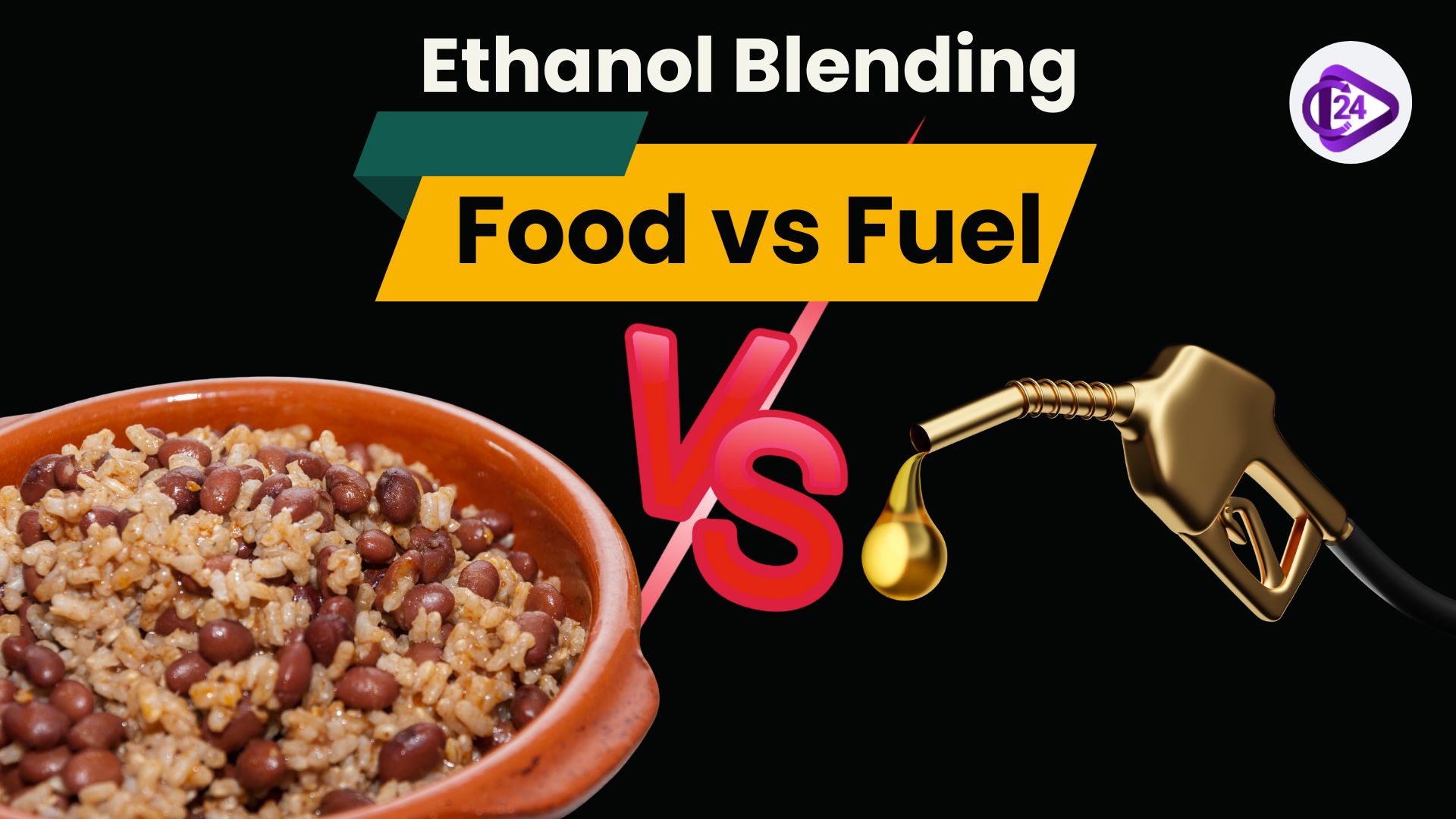
Food vs Fuel: Surge in Ethanol Blending and Its Impacts on Sugar Availability and Prices

India's Ethanol Blending Program (EBP) represents a vital component of the nation's energy security policy framework. India is shifting its energy focus to local sugar cane production for ethanol fuel creation because global petroleum costs remain unstable. The government tries to decrease oil imports through petrol-ethanol blending yet the fuel production emphasis on crops leads to reduced sugar and food production levels. Frustration has arisen from agricultural resource competition between food production and fuel manufacture since the nation confronts increasing sugar costs coupled with looming food supply problems.

Context

  • India's ethanol-blending policy has advanced to surpass its original goal by accelerating the target of reaching 30% petrol-blended ethanol by 2025. 

  • The Indian government has implemented this initiative to decrease reliance on fossil fuels and reduce national oil imports.

Key Points:

Ethanol Blending and Policy timeline

  • Indian authorities began with a 20% ethanol blending target for 2025 yet increased the objective to 30% blending by the same year. Recent policy changes extended the ethanol-blending target beyond its initial 2025 goal to a new objective of achieving 30% blending during the same period.

  • The government tightened its ethanol-blending standards to 15% in 2020-2021 and plans to exceed the previous target by achieving 30% blending in upcoming years.

Impact on Sugarcane Production:

  • As ethanol requirements grow the industry funnels more sugarcane resources into producing ethanol. The decreased availability of sugar for direct use occurs due to this development.

  • Due to decreasing sugarcane production since 2022 the government has raised the Fair Remunerative Price (FRP) to safeguard farmer interests. Sugar prices have increased because of rising costs.

Sugar Prices and Consumer Impact:

  • The accelerating need for sugar to produce ethanol has driven up sugar prices which directly affect consumers' purchasing power.

  • Recent data shows a substantial increase in sugar prices which threatens to worsen food access challenges for lower-income households.

Ethanol Production and Environmental Benefits:

  • People recognize ethanol blending as sustainable because this renewable fuel stems from agricultural raw materials.

  • India achieves both energy independence and lesser emissions of greenhouse gases by blending ethanol into petroleum products.

Challenges of implementing food vs fuel

  • India's EBP promotes energy security but shares negative effects on food production mainly in the sugar sector.

  • Agricultural resources aim diverting their output from food production to fuel output which creates escalating sugar prices affecting consumer prices and food sector costs.

  • National food security requires the government to establish measures which prevent ethanol production from negatively affecting the availability of basic food items.

Government’s strategies to preserve sugar distribution:

  • The government seeks to synchronize ethanol manufacturing operations with sugar yield to protect the available sugar supplies from rising ethanol consumption levels.

  • The government investigates various regulatory tools including price controls together with financial support to achieve stable sugar prices.

Long-Term Sustainability of the EBP:

  • The EBP successfully built an ethanol market demand system alongside farmer support initiatives. This program's long-term continuation depends on preserving nationwide food security alongside achieving self-sufficiency in energy resources.

  • Due to rising discussions about the food versus fuel conflict the future of biofuel policies will probably change.

Conclusion:

Ethanol blending activities in India represent a major advancement both for energy independence and reduced fossil fuel usage. This policy exposes India's vital food vs fuel trade-off because it produces rising sugar prices alongside food security risks. The Ethanol Blending Program (EBP) provides multiple economic opportunities and environmental advantages but India needs to control agricultural resource reallocation to protect food supplies. 

FAQs

India aims to exceed its previous 20% ethanol blending target by reaching 30% ethanol blending with petrol by 2025.

Rising ethanol requirements shift more sugarcane stock toward fuel production hence decreasing sugar availability in the food market.

The shift of sugarcane from traditional food production to ethanol fuel has raised prices that strain lower-income consumers' ability to purchase products.

Through ethanol blending we can decrease greenhouse gas release while establishing energy freedom through sustainable farming methods.

Government officials are pursuing two strategies to optimize ethanol output relative to sugar production while studying ways to stabilize market prices and protect food supplies.

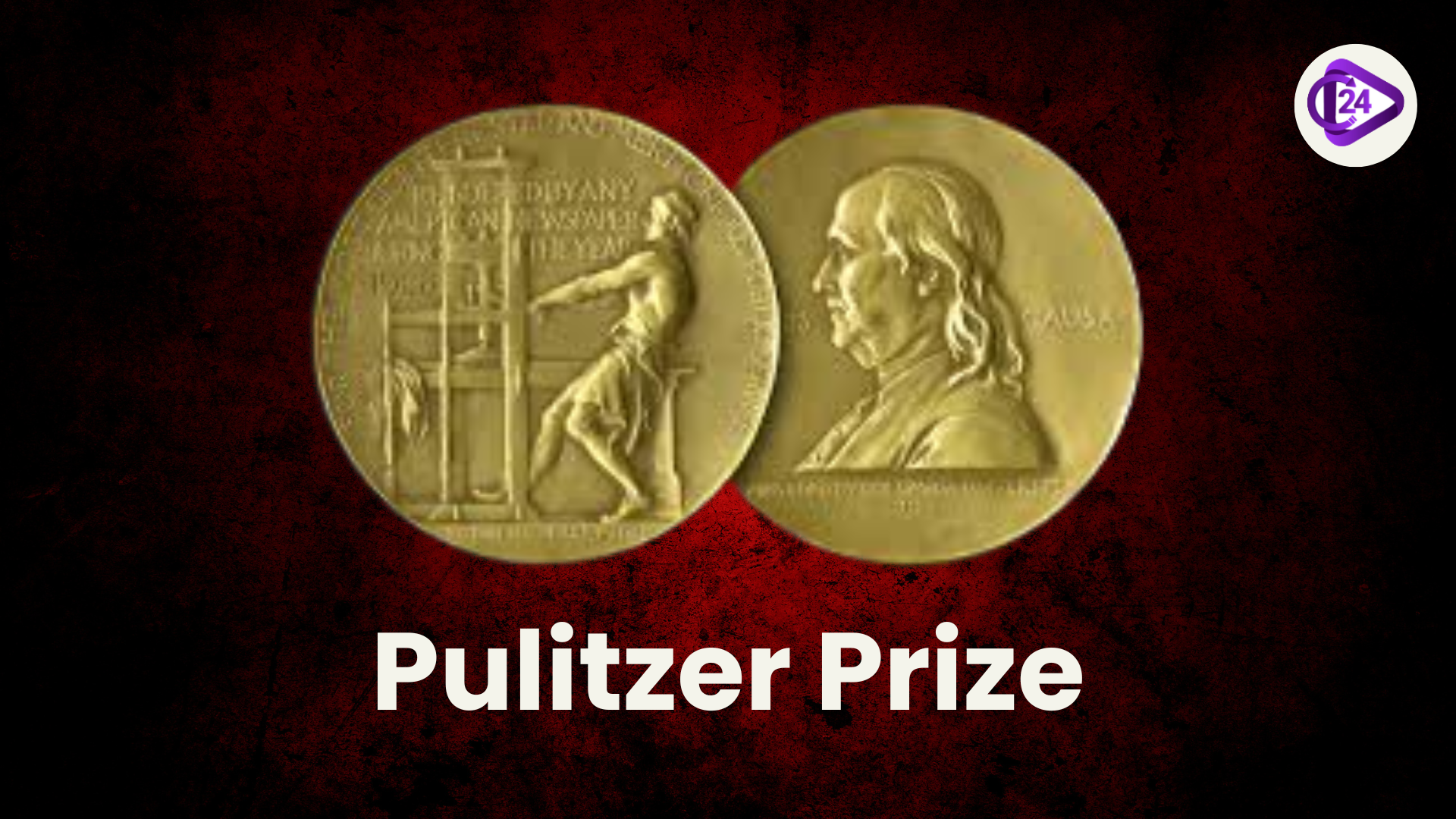
Pulitzer Prize 2025: Celebrates outstanding achievements in journalism, literature and art.

Multiple honors were announced at the Pulitzer Prizes 2025 ceremony to celebrate excellent work from journalistic and literary and artistic fields. Since 1917 the prestigious Joseph Pulitzer named award has existed as the cornerstone honor for American achievements across many fields. Percival Everett took home the Fiction prize while Branden Jacobs-Jenkins won Drama and several news organizations including The New York Times and The Washington Post received recognition for their reporting about the Trump assassination attempt.

Context:

  • Journalism together with the arts receives its most prestigious recognition from the Pulitzer Prize. 

  • The Pulitzer administration through Columbia University annually awards prizes across 23 categories that Joseph Pulitzer established in 1917. 

Key Points:

About the Pulitzer Prize:

  • Initiated: Joseph Pulitzer established this prize through his foundation back in 1917 and Columbia University selects winners each year.

  • Field of recognition: The Pulitzer Prize rewards outstanding achievement across journalism, literary work and performance in music and drama.

  • Prize Money: The prize money for winners amounts to $15,000 but those recognizing public service also get a gold medal.

Key 2025 Winners:

  • Fiction: From Percival Everett comes "James" which uses Huckleberry Finn's story to tell the tale of a slave.

  • Drama: Branden Jacobs-Jenkins earned the 2025 Drama committee's appreciation for his play Purpose which explores the tensions within a wealthy African American family.

  • Journalism: The journalistic excellence of The New York Times, The New Yorker, and The Washington Post brought home multiple awards through their journalism on the attempted Trump assassination.

  • Public Service: Kavita Suarna collaborated with Lizzie Presser and Cassandra Jaramillo and Stacy Kranitz to share news reports on pregnancy-related fatalities from restrictive abortion laws.

  • Investigative Reporting: This investigation by Reuters Staff analyzed the extensive system behind fentanyl distribution during the current crisis.

  • International Reporting: New York Times staff with Declan Walsh received recognition for their reporting on Sudan's conflicts.

Other Notable Winners:

  • Special Writing: Mark Warren earned a special writing award from Esquire magazine.

  • Commentary: Through his New Yorker essays Mosab Abu Toha explained the tragic human toll of Palestinian Gaza during times of war.

  • Editorial Writing: The Houston Chronicle staff including Raj Mankad and Leah Binkowitz with Sharon Steinman and Lisa Falkenberg earned recognition for their reporting efforts.

  • Photography: The Breaking News Photography prize went to Doug Mills from NYT and Moises Saman from The New Yorker won the Exclusive Photography award.

Breakthrough Achievements:

  • The Pulitzer Prizes 2025 celebrate groundbreaking reporting in multiple sectors through their awards which focus on both worldwide events like the fentanyl crisis and Sudan conflict and homegrown investigations into figures such as Elon Musk and Donald Trump.

Conclusion:

In 2025 the Pulitzer Prize organizers emphasize their mission to honor outstanding journalism achievements across news and artistic fields by prioritizing timely coverage of essential social political topics. Journalism's powerful influence manifests through writers like Percival Everett and Mosab Abu Toha who use their pen to reshape public understanding even as investigative reporting serves to uncover vital systemic issues. Through its ongoing mission the Pulitzer Prize serves as an enduring symbol of excellence that recognizes individuals making lasting contributions to society.

FAQs


The prestigious American award created by Joseph Pulitzer in 1917 recognizes brilliant work across journalism, literature, and artistic fields. The prize bestows awards for public service alongside fiction, drama, investigative reporting, and 21 other categories.


Percival Everett received the 2025 Pulitzer Prize for Fiction with his book James that retells Huckleberry Finn’s narrative while portraying the experiences of a slave.


During Pulitzer Prize celebrations in 2025, The New York Times shared three awards alongside The New Yorker and The Washington Post for their reporting on Trump’s assassination bid.


Kavita Suarna teamed up with Lizzie Presser, Cassandra Jaramillo, and Stacy Kranitz to secure the Public Service Pulitzer Prize for their journalism about pregnancy deaths from restrictive abortion policies.


Mosab Abu Toha received the Pulitzer Prize for Commentary through The New Yorker where his personal essays showcased the catastrophic human toll of Gaza’s ongoing dispute.

Operation Sindoor: India strikes back after Pahalgam

Following the Pahalgam terror attack that killed 26 civilians, India launched Operation Sindoor targeting 9 locations used by banned groups, including Jaish-e-Mohammed (JeM) and Lashkar-e-Taiba (LeT) and Hizbul Mujahideen (HM). Observer commands consisting of Indian military forces conducted strikes through coordinated air, ground, and naval forces against targets in Pakistan and Pakistan-occupied Kashmir. Operation Sindoor served two purposes since it targeted terrorist activities while seeking vengeance for the Pahalgam attack without permitting open conflict with Pakistan's military.

Context:

  • Operation Sindoor served as India's counteraction to the Pahalgam terror attack that claimed 26 lives on April 22, 2025.

  • The operation conducted airstrikes on 9 surreptitious terrorist facilities distributed between Pakistan and Pakistani-controlled Kashmir, with 4 in Pakistan and 5 inside PoK.

  • The Indian forces, consisting of the army, the air force, and the navy carried out the operation from their position within India using precision-guided munitions.

  • Operation Sindoor received a description from India's Defense Ministry as "focused, measured, and non-escalatory" to confirm the avoidance of Pakistani military sites.

Key Points:

Targeted Terror Sites: 

9 terror camps became targets after the operation pursued them at these locations:

Operation in Pakistan (4 sites)

Location Function / Affiliation
Markaz Subhan Allah, Bahawalpur Jaish-e-Mohammed (JeM) Headquarters
Markaz Taiba, Muridke Lashkar-e-Taiba (LeT) Base
Mehmoona Joya, Sialkot Hizbul Mujahideen Camp
Markaz Ahle Hadith, Barnala LeT-linked Religious Indoctrination Hub

Operation in POK – Pakistan Occupied Kashmir (5 sites)

Location Function / Affiliation
Syedna Bilal Camp, Muzaffarabad Jaish-e-Mohammed Training Centre
Shwawai Nalla Camp, Muzaffarabad Lashkar-e-Taiba Operations Unit
Makaz Raheel Shahid, Kotli Hizbul Mujahideen Centre
Markaz Abbas, Kotli JeM Safehouse
Sarjal Facility, Tehra Kalan Weapons and IED Storage

Background of the Operation Sindoor

  • Active terrorists killed 26 innocent civilians during the Pahalgam terror attack in April 22, 2025. 

  • The attack led to higher tensions between India and Pakistan after it became known that Jaish-e-Mohammed (JeM), Lashkar-e-Taiba (LeT), and Hizbul Mujahideen (HM) conducted terrorist attacks on Indian territory. 

  • India launched Operation Sindoor to eliminate both the terror groups' infrastructure and leadership.

  • The Indian forces executed Operation Sindoor on May 7, 2025 using deliberate steps that kept the campaign focused and maintained control over escalating military actions to stop disarm development toward total conflict.

Strategic Importance:

  • Security forces conducted a targeted operation against Jaish-e-Mohammed and Lashkar-e-Taiba headquarters responsible for carrying out terrorist strikes including the Pulwama incident, the 2008 Mumbai attacks, and the attack against the Indian Parliament.

  • Indian military action became necessary because Pakistan refused to eliminate its terror groups.

Coordinated Effort:

  • This military action received support from all three components of Indian armed forces, including the Army, Navy and Air Force.

  • The Indian government adopted intelligence data combined with precise weapon systems to deliver attacks that struck only terrorist infrastructure.

  • The operation was designed to stay non-escalatory to prevent attacking any sanctuaries belonging to Pakistan's armed forces so a major military confrontation between both countries could be avoided.

International Diplomacy:

  • India shared details of its anti-terror activities directed at Pakistan-based groups with multiple world capitals including the United States, after the attacks.

  • During diplomatic talks, NSA Ajit Doval presented proof to US officials demonstrating Pakistan-based terrorist involvement in the Pahalgam attack, which necessitated Operation Sindoor.

Notable Military Operations of India

Year Force Operation Name Location / Objective
1948 Indian Army Operation Polo Hyderabad – Integration of princely state
1961 Indian Army Operation Vijay Goa – Liberation from Portuguese rule
1971 Indian Navy Operation Trident Karachi – Naval strike during Indo-Pak war
1984 Indian Army Operation Blue Star Punjab – Removal of militants from Golden Temple
1999 Indian Air Force Operation Safed Sagar Kargil War – Air support operations
2015 Indian Navy Operation Raahat Yemen – Civilian evacuation during conflict
2016 Indian Army Myanmar Surgical Strike Cross-border counter-insurgency mission
2019 Indian Air Force Operation Bandar Balakot – Airstrike after Pulwama attack
2020 Indian Navy Operation Samudra Setu COVID-19 – Global repatriation of Indians
2024 All Forces Operation Sindoor Pakistan & PoK – Response to Pahalgam attack

Conclusion:

The military operation designated Sindoor focused solely on striking terrorist facilities located throughout Pakistan territory, alongside Pakistan-occupied Kashmir. Another demonstration of India's resolve against cross-border terrorism arose through precision strikes targeting JeM, with LeT and HM at their operational bases. Through its military operation, India protected a non-escalatory status while making its diplomatic objectives clear to defend both sovereignty and its citizens.

FAQs

Operation Sindoor functioned as India's counterattack response to the terrorist strike in Pahalgam that took the lives of 26 civilians. India launched Operation Sindoor to strike JeM, LeT, and HM terrorist facilities inside Pakistan and PoK territories.

The military operation destroyed facilities belonging to JeM alongside LeT and HM across nine distinct targets.

A synchronized operation with precision-guided weapons linked the Indian Army alongside Navy and Air Force to strike terrorist targets outside enemy military territory.

India actively avoided striking Pakistani military sites to maintain limited conflict escalation yet successfully hit terror organizations.

Through briefings delivered to global powers including the United States, India presented evidence confirming Pakistan-based terrorist participation as justification for its military intervention.

India and the United Kingdom concluded Free Trade Agreement (FTA): providing duty-free access for 99% of merchandise shipments

A major trade deal between India and the UK stands as a landmark achievement for developed economy-oriented Indian trade relations while global trade conflicts continue. India pursues trade relationship expansion with the United Kingdom as the nation withdraws from the EU to sign new commercial agreements worldwide. The agreement functions as an initial instrument to obtain expanded market entry for Indian products alongside boosting economic expansion and employment opportunities.

Context:

  • The Free Trade Agreement between India and the United Kingdom targets a trade surge that will exceed $60 billion for goods and services while establishing duty-free access for 99% of Indian merchandise entering the UK. 

  • 3 years of negotiations produced an agreement granting India duty-free status for 99% of its merchandise sent to the UK. 

Key Points:

  • Bilateral Trade Growth:

    • The India-UK Free Trade Agreement aims to grow bilateral trade past $120 billion by targeting a doubling of trade within five years.

    • Through this agreement both nations aim to promote trade between goods and services especially nurturing the development of chemical, textile, gem & jewellery, leather & footwear, base metal industries despite UK trade barriers.

  • Duty-Free Access:

    • Indian export-dependent sectors will experience powerful growth from receiving waste-free customs access for their products entering the UK market.

  • Reduction in Tariffs:

    • Over the next decade India plans to cut customs duties on 90% of tariff lines and offer free tariffs for 85% of UK exports.

    • Products like dairy and apple remain exempt from these duty reductions because they protect India's crucial domestic industries.

Impact on India:

  • Economic Growth: FTA forecasts doubling India-UK trade volume to reach $120 billion over the next five years.

  • Industrial Benefits: The UK has provided duty-free trade availability for chemical industries, textile industries, leather factories, gemstone manufacturers.

  • Increased Market Access: The UK will provide duty-free entry for 99% of India's merchandise imports.

  • Tariff Reductions: The trade agreement includes zero tariffs for 85% of UK products which will enter effect during the next decade.

  • Improved Employment Opportunities: UK extends a three-year exemption to Indian workers from social security requirements.

  • Market Access for Services: The UK market will receive expanded options to use India's digital services within its borders.

  • Automotive Sector Boost: Automobile tariffs reduced from 100% to 10%.

  • Energy Security and Agriculture: Japan needs to accomplish a strategic alignment between ethanol manufacturing and domestic food production.

Impact on the UK:

  • Increased Bilateral Trade: The growing market in India gives UK businesses better access to its textile sector along with its automobile market and service industry.

  • FDI: The likelihood rises that UK investors will extend their funding operations into Indian entities primarily through technology and pharmaceutical industries.

  • Reduced Tariffs: The reduction in India's export duties creates expanded opportunities for UK manufacturers to enter the country's market.

  • Increased Mobility: The broader connection of Indian experts in Information Technology and healthcare sectors becomes possible.

  • Whisky and Gin Market: The UK alcohol industry will benefit from a 75% decrease in tariffs that apply to its export of whisky.

Importance of the India-UK FTA:

  • Strategic Significance: Brexit era trade relations become more diverse as economic relations between both nations become stronger.

  • Model for Future FTAs: Two parties benefit mutually from their trade dealings and investment exchanges and service-sector cooperation.

  • Significant Impact on Exports: India's textiles and automobiles and gems and agricultural products benefit from zero customs duties under this trade deal.

  • Focus on Services: The FTA opens improved opportunities for UK businesses to consume IT and digital services from India.

Challenges of the India-UK FTA:

  • Food Security Concerns: Soaring ethanol output threatens to use valuable agricultural resources thus reducing the amount of available sugar.

  • Market Competition: Indian industrial sectors must brace themselves for sharpened market competition due to UK companies entering their market with focused interest in automotive operations.

  • Rising Imports vs Domestic Industry: Accounting for duty-free access may create increased import competition that puts pressure on domestic manufacturing enterprises.

  • Social and Environmental Concerns: Labor mobility under this agreement along with biofuel environmental consequences present social problems that require immediate solutions.

  • Long-Term Sustainability: For the FTA to succeed India requires stable policies combined with reasonable medicine prices.

Conclusion:

By signing the India-UK Free Trade Agreement both nations formally advanced their economic partnership through a historical agreement. The FTA guarantees duty-free access to 99% of merchandise shipments through its provisions while lowering tariffs on key products and providing expanded market opportunities for Indian industries to realize economic growth and create new job opportunities. 

FAQs

Through its India-UK Free Trade Agreement (FTA) 99% of Indian products sent to the UK will benefit from utility-free commercial access. The dual trade objective of this deal targets an expansion of commercial activity between nations toward reaching a $120 billion mark within five years.

The India-UK Free Trade Agreement provides duty-free standards and reduced duties benefits to chemicals as well as textiles and leather and gem & jewellery and automobiles which will result in higher exports and sector growth.

A three-year social security payment waiver from the UK permits more Indian professionals to work within its territory.

India has set a goal to decrease tariffs on 90% of its tariff lines over the coming decade while maintaining zero duties for 85% of UK exports coupled with dairy and apple exemptions to protect domestic business interests.

The India-UK FTA creates food security challenges due to higher ethanol output while both UK and domestic producers face market competition and face rising import levels. The agreement requires attention to social and environmental issues which develop from labor migration effects and biofuel production processes.

India Climbs 3 Spots to 130 in HDI Rankings, But Inequality Remains a Major Challenge

The Human Development Index data for India shows strong improvement which indicates advancements across life expectancy and healthcare delivery and education parameters. Although India demonstrates steady improvement the nation maintains fundamental difficulties in minimizing income disparities and gender equality along with female labor force engagement. The UNDP report shows India has successfully reduced poverty rates while demonstrating increased per capita gross national income yet emphasizes that social inequalities still exist. The improvement in India's HDI score positions it next to high human development status yet the nation stays within medium human development while fighting existing inequalities in equitable development.

Context: 

  • According to the Human Development Report 2025 by United Nations Development Programme (UNDP) India now stands at 130th position among 193 countries in 2023 with a three-place improvement from previous rankings. 

  • The HDI value now stands at 0.685 near the high human development threshold yet ongoing struggles with equality together with gender biases and income disparities limit overall improvement.

Key Points:

HDI Improvement and Rankings:

  • The world ranking of the Human Development Index for India rose from 133 in 2022 to reach position 130 during 2023.

  • The Human Development Index showed an upward trend by advancing from 0.676 in 2022 to 0.685 in 2023 on its way toward reaching the threshold value of 0.700 for high human development standards.

  • India's Gross National Income (GNI) experienced growth alongside a reduction of its poverty levels.

  • During the last three decades India's Gross National Income per person increased steeply from $2,167.22 in 1990 to reach $9,046.76 in 2023.

  • Between 2015-16 and 2019-21 multidimensional poverty affected 135 million fewer Indians demonstrating that their living standards and welfare improved.

Inequality Reduces HDI:

  • The combination of better health outcomes and education benefits fails to counteract inequality's 30.7% reduction of India's HDI value among the nations in this region.

  • Uneven income levels together with gender-based inequities create obstacles that challenge both fair growth and complete social inclusion.

  • The numbers of working women and their political representation affect India's development indicators.

  • The improvement of women's stake in the workforce and political representation remains slow despite the recent passage of a constitutional amendment that guarantees women one-third of legislative seats. This amendment signals transformative potential.

Life Expectancy and Education:

  • Health initiatives like Ayushman Bharat, National Rural Health Mission and Janani Suraksha Yojana together with other national programs have contributed to a substantial increase in life expectancy across India to 72 years during 2023 from 58.6 years in 1990.

  • National educational policies including the Right to Education Act and National Education Policy 2020 have raised the projected school years for children from 8.2 years in 1990 to 13 years today.

Role of Artificial Intelligence:

  • India stands at the forefront of global artificial intelligence (AI) leadership through remarkable self-reported AI skills penetration across its nation.

  • According to the UNDP report Artificial Intelligence shows great potential to transform India's development trajectory in developing economies that grow fast.

What is the Human Development Report?

Background of HDI

  • Since 1990 the United Nations Development Programme (UNDP) has published the Human Development Reports (HDRs) through which they examine multiple themes using the human development framework. 

  • The reports exist to expand human development knowledge past traditional economic metrics including GDP. 

  • The reports direct their attention toward human life enhancement alongside making human well-being vital for development execution.

  • Since its introduction in 1990 the Human Development Index (HDI) serves as a principal measurement tool for human development comparison between countries across these reports.

Human Development Index (HDI):

  • Human Development Index functions as a combined measure that tracks average success in developing human potential. The rating system analyzes three essential measures to present a comprehensive development picture which surpasses basic economic expansion. There are 3 factors serve as measurement components for HDI assessment:

  • Three components of HDI

  • Life Expectancy at Birth (SDG 3):

    • The metric tracks how long people live and how well their health remains during their lifetime.

  • Expected Years of Schooling (SDG 4.3):

    • The indicator determines the full period of educational enrollment which begins when a child starts primary school. 

    • Mean Years of Schooling (SDG 4.4):

      • Adults aged 25 and older achieve education for an average number of years indicating population-wide trends regarding education quality and literacy levels.

  • Gross National Income per capita (SDG 8.5)

    • The income level of a nation's residents who earn money from both local and foreign sources is measured through GNI per capita.

    • The indicator reveals both an economy's fundamental financial health and its measures for standard of living.

Through these three indicators we can get a detailed picture of country life quality which enables nationwide comparisons centered on health metrics and education levels and economic performance.

Conclusion:

The improvement in India's HDI ranking demonstrates steady development across the healthcare and life expectancy, and education sectors. Despite progress, the problem of inequality continues to pose substantial difficulties. The progress of poverty reduction and GNI rise along with gender equality reforms needs to be balanced by comprehensive efforts to overcome ongoing income disparities as well as gender equality and workforce participation gaps if India wishes to maintain its growth momentum.

FAQs

India stands at position 130 among 193 nations while its Human Development Index value reaches 0.685 during 2025.

A combination of superior longevity achievements and enhanced medical care delivery together with stronger educational results and raised National Gross Income led to increased HDI scores in India.

The persistent gaps between rich and poor populations alongside gender discrimination and insufficient female workforce participation create a 30.7% reduction in India's adjusted Human Development Index.

The Human Development Index (HDI) requires three essential components for its calculation: life expectancy at birth with expected and mean school years and Gross National Income (GNI) per capita.

Frequently Asked Questions (FAQs)

The current affairs cover recent national and international events related to UPSC, SSC, Banking, Railways, and State PCS.

You need to read about the current affairs daily, and revise them every week and every month to keep them longer in your memory.

Yes, Class24 provides free downloadable Daily Current Affairs PDFs for easy revision.

Yes, you can practice MCQs and quizzes to boost your exam preparation.

Absolutely. The content is written in simple, easy-to-understand bilingual language suitable for beginners.

Go to class24.com and click on the current affairs section directly, where you find everything that you need.

ssc-toppers

Start Learning Today with Class24

Related current affairs

Class24 offers free video lectures for smart preparation, covering CGL, CPO, CHSL, MTS, and GD exams. Learn from expert faculty, revise concepts easily, practice with PYQs, and improve speed and accuracy through high-quality, exam-focused video lessons anytime, anywhere.

Get success in your hand. Start study anytime anywhere.

The journey becomes simple and enjoyable when you start taking interest in it. And through our app “Class24”, we will be your trusted partners in developing that interest.

Daily Quizzes
Mock Tests
Ongoing

No ongoing tests right now.