

Day: April 14, 2025

Africa-India Key Maritime Engagement (AIKEYME) 2025

The Indian Navy conducts AIKEYME 25 as its inaugural multilateral maritime exercise with African member states in Tanzania. The exercise strengthens defense relations between India and Africa by advancing mutual capabilities in maritime security and anti-piracy and surveillance measures. As an embodiment of SAGAR and MAHASAGAR designs the program strengthens regional cooperation and military diplomacy while facilitating technological collaboration through joint exercises and access to simulators and training facilities for building up a secure prosperous Indian Ocean region.

  • Location: Dar es Salaam, Tanzania

  • Hosted by: India and Tanzania

Participating Nations:

  • Co-hosts: India, Tanzania

  • Participants: Comoros, Djibouti, Kenya, Madagascar, Mauritius, Mozambique, Seychelles, South Africa

Strategic Importance:

  • Maritime Security:

    • India and Tanzania should prioritize efforts to fight against piracy together with smuggling operations alongside illegal trafficking activities.

    • The use of improved maritime observance systems combined with instantaneous data sharing capabilities.

  • India’s Strategic Vision:

    • The initiative supports the Security and Growth for All in the Region policy known as SAGAR.

    • India demonstrates its enduring dedication to promote maritime peace together with stability in the long run.

  • Defence Diplomacy & Cooperation:

    • Through its MAHASAGAR initiative the organization works for complete regional growth.

    • The initiative enhances military and diplomatic relations between India and African countries

    • The initiative supports direct interactions among people throughout the region as well as self-governance in the area.

  • Technology & Capacity Building:

    • The exchange of knowledge between participants takes place through simulator trainings and defence exhibitions.

    • Mutual training along with technology transfers and indigenous development activities find their basis here

Conclusion

The AIKEYME 25 exercise establishes itself as a historic development for joint maritime activities between India and Africa. The initiative solves urgent security problems and develops strong military ties that support technological development and establish shared prosperity goals across the region. This initiative establishes India as a maritime authority while demonstrating its position as a reliable naval power within the Indian Ocean region.

Golden Jubilee of Aryabhata 2025: Celebrating India’s First Satellite and ISRO’s Historic Milestone

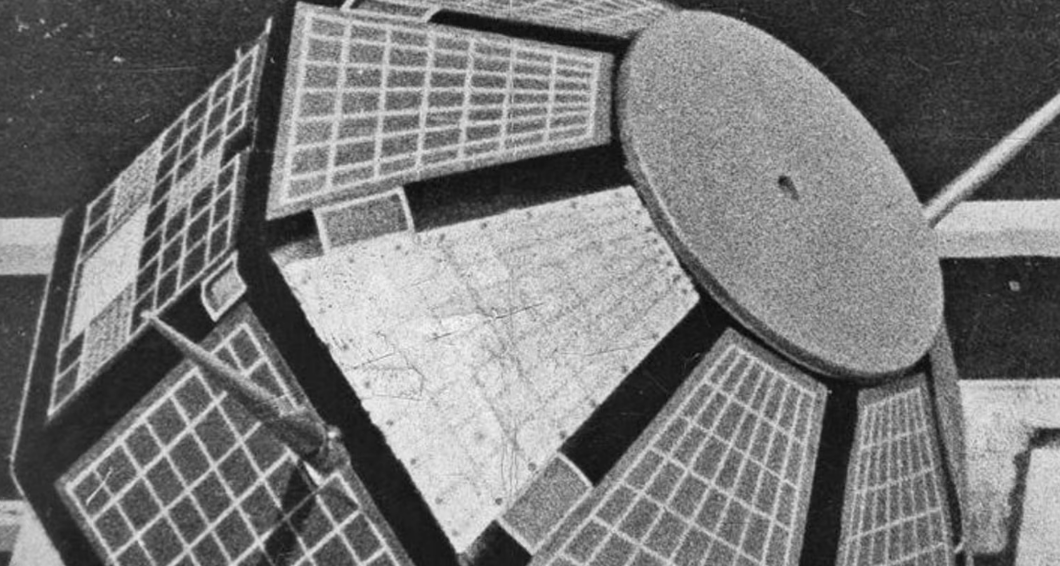
India’s pioneering satellite Aryabhata reached orbit fifty years ago on April 19, 2025. Aryabhata found its launch destination in the Soviet Union in 1975 as the flagship mission for India's new space exploration venture under the oversight of ISRO. India’s membership in the spacefaring nations alongside satellite technology and space exploration developments began with the seminal Aryabhata mission.

Historical Significance:

  • Aryabhata was launched on April 19, 1975, aboard a Soviet Kosmos-3M rocket from Kapustin Yar, USSR

  • Aryabhata positioned India as the 11th nation worldwide that launched satellites into orbit.

  • This accomplished launch set the first chapter of India's space technology exploration and research activities.

Naming of Aryabhata:

  • Prime Minister Indira Gandhi made her selection from among three Potential Names: Aryabhata, Mitra, and Jawahar.

  • Aryabhata received its name from the Indian astronomer and mathematician who lived during the ancient period.

  • The satellite received two alternate names as Jawahar and Mitra which conveyed both Indian freedom along with Soviet-Indian friendship.

Technical and Design Aspects:

  • Aryabhata featured 26 flat surfaces with a 1.59 meter diameter and 1.19 meter height in its quasi-spherical shape.

  • The spacecraft used 36,800 sq cm worth of solar cells to produce a maximum power output of 46 watts.

  • The orbit maintained by the satellite reached 563 km x 619 km heights.

Mission Objectives and Performance:

  • Aryabhata conducted scientific research for X-ray astronomy as well as aeronomy and solar physics studies while maintaining its experimental objectives.

  • The power distribution problem during initial operations let only one of the payloads function.

  • Aryabhata transmitted signals until February 10, 1992 before the mission ended after 17 years of successful operation.

Legacy and Impact:

  • Through giving confidence to ISRO Aryabhata paved the way for a serious Indian space technology program.

  • India has established 131 satellites while maintaining 55 operational satellites in space since its initial space project.

  • By launching 433 satellites for 34 countries the Indian space program delivered support for global missions after its establishment.

Golden Jubilee Celebrations:

  • The organization ISRO will organize unique programs to mark this historic event.

  • Through the jubilee event India celebrates its transformation from beginning space missions to becoming a worldwide space leadership force.

Conclusion:

Aryabhata’s launch in 1975 achieved status beyond technology because it demonstrated India’s scientific ambitions and accomplishment capabilities. This 50-year anniversary of Aryabhata’s achievement functions as a milestone which represents Indian innovation alongside national determination and patriotic pride. Through its launch India gained control over its space exploration capabilities thus creating a thriving space economy which positioned the nation as a prominent global space power.

Mauritius Becomes First African Nation to Sign ISA’s Country Partnership Framework 2025

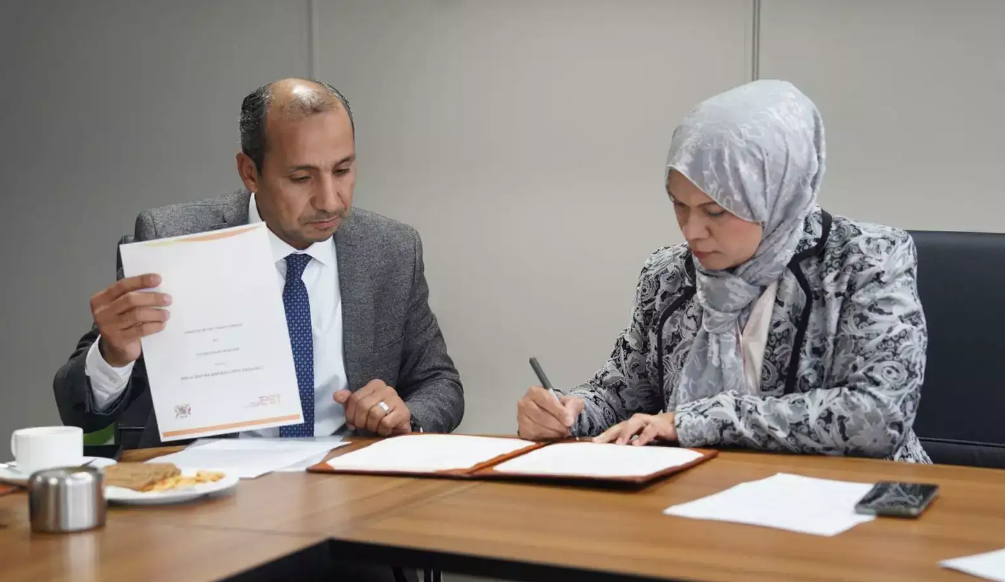
Mauritius joined the International Solar Alliance’s (ISA) Country Partnership Framework (CPF) on April 12, 2025 to become the first African nation to endorse this framework. The CPF functions as a strategic mechanism which enhances solar energy partnerships between the member nations of the International Solar Alliance throughout both short and extended durations. Through ISA India takes a leading position to boost African countries' involvement in worldwide clean energy transitions.

What is Country Partnership Framework?

  • A Country Partnership Framework represents a strategic plan orchestrated by International Solar Alliance for enhancing intermember solar cooperation.

  • ISA launched the strategic initiative to establish formal cooperative relationships with its member countries.

  • The initiative accelerates transitions toward clean energy fields by using collective solar projects.

  • The initiative supports sustained development and solar energy capability strengthening and investment channeling from local to global sources.

About International Solar Alliance (ISA):

  • Nature: Treaty-based intergovernmental organization.

  • Founded: In 2015 at COP21 in Paris by India and France.

  • Headquarters: Gurugram, Haryana, India.

  • The ISA stands at 104 countries which have phốieated both signatures and ratification agreements as of March 2025.

  • Under an amendment in 2020 all members of the United Nations received admission eligibility for ISA membership through its organization.

ISA’s Strategic Vision – ‘Towards 1000’ Strategy:

  • The organization aims to gather USD 1,000 billion in solar energy funding during the next decade.

  • The organization will provide 1,000 million individuals with clean energy access.

  • Installing 1,000 GW worth of solar energy capacity will be a specific goal.

  • The installation of 1,000 GW solar energy capacity is the main objective.

  • The solar installation would result in annual emission reduction of 1,000 million tonnes of CO₂.

Key ISA Initiatives:

  • SolarX Startup Challenge: Financial and technical support for solar entrepreneurs.

  • STAR-C Initiative: Strengthens solar capacity and institutional frameworks.

  • Global Solar Facility: This investment fund through Global Solar Facility provides payment security to bring in solar industry investments.

  • Green Hydrogen Innovation Centre: Integrates solar power with hydrogen energy systems.

Mauritius' Milestone Signing:

  • ISA recognized Mauritius as the pioneer nation from Africa that signed a CPF agreement with the institution.

  • The collaboration between ISA and Africa is steadily expanding its solar partnership activities.

  • The agreement enables Mauritius to gain access to technical and financial support structures operated by ISA.

India’s Leading Role in ISA:

  • The organization has benefited from this executive's continuous financial and leadership contributions toward ISA's development.

  • India organizes One Sun One World One Grid (OSOWOG) as a borderless program to connect solar power systems worldwide.

  • The organization receives ₹100 crore each year which enables ISA to develop activities within developing nations.

  • The agency contributes project funding together with technology transfer and training assistance to develop Africa and Asia.

Conclusion

The Country Partnership Framework agreement between Mauritius represents a historic development for solar power adoption in Africa as ISA expands its solar mission on a world scale. This document represents the united worldwide dedication towards developing sustainable solar-powered development and climate-resistant infrastructure. India leads the transformative ISA movement which enables developing nations to cooperate for clean energy thus bringing forth a sustainable and inclusive future.

Dr. B.R. Ambedkar’s 135th Jayanti: Legacy of India’s Constitution Maker

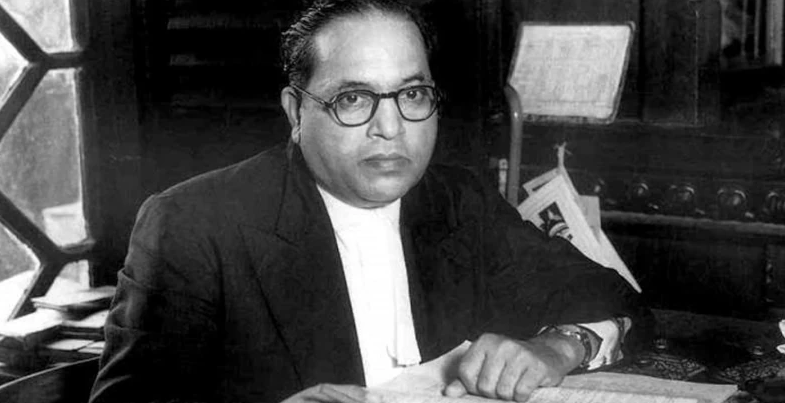
Dr. Bhimrao Ramji Ambedkar exhibited leadership through his role as the "Architect of the Indian Constitution" while leading as a social reformer during his remarkable career as a modern Indian historical figure. Dr. Bhimrao Ramji Ambedkar born on April 14, 1891 in Mhow Madhya Pradesh started his life in the town where his path to justice and equality would blend with the struggle of Dalits facing systematic caste oppression. Through his unremitting efforts to grant Dalits social elevation while building India's democratic structure he established a permanent national achievement.

Context: 

  • On Monday 14th April 2025, the 135th birthday commemoration of Dr. B.R. Ambedkar will occur at Prerna Sthal located on Parliament House lawns in New Delhi.

Early Life and Struggles:

  • Dr. Ambedkar originated from the Mahar caste where Hindu society labeled this group as untouchable. 

  • Dr. B.R. Ambedkar was born to his father Ramji Maloji Sakpal who fought in the British Indian Army while his mother Bhimabai handled domestic duties as a homemaker. 

  • Ambedkar developed his lifetime mission to fight against the caste system after enduring extreme social segregation as a child in his communities.

  • During his childhood years Ambedkar suffered tremendous difficulties that shaped his later life. 

Educational Journey:

  • The academic accomplishments of Ambedkar rank among the most impressive of his era. Ambedkar managed to overcome caste discrimination although it did not stop him from becoming the most educated Indian during his time. 

  • Ambedkar's educational journey included:

    • Early Education:

      • In 1907 Ambedkar achieved his matriculation diploma then enrolled at Elphinstone College in Mumbai to study Economics and Political Science and earned his B.A. degree in 1912.

    • Higher Studies Abroad:

      • During 1913 the Maharaja Sayajirao Gaikwad of Baroda agreed to provide Ambedkar with an educational scholarship for studying abroad. 

      • The M.A. degree program at Columbia University in 1916 allowed him to produce the thesis titled "The Administration and Finance of the East India Company". 

      • His academic achievements at the London School of Economics (LSE) earned him extensive recognition as one of the most well-educated persons during that period through his Ph.D. and D.Sc. in Economics.

Advocacy for Dalit Rights:


  • Throughout his life Ambedkar dedicated himself to fighting on behalf of Dalits because he fought against their harsh caste-based mistreatment. 

  • According to him social justice together with equality were essential elements for India to advance as a nation. 

  • Ambedkar focused his advocacy for Dalit rights through several significant events which include:

    • Annihilation of Caste (1936):

      • Through his book "Annihilation of Caste" Ambedkar pushed for ending both the Hindu orthodox and the caste system through its abolition. 

      • As a result the work served to rally Dalits and progressive thinkers throughout India against caste oppression.

    • Scheduled Castes Federation (1942):

      • After evolving into the Scheduled Castes Federation, the party established its mission to protect the civil rights of Dalits while working for their representation in political institutions.

Role in Constitutional Reform and the Indian Constitution:

  • As Chairman of the Drafting Committee of the Indian Constituent Assembly Dr. Ambedkar made his most important contribution toward shaping Indian society. 

  • Ambedkar brought to life the Indian Constitution through his drafting leadership so it would secure basic respect and equal protection for all citizens but specifically target the disadvantaged communities. 

  • Several provisions within the Constitution examples the vision he established for democratic India with complete separation between state and religion as well as full inclusivity for all citizens.

  • Citizenship rights should protect the equality and rights of all people with a special focus on safeguarding Dalit and female rights.

  • Untouchability elimination received protection through the law because Ambedkar fought to make it a punishable offense.

  • He advocated that affirmative action should serve both Dalits and socio-economically disadvantaged tribes to create their advancement possibilities.

Poona Pact and the Fight for Dalit Political Rights:

  • Dr. Ambedkar distinguished himself by creating a pivotal advancement in the Dalit efforts to obtain political rights through his involvement in the Poona Pact of 1932. 

  • The British Communal Award initially provided Dalits with separate electorates but Dr Ambedkar had to negotiate with Mahatma Gandhi when the leader opposed this system for proposing divisions within Hindu society. 

  • The individuals reached an agreement to provide Dalits with reserved seats in normal electoral constituencies instead of maintaining separate voting groups.

Conversion to Buddhism:

  • During his last years Dr. Ambedkar rejected Hinduism because of its caste-based prejudice and decided to join Buddhism. 

  • During the ceremony held in Nagpur on October 14, 1956 Dr. Ambedkar and approximately 500,000 other followers joined Buddhism together. 

  • Ambedkar considered Buddhism as a doctrinal system which expressed his life-long dedication to fair treatment by pursuing freedom and equality and mutual brotherhood.

Legacy and Influence:

  • The legacy produced by Dr. Ambedkar has deep and extensive effects. 

  • Following his position as Law Minister he maintained his advocacy for marginalized groups in India. 

  • Through his dedication he built the basis for India to evolve into a more impartial and diverse nation. 

  • Through his progressive thinking about social and political equality Ambedkar launched movements that have inspired Dalit rights campaigns and support for gender equality and social justice efforts in India as well as worldwide.

Conclusion:

The contributions Dr. Bhimrao Ramji Ambedkar made to the creation of the Indian Republic are without parallel. Many millions of people stay inspired by his constant battle against caste oppression and his pioneering contribution to the Indian Constitution creation and his clear leadership toward an inclusive and equitable society. Ambedkar serves as a permanent manifestation of opposition against persecution while fighting for civil rights together with social equality and justice in society. The enduring value of his accomplishments will aid India on its path to build a society that is fair and inclusive.

How Make in India is Transforming India’s Global Pharmaceutical Footprint

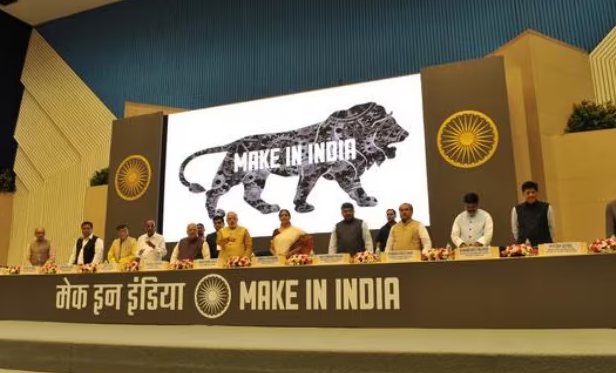
The pharmaceutical sector in India advances through the Make in India and Atmanirbhar Bharat initiatives to become the global leader of affordable quality medicines. The Department of Pharmaceuticals under the Ministry of Chemicals and Fertilizers operates as the leader to guide the nation toward achieving global leadership in affordable quality pharmaceutical distribution.

The global market for branded generics belongs to India primarily because pharmaceutical producers deliver high-quality products at competitive prices. 

For example, India contributes:

  • 55–60% of UNICEF's global vaccine supply

  • WHO receives nearly every DPT vaccine order it places from its suppliers

  • 52% of BCG and 45% of measles vaccines worldwide

The Indian Pharmaceutical Industry: A Snapshot

  • India’s pharmaceutical businesses extend from formulation medicines to bulk pharmaceuticals and biotechnological products and vaccine manufacturing. It is globally respected for:

    • Advanced research and development capabilities

    • Large-scale, affordable production

    • Wide-reaching exports

Medical Devices: Building a Healthier Future

  • The medical devices industry in India fills a critical role in building a robust healthcare system. This sector serves as a decisive element for medical identification and therapeutic procedures together with illness operating procedures. Major categories include:

    • Electro-medical equipment

    • Implants

    • In-vitro diagnostic reagents

    • Surgical instruments

    • Consumables and disposables

  • The Make in India mission supports the medical devices sector through funding capital-intensive measures and technology-based solutions in addition to professional training initiatives.

Trade and Investment: India on the Global Map

  • The Department of Pharmaceuticals leads the evaluation process which results in the approval of Foreign Direct Investment (FDI) projects within the pharma and medical technology sectors. Between April and December 2024:

    • Pharmaceuticals coupled with medical devices attracted ₹11,888 crore from foreign direct investment

    • The approved brownfield development projects reached 13 worth 7,246.40 crore rupees

The Production Linked Incentive (PLI) Schemes 

  • The Production Linked Incentive (PLI) schemes which started in 2020 help domestic production by rewarding manufacturers based on their performance goals while promoting exports and cutting down imports. The initiatives run parallel with the national vision of Atmanirbhar Bharat.


  • PLI for Pharmaceuticals

    • Tenure: FY 2022–23 to FY 2027–28

    • Budget: ₹15,000 crore

    • Beneficiaries: 55 selected manufacturers

    • Through this program the scheme encourages the manufacturing of valuable pharmaceuticals which comprise:

    • The scheme focuses on developing high-value pharmaceuticals that include Biopharmaceuticals, complex generics, patented drugs and gene therapies and orphan drugs.

    • The government supports the development of APIs together with Key Starting Materials (KSMs) and Drug Intermediates (DIs).

    • Public health-focused drugs: anti-cancer, anti-diabetic, autoimmune, and cardiovascular products

  • PLI for KSMs, DIs, and APIs

    • Tenure: FY 2020–21 to FY 2029–30

    • Budget: ₹6,940 crore

    • This scheme operates to decrease national dependence on imported drugs while targeting 41 pharmaceutical bulk medications.

    • Progress to date:

    • The invested amount reached ₹4,253.92 crore which surpassed the originally pledged ₹3,938.57 crore.

    • 34 of 48 selected projects already commissioned

    • Example projects:

    • The government of Andhra Pradesh allocated ₹1,910 crore for Penicillin G development which led to expected savings of ₹2,700 crore from imports.

    • Funding of ₹450 crore from Clavulanic Acid operations enabled Himachal Pradesh to achieve ₹600 crore worth of import replacement.

  • PLI for Medical Devices

    • Tenure: FY 2020–21 to FY 2027–28

    • Outlay: ₹3,420 crore

    • The scheme targets implementation projects within four segments which include radiology, cancer care, imaging techniques, and implants.

    • Incentive structure:

      • 5% of incremental sales

      • Category A: up to ₹121 crore

      • Category B: up to ₹40 crore

    • The establishment of Bulk Drug Parks operates to enhance manufacturing facilities through regional investments.

    • This new scheme originated in March 2020 to establish unique manufacturing areas that lower production expenses and boost domestic capabilities.

    • The drug park scheme operates under Gujarat along with Himachal Pradesh and Andhra Pradesh as approved states.

    • The program provides financial support of up to ₹1,000 crore to each park or its project cost at seventy percent level.

    • Total outlay: ₹3,000 crore

Pradhan Mantri Bhartiya Janaushadhi Pariyojana (PMBJP)

  • PMBJP guarantees that all people have access to cost-effective and top-quality generic pharmaceuticals throughout the country of India. Key initiatives include:

  • Public education on the benefits and safety of generics

  • The initiative promotes the adoption of generic medicine prescriptions throughout Indian government healthcare facilities.

  • The distribution network expansion strategy focuses on areas which lack proper access to pharmaceutical and healthcare products

  • On April 8th 2025 there existed 15479 Jan Aushadhi Kendras throughout the nation.

Strengthening Pharmaceuticals Industry (SPI) Scheme

  • The Central Sector Scheme entitled SPI operates to boost the operational abilities of the MSME pharmaceutical sector.

  • Budget: ₹500 crore

  • Duration: FY 2021–22 to FY 2025–26

  • The plan includes upgrading infrastructure facilities and enhancing regulatory systems for supporting research activities and employee training.

Conclusion: Toward Global Pharma Leadership

The pharmaceutical industry together with medical devices represent powerful symbols of India’s development in science and innovation and manufacturing capability. The PLI schemes with Bulk Drug Parks and PMBJP initiatives allow India to increase domestic production as well as decrease healthcare expenses and improve accessibility for its population.

The nation's sustained emphasis on innovation and self-reliance together with global partnerships places India optimistically to lead the development of quality yet affordable healthcare solutions which will benefit national and global health outcomes.

Frequently Asked Questions (FAQs)

The current affairs cover recent national and international events related to UPSC, SSC, Banking, Railways, and State PCS.

You need to read about the current affairs daily, and revise them every week and every month to keep them longer in your memory.

Yes, Class24 provides free downloadable Daily Current Affairs PDFs for easy revision.

Yes, you can practice MCQs and quizzes to boost your exam preparation.

Absolutely. The content is written in simple, easy-to-understand bilingual language suitable for beginners.

Go to class24.com and click on the current affairs section directly, where you find everything that you need.

ssc-toppers

Start Learning Today with Class24

Related current affairs

Class24 offers free video lectures for smart preparation, covering CGL, CPO, CHSL, MTS, and GD exams. Learn from expert faculty, revise concepts easily, practice with PYQs, and improve speed and accuracy through high-quality, exam-focused video lessons anytime, anywhere.

Get success in your hand. Start study anytime anywhere.

The journey becomes simple and enjoyable when you start taking interest in it. And through our app “Class24”, we will be your trusted partners in developing that interest.

Daily Quizzes
Mock Tests
Ongoing

No ongoing tests right now.