

Day: March 1, 2025

Herath: The Sacred Mahashivratri Celebration of Kashmiri Pandits

Known as a holy event by Kashmiri Pandits, Herath provides them a distinct tradition to observe Mahashivratri. Herath runs as a multi-day observance throughout India while most regions follow one-day celebrations for this spiritual festival. The word "Herath" comes from "Har-Ratri" which means "Night of Hara" thus referring to Lord Shiva. The symbolic nature of Herath manifests the divine connection between cosmic powers and the mutual relationship of Shiva and Parvati.

Historical & Cultural Context

  • Kashmir’s cultural heritage provides the foundation for these traditions which express themselves through its historical heritage.

  • Both the celebration of Heritage have been carried out with magnificence throughout Kashmir's entire region.

  • The observance of Herath by Kashmiri Pandits continues worldwide after their mass migration became history in 1990.

Spiritual & Religious Significance

  • According to popular belief Lord Shiva appears before humans during this sacred nighttime manifestation.

  • A time of spiritual awakening, purification, and divine blessings.

  • In contrast to most parts of India Herath celebrations involve custom-based rituals at homes instead of mainly visiting temples.

Rituals & Traditions

1. Vatuk Pooja – Worship of Vatuk Dev

  • In the belief of Kashmiri Pandits Vatuk Dev still represents the sacred power of Lord Shiva.

  • Each vessel in the worship contains water mixed with walnuts and may be made from earthen or metal materials.

  • Water functions as a symbol of spiritual purity and spiritual essence while walnuts communicate success together with holy gifts.

2. Doon Pooja – The Sacred Walnuts

  • The proper ceremonial procedure involves walnut water soaking.

  • The distribution of walnuts follows a process of sacred blessing to become Prasad.

  • Symbolizes purification and divine grace.

3. Night Vigil & Fasting

  • During the nighttime ritual of devotion devotees maintain vigil by reciting devotional songs about Lord Shiva.

  • Religious traditions of Herath require strict fasting by certain people yet other followers eat simple vegetarian foods during times of observance.

4. Salaam – Post-Herath Celebration

  • The festivities take place the day after Herath in an Eid-type manner.

  • During Herath families both share their blessed messages and serve the traditional meals of Kashmiri culture.

  • The celebration expresses both communal unity and culture-based peace between people.

Herath: A Lost Tradition in Kashmir

  • A widespread traditional holiday connecting Muslims with Pandits used to be celebrated throughout Kashmir.

  • Within Kashmir Pandits regularly received visiting greetings from their Muslim neighbors.

  • The celebration of Herath ended after the mass migration of 1990 in the Kashmir Valley.

  • The writer expresses hope that Herath will come back to Kashmir to celebrate with its people.

Conclusion

Herath functions beyond its role as a celebration since it represents the perseverance and traditional beliefs and roots of Kashmiri Pandits. The celebration of Herath persists externally from Kashmir yet Pandit and Muslim Kashmiris continue to hope for its restoration within their ancestral land. The people of Kashmir hope one day the celebration of Herath will restore its original major element in the region by bringing together prayers and communal joy and harmony.

India-EU Strategic Partnership: Advancing Trade, Security, and Economic Cooperation

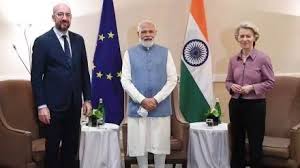
Prime Minister Narendra Modi together with European Commission Chief Ursula von der Leyen met in New Delhi to develop the India-European Union (EU) strategic partnership. By the conclusion of 2025 both parties aim to finalize both provisions of a Free Trade Agreement (FTA) as well as a security and defence accord. India-EU economic and geopolitical ties experienced a significant advancement through this development.

Key Developments

  • India with the EU developed a collaborative framework that involved trade agreements and cooperation in technology and investments and innovation as well as green growth strategies, security initiatives and workforce development and mobility systems.

  • FTA negotiations between the two parties began in 2007 but were restarted in 2022 with a prolonged pace of progression. The political initiative strives for the settlement of the negotiations before the end of 2023.

  • The proposed Investment Protection Agreement establishes measures to shield businesses along with investors against excessive economic risks across both India and EU territories.

  • The Geographical Indications Agreement establishes procedures to expand the international trade of items bearing established territory designations such as Darjeeling Tea and Champagne.

  • The EU continues to push India to reduce automobile and alcohol import tariffs since these issues block progress in the ongoing negotiations.

  • Security & Defence Cooperation received attention during discussions because global security conditions have shifted.

Challenges and Concerns

  • EU officials demand lower import duties for their automotive and alcoholic beverage goods yet Indian authorities prioritize home-based industrial support.

  • The recent delays in FTA deadlines with the UK and Australia led to concerns regarding the fulfillment of this deal during the current year.

  • India's refusal to join the European Union position regarding Russia and its insistence on Russian oil imports weakens EU-India relations.

  • EU political leaders view India as a vital trading partnership to stabilize European markets against recent changes in U.S. foreign policy under Donald Trump who threatens trade tariffs and reevaluates Russian diplomatic relations.

  • No Additional EU-India Summits Have Occurred Since 2020 Thus Accelerating Delays in Diplomatic Interactions Between Both Parties.

Geopolitical Context

  • EU organizations have initiated a process of Chinese risk reduction which positions India as their primary strategic trading partner for technological advances.

  • The potential trade disputes between the EU and US due to Trump's governmental policies have encouraged Europe to establish enduring alliances with other nations.

  • India faces a challenge in its business partnerships with Russia because its economic growth with Moscow contradicts the ongoing Russia sanctions maintained by EU institutions.

Future Prospects

  • A potential successful implementation of an India-EU FTA will create the largest trade agreement worldwide.

  • Successful settlements of this agreement have the potential to draw additional European funding into Indian markets while expanding Indian export operations towards the European market.

  • The collaboration between India and the EU can fight against Chinese domination of global commercial activities.

Conclusion

The India-EU FTA and security pact hold significant economic and strategic importance. An increased political emphasis demonstrates that important issues will get increased attention to find solutions. An effective agreement has the potential to transform India's position in international commercial and security partnerships as worldwide conditions continue to transform.

India exploring critical minerals in Zambia, Congo and Australia

The government of India conducts aggressive mineral exploration activities in Zambia and Congo and Australia to acquire lithium resources for energy transition due to their vital significance. The mining initiative managed by the Ministry of Mines serves as a national strategy to make India less dependent on imported minerals while promoting domestic sector autonomy.

Key Developments

Exploration in Africa and Australia

  • The government of Zambia opened a 9,000 square kilometre exploration zone for Indian entities to prospect cobalt and copper resources.

  • The country explores potential mining prospects in the regions of Congo and Tanzania.

  • The Australian lithium and critical mineral explorations are conducted by Coal India alongside NMDC and ONGC Videsh Limited.


Domestic Lithium Reserves

  • India made its historical discovery of lithium resources in Jammu and Kashmir during 2023 amounting to 5.9 million metric tons.

  • Lithium mining activities will start soon for the government but private companies have not shown commitment.

  • The government plans to make an important decision regarding lithium exploration in Jammu and Kashmir before the month of May 2025 arrives.

About Lithium

General Characteristics:

  • Lithium stands as a chemical element which holds atomic number 3.

  • Among the known elements it maintains the lightest solid form while belonging to the alkali metal classification.

  • Lithium displays a lustrous white appearance along with softness while it behaves extremely reactive to water.

  • The material exhibits body-centered cubic configuration in its crystalline structure.

Occurrence & Reserves:

  • Lithium exists in the crust of Earth at a concentration of 0.002 percent.

  • Due to its reactivity lithium exists only bound within minerals such as spodumene, petalite, lepidolite along with amblygonite.

  • The Lithium Triangle including Argentina Bolivia along with Chile contains roughly 50 percent of global lithium resource storage.

  • Lithium emerges as the primary mineral extracted from the ground in Australia, Chile and China.

Uses of Lithium:

  • The mobile phone market along with laptop devices and electric cars and renewable energy storage solutions depend on rechargeable lithium-ion batteries for power.

  • Lithium-containing metal alloys including lithium-aluminium and lithium-magnesium strengthen structures while decreasing their weight in aircrafts high-speed trains along with bicycles frames.

  • The combination of lithium oxide strengthens the durability properties of specific glass and ceramic materials.

  • Lithium chloride together with lithium bromide functions as an industrial component for air conditioning and industrial drying operations.

  • Hospital practice requires lithium carbonate to assist patients with bipolar disorder (manic depression).

  • The application of lithium hydride serves as an energy storage method for hydrogen.

Lithium Reserves in India:

  • The Geological Survey of India (GSI) reported in February 2023 about discovering 5.9 million tonnes of inferred lithium reserves in Reasi district, Jammu & Kashmir which marks the first major lithium discovery in the country.

  • The states of Karnataka together with Chhattisgarh and Rajasthan contain minor lithium deposits.

Lithium Exploration & Production Efforts:

  • Khanij Bidesh India Limited (KABIL) which is a joint venture between three public sector firms undertakes foreign acquisitions of lithium assets.

  • The Indian government seeks lithium supply agreements with Argentina, Australia and Chile because these nations hold promising lithium deposits.

  • The government uses Make in India and Atma Nirbhar Bharat initiatives to refine lithium and produce batteries.

Strategic Funding and Policy Push

  • The Indian government committed ₹163 billion ($1.88 billion) for critical minerals sector development under an approval in January 2025.

  • The Ministry of Mines has declared more than twenty minerals essential since they play vital roles in India's transition toward renewable energy and construction requirements.

  • India needs to develop its lithium processing technology which remains under China's control.

Significance of Critical Mineral Exploration

Economic Implications

  • Domestic lithium mining operations will reduce EV battery prices which makes electric vehicles more accessible to the market.

  • The domestic extraction of lithium reduces the billions of dollars India sends to foreign nations for lithium and thus saves valuable foreign exchange reserves.

  • India appeals to worldwide investors by extending its offshore mineral block bidding opportunity for worth ₹1.5 trillions.

Geopolitical Considerations

  • The Indian government seeks to diminish Chinese global lithium processing authority through an expanded distribution network of production sites.

  • Through mining agreements between India and African nations in Zambia and Congo and Tanzania economic relations between the two regions will become stronger.

  • Experimental cooperation with Australia provides domestic and international investors with dependable access to critical minerals.

Environmental and Social Impact

  • The establishment of mining operations both inside India and Africa creates new employment opportunities throughout these geographic areas.

  • Building responsible mining practices remains essential because such activities will disrupt local ecosystems and force community displacement.

  • Lithium mining helps India implement its green energy plans through both electric vehicle adoption and renewable energy storage systems development.

Challenges and Way Forward

  • The development of efficient lithium processing technology remains pending in India due to operational challenges in J&K which encounter security complications and complex logistical dynamics.

  • Sustainable mining needs environmentally safe regulations to prevent environmental harm.

  • India must maintain lasting agreements with mineral resource foreign competitors as several countries display parallel interest in critical mineral extraction.

Conclusion

The Indian government actively supports critical mineral exploration efforts because it helps achieve self-reliance in vital industrial sectors. India is creating a sustainable and energy-secure future by successfully acquiring resources from Zambia, Congo, Australia and its own domestic reserves. The successful execution of this initiative depends on proper solutions for environmental issues and technological requirements as well as geopolitical conflicts.

Hydrocarbon Exploration in the Gulf of Mannar: Balancing Energy Security and Environmental Concerns

Hydrocarbon exploration in the deep-sea region of the Gulf of Mannar received support from the Indian government despite triggering arguments about balancing economic growth against environmental protection. The proposed energy security initiative creates risks for marine biodiversity health and local fisher folk's survival which becomes a topic of serious debate. The Gulf of Mannar's ecological importance stems from its extensive coral reefs and seagrass beds and this makes experts warn about enduring environmental harm.

Introduction to Hydrocarbon Exploration in the Gulf of Mannar:

  • Through its latest hydrocarbon exploration tender the Ministry of Petroleum and Natural Gas included 9,990.96 sq km of deep-sea area found in the Gulf of Mannar in Tamil Nadu.

  • The government offers the Gulf of Mannar deep-sea region through its 10th edition of the Open Acreage Licensing Policy (OALP) to attract company participation in oil and gas discoveries.

  • Among the 25 offshore areas included in this tender the total expense amounts to 1,91,986 sq km.

Environmental Concerns:

  • The Gulf of Mannar Biosphere Reserve protects three types of vulnerable species including dugongs alongside turtles and marine mammals.

  • Marine biodiversity gets support from both seagrass beds and coral reefs that exist in the sensitive ecological area of the region.

  • Hydrocarbon exploration operations including seismic surveys and drilling practices generate concerns from environmentalists because they might create permanent ecological destruction.

  • The acoustic disturbances from survey activities interfere with marine organisms' habitats and extraction byproducts contaminate the water and diminish fish populations.

Socio-Economic Impact:

  • Local fishing activities face disruption through the exploration process because fishing serves as the main economic source for residents in Ramanathapuram and Thoothukudi districts' coastal areas.

  • The food security of the regional fishing industry is at risk because contaminated seawater poses threats to fishing activities through spills and leaks.

  • Fishermen together with environmental organizations have the potential to demonstrate opposition due to anticipated persistent negative impact on aquatic economic systems.

Government’s Perspective and Industry Response:

  • The state government supports hydrocarbon exploration because it will improve domestic hydrocarbon production and decrease oil import levels.

  • By including deep-sea blocks near the Andaman and Nicobar Islands the government signals its ambition to increase offshore oil and gas reserves in these areas which were previously designated as ‘no-go zones.’

  • The experts advocate selecting renewable energy technologies instead of drilling for fossils in areas that hold important ecological value.

Global Context and Best Practices:

  • Environmental constraints have become widespread throughout several countries in their effort to minimize ecological harm from deep-sea drilling activities.

  • Before starting such projects the United Nations together with international marine conservation entities require detailed assessments of environmental effects.

  • To minimize environmental risks India should deploy advanced spill management systems and implement measures that decrease seismic survey disturbances.

Conclusion 

The oil exploration project within the Gulf of Mannar contains multiple benefits but also multiple hurdles to overcome. The government should evaluate economic advantages against environmental sustainability before adopting this project to achieve India's energy objectives. Strategies should include robust environmental safeguards together with complete impact assessments and alternative energy solution exploration to achieve sustainable resource extraction practices. Moving forward requires stakeholders including environmental experts and local communities to pursue consultation for establishing an informed and sustainable energy policy.

ISRO’s Aditya L-1 captured its first ever image of a solar flare “Kernel”

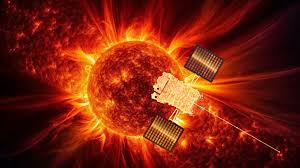
Using the Solar Ultraviolet Imaging Telescope (SUIT) aboard Aditya-L1 scientists obtained the initial observation of solar flare 'Kernel' in the lower regions of the solar atmosphere thus advancing solar research significantly. The Solar Ultraviolet Imaging Telescope (SUIT) operating on February 22, 2025 recorded an X6.3-class solar flare while detecting its first observed brightening in Near Ultraviolet (NUV) wavelength between 200 to 400 nm. The new evidence shows that solar flare energy influences Sun atmospheric temperature variations. The launch of Aditya-L1 on September 2, 2023 established its orbit around the Earth-Sun Lagrange Point L1 to obtain groundbreaking knowledge about solar activities affecting Earth's condition.

Key Observations and Findings

  • The Solar Ultraviolet Imaging Telescope (SUIT) Payload generated images of the flare kernel within the lower solar atmosphere from photospheric to chromospheric levels.

  • During February 22nd 2025 when X6.3-class solar flares underwent observation by the Aditya-L1 space platform it gathered advanced data extending from 200 to 400 nm wavelengths within the Near Ultraviolet range.

  • Energy Dispersal Across Solar Layers: Confirmed that the energy from the solar flare propagates through different layers of the Sun’s atmosphere.

  • The observation of intensified brightening from the lower solar atmosphere directly results in plasma temperature elevation within the solar corona.

  • Validation of Theoretical Models: Provided new insights and empirical evidence supporting long-standing theories about solar flares and their impact on space weather.

Aditya-L1 Mission Overview

  • Launch Date: September 2, 2023.

  • Orbit: The satellite will enter its January 6, 2024 position in a halo orbit that surrounds Earth-Sun Lagrange Point 1 (L1).

  • Payload: The scientific instruments onboard Aditya-L1 study solar flares and coronal mass ejections together with analyzing the behavior of solar wind.

  • Aim: This mission offers uninterrupted Sun observation which leads to better space weather prediction capabilities.

Need for Solar Missions

  • The space environment depends heavily on both magnetic fields from the Sun and its releases of solar energy.

  • Solar storms cause disruptions to satellite communications and power grids on Earth as well as GPS systems.

  • The mission assists scientists by revealing how the corona produces its extreme heat and the mechanisms behind the solar cycle and solar wind and flare formation.

Significance of Aditya-L1 Mission

  • India secured its position as a dominant space-based solar investigation force through its first observational platform.

  • Technological Advancement: Enhances ISRO’s capabilities in deep space exploration.

  • Scientific Contribution: Adds to global research on solar physics and space weather.

  • Future Missions: Paves the way for Aditya-L2 and Aditya-L3 for more advanced solar studies.

Global Solar Research Initiatives

Multiple space-based international research missions exist to explore the sun:

  • NASA’s Parker Solar Probe (2018): Studies the solar corona and solar wind acceleration.

  • ESA-NASA Solar Orbiter (2020): Investigates the Sun’s magnetic fields and solar wind interactions.

  • Japan’s Hinode (2006): Examines the Sun’s magnetic activity.

  • Several ongoing missions consisting of ACE and IRIS alongside WIND and STEREO carry out steady solar observation activities.

Conclusion

The successful acquisition of a solar flare kernel by Aditya-L1 advances the field of solar investigation substantially. The mission provides new knowledge about how solar processes affect Earth while showing us how the sun functions. Future space exploration programs need to direct research toward investigating polar sun regions along with measuring multi-directional energy flare-ups and developing superior space weather detection systems. India establishes a permanent position in space exploration through this mission along with opportunities for solar physics' future developmental growth.

Frequently Asked Questions (FAQs)

The current affairs cover recent national and international events related to UPSC, SSC, Banking, Railways, and State PCS.

You need to read about the current affairs daily, and revise them every week and every month to keep them longer in your memory.

Yes, Class24 provides free downloadable Daily Current Affairs PDFs for easy revision.

Yes, you can practice MCQs and quizzes to boost your exam preparation.

Absolutely. The content is written in simple, easy-to-understand bilingual language suitable for beginners.

Go to class24.com and click on the current affairs section directly, where you find everything that you need.

ssc-toppers

Start Learning Today with Class24

Related current affairs

Class24 offers free video lectures for smart preparation, covering CGL, CPO, CHSL, MTS, and GD exams. Learn from expert faculty, revise concepts easily, practice with PYQs, and improve speed and accuracy through high-quality, exam-focused video lessons anytime, anywhere.

Get success in your hand. Start study anytime anywhere.

The journey becomes simple and enjoyable when you start taking interest in it. And through our app “Class24”, we will be your trusted partners in developing that interest.

Daily Quizzes
Mock Tests
Ongoing

No ongoing tests right now.