Day: February 19, 2025

Syria’s Heritage Restoration: Reviving Culture and Economy

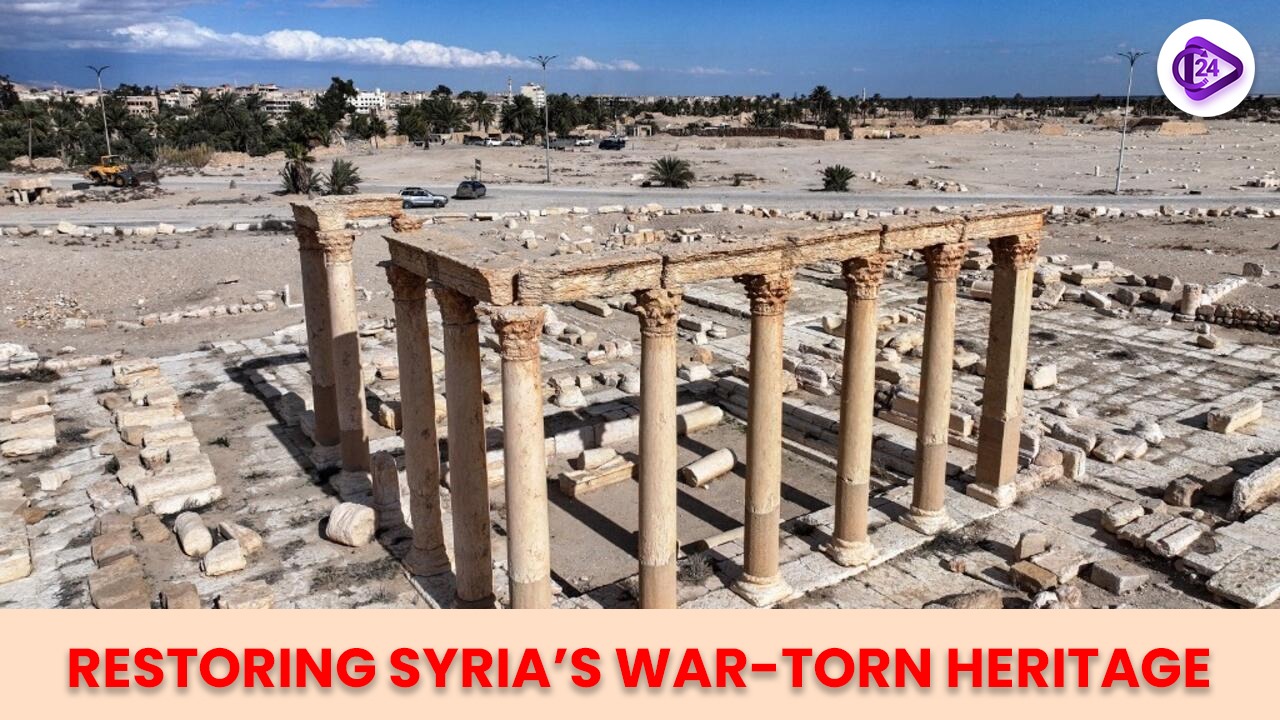
Syria plans to restore all three of its heritage sites Palmyra Crac des Chevaliers and the Dead Cities for the purpose of developing tourism and enhancing its damaged economy. War, looting activities combined with natural disasters perpetrated major destruction across Syria. All three sectors including IS militants, government forces and rebel groups contributed to these damages. The sites have received remote monitoring from UNESCO since 2015 yet they encounter blocking factors including dangerous conditions and budget limitations and illicit digging activities. Local conservationists believe that heritage revival tactics will create employment opportunities and visitor attraction which will defend Syria's cultural heritage as an essential pathway to economic growth and historical preservation.

Introduction

  • Syria undertakes restorative projects to revitalize historical sites thus attracting tourists who will help reconstruct its economy ravaged by war.

  • Extended destruction occurred at Palmyra and Crac des Chevaliers and the Dead Cities because of war destruction and looting in addition to natural disasters.

  • These restorative measures hold great importance for Syria because they protect its cultural heritage yet simultaneously drive economic development.

Significance of Syrian Heritage Sites

  1. Palmyra (UNESCO World Heritage Site):

    • A 2,000-year-old Roman-era trade hub on the ancient Silk Road.

    • The annual number of tourists who visited reached 150,000 each month until the beginning of the 2011 civil war.

    • The IS terrorist group committed its destruction of historical monuments including the Temple of Bel the Baalshamin temple and the Arch of Triumph.

  2. Crac des Chevaliers:

    • The Romans constructed this medieval Crusader castle which emerged during that period.

    • During the Syrian Civil War the area underwent severe bombardment followed by substantial damage from the recent earthquake.

  3. Dead Cities:

    • More than 700 deserted Byzantine towns dating from the 1st century exist in the region.

    • Buildings such as churches and houses together with tombs continue to stand but they endure damage from thieves and unlicensed excavation activities.

Impact of War on Heritage Sites

  • Destruction by Islamic State (IS):

    • The Islamic State carried out enormous artifact theft while attacking what they considered to be sinful religious monuments.

    • Notable destruction of Palmyra’s historic temples and antiquities.

  • Government and Rebel Forces' Impact:

    • Heavy bombardment of Crac des Chevaliers and Dead Cities by Assad's forces.

    • The military bases occupying historic sites included Russian troops who used Fakhr al-Din al-Ma’ani Castle for their barracks operations.

    • Artefacts were systematically smuggled to hidden markets through the combination of illegal archaeological activities and theft.

Role of UNESCO and International Efforts

  • UNESCO took charge of remote monitoring Syrian heritage through satellite imagery analysis and reported data starting in 2015.

  • Under proper security conditions UNESCO will provide technical help for reconstruction projects.

  • The year 2019 brought to light from UNESCO experts that thorough research studies must precede any extensive restoration operations.

  • The historic artifacts need to be located through collaboration between local conservationists and the Directorate of Antiquities and Museums.

Potential Benefits of Heritage Restoration

  • The restoration of cultural heritage sites presents a chance to draw oversea tourists who will contribute to economic growth.

  • Cultural Preservation: Protection of Syria’s historical identity and legacy.

  • Economic Revitalization: Job creation in conservation, tourism, and local industries.

Conclusion

  • Local tourist arrivals together with preservation work indicate positive signs for Syria's historical sites to recover from their present state.

  • Proper preservation and rebuilding of Syria's valuable heritage requires coordinated action from UNESCO together with local authorities assisted by international support.

India-Qatar Strategic Partnership: Strengthening Trade, Security, and Bilateral Cooperation

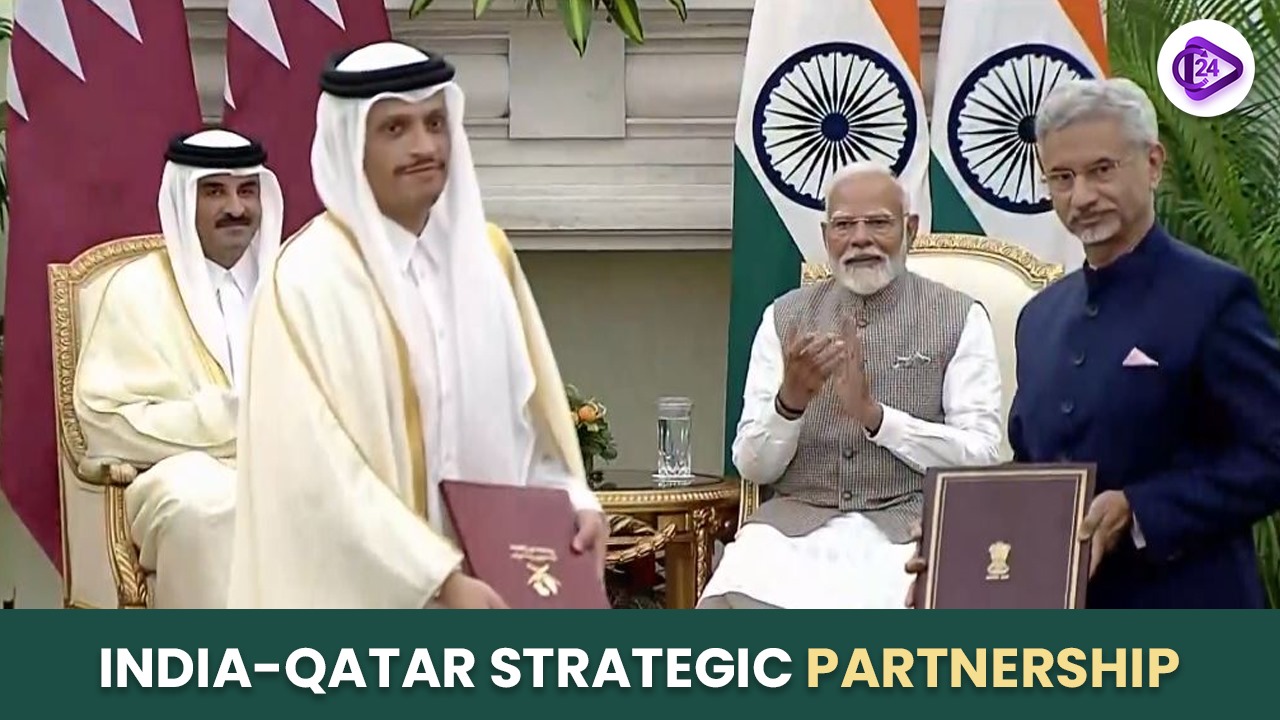
Emir of Qatar Sheikh Tamim bin Hamad Al-Thani conducted a diplomatic visit to India from February 17 to 18 of 2025 to bolster bilateral ties in diplomacy and economics and security sectors. Both countries agreed to the Bilateral Strategic Partnership Agreement that solidified their continuing collaboration between trade and energy sectors and investment and technology and defense and cultural fields. Qatar invested $10 billion as both parties worked toward raising their trade value to double by 2030 and proceeded with negotiations for a Comprehensive Economic Partnership Agreement (CEPA). Double Taxation Avoidance Agreement and four different Memoranda of Understanding about finance and sports and archives and investment cooperation served as the main agreements. The countries jointly condemned terrorism together with their focus on UN reform initiatives and they expanded joint bilateral programs that solidified their strong labor force and cultural bonds.

Introduction

  • Indian Prime Minister Narendra Modi invited Qatar’s leader Sheikh Tamim bin Hamad Al-Thani for a visit that took place on February 17-18 of 2025.

  • He performed his second official diplomatic mission to India to develop bilateral relationships between the two countries.

  • A strong delegation consisting of ministers combined with officials and business leaders backed his visit.

  • A Bilateral Strategic Partnership Agreement became a major landmark achievement in the development of India-Qatar diplomatic ties.

Political and Diplomatic Relations

  • The countries agreed to preserve structured cooperation and continued regular meetings at high governmental levels.

  • Bilateral and multilateral organizations including the UN and GCC will receive stronger cooperation attention from both parties.

  • During their meeting India showed appreciation to Qatar for giving support to the India-GCC Strategic Dialogue while emphasizing the importance of reforms at the United Nations Security Council.

  • The leaders examined regional security matter through joint discussions about Middle Eastern events alongside worldwide efforts for peace.

Economic and Trade Cooperation

India-Qatar Bilateral Trade:

  • India and Qatar signed an agreement to boost economic trade by 2030 while discussing possible establishment of a Comprehensive Economic Partnership Agreement (CEPA).

  • The Gulf country Qatar made a $10 billion investment plan to support Indian projects spanning from infrastructure improvements to technological advances as well as food safety initiatives and logistics infrastructure and manufacturing facilities.

  • The Indian government brought approval for Qatar Investment Authority (QIA) to establish an office in India.

  • A joint commission for trade and commerce will ensure economic relations monitoring between the two nations.

Financial and Taxation Reforms:

  • The governmental bodies of both nations established a Double Taxation Avoidance Agreement (DTAA) which fostered economic investment opportunities between them.

  • Agreement between India's Ministry of Finance and Qatar’s Ministry of Finance on financial and economic cooperation.

Energy Cooperation

  • Energy cooperation between India and Qatar will grow stronger by doing business in energy infrastructure through investment partnerships and trade activities.

  • A regular process of meetings exists between the Joint Task Force on Energy and its stakeholders to protect energy supply.

Investment and Infrastructure Development

  • Progress has been made within the Joint Task Force on Investments which plans to meet for the first time in June 2024.

  • The nation of Qatar acknowledged the rapid economic expansion in India and its appealing business environment.

  • Emphasis on collaboration between investment authorities, financial institutions, and businesses.

Digital and Financial Technology Cooperation

  • The leaders agreed to increase the use of Unified Payment Interface (UPI) across borders between Qatar and India.

  • QNB’s expansion in India through an office in GIFT City.

  • Discussion on bilateral trade settlement in local currencies.

Security and Counterterrorism Cooperation

  • The leaders showed full agreement against terrorism no matter what form or where it exists including cross-border terrorist activities.

  • Both countries advanced their partnership by developing their joint efforts against cybercrime as well as counter-terrorism operations and drug trafficking and money laundering activities.

  • Both governments placed emphasis on bilateral security actions which include sharing intelligence together with joint law enforcement cooperation.

Defense and Strategic Cooperation

  • The leaders of India and Qatar started productive talks regarding defense cooperation which included security and strategic partnership advancement.

  • Security measures aimed at defense against cyberattacks must include preventative measures against radicalization and technical information exchange.

Healthcare and Pharmaceutical Trade

  • The two nations established healthcare as an essential corner of their bilateral ties.

  • The Indian government declared its intention to enhance pharmaceutical and medical device exports into Qatar.

  • Indian pharmaceutical companies will encounter less bureaucratic restraint for Qatar physician company authorization.

Science, Technology, and Innovation

  • Technology development and digital governance and artificial intelligence and startup initiatives received mutual support for collaboration from both countries.

  • Indian startup businesses will receive opportunities to attend Web Summits in Doha starting from 2024 through 2025.

Cultural and Educational Ties

  • The governments designated 2018-2019 as the India-Qatar Year of Culture, Friendship, and Sports.

  • Both nations strengthened their existing partnership by establishing better relationships through university cooperations, academic programs between students and professors as well as scientific research partnerships.

  • The countries enhanced their sports cooperation by exchanging athletes while sharing training programs.

People-to-People and Labor Cooperation

  • The country expressed gratitude toward Indian migrants who supported its economic growth by establishing programs to protect their welfare.

  • The member states established a practice of constant meetings through their Joint Working Group on Labour and Employment systems.

  • India introduced electronic visa access to Qatari nationals to stimulate both tourism and travel developments.

Food Security and Supply Chain Cooperation

  • Food security with stable supply chains emerged as essential areas where both nations should collaborate.

  • Both parties committed to launch joint agricultural ventures and develop logistic systems together and facilitate trade activities.

Conclusion

  • The encounter between the dignitaries confirmed the existing firm alliances between India and Qatar.

  • Through the Strategic Partnership Agreement both nations aim to strengthen their cooperation functions that span from economic ties to security cooperation and cultural exchanges and technological advancement.

  • The leaders held an optimistic view about India-Qatar bilateral relations which will lead to joint benefits and security stability.

US-Russia Talks in Saudi Arabia: Geopolitical Shifts and Limited Outcomes

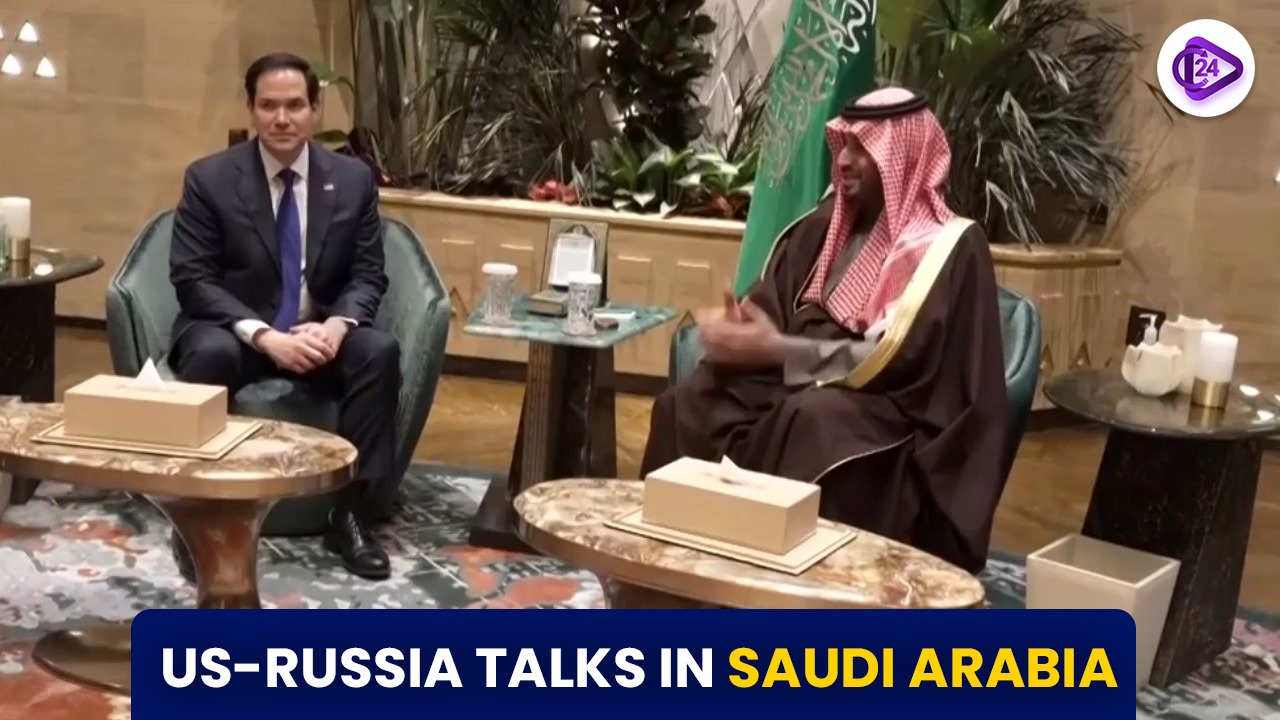
High-level officials from Russia and the United States conducted dialogue in Saudi Arabia regarding both the Ukrainian conflict and their diplomatic relations in their initial meeting in 2022. President Zelensky expressed disapproval when Ukraine was left out of the discussions since any decisions without Kyiv participation were deemed unacceptable. The battlefield victories Russia obtained in warfare pushed the country to demand that NATO would withdraw from Eastern Europe. The European countries maintain a neutral stance because they are concerned about possible disengagement from the United States. The discussions included assessments of an unpopular US proposal concerning Gaza. The country maintains positions with both the USA and Russia which positions it effectively as a vital mediation force. These important talks demonstrate significant changes in international diplomacy and power structure therefore they will produce limited results in the near future.

Introduction

  • Saudi Arabia became the location when US and Russian officials engaged in strategic negotiations dedicated to ending the three-year-old conflict in Ukraine.

  • President Volodymyr Zelensky from Ukraine expressed disapproval because his country remained uninvited to the meeting.

  • Apart from addressing US-Russia bilateral relations the conference focused on multiple geopolitical subjects which included NATO enlargement as well as the conditions in Gaza.

US-Russia Relations and the Ukraine War

  • A major diplomatic session occurred between Washington and Moscow after Russia began its invasion of Ukraine in 2022.

  • Russian diplomatic goals aim to reduce NATO control in Eastern Europe which Moscow has sought since an extended period.

  • The recent Russian military successes have given Moscow the courage to negotiate favorable terms with the West.

  • The Trump administration in the United States is pushing for a rapid peace agreement while this move creates anxiety throughout Ukraine along with European countries.

Ukraine’s Exclusion from Talks

  • Zelensky expressed his disapproval because Kyiv officials were excluded from the negotiations.

  • Ukraine remains concerned about possible US-Russian negotiations for resolving the Ukraine crisis because participation exclusion poses threats to its national independence.

  • The current status of Ukraine hangs in balance according to Zelensky because without ongoing American backing victory becomes absolutely impossible.

European Concerns and Weaknesses

  • The leaders from Europe demonstrate growing concern about the potential American withdrawal from supporting Ukraine.

  • The European military coalition relies on continuous backing from the United States because it cannot match Russian military capabilities on its own.

  • Sergey Lavrov from Russia’s Foreign Ministry expressed doubt about European involvement in peace negotiations since they appeared unclear about their true goals.

Saudi Arabia as a Diplomatic Mediator

  • The Middle Eastern country Saudi Arabia has joined international diplomatic activities following a period of hostility against the United States.

  • The Saudi government sustains working relations with both the United States and Russia through its management of energy supplies and military security needs.

  • The Kingdom of Saudi Arabia had previously arranged negotiations through which Russian forces swapped prisoners with Ukraine.

US Proposal on Gaza and Middle East Diplomacy

  • Most discussions at the meeting evaluated the contentious Gaza-related US proposal which involved Palestinian population relocation.

  • Saudi Arabia works with its neighbors to create a new strategic framework that excludes the requirement of forced population moves.

  • The Gulf Cooperation Council (GCC) meeting is approaching where Arab states will manifest their regional peace framework.

Broader Geopolitical Implications

  • Russian military success on battlefields has given its political operatives better leverage during negotiations.

  • The United States strives to manage its responsibilities between Ukraine alongside Middle East and Asian operations.

  • Global politics is undergoing change because this diplomatic meeting demonstrates traditional Western powers no longer have complete authority over negotiation processes.

Conclusion

  • The diplomatic milestone achieved at Riyadh remains insufficient for an immediate breakthrough to occur.

  • Any potential agreement faces doubts about its legitimacy because Ukraine and its European allies are not participating.

  • These diplomatic negotiations between Russia and Asian and Global South countries will establish enduring political boundaries across European territories and beyond European territories.

China’s Major Contribution to U.S. Imports (2018-2023)

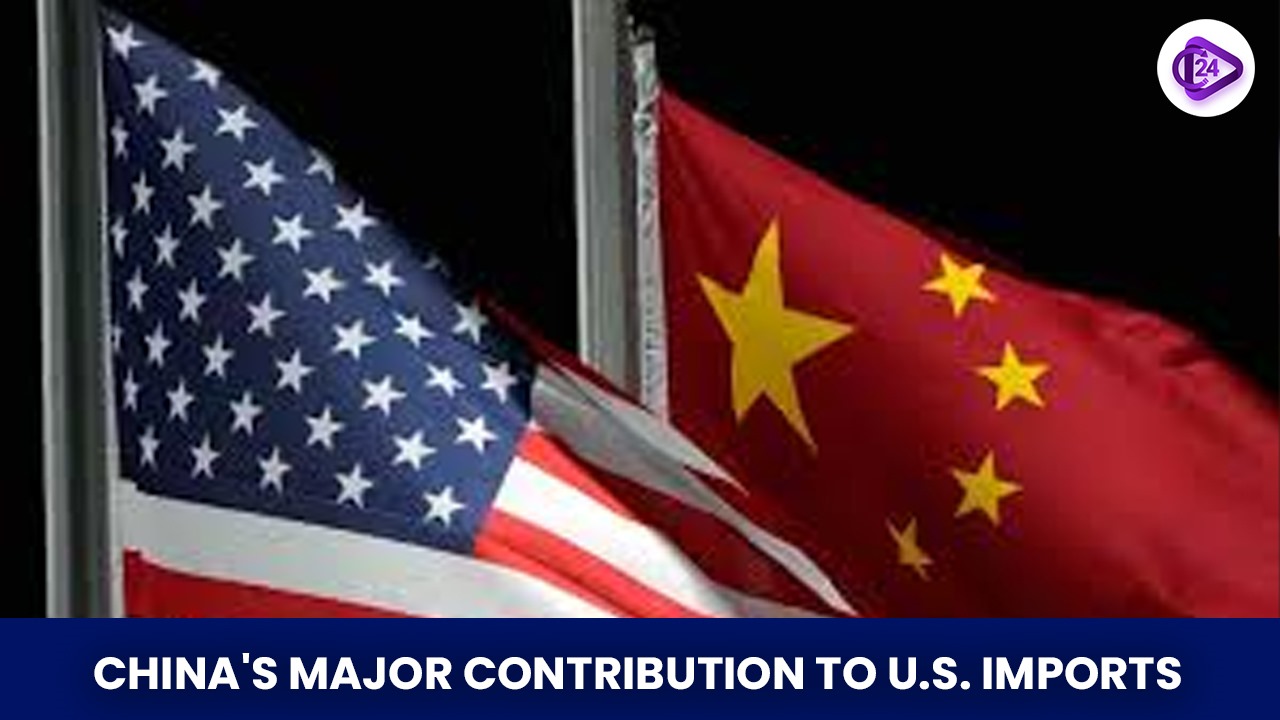
China led as the largest importer of U.S. goods since 2018 which amounted to 18% of the total with Mexico and Canada trailing closely at 14% and 13% respectively. The U.S. imported 17,000 billion dollars worth of products during this time span while electrical machinery took 15% of that total with vehicles and parts at 11% and nuclear machinery at 9%. China held strong dominance in the import of iron or steel, plastics, clothing, furniture as well as toys by accounting for almost 80% of toys and roughly 40% of furniture. 

China held the position of second importer for measuring instruments alongside organic chemicals and rubber. The United States received substantial vehicle exports and measuring instrument shipments from Mexico which along with other export categories put Mexico among the prominent senders of goods to the U.S.                                   

Trade Tariffs Announcement:

  • During a recent period President Donald Trump implemented supplementary trade barriers for imports from China and between Canada and Mexico based on a declared national emergency about illegal migration and drug smuggling which provoked Chinese counteractions.

China’s Share in U.S. Imports (2018-2023):

  • During the 2018-2023 period China maintained the highest importing status of U.S. services amounting to 18% among more than 75 trading nations.

Major U.S. Import Categories:

  • Out of the $17,000 billion in U.S. imported goods from 2018 to 2023 electrical machinery and equipment made up 15% while vehicles and their parts reached 11% and nuclear machinery and appliances totaled 9%.

China's Dominance in Specific Imports:

  • Electrical equipment along with nuclear systems and eight additional products represented the top 15 imports whose source came from China.

  • The data showed China led as the largest importer of iron or steel plastics clothing and furniture and toys in this sector.

    • Iron or steel, plastics, clothing (20-30%)

    • Furniture (about 40%)

    • Toys (nearly 80%)

China’s Contribution in Other Imports:

  • The United States imported measuring instruments and organic chemicals and rubber as the second highest products from China.

Mexico’s Contribution to U.S. Imports:

  • The U.S. imports the most vehicles along with measuring instruments from Mexico while this nation ranks among the top three exporters of electrical and nuclear machinery furniture iron or steel as well as rubber.

Canada's Import Contribution:

  • The U.S. imports from Canada contributed half of all mineral imports and also received major shares from plastics as well as vehicles and iron or steel sectors.

Trade Relations and Economic Interdependence:

  • U.S. trade relations show complete interdependence because China, Mexico and Canada serve as the centers of U.S. import activities within high-value sectors that include machinery vehicles and consumer goods.

Conclusion

 The U.S. economy heavily depends on China, Mexico and Canada as China provides the biggest imports to the United States which primarily consist of electrical machinery, clothing and toys. These trade relations demonstrate that these countries serve as vital links within the United States supply chain. President Trump's recent trade tensions and imposed tariffs have not diminished these countries' importance to the United States' demand for various merchandise. Global trade demonstrates complex dynamics between connecting nations that requires strong trade partnerships to promote economic stability together with growth activities.

Constitutional Morality: Key to Sustaining Democracy and Reforms

The base principle of constitutional morality demands absolute respect for the constitutional system while validating all its established regulations as if they were holy formalities. The legal system now relies on constitutional morality to regulate public morality fluctuations according to Navtej Singh Johar and Joseph Shine decisions. The theory adopts George Grote's understanding of Athenian democracy by advocating constitutional form maintenance alongside the analysis of possible reforms. Dr. Ambedkar demonstrated that a stable democratic system would require constitutional morality. The fundamental distinction between constitutional patriotism and constitutional morality exists in process-based mechanics since the latter strives to bridge respect for constitutional principles with forward-thinking reform efforts.

Concept of Constitutional Morality:

  • In this civic culture citizens maintain visible respect for both systemic structures and democratic processes outlined in the constitution.

  • Through the application of public reason combined with self-restraint and critique citizens maintain respect for constitutional rules that stand as sacred.

Judicial Interpretation:

  • The court uses constitutional morality as an essential tool for legal interpretation in judicial cases including Navtej Singh Johar vs. Union of India (2018) and Joseph Shine vs. UOI (2018).

  • The judicial system considers public morality as an important regulatory mechanism to maintain stability in legal structures.

Historical Origins:

  • According to George Grote democratic processes would work optimally through constitutional reverence for their proper forms.

  • According to Grote, constitutions needed to have cultural support beyond their legal framework to function properly.

Dr. B.R. Ambedkar’s Perspective:

  • The Indian Constitution gained shape according to Dr. Ambedkar through constitutional morality principles which he specifically incorporated during the foundational phase.

  • According to him self-restraint proved essential because changing the constitution through formal alterations could lead to its perversion.

Adherence and Critique:

  • In accordance with constitutional morality citizens must follow the constitution without condition and must uphold its results even when they disagree with their own beliefs.

  • Through this system people can both support existing processes while also striving for essential changes to help improve the system.

Distinction from Constitutional Patriotism:

  • Jürgen Habermas' constitutional patriotism relies on common values for unity while constitutional morality emphasizes following procedures that handle differences through formalized agreements between groups.

  • Mature constitutionalism results from this method because it finds stability through reform while preserving both constitutional respect and necessary change.

Conclusion

A functioning democratic system needs constitutional morality as its foundation because it impels both authorities and citizens to care for constitutional structures while enabling transformation and analytical examination. The system invites people to explore constitutional reverence while simultaneously embracing reform needs in a way that builds maturity towards constitutional administration. A democracy ensures freedom and justice and equality through constitutional morality because it upholds procedural integrity which secures democratic principles against extremist ideological influence and political agendas. A distinct feature of the Indian Constitution demonstrates its purpose to preserve ongoing principles while embracing modifications.

Aravali Safari Park Project Introduced the the Haryana Government

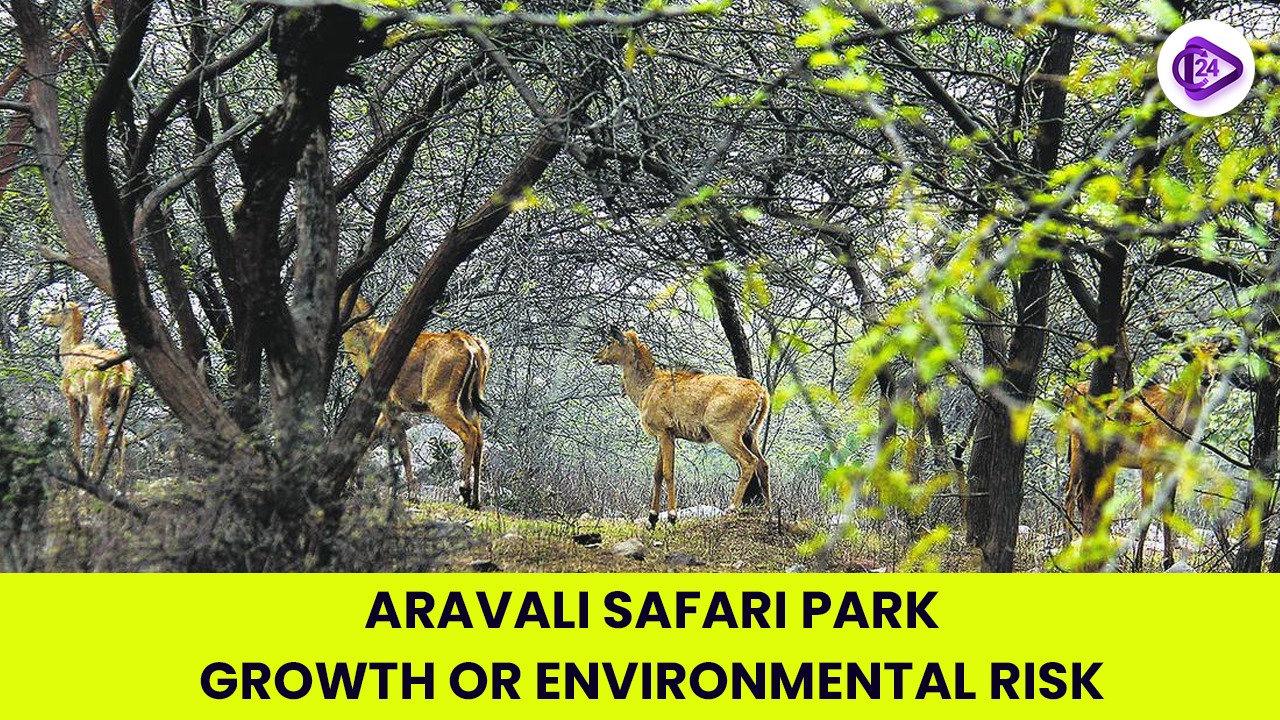
Haryana government planned the Aravali Safari Park as the global largest wilderness sanctuary by combining 3,858 hectares between Gurugram and Nuh districts for animal preserves and lodging establishments and recreational areas. Opposition has risen against the project because the Aravali hills serve essential environmental functions which include slowing progressive desertification and sustaining groundwater supplies and protecting wildlife habitats. Multiple experts have claimed that this project infringes upon forest regulations while endangering biodiversity conditions and intensifying the water shortage dilemma. The Forest Conservation Act along with the PLPA (1900) and Supreme Court court decisions provide legal defense to the region. A national park declaration for the territory instead of commercial safari development would be recommended by conservationists because it supports both sustainability and environmental conservation goals.

Introduction

  • The authorities in Haryana planned the construction of Aravali Safari Park across 3,858 hectares covering Gurugram and Nuh districts.

  • The proposed project aims to become the largest safari park on earth and includes numerous tourist-focused structures and resources such as enclosure facilities and dining and recreational features.

  • Even though it was originally promised in the polls the project faces significant resistance from environmental activists as well as former forestry officials.

Project Details

  • The Forest Department assumed responsibility for the project that started under the Haryana Tourism Department leadership.

  • The park covers areas that stretch from 11 villages in Gurugram totaling 2574 hectares to 7 villages in Nuh consisting of 1284 hectares.

Proposed components:

  • The planned facilities included animal cages in conjunction with botanical gardens and aquariums at the site.

  • Hotels, restaurants, and an open-air theatre.

  • Cable cars, tunnel walkways, and children’s parks.

  • An animal hospital and other tourist attractions.

Opposition to the Project

  • The Aravali hills function as a protective natural structure which forms the oldest fold mountain range while preventing desertification.

  • Highly water-stressed Gurugram and Nuh districts receive their recharge water supply through the natural rock formations of this area.

  • Because the Aravalis maintain numerous species of wildlife alongside their diverse plants the area requires urgent preservation efforts.

Legal Challenges:

  • The regulatory classification of this area designates it as forestry territory according to the definition of the Forest Conservation Act, 1980.

  • The Supreme Court together with the National Green Tribunal NGT has established barriers that restrict non-forest activities across these areas.

  • The forested area in Haryana represents just 3.6% of the land while the region needs wildlife restoration rather than commercial development.

  • Professional foresters among them comprising 37 retired Indian Forest Service (IFS) officers sent a letter to PM Modi which condemned the project for being primarily commercial rather than focused on conservation efforts.

Legal Protections for Aravali

  1. Punjab Land Preservation Act (PLPA), 1900:

    • Section 4 and 5 of the law control active land utilization by stopping forest destruction.

  2. Forest Conservation Act, 1980:

    • Under “forest” classification the law limits land use changes for activities outside forestry.

  3. Supreme Court Judgment (T.N. Godavarman Case, 1996):

    • The dictionary definition of forests allows this legislation to protect both designated and unidentified forest areas under legal standards.

  4. Regional Plan-2021 (National Capital Region):

    • Classifies Aravalis as a “Natural Conservation Zone (NCZ)”, restricting construction to only 0.5% of the area.

Recent Developments:

The government officially classified 24,000 hectares of Aravali territory as protected forest territory through an Indian Forest Act, 1927 designation to compensate for Nicobar Islands forest diversion.

Alternative Suggestions

  1. Declare a National Park/Sanctuary:

    • The establishment of National Park or Sanctuary designation delivers the best way to protect the Aravalis while maintaining ecological balance in the region.

  2. Sustainable Development Initiatives:

    • The regional government should encourage both eco-tourism development and forest reforestation initiatives rather than installing big-scale tourism enterprises.

  3. Strict Implementation of Laws:

    • Existing forest conservation laws should have their enforcement strengthened in order to stop both illegal construction activities and deforestation.

Conclusion

The Aravali Safari Park attempts to generate tourism activity but it exposes the environment to substantial dangers. The united protection of Aravali territory as well as its ecological significance prevents the implementation of major infrastructure projects. Creating a national park as a conservation-oriented initiative would help fulfill sustainable development objectives and climate resilience targets.

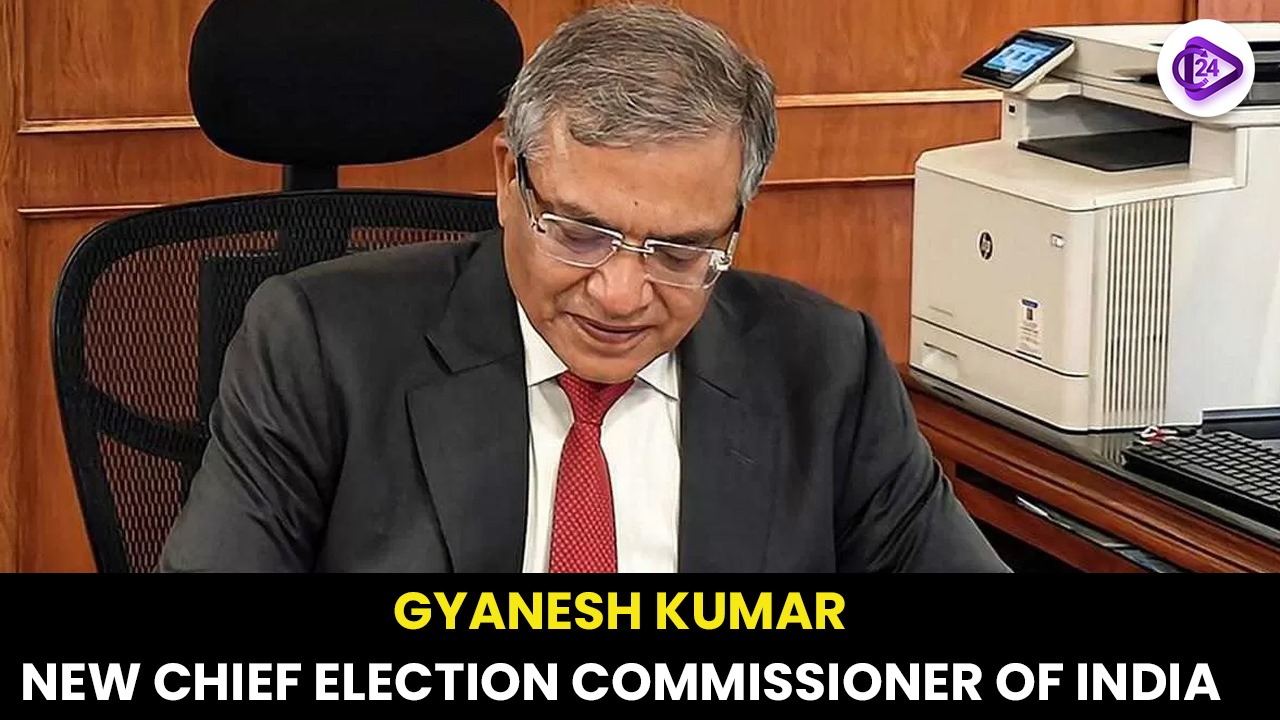
Gyanesh Kumar Appointed as the Chief Election Commissioner (CEC)

According to Article 324 of the Indian Constitution the system for appointing Election Commissioners exists. This article vests the power of superintendence, direction, and control of elections in the Election Commission of India (ECI). The functions of conducting elections throughout India fall under the authority of the Chief Election Commissioner together with the Election Commissioners. The executive branch traditionally guided the selection of Election Commissioners yet recent changes brought forth greater openness together with wider inclusion in the Commissioner appointment process.

Recent Appointments Under the New Law

  • The present appointments in the Election Commission followed the implementation of the Chief Election Commissioner and Other Election Commissioners Act, 2023 in December 2023. Under this provision:

  • Gyanesh Kumar accepted the role of Chief Election Commissioner (CEC) while succeeding Rajiv Kumar. Gyanesh Kumar holds the position of 1988-batch IAS officer from the Kerala cadre and leads the two other panel members in seniority.

  • Vivek Joshi has received election commissioner position. The Indian government appointed him as bothRegistrar General of India and Census Commissioner in prior positions.

  • The Uttar Pradesh-based civil servant Sukhbir Singh Sandhu continues serving as one of the Election Commissioners.

  • The two commissioners joined the electoral body because Arun Goel resigned while Anup Chandra Pandey retired.

Selection Committee

  1. A selection committee consisting of three members selected the candidates.

    • Prime Minister Narendra Modi

    • Leader of the Opposition in Lok Sabha, Rahul Gandhi

    • Union Home Minister Amit Shah took the appointment through nomination from Prime Minister Narendra Modi.

Appointment Process

The current procedure for appointing both Chief Election Commissioner and Election Commissioners emerges from The Chief Election Commissioner and Other Election Commissioners (Appointment, Conditions of Service and Term of Office) Bill, 2023. According to this bill:

  • The President of India selects CEC and ECs that the Selection Committee suggests.

  • The Selection Committee consists of these members to fulfill its composition requirements:

  • The Prime Minister (Chairperson)

  • The Prime Minister chooses an individual to serve on the Selection Committee as Union Cabinet Minister.

  • The Leader of the Opposition or the leader of the largest opposition party in the Lok Sabha

The Search Committee under Law Minister leadership presents candidate selection to the Selection Committee. The system provides a method of choosing candidates with strict and detailed protocols.

Qualifications for Appointment

There are no specific educational requirements or professional qualifications mentioned by the Indian Constitution during Election Commissioner appointments. By standard practice the government appoints its senior most bureaucracy members who hold the position of Cabinet Secretary or equivalent rank. The procedure guarantees that highly experienced administrative officials who understand electoral procedures well occupy these critical positions.

Eligibility and Salary

  • Before accepting their positions at CEC or as an EC persons need to maintain active employment at or have previous experience at Secretary to the Government of India level.

  • A new revision process has updated both salary and conditions of service for the CEC and members of the ECs.

  • The members of the Election Commission received their payment based on the level of Supreme Court justice before this change took effect.

  • The revised system has established their compensation level at the same rate as the Cabinet Secretary.

Roles and Functions

The Election Commission of India maintains an essential position throughout electoral democracy for its proper execution. The Election Commission performs four critical duties which consist of:

  • Supervision, Direction, and Control:

    • The Commission executes elections for the President as well as Vice-President and members of Parliament combined with State Legislative branches and both national government officers.

  • Regulation of Electoral Process:

    • General regulations for elections are established by this body.

    • The Commission establishes electoral districts while creating voting records.

  • Recognition of Political Parties:

    • Grants recognition to political parties.

    • The authority provides election symbols to recognized political parties in addition to candidates.

  • Conduct of Elections:

    • The commission takes responsibility for selecting both the times and dates of public elections.

    • Polling officers receive their appointments through the electoral authority for multiple electoral districts.

  • Ensuring Free and Fair Elections:

    • The institution implements the Model Code of Conduct as stipulated by law.

    • Elections prevent illegal practices through measures against rigging as well as booth capturing and voter intimidation.

Contributions of Rajiv Kumar as CEC

Rajiv Kumar took his position as an Election Commissioner at ECI on September 1, 2020 before becoming the 25th Indian Chief Election Commissioner on May 15, 2022. Rajiv Kumar led a 4.5-year era in which he brought substantial changes to the voting system alongside complete electoral processes.

  • Elections in 31 States/UTs

  • Presidential and Vice-Presidential elections of 2022

  • Lok Sabha Elections 2024

  • Rajya Sabha renewals

Under his leadership the elections remained peaceful and he achieved minimal repolls and events of violence making it an exceptional accomplishment in electoral management.

Conclusion

Free and fair elections in India are safeguarded by the Election Commission of India. Historically the executive selected its members for appointment yet present-day legislation works toward elevating appointment transparency and inclusion standards. The normative role of the Election Commission for maintaining transparent elections will remain essential for Indian democratic governance to uphold constitutional principles in its future democratic development.

Frequently Asked Questions (FAQs)

The current affairs cover recent national and international events related to UPSC, SSC, Banking, Railways, and State PCS.

You need to read about the current affairs daily, and revise them every week and every month to keep them longer in your memory.

Yes, Class24 provides free downloadable Daily Current Affairs PDFs for easy revision.

Yes, you can practice MCQs and quizzes to boost your exam preparation.

Absolutely. The content is written in simple, easy-to-understand bilingual language suitable for beginners.

Go to class24.com and click on the current affairs section directly, where you find everything that you need.

ssc-toppers

Start Learning Today with Class24

Related current affairs

Class24 offers free video lectures for smart preparation, covering CGL, CPO, CHSL, MTS, and GD exams. Learn from expert faculty, revise concepts easily, practice with PYQs, and improve speed and accuracy through high-quality, exam-focused video lessons anytime, anywhere.

Get success in your hand. Start study anytime anywhere.

The journey becomes simple and enjoyable when you start taking interest in it. And through our app “Class24”, we will be your trusted partners in developing that interest.

Daily Quizzes
Mock Tests
Ongoing

No ongoing tests right now.