


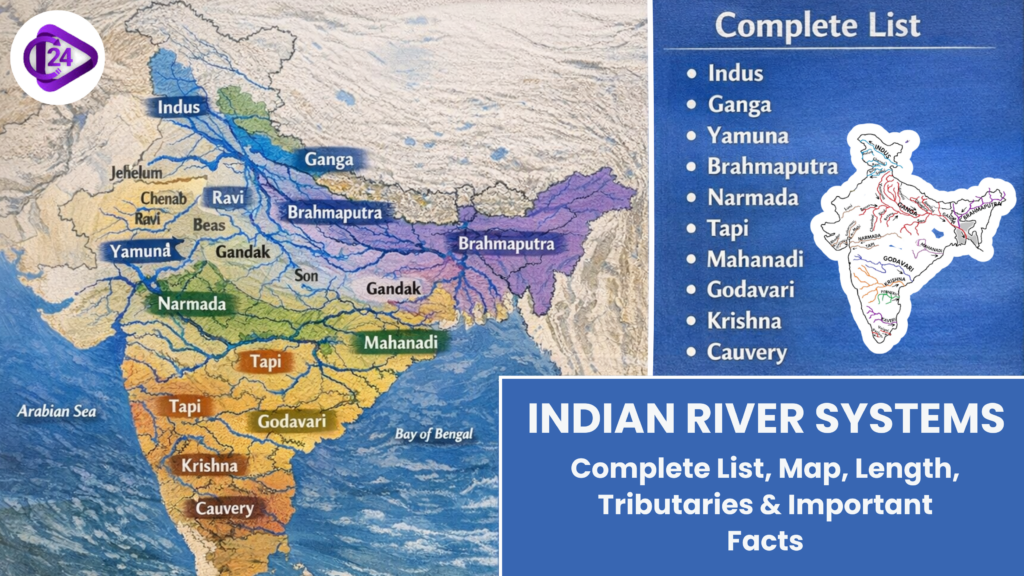
India’s river systems are a vital part of its geography, influencing agriculture, economy, and settlement patterns across the country. The major rivers include the Ganga, Brahmaputra, Indus, Godavari, Krishna, and Narmada, each differing in origin, length, and flow characteristics. These rivers are broadly classified into Himalayan and Peninsular systems based on their source and nature. They play a key role in irrigation, water supply, hydropower generation, and ecological balance. While most rivers drain into the Bay of Bengal, some flow westward into the Arabian Sea, highlighting the diversity of India’s drainage system.
List of Indian Major River Systems
The list of major Indian river systems includes important rivers like the Ganga, Brahmaputra, Indus, Godavari, Krishna, and Narmada. These rivers are classified into Himalayan and Peninsular systems based on their origin. They play a crucial role in irrigation, water supply, agriculture, and shaping India’s diverse physical and economic landscape.
| River | Total Length (km) | Length in India (km) |
| Ganga | 2525 | 2525 |
| Brahmaputra | 2900 | 916 |
| Indus | 3180 | 1114 |
| Godavari | 1465 | 1465 |
| Krishna | 1400 | 1400 |
| Narmada | 1312 | 1312 |
| Tapti (Tapi) | 724 | 724 |
| Mahanadi | 851 | 851 |
| Kaveri (Cauvery) | 800 | 800 |
| Sabarmati | 371 | 371 |
| Pennar | 597 | 597 |
| Luni | 495 | 495 |
Indian Rivers and Their Major Tributaries
| River | Major Tributaries |
| Ganga | Yamuna, Ghaghara, Gandak, Kosi, Son, Damodar |
| Yamuna | Chambal, Betwa, Ken, Sind |
| Brahmaputra | Dibang, Lohit, Subansiri, Manas, Teesta |
| Indus | Jhelum, Chenab, Ravi, Beas, Sutlej |
| Godavari | Pranhita, Indravati, Manjira, Sabari, Penganga |
| Krishna | Bhima, Tungabhadra, Ghataprabha, Malaprabha, Musi |
| Narmada | Tawa, Hiran, Orsang, Kolar |
| Tapti (Tapi) | Purna, Girna, Panjhra |
| Mahanadi | Seonath, Hasdeo, Mand, Ib, Ong |
| Kaveri (Cauvery) | Hemavati, Shimsha, Arkavati, Bhavani, Amaravati |
| Sabarmati | Sei, Wakal, Harnav |
| Luni | Sukri, Jawai, Bandi |
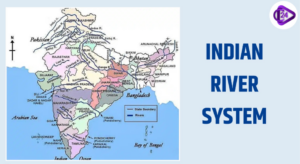
Indian River Map with Names
An Indian River Map with names classifies rivers into the Himalayan and Peninsular systems. Himalayan rivers like the Ganga, Brahmaputra, and Indus are perennial and glacier-fed, while Peninsular rivers like the Godavari, Krishna, and Narmada are rain-fed. The map highlights origins, flow directions, tributaries, and drainage patterns, essential for geography and competitive exams.
Comparison Between the Himalayan and the Peninsular Rivers
| Basis | Himalayan Rivers | Peninsular Rivers |
| Origin | Originating from glaciers in the Himalayas | Originating from hills and plateaus (Peninsular India) |
| Nature | Perennial (flows throughout the year) | Seasonal (mainly rain-fed) |
| Water Source | Snow + rainfall | Rainfall only |
| Length | Longer rivers | Shorter rivers |
| Flow | Meandering with large basins | Straight with smaller basins |
| Valley Type | Form V-shaped valleys in mountains | Form broad, shallow valleys |
| Delta Formation | Large deltas (e.g., Ganga-Brahmaputra) | Smaller deltas or estuaries |
| Erosion | High erosion and sediment load | Less erosion |
| Examples | Ganga, Brahmaputra, Indus | Godavari, Krishna, Narmada |
| Navigation | More suitable for navigation | Less suitable |
Major Rivers in India: Complete Guide to Indian River Systems
India’s river systems are the lifeline of the country, playing a crucial role in shaping its geography, economy, agriculture, and civilisation. From the snow-fed rivers of the Himalayas to the rain-fed rivers of the Peninsular Plateau, India has a vast and diverse drainage system. These rivers not only provide water for irrigation and drinking but also support industries, biodiversity, and cultural traditions.
Classification of Indian Rivers
Indian rivers are broadly classified into two major categories:
- Himalayan Rivers
These rivers originate from glaciers in the Himalayan mountain ranges and are perennial, meaning they flow throughout the year.
Key Features:
- Fed by snow and rainfall
- Large river basins
- Meandering courses
- High erosion and sediment load
Major Himalayan Rivers:
- Ganga
- Brahmaputra
- Indus
2. Peninsular Rivers
These rivers originate from the Peninsular Plateau and are mainly rain-fed.
Key Features:
- Seasonal flow
- Smaller basins
- Less erosion
- Flow through hard rock regions
Major Peninsular Rivers:
- Godavari
- Krishna
- Narmada
- Mahanadi
- Kaveri
Major River Systems in India
- Ganga River System
The Ganga is the most important river in India and holds immense cultural, economic, and spiritual significance.
- Origin: Gangotri Glacier (Uttarakhand)
- Length: 2525 km
- States Covered: Uttarakhand, Uttar Pradesh, Bihar, West Bengal
Major Tributaries:
Yamuna, Ghaghara, Gandak, Kosi, Son
Importance:
- Supports the largest agricultural belt
- Forms the fertile Indo-Gangetic plains
- Major source of irrigation
- Brahmaputra River System
The Brahmaputra is one of the longest rivers in the world with a unique course.
- Origin: Tibet (as Tsangpo)
- Length: ~2900 km
- Flows through: Arunachal Pradesh, Assam
Major Tributaries:
Dibang, Lohit, Subansiri, Manas
Importance:
- Forms a large delta with Ganga
- Prone to floods due to heavy rainfall
- Supports rich biodiversity
- Indus River System
The Indus river system is one of the oldest river systems associated with the Indus Valley Civilization.
- Origin: Tibet near Lake Mansarovar
- Length: ~3180 km
Major Tributaries:
Jhelum, Chenab, Ravi, Beas, Sutlej
Importance:
- Lifeline of northwestern India and Pakistan
- Important for irrigation
- Godavari River System
Known as the “Ganga of the South”, it is the largest river in Peninsular India.
- Origin: Trimbak Hills (Maharashtra)
- Length: 1465 km
Major Tributaries:
Pranhita, Indravati, Manjira
Importance:
- Major irrigation source
- Supports agriculture in central and southern India
- Krishna River System
The Krishna River is another major river in southern India.
- Origin: Western Ghats (Maharashtra)
- Length: ~1400 km
Major Tributaries:
Bhima, Tungabhadra
Importance:
- Supports irrigation and hydroelectric projects
- Important for states like Karnataka and Andhra Pradesh
- Narmada River System
The Narmada is one of the major west-flowing rivers in India.
- Origin: Amarkantak Plateau
- Length: 1312 km
Features:
- Flows through a rift valley
- Drains into the Arabian Sea
Importance:
- Hydropower projects
- Important for central India
- Mahanadi River System
- Origin: Chhattisgarh highlands
- Length: 851 km
Tributaries:
Seonath, Hasdeo
Importance:
- Forms a fertile delta in Odisha
- Important for agriculture
- Kaveri River System
- Origin: Brahmagiri Hills (Karnataka)
- Length: 800 km
Tributaries:
Hemavati, Bhavani
Importance:
- Lifeline of Tamil Nadu
- Major irrigation river
- Tapti (Tapi) River
- Origin: Satpura Range
- Flows into: Arabian Sea
Importance:
- One of the few west-flowing rivers
Drainage Patterns in India
India’s rivers follow different drainage patterns:
- Dendritic: Tree-like pattern (most common)
- Trellis: Parallel tributaries
- Radial: Flow from a central peak
- Rectangular: Right-angle bends
Importance of Rivers in India
- Agriculture
Rivers provide water for irrigation, supporting food production.
- Drinking Water
Major cities depend on rivers for water supply.
- Hydroelectric Power
Dams on rivers generate electricity.
- Transportation
Some rivers are used for inland navigation.
- Cultural Significance
Rivers like Ganga are considered sacred.
River Pollution Issues
- Industrial waste
- Sewage discharge
- Plastic pollution
Government Initiatives:
- Namami Gange Programme
- River cleaning projects
Interlinking of Rivers
The government has proposed linking rivers to:
- Reduce floods
- Solve water scarcity
- Improve irrigation
Major Deltas in India
- Ganga-Brahmaputra Delta (largest in the world)
- Godavari Delta
- Krishna Delta
- Mahanadi Delta
Important Facts for Exams
- Longest river in India: Ganga
- Longest river system: Indus
- Largest delta: Sundarbans
- West-flowing rivers: Narmada, Tapti
- East-flowing rivers: Most Peninsular rivers
Conclusion – Indian River Systems
Indian river systems are fundamental to the country’s geography, economy, and cultural heritage. From the perennial Himalayan rivers to the seasonal Peninsular rivers, they support agriculture, water supply, biodiversity, and livelihoods. These rivers shape fertile plains, enable irrigation, and contribute to energy generation. However, challenges like pollution, overuse, and climate change threaten their sustainability. Effective river management, conservation efforts, and public awareness are essential to preserve these vital resources. Understanding Indian river systems is crucial for both academic learning and competitive exam preparation, as they remain a key component of India’s natural and economic framework.