

Day: March 23, 2026
Elon Musk

Elon Musk Launches Terafab AI Chip Project to Challenge NVIDIA

Elon Musk has announced the ambitious Terafab AI chip project, aiming to reshape the global semiconductor landscape and reduce reliance on established players like NVIDIA. As artificial intelligence demand surges worldwide, the need for high-performance, cost-efficient chips has become critical. Musk’s move signals a strategic push toward vertical integration, leveraging his ecosystem of companies to develop cutting-edge AI hardware. The Terafab initiative is expected to accelerate innovation, enhance computing power, and intensify competition in the rapidly evolving AI chip market, marking a significant shift in the future of technology.

Terafab AI Chip Project: Key Highlights, Features, and Market Impact

  • Terafab is Elon Musk’s new initiative to develop advanced AI chips.
  • The project aims to reduce dependence on companies like NVIDIA.
  • Rising global demand for AI computing power is a key driver behind this move.
  • The project focuses on creating high-performance, cost-efficient semiconductor solutions.
  • It aligns with Musk’s vision of vertical integration across his companies.
  • Terafab may support AI needs for Tesla’s autonomous driving technology.
  • It could also enhance computing capabilities for SpaceX and other ventures.
  • The initiative is expected to boost innovation in AI hardware development.
  • Competition in the semiconductor industry will likely intensify due to this project.
  • Terafab may push existing companies to accelerate research and development.
  • The project highlights the strategic importance of AI chips in future technologies.
  • It could contribute to reducing global chip supply chain constraints.
  • Musk’s entry into chip manufacturing signals a long-term commitment to AI dominance.
  • The initiative may attract significant investments and partnerships globally.
  • Terafab has the potential to reshape the pricing and accessibility of AI chips.
  • It reflects the growing trend of tech giants building in-house chip capabilities.
  • The project could create new opportunities in the semiconductor job market.
  • Environmental and manufacturing challenges may arise with large-scale production.
  • Governments may closely monitor such developments due to strategic importance.
  • Overall, Terafab represents a bold step toward transforming the AI semiconductor ecosystem.

Previous Year Question on SpaceX

Exam Name Year Question Options Answer
SSC CGL 2021 SpaceX is a private aerospace company founded by which entrepreneur? A. Jeff Bezos B. Elon Musk C. Bill Gates D. Mark Zuckerberg B. Elon Musk
RRB NTPC 2022 Which company launched the Falcon 9 rocket? A. NASA B. ISRO C. SpaceX D. Blue Origin C. SpaceX
SSC CHSL 2020 The Starlink project is associated with which company? A. Amazon B. SpaceX C. Google D. Microsoft B. SpaceX
UPSC Prelims 2023 Consider the following: Starlink, Falcon Heavy, and Dragon Capsule. These are related to which organisation? A. NASA B. ESA C. SpaceX D. ISRO C. SpaceX
SSC GD 2022 Who is the founder of SpaceX? A. Elon Musk B. Jeff Bezos C. Larry Page D. Sundar Pichai A. Elon Musk
RRB Group D 2021 Dragon spacecraft is developed by which company? A. ISRO B. NASA C. SpaceX D. Roscosmos C. SpaceX
SSC MTS 2023 The Falcon Heavy rocket is associated with which company? A. SpaceX B. Blue Origin C. NASA D. Boeing A. SpaceX
CDS 2022 Starlink satellites are launched by which organisation? A. NASA B. SpaceX C. ISRO D. ESA B. SpaceX
SSC CPO 2023 Which company is developing a global satellite internet network called Starlink? A. Amazon B. SpaceX C. Meta D. Apple B. SpaceX
NDA 2021 Crew Dragon spacecraft is developed by which company? A. SpaceX B. NASA C. ISRO D. Blue Origin A. SpaceX


Tamil Nadu Needs More Basic Science Funding

Conclusion – Elon Musk Launches Terafab AI Chip

Elon Musk’s Terafab AI chip project marks a significant step toward reshaping the semiconductor industry. By challenging established players like NVIDIA, it highlights the growing importance of in-house AI hardware development. This initiative could drive innovation, increase competition, and play a crucial role in defining the future of artificial intelligence and advanced computing globally.
Rice, Wheat Procurement Falls Again: House Panel Raises Concern

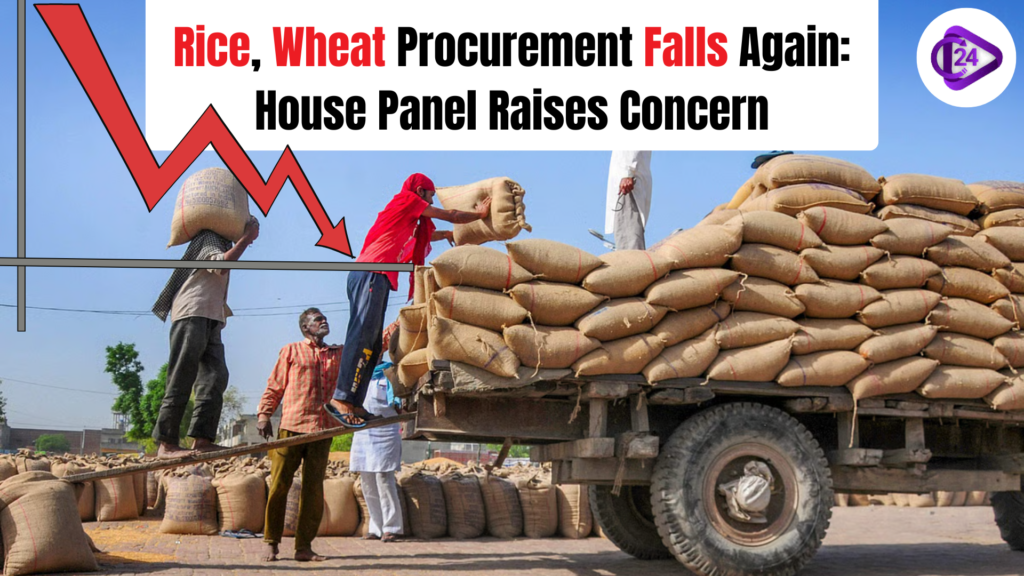
India’s food security framework is facing renewed scrutiny as rice and wheat procurement levels remain consistently low, raising concerns among policymakers. A parliamentary panel has flagged the issue, highlighting potential risks to the Public Distribution System (PDS) and buffer stock maintenance. Procurement shortfalls can impact price stability, farmer income assurance, and the government’s ability to manage food supply during emergencies. Factors such as changing crop patterns, market price fluctuations, and logistical challenges have contributed to this trend. Addressing these concerns is crucial to ensure long-term food security and maintain a balanced agricultural economy.

Rice & Wheat Procurement Decline: Causes, Impact, and Government Concerns

  • Rice and wheat procurement levels have declined in recent cycles, raising policy concerns.

  • A parliamentary panel has highlighted risks to national food security.

  • Lower procurement may affect buffer stock availability for emergencies.

  • The Public Distribution System (PDS) depends heavily on adequate grain procurement.

  • Farmers may prefer selling in open markets due to better prices.

  • Minimum Support Price (MSP) may not always be competitive with market rates.

  • Climate change and erratic weather impact crop yields.

  • Shifts toward alternative crops reduce wheat and rice cultivation areas.

  • Storage and logistical issues can hinder efficient procurement.

  • State-level variations in procurement policies affect overall performance.

  • Reduced stocks can lead to price volatility in domestic markets.

  • The government may need to increase imports if shortages persist.

  • Food inflation risks may rise due to supply constraints.

  • Procurement inefficiencies can affect farmer income stability.

  • Policy reforms may be required to strengthen procurement mechanisms.

  • Digital tracking and modernisation can improve supply chain efficiency.

  • Incentives for farmers could encourage higher participation in procurement.

  • Strengthening infrastructure like warehouses and cold storage is essential.

  • Coordination between central and state agencies is crucial.

  • Ensuring sustainable agriculture practices can stabilise long-term production.

PYQs on Rice and Wheat

Exam Name Year Question Options Answer
UPSC Prelims 2020 Which among the following is the largest producer of rice in the world? A. India
B. China
C. Indonesia
D. Bangladesh
B. China
SSC CGL 2021 Which country is the second-largest producer of rice in the world? A. India
B. China
C. Vietnam
D. Thailand
A. India
RRB NTPC 2022 Wheat is mainly grown in which type of soil in India? A. Black soil
B. Alluvial soil
C. Laterite soil
D. Desert soil
B. Alluvial soil
SSC CHSL 2020 Which state is the largest producer of wheat in India? A. Punjab
B. Haryana
C. Uttar Pradesh
D. Bihar
C. Uttar Pradesh
UPSC Prelims 2018 Rice cultivation requires which of the following conditions? A. Low temperature & low rainfall
B. High temperature & high rainfall
C. Cold climate
D. Dry climate
B. High temperature & high rainfall
SSC GD 2022 Which soil is most suitable for rice cultivation? A. Black soil
B. Alluvial soil
C. Red soil
D. Laterite soil
B. Alluvial soil
RRB Group D 2021 Which is the largest wheat-producing state in India? A. Punjab
B. Haryana
C. Uttar Pradesh
D. Rajasthan
C. Uttar Pradesh
SSC MTS 2023 Wheat is a ______ crop. A. Kharif
B. Rabi
C. Zaid
D. Cash crop
B. Rabi
NDA 2021 Rice is mainly a ______ crop. A. Rabi
B. Kharif
C. Zaid
D. Plantation
B. Kharif
CDS 2022 Which nutrient is most required for wheat growth? A. Nitrogen
B. Phosphorus
C. Potassium
D. Calcium
A. Nitrogen
UPSC Prelims 2017 Which state is the largest producer of rice in India? A. Punjab
B. Uttar Pradesh
C. West Bengal
D. Andhra Pradesh
C. West Bengal
SSC CPO 2023 The ideal temperature for wheat cultivation is around? A. 10–15°C
B. 20–25°C
C. 25–30°C
D. 30–35°C
B. 20–25°C

SC Orders Maternity Leave for All Adoptive Mothers

Conclusion – Rice & Wheat Procurement Falls Again

The continued decline in rice and wheat procurement raises serious concerns about India’s food security and agricultural stability. It highlights challenges in MSP effectiveness, farmer participation, and supply chain efficiency. Addressing these issues through policy reforms, better incentives, and improved infrastructure is essential. Ensuring adequate buffer stocks and strengthening procurement systems will be crucial to maintain price stability, support farmers, and secure the nation’s long-term food needs.

One Billion Tonne Coal

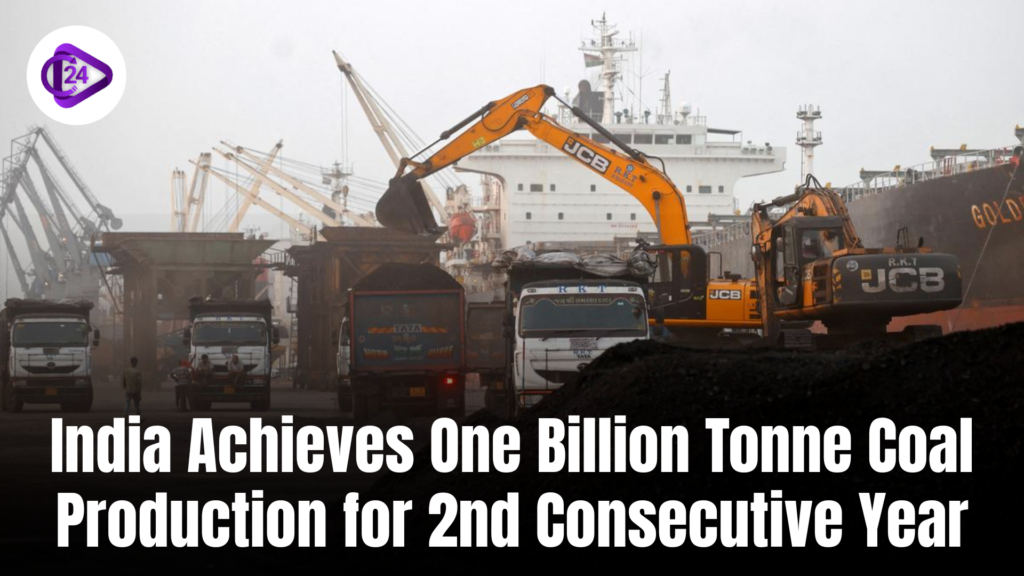
India Achieves One Billion Tonne Coal Production for 2nd Consecutive Year

India has reached a major milestone in its energy sector by achieving one billion tonnes of coal production for the second consecutive year. This achievement underscores the country’s growing energy demand and its continued reliance on coal for power generation. Driven by increased industrial activity, infrastructure development, and rising electricity consumption, coal remains central to India’s energy security. The consistent production level also reflects improved efficiency, technological advancements, and effective government policy implementation. It further strengthens India’s position among the world’s leading coal-producing nations while ensuring a stable energy supply.

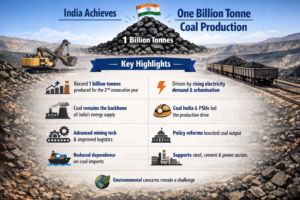
Key Highlights of India’s One Billion Tonne Coal Production

  • India achieved one billion tonnes of coal production for the second consecutive year, underscoring strong growth in the energy sector.

  • The milestone reflects rising electricity demand driven by rapid industrialisation and urbanisation.

  • Coal remains the backbone of India’s power generation, accounting for a major share of the energy supply.

  • Public-sector companies such as Coal India Limited played a crucial role in achieving this target.

  • Improved mining technologies and better logistics have boosted production efficiency.

  • Government initiatives and policy reforms have supported higher coal output.

  • The achievement reduces dependence on coal imports and enhances energy security.

  • It supports key sectors, including steel, cement, and power generation.

  • Environmental concerns remain a challenge despite increased production.

  • Sustainable mining practices are being promoted to balance growth and environmental protection.

MCQs on Coal and Ranking

1. Which country is the largest producer of coal in the world?
A. India
B. USA
C. China
D. Australia
Answer: C. China
Explanation: China leads global coal production due to its massive industrial base and high energy demand.

2. Which country ranks second in coal production globally?
A. India
B. Australia
C. USA
D. Russia
Answer: A. India
Explanation: India is the second-largest producer, driven by growth in the power and industrial sectors.

3. Which state is the largest coal-producing state in India?
A. Odisha
B. Chhattisgarh
C. Jharkhand
D. West Bengal
Answer: C. Jharkhand
Explanation: Jharkhand has rich coal reserves and major coalfields like Jharia and Bokaro.

4. Which Indian state is known for the Talcher coalfields?
A. Jharkhand
B. Odisha
C. Chhattisgarh
D. Madhya Pradesh
Answer: B. Odisha
Explanation: Talcher in Odisha is one of India’s largest coal-producing regions.

5. The Jharia coalfield is located in which state?
A. Odisha
B. Jharkhand
C. West Bengal
D. Bihar
Answer: B. Jharkhand
Explanation: Jharia is famous for high-quality coking coal used in steel production.

6. Which type of coal has the highest carbon content?
A. Peat
B. Lignite
C. Bituminous
D. Anthracite
Answer: D. Anthracite
Explanation: Anthracite is the purest form of coal with the highest carbon percentage and energy value.

7. Which country is the largest exporter of coal in the world?
A. India
B. Australia
C. Indonesia
D. USA
Answer: B. Australia
Explanation: Australia dominates coal exports due to its large reserves and strong global demand.

8. Which Indian state is the second-largest coal producer?
A. Odisha
B. Chhattisgarh
C. West Bengal
D. Madhya Pradesh
Answer: B. Chhattisgarh
Explanation: Chhattisgarh has major coalfields, such as Korba, which contribute significantly to production.

9. The Raniganj coalfield is located in which state?
A. Jharkhand
B. Odisha
C. West Bengal
D. Bihar
Answer: C. West Bengal
Explanation: Raniganj is one of India’s oldest coalfields.

10. The Neyveli coal mines are famous for which type of coal?
A. Anthracite
B. Bituminous
C. Lignite
D. Peat
Answer: C. Lignite
Explanation: Neyveli in Tamil Nadu is known for lignite, a low-grade brown coal.

11. Which country has the largest coal reserves in the world?
A. China
B. USA
C. India
D. Australia
Answer: B. USA
Explanation: The USA holds the largest proven coal reserves globally.

12. Which sector consumes the maximum coal in India?
A. Transport
B. Power generation
C. Agriculture
D. Household
Answer: B. Power generation
Explanation: Most of India’s coal is used in thermal power plants for electricity.

13. The Bokaro coalfield is located in which state?
A. Jharkhand
B. Odisha
C. Chhattisgarh
D. Bihar
Answer: A. Jharkhand
Explanation: Bokaro is an important coalfield that supports the steel industry.

14. Which organisation is the largest coal-producing company in India?
A. NTPC
B. ONGC
C. Coal India Limited
D. GAIL
Answer: C. Coal India Limited
Explanation: Coal India Limited is the world’s largest coal-producing company.

15. Which state produces lignite coal in India?
A. Rajasthan
B. Tamil Nadu
C. Gujarat
D. All of the above
Answer: D. All of the above
Explanation: Lignite deposits are found in Rajasthan, Tamil Nadu (Neyveli), and Gujarat

Pakistan-Afghanistan Conflict Highlights

Conclusion – India Achieves One Billion Tonne Coal Production

India’s achievement of producing one billion tonnes of coal for the second consecutive year highlights its strong energy security and growing industrial capacity. It reflects improved efficiency, policy support, and rising demand. However, balancing this growth with environmental sustainability remains crucial. Moving forward, India must focus on cleaner technologies and the integration of renewable energy to ensure long-term, sustainable development while maintaining energy reliability for its expanding economy.

Frequently Asked Questions (FAQs)

The current affairs cover recent national and international events related to UPSC, SSC, Banking, Railways, and State PCS.

You need to read about the current affairs daily, and revise them every week and every month to keep them longer in your memory.

Yes, Class24 provides free downloadable Daily Current Affairs PDFs for easy revision.

Yes, you can practice MCQs and quizzes to boost your exam preparation.

Absolutely. The content is written in simple, easy-to-understand bilingual language suitable for beginners.

Go to class24.com and click on the current affairs section directly, where you find everything that you need.

ssc-toppers

Start Learning Today with Class24

Related current affairs

Class24 offers free video lectures for smart preparation, covering CGL, CPO, CHSL, MTS, and GD exams. Learn from expert faculty, revise concepts easily, practice with PYQs, and improve speed and accuracy through high-quality, exam-focused video lessons anytime, anywhere.

Get success in your hand. Start study anytime anywhere.

The journey becomes simple and enjoyable when you start taking interest in it. And through our app “Class24”, we will be your trusted partners in developing that interest.

Daily Quizzes
Mock Tests
Ongoing

No ongoing tests right now.