
PM Modi Flags Off India’s First Hydrogen Train on Jind–Sonipat Route
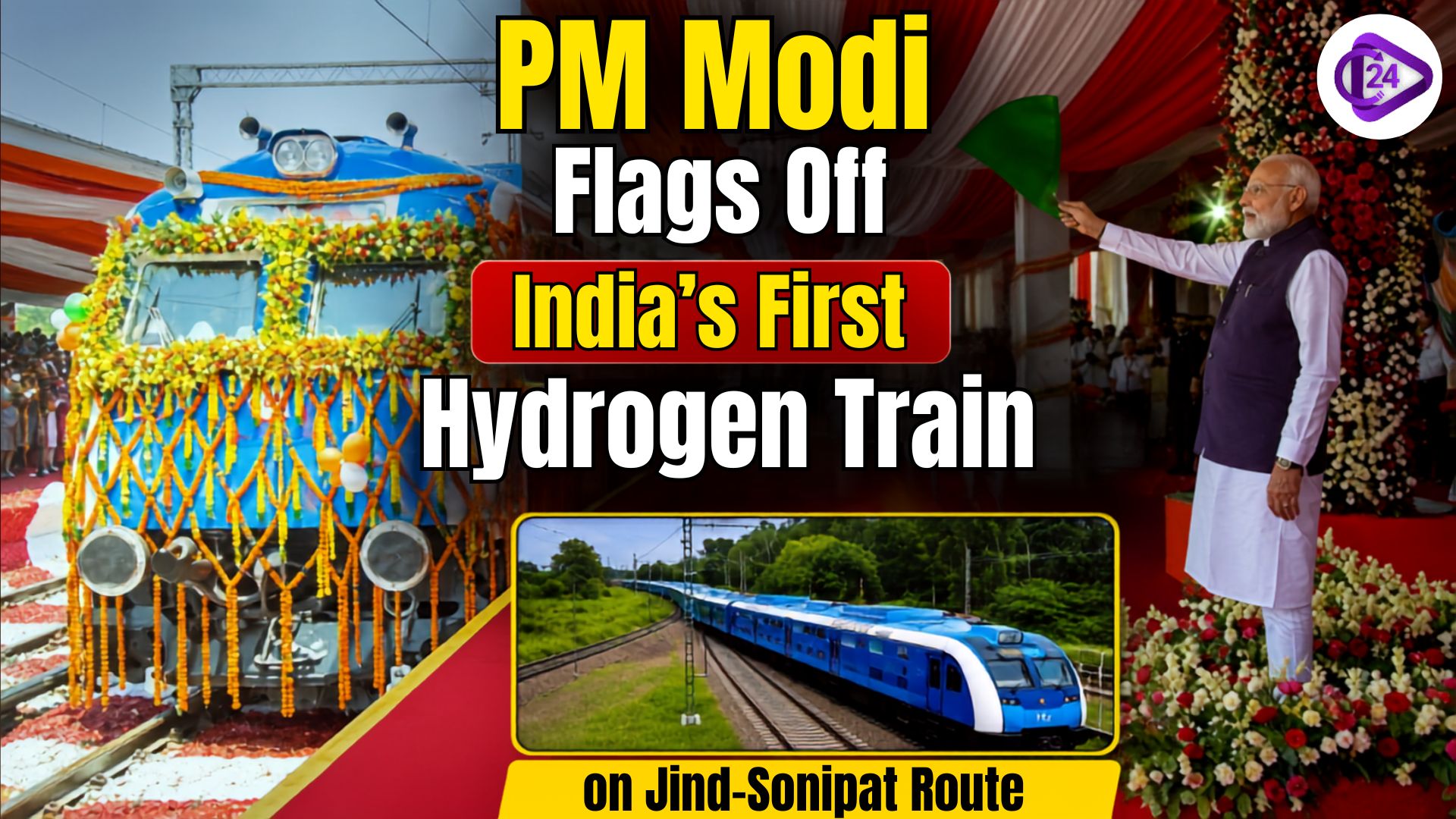
Table of Contents
PM Modi launched the first hydrogen train between Jind and Sonipat in Haryana, which is a significant step towards clean and sustainable mobility. The hydrogen train is powered by hydrogen fuel cells. It produces electricity via a chemical (hydrogen/oxygen) reaction, with only water vapour (as the exhaust gases) as a result, considered a zero-emission transport. It is part of the National Green Hydrogen Mission and India’s target of becoming a Net Zero Nation by 2070. The Launch has highlighted Indian Railways’ approach towards Green Mobility, Energy security, lesser dependence on fossil fuel and embracing innovative technologies that enable the railways to operate cleaner.
What is a Hydrogen Train?
A hydrogen train is an eco-friendly railway train that runs on hydrogen fuel cell technology rather than using diesel. This involves the use of hydrogen stored in a tank on board, where it is combined with oxygen from the air in the fuel cell to generate electricity. The steam provides power to the train’s electric tractors and the only by-products are water vapour and heat, which represent a zero-tailpipe-emission transportation method. Hydrogen trains are ideal for lines without overhead wires, making overhead electrification expensive. They are more environmentally friendly, quieter, and greener than diesel-powered trains, contributing to carbon footprint reduction and the adoption of an eco-friendly and energy-efficient mode of transport in India.
How Does a Hydrogen Train Work?
- Hydrogen Storage: Hydrogen gas is stored in specially designed high-pressure tanks on the roof or under the train. These tanks have minimum safety features to withstand higher pressures and also to prevent leakage.
- Fuel Cell technology: Hydrogen gas that is stored with the help of this technology will be sent to fuel cells, where H2 reacts with O2 present in the air in an electrochemical process. The process, unlike that of diesel engines, does not involve fuel combustion.
- Electricity Generation: The chemical reaction between hydrogen and oxygen creates electricity that is used to power the train’s electric traction motors. This reaction only produces water vapour and heat, which means it does not pollute the environment.
- Battery Support: Most hydrogen trains feature lithium-ion batteries that stockpile surplus electricity from the fuel cell. These batteries supply extra power during acceleration, climbing gradients and peak load conditions.
- Traction Motors: The electric power from the fuel cell and batteries drives electric motors, which turn the wheels of such a train forward smoothly and silently.
- Regenerative Braking: When braking occurs, the train recovers kinetic energy via regenerative braking. The energy recovered in this way is stored in the batteries, allowing ideal use of these energy-saving functions and resulting in a reduction in overall hydrogen consumption.
- Zero Tailpipe Emissions: Hydrogen trains do not burn fossil fuel and emit only water vapour and heat rather than greenhouse gases or air pollutants.
- Non-Electrified Rail: Hydrogen trains are perfect for routes that don’t have electric power and would be too costly or challenging to electrify, giving a cleaner alternative to diesel locomotives.
Andy Burnham Confirmed as UK Labour Leader
Benefits of Hydrogen Trains
- Zero Emissions at Point of Use: Hydrogen Trains emit only water vapour and heat, making them a relatively clean alternative to diesel trains that are also greenhouse gas-emitting vehicles.
- Eco-Friendly vehicles: They prevent air pollution, carbon footprints and particulate matter to a great extent, thereby promoting sustainable and green transport.
- Lower Dependence on Diesel: Hydrogen trains help reduce the intake of imported fossil fuels, thereby making India more energy independent and saving fuel import bills.
- Compatible with Non-Electrified Routes: They are capable of running on rail lines without overhead electric wires; thus, no costs associated with the expense involved in electrification can arise.
- Reduced Noise Pollution: Hydrogen fuel cells can operate with noise levels considerably lower than diesel engines, leading to a more comfortable and quiet travel experience.
- High Energy Efficiency: Fuel cells run on hydrogen in a more efficient manner than conventional diesel engines and hence use the energy in a much better way.
- Quick Refuelling: Compared to battery-electric trains, where the time taken for a charge can be quite substantial, refuelling a hydrogen train takes much less time, allowing operationally more efficient turnarounds.
- Aims Green Hydrogen Mission: Hydrogen trains propagate the utilisation of green hydrogen produced using renewable energy and are essential for meeting India’s target to lead in global climate change mitigation actions through clean energy transition.
- ROI (Short-Term) and LTOC (Fundamental): Very high initial capital cost but lower hydrogen fuel and maintenance costs can result in reduced total cost of ownership over time.
- Promotes Railway Sustainability: Hydrogen trains also aid Indian Railways in realising its target of becoming a carbon-neutral entity, while modernising rail transport with clean technology.
- Encourages Innovation: Hydrogen rail is part of a wider spectrum in that by investing in new types of technology such as fuel cells, the consumption process and further infrastructure.
- Impact on Global Climate: These hydrogen trains with a very low cost of emissions will support India in fulfilling the commitments made by the country on global climate forums, as more than 10% of carbon generation comes from the transport sector.
How India’s First Hydrogen Train Supports the Green Hydrogen Mission?
- Demonstrates the usage of green hydrogen as a clean fuel in the transport sector, thus supporting the National Green Hydrogen Mission.
- Utilises hydrogen fuel cell technology, which on board produces electricity and only emits water vapour and heat, providing near-zero tailpipe emissions.
- Lowers dependence on diesel trains to continue to reduce fossil fuel use and greenhouse gas emissions.
- Transforms energy security by fostering the supply and consumption of domestically manufactured green hydrogen.
- Jind: India’s first integrated hydrogen railway ecosystem comprising a hydrogen production plant, Hydrogen storage, compression & refuelling infrastructure
- Proves the business case for hydrogen fuel cell rail and sets a strong precedent for broader adoption throughout Indian Railways
- Indigenous design, development of hydrogen train technology and infrastructure that supports Atmanirbhar Bharat.
- Aligns with India’s commitment of Net Zero emission by 2070 by providing sustainable and clean mobility solutions
- Stimulates development of low-cost hydrogen production by electrolysis and facilitates demand for green hydrogen in multiple end-uses.
- Embeds India in the small club of nations that are deploying hydrogen-powered rail technology, enhancing its stature as a leader in clean energy and sustainable transport.
NITI Aayog Investment Rankings 2026
Features of India’s First Hydrogen Train
- Major Green Railway milestone: India’s 1st hydrogen train on Jind–Sonipat route in Haryana
- Hydrogen-Fuel Cell (HFC) which produces electricity from Hydrogen & Oxygen by reducing it into a train
- It generates only water vapour and heat as a by-product, which means it is a zero-tailpipe-emission train.
- Embedded hydrogen production, storage, compression and refuelling facility at Jind for the first hydrogen rail ecosystem of India.
- Intended to take over from diesel trains on fit-for-purpose routes to cut down harmful emissions and dependency on fossil fuels.
- Demonstrates real-life utility of green hydrogen in the transport sector, supporting all 17 points of application under the National Green Hydrogen Mission
- Designed with advanced safety systems such as hydrogen leak detection and fire protection, pressure monitoring, and emergency shutdown mechanisms.
- Equipped with hydrogen storage cylinders of great capacity, plus an onboard high-speed fuel cell system that provides constant power generation.
- Has quieter operations, greater energy efficiency and less maintenance than conventional diesel trains.
- Indigenous development and true Atmanirbhar Bharat of hydrogen rail technology and infrastructure.
- Supports India’s vision of reaching Net Zero emissions before 2050 and promotes environment-friendly clean mobility
- Acts as a model project for the future deployment of hydrogen-powered trains in Indian Railways, particularly on non-electrified routes.
Government Adds Iron Ore to Core Sector Index
Advantages of First Hydrogen Train in India
- Accelerates Green Energy Transition: Integrate conventional fossil fuels replacing clean hydrogen technology in Indian railways.
- National Green Hydrogen Mission Support: Generates Demand for green hydrogen and facilitates the use of green hydrogen in the transportation sector.
- Reduces Carbon Footprint: Main emission is water vapour, which helps to cut GHG emissions and also improves air quality.
- Lower diesel consumption: Deployed on routes suitable for them instead of diesel locomotives, they help to cut down fuel bills and reduce India’s crude oil import dependence.
- Improves Energy Security: Promotes the utilisation of indigenous hydrogen; diversifies India’s energy resource pool.
- Native Manufacturing Increment: Manufacture of hydrogen fuel cells, storage systems, and railway technologies under Make in India & Atmanirbhar Bharat initiatives
- Significant Railway Decarbonisation: Along with the Indian Railways’ aim of becoming a Net Zero Carbon Emitter, this complements efforts to cut down emissions from railway operations.
- Drives Technological Innovation: Encourages research and development in hydrogen production, fuel-cell technology, and clean mobility solutions.
- Establishes a New Hydrogen Ecosystem: Drives investment into hydrogen production, storage, transportation, refuelling infrastructure and skilled jobs
- Enhances Operations: Hydrogen fuel-cell trains can accelerate faster, vibrate less and operate much more quietly than diesel trains.
- Clean Mobility to Non-Electrified Routes: Offers an environmentally friendly option for non-electrified rail routes.
- Global Leadership: By becoming one of only a few countries developing hydrogen-powered trains, India is also demonstrating its commitment to sustainable transport and clean energy technology advances.
- Encourages collaboration for public-private partnership: This paves the way for government, industry and research institutions to come together in the hydrogen economy.
- Enhancing Economic Growth: It stimulates new investment, technology transfer and employment in both the clean energy sector and railway industry to make India’s green economy stronger.