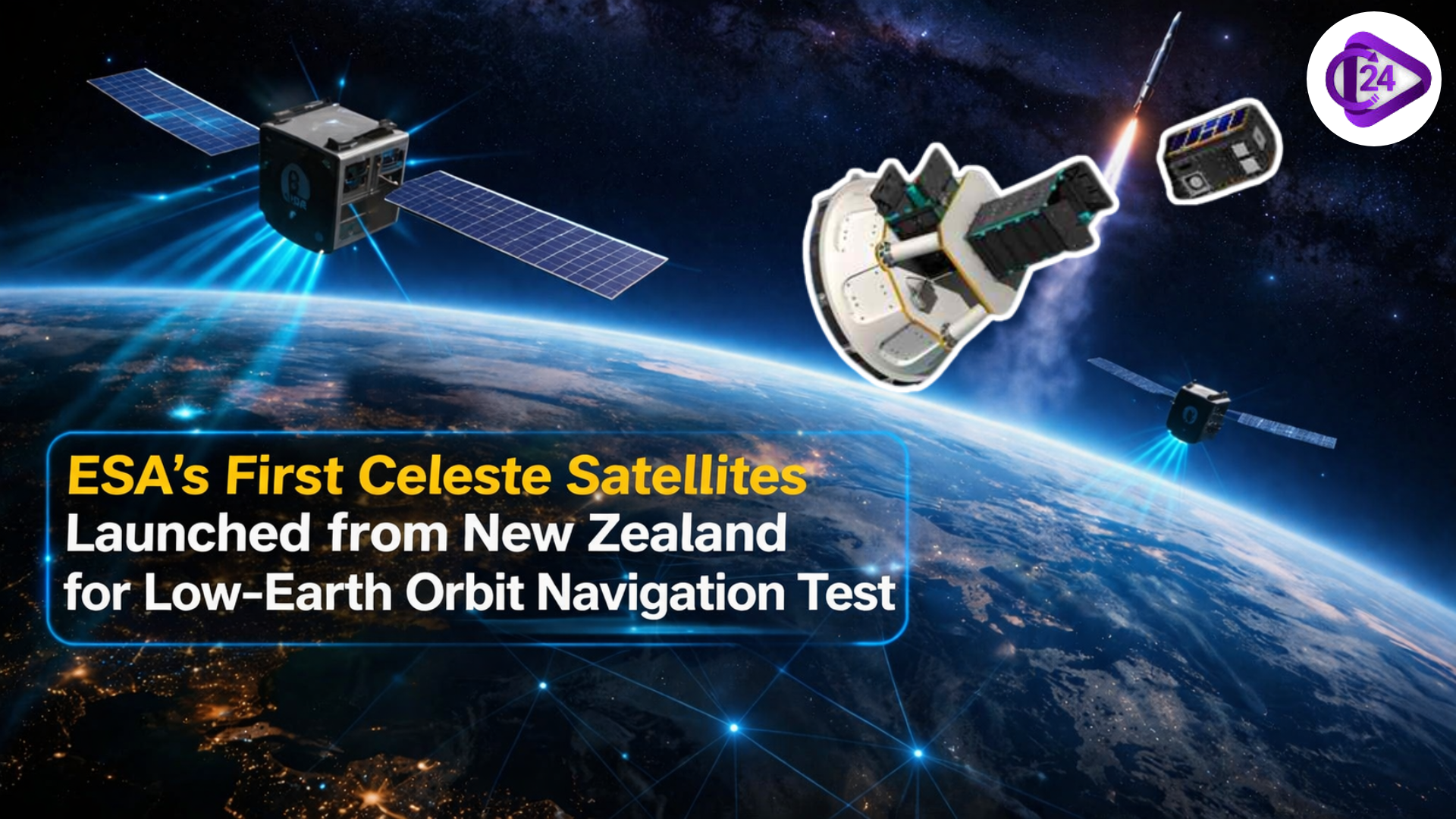


The European Space Agency has managed to launch its first Celeste satellites in New Zealand, and this is a significant development in space-based navigation technology. This mission will be a test of advanced positioning and timing systems in Low Earth Orbit (LEO), which can revolutionise satellite navigation and communication. Since more and more people are relying on space infrastructure, the Celeste project of ESA aims to improve the accuracy, resilience, and independence of the navigation systems. The opening also emphasises the international partnership and space exploration, making ESA the leader in the next generation of navigation services.
Key Highlights of ESA’s Celeste Satellite Launch
-
The European Space Agency put up their initial Celeste satellites to test the navigation in Low Earth Orbit (LEO).
-
The operation took place outside of New Zealand, an emerging centre in commercial space launch.
-
Emphasises the creation of stand-alone navigation systems, other than depending on GPS.
-
Intended to enhance the precision of the positioning of satellites in LEO.
-
Increases the resilience of the navigation systems in case of disruption and signal breakdowns.
-
Favours the future constellations of satellites and space internet.
-
Supplies safer satellite operations through orbital tracking.
-
Promotes timing and synchronisation innovations.
-
Helps minimise the reliance on land-based navigation systems.
-
Enhances the European strategic independence in space technology.
-
The Celeste system is made to be very precise and reliable in space missions.
-
Further encourages cross-border cooperation in state-of-the-art space studies.
-
It is predicted to bring advantages to such industries as telecommunications, defence, and Earth observation.
-
Compliant with worldwide tendencies of building LEO satellite networks.
-
Takes a step towards the development of the next-generation space navigation architecture.
What is ESA’s Celeste Mission?
-
The Celeste mission is a project by the European Space Agency aimed at coming up with superior navigation systems in space.
-
It is concerned with positioning, navigation, and timing (PNT) technologies testing in low Earth orbit.
-
Intends to develop a self-reliant and autonomous alternative to the conventional GNSS systems.
-
Promotes satellite constellations and autonomous space.
-
Improves spacecraft navigation and collision avoidance.
-
It was intended to enhance the efficiency and safety of space missions.
-
Contributes to the development of European space and innovation.
Mangroves in Focus After SC Coastal Road Verdict
Conclusion – ESA’s First Celeste Satellites
The European Space Agency launched the first Celeste satellites, and this is a great breakthrough in the technology of space navigation. The mission reinforces the future of autonomous operations and satellite-based services by being used to test innovative positioning systems in low Earth orbit. It is a project that was initiated in New Zealand and is indicative of increased international cooperation in space exploration. Celeste is likely to improve the precision, dependability and robustness of manoeuvring systems, which is likely to precondition the next-generation space facilities and strengthen the European leadership in the sphere of innovative space technologies.