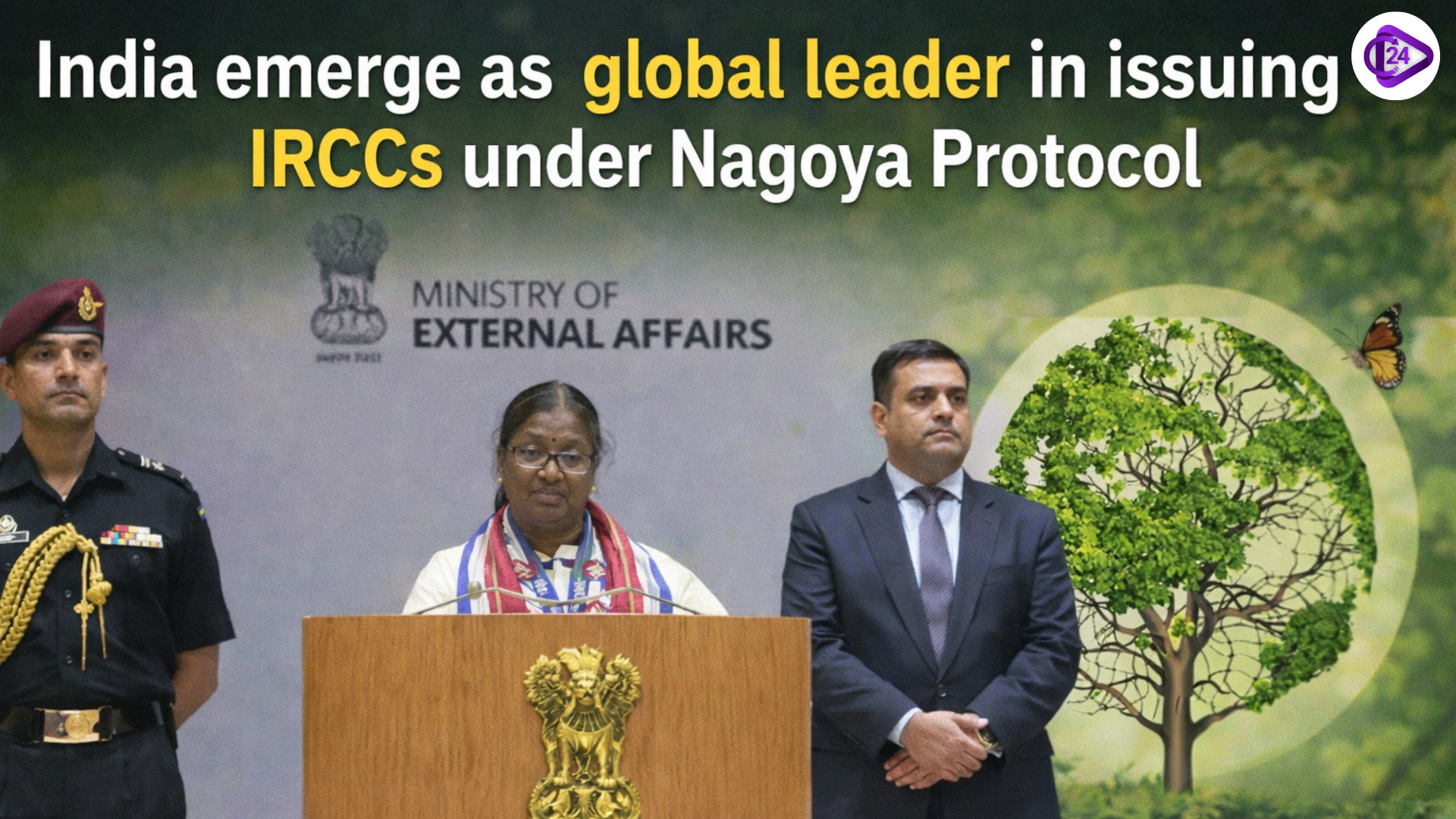


India has become a world leader in the provision of an Internationally Recognised Certificate of Compliance (IRCC) in the Nagoya Protocol, which is a major success story in the regulation of biodiversity. This is a milestone that shows that the country has a well-established regulatory environment and reliance on equitable and fair sharing of the benefits that occur due to genetic resources. The process of improving transparency and accountability in accessing biological resources has been achieved by simplifying the systems and reinforcing the digital systems in India. The success not only enhances the international status of India but also conserves and sustains development in line with international environmental objectives.
Key Highlights of India’s Leadership in IRCCs Under the Nagoya Protocol
-
India is currently among the leading nations in the world to issue IRCCs, with good governance of biodiversity.
-
IRCCs provide access to genetic resources legally and also verify that national laws governing biodiversity are adhered to.
-
The system is consistent with the goals of the Nagoya Protocol of equitable benefit-sharing.
-
The digital ABS (Access and Benefit Sharing) mechanism in India has enhanced transparency and tracking.
-
Helps safeguard the traditional knowledge of local and indigenous people against exploitation.
-
It further encourages research and innovation, and also maintains ethical utilisation of biological resources.
-
Enhances the position of India in the world’s conservation efforts in biodiversity.
-
Favours the environmentally friendly use of natural resources and protection.
-
Promotes biotechnology and pharmaceutical partnerships with foreign countries.
-
It increases the economic growth via controlled bio-resource use.
-
Increases piracy compliance and decreases biopiracy activities that are illegal.
-
India has demonstrated its adherence to international environmental treaties and agreements.
-
Gives companies and researchers who access resources a legal assurance.
-
Enhances trust in the stakeholders in biodiversity-based industries.
-
Contributes significantly to the realisation of sustainable development and ecological harmony.
What is the Nagoya Protocol?
-
The Nagoya Protocol is a Convention on Biological Diversity (CBD) international agreement.
-
In 2010, it was adopted in Nagoya, Japan, to achieve equitable distribution of genetic resources benefits.
-
Intended to avoid the exploitation of biodiversity and safeguard the rights of countries endowed with resources.
-
Presents Access and Benefit Sharing (ABS) of regulated biological resource use.
-
Make sure that the gains, such as profits, research results, and technology, are distributed equally.
-
Promotes the protection of biodiversity and sustainable utilisation of its elements.
-
Promotes transparency and legal security in the utilisation of genetic materials.
-
India is a signatory and is taking the necessary steps to enforce its provisions in the form of national laws.
Conclusion – Nagoya Protocol
The Nagoya Protocol has been an important aspect when it comes to fair and equitable distribution of the benefits that will be received as a result of using the genetic resources. It reinforces the international community in its quest to conserve biodiversity and safeguard the interests of the indigenous people and countries endowed with resources. The protocol encourages long-term ecological balance and responsible innovation by facilitating transparency, access to the law, and sustainable practices. Countries such as India have shown great commitment with proper implementation, making the protocol one of the pillars in ensuring global environmental sustainability and inclusive development.