
Day: December 5, 2025

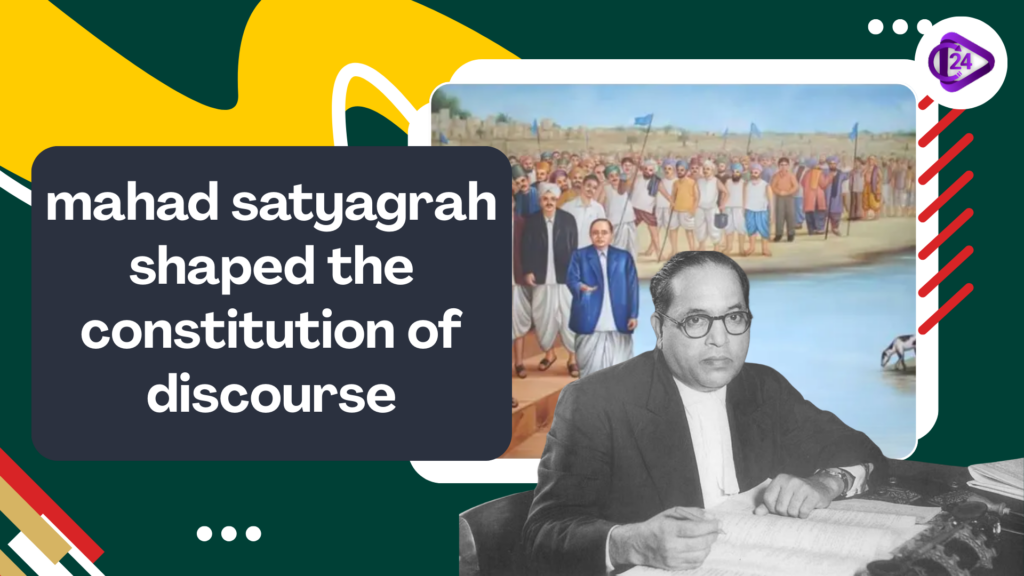
Mahad Satyagraha Shaped The Indian Constitution

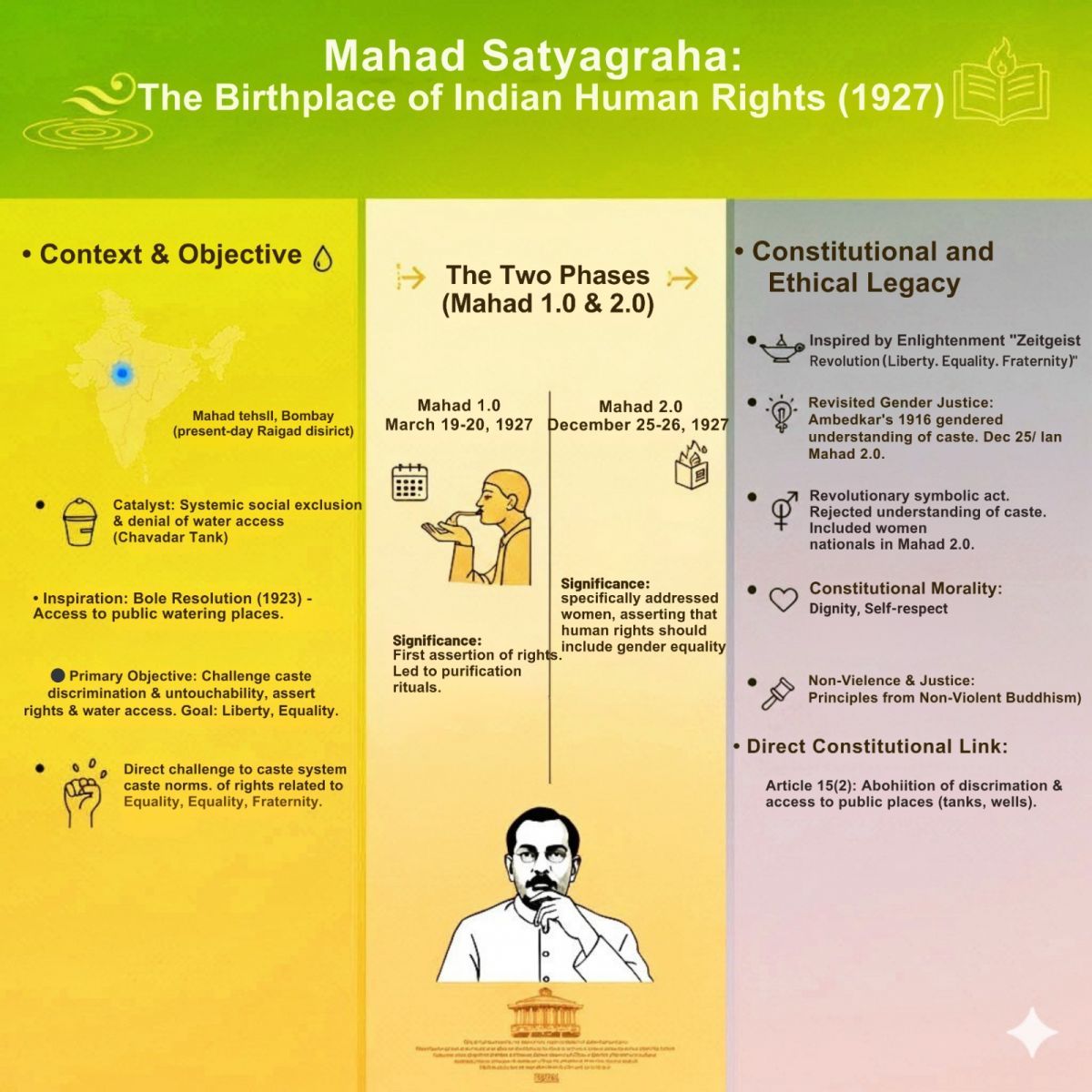
The Mahad Satyagraha was a historic movement against caste-based discrimination on 20 March 1927, led by B. R. Ambedkar. Its main goal was to take the right of Dalits to have a public water tank symbolising equality, dignity, and social justice. The movement was a strong affirmation of civil rights and a confrontation of the established social inequalities. It is generally considered to have been a milestone in the struggle of India against untouchability and discrimination. Conversely, no substantial historical data exists of a movement by the name of Madad Satyagraha, as none of the sources are credible or verifiable.

Significance of Mahad Satyagraha

  • Started the first significant Dalit civil rights movement headed by B. R. Ambedkar.

  • Claimed that oppressed communities had the right to use the public water sources.

  • Attacked the principles of caste-based discrimination in social places.

  • Prepared the groundwork for the future social justice movements in India.

  • Enhanced the concept of equality, dignity, and constitutional rights.

  • A leading social reformer through non-violent disobedience.

  • Later movements of legal and social emancipation were inspired.
Recently Asked Questions About Mahad Satyagraha

Exam Name / Year Question Options Correct Answer Explanation
SSC CGL 2023 Mahad Satyagraha of 1927 was led by whom? A) Gandhiji B) Ambedkar C) Jyotiba Phule D) Narayan Guru B) Ambedkar Ambedkar led the movement demanding equal access to public water sources.
RRB NTPC 2022 Mahad Satyagraha was mainly related to which issue? A) Tax protest B) Water access rights C) Land reforms D) Education equality B) Water access rights The movement sought Dalit rights to use the public tank at Mahad.
SSC CHSL 2023 In which year did the Mahad Satyagraha take place? A) 1919 B) 1927 C) 1932 D) 1942 B) 1927 The protest was held on 20 March 1927.
UPSC Prelims 2021 Mahad Satyagraha is considered significant because it: A) Started the Quit India Movement B) Initiated the civil rights struggle for Dalits C) Created the first Dalit political party D) Led to the Poona Pact B) Initiated the civil rights struggle for Dalits It was the first organised Dalit civil rights movement.

Expected Quiz for Upcoming Exams (Mahad Satyagraha)

Mahad Satyagraha is considered a milestone because it:

A) Started the Quit India Movement
B) Launched India’s constitutional reforms
C) Marked the beginning of the organised Dalit civil rights struggle
D) Introduced reservations in India
Answer: C) Marked the beginning of the organised Dalit civil rights struggle
Description: Ambedkar used non-violent protest to claim basic human rights for oppressed communities.

During the Mahad Satyagraha, Ambedkar publicly burned which text?

A) Manusmriti
B) Arthashastra
C) Bhagavad Gita
D) Upanishads
Answer: A) Manusmriti
Description: Ambedkar burned the Manusmriti to protest caste-based discrimination and oppressive social norms.

The Mahad Satyagraha strengthened what long-term vision of Ambedkar?

A) Economic liberalisation
B) Social equality and annihilation of caste
C) Federal restructuring of states
D) Nationalisation of industries
Answer: B) Social equality and annihilation of caste
Description: It shaped Ambedkar’s lifelong mission to build a society based on dignity, rights, and equality.

Complete Current Affairs 2025-26 Batch by Bhunesh sir

Conclusion 

Madad Satyagraha is an allegory that represents a broader fight for equality and dignity, which ultimately led to the adoption of the values incorporated in the Indian Constitution. It intensified the aspiration for constitutional rights championed by Dr. B. R. Ambedkar by arguing that social injustice is wrong and that people must fight it together, thereby reinforcing the values of justice, freedom, and equal rights for every citizen.
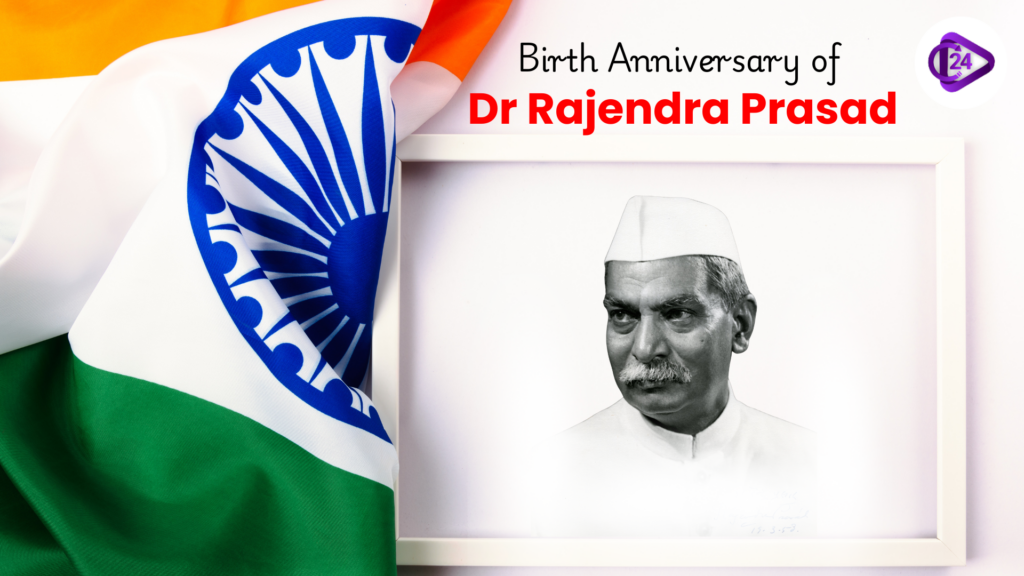

Birth Anniversary of Dr Rajendra Prasad

Dr. Rajendra Prasad was the first President of India and an eminent figure in the struggle to gain freedom within the country, and his birthday on 3rd December is celebrated. As a scholar, statesman, and social reformer, he was instrumental in instilling modern India, including chairing the Constituent Assembly, which had drafted the Indian Constitution. Dr. Prasad was a well-known, humble, honest, and committed person towards serving the country who fought his way through education, social justice, and unity as a nation. His life remains a source of inspiration to new generations of people to remember such values as discipline, honesty, and proper devotion to nation-building. The day is celebrated in India both with piety and educational activities.

Journey of India’s First President, Dr Rajendra Prasad

  • Born on 3rd December 1884 in Ziradei, Bihar.

  • Studied at Calcutta University; he was a lawyer and a scholar.

  • He was involved in the Indian independence movement headed by Mahatma Gandhi.

  • Chosen as President of the Constituent Assembly, which wrote the Indian Constitution.

  • The longest Indian Presidential tenure in history, 1950-1962.

  • Popular with his humility, simplicity, and patriotism.

  • Promotional education, social change, and nationalism.

  • Bharat Ratna in 1962, the most important civilian award in India.

  • The hero is to be remembered as the embodiment of integrity, discipline, and nation-building.

Most Important PYQs for Dr Rajendra Prasad

Exam Name / Year Question Options Correct Answer Explanation
SSC CGL 2022 Who was the first President of India? A) Jawaharlal Nehru
B) S. Radhakrishnan
C) Dr. Rajendra Prasad
D) C. Rajagopalachari
C) Dr. Rajendra Prasad Dr. Rajendra Prasad served as India’s first President from 1950 to 1962.
RRB NTPC 2021 Dr. Rajendra Prasad was awarded which civilian honour? A) Padma Vibhushan
B) Bharat Ratna
C) Padma Shri
D) Padma Bhushan
B) Bharat Ratna He received India’s highest civilian award in 1962.
UPSC Prelims 2020 When is the birth anniversary of Dr. Rajendra Prasad celebrated? A) 2nd October
B) 3rd December
C) 15th August
D) 26th January
B) 3rd December Marks the birthday of India’s first President.
SSC CHSL 2021 Dr. Rajendra Prasad presided over which important assembly? A) Constituent Assembly
B) Indian National Congress Session
C) Planning Commission
D) Interim Government
A) Constituent Assembly He was the President of the Constituent Assembly that drafted the Constitution.
RBI Grade B 2022 How many years did Dr. Rajendra Prasad serve as President of India? A) 5 years
B) 7 years
C) 12 years
D) 10 years
C) 12 years He served two terms, from 1950 to 1962, the longest tenure in Indian history.

Expected MCQs About Rajendra Prasad

Which books were authored by Dr. Rajendra Prasad?

A) India Divided

B) Atmakatha (Autobiography)

C) India’s Constitution and Democracy

D) Both A & B

Answer: D) Both A & B

Explanation: Authored several books, including his autobiography “Atmakatha” and political works.

During which movement did he boycott British courts?

A) Non-Cooperation Movement
B) Civil Disobedience Movement
C) Quit India Movement
D) Salt Satyagraha
Answer: A) Non-Cooperation Movement
Explanation: Followed Gandhi’s call to boycott British institutions.

Dr. Rajendra Prasad’s contribution to India can be summarised as:

A) Political leadership
B) Legal expertise
C) Social reform and nation-building
D) All of the above
Answer: D) All of the above
Explanation: His career spanned activism, governance, scholarship, and public service.

Conclusion

The life of the first President, freedom fighter, and nation-builder of India is commemorated on the 15th of June on the occasion of the birthday of India, celebrated in honor of Dr. Rajendra Prasad. It celebrates his lifetime commitment to justice, education, and social reforms, which continue to influence generations to act in terms of integrity, humility, and devotion to the country's development, democracy, and unity.

Postal Department Considers UPI-like ‘Labels’ for Addresses

The Postal Department is also coming up with a UPI-like digital address labeling system, based on its officially launched DIGIPIN program. It aims to substitute the long physical addresses with short, standardised, geo-coded digital identifiers, which are UPI IDs in nature. The Department of Posts states that the digital address codes will tighten the place, which is simple to check and share immediately, and across all platforms. The goal of this system is to enhance the precision of delivery, simplification of the logistics of e-commerce, and provide support for the reach of governmental services in both urban and rural areas. Incorporating digital labels, India can advance towards the development of a coherent, technology-driven addressing infrastructure under the scheme of its digital governance vision.

Key Highlights Points About Postal 

  • In 1854, the India Post was started and presented a new postal system when Lord Dalhousie introduced it.

  • It is governed by the Indian Post Office Act, 1898, and was revised with different amendments in subsequent years and modern digital changes.

  • The Dhurva Digital Address System is meant to offer digital addresses that are geo-coded and precise.

  • The India Post runs one of the largest networks of postal services in the world in cities, rural, and remote areas.

  • The main services are mail, banking, insurance, logistics, and support of digital public infrastructure.

Complete Current Affairs 2025-26 Batch by Bhunesh sir

Asked Questions About the Postal Department

Exam Name / Year Question Options Correct Answer Explanation
RRB NTPC 2021 India Post was originally established in which year? A) 1837 B) 1854 C) 1898 D) 1911 B) 1854 India’s modern postal system began in 1854 under Lord Dalhousie.
SSC CGL 2022 The Indian Postal system functions under which Act? A) IPC 1860 B) Post Office Act 1852 C) Indian Post Office Act 1898 D) Postal Amendment Act 1986 C) Indian Post Office Act 1898 This Act governs postal operations in India.
RRB Group D 2022 What is ‘Dhruva’ related to the Postal Department? A) Financial Scheme B) Digital Address System C) New Stamp Series D) Logistics App B) Digital Address System Dhruva is a digital, geo-coded addressing initiative.
SSC CHSL 2023 Which ministry controls the Department of Posts? A) Home Ministry B) Ministry of Finance C) Ministry of Communications D) Ministry of IT C) Ministry of Communications India Post works under the Department of Posts, Ministry of Communications.
UPSC Prelims 2020 India Post Payments Bank (IPPB) was launched in which year? A) 2015 B) 2016 C) 2017 D) 2018 D) 2018 IPPB was formally launched nationwide in September 2018.

Expected Question for Upcoming Exams (Indian Postal)

Dhruva, recently seen in the news, is related to which initiative of the Postal Department?

A) Financial inclusion

B) Geo-coded digital addressing

C) Railway parcel tracking

D) Aadhaar verification

Answer: B) Geo-coded digital addressing

Description: Dhruva is a digital address system providing precise, map-based location codes.

What is the main purpose of the newly introduced DIGIPIN system?

A) Replace Aadhaar

B) Assign digital geo-tagged location codes

C) Expand post office branches

D) Improve money order services

Answer: B) Assign digital geo-tagged location codes

Description: DIGIPIN provides a 10-digit precise digital address, improving delivery accuracy.

DIGIPIN is aligned with which national policy?

A) National IT Vision 2005

B) National Geospatial Policy 2022

C) Digital India 2014

D) Governance Reforms 2021

Answer: B) National Geospatial Policy 2022

Description: DIGIPIN supports India’s geospatial data framework under this policy.

Where was the first modern post office of India established?
A) Mumbai
B) Kolkata
C) Chennai
D) Delhi
Answer: B) Kolkata
Description: The first modern post office was set up in Kolkata during British rule.

Where is the world’s highest post office located?

A) Leh

B) Hikkim, Himachal Pradesh

C) Tawang

D) Kargil

Answer: B) Hikkim, Himachal Pradesh

Description: Hikkim Post Office (at ~4,440m) is officially the world’s highest functional post office.

Conclusion

The Postal Department to implement UPI-type digital labels is the biggest stride towards the introduction of modern, precise, and shareable addressing in India. The system can simplify deliveries, enhance the efficiency of the e-commerce market, and reinforce the digital governance to make the postal services quicker, smarter, and future-resilient through utilizing geo-coded identifiers such as Dhruva and DIGIPIN.


Frequently Asked Questions (FAQs)

The current affairs cover recent national and international events related to UPSC, SSC, Banking, Railways, and State PCS.

You need to read about the current affairs daily, and revise them every week and every month to keep them longer in your memory.

Yes, Class24 provides free downloadable Daily Current Affairs PDFs for easy revision.

Yes, you can practice MCQs and quizzes to boost your exam preparation.

Absolutely. The content is written in simple, easy-to-understand bilingual language suitable for beginners.

Go to class24.com and click on the current affairs section directly, where you find everything that you need.

ssc-toppers

Start Learning Today with Class24

Related current affairs

Class24 offers free video lectures for smart preparation, covering CGL, CPO, CHSL, MTS, and GD exams. Learn from expert faculty, revise concepts easily, practice with PYQs, and improve speed and accuracy through high-quality, exam-focused video lessons anytime, anywhere.

Get success in your hand. Start study anytime anywhere.

The journey becomes simple and enjoyable when you start taking interest in it. And through our app “Class24”, we will be your trusted partners in developing that interest.

Daily Quizzes
Mock Tests
Ongoing

No ongoing tests right now.