
Day: April 4, 2026
Myanmar’s New President

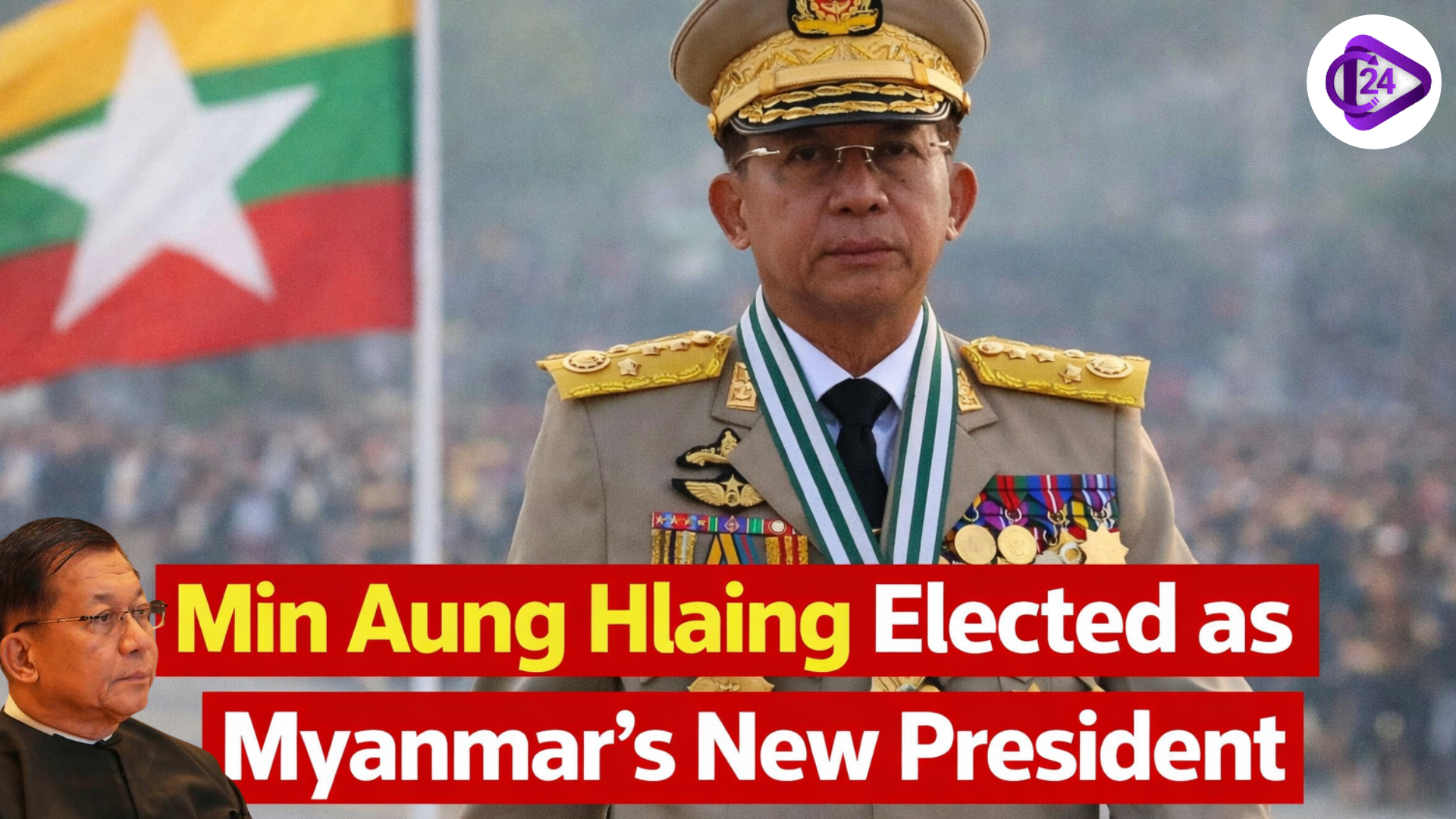
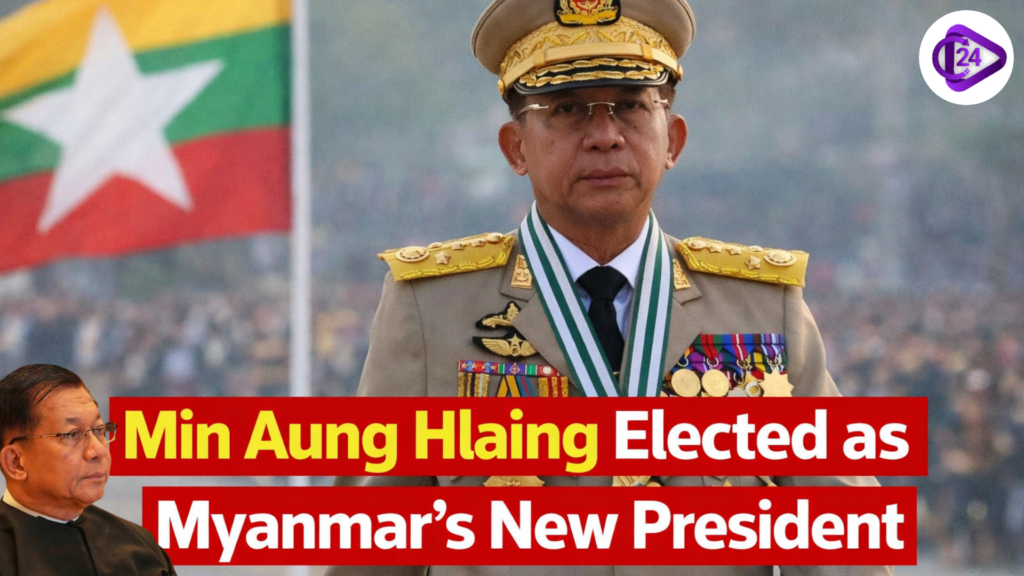
Min Aung Hlaing Elected as Myanmar’s New President

The new president of Myanmar is elected as Min Aung Hlaing, which is a major change in the politics of the country. His leadership is timely as the armed forces face a period of political challenges and international scrutiny. His appointment will have an effect on the governance and internal stability of Myanmar, as well as the external relations. The transfer indicates the ongoing presence of the military in the political system of the country and poses significant questions about the future of democracy and reform in Myanmar.

Political Implications of Leadership Change in Myanmar

  • The election of Min Aung Hlaing as president is an indication of military strength consolidated in the political system of Myanmar.
  • This leadership is indicative of the fact that the armed forces still dominated the process of governance and decision-making.
  • The emergence is against the background of political instabilities and civil strife in Myanmar.
  • It can affect Myanmar’s relationship with the international community and regional entities such as ASEAN.
  • The transition may inform future policies on democracy, human rights, and governance reforms.
  • The international responses will differ, and the concern relates to the democratic procedure and political freedom.
  • The change in leadership can affect economic policy and foreign investment in the country.
  • It draws attention to the changing political situation in which the military and civilian roles are still inseparable.
  • The challenge of domestic opposition and ethnic conflicts may remain a challenge to stable governance.
  • Around the globe, observers will closely monitor the implications of this development for the peace and security of the region.

Static GK Questions on Myanmar

  1. The capital of Myanmar is:
    A) Yangon
    B) Mandalay
    C) Naypyidaw
    D) Bago
    Answer: C) Naypyidaw
    Explanation: Naypyidaw became the capital in 2005, replacing Yangon.
  2. Which Indian state shares a border with Myanmar?
    A) Bihar
    B) Gujarat
    C) Manipur
    D) Punjab
    Answer: C) Manipur
    Explanation: Myanmar shares borders with Indian states including Manipur, Mizoram, Nagaland, and Arunachal Pradesh.
  3. Which river is the longest in Myanmar?
    A) Mekong
    B) Salween
    C) Irrawaddy
    D) Chindwin
    Answer: C) Irrawaddy
    Explanation: The Irrawaddy River is Myanmar’s main river and lifeline for transport and agriculture.
  4. Myanmar was formerly known as:
    A) Siam
    B) Burma
    C) Ceylon
    D) Kampuchea
    Answer: B) Burma
    Explanation: Myanmar was officially known as Burma until 1989.
  5. Myanmar is a member of which regional organisation?
    A) SAARC
    B) ASEAN
    C) EU
    D) SCO
    Answer: B) ASEAN
    Explanation: Myanmar joined ASEAN in 1997 to promote regional cooperation.
  6. Which sea lies to the west of Myanmar?
    A) South China Sea
    B) Arabian Sea
    C) Bay of Bengal
    D) Red Sea
    Answer: C) Bay of Bengal
    Explanation: Myanmar has a long coastline along the Bay of Bengal.
  7. The official language of Myanmar is:
    A) Thai
    B) Burmese
    C) Khmer
    D) Lao
    Answer: B) Burmese
    Explanation: Burmese is the official language used in administration and communication.
  8. Which of the following countries does NOT border Myanmar?
    A) China
    B) India
    C) Vietnam
    D) Thailand
    Answer: C) Vietnam
    Explanation: Myanmar borders China, India, Bangladesh, Thailand, and Laos.
  9. Who is a prominent political leader associated with Myanmar’s democracy movement?
    A) Hun Sen
    B) Aung San Suu Kyi
    C) Lee Hsien Loong
    D) Mahathir Mohamad
    Answer: B) Aung San Suu Kyi
    Explanation: Aung San Suu Kyi led the pro-democracy movement and won the Nobel Peace Prize.
  10. Myanmar’s economy is largely based on:
    A) IT sector
    B) Agriculture
    C) Automobile industry
    D) Space technology
    Answer: B) Agriculture
    Explanation: Agriculture is a major sector, employing a large part of the population.
  11. Which two water bodies near the Myanmar region are connected by the Strait of Malacca?
    A) Arabian Sea and Red Sea
    B) Bay of Bengal and South China Sea
    C) Pacific Ocean and Atlantic Ocean
    D) Black Sea and Mediterranean Sea
    Answer: B) Bay of Bengal and South China Sea
    Explanation: It is a key global trade route near Southeast Asia.
  12. Which important Indian project is associated with Myanmar?
    A) Sagarmala Project
    B) Kaladan Multi-Modal Transit Transport Project
    C) Bharatmala Project
    D) Project Mausam
    Answer: B) Kaladan Multi-Modal Transit Transport Project
    Explanation: This project connects India’s northeast to Myanmar’s Sittwe port.

IMD Issues Big Warning

Conclusion – Min Aung Hlaing Elected

The election of Min Aung Hlaing to the presidency is a turning point in the politics of Myanmar. It shows the still existing rule of the military in the government and provokes significant issues of democracy and stability. This development will have an impact on domestic policies and international relations because the entire world is still concentrated on the political future of Myanmar and its way to peace, reform, and inclusive governance.
Mission Mitra

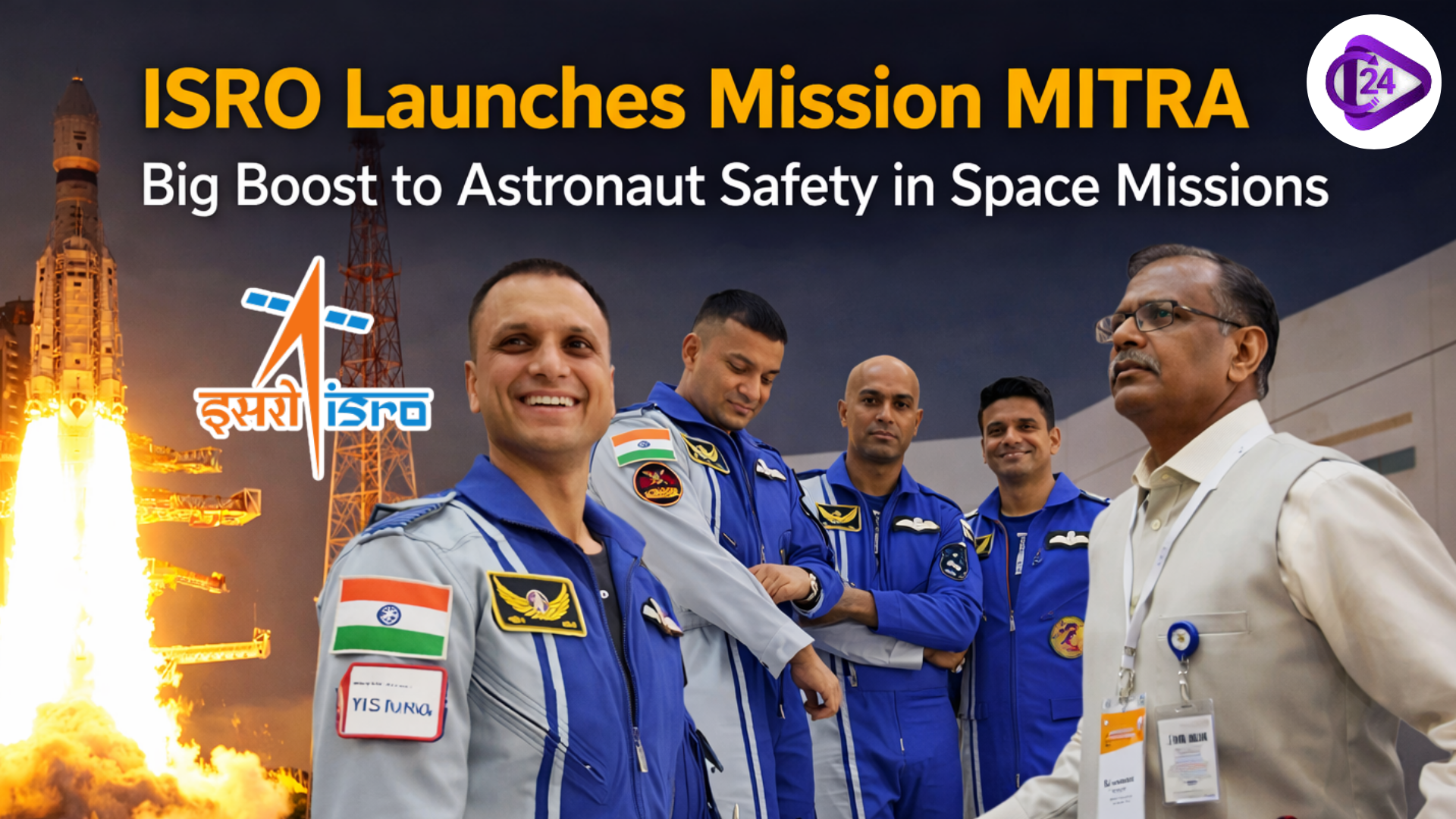
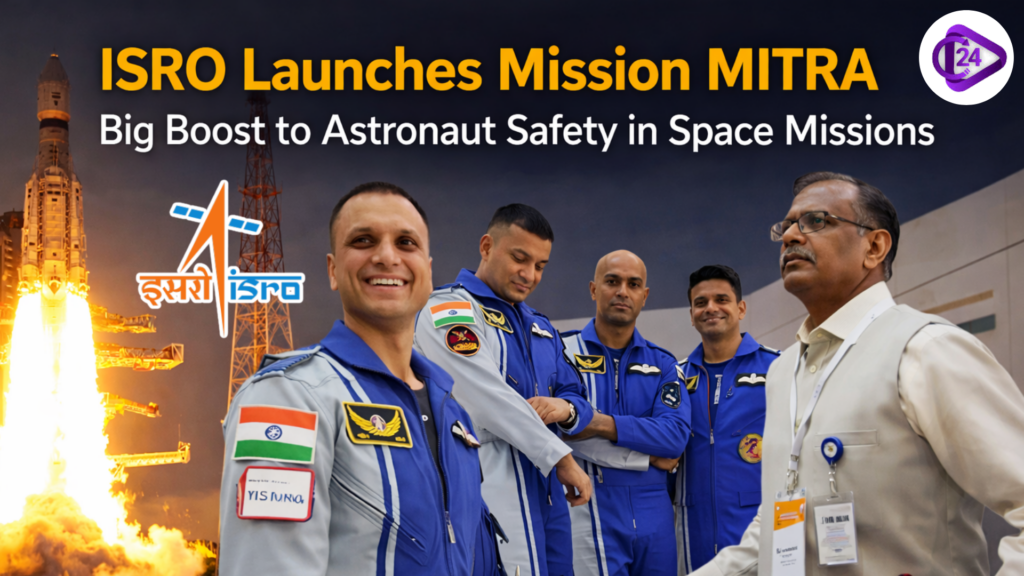
ISRO Launches Mission MITRA: Big Boost to Astronaut Safety in Space Missions

The Mission MITRA by the Indian Space Research Organisation has been a big step in providing astronaut safety in India. This program would improve the safety and health of the crew participants of human spaceflight programs, particularly in the ambitious Gaganyaan Mission. Mission MITRA focuses on sophisticated surveillance systems, emergency response, and real-time assistance technologies. It shows India’s commitment to building reliable, secure space exploration systems and enhancing its reputation as a leading spacefaring nation.

Key Features and Importance of Mission MITRA

  • Mission MITRA is a specific project, and its goal is to enhance the safety of astronauts in human spaceflight missions.
  • The Indian Space Research Organisation has developed it to assist crew members in harsh space conditions.
  • The mission is crucial in improving the safety structure of the Gaganyaan Mission.
  • It also has sophisticated monitoring devices that can monitor the health and vital parameters of astronauts.
  • The programme aims to provide rapid emergency response systems in unanticipated events within space.
  • Its goal is to reduce the risks of long-duration space missions and hostile space conditions.
  • Mission MITRA incorporates the usage of modern technologies in communication, navigation, and life support systems.
  • It enhances readiness for exploring human space and future missions to other planets.
  • The mission helps enhance the reliability and success rates of crewed space flights.
  • It indicates India’s increasing technological potential and safe space missions.

Recently Asked Questions on ISRO

1. Consider the following statements about Chandrayaan missions:

  1. Chandrayaan-1 carried NASA’s Moon Mineralogy Mapper.
  2. Chandrayaan-2 orbiter is still operational.
  3. Chandrayaan-3 had an orbiter module.

Which of the statements given above is/are correct?
A) 1 and 2 only
B) 2 and 3 only
C) 1 only
D) 1, 2 and 3

Answer: A) 1 and 2 only
Explanation: Chandrayaan-3 did not have an orbiter; it used Chandrayaan-2 orbiter for communication.

2. With reference to Aditya-L1, consider the following statements:

  1. It will be placed in a halo orbit around Lagrange Point L1.
  2. It is India’s first solar mission.
  3. It studies only the photosphere of the Sun.

Which of the statements given above is/are correct?
A) 1 and 2 only
B) 2 only
C) 1, 2 and 3
D) 1 only

Answer: A) 1 and 2 only
Explanation: Aditya-L1 studies multiple layers, like corona, chromosphere, not just photosphere.

3. Consider the following pairs (Mission : Objective):

  1. Astrosat: Multi-wavelength astronomy
  2. NavIC: Global navigation system
  3. RISAT: Radar imaging Earth observation

Which of the pairs given above is/are correctly matched?
A) 1 and 3 only
B) 1 only
C) 2 and 3 only
D) 1, 2 and 3

Answer: A) 1 and 3 only
Explanation: NavIC is regional, not global.

4. Consider the following statements about Gaganyaan Mission:

  1. It aims to send humans to Low Earth Orbit.
  2. It uses GSLV Mk II launch vehicle.
  3. It includes both crewed and uncrewed test flights.

Which of the statements given above is/are correct?
A) 1 and 3 only
B) 1 only
C) 2 and 3 only
D) 1, 2 and 3

Answer: A) 1 and 3 only
Explanation: Gaganyaan Mission uses LVM3 (GSLV Mk III), not Mk II.

5. Assertion (A) and Reason (R):

Assertion (A): PSLV is considered one of the most reliable launch vehicles of ISRO.
Reason (R): PSLV is mainly used for geostationary satellite launches.

  1. A) Both A and R are true, and R is correct explanation of A
    B) Both A and R are true, but R is not correct explanation
    C) A is true, R is false
    D) A is false, R is true

Answer: C) A is true, R is false
Explanation: The PSLV is reliable but mainly used for polar orbits, not geostationary.

6. Consider the following statements about XPoSat:

  1. It studies X-ray polarisation.
  2. It is India’s first mission dedicated to studying black holes.
  3. It helps understand high-energy cosmic sources.

Which of the statements given above is/are correct?
A) 1 and 3 only
B) 2 only
C) 1, 2 and 3
D) 1 only

Answer: A) 1 and 3 only
Explanation: XP OSat studies X-ray sources, not exclusively black holes.

7. With reference to launch vehicles, consider the following:

  1. PSLV – Polar orbit missions
  2. GSLV Mk III – Heavy payload missions
  3. SSLV – Small satellite launches

Which of the above is/are correctly matched?
A) 1 and 2 only
B) 2 and 3 only
C) 1, 2 and 3
D) 1 only

Answer: C) 1, 2 and 3
Explanation: All launch vehicles are correctly matched with their roles.

Artemis II Mission

Conclusion – ISRO Launches Mission MITRA

Mission MITRA represents an important step towards making the Indian Space Research Organisation safe and reliable in terms of astronauts and missions. It enhances the readiness of India for the exploration of space through supporting activities such as the Gaganyaan Mission. Mission MITRA will increase the safety of the crew in severe space environments by incorporating high-tech monitoring and emergency response mechanisms, which will further strengthen India as a responsible and competent spacefaring country, with high safety and innovation priorities.

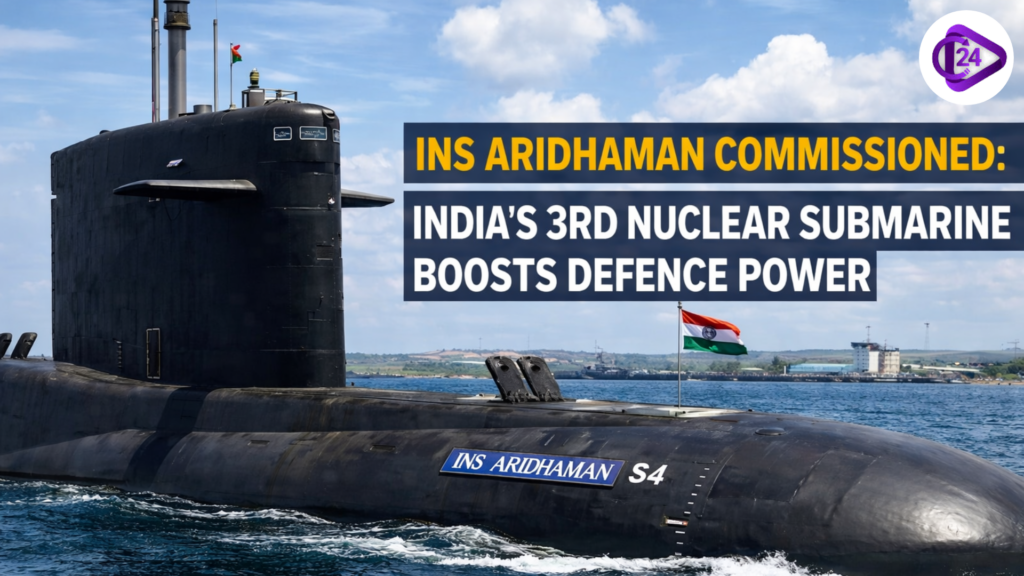
INS Aridhaman

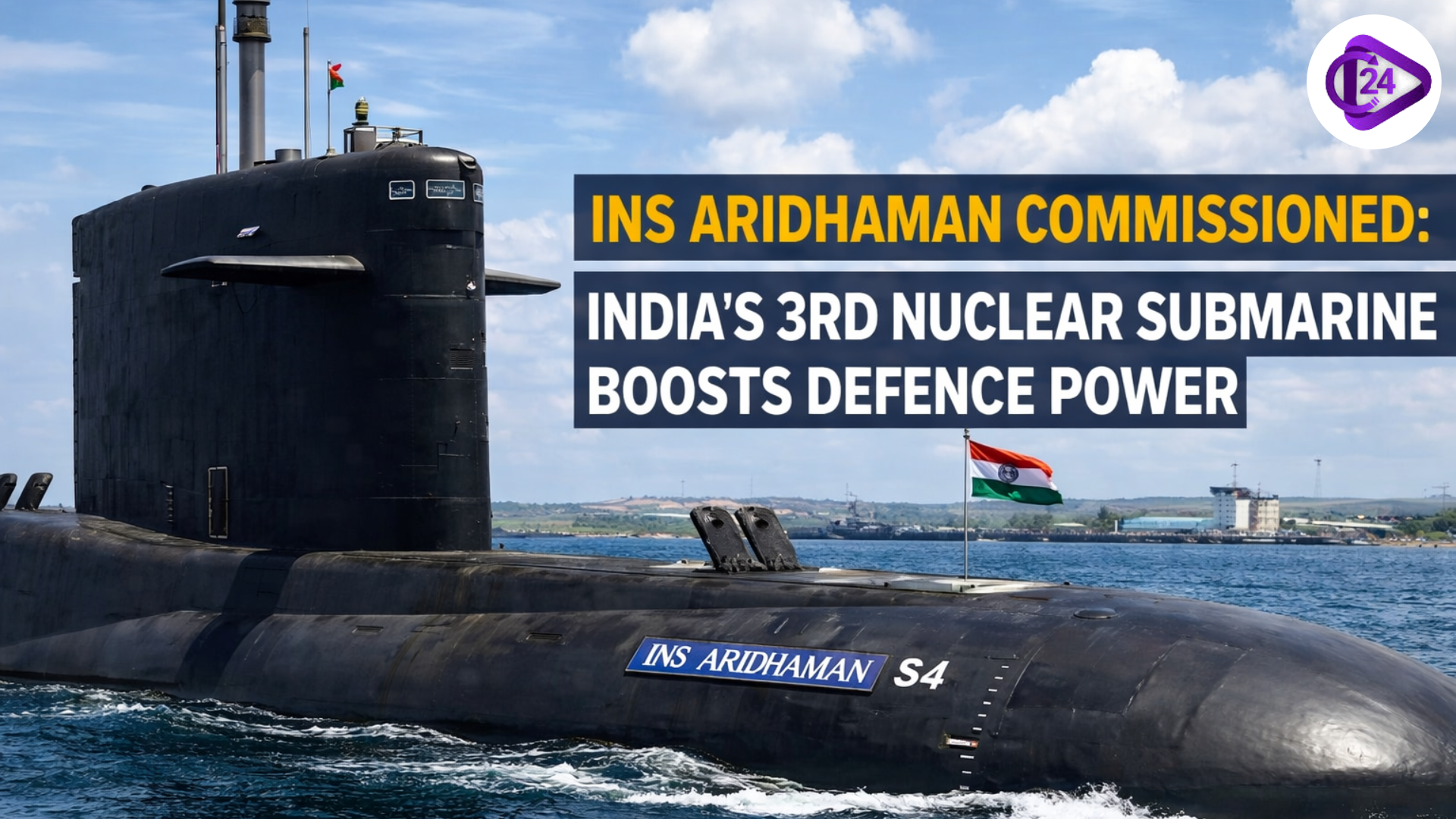
INS Aridhaman Commissioned: India’s 3rd Nuclear Submarine Boosts Defence Power

The commissioning of INS Aridhaman into the Indian Navy has been a big step towards enhancing the strategic defence capability of India. Being the third nuclear-powered ballistic missile submarine (SSBN) in the country, INS Aridhaman contributes greatly to the second-strike capability of India and makes it one of the select few countries with a developed nuclear deterrence system. This milestone was developed under India’s Indigenous Nuclear Submarine Program, highlighting the country’s increasing technological proficiency and investment in national security. Additionally, the maritime component of the Indian Nuclear Triad has been enhanced.

Key Features & Strategic Importance of INS Aridhaman

  • The third nuclear-powered ballistic missile submarine is INS Aridhaman, which enhances the country’s defence capabilities in terms of underwater defence and long-term strategic preparedness.
  • It enhances the maritime component of the Nuclear Triad, which guarantees a believable and survivable nuclear retaliation.
  • The submarine increases the second-strike capability of India, which will enable it to respond safely to any attack by the United States of America, even after a nuclear attack.
  • It is developed with high-level stealth capabilities and would have a low acoustic signature, which would be very difficult to detect by enemy sonar systems.
  • It has a nuclear reactor, which allows it to stay submerged for long periods of time, thus enabling long-range and continuous patrol missions.
  • It is also fitted with submarine-launched ballistic missiles (SLBMs), which have greatly increased the strategic strike capability of India.
  • It is the result of developing under the domestic Advanced Technology Vessel (ATV) programme in India, which indicates an increase in self-reliance in defence production.
  • The submarine is very flexible in its operations, as it can deploy to large areas of the ocean, such as the Indo-Pacific.
  • It improves the general strength and deterrence power of the Indian Navy during contemporary naval war.
  • It increases the geopolitical status of India by placing it among the few countries having advanced nuclear submarines.

MCQs on Indian Submarine Chronology

  1. India’s first indigenously built nuclear-powered ballistic missile submarine is:
    A) INS Arighat
    B) INS Chakra
    C) INS Arihant
    D) INS Aridhaman
    Answer: C) INS Arihant
    Explanation: INS Arihant is India’s first indigenously built SSBN, commissioned in 2016, thereby completing the nuclear triad.
  2. INS Arihant was commissioned into the Indian Navy in which year?
    A) 2014
    B) 2015
    C) 2016
    D) 2017
    Answer: C) 2016
    Explanation: INS Arihant was officially commissioned in August 2016, marking a major milestone in India’s defence capability.
  3. Which is the second nuclear-powered ballistic missile submarine of India?
    A) INS Chakra
    B) INS Arighat
    C) INS Aridhaman
    D) INS Kalvari
    Answer: B) INS Arighat
    Explanation: INS Arighat is the second SSBN, launched in 2017 and part of the Arihant-class program.
  4. INS Aridhaman is classified as which type of submarine?
    A) Diesel-electric submarine
    B) Attack submarine
    C) Ballistic missile submarine
    D) Patrol submarine
    Answer: C) Ballistic missile submarine
    Explanation: INS Aridhaman is an SSBN, designed to carry nuclear-tipped ballistic missiles.
  5. INS Chakra, leased by India, belongs to which country?
    A) USA
    B) France
    C) Russia
    D) UK
    Answer: C) Russia
    Explanation: INS Chakra is a nuclear-powered attack submarine leased from Russia and belongs to the Akula class.
  6. INS Kalvari belongs to which class of submarines?
    A) Arihant Class
    B) Scorpene Class
    C) Akula Class
    D) Kilo Class
    Answer: B) Scorpene Class
    Explanation: INS Kalvari is the first submarine of the Scorpene (Kalvari) class, inducted in 2017.
  7. India’s nuclear submarine development program is known as:
    A) Project Seabird
    B) ATV Program
    C) Mission Sagar
    D) Project Varsha
    Answer: B) ATV Program
    Explanation: The Advanced Technology Vessel (ATV) program is responsible for developing India’s nuclear submarines.
  8. Which submarine is associated with completing India’s nuclear triad?
    A) INS Chakra
    B) INS Arihant
    C) INS Kalvari
    D) INS Sindhughosh
    Answer: B) INS Arihant
    Explanation: INS Arihant enabled India to achieve a credible nuclear triad with land, air, and sea-based capabilities.
  9. INS Kalvari was commissioned in which year?
    A) 2015
    B) 2016
    C) 2017
    D) 2018
    Answer: C) 2017
    Explanation: INS Kalvari was commissioned in December 2017 as part of India’s modern diesel-electric submarine fleet.
  10. Which of the following submarines is diesel-electric powered?
    A) INS Arihant
    B) INS Arighat
    C) INS Chakra
    D) INS Kalvari
    Answer: D) INS Kalvari
    Explanation: INS Kalvari is a diesel-electric submarine, unlike the Arihant class and Chakra, which are nuclear-powered.


India Hosts IONS Maritime Exercise 2026 in Kochi Port

Conclusion – INS Aridhaman

The launching of INS Arihant is a major move towards enhancing the maritime defence of India as well as nuclear deterrence. It makes the Nuclear Triad of the country more credible, as it provides a second-strike capability. It is an Indian Navy unit and is indicative of the increasing self-sufficiency of India in sophisticated defence technology, and enhances its strategic location in the Indo-Pacific region, which strengthens national security and world image.

Frequently Asked Questions (FAQs)

The current affairs cover recent national and international events related to UPSC, SSC, Banking, Railways, and State PCS.

You need to read about the current affairs daily, and revise them every week and every month to keep them longer in your memory.

Yes, Class24 provides free downloadable Daily Current Affairs PDFs for easy revision.

Yes, you can practice MCQs and quizzes to boost your exam preparation.

Absolutely. The content is written in simple, easy-to-understand bilingual language suitable for beginners.

Go to class24.com and click on the current affairs section directly, where you find everything that you need.

ssc-toppers

Start Learning Today with Class24

Related current affairs

Class24 offers free video lectures for smart preparation, covering CGL, CPO, CHSL, MTS, and GD exams. Learn from expert faculty, revise concepts easily, practice with PYQs, and improve speed and accuracy through high-quality, exam-focused video lessons anytime, anywhere.

Get success in your hand. Start study anytime anywhere.

The journey becomes simple and enjoyable when you start taking interest in it. And through our app “Class24”, we will be your trusted partners in developing that interest.

Daily Quizzes
Mock Tests
Ongoing

No ongoing tests right now.