
Day: March 18, 2026
Tamil Nadu science funding

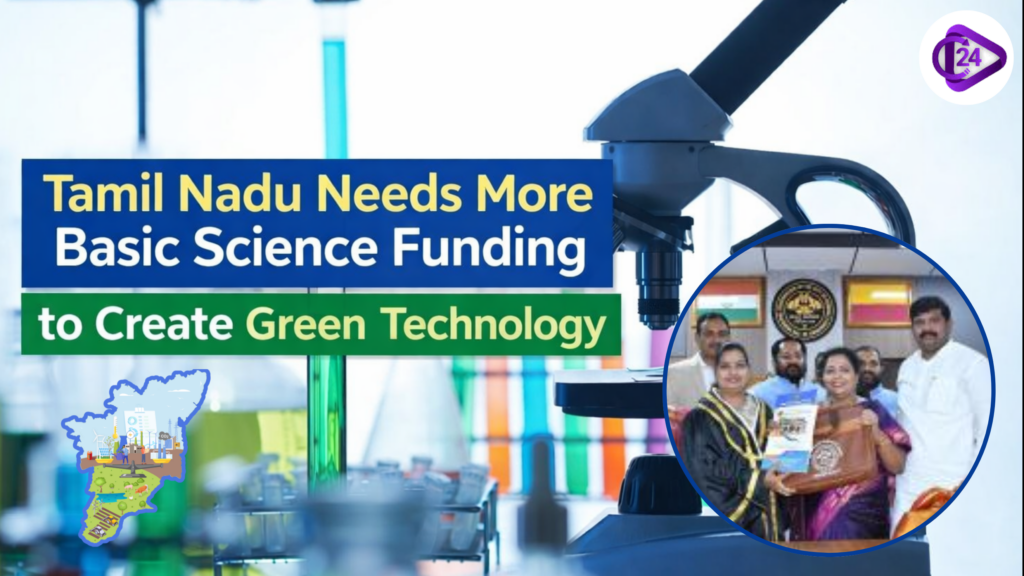
Tamil Nadu Needs More Basic Science Funding to Create Green Technology

Tamil Nadu is emerging as a key hub for innovation and sustainable development in India, but experts emphasise that greater investment in basic science research is essential to accelerate the transition toward green technology. While the state has made notable progress in sectors like renewable energy, electric mobility, and climate innovation, the foundation of such advancements lies in strong scientific research. Institutions such as the Indian Institute of Technology Madras and the Council of Scientific and Industrial Research have highlighted the need for long-term funding to support fundamental studies in physics, chemistry, and environmental sciences. Strengthening this base will enable breakthroughs in clean energy, sustainable materials, and climate resilience technologies. Increased public and private investment can position Tamil Nadu as a leader in green innovation, contributing to India’s broader goals of sustainability, energy security, and carbon reduction.

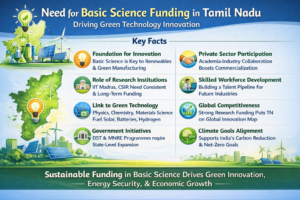
Key Facts – Need for Basic Science Funding in Tamil Nadu

  • Foundation for Innovation: Basic science research forms the backbone of applied technologies, including renewable energy and green manufacturing.
  • Role of Research Institutions: Institutes like the Indian Institute of Technology Madras are actively working on sustainable technologies, but require consistent funding support.
  • Link to Green Technology: Advances in physics, chemistry, and materials science directly contribute to innovations in solar panels, batteries, and hydrogen energy.
  • Government Initiatives: Programmes under the Department of Science and Technology and the Ministry of New and Renewable Energy aim to promote clean energy research, but need expansion at the state level.
  • Private Sector Participation: Increased collaboration between academia and industry can accelerate the commercialisation of green solutions.
  • Skilled Workforce Development: Investment in basic science helps build a strong talent pipeline for future green industries.
  • Global Competitiveness: Strong research funding enables Tamil Nadu to compete with global innovation hubs in sustainable technology.
  • Climate Goals Alignment: Enhanced funding supports India’s commitments to reduce carbon emissions and achieve net-zero targets.

Asked the previous year’s Question and Answers

1. UPSC Prelims 2017

With reference to South Indian history, which of the following statements is/are correct regarding Chola administration in Tamil Nadu?
Options:
A) Village assemblies were called Sabha and Ur
B) Land revenue was the main source of income
C) Both A and B
D) Neither A nor B
Answer: C) Both A and B
Explanation: Cholas had a well-developed local self-government system (Sabha & Ur), and land revenue was the primary source of income.

2. UPSC Prelims 2016

Which classical dance form originated in Tamil Nadu?
Options:
A) Kathak
B) Bharatanatyam
C) Odissi
D) Manipuri
Answer: B) Bharatanatyam
Explanation: Bharatanatyam is one of the oldest classical dance forms, originating in Tamil Nadu temples.

3. SSC CGL 2020

The Brihadeeswara Temple, a UNESCO World Heritage Site, is located in which state?
Options:
A) Karnataka
B) Tamil Nadu
C) Andhra Pradesh
D) Kerala
Answer: B) Tamil Nadu
Explanation: Brihadeeswara Temple at Thanjavur was built by Rajaraja Chola I and is a masterpiece of Dravidian architecture.

4. RRB NTPC 2019

The Kaveri River primarily flows through which of the following states?
Options:
A) Tamil Nadu and Karnataka
B) Kerala and Andhra Pradesh
C) Maharashtra and Gujarat
D) Odisha and West Bengal
Answer: A) Tamil Nadu and Karnataka
Explanation: The Kaveri originates in Karnataka and flows into Tamil Nadu before draining into the Bay of Bengal.

5. SSC CHSL 2018

Which Tamil Nadu city is known as the “Gateway of South India”?
Options:
A) Madurai
B) Chennai
C) Coimbatore
D) Tiruchirappalli
Answer: B) Chennai
Explanation: Chennai is a major cultural, economic, and transport hub in South India.

6. RRB Group D 2018

Which river forms the Hogenakkal Falls in Tamil Nadu?
Options:
A) Krishna
B) Godavari
C) Kaveri
D) Mahanadi
Answer: C) Kaveri
Explanation: Hogenakkal Falls, often called the “Niagara of India,” is formed by the Kaveri River.

7. UPSC Prelims 2014

Which of the following temples is associated with the Dravidian style of architecture?
Options:
A) Sun Temple, Konark
B) Meenakshi Temple, Madurai
C) Khajuraho Temples
D) Sanchi Stupa
Answer: B) Meenakshi Temple, Madurai
Explanation: The Meenakshi Temple is a prime example of Dravidian architecture found in Tamil Nadu.

8. SSC MTS 2019

Which river is known as the “Ganga of the South” in Tamil Nadu?
Options:
A) Godavari
B) Krishna
C) Kaveri
D) Narmada
Answer: C) Kaveri
Explanation: The Kaveri River is considered sacred and is often called the “Ganga of the South.”

9. RRB NTPC 2021

Where does the Kaveri River finally drain?
Options:
A) Arabian Sea
B) Bay of Bengal
C) Indian Ocean
D) Persian Gulf
Answer: B) Bay of Bengal
Explanation: The river forms a delta in Tamil Nadu and drains into the Bay of Bengal.

10. SSC CGL 2017

Mamallapuram (Mahabalipuram), famous for rock-cut temples, is located in which state?
Options:
A) Odisha
B) Tamil Nadu
C) Kerala
D) Andhra Pradesh
Answer: B) Tamil Nadu
Explanation: Mamallapuram, a UNESCO site, was developed during the Pallava dynasty in Tamil Nadu.
Pi Day 2026: Interesting Facts and Historical Background

Conclusion 

Strengthening basic science funding in Tamil Nadu is crucial for advancing green technology and sustainable development. A strong research base will drive innovation in clean energy, climate solutions, and eco-friendly industries. By investing in fundamental sciences, the state can enhance global competitiveness, support India’s sustainability goals, and build a resilient, future-ready economy.
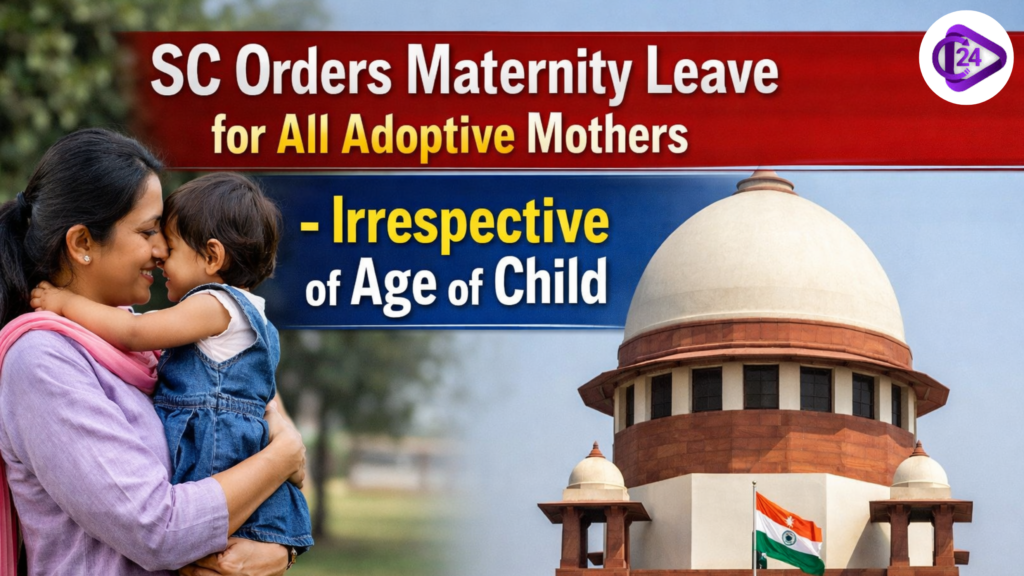

SC Orders Maternity Leave for All Adoptive Mothers

SC Orders Maternity Leave for All Adoptive Mothers – Irrespective of Age of Child

The Supreme Court of India has issued a landmark ruling granting maternity leave to all adoptive mothers, regardless of the child’s age. Previously, the Code on Social Security, 2020, limited maternity benefits to mothers adopting children below three months old. The Court declared this restriction discriminatory and unconstitutional, affirming that motherhood extends beyond biological birth. Under the new directive, every adoptive or commissioning mother is entitled to 12 weeks of maternity leave from the day the child is handed over. The judgement emphasises that denying leave based on the child’s age violates Article 14 (Equality) and Article 21 (Personal liberty and dignity) of the Constitution. Justices JB Pardiwala and R Mahadevan highlighted the importance of recognising adoptive motherhood and recommended that the government consider implementing paternity leave as a social security benefit. This decision strengthens gender equality and parental rights, ensuring adoptive mothers receive equal protection in the workplace nationwide.

Key Highlights – SC Ruling on Adoptive Mothers’ Maternity Leave

  • No Age Restriction: Adoptive mothers are now eligible for maternity leave regardless of the child’s age.

  • 12 Weeks Leave: Leave entitlement starts from the date the child is handed over.

  • Constitutional Protection: Age-based limitations violated Articles 14 & 21.

  • Recognition of Motherhood: The court affirmed that adoptive motherhood carries the same responsibilities as biological motherhood.

  • Paternity Leave Suggestion: Bench urged the government to consider a legal provision for fathers.

  • Workplace Equality: Promotes inclusive parental benefits and strengthens gender equality in employment.

Best PYQs on the Supreme Court

1. UPSC Prelims 2024

The Supreme Court of India’s advisory jurisdiction is mentioned under which article?

Options:

A) Article 130

B) Article 138

C) Article 143

D) Article 147

Answer: C) Article 143

Explanation: Article 143 allows the President to seek the Supreme Court’s opinion on legal or public importance matters.

2. UPSC Prelims 2024

The right to privacy is protected under which article of the Constitution?

Options:

A) Article 14

B) Article 19

C) Article 21

D) Article 25

Answer: C) Article 21

Explanation: The Supreme Court declared the right to privacy as part of Article 21 (Right to Life and Personal Liberty) in the Puttaswamy judgment.

3. SSC CGL 2022

Which Article states that the law declared by the Supreme Court is binding on all courts in India?

Options:

A) Article 140

B) Article 141

C) Article 142

D) Article 144

Answer: B) Article 141

Explanation: Article 141 ensures uniformity in law by making Supreme Court judgments binding across all courts.

4. RRB NTPC 2021

Under which Article is the Supreme Court of India established?

Options:

A) Article 123

B) Article 124

C) Article 131

D) Article 136

Answer: B) Article 124

Explanation: Article 124 provides for the establishment, composition, and appointment of judges of the Supreme Court.

5. SSC CHSL 2020

Under which article can a citizen directly approach the Supreme Court for the enforcement of fundamental rights?

Options:

A) Article 19

B) Article 21

C) Article 32

D) Article 226

Answer: C) Article 32

Explanation: Article 32 is called the “heart and soul of the Constitution” as it allows individuals to directly approach the Supreme Court for rights enforcement.

6. RRB Group D 2019

Which article gives the Supreme Court the power to do “complete justice”?

Options:

A) Article 136

B) Article 141

C) Article 142

D) Article 144

Answer: C) Article 142

Explanation: Article 142 empowers the Supreme Court to pass any order necessary to ensure complete justice in a case.

7. SSC CGL 2018

Under which article does the President of India seek advice from the Supreme Court?

Options:

A) Article 141

B) Article 142

C) Article 143

D) Article 144

Answer: C) Article 143

Explanation: Article 143 provides advisory jurisdiction where the president can refer matters to the Supreme Court.

8. RRB NTPC 2017

Which article deals with the original jurisdiction of the Supreme Court?

Options:

A) Article 129

B) Article 131

C) Article 136

D) Article 137

Answer: B) Article 131

Explanation: Article 131 gives the Supreme Court exclusive power to hear disputes between the Centre and the States.

9. SSC MTS 2019

Under which article can the Supreme Court review its own judgement?

Options:

A) Article 137

B) Article 138

C) Article 139

D) Article 140

Answer: A) Article 137

Explanation: Article 137 allows the Supreme Court to review its own judgements or orders.

10. UPSC Prelims 2016

Under which article does the Supreme Court have appellate jurisdiction in constitutional cases?

Options:

A) Article 132

B) Article 133

C) Article 134

D) Article 136

Answer: A) Article 132

Explanation: Article 132 provides appellate jurisdiction of the Supreme Court in constitutional matters from the High Courts.

New Parasitic Wasp Species Discovered in Assam Tea Estate

Conclusion

The Supreme Court’s ruling on maternity leave for adoptive mothers marks a progressive step toward equality and inclusive workplace policies. By removing age-based restrictions, it reinforces constitutional values of dignity and non-discrimination. This decision not only strengthens parental rights but also promotes a more humane and supportive framework for adoptive families across India.

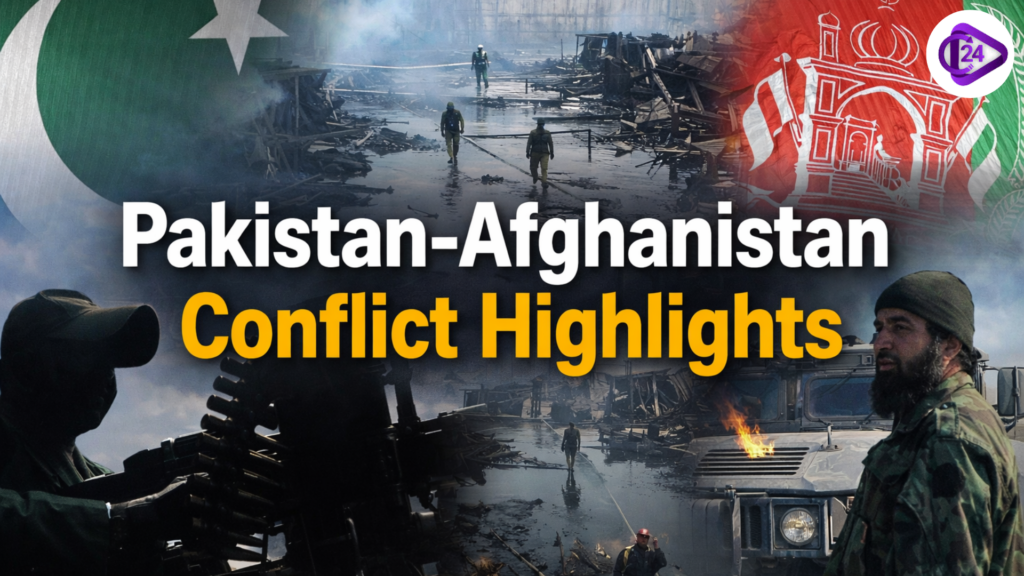
Pakistan-Afghanistan Conflict Highlights: Security Challenges and Diplomatic Efforts

The conflict between Pakistan and Afghanistan has escalated sharply in 2026, creating one of the most pressing security challenges in South Asia. Tensions intensified after Pakistan launched airstrikes inside Afghan territory, claiming they targeted militant bases along the Durand Line. Afghan authorities strongly reject these claims, arguing that strikes have hit civilian areas, including hospitals and residential zones, raising concerns about violations of sovereignty and international law. Hundreds of civilians have reportedly died or been injured, and thousands have been displaced. This crisis has also raised alarm among regional and global actors, including the United Nations, which has called for restraint and thorough investigations. Meanwhile, China and other diplomatic actors have attempted to mediate, urging both countries to engage in dialogue and prevent further escalation. The situation reflects longstanding mistrust, unresolved security disputes, and challenges in counter‑terrorism cooperation between Islamabad and Kabul.

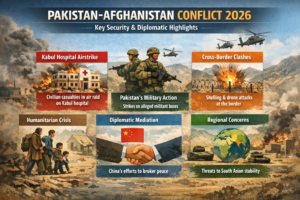
Key Security and Diplomatic Highlights of Pakistan-Afghanistan Conflict

  • Kabul Hospital Airstrike: In March 2026, the Omid Addiction Treatment Hospital in Kabul was struck by air raids, reportedly killing hundreds. Afghan authorities described this as a civilian-targeted attack, while Pakistan asserted that militant infrastructure was targeted.
  • Pakistan’s Military Stance: Pakistan has characterised its operations as an “open war” against militants operating from Afghan soil, particularly targeting groups like the Tehrik‑i‑Taliban Pakistan (TTP). Afghanistan has denied harbouring militants and condemned repeated cross-border strikes.
  • Cross-Border Clashes: There have been exchanges of fire, including drone strikes and artillery incidents, along the disputed border. Civilians living near the border are facing increased risk and displacement.
  • Humanitarian Impact: Tens of thousands of people have been displaced due to fighting. Trade, transport, and access to essential services have been disrupted, worsening economic and social hardships.
  • Diplomatic Efforts: China has played a mediating role, urging both Pakistan and Afghanistan to stop hostilities and engage in talks. International organisations, including the UN, have called for investigations into civilian casualties and emphasised adherence to humanitarian law.
  • Regional Implications: The ongoing conflict threatens broader South Asian stability. Neighbouring countries are monitoring the situation closely, highlighting the urgent need for effective border management and counter-terrorism cooperation.

Diplomatic Developments between India and Afghanistan

India and Afghanistan share a long-standing strategic partnership, underpinned by historical, cultural, and economic ties. Over the past two decades, India has emerged as one of Afghanistan’s largest development partners, investing in infrastructure projects such as the Zaranj–Delaram highway, Salma (Afghan-India Friendship) Dam, and numerous healthcare and educational initiatives. These projects have strengthened bilateral cooperation and enhanced regional stability.

In recent years, India has actively engaged with Afghanistan through diplomatic channels, supporting the Intra-Afghan peace talks and maintaining a technical presence in Kabul despite political uncertainties. Even after the Taliban’s takeover in 2021, India has emphasised humanitarian assistance and continued dialogue to safeguard its strategic interests.

Bilateral relations also focus on trade and connectivity, with initiatives like the Chabahar Port corridor, linking Afghanistan to India via Iran, promoting economic integration and regional connectivity. Both nations have prioritised counter-terrorism cooperation, peace-building, and capacity development to address security challenges.

These ongoing diplomatic developments between India and Afghanistan reflect India’s commitment to a stable and prosperous Afghanistan, highlighting the importance of continued collaboration in security, trade, and humanitarian domains.

IISc Professor Arpita Patra Summits World’s Highest Volcano

Conclusion – Pakistan-Afghanistan Conflict Highlights

The Pakistan–Afghanistan conflict underscores persistent regional security challenges, cross-border tensions, and humanitarian concerns. Civilian casualties and militant activities have escalated hostilities, prompting international calls for restraint. Diplomatic efforts, including mediation by China and advocacy by the United Nations, remain crucial to de-escalation, stability, and fostering long-term peace between both nations while safeguarding regional strategic interests.

Frequently Asked Questions (FAQs)

The current affairs cover recent national and international events related to UPSC, SSC, Banking, Railways, and State PCS.

You need to read about the current affairs daily, and revise them every week and every month to keep them longer in your memory.

Yes, Class24 provides free downloadable Daily Current Affairs PDFs for easy revision.

Yes, you can practice MCQs and quizzes to boost your exam preparation.

Absolutely. The content is written in simple, easy-to-understand bilingual language suitable for beginners.

Go to class24.com and click on the current affairs section directly, where you find everything that you need.

ssc-toppers

Start Learning Today with Class24

Related current affairs

Class24 offers free video lectures for smart preparation, covering CGL, CPO, CHSL, MTS, and GD exams. Learn from expert faculty, revise concepts easily, practice with PYQs, and improve speed and accuracy through high-quality, exam-focused video lessons anytime, anywhere.

Get success in your hand. Start study anytime anywhere.

The journey becomes simple and enjoyable when you start taking interest in it. And through our app “Class24”, we will be your trusted partners in developing that interest.

Daily Quizzes
Mock Tests
Ongoing

No ongoing tests right now.