
Day: March 16, 2026

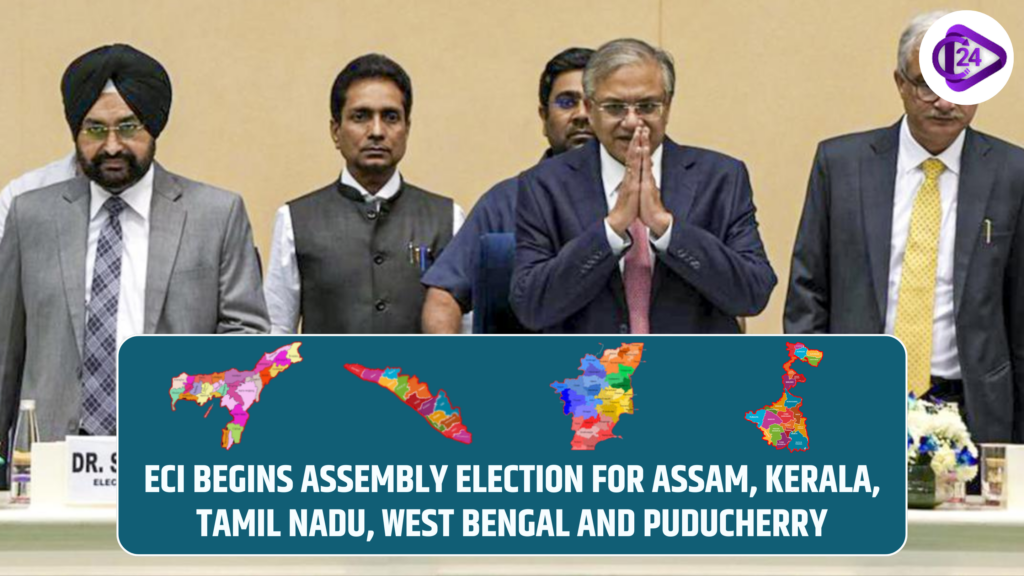
ECI Announces Assembly Elections in 4 States and Puducherry

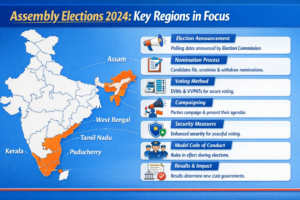
The Election Commission of India has begun the process for the Assembly Elections in several key regions including Assam, Kerala, Tamil Nadu, West Bengal, and the Union Territory of Puducherry. These elections are significant as they determine the formation of new state governments and shape regional political dynamics. The announcement of the election schedule marks the start of the democratic process, including candidate nominations, campaigning, and voting phases. Political parties and voters across these states are now preparing for the electoral process, which plays a crucial role in strengthening democratic governance in India.

Key Highlights of the Assembly Election Process

  • The election process is conducted by the Election Commission of India, which is responsible for ensuring free, fair, and transparent elections across the country.

  • Assembly elections will take place in five regions: Assam, Kerala, Tamil Nadu, West Bengal, and Puducherry, each with its own political landscape and electoral significance.

  • The election schedule includes important stages such as notification of elections, filing of nominations by candidates, scrutiny of nomination papers, withdrawal of candidatures, and the final voting date.

  • The elections will be conducted using Electronic Voting Machines (EVMs) along with Voter Verifiable Paper Audit Trail (VVPAT) systems to ensure transparency and voter confidence.

  • Security arrangements are strengthened during the election period, especially in sensitive constituencies, to maintain law and order and ensure peaceful voting.

  • Political parties will actively campaign across the states, presenting their manifestos and development agendas to attract voters.

  • The Model Code of Conduct comes into effect immediately after the announcement of the election schedule, regulating government announcements and campaign practices.

  • Voters play a crucial role in the democratic process by participating in the elections and choosing their representatives in the legislative assemblies.

  • The results of these elections will determine the formation of new state governments and influence regional and national political trends.

PYQs – Assembly Elections

Exam Year Question Answer
UPSC Prelims 2017 The Election Commission of India conducts elections to which of the following? (A) Lok Sabha (B) State Legislative Assemblies (C) President and Vice-President (D) All of the above All of the above
SSC CGL 2019 The elections to the State Legislative Assembly are conducted by which authority? (A) State Government (B) Election Commission of India (C) Supreme Court (D) Parliament Election Commission of India
SSC CHSL 2018 The normal term of a State Legislative Assembly in India is: (A) 4 years (B) 5 years (C) 6 years (D) 7 years 5 years
RRB NTPC 2019 Which article of the Constitution deals with the duration of State Legislative Assemblies? (A) Article 170 (B) Article 172 (C) Article 356 (D) Article 368 Article 172
UPSC Prelims 2014 The minimum age required to contest an election to the State Legislative Assembly is: (A) 21 years (B) 25 years (C) 30 years (D) 35 years 25 years
SSC GD 2021 Which body conducts elections to the State Legislative Assembly in India? (A) State Election Commission (B) Election Commission of India (C) Parliament (D) Supreme Court Election Commission of India
State PCS (UPPCS) 2016 The maximum strength of a State Legislative Assembly can be: (A) 400 (B) 450 (C) 500 (D) 550 500
SSC MTS 2020 Who can dissolve the State Legislative Assembly before the completion of its term? (A) Prime Minister (B) President (C) Governor (D) Speaker Governor
RRB Group-D 2018 Which of the following represents the lower house of the State Legislature? (A) Legislative Council (B) Legislative Assembly (C) Rajya Sabha (D) Lok Sabha Legislative Assembly
UPSC Prelims 2019 Which constitutional authority is responsible for superintendence, direction and control of elections to Parliament and State Legislatures? (A) President (B) Prime Minister (C) Election Commission of India (D) Supreme Court Election Commission of India

India’s Supreme Court Allows First-Ever Passive Euthanasia Death

Conclusion – ECI Begins Assembly Election for Four States

The beginning of the assembly election process marks an important phase in India’s democratic system. Conducted by the Election Commission of India, these elections allow citizens to choose their representatives and shape state governments. Transparent procedures, voter participation, and fair campaigning remain essential to ensure credible outcomes and strengthen democratic governance across the states involved.
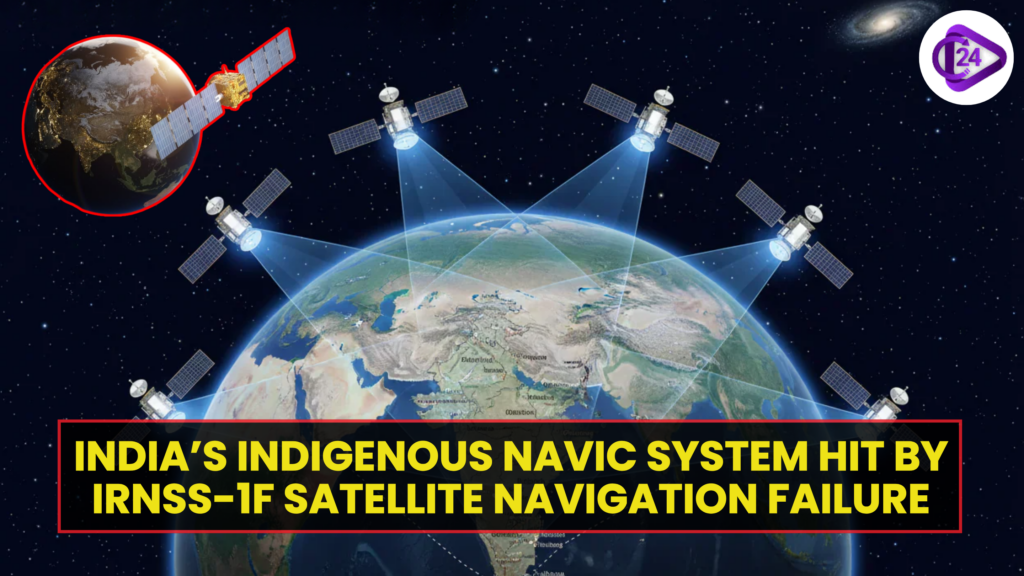
NavIC Setback: IRNSS-1F Satellite Stops Navigation Services

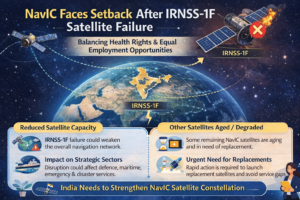
India’s indigenous satellite navigation system NavIC has encountered a major setback after the IRNSS-1F satellite ceased supporting navigation services. NavIC (Navigation with Indian Constellation) is developed by the Indian Space Research Organisation to offer accurate positioning and timing services across India and neighbouring regions. The IRNSS-1F satellite was a crucial component of this regional navigation constellation. Its failure to support navigation signals has raised concerns about the system’s operational robustness and the urgency of satellite replacements. Experts believe that maintaining a strong and fully operational constellation is vital for strategic, civilian, and commercial navigation applications.

Impact of IRNSS-1F Satellite Failure on NavIC Navigation System

  • The IRNSS-1F satellite is part of India’s regional navigation constellation under the NavIC programme, which aims to provide independent and reliable positioning services for India and nearby regions.
  • The satellite was launched in 2016 as part of the Indian Regional Navigation Satellite System constellation, designed to ensure accurate navigation without relying on foreign systems.
  • With IRNSS-1F no longer supporting navigation services, the total number of fully operational satellites in the constellation may be reduced, potentially affecting signal strength and redundancy.
  • NavIC plays an important role in strategic sectors such as defence navigation, disaster management, vehicle tracking, and maritime operations.
  • The system is also expected to support civilian uses like smartphone navigation, fleet management, and mapping services across India.
  • The setback highlights the importance of maintaining backup satellites and planning timely replacements to ensure uninterrupted services.
  • India has been actively working to strengthen NavIC by launching replacement satellites and improving signal compatibility with modern devices.
  • Despite this challenge, experts believe that India’s space programme, led by the Indian Space Research Organisation, can restore full functionality through future satellite launches and system upgrades.

Previous Year Questions on ISRO’s Satellite

Exam Year Question Answer
SSC CGL 2019 Which was India’s first satellite launched into space? (A) Rohini (B) Aryabhata (C) Bhaskara (D) INSAT Aryabhata
SSC MTS 2019 India launched its first satellite in 1975. What was its name? (A) Rohini (B) Aryabhata (C) APPLE(D) INSAT-1A Aryabhata
RRB NTPC 2016 In 1981, which satellite was launched by ISRO as India’s first experimental geostationary communication satellite? (A) Aryabhata (B) APPLE (C) Bhaskara-II (D) INSAT-1B APPLE
SSC CHSL 2018 Which Indian satellite discovered evidence of water molecules on the Moon? (A) Chandrayaan-1 (B) Chandrayaan-2 (C) Mangalyaan (D) Astrosat Chandrayaan-1
RRB Group-D 2018 Which ISRO mission successfully entered Mars orbit in 2014? (A) Chandrayaan-1 (B) Chandrayaan-2 (C) Mangalyaan (D) Gaganyaan Mangalyaan
SSC GD 2022 Which satellite navigation system has been developed by India? (A) Galileo (B) NavIC (C) GLONASS (D) BeiDou NavIC
RRB NTPC 2020 Which is India’s first dedicated astronomy satellite launched by ISRO? (A) Cartosat-2 (B) GSAT-7 (C) Astrosat (D) INSAT-3D Astrosat
SSC CGL 2017 Which satellite was the first launched by India using an Indian launch vehicle? (A) Aryabhata (B) Rohini (C) Bhaskara (D) INSAT-1A Rohini
RRB ALP 2019 Which ISRO mission is associated with the study of the Sun? (A) Chandrayaan-1 (B) Mangalyaan (C), Astrosat (D), Aditya-L1 Aditya-L1
SSC CHSL 2020 Which ISRO satellite series is mainly used for mapping and earth observation? (A) Cartosat (B) INSAT (C) GSAT (D) Kalpana Cartosat

India’s Supreme Court Allows First-Ever Passive Euthanasia Death

Conclusion (IRNSS-1F Satellite Failure Impacts NavIC System)

The failure of the IRNSS-1F satellite highlights the challenges of maintaining a reliable navigation constellation. As part of India’s NavIC system, such setbacks underline the need for timely satellite replacements and technological upgrades. Strengthening the satellite network will be crucial to ensure uninterrupted navigation services and to maintain India’s strategic and technological independence in space-based navigation.

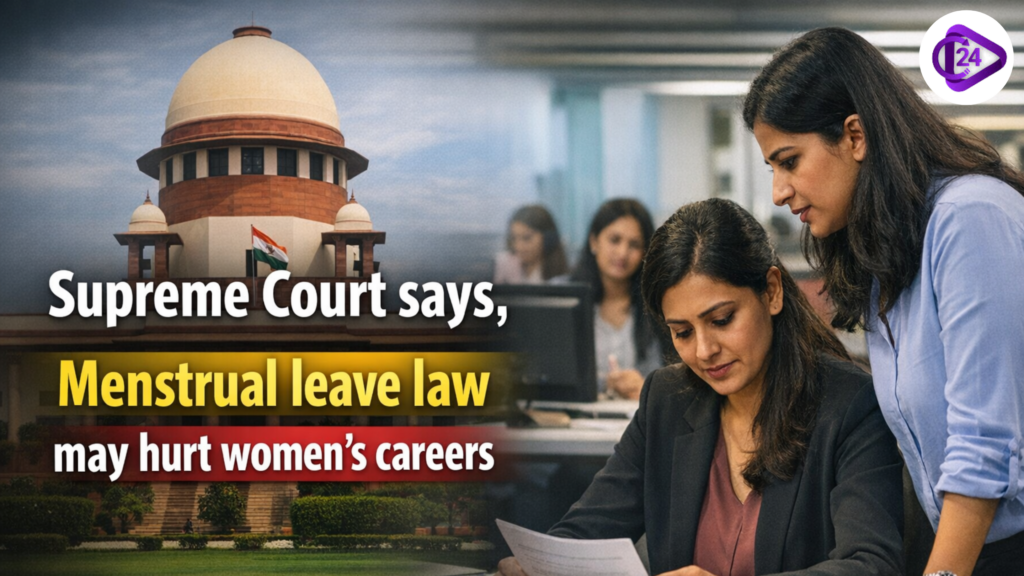
Supreme Court says, Menstrual Leave Law May Hurt Women’s Careers

Menstrual leave has been a topic of intense debate in India and across the world. Recently, the Supreme Court observed that making menstrual leave a legal mandate could unintentionally harm women’s career opportunities. The concern is that employers might develop a bias against hiring women if additional leave requirements become compulsory. While the idea behind menstrual leave is to support women’s health and well-being, the court suggested that such policies must be designed carefully to avoid reinforcing workplace discrimination. The discussion has sparked conversations about balancing women’s health rights with equal employment opportunities and ensuring that workplace policies promote inclusion rather than creating unintended disadvantages.

Key Observations Behind the Supreme Court’s View on Menstrual Leave

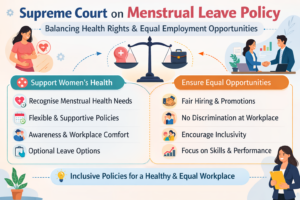
  • The court highlighted that a mandatory menstrual leave policy could unintentionally create barriers for women in hiring and promotions. Employers might view women as less available for work compared to men.
  • There is a risk that companies, especially in competitive sectors, could become hesitant to recruit women if they believe additional leave policies will affect productivity.
  • The court suggested that well-intentioned policies sometimes lead to unintended consequences, particularly when employers prioritise efficiency and operational continuity.
  • Instead of a strict legal mandate, the court indicated that workplace flexibility and supportive policies might be a more balanced approach to address menstrual health concerns.
  • The discussion emphasised the need to focus on gender equality in workplaces. Policies should empower women without reinforcing stereotypes that women are less capable or less consistent employees.
  • The court also noted that menstrual health is a genuine issue affecting many women, and workplaces should acknowledge it through awareness, supportive environments, and optional leave policies where appropriate.
  • Policymakers were encouraged to consult employers, health experts, and women’s groups to design practical solutions that protect women’s health without affecting their professional growth.
  • The debate reflects a broader challenge: ensuring workplace policies support women’s well-being while maintaining equal opportunities in hiring, promotion, and career advancement.

PYQs – Human Reproduction

Exam Year Question Options Answer
RRB NTPC 2020 Where does fertilisation occur in humans? (A) Ovary (B) Uterus (C) Fallopian Tube (D) Cervix Fallopian Tube
SSC GD 2021 The female reproductive cell is known as: (A) Sperm (B) Ovum (C) Embryo (D) Zygote Ovum
SSC CHSL 2020 Which organ produces sperm in human males? (A) Prostate gland (B) Testis (C) Vas deferens (D) Seminal vesicle Testis
RRB Group D 2019 The fertilized egg formed after fusion of sperm and ovum is called: (A) Embryo (B) Zygote (C) Foetus (D) Placenta Zygote
SSC CGL 2019 Which hormone is responsible for male secondary sexual characteristics? (A) Estrogen (B) Testosterone (C) Progesterone (D) Oxytocin Testosterone
RRB NTPC 2018 The process of formation of male gametes is called: (A) Oogenesis (B) Spermatogenesis (C) Fertilization (D) Implantation Spermatogenesis
SSC CHSL 2018 The organ where sperm mature and are stored is: (A) Testis (B) Epididymis (C) Urethra (D) Vas deferens Epididymis
RRB Group D 2018 The attachment of the embryo to the uterine wall is called: (A) Fertilization (B) Implantation (C) Ovulation (D) Gestation Implantation
SSC GD 2017 How many chromosomes are present in a human gamete? (A) 23 (B) 44 (C) 46 (D) 22 23
RRB ALP 2019 Which hormone triggers ovulation in females? (A) FSH (B) LH (C) Estrogen (D) Progesterone LH
SSC CGL 2017 The tube connecting the ovary to the uterus is called: (A) Cervix (B) Vagina (C) Fallopian tube (D) Endometrium Fallopian tube
RRB NTPC 2017 What is the average gestation period of humans? (A) 200 days (B) 240 days (C) 280 days (D) 300 days 280 days
SSC MTS 2019 The beginning of menstruation at puberty is called: (A) Menopause (B) Menarche (C) Ovulation (D) Fertilization Menarche
RRB Group D 2018 The surgical method of birth control in males is: (A) Tubectomy (B) Vasectomy (C) Amniocentesis (D) IVF Vasectomy
SSC GD 2022 Which hormone is detected in pregnancy test kits? (A) LH (B) Estrogen (C) hCG (D) Progesterone hCG

Cabinet Approves Extension of Jal Jeevan Mission December 2028

Conclusion – Menstrual Leave Law

The debate around menstrual leave highlights the challenge of balancing women’s health needs with workplace equality. While supportive policies are important, they must be designed carefully to avoid unintended discrimination in hiring or career growth. A flexible and inclusive approach, driven by awareness and organisational support, may help ensure women’s well-being without creating barriers to their professional opportunities.

Frequently Asked Questions (FAQs)

The current affairs cover recent national and international events related to UPSC, SSC, Banking, Railways, and State PCS.

You need to read about the current affairs daily, and revise them every week and every month to keep them longer in your memory.

Yes, Class24 provides free downloadable Daily Current Affairs PDFs for easy revision.

Yes, you can practice MCQs and quizzes to boost your exam preparation.

Absolutely. The content is written in simple, easy-to-understand bilingual language suitable for beginners.

Go to class24.com and click on the current affairs section directly, where you find everything that you need.

ssc-toppers

Start Learning Today with Class24

Related current affairs

Class24 offers free video lectures for smart preparation, covering CGL, CPO, CHSL, MTS, and GD exams. Learn from expert faculty, revise concepts easily, practice with PYQs, and improve speed and accuracy through high-quality, exam-focused video lessons anytime, anywhere.

Get success in your hand. Start study anytime anywhere.

The journey becomes simple and enjoyable when you start taking interest in it. And through our app “Class24”, we will be your trusted partners in developing that interest.

Daily Quizzes
Mock Tests
Ongoing

No ongoing tests right now.