
Day: March 12, 2026

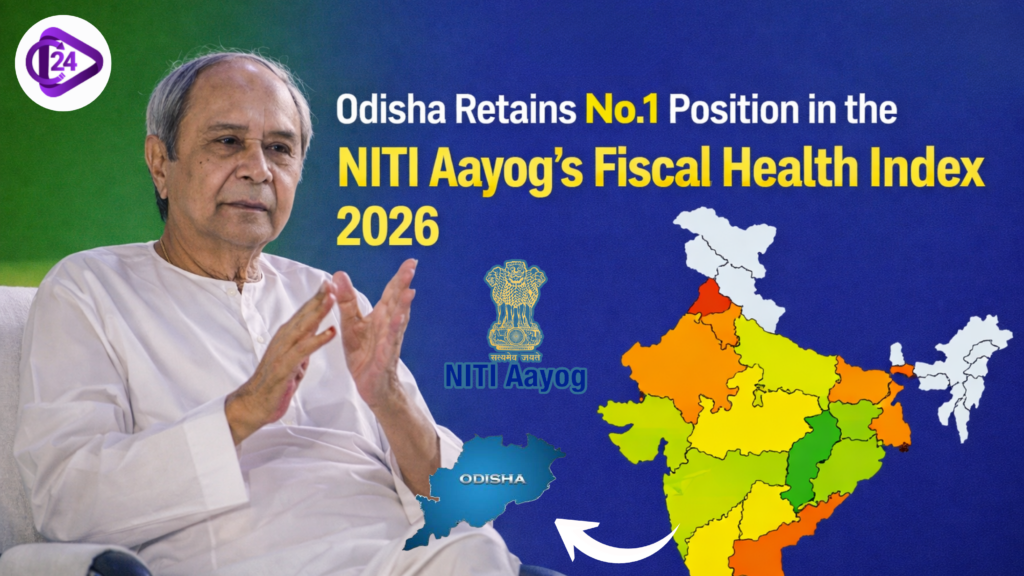
Odisha Retains No.1 Position in the NITI Aayog’s Fiscal Health Index 2026

Odisha has once again secured the top position in the Fiscal Health Index (FHI) 2026 released by NITI Aayog, highlighting the state’s strong financial management and fiscal discipline. The index evaluates the financial performance of Indian states based on indicators such as revenue generation, debt management, expenditure quality, and fiscal sustainability. Odisha’s consistent focus on prudent budgeting, improved tax collection, and effective public spending has helped it maintain fiscal stability despite economic challenges. The ranking reflects the state’s ability to balance development priorities with responsible financial practices, making it a model for other states aiming to strengthen governance and economic resilience.

Odisha’s Top Rank in Fiscal Health Index 2026

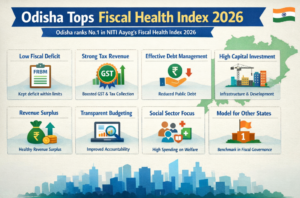
  • The Fiscal Health Index (FHI) by NITI Aayog assesses the financial performance of states using indicators such as revenue mobilization, fiscal deficit management, and debt sustainability.

  • Odisha retained the No.1 position due to its strong fiscal discipline and effective financial governance.

  • The state maintained a low fiscal deficit, keeping it within the limits prescribed under the Fiscal Responsibility and Budget Management framework.

  • Odisha showed strong performance in own tax revenue generation, particularly through improved GST collection and efficient tax administration.

  • Effective management of public debt and liabilities contributed significantly to the state’s fiscal strength.

  • The government emphasized productive capital expenditure, investing in infrastructure, health, education, and rural development.

  • Odisha maintained a healthy revenue surplus, indicating that its revenues were sufficient to cover regular expenditure.

  • Transparent budgeting and digital financial monitoring systems improved accountability and financial efficiency.

  • Social sector spending remained high while still maintaining fiscal balance, reflecting inclusive development.

  • The state’s performance sets a benchmark for other Indian states aiming to achieve sustainable fiscal management and economic growth.
Nepal’s Rapper-Mayor in Pole Position to Become Prime Minister

Conclusion

Odisha retaining the top position in the Fiscal Health Index 2026 underscores its commitment to sound financial management and responsible governance. The assessment by NITI Aayog reflects the state’s ability to maintain fiscal discipline while supporting development initiatives. Odisha’s model highlights how prudent budgeting, efficient revenue collection, and strategic expenditure can strengthen economic stability and promote sustainable growth.
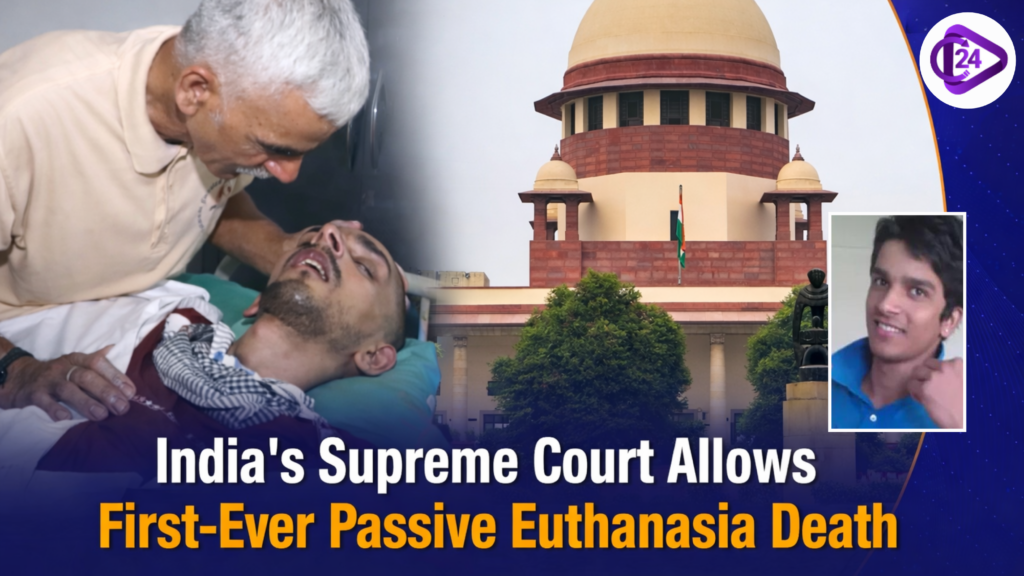
India’s Supreme Court Allows First-Ever Passive Euthanasia Death

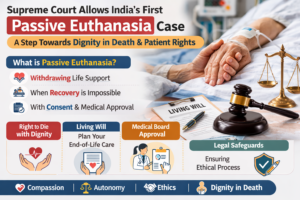
India’s legal and ethical landscape witnessed a historic moment when the Supreme Court of India permitted the country’s first case of passive euthanasia to be carried out under judicial oversight. Passive euthanasia refers to withdrawing or withholding life-sustaining treatment from a terminally ill patient who has little or no chance of recovery. The decision highlights the growing recognition of patient autonomy, dignity in death, and compassionate medical care. India had earlier recognized the concept through landmark rulings, but this case marks the first time the procedure has been practically implemented with court approval. The development has sparked nationwide debate on medical ethics, legal safeguards, and the rights of patients and families.

Legal and Ethical Significance of Passive Euthanasia in India

  • Passive euthanasia involves the withdrawal or withholding of life-sustaining medical treatment such as ventilators, artificial feeding, or other life-support systems when recovery is deemed impossible.

  • The legal basis for passive euthanasia in India was established by the Aruna Shanbaug Case, where the court allowed passive euthanasia under strict guidelines and judicial supervision.

  • Later, the Common Cause vs Union of India recognized the right to die with dignity as part of the fundamental right to life under Article 21 of the Constitution.

  • The court also legalized the concept of a “living will,” allowing individuals to state in advance whether they wish to receive life-support treatment if they become terminally ill.

  • In the recent case, the court allowed the withdrawal of life support after verifying medical reports and the consent of family members.

  • A medical board evaluated the patient’s condition and confirmed that recovery was medically impossible.

  • Strict procedural safeguards were followed to ensure that the decision was voluntary, ethical, and not influenced by financial or social pressure.

  • The ruling sets an important precedent for hospitals, doctors, and families dealing with terminal illness cases.

  • It also emphasizes the importance of palliative care and compassionate end-of-life decisions in the healthcare system.

  • The case may encourage more awareness about living wills and patients’ rights in India.

Best MCQs in Euthanasia

Which country became the first in the world to legalize euthanasia?

A. Belgium
B. Netherlands
C. Switzerland
D. Canada

Answer: B. Netherlands
Explanation: The Netherlands became the first country to legalize euthanasia in 2002 under strict medical and legal conditions.

Which country was the second in the world to legalize euthanasia?

A. Belgium
B. Luxembourg
C. Canada
D. Spain

Answer: A. Belgium
Explanation: Belgium legalized euthanasia in 2002, shortly after the Netherlands, and later extended the law to include minors under strict safeguards.

Which type of euthanasia is legal in India under specific conditions?

A. Active euthanasia
B. Passive euthanasia
C. Voluntary euthanasia
D. Physician-assisted suicide

Answer: B. Passive euthanasia
Explanation: In 2018, the Supreme Court of India allowed passive euthanasia and recognized the right to die with dignity.

Which landmark case in India first allowed passive euthanasia under strict guidelines?

A. Vishaka Case
B. Maneka Gandhi Case
C. Aruna Shanbaug Case
D. Kesavananda Bharati Case

Answer: C. Aruna Shanbaug Case
Explanation: The Aruna Shanbaug Case allowed passive euthanasia for the first time in India with court approval.

Which Indian case legalized the concept of a “living will”?

A. Shreya Singhal Case
B. Common Cause Case
C. Nirbhaya Case
D. Minerva Mills Case

Answer: B. Common Cause Case
Explanation: In the Common Cause vs Union of India, the Supreme Court recognized living wills and the right to die with dignity.

In euthanasia, what does “passive euthanasia” mean?

A. Administering a lethal injection
B. Withdrawing or withholding life-support treatment
C. Providing painkillers to end life quickly
D. Assisted suicide by doctors

Answer: B. Withdrawing or withholding life-support treatment
Explanation: Passive euthanasia involves stopping life-sustaining treatment like ventilators when recovery is impossible.

Which country legalized euthanasia for minors (children) under certain conditions?

A. Canada
B. Spain
C. Belgium
D. Germany

Answer: C. Belgium
Explanation: Belgium became the first country to allow euthanasia for children of all ages with parental consent and strict medical approval.

Which European country is known for allowing assisted suicide but not active euthanasia?

A. Switzerland
B. Italy
C. Portugal
D. Greece

Answer: A. Switzerland
Explanation: Switzerland allows assisted suicide if the person helping has no selfish motive.

The right to die with dignity in India is linked to which article of the Constitution?

A. Article 14
B. Article 19
C. Article 21
D. Article 32

Answer: C. Article 21
Explanation: Article 21 guarantees the Right to Life, which the Supreme Court interpreted to include dignity in death.

Which country in North America legalized medical assistance in dying (MAiD) in 2016?

A. United States
B. Mexico
C. Canada
D. Cuba

Answer: C. Canada
Explanation: Canada legalized Medical Assistance in Dying (MAiD) in 2016, allowing doctors to assist terminally ill patients.

Amit Shah Unveils ‘Pragati’, ‘Vikas’

Conclusion

The decision of the Supreme Court of India to allow the country’s first passive euthanasia marks a significant step in recognizing the right to die with dignity. Building on earlier rulings such as the Aruna Shanbaug Case and the Common Cause vs Union of India, the move highlights evolving legal and ethical perspectives on end-of-life care while emphasizing strict safeguards, patient autonomy, and compassionate medical decision-making.

Frequently Asked Questions (FAQs)

The current affairs cover recent national and international events related to UPSC, SSC, Banking, Railways, and State PCS.

You need to read about the current affairs daily, and revise them every week and every month to keep them longer in your memory.

Yes, Class24 provides free downloadable Daily Current Affairs PDFs for easy revision.

Yes, you can practice MCQs and quizzes to boost your exam preparation.

Absolutely. The content is written in simple, easy-to-understand bilingual language suitable for beginners.

Go to class24.com and click on the current affairs section directly, where you find everything that you need.

ssc-toppers

Start Learning Today with Class24

Related current affairs

Class24 offers free video lectures for smart preparation, covering CGL, CPO, CHSL, MTS, and GD exams. Learn from expert faculty, revise concepts easily, practice with PYQs, and improve speed and accuracy through high-quality, exam-focused video lessons anytime, anywhere.

Get success in your hand. Start study anytime anywhere.

The journey becomes simple and enjoyable when you start taking interest in it. And through our app “Class24”, we will be your trusted partners in developing that interest.

Daily Quizzes
Mock Tests
Ongoing

No ongoing tests right now.