

Day: March 10, 2026
Who is Mojtaba Khamenei, Iran's New Supreme Leader?

Who is Mojtaba Khamenei, Iran’s New Supreme Leader?

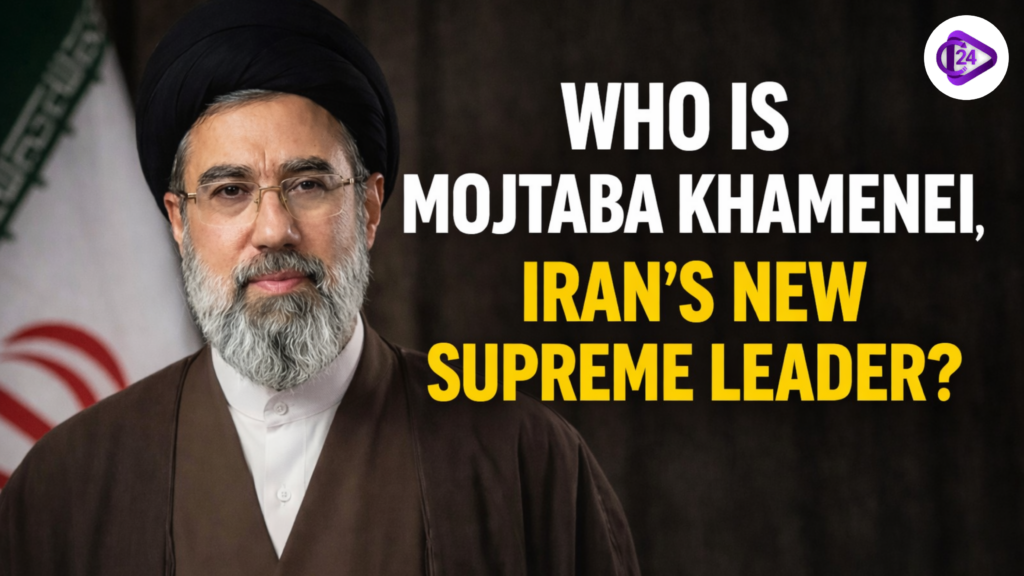
Mojtaba Khamenei became the third Supreme Leader of Iran on 8 March 2026, succeeding his father Ali Khamenei. He was chosen by the powerful Assembly of Experts after his father’s death during an escalating regional conflict. A mid-ranking Shiite cleric educated at the Qom seminary, Mojtaba had long been influential behind the scenes in Iran’s political and security establishment. His appointment marks a historic moment because it is the first time leadership in the Islamic Republic has passed from father to son, raising debates about dynastic succession in a system founded after the 1979 revolution.

Key Facts About Mojtaba Khamenei

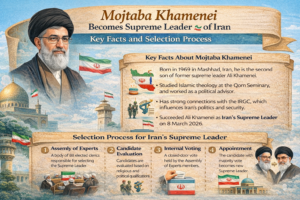
  • Mojtaba Khamenei was born in 1969 in Mashhad, Iran, and is the second son of former supreme leader Ali Khamenei.

  • He studied Islamic theology at the Qom Seminary, one of the most important centers of Shia religious education.

  • Before becoming supreme leader, he held influence as a political and security adviser within the office of the Supreme Leader.

  • Mojtaba had strong connections with the Islamic Revolutionary Guard Corps (IRGC), which plays a major role in Iran’s politics and regional security strategy.

  • In March 2026, the Assembly of Experts elected him as Iran’s third supreme leader, the country’s highest political and religious authority.

  • The Supreme Leader has ultimate authority over the military, judiciary, media, and major state policies, making the role more powerful than the president.

  • His appointment occurred during a major regional crisis involving Iran, Israel, and the United States, adding global attention to the leadership transition.

  • Analysts believe his leadership signals continuity of Iran’s hardline political and foreign policy approach.

  • The succession has sparked debate because the Islamic Republic was originally created to reject hereditary monarchy, yet leadership passed from father to son.

  • As supreme leader, Mojtaba now holds the final authority in Iran’s political system, shaping domestic governance and foreign policy decisions.

Process of Choosing Iran’s Supreme Leader

  • The Supreme Leader of Iran is selected by the Assembly of Experts, an influential clerical body responsible for appointing and supervising the country’s highest authority.

  • The Assembly of Experts currently consists of about 88 Islamic scholars and clerics who specialize in Islamic jurisprudence and political theology.

  • Members of this assembly are elected by the Iranian public every eight years, but only candidates approved by the Guardian Council can contest these elections.

  • When the position of Supreme Leader becomes vacant due to death, resignation, or incapacity, the Assembly of Experts convenes to select a successor.

  • The assembly evaluates potential candidates based on religious scholarship, political wisdom, justice, and leadership capability as required by Iran’s constitution

  • Eligible candidates are usually senior Shiite clerics (Ayatollahs) with strong knowledge of Islamic law and influence within religious institutions.

  • Members hold closed-door deliberations, discussing the qualifications and political acceptability of possible candidates.

  • After discussions, the assembly conducts an internal vote, and the candidate who gains a majority of votes becomes the new Supreme Leader.

  • If a leader cannot immediately be chosen, a temporary leadership council consisting of senior officials may carry out the leader’s duties until the appointment is finalized.

  • Once selected, the Supreme Leader becomes the highest political and religious authority in Iran, with control over the military, judiciary, and major state policies.
Finn Allen Scores Fastest Century in T20 World Cup

Conclusion

The selection of Iran’s Supreme Leader reflects the unique blend of religion and politics within the Islamic Republic. The powerful Assembly of Experts holds the constitutional authority to appoint and supervise the leader, ensuring religious legitimacy and political leadership. This process highlights the central role of clerical institutions in shaping Iran’s governance and long-term policy direction.
From 1776 to 2026 Adam Smith's Lessons for the Global Economy

From 1776 to 2026: Adam Smith’s Lessons for the Global Economy

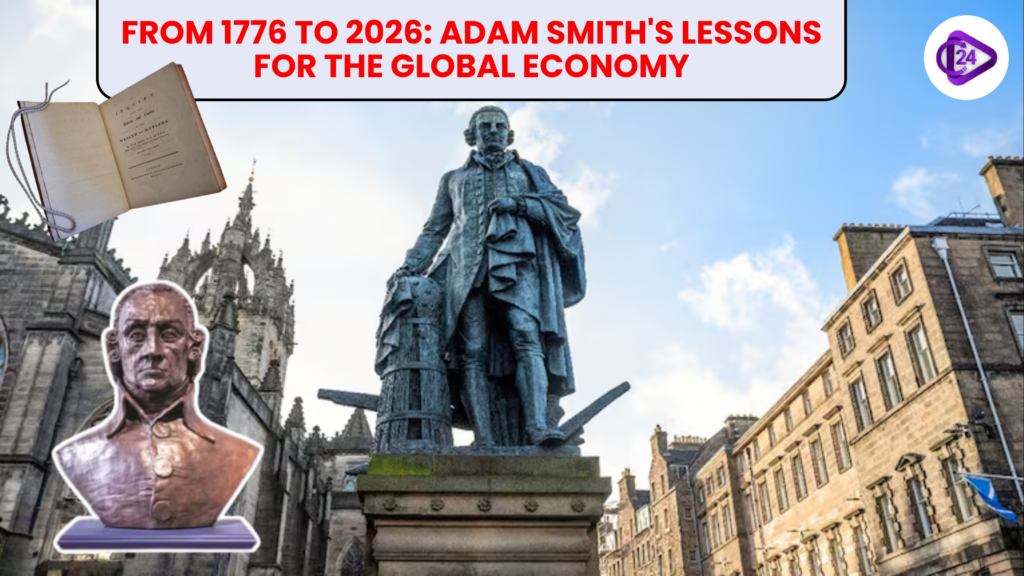
In 1776, the Scottish economist Adam Smith published The Wealth of Nations, a landmark work that laid the foundation of modern economics. His ideas about free markets, division of labour, and limited government intervention shaped global economic thinking for centuries. Nearly 250 years later, in 2026, Smith’s insights remain highly relevant in debates on globalization, trade, and economic policy. As the world faces challenges such as inequality, protectionism, and technological disruption, policymakers and economists continue to revisit Smith’s principles to understand how markets function and how prosperity can be created through productivity, innovation, and efficient allocation of resources.

Adam Smith’s Lessons for the Global Economy

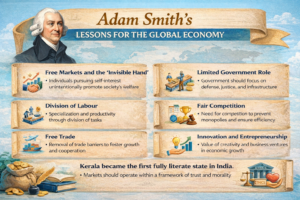
  • Adam Smith emphasized the importance of free markets, arguing that individuals pursuing their self-interest can unintentionally promote the welfare of society through the concept of the “invisible hand.”

  • His theory of division of labour showed how specialization increases productivity, a principle still visible in modern global supply chains and industrial production.

  • Smith strongly supported free trade, criticizing mercantilist policies and advocating the removal of trade barriers to promote economic growth and international cooperation.

  • He believed governments should play a limited but essential role, focusing on defense, justice, and public works such as infrastructure that markets may not provide efficiently.

  • Smith warned against monopolies and excessive market power, highlighting the need for fair competition to ensure efficiency and consumer welfare.

  • His ideas underline the value of innovation and entrepreneurship, which drive economic development and technological advancement in modern economies.

  • Smith also recognized the importance of moral philosophy, arguing that markets should operate within a framework of ethics, trust, and social responsibility.

  • In the context of globalization, Smith’s principles encourage open economies, cooperation, and efficient resource allocation, which remain crucial for sustainable and inclusive economic growth.

Important MCQs on Adam Smith

Question Options Answer Explanation
Who is regarded as the “Father of Modern Economics”? A) Adam Smith B) John Maynard Keynes C) Karl Marx D) David Ricardo A Adam Smith is called the Father of Modern Economics for his systematic analysis of markets and economic growth.
Adam Smith’s famous book published in 1776 is: A) Das Kapital B) The Wealth of Nations C) General Theory of Employment, Interest and Money D) Principles of Political Economy B The Wealth of Nations laid the foundation for classical economic theory.
The concept of the “Invisible Hand” refers to: A) Government control over markets B) Market forces guiding economic activity C) International trade agreements D) Welfare state policies B Adam Smith used the term “Invisible Hand” to explain how self-interest in a free market can benefit society.
According to Adam Smith, which factor greatly increases productivity? A) Population growth B) Division of labour C) Government subsidies D) Protectionism B Smith highlighted division of labour as the key source of efficiency and productivity.
Adam Smith strongly criticized which economic system? A) Capitalism B) Mercantilism C) Socialism D) Mixed economy B He opposed mercantilism, arguing that trade restrictions reduce overall wealth.
Adam Smith belonged to which school of economic thought? A) Keynesian School B) Classical School C) Monetarist School D) Institutional School B Smith is one of the founders of the Classical School of Economics.
Adam Smith believed the primary role of government should include: A) Price fixing B) Trade restrictions C) Defense, justice, and public works D) Nationalization of industries C Smith supported limited government roles such as defense, justice, and infrastructure.
Adam Smith was from which country? A) England B) Germany C) Scotland D) France C Adam Smith was a Scottish economist and philosopher.
Which earlier book written by Adam Smith focuses on ethics and morality? A) The Theory of Moral Sentiments B) The Communist Manifesto C) Capital in the Twenty-First Century D) Road to Serfdom A Published in 1759, it discusses morality, sympathy, and ethical behavior in society.
Adam Smith supported which type of international economic policy? A) Protectionism B) Autarky C) Free Trade D) Trade embargoes C Smith believed free trade allows countries to specialize and increase global wealth.

World Obesity Day 2026

Conclusion

The ideas of Adam Smith continue to shape modern economic thinking even after more than two centuries. His concepts of free markets, division of labour, and the “invisible hand,” presented in The Wealth of Nations, remain central to discussions on globalization, trade, and development. In a rapidly changing global economy, Smith’s principles still provide valuable guidance for promoting efficiency, innovation, and sustainable economic growth

Frequently Asked Questions (FAQs)

The current affairs cover recent national and international events related to UPSC, SSC, Banking, Railways, and State PCS.

You need to read about the current affairs daily, and revise them every week and every month to keep them longer in your memory.

Yes, Class24 provides free downloadable Daily Current Affairs PDFs for easy revision.

Yes, you can practice MCQs and quizzes to boost your exam preparation.

Absolutely. The content is written in simple, easy-to-understand bilingual language suitable for beginners.

Go to class24.com and click on the current affairs section directly, where you find everything that you need.

ssc-toppers

Start Learning Today with Class24

Related current affairs

Class24 offers free video lectures for smart preparation, covering CGL, CPO, CHSL, MTS, and GD exams. Learn from expert faculty, revise concepts easily, practice with PYQs, and improve speed and accuracy through high-quality, exam-focused video lessons anytime, anywhere.

Get success in your hand. Start study anytime anywhere.

The journey becomes simple and enjoyable when you start taking interest in it. And through our app “Class24”, we will be your trusted partners in developing that interest.

Daily Quizzes
Mock Tests
Ongoing

No ongoing tests right now.