
Day: February 28, 2026
Raksha Rajya Mantri

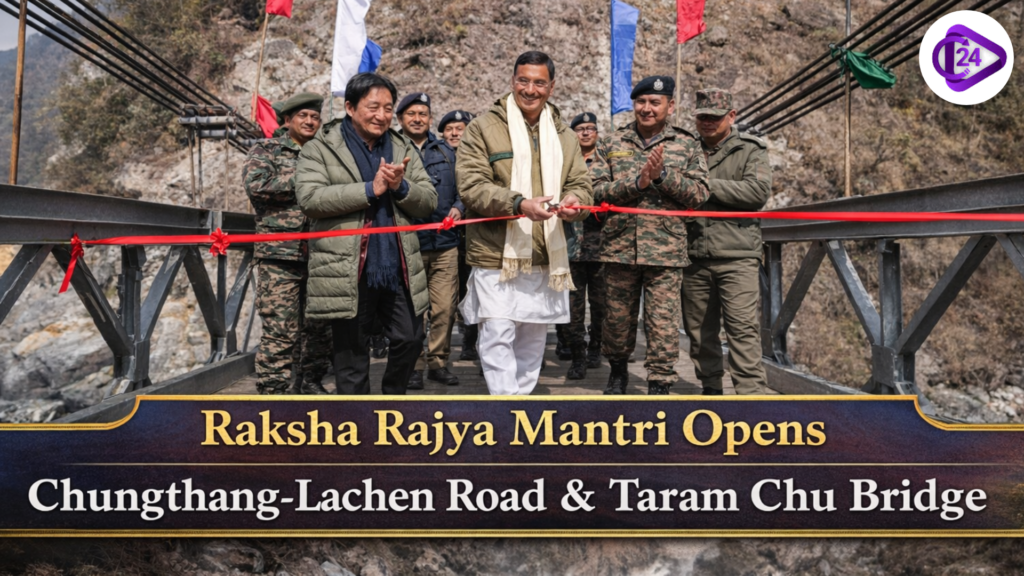
Raksha Rajya Mantri Opens Chungthang-Lachen Road & Taram Chu Bridge

The Raksha Rajya Mantri recently inaugurated the Chungthang-Lachen Road and Taram Chu Bridge in North Sikkim, a significant step toward improving connectivity in the region. These infrastructure projects were undertaken by the Border Roads Organisation (BRO) under Project Swastik, following extensive damage caused by natural disasters, including cloudbursts and a glacial lake outburst flood. The Chungthang-Lachen Road, spanning 28 km, and the Taram Chu Bridge, a 400-foot Bailey suspension bridge, are vital for residents and security forces, ensuring safer and more reliable access to this remote Himalayan region. These improvements also support regional development and provide a boost to economic activities and tourism. The BRO’s efforts included clearing 96 landslides and constructing several bridges to restore essential routes. This project demonstrates India’s commitment to resilient infrastructure development in difficult terrains, ensuring the well-being of its citizens and enhancing national security.

Highlights of the Chungthang-Lachen Road & Taram Chu Bridge Inauguration

  • The Chungthang-Lachen Road extends 28 km, reconnecting critical areas in North Sikkim.
  • The Taram Chu Bridge, a 400-foot Bailey suspension bridge, has been rebuilt to endure high-altitude conditions.
  • The reconstruction project, led by the Border Roads Organisation (BRO), aimed to recover from past disasters and restore vital connections.
  • The project involved clearing 96 landslides, repairing bridges, and constructing new ones as part of Project Swastik.
  • The efforts also included reopening the 7.5 km Naga-Toong stretch, which was completed in October 2025.
  • These improvements benefit local communities, security personnel, and emergency services, improving travel safety.
  • The development of these infrastructures also promotes regional economic growth, tourism, and enhanced emergency responses in this strategically significant area.
  • These projects reflect India’s dedication to building disaster-resilient infrastructure in challenging terrains.

Recently Asked Previous Year Questions

Question Options Answer
Which high‑altitude lake in Sikkim is sacred and a major attraction? a) Tsomgo Lake b) Pangong Lake c) Dal Lake d) Nainital Lake a) Tsomgo Lake
Which pass connects Sikkim to the Chumbi Valley of Tibet? a) Nathu La b) Jelep La c) Shipki La d) Chang La a) Nathu La
Which river forms part of the boundary between Sikkim and West Bengal? a) Teesta b) Rangit c) Mahananda d) Brahmaputra b) Rangit
Which is the state animal of Sikkim? a) Snow Leopard b) Himalayan Tahr c) Red Panda d) Yak c) Red Panda
Which is the state bird of Sikkim? a) Himalayan Monal b) Blood Pheasant c) Common Myna d) Peacock b) Blood Pheasant
Where is the first capital of Sikkim, and who was crowned there? a) Gangtok – Phuntsog Namgyal b) Yuksom – Phuntsog Namgyal c) Namchi – Chador Namgyal d) Pelling – Tenzing Norbu b) Yuksom – Phuntsog Namgyal
What is the de facto state song of Sikkim? a) Jahan Bagcha Teesta Rangeet (b) Sikkim Himalaya c)  Mero Sikkim (d) Himalaya Ki Godi a) Jahan Bagcha Teesta Rangeet
Who was Sikkim’s first Chogyal, consecrated in 1642? a) Tenzing Norbu b) Phuntsog Namgyal c) Chador Namgyal d) Thutob Namgyal b) Phuntsog Namgyal

Supreme Court Suo Motu on NCERT Row

Conclusion 

The inauguration of the Chungthang-Lachen Road and Taram Chu Bridge by the Raksha Rajya Mantri marks a significant step in enhancing connectivity in North Sikkim. These infrastructure projects, rebuilt by the Border Roads Organisation (BRO), are vital for local communities, security operations, and economic growth. The improved transport links will facilitate better access to essential services, stimulate regional development, and strengthen India’s strategic presence in the Himalayan region, reaffirming the commitment to resilient and sustainable infrastructure developmen
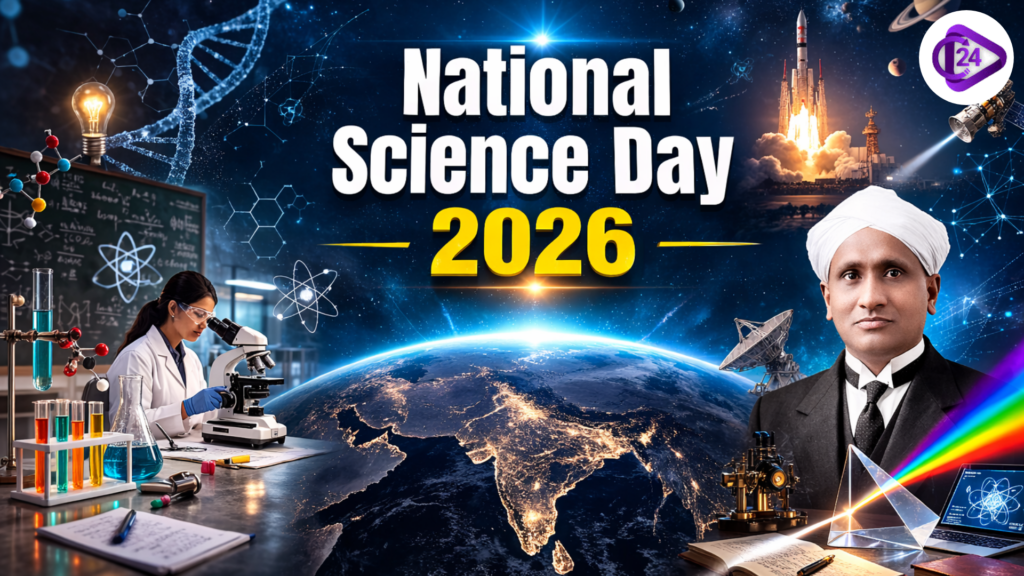
National Science Day 2026

National Science Day 2026: Honouring C. V. Raman’s Legacy of Discovery

National Science Day, celebrated on February 28, commemorates the groundbreaking discovery of the Raman Effect by Indian physicist Sir C. V. Raman in 1928. This pivotal discovery, which earned him the Nobel Prize in Physics in 1930, marked a significant advancement in the study of light scattering.

First recognised by the Indian government in 1986, National Science Day has been celebrated annually since 1987. The day serves to raise awareness about the importance of science in daily life, encourage scientific curiosity, and inspire innovation. Institutions across India organise activities such as lectures, exhibitions, and outreach events to promote scientific engagement and education.

Objective of National Science Day

  • National Science Day aims to highlight the significance of science and its everyday applications, making science more accessible and relevant to people of all ages.
  • The day encourages the spread of awareness about scientific thought and innovation, fostering a deeper understanding of how science drives progress in society.
  • It inspires students and youth to engage with science, promoting curiosity, experimentation, and exploration in various fields of study.
  • The celebration aims to make scientific research and technology more visible, emphasising the impact of scientific achievements on the world.
  • National Science Day seeks to promote scientific reasoning and critical thinking, encouraging individuals to make decisions based on evidence and logic.
  • It offers an opportunity for schools, colleges, and research institutions to organise events, such as workshops and lectures, to reinforce scientific learning beyond textbooks.
  • The day also celebrates India’s rich scientific heritage and honours the contributions of scientists who have advanced human knowledge.
  • By hosting a range of activities, National Science Day strives to motivate future generations to pursue careers in science and research.

National Science Day 2026 Theme

The official theme for National Science Day 2026 is “Women in Science: Catalysing Viksit Bharat.” This theme highlights the vital role that women play in scientific research, innovation and national progress, aiming to empower and inspire greater participation of women and girls in STEM fields as part of India’s development journey.

Legacy of C. V. Raman

Sir Chandrasekhara Venkata Raman left a lasting impact on science through his pioneering work on the behaviour of light. In 1928, he discovered that when light passes through a transparent material, a small part of the scattered light shifts to different wavelengths. This unexpected change became known as the Raman effect, fundamentally changing how scientists study the interaction between light and matter. Raman’s finding opened the door to new research methods in spectroscopy, allowing researchers to identify molecular structures and chemical compositions. For this breakthrough, he was awarded the 1930 Nobel Prize in Physics, becoming the first Indian scientist to receive this honour in science. Today, the Raman effect remains a key tool in physics, chemistry, and materials science, and it is the reason National Science Day is observed each year on February 28.

International Energy Agency (IEA)

Conclusion (National Science Day 2026)

National Science Day 2026 serves as a reminder of the profound impact of science on society. It honours the legacy of great Indian scientists like C. V. Raman and encourages future generations to explore scientific fields. The theme “Women in Science: Catalysing Viksit Bharat” emphasises the importance of gender equality in driving innovation and scientific progress, inspiring young minds to contribute to a scientifically advanced nation.

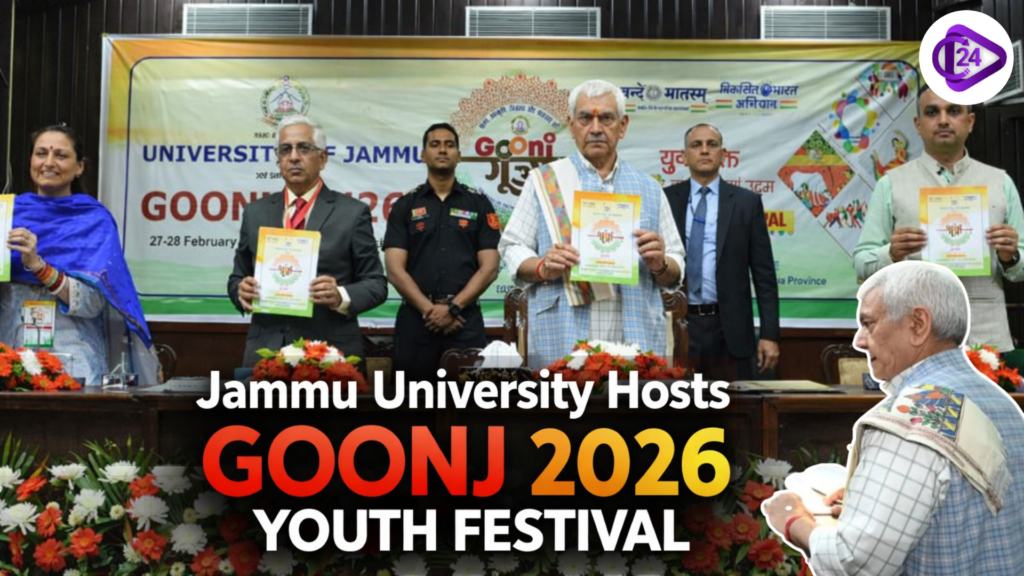
Jammu University Hosts Goonj 2026 Youth Festival

Jammu University Hosts Goonj 2026 Youth Festival

The University of Jammu is hosting the third edition of its prominent youth festival, Goonj 2026, a vibrant two-day event celebrating culture, sports, creativity, and academic achievement. The festival brings together students, faculty, and departments to exchange ideas, showcase talents, and foster a sense of community. The event was inaugurated by Lieutenant Governor Manoj Sinha, who emphasised the pivotal role of youth in driving innovation and shaping the future. Goonj 2026 offers students a platform for self-expression, reinforcing the university’s dedication to nurturing holistic growth that combines intellectual pursuits with personal development.

What is the Goonj Youth Festival 2026

  • Goonj 2026 is the third edition of the University of Jammu’s annual youth festival, taking place on February 27–28, 2026.
  • The festival invites participation from students, faculty, and academic departments across the university, its affiliated colleges, and nearby institutions.
  • Goonj 2026 is designed to foster holistic growth by blending academic, cultural, and creative activities, allowing students to express themselves beyond the classroom.
  • It serves as a platform for young individuals to showcase their talents, engage in meaningful exchanges with peers, and promote a sense of belonging within the university community.
  • The event has attracted over 600 participants with growing interest and registrations.
  • The festival includes a wide range of activities, such as sports events, cultural performances, and a Best Practices Showcase to highlight the skills and achievements of students and faculty.
  • Academic departments will also present displays of their research, innovation, and educational achievements, further enriching the festival’s offerings.
  • Through its combination of competitive, artistic, and intellectual activities, Goonj aims to encourage leadership, teamwork, and personal development, preparing students for the challenges ahead.


Rajasthan Launches Homestay Scheme 2026

Conclusion 

The Goonj 2026 Youth Festival at the University of Jammu proved to be an enriching and vibrant celebration of talent, creativity, and academic spirit. With a wide array of activities ranging from cultural performances to sports competitions, the festival provided students a platform to showcase their skills and foster a sense of community. By involving participants from various campuses and academic departments, Goonj highlighted the university’s commitment to holistic student development. The festival successfully encouraged collaboration, innovation, and leadership, reinforcing the importance of youth in shaping the future of academia and society.

Frequently Asked Questions (FAQs)

The current affairs cover recent national and international events related to UPSC, SSC, Banking, Railways, and State PCS.

You need to read about the current affairs daily, and revise them every week and every month to keep them longer in your memory.

Yes, Class24 provides free downloadable Daily Current Affairs PDFs for easy revision.

Yes, you can practice MCQs and quizzes to boost your exam preparation.

Absolutely. The content is written in simple, easy-to-understand bilingual language suitable for beginners.

Go to class24.com and click on the current affairs section directly, where you find everything that you need.

ssc-toppers

Start Learning Today with Class24

Related current affairs

Class24 offers free video lectures for smart preparation, covering CGL, CPO, CHSL, MTS, and GD exams. Learn from expert faculty, revise concepts easily, practice with PYQs, and improve speed and accuracy through high-quality, exam-focused video lessons anytime, anywhere.

Get success in your hand. Start study anytime anywhere.

The journey becomes simple and enjoyable when you start taking interest in it. And through our app “Class24”, we will be your trusted partners in developing that interest.

Daily Quizzes
Mock Tests
Ongoing

No ongoing tests right now.