

Day: November 21, 2025

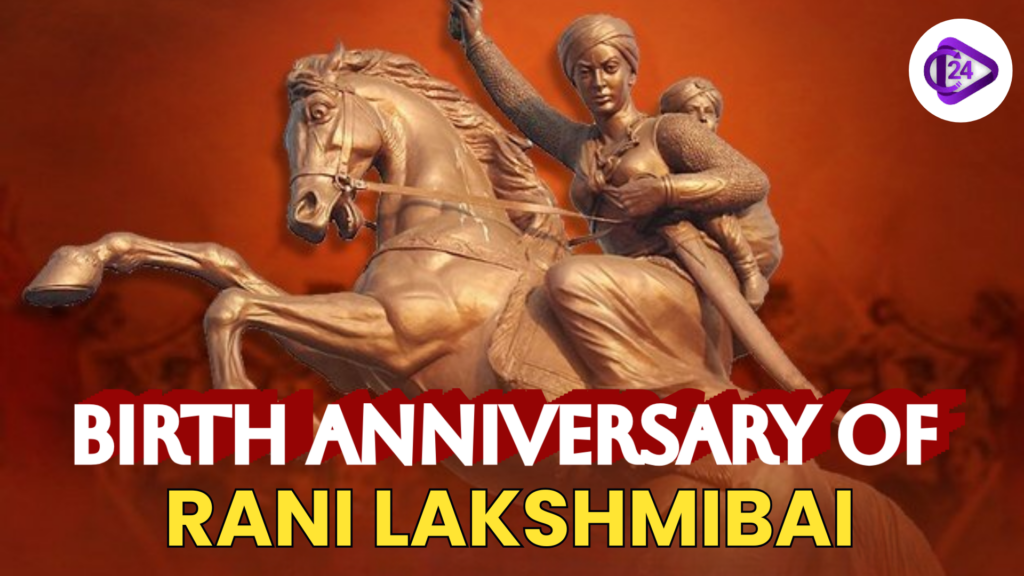
India Pays Tribute to The Birth Anniversary of Rani Lakshmibai

Rani Lakshmibai, also known as Manikarnika Tambe, was born on 19 November 1828 in Varanasi, and she will continue to be a great icon of bravery and rebellion. She was brought up by her widowed father and learned how to ride horses, how to shoot a bow and arrow, and how to fight martial arts, molding her into a warrior. She married the Maharaja of Jhansi, and she was to become the legendary Rani of Jhansi. Every year, on the anniversary of her birth, particularly in Jhansi, her significant role in the freedom struggle of India is celebrated in her honor and the heroic role she played in the 1857 Rebellion.

Contribution of Rani Lakshmibai 

  • Rani Lakshmibai (born Manikarnika Tambe) was the daughter of Moropant Tambe, a highly respected court official of the Peshawas.
  • She got married to the Maharaja Gangadhar Rao Newalkar of Jhansi and became the queen of the princely state.
  • She and her husband adopted Anand Rao, who became known as Damodar Rao, when her baby son passed away.
  • After the death of the Maharaja in 1853, the British declined to accept her adopted son as a legitimate descendant, and instead, they tried to annex Jhansi by enforcing the Doctrine of Lapse.
  • Lord Dalhousie became the Governor-General who enforced this doctrine, and it was only subsequently in 1858 that the Viceroy post was established.
  • Lakshmibai was a great opponent of British annexation and even said that she would not give up Jhansi and was resolved to protect her kingdom.
  • She was in the middle of the Revolt of 1857, becoming one of the most iconic figures in it.
  • She also coordinated the defence of Jhansi, trained armies and went to war with incredible tactical ability.
  • She fought gallantly in the siege of Jhansi and then, on the way, galloped away and escaped with her adopted son tied on her back.
  • Having joined rebel forces at Kalpi and Gwalior, she went on to further oppose the advances of the British with other leaders such as Tantia Tope.
  • She met her demise in a heroic war in June 1858.
  • Her place of burial/cremation is in Phool Bagh, Gwalior.
  • Rani Lakshmibai has remained a timeless icon of bravery, patriotism, female empowerment and opposition to colonialism.

Conclusion

The fact that India honours the birth anniversary of Rani Lakshmibai indicates that the country admires her courage and sacrifice to the utmost. The way she led the 1857 revolt fearlessly is a source of inspiration to generations. Her memory enhances the determination of India to take action as a courageous nation, with patriotism and willpower to fight against injustice forever.
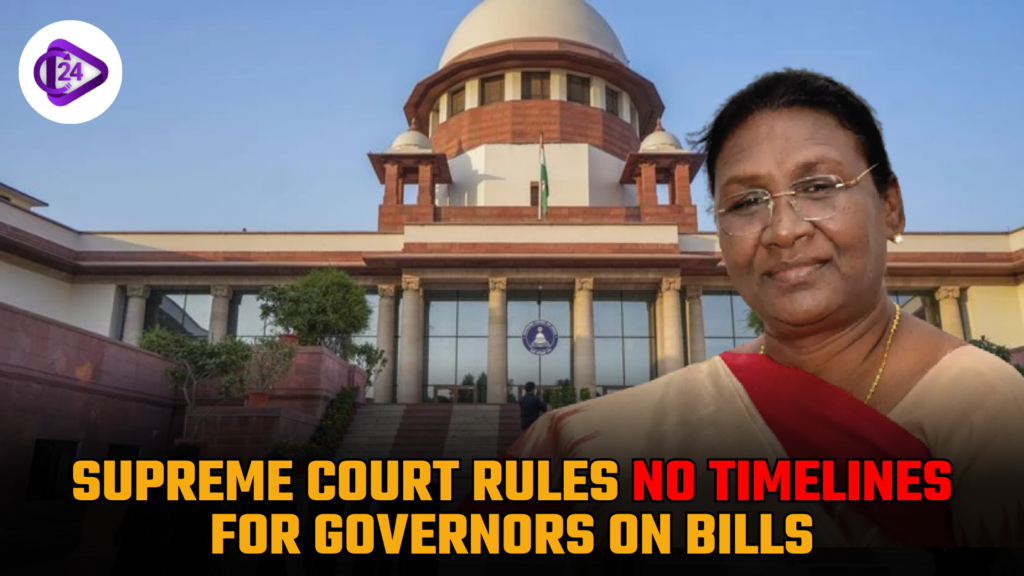
 

Supreme Court Says No Mandatory Time Limit for Governors to Clear Bills

The Supreme Court of India has ruled that it cannot impose deadlines on governors (or the President) to either approve or disapprove bills passed by state legislatures. The five-judge Constitution Bench ruled that Articles 200 and 201 of the Constitution specifically provide flexibility, which grants governors the discretion to assent, return, or defer bills. The court did not accept what was termed 'deemed assent through judicial fiat', but the court cautioned that delays that are not explained after a long period of time will be subject to limited judicial review. The decision brings back federal balance, maintaining the separation of powers without taking action endlessly.

What the Court Decided in its Latest Constitutional Judgment

  • The Supreme Court made it clear that governors are not permitted to use a pocket veto to hold a bill pending.
  • Article 200 provides that a governor is required to either approve, disapprove, or send back the bill or preserve it to the president.
  • The indefinite action is illegal since the article does not allow silent or long withholding.
  • In Article 201, the president is also not able to delay a bill indefinitely.
  • The court believed that it had no power to correct inflexible time limits, but the court can take into consideration excessive delays.
  • The ruling strengthens federal equilibrium and avoids constitutional discretion abuse.

Conclusion

The constitutional flexibility of governors in light of the Supreme Court opinion that governors are not required to comply with time limits to clear bills is a reinforcement that discourages the abuse of discretionary powers. The Court defends democratic processes by warning against the existence of unreasonable delays that undermine federal accountability. The decision keeps the balance between the roles of the constitution and the efficiency of the legislation, making the governance transparent and accountable.


Frequently Asked Questions (FAQs)

The current affairs cover recent national and international events related to UPSC, SSC, Banking, Railways, and State PCS.

You need to read about the current affairs daily, and revise them every week and every month to keep them longer in your memory.

Yes, Class24 provides free downloadable Daily Current Affairs PDFs for easy revision.

Yes, you can practice MCQs and quizzes to boost your exam preparation.

Absolutely. The content is written in simple, easy-to-understand bilingual language suitable for beginners.

Go to class24.com and click on the current affairs section directly, where you find everything that you need.

ssc-toppers

Start Learning Today with Class24

Related current affairs

Class24 offers free video lectures for smart preparation, covering CGL, CPO, CHSL, MTS, and GD exams. Learn from expert faculty, revise concepts easily, practice with PYQs, and improve speed and accuracy through high-quality, exam-focused video lessons anytime, anywhere.

Get success in your hand. Start study anytime anywhere.

The journey becomes simple and enjoyable when you start taking interest in it. And through our app “Class24”, we will be your trusted partners in developing that interest.

Daily Quizzes
Mock Tests
Ongoing

No ongoing tests right now.