
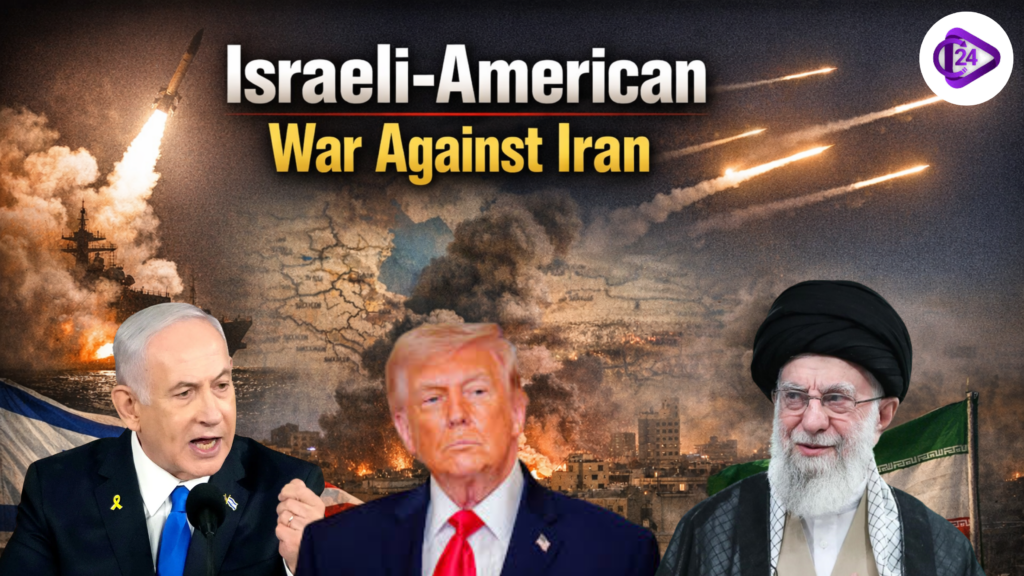
Israeli-American War Against Iran: Strait of Hormuz Crisis and Global Implications
The escalating confrontation involving Israel, the United States, and Iran has emerged as a major geopolitical development in West Asia. Military strikes on Iranian strategic facilities, followed by retaliatory responses and heightened tensions across the Persian Gulf, have raised fears of a wider regional conflict. The situation has drawn global attention because of the potential disruption to the Strait of Hormuz, a crucial maritime chokepoint through which a large share of global oil and natural gas supplies pass. As tensions intensify, the conflict is affecting global energy markets, diplomatic relations, and security dynamics across the Middle East. For countries like India that depend heavily on energy imports from the Gulf region, the crisis carries significant economic and strategic implications.
Why in News
- The Israeli-American conflict with Iran has gained international attention due to several recent developments:
- Coordinated military strikes reportedly targeting Iranian nuclear and military facilities.
- Retaliatory actions and heightened tensions between Iran and Western allies.
- Threats by Iran to restrict or disrupt maritime traffic through the Strait of Hormuz.
- Increased military deployments by global powers in the Persian Gulf region.
- Rising global oil prices and concerns over potential energy supply disruptions.
These developments have made the conflict a critical geopolitical issue affecting global security and energy stability.
Context and Background of the Conflict
The tensions between Iran, Israel, and the United States are rooted in long-standing geopolitical and strategic rivalries in West Asia.
Key background factors include the following:
Iran’s Nuclear Program
Iran’s uranium enrichment activities have been a major point of contention. Western countries and Israel fear that Iran may develop nuclear weapons capability, while Iran maintains that its nuclear programme is for peaceful purposes.
Israel’s Security Concerns
Israel views Iran’s missile programme and regional alliances as a major threat to its national security. Israeli leadership has repeatedly emphasised preventing Iran from acquiring nuclear weapons.
US-Iran Rivalry
Relations between the United States and Iran have been strained for decades due to sanctions, nuclear negotiations, and regional conflicts.
Regional Power Competition
Iran’s influence in countries such as Syria, Iraq, Lebanon, and Yemen has intensified geopolitical rivalries across the Middle East. These tensions have periodically escalated into military confrontations, raising the risk of a broader conflict.
Strait of Hormuz: Strategic Importance
The Strait of Hormuz is one of the world’s most critical maritime chokepoints. It connects the Persian Gulf with the Gulf of Oman and the Arabian Sea, serving as the main route for energy exports from Gulf countries.
Important geographical and strategic features include:
- Located between Iran (north) and Oman and the UAE (south).
- Approximately 33 km wide at its narrowest point.
- Key shipping lanes are only about 3 km wide in each direction.
- Nearly 20% of global oil trade passes through this route.
- Major oil-producing countries such as Saudi Arabia, Iraq, Kuwait, Qatar, and the UAE rely heavily on this maritime passage to export energy resources.
- Because of its importance, the strait is considered one of the most sensitive strategic locations in global geopolitics.
Causes of the Escalation
Several factors have contributed to the escalation of tensions leading to the Israeli-American confrontation with Iran.
Nuclear Security Concerns
Israel and Western powers remain concerned about Iran’s nuclear enrichment capabilities and potential military applications.
Regional Proxy Conflicts
Iran’s support for allied groups in the Middle East has intensified tensions with Israel and its allies.
Strategic Military Competition
The presence of military bases, naval forces, and advanced missile systems in the region has increased the likelihood of confrontation.
Economic Sanctions and Political Pressure
Sanctions imposed on Iran by Western countries have heightened tensions and contributed to diplomatic breakdowns.
Impact on India
The conflict has important implications for India due to its economic and strategic interests in the Middle East.
Energy Security
India imports nearly 85–90% of its crude oil requirements, and a large share of these imports originate from Gulf countries.
Most of these shipments pass through the Strait of Hormuz, making India vulnerable to disruptions in the region.
Rising Oil Prices
Escalation of tensions can cause global oil prices to rise sharply, increasing India’s energy import bill and contributing to inflation.
Trade and Shipping Risks
The Persian Gulf is an important route for India’s international trade. Increased security risks can lead to higher shipping costs and insurance premiums.
Strategic Diplomacy
India maintains strong diplomatic relations with Iran, Israel, and Gulf countries, making the situation diplomatically sensitive. Balancing these relationships is crucial for India’s foreign policy.
Strategic and Security Implications
The conflict has broader security implications for the Middle East and beyond.
Key concerns include:
- Risk of a wider regional war involving Gulf countries.
- Increased militarisation of the Persian Gulf and surrounding waters.
- Potential threats to energy infrastructure and shipping routes.
- Expansion of cyber warfare and hybrid conflict tactics.
Strategic and Security Implications
The conflict has broader security implications for the Middle East and beyond.
Key concerns include:
- Risk of a wider regional war involving Gulf countries.
- Increased militarisation of the Persian Gulf and surrounding waters.
- Potential threats to energy infrastructure and shipping routes.
- Expansion of cyber warfare and hybrid conflict tactics.
Conclusion – Israeli-American War Against Iran
The Israeli-American war against Iran represents a significant geopolitical crisis with far-reaching regional and global consequences. The potential disruption of the Strait of Hormuz, one of the world’s most important energy chokepoints, has heightened concerns about global energy security and economic stability. For India, the crisis directly affects energy imports, trade routes, and diplomatic relations in the Middle East. Globally, rising tensions could trigger higher oil prices, disrupt supply chains, and intensify geopolitical rivalries. Addressing the crisis will require sustained diplomatic efforts, international cooperation, and strategic planning to ensure stability in one of the world’s most sensitive geopolitical regions.