
Day: September 13, 2025

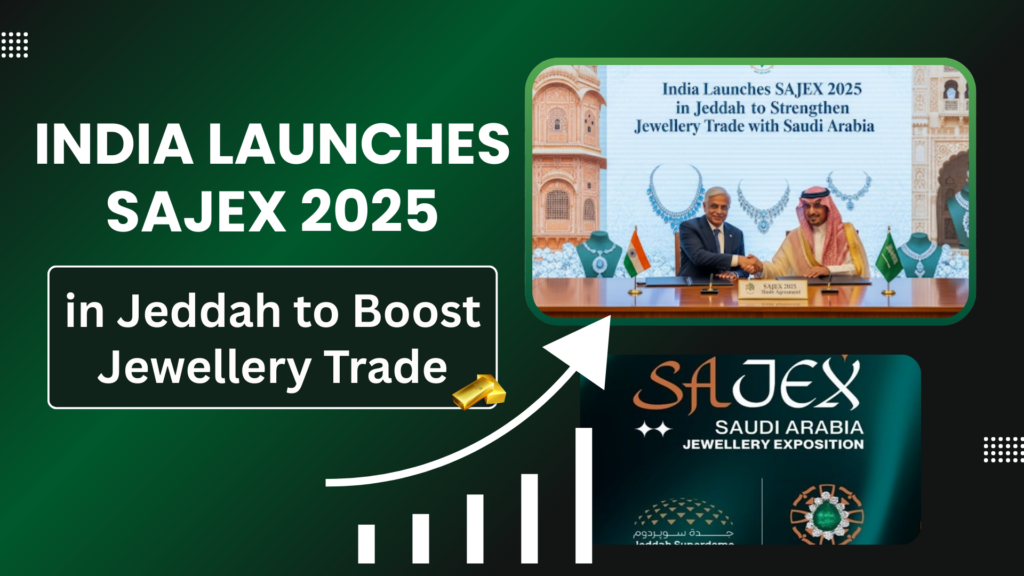
India Launches SAJEX 2025 in Jeddah to Boost Jewellery Trade

India has also initiated SAJEX 2025 (Saudi Arabia Jewellery Exposition), in Jeddah to intensify its trade in jewellery with Saudi Arabia and GCC nations. The event shows off the fact that India is a world leader in gem and jewellery exports and seeks to increase its market share in the Middle East luxury market.

Event Details

  • Dates: 11–13 September 2025

  • Venue: Jeddah Superdome, Saudi Arabia

  • Organizers:

    • Gem & Jewellery Export Promotion Council (GJEPC)

    • Indian Consulate, Jeddah

    • Indian Embassy, Riyadh

    • Ministry of Commerce & Industry

  • Scale:

    • 200+ exhibitors

    • 250 booths

    • 2,000+ international buyers and business visitors

  • Exhibits Include:
     

    • Diamond and coloured gemstone jewellery

    • Bridal collections

    • Gold jewellery (18k, 21k, 22k)

    • Lab-grown diamonds

    • Jewellery-making technology and innovation

India’s Jewellery Industry

  • Global Share:
     

    • 65% of global diamond value (processing over 1 billion diamonds annually)

    • 92% of global diamond trade by volume
       

  • Exports FY 2024–25: $32 billion

  • FDI Growth: 315% surge in FY 2024–25, contributing to $50 billion total FDI inflow

  • India is a leader in gold, silver, coloured gemstones, and lab-grown diamonds, reinforcing its status as a production and innovation hub.

Saudi Arabia Market Potential

  • GDP: $1.1 trillion, largest in the Gulf region

  • Jewellery Market: $4.56B (2024) → $8.34B (2030), CAGR 10.6%

  • Vision 2030: Focus on luxury, retail, and tourism growth

  • SAJEX 2025 Objective: Position Saudi Arabia as a regional jewellery hub and reinforce India’s strategic trade role

Key Takeaways

Fact

Details

Event

SAJEX 2025

Location

Jeddah Superdome, Saudi Arabia

Dates

11–13 September 2025

Organizers

GJEPC, Indian Consulate (Jeddah), Indian Embassy (Riyadh), Commerce Ministry

India’s Exports FY 24–25

$32 billion (gems and jewellery)

Saudi Market Growth

$4.56B → $8.34B by 2030 (CAGR 10.6%)

Conclusion

Shows India’s economic diplomacy and trade expansion in the Gulf. Highlights India’s leadership in the global gem and jewellery value chain. Demonstrates alignment with Vision 2030 markets and strategic FDI promotion.
India Achieves 250 GW Non-Fossil Fuel Power Capacity

India has reached a milestone of generating 250 GW of electricity capacity using non-fossil fuel, which is significant in her process of converting to low-carbon and sustainable energy sources. On 11 September 2025, during the State Review Meeting on Renewable Energy in New Delhi, union minister Pralhad Joshi announced this. This puts India among the leading clean energy countries in the world and speeds up towards the 500 GW renewable energy target by 2030, which is consistent with the Nationally Determined Contributions (NDCs) of India under the Paris Agreement.

Destruction of Non-Fossil Fuel Capacity.

The 250 GW capacity includes:

  • Solar Energy

  • Wind Power

  • Hydropower

  • Biomass Energy

  • Nuclear Energy

This is a paradigm shift of fossil-based energy to clean and sustainable energy.

2030 vision: 500 GW Renewable Energy.

  • The government aims to achieve 500 GW of renewable energy by 2030 with its energy security, climate and sustainable development objectives.

  • They are using policy momentum, investments and participation at the state level to realize this ambitious target.

Key Initiatives

Swachh Bharat & Swachh Energy:

  • Associating clean environments with clean energy, fighting pollution, enhancing the health of the population, and providing energy access to the underprivileged.

Free Power to 20 lakh families:

  • Homes that do not own the roof top or do not have the infrastructure to do it are utility-led solar models.

  • Andhra Pradesh has been the first one to implement it.

  • Target to achieve 1 crore households in the country, increase equity in energy and rural electrification.

NEXT GEN GST and Economic Impact:

  • GST reforms which will boost GDP.

  • Establishes a better investment system of renewable energy and clean technologies companies.

Key Facts & Takeaways

Fact

Details

Milestone

250 GW non-fossil fuel power capacity

Announced by

Union Minister Pralhad Joshi

Announcement Date

11 September 2025

2030 Target

500 GW renewable energy

Free Electricity Beneficiaries

20 lakh households (target 1 crore)

Implementation

Utility-led solar model

Energy Sources

Solar, Wind, Hydro, Biomass, Nuclear

Conclusion

Showcases a desire of India to achieve climate objectives and sustainable development. Publicizes the energy equity projects on the marginalized population. Governments demonstrate the combination of policy, technology and economic planning towards developing large scale renewable energy targets.

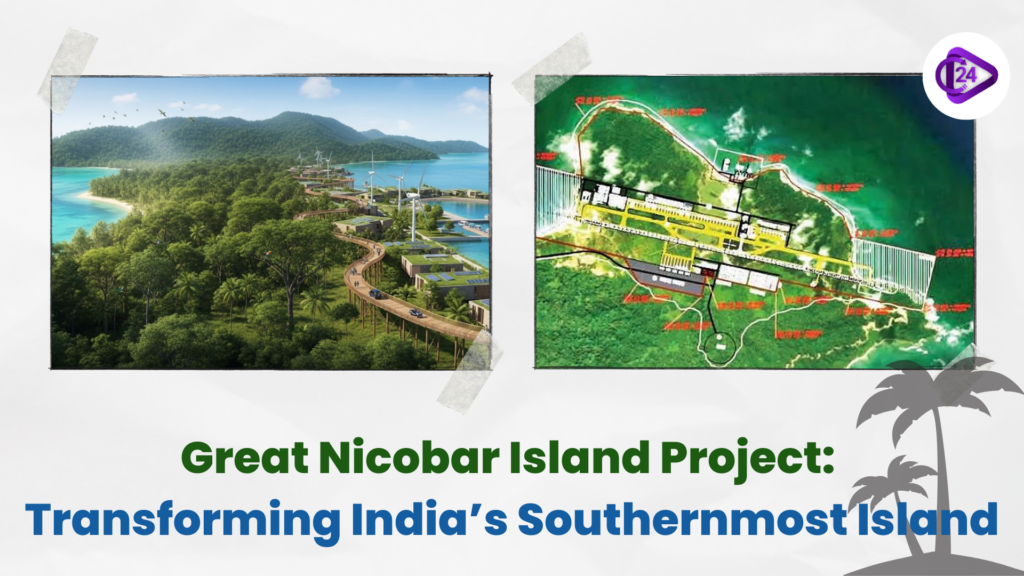
Great Nicobar Island Project: Transforming India’s Southernmost Island

The Great Nicobar Island Project has been in the limelight of Prime Minister Narendra Modi and he has proposed to change the island into a major maritime and air connectivity hub in the Indian Ocean Region (IOR) through the project. It is said to be of strategic, defence, and national significance, and is a balance of both economic development and environmental conservation, and fits the idea of a Viksit Bharat in 2047.

Project Overview

The Great Nicobar Island Project is a multi-development project aimed at improving the infrastructure, connectivity and the presence of Indian maritime security.

Key Features:

  • International Container Transshipment Terminal (ICTT): Capacity of 14.2 million TEU, making it one of Asia’s largest.

  • Greenfield International Airport: Dual-use for civilian and military purposes.

  • Power Plant: 450 MVA gas and solar-based project for energy security.

  • Township Development: Spread across 16,610 hectares to support population and economic activity.

  • Project Cost: ₹72,000 crore

  • Timeline: Phased execution over 30 years

Geopolitical and Strategic Importance.

  • Weakening Expansionism: Strengthens India to counter regional security threats, such as the increase in Chinese naval power.

  • Reducing Illicit activities: Assists in thwarting illegal poaching/transnational maritime crimes.

  • Maritime Advantage: Sited south of Indira point which is less than 150 km into Indonesia to gain strategic control of the Malacca Strait-Indian Ocean route.

  • Global Positioning: Enhanced maritime and air connectivity makes India a security and trade partner of choice in the Indo-Pacific.

Ecological and Tribal Issues.

  • Forest Diversion: Approximately 13,075 hectares (15% of the island) will be diverted; approximately 964,000 trees would be subjected to a threat.

  • Wildlife Impact: Leatherback sea turtle is an endangered species found here.

  • Indigenous Tribes:

    • Shompen: ~237 members

    • Nicobarese: ~1,094 members

    • Tribal reserve: The area is 751 sq km, 84 sq km will be denotified.

  • Seismic Risk: The island is located in a seismically active area that has been destroyed before by tsunami of 2004 (magnitude 9.2). 

  • Professionals forecast that there would be a low possibility of a repeat of a significant occurrence in the short run.

  • Union Minister Bhupender Yadav stressed that ecological, social and strategic evaluation has been carried out as a measure of tribal welfare and that of biodiversity.

Economy Meets Ecology

The project is to find equilibrium between development and environmental conservation:

  • Working according to the National Building Code of earthquake resistance infrastructure.

  • Assimilation of renewable energy (power by the sun)

  • Development of conservation areas of tribal communities and biodiversity.

  • Environmental conscious planning to reduce environmental impact.

Key Facts & Takeaways

Fact

Details

Project

Great Nicobar Island Project

Highlighted by

PM Narendra Modi (12 September 2025)

Union Minister

Bhupender Yadav, MoEFCC

Project Value

₹72,000 crore

Duration

30 years (phased development)

Strategic Importance

Defence, maritime security, global trade

Key Features

ICTT, Greenfield airport, power plant, township development

Ecological Measures

Tribal and biodiversity protection, renewable energy, eco-sensitive planning

Conclusion

 The Great Nicobar Island Project is a perfect example of the Indian strategic thinking and foresight with integration of maritime and air connectivity, defence readiness, and economic development with environmental and tribal protection. In the case of UPSC, it shows combined planning in infrastructure, geopolitics and sustainable development, the increasing influence of India in the Indo-Pacific region.

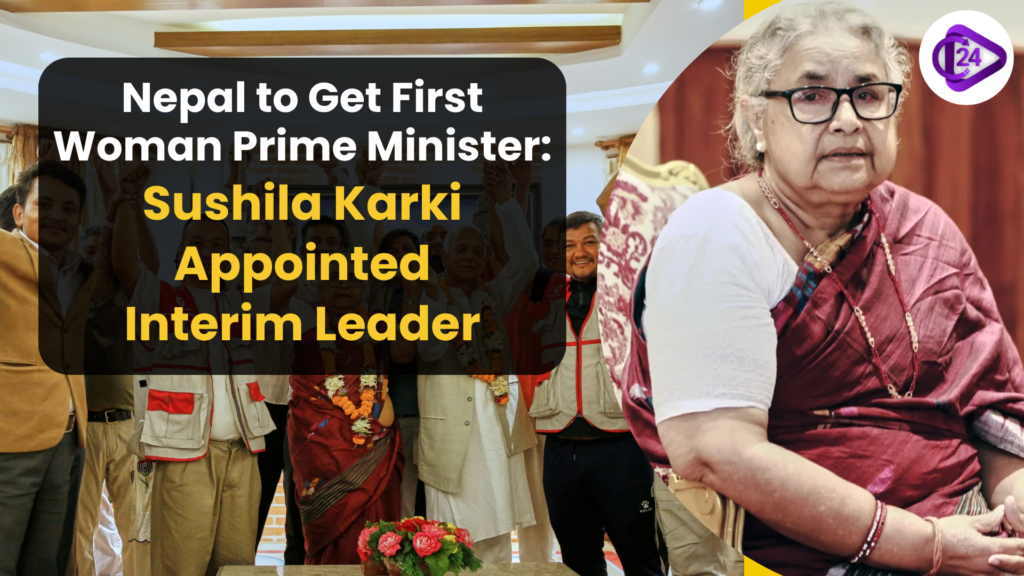
Nepal to Get First Woman Prime Minister: Sushila Karki Appointed Interim Leader

This has been accomplished in a historical political scenario with Sushila Karki, the first women Chief Justice in Nepal, being appointed the first woman to serve as an interim Prime Minister of the country. following an agreement between President Ran Chandra Paudel, the Nepali Army, and Gen-Z protest representatives. Her position comes after a succession of youth driven protests which pressured the former Prime Minister KP Sharma Oli to step down, heralding the emergence of a new generation Nepal politics.

Background: The Gen-Z Revolt

  • The demonstrations were significantly caused by the young Nepalis who were vexed by being marginalized by corruption and failure of governance especially by the proposed ban on the social media sites.

  • The protests turned violent and more than 30 and 1,000 plus people were wounded.

  • The elderly political leaders stepped down by masses hence creating room to the young leadership.

  • Other entrance contenders were Kathmandu Mayor Balendra Shah and former Nepal Electricity Authority head, Kulman Ghising.

  • Sushila Karki emerged as a consensus choice due to her clean image, anti-corruption record, and public credibility.

Who is Sushila Karki?

  • Date of Birth: 7 June 1952, Biratnagar, Nepal

  • Education:

    • BA, Mahendra Morang Campus, Nepal (1972)

    • MA (Political Science), Banaras Hindu University, India (1975)

    • LLB, Tribhuvan University, Nepal (1978)

  • Legal Career: Began in 1979; became Senior Advocate in 2007

  • Judiciary:

    • Appointed ad-hoc Supreme Court Judge in 2009, permanent judge in 2010

    • First female Chief Justice of Nepal (2016–2017)

    • Known for a zero-tolerance approach to corruption, which brought her into conflict with political elites

    • Survived impeachment attempts in 2017

The independence and integrity of the judiciary, made her the right person to lead Nepal at the time of political transition.

Role as Interim Prime Minister

The main duties of Karki are:

  • Stabilising Nepal in weeks of instability.

  • Holding free and fair elections in 6-12 months.

  • Re-establishing citizen confidence in the system of governance by transparency and accountability.

  • Although widely popular, she experiences weaknesses like a wide political divide, economic stagnation and weak democratic institutions.

Regional and International Significance

  • This political transition is geopolitical in Nepal because it is situated between India and China.

  • The leadership of Karki is a gender and a generational milestone; it can be hopeful that more women will be politically involved in South Asia.

  • Her educational and academic connections to India can be used as a boon to the bilateral relations between India and Nepal and cultural diplomacy.

Key Facts & Takeaways

Fact

Details

Name

Sushila Karki

Position

Interim Prime Minister of Nepal (first woman PM)

Sworn in

12 September 2025

Appointed by

Gen-Z protest leaders, Nepali Army, President Ran Chandra Paudel

Predecessor

KP Sharma Oli

Main Role

Conduct elections within 6–12 months; restore governance

Background

First woman Chief Justice of Nepal (2016–2017)

Conclusion

 The appointment of Sushila Karki as the first woman Prime Minister in Nepal is a milestone in South Asian politics, contributing to the empowerment of women, generational transformation and anti-corruption governance. In the case of UPSC, it depicts themes like gender in leadership, transition of power, youth activism, and geopolitics of the region.

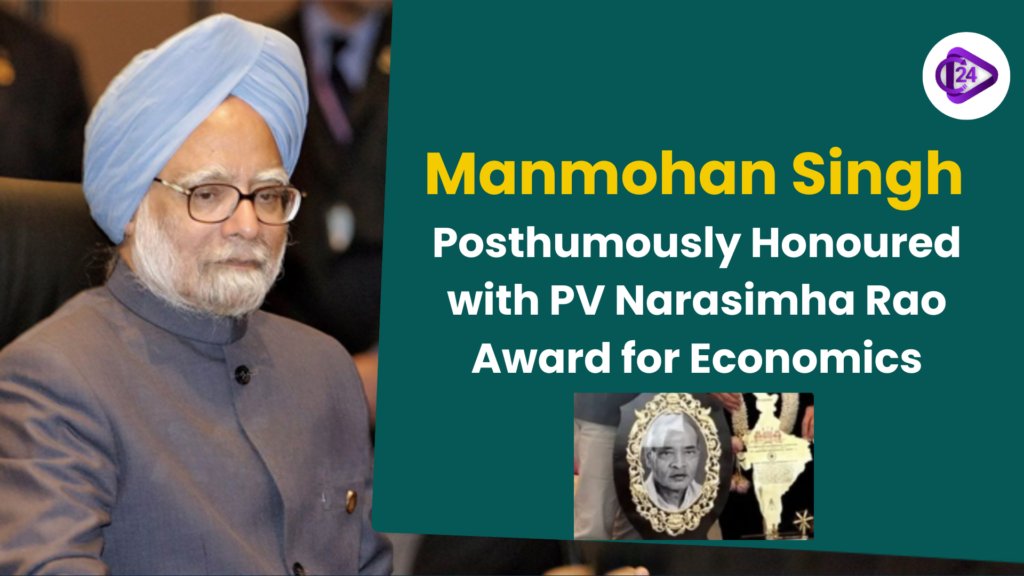
Manmohan Singh Posthumously Honoured with PV Narasimha Rao Award for Economics

Dr. Manmohan Singh, former Prime Minister and architect of India’s 1991 economic liberalisation, was posthumously awarded the PV Narasimha Rao Memorial Award for Economics. The award, presented by Montek Singh Ahluwalia, recognises Dr. Singh’s pivotal role in steering India’s economy through a financial crisis and initiating sweeping reforms such as de-licensing industries, reduction in import tariffs, and the liberalisation of trade. The award ceremony in New Delhi was attended by policymakers and economists, with Dr. Singh’s wife, Gursharan Kaur, accepting the award on his behalf.

Key Points in Detail

Significance of the Award

  • The PV Narasimha Rao Memorial Award in Economics is an award that recognizes those who have made revolutionary contributions to the economic development of India.

  • Dr. Manmohan Singh is credited with the historic contribution in the formulation of the post independence economic policies of India particularly the 1991 economic reforms.

  • This award was given after his death as a commemoration of the legacy that Singh left behind in transforming the Indian economy.

The role of Dr. Singh in Reforming the Economy of India (1991)

  • De-licensing of industries in order to encourage entrepreneurship and development of the private sector.

  • Improved competition and low prices: through reduced tariffs on imports.

  • Liberalization of the exchange rates in order to open the Indian economy to the rest of the world.

  • Promotion of Foreign Direct Investment (FDI) to increase inflow of capital and boost growth.

  • Reorganizing the state sector to enhance efficiency and competitiveness.

  • These reforms played a critical role in ensuring that India was no longer heading towards a financial crisis and embarked on the process of liberalisation and integration into the worldwide arena.

Old Relationship with P V Narasimha Rao.

  • Dr. Singh being the Finance Minister had collaborated with the Prime Minister Narasimha Rao to carry out the 1991 reforms.

  • The liberalisation policies have the credit of both leaders and have transformed the economic picture of India.

  • The award is a recognition of the long-term relationship between the two whose combined forces gave the foundation to the Indian sustained economic growth in later decades.

PV Narasimha Rao Memorial Foundation (PVNMF) 

  • PV Narasimha Rao Memorial Foundation (PVNMF) is a non-profit organization that celebrates the life of a great Indian national leader by awarding donation scholarships and facilitating education.

  • The award, named after PV Narasimha Rao Memorial Foundation (PVNMF), is given to honor those who have assisted the economic growth of India in a significant way.

  • The ceremony was attended by K. Ramachandra Murthy (President of PVNMF) and Madhamchetty Anil Kumar (General Secretary) who paid tribute to the legacy of Dr. Singh.

Conclusion

The posthumous PV Narasimha Rao Memorial Award conferred on Dr. Manmohan Singh in Economics shows his legendary contribution to the economic reforms in India that transformed the growth of the nation. This recognition supports the old relationship between Dr. Singh and PV Narasimha Rao whose coupled vision resulted in a new phase of economic liberalisation and internationalisation. In the case of UPSC, this is the significance of transformational leadership in the economic policy and the legacy of 1991 reforms on the modern Indian economy.

Frequently Asked Questions (FAQs)

The current affairs cover recent national and international events related to UPSC, SSC, Banking, Railways, and State PCS.

You need to read about the current affairs daily, and revise them every week and every month to keep them longer in your memory.

Yes, Class24 provides free downloadable Daily Current Affairs PDFs for easy revision.

Yes, you can practice MCQs and quizzes to boost your exam preparation.

Absolutely. The content is written in simple, easy-to-understand bilingual language suitable for beginners.

Go to class24.com and click on the current affairs section directly, where you find everything that you need.

ssc-toppers

Start Learning Today with Class24

Related current affairs

Class24 offers free video lectures for smart preparation, covering CGL, CPO, CHSL, MTS, and GD exams. Learn from expert faculty, revise concepts easily, practice with PYQs, and improve speed and accuracy through high-quality, exam-focused video lessons anytime, anywhere.

Get success in your hand. Start study anytime anywhere.

The journey becomes simple and enjoyable when you start taking interest in it. And through our app “Class24”, we will be your trusted partners in developing that interest.

Daily Quizzes
Mock Tests
Ongoing

No ongoing tests right now.