
Day: June 27, 2025

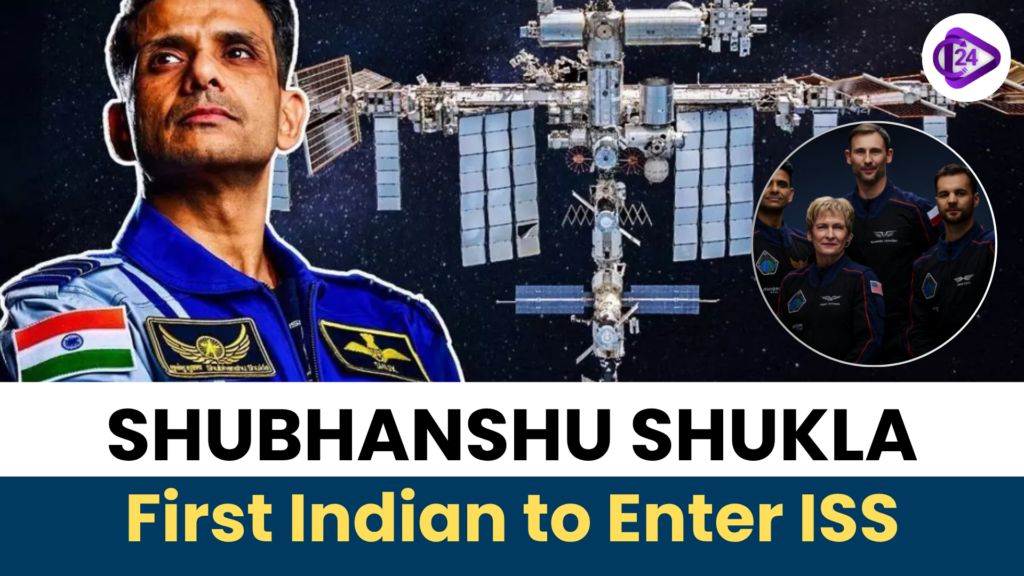
Shubhanshu Shukla: First Indian to Enter International Space Station

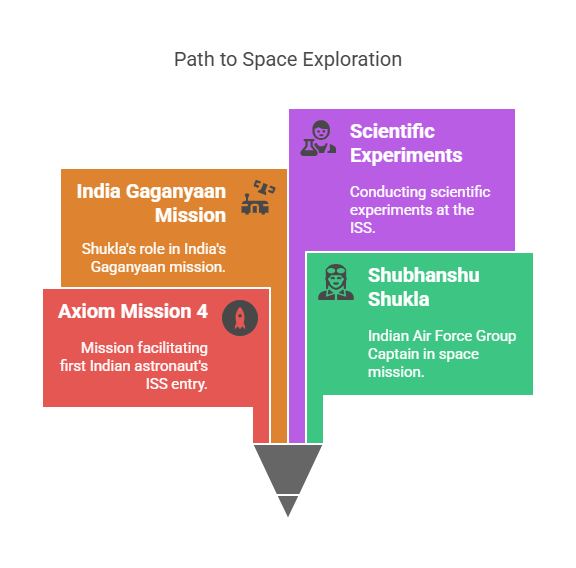
On Thursday, Group Captain Shubhanshu Shukla of the Indian Air Force became the first Indian to enter the International space station (ISS). This is a historic feature in the history of space exploration in India because Shukla has become part of the Axiom Mission 4 (Ax-4) and also set up the foundation to international space exploration as India makes its first manned spaceflight, Gaganyaan.

Context

  • Axiom Mission 4 has Franck pass the first Indian astronaut into the ISS in the shape of Shubhanshu Shukla, a Group Captain in the Indian Air Force. 

  • This is one of the stepping blocks to what Shukla is going to do in the India Gaganyaan mission. 

  • The astronauts will reside at the ISS during two weeks carrying out scientific experiments like those of ISRO.
Details:

Historic Achievement:

  • The first Indian astronaut who was going to enter the ISS was Group Captain Shubhanshu Shukla. 

  • Earlier Thursday afternoon, his spaceship, the Dragon crew capsule, docked on the ISS after several hours of orbiting the globe.

 Gaganyaan Mission and Association:

  • The mission gives Shukla a vital step as he is amongst astronauts assigned to take part in the India Gaganyaan mission. 

  • Gaganyaan will be India's first human space mission, anticipated to be launched in 2026.

Training and Preparations:

  • Shukla and another astronaut Prasanth Nair, who is in the Ax-4 crew as a backup astronaut, have completed advanced training at the Johnson Space Center in Texas. 

  • They received training as well in Russia and this is part of the experience on human spaceflight.

Time and Exercises:

  • The four astronauts on board of the space ship are to spend the next fortnight at the ISS and perform scientific experiments, which includes eight experiments under ISRO, and participate in maintaining the station.

Obstacles and delays:

  • The Axiom-4 mission experienced various setbacks such as bad weather and malfunctioning of the falcon 9 rocket and the ISS prior to its docking at 4. 15 pm IST.

Conclusion

The entry of Shubhanshu Shukla in ISS is the historic event in the space exploration of India. Not only does his contribution to the Axiom Mission 4 signify increasing Indian capacities in space, it is also an event which promotes the upcoming Gaganyaan mission, which as the next step in the human spaceflight ventures of India, will serve as a great milestone.
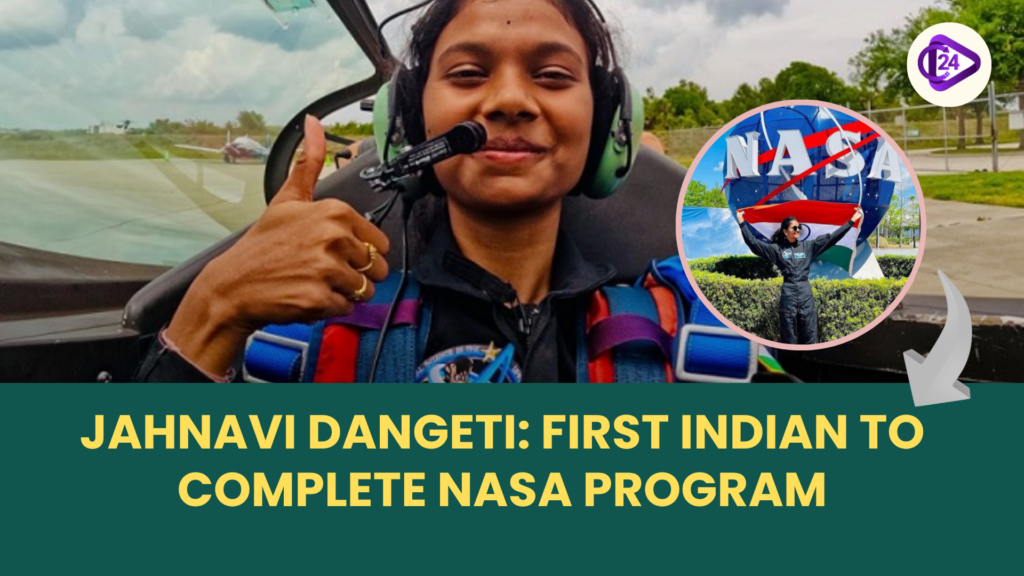
Dangeti Jahnavi Becomes First Indian to Complete NASA’s Space Program

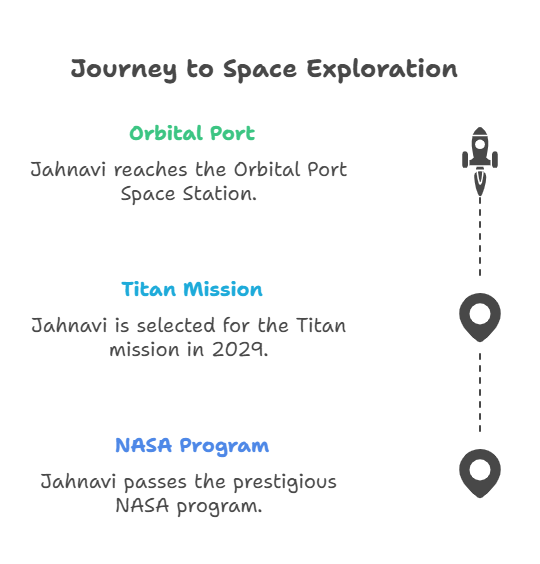
Dangeti Jahnavi, a space enthusiast and the first Indian to have passed through the prestigious International Air and Space Program offered by NASA, in Palakollu, the District Headquarters in Andhra Pradesh. Her victory is a big step in the increasing involvement of India in international space exploration. The fact that Jahnavi was picked to go to Titan in 2029 to the Orbital Port Space Station as part of a team is also an indication of her high qualifications and the rising factor of the Indian talent in global space flights.

Context

  • The first Indian ever to graduate out of NASA air and space program is Dangeti Jahnavi who has been appointed to a history-making journey to an Orbital Port Space Station in Titan in 2029. 

  • Her interests abroad, her education and her contributions as far as space science is concerned depict the fact that India is rising as far as space exploration is concerned.

Key Points

Historic Achievement:

  • The first Indian to graduate the International Air and Space Program of NASA is Dangeti Jahnavi, the Andhra Pradesh resident. 

  • Her appointment to the mission of Titan Orbital Port Space station in 2029 is a very important historical moment in the history of space explorations in India.

Educational Background:

  • Jahnavi did her Bachelors in Electronics and Communication Engineering at Lovely Professional University. 

  • She is a native of Palakollu, Andhra Pradesh and she has been supported by her family, especially her parents who stay in Kuwait.

STEM Leadership and Advocacy:

  • Jahnavi is one of the champions of STEM education in India.

  •  She has given lectures in the programs of the education department of ISRO and in the National Institutes of Technology (NITs) encouraging the next generation of space lovers.

Advanced Training and Research:

  • Her training to go to space includes such activities as analog missions and deep-sea diving as well as international conferences on planetary science. 

  • An asteroid was discovered by Jahnavi as a result of her work with the International Astronomical Search Collaboration, thus she has worked in space science.

International Recognition:

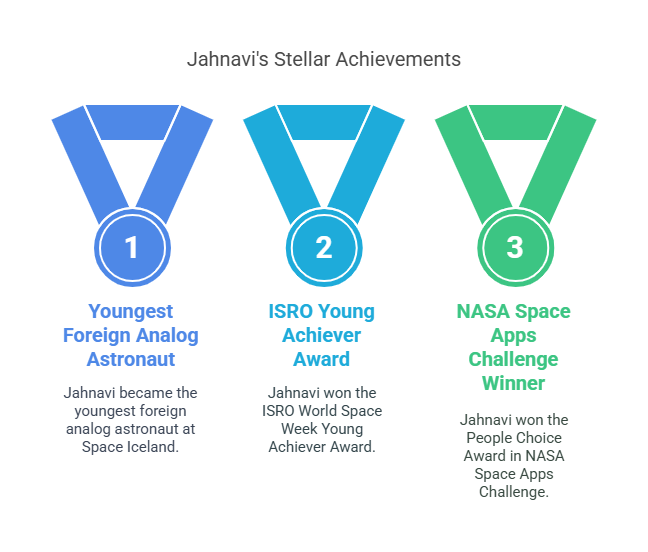
  • Jahnavi was the first Indian to make it to the geology training at Space Iceland ever to be selected and also became the youngest foreign analog astronaut. 

  • Her honours were not limited to awards because she also won the ISRO World Space Week Young Achiever Award as well as the People Choice Award in NASA Space Apps Challenge.

Conclusion

The success of Dangeti Jahnavi proves the increasing space role of India. Her experiences on the way to being the first Indian who graduated the NASA International Air and Space Program are inspirational to the generations to come who want to be part of the space business and advance the centrality of STEM-education in producing the new generation of adventurers. Further evidence of her extraordinary talent and international prominence in the field of space science can be seen in the fact that she is selected to the Titan Orbital Port mission.

World Famous Rath Yatra of Lord Jagannath will kick start today at Puri in Odisha

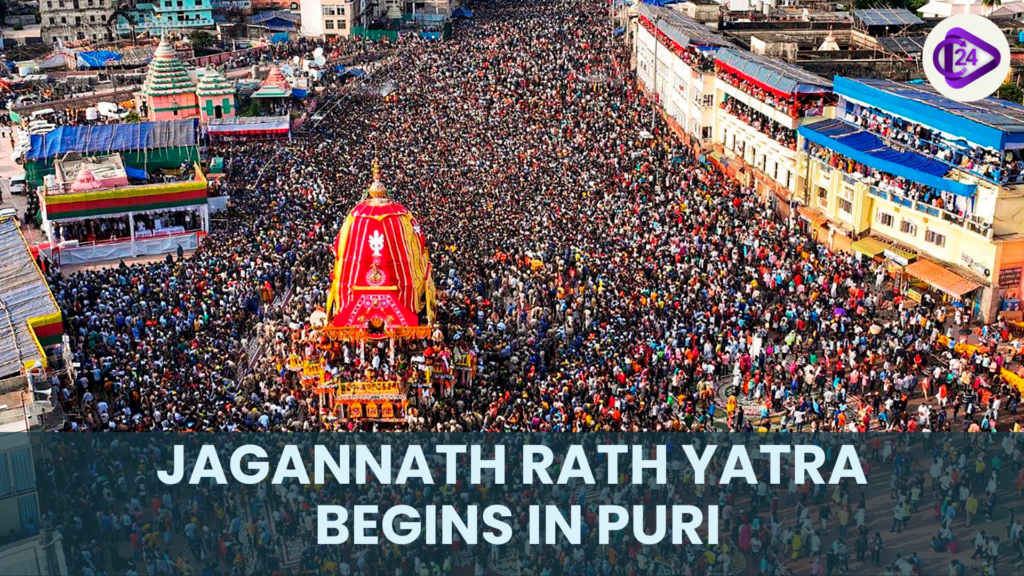
Today, the most popular Rath Yatra, or Chariot Festival, of Lord Jagannath, and his siblings, Lord Balabhadra and Devi Subhadra is scheduled to be started at Jagannath Puri, Odisha. Every year in June-July, this legendary carnival is held to commemorate the trip of the deities to their birth land, Hari-Gundicha Temple. Millions of devotees around the globe attend the event and celebrate it in India as a big event in the culture and religion of Indians.

What is Jagannath Rath Yatra?

  • Jagannath Rath Yatra refers to an annual Hindu festival which revolves around the journey of Lord Jagannath, his elder brother Lord Balabhadra and his junior sister Goddess Subhadra. 

  • Gods make the journey of about three kilometers to the Gundicha temple, which is the home of their aunt, which is a distance of three kilometers away than their home temple in Puri, Odisha. 

  • It is called the Festival of Chariots because the gods are transported in three gigantic wooden chariots being pulled by the devotees by the help of ropes.

Why is Jagannath Rath Yatra celebrated?

  • According to the legend, Goddess Subhadra once said that she wanted to go to the house of her aunt in Gundicha. 

  • Lord Jagannath and Lord Balabhadra had to accompany her on a chariot ride to realize her wish. 

  • This is repeated annually and the gods follow a similar path towards Gundicha Temple.

Historical Background:

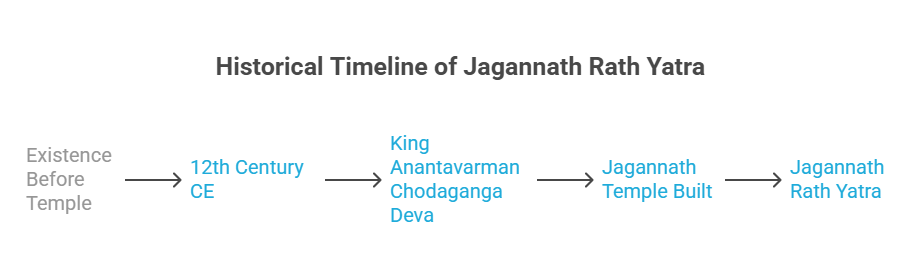
  • The Jagannath Rath Yatra has been traced as far back as to the 12th century CE when King Anantavarman Chodaganga Deva had built the Jagannath temple in Puri. 

  • Ancient sources also indicate that the festival has been in existence since time immemorial even before the temple was built.

Time and Period:

  • The festival is celebrated once a year on the second day of the bright fortnight of the month of Ashadha ( June-July) and the festival lasts nine days. 

  • The finale of the festival is the homecoming of Gods to the Jagannath temple which is referred to as the Bahuda Yatra.

Characteristics of the Charis:

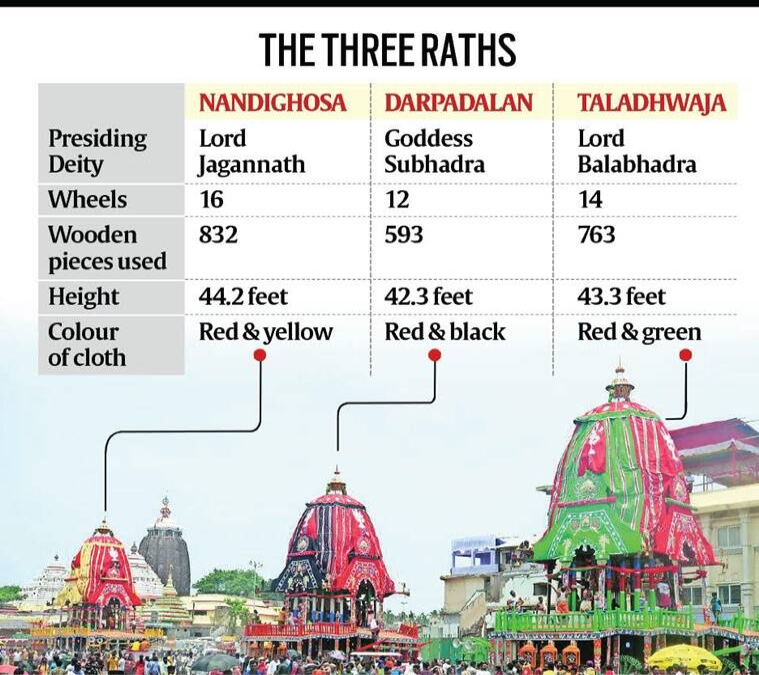
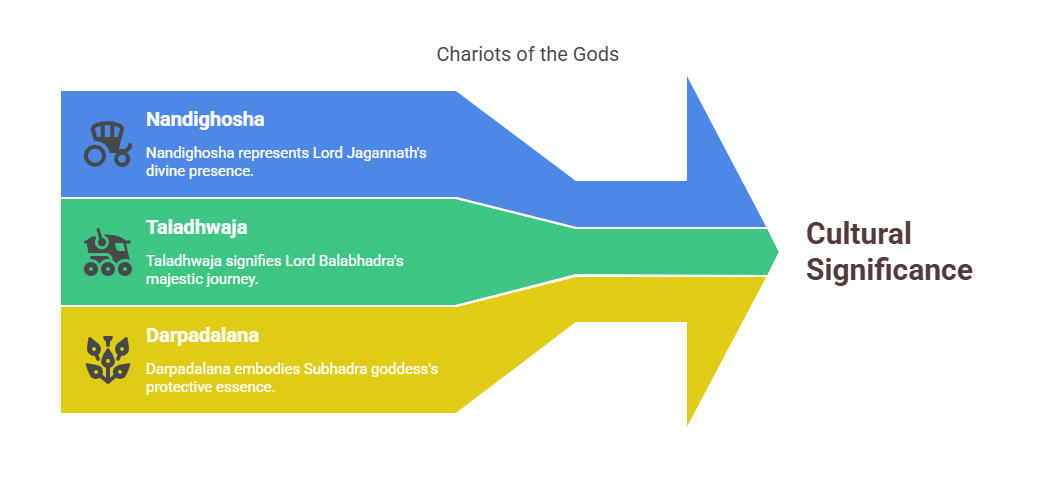
The chariots are large and highly ornamented, and skilled craftsmen, known as rupakar servitors, decorate it with sculptured figures of birds, animals, flowers and guardian deities. There are three chariots that are used in the yatra:

  • Nandighosha – The chariot of the lord Jagannath.

  • Taladhwaja – Horse-carriage of Lord Balabhadra.

  • Darpadalana – The car of Subhadra goddess.

Jagannath Puri:

  • The Jagannath Puri Temple or the White Pagoda, is one of the important monuments of Odisha and also considered to be one of the Char Dham The Hindu pilgrimage destinations in India (along with Badrinath, Dwaraka and Rameswaram). 

  • It is a perfect piece of Kalinga architecture, defined by curved towers, carvings, and decorated sculptures.

  • A fortified ring wall surrounds the temple complex and contains four gates oriented to the cardinal directions. 

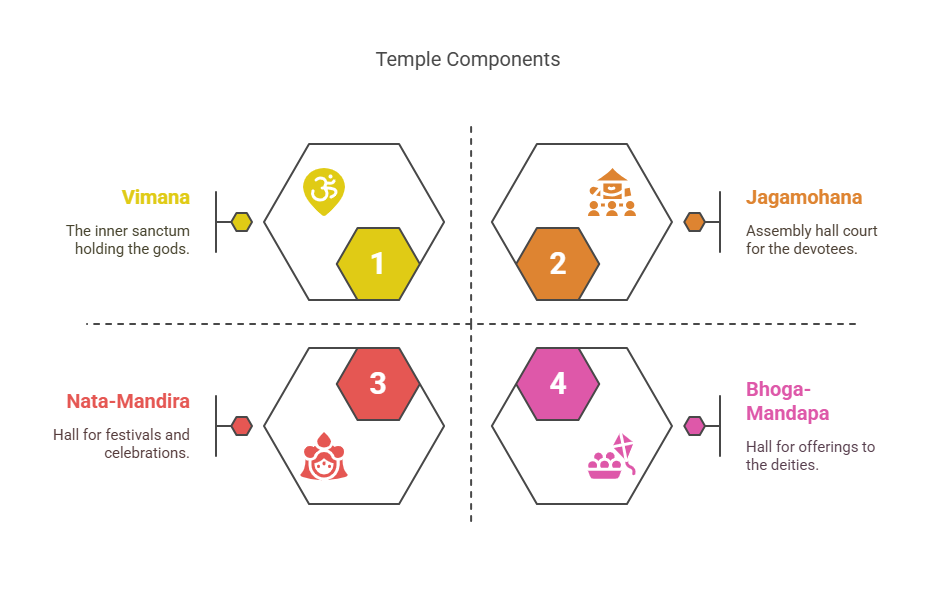
  • It consists of four big structures:

  • Vimana (Sanctum): The most inner components of the temple that holds the gods.

  • Jagamohana (Assembly Hall): The assembly hall court used by the devotees.

  • Nata-Mandira (Festival Hall): Here festivals and celebrations of the temples were held.

  • Bhoga-Mandapa (Offering Hall): The hall in which offering to the deities is made.

  • People also believe that the temple is a Yamanika Tirtha which means that the influence of the lord of death Yama has been wiped out by the existence of Lord Jagannath.

Conclusion

Puri Rath Yatra is a large religious event as well as a cultural festival, which depicts piety, and harmony of the millions. The festival is to be a great success as the security is strong, everything is planned and devotees will come to experience the chariot procession and the journey of deities to Gundicha Temple regardless of the places they live in the world.

Keeladi Controversy-Conflict of Archaeology, Politics and Tamil Heritage

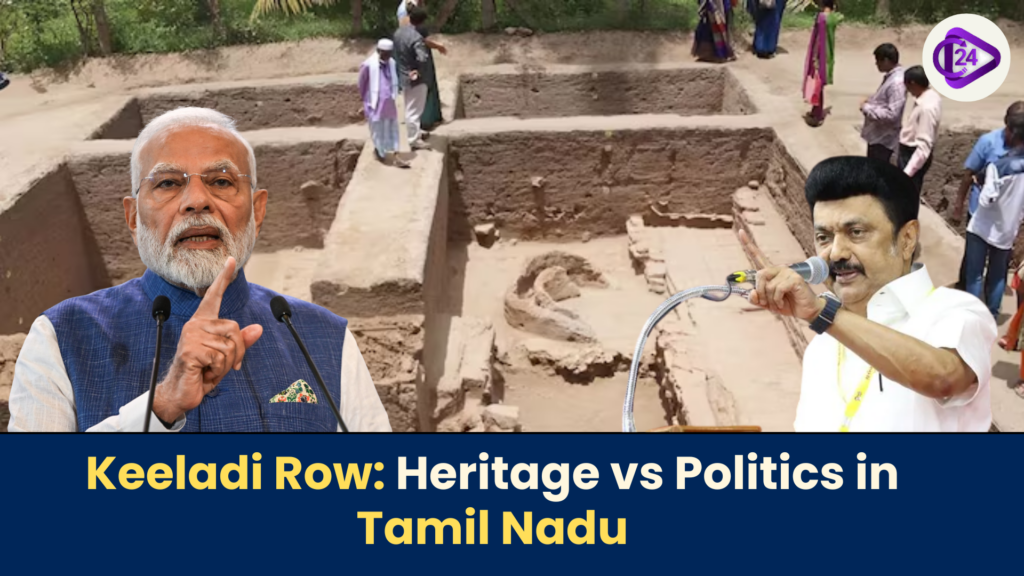
The Keeladi controversy deepened when an archaeologist K. Amarnath Ramakrishna was transferred and requested to amend his report by the Archaeological Survey of India (ASI). This dispute created political turmoil in Tamil Nadu where local parties have accused the Centre of violating Tamil traditions. The controversy has led to a greater discussion concerning the validity of science in the findings and the place of politics in history.

Context

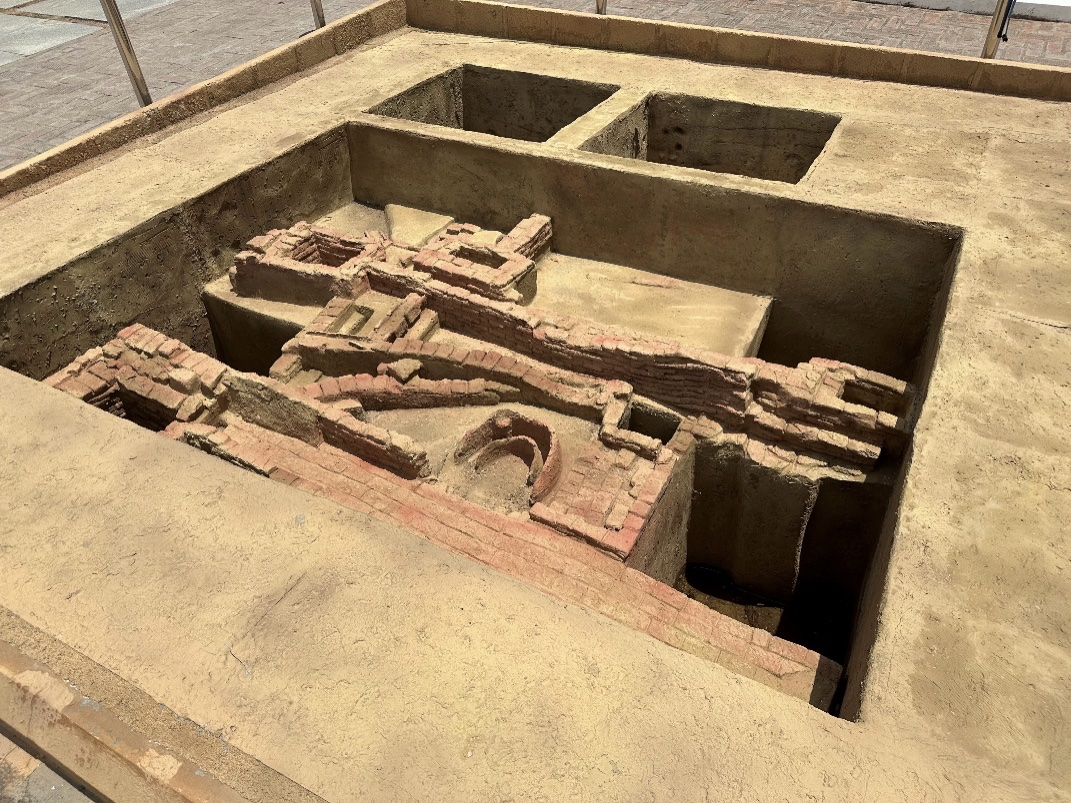
  • The Keeladi excavation process during which evidence of ancient urban civilization had been unearthed has become a battleground on the political differences between Tamil Nadu and the Centre. 

  • That ASI should revise the report has resulted in an allegation of stopping the Tamil legacy and the issue has been raised further.

Details

Background of excavation:

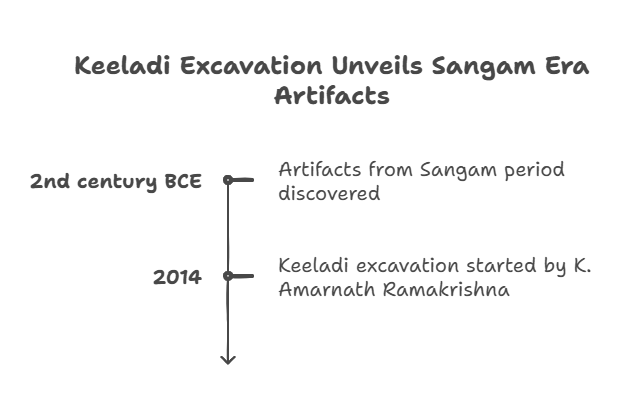
  • Keeladi excavation, started by K. Amarnath Ramakrishna, turned up more than 7,500 artifacts, dating at least to the 2nd century BCE, the period of Sangam.

ASI’s Demand

  • The ASI criticized the ASI questioning the dating and depth of some discoveries and requested that the report be revised after Ramakrishna submitted his 982-page report on the findings. 

  • But Ramakrishna did not obey and justified his discovery as a scientific one.

Political Reactions

  • The political parties in Tamil Nadu, particularly DMK chided the Centre for subjugating Tamil culture. 

  • The AIADMK remained silent but then voiced its concern of lack of corroboration.

Historical Significance

  • The Keeladi discovery featured that the civilization lacked religion as there is no trace of any religious icon in the area. 

  • This has been used as the reason for an advanced Tamil civilization, and led to pride in Tamil heritage.

Scientific Dispute

  • ASI took objections over the early date of findings arguing that there still was a need to conduct more scientific tests to substantiate the finding. 

  • But Ramakrishna postulated that the results conveyed by a strict sense of archaeology with Accelerator Mass Spectrometry.

Conclusion

The Keeladi debate points to the issue of science and politics in the wide sense of historical identity. Whereas the scientific community is holding the grounds on the legitimacy of the results, there is still the political context to the debate as Tamil Nadu considers it as their right to protect and continue their archaic culture. The scandal highlights the problem of the reconciliation of historical studies and political and cultural discourses.

The Future of India Energy to be Increased by First Nuclear Power Plant in Bihar

The construction of the first nuclear power plant in India will take place in Bihar; this is the broader strategy which aims to diversify the energy sources. The project will help the country enhance its nuclear energy capacity besides helping to contribute to regional energy security. Simultaneously, a 1,000 MW battery-storage program is underway to fix the grid, and combine renewables. The emergence of Small Modular Reactors (SMRs) is a great stride in the Indian nuclear community with emphasis on safety, efficiency as well as flexibility. To meet the demands, the government also plans to expand its nuclear energy power to a great extent by 2031-32.

Context

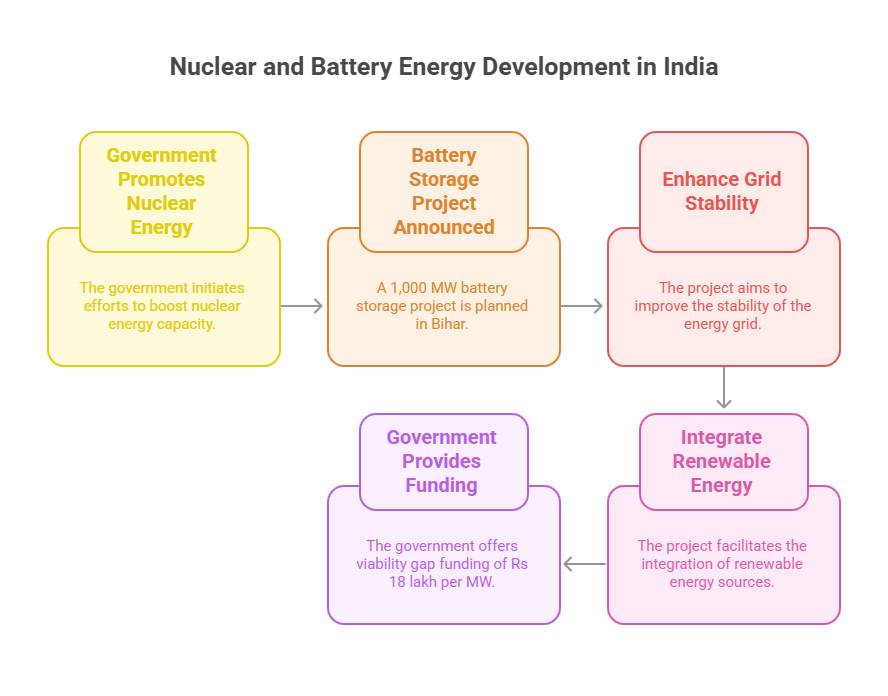
  • This announcement comes after the attempts of the Government to promote the nuclear energy capacity in India. 

  • Even with this, a 1,000 MW battery storage capacity will also be established in Bihar. 

  • This project is also targeting enhancing grid stability and facilitating the integration of renewable energy. 

  • This will be done as the Government will provide viability gap funding of Rs 18 lakh per MW under this project.

About

What is Nuclear Energy?

  • During nuclear reactions, energy could be generated in the form of nuclear energy by fission (atom separation) or fusion (atomic nuclei combination). 

  • In nuclear fission heavy atomic nuclei such as those of uranium or plutonium are broken apart, forming lighter nuclei, but allowing immense quantities of energy to be liberated. 

  • It is exploited in the production of electricity in nuclear power plants.

How do you define Small Modular Reactors (SMRs)?

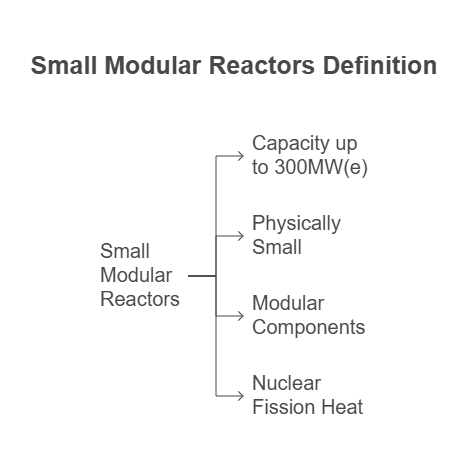
Small Modular Reactors (SMRs) are new improved nuclear reactors that can have a capacity of power ranging up to 300MW(e) per unit compared to the traditional nuclear reactors that have the capacity to produce a generating capacity of one-third that of SMR power.

  • Small: Physically small unlike the conventional nuclear reactors.

  • Modular: Components and systems are preassembled in the factory and can be transported to the place of installations in order to have flexibility with deployment.

  • Reactors: SMRs produce energy by producing nuclear fission heat.

SMRs are of 4 main types:

  • Light Water Reactors

  • High-Temperature Gas Reactors

  • Liquid Metal Reactors

  • Molten Salt Reactors

Positives of SMRs:

  • Improved Safety: SMRs have in-built safety options like natural convection and gravity driven cooling that make them fail-safe in order to avoid any overheating without needing an external source of energy or operator action.

  • Flexibility: The modular design of SMRs enables a gradual gain of power, which is well suited to meet the increasing need in energy.

  • Reportable in Remote Areas: SMRs have the advantage of being smaller in size and they are suitable to be used in smaller grid systems and also used in district heating and desalination of water.

  • Efficient Cost: Construction of an elaborate amount of structures on site can be expensive and costly. However, prefabrication involves a lot of savings in regard to expenses, and time expenditure.

Government Plans of Improving the Nuclear Capability of India

  • The target of India is an enhancement of its nuclear installed capacity in 2031-32 to 22,480 MW as against its current capacity of 8,180 MW. 

  • Various states, including Gujarat, Rajasthan, Tamil Nadu, Haryana, Karnataka, and Madhya Pradesh, are already constructing and commissioning 10 new reactors (with the total capacity of 8,000 MW).

International Cooperation

  • The government has approved in principle to set up 6 x 1,208 MW nuclear power reactors within Kovvada in Andhra Pradesh by cooperation with the United States.

Recent Trend of Indian Nuclear Energy:

  • Uranium discovery: A major new uranium discovery was made around India oldest uranium mine in Jaduguda in Jharkhand.

  • Rajasthan Atomic Power Project (RAPP-7): On September 19, 2024, Unit-7 of RAPP got critical, which is a significant development in the work of a nuclear reactor. It is the third local nuclear reactor to attain this role.

  • Kakrapar Atomic Power Station Units 3 & 4:These 700 MWe reactors started commercial operation in FY 2023 24, the first of India Pressurized Heavy Water Reactors (PHWRs) of this capacity started in commercial operation.

  • Kalpakkam 500 MWe PFBR: India started the commissioning of its first 500 MW Prototype Fast Breeder Reactor (PFBR) in 2024 with primary sodium filling, commissioning of sodium pumps and core loading.

Mission on Nuclear Energy:

  • Capacity Target: The target aims at achieving 100 GW by 2047 (The current capacity stands at 8 GW).

  • Small Modular Reactors (SMRs): 3000 MW of SMRs is an envisaged development supported by a 20000 crore fund in research and development of indigenous SMRs. A focus is on five functional SMRs in 2033.

  • Participation in the Private Sector: It has been proposed to amend the important legislations in this regard such as the Atomic Energy Act, 1962, and the Civil Liability Nuclear Damage Act, 2010 in such a way that proper frameworks and compensation mechanisms in the event of a nuclear accident have been put in place.

  • Capacitor growth: 10 modern reactors (8 GW) in several states are in progress. Another is a 6 x 1208 MW nuclear plant in Andhra Pradesh that was approved together with the USA.

  • Nuclear Partnerships: India is working with the private industry to establish Bharat Small Reactors (BSRs) and Bharat Small Modular Reactors (BSMRs).

Conclusion

The Bihar nuclear power plant is one of the significant milestones towards India enhancing its energy mix, optimizing energy security in this region, and opening itself to modern nuclear technologies. The emphasis on Small Modular Reactors and increased nuclear capacity represents the devotion of India in fulfilling its aggressive energy objectives and continuing its involvement in the international nuclear energy industry.

Frequently Asked Questions (FAQs)

The current affairs cover recent national and international events related to UPSC, SSC, Banking, Railways, and State PCS.

You need to read about the current affairs daily, and revise them every week and every month to keep them longer in your memory.

Yes, Class24 provides free downloadable Daily Current Affairs PDFs for easy revision.

Yes, you can practice MCQs and quizzes to boost your exam preparation.

Absolutely. The content is written in simple, easy-to-understand bilingual language suitable for beginners.

Go to class24.com and click on the current affairs section directly, where you find everything that you need.

ssc-toppers

Start Learning Today with Class24

Related current affairs

Class24 offers free video lectures for smart preparation, covering CGL, CPO, CHSL, MTS, and GD exams. Learn from expert faculty, revise concepts easily, practice with PYQs, and improve speed and accuracy through high-quality, exam-focused video lessons anytime, anywhere.

Get success in your hand. Start study anytime anywhere.

The journey becomes simple and enjoyable when you start taking interest in it. And through our app “Class24”, we will be your trusted partners in developing that interest.

Daily Quizzes
Mock Tests
Ongoing

No ongoing tests right now.