
Day: June 25, 2025

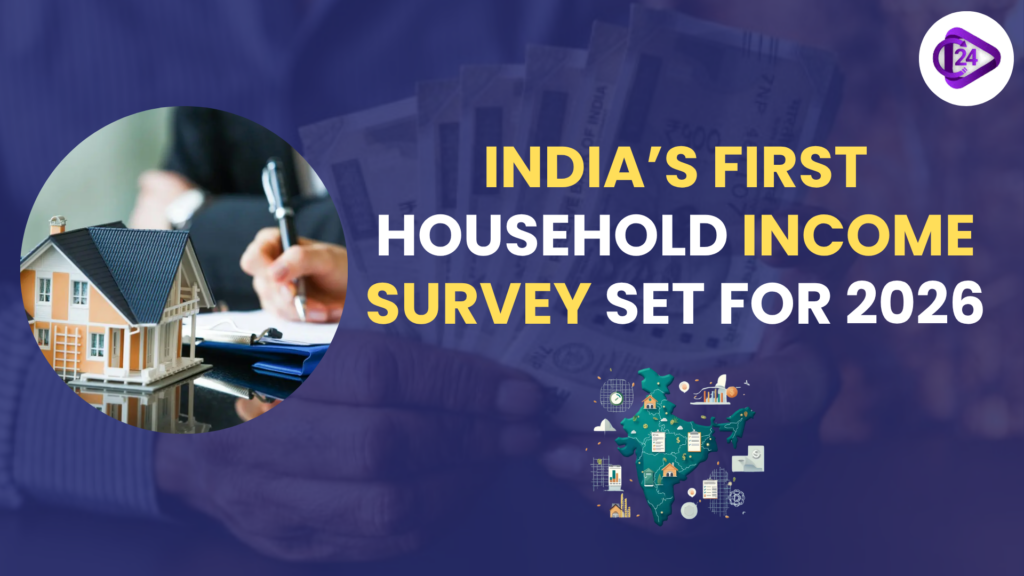
First-ever Household Income Survey to be carried out in 2026 by Statistics Ministry

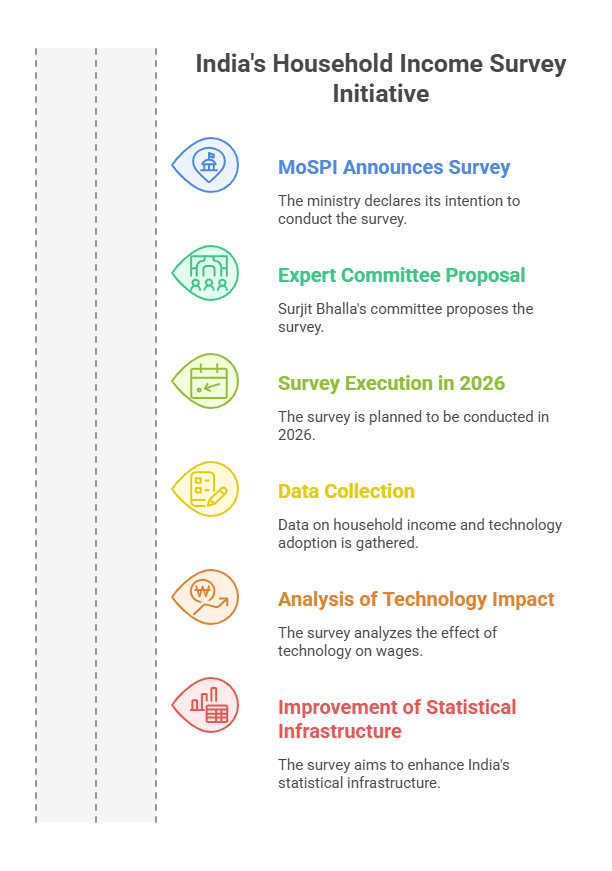
The ministry of statistics and programme implementation (moSPI) has declared intentions to submit India to the first-ever Household income Survey in 2026. This survey will be used to gauge the income of households in the country and it will also determine the effect that adoption of technology has on wages. This survey is proposed by an expert committee led by an economist Surjit Bhalla who has attempted to undertake this survey many times in the past because of unavailability of reliable data. The project is a cherry on the pie because it displays the concern of MoSPI toward passing credible economic statistics and bettering statistical infrastructure within India.

Context

  • In 2026, India will have the first ever Household Income Survey, that is, an attempt to measure income and measure the effects of technology on wages. 

  • The survey will be a giant step in enhancing the data gathered and give more precise information on the economic situation of the country.

Key Points

Objective

  • The first prime effort to mop up precise household income data in India.

    • Income disparities

    • Economic trends

    • Technological effects on wages

Historical Context

  • Past attempts (1950s60s) did not work because of undependable data and underestimation of application.

  • The result was that estimates of income were less than the consumption and savings thereby causing inconsistency.

  • The recent earlier program failed and, thereby, a new one is required.

Scope and Methodology

  • Coverage: All over the country (rural and urban)

  • Advised by: Technical Expert Group (TEG) headed by the economist Surjit Bhalla

  • Focus on:

    • Better methods of sampling

    • Plugging the major gaps of income distribution data

Expert group and advisory role.

  • TEG responsibilities:

    • Define major income-related notions

    • Develop survey tools Design survey tools

    • Make sure that it conforms to global best practices

    • Devise finishing of results

Related Initiatives

  • Ministry of statistics also carries out:

    • Periodic Labour Force Survey (PLFS) – monthly survey based on income, rent, pensions, remittances

    • Age of industry Annual Survey of Industries

    • Surveys of Social Consumption

Conclusion

Household Income Survey is indeed a milestone on enhancing data and research that monitors the trends of income patterns in India. Under the leadership of such experts as Surjit Bhalla, the project will generate important information on the issue of economic inequality and technological influences on earnings, which will facilitate development of more efficient economic strategies. The survey will also help India in the achievement of a stable statistical framework in the future growth of the country.
The Emergency: India’s Darkest Chapter — 50 Years Later

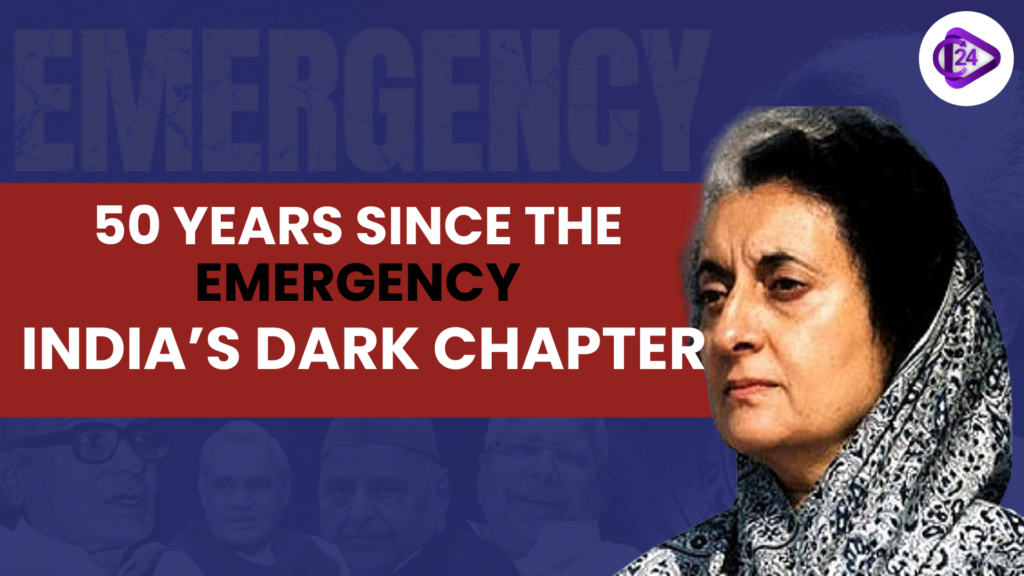
The Emergency declared by Indira Gandhi on June 25, 1975 was one of the worst times in Indian history when the government disregarded civil liberties, suppressed the press, made arrests on a massive scale and ruled by decree. During this 21 month period between June 25, 1975 and March 21, 1977 there was election suspension and mass repression. The article also discusses the history of the Emergency, the emergence of the JP Movement and the subsequent failure in the Indira Gandhi leadership in the 1977 elections. The Emergency still has an impact on the politics of India to date.

Context

  • The Emergency of 1975 was a historical repressive mark against civil rights and political liberty during the reign of Indira Gandhi. 

  • Though it was oppressive in action, it changed the political scenario in India which eventuated in the formation of the Janata Party in 1977.

Key Points

Historical Context

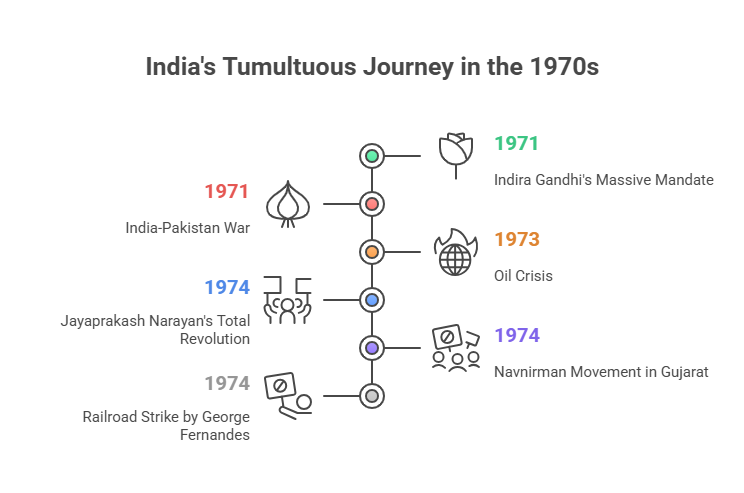
  • In 1971 Indira Gandhi attained a huge mandate but had to deal with economic difficulties:

    • India- Pakistan War 1971

    • Severe droughts

    • Oil Crisis of 1973

  • The increasing misgovernance and levels of corruption caused citizens to be upset.

  • Jayaprakash Narayan had invoked the slogan of Total Revolution in JP Movement (JP).

  • Large student protest:

    • Navnirman Movement (Gujarat)

    • Railroad strike by George Fernandes

Declaring of Emergency

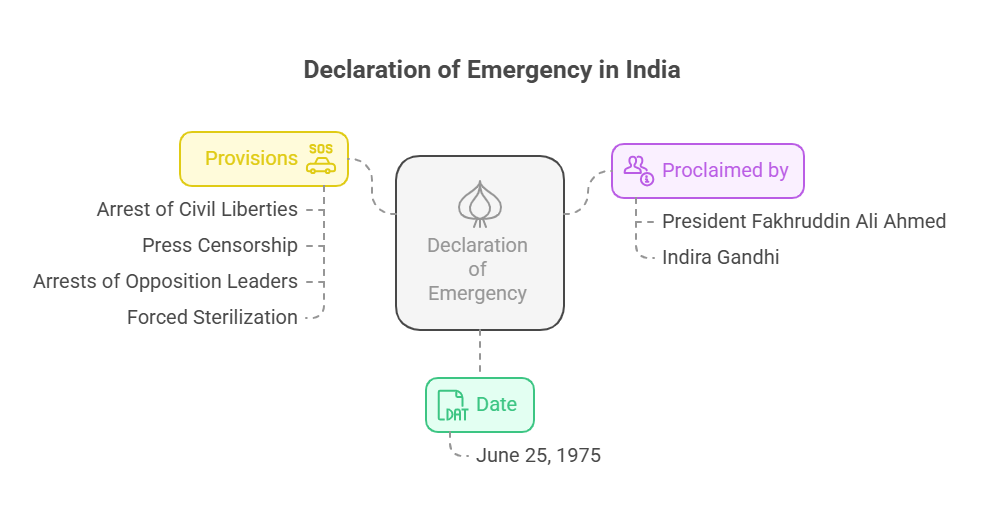
  • Date- June 25, 1975

  • Proclaimed by – President Fakhruddin Ali Ahmed on the advice of Indira Gandhi

  • Provisions:

    • Arrest of civil liberties and Fundamental Rights

    • Press censorship

    • Arrests of opposition leaders in large numbers

    • Such controversial actions as forced sterilization (in the influence of Sanjay Gandhi)

Political Consequences

  • Popular popular vindication

  • Elections of 1977: Janata Party is created and overcomes Congress

  • First non-Congress government in the Centre

  • Signified a short pause on the leading role of the Congress in Indian politics

Judicial and Constitutional policies

  • The 44 th constitutional Amendment (1978):

    • Altered emergency clause of saying internal disturbance to saying armed rebellion

    • Revived safeguard of Fundamental Rights

    • Provided new judicial review of proclamation of Emergency

Emergency legacy

  • National awakening and emerging of new leaders: Lalu Prasad Yadav, George Fernandes, Arun Jaitley

  • Reputational destruction to the Congress; Multi-party democracy sowed the seeds.

  • The experience added to the overall decline of Congress, which has led to its loss in 2014.

Conclusion

The issue of the Emergency of 1975 still remains one of the debatable events in Indian political history. It reduced civil liberty and the press freedom, but simultaneously started a political motion that eventually transformed the politics of power in India. After the Emergency period, there had been significant constitutional changes and political shifts, and this is why it can be regarded as a critical point of the development of democracy development in the country.


India Launches Largest-Ever Tribal Empowerment Campaign — DhartiAaba Janbhagidari Abhiyan (DAJA)

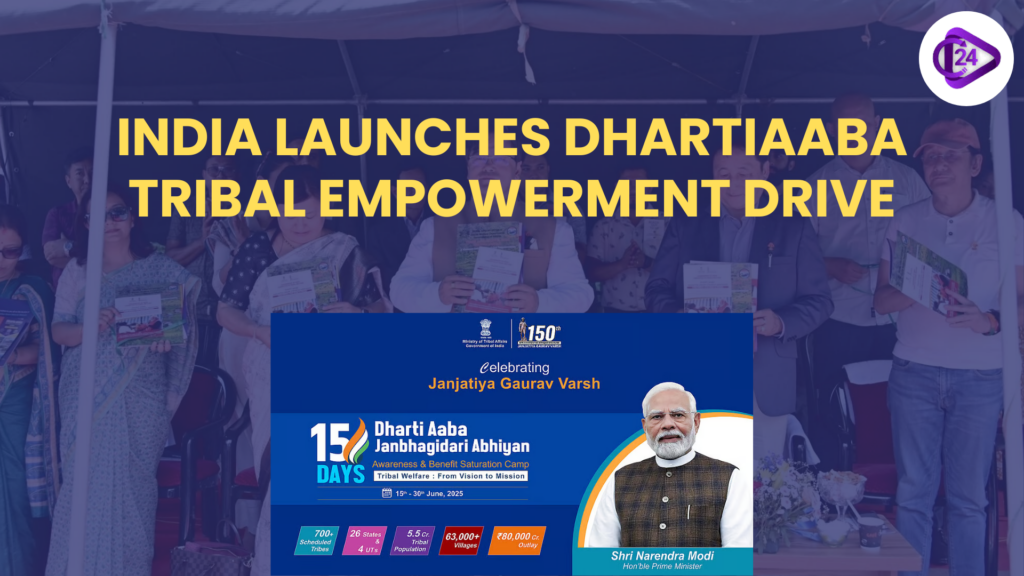
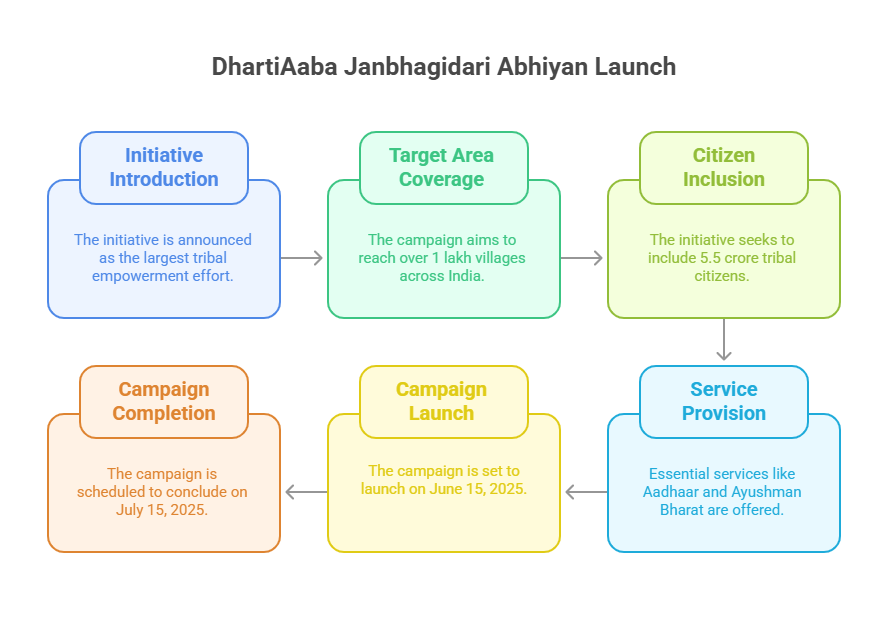
India has introduced the DhartiAaba Janbhagidari Abhiyan (DAJA) or the biggest ever tribal empowerment initiative in the history of the country. Crossing 1 lakh tribal villages and PVTG settlements in 31 states and UTs, the campaign will target to include more than 5.5 crore tribal citizens and make these all-inclusive government welfare schemes. It will be launched on June 15, 2025, and completed on July 15, 2025, as it will cater to the pressing needs of the tribal communities by offering essential services, including the Aadhaar enrolment process, the Ayushman Bharat cards scheme, the PM-Kisan registration process, etc. The promotion also celebrates Bhagwan Birsa Munda the leader of the tribal pride and struggle.
Context

The DAJA campaign in India is empowering 5.5 crores of tribal citizens in 31 states/UTs by providing them the government services at their tribal village itself. The effort is a celebration of being tribal and inclusion with the support of grass-roots involvement and culture affirming.

Key Points 

Launches & Coverage:

  • Release date: June 15, 2025

  • Coverage: 1 lakh + tribal villages and PVTG habitation in 550+ districts in 31 states/UTs

  • Target Group: More than 5.5 crore tribal citizens

  • Completion: Expected in July 15, 2025

Objective:

  • Empower the tribal communities by door step delivery of welfare schemes such as Aadhaar, Ayushman Bharat, PM-Kisan, Ujjwala, Jan Dhan.

Key Achievements 

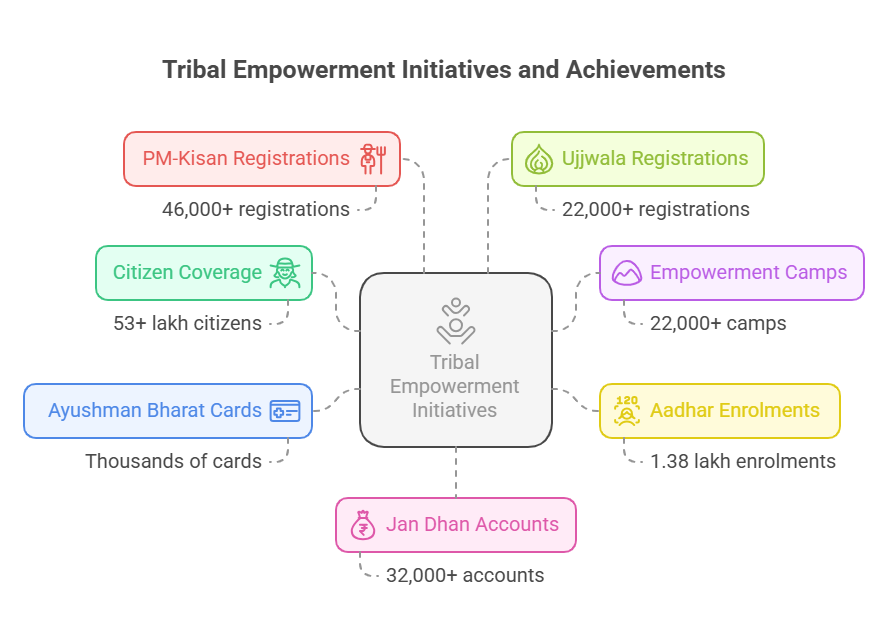
  • 53+ lakh tribal citizens covered

  • More than 22,000 Tribal Empowerment Camps organized

  • 1.38 lakh enrolments of Aadhar

  • Ayushman Bharat cards maintained in thousands of numbers

  • More than 46,000 PM-Kisan registrations

  • 22,000 and above Ujjwala registrations

  • Jan dhan accounts opened 32,000 and above

Focus Areas of Theme:

  • Welfare Saturation- Assuring all entitlements to eligible tribal households.

  • Cultural inclusion: Tribal art, language and outreach in local dialects

  • Options provided within incentives: FRA, pensions, start up, legal support

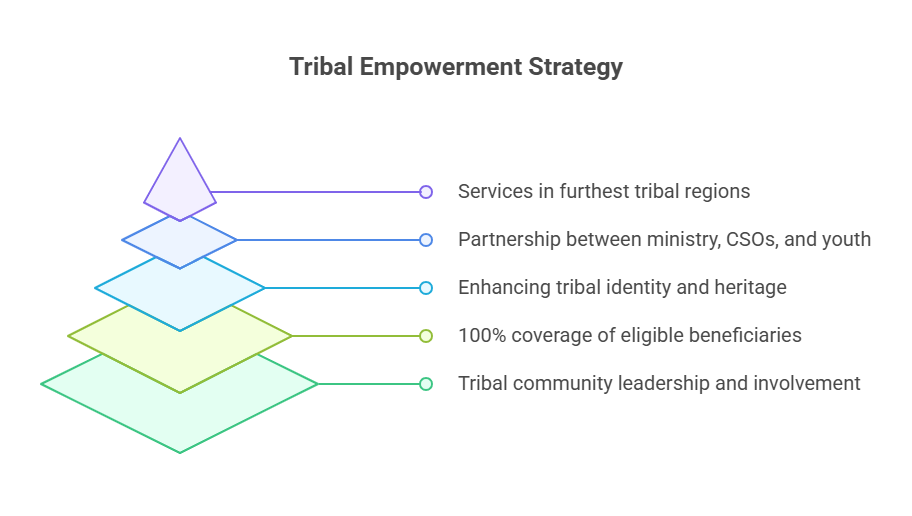
Pillars of Governance:

  • Janbhagidari: Leadership and involvement of tribal community

  • Saturation: 100 percent of the eligible beneficiaries

  • Cultural Inclusion: Enhancing tribal identity and Tribal heritage

  • Convergence: Partnership between the ministry, CSOs and the youth

  • The last mile delivery: Services in furthest tribal regions

Leadership & Participation:

  • Opening by Shri Jayant Chaudhary and Smt. Savitri Thakur

  • Support at the local level- by such leaders as Shri Mangubhai Patel & Shri Devendra Fadnavis

  • Participation of over 700 tribal groups and 75 PVTGs

Cultural Activities:

  • Folk expo, handicraft expo, tribal food festivals

  • The youth and civil society was instrumental in execution

History & Worth:

  • Janjatiya Gaurav Varsh is part of it.

  • Homenaje a Bhagwan Birsa Munda (DhartiAaba)

  • Fits in the PM desire of Sabka Saath, Sabka Vikas to make the tribals the center of the development of India

Conclusion

The DhartiAaba Janbhagidari Abhiyan (DAJA) has become a landmark in the processes of tribal empowerment in India, with the aim of inclusion, self-dependence, and social participation of tribals. The campaign is not only empowering the tribal women, youth and their families; but also it is celebrating their heritage and contribution as Indians to the country by giving them direct connection to the government welfare schemes. It is an effort to restate that the government is true to its cause to be an inclusive government and respect that of the tribe in the Indian saga of development.


Empowering Adolescent Girls: NAVYA Vocational Training Initiative Launched in Sonbhadra

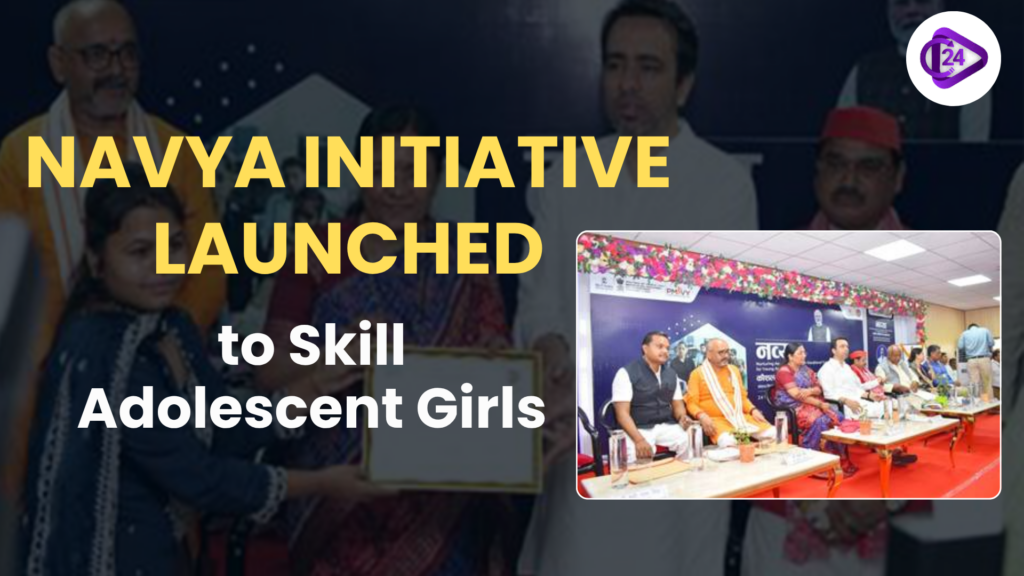
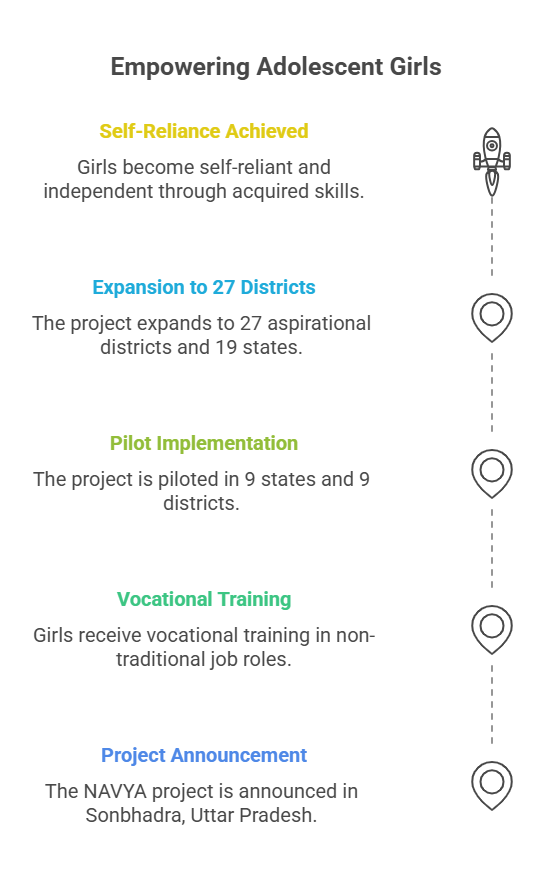
NAVYA, a project to empower adolescent girls between the age of 16-18 was announced in Sonbhadra, Uttar Pradesh, the district with an aspirational status. This initiative, which is a cooperation between the Ministry of Skill Development and Entrepreneurship (MSDE) and the Ministry of Women and Child Development (MWCD) will help provide vocational training to girls in non-traditional job roles and make them future-ready. The project is piloted in 9 states and 9 districts and further will be extended to 27 aspirational districts and 19 states. Shri Jayant Chaudhary and Smt. Savitri Thakur, the attendants of the launch event stressed the need of the government to enable girls to become self-reliant through equipping them with the necessary skills in order to become independent.

Context

  • The NAVYA initiative was undertaken to give vocational training to teenage girls in aspiration districts. 

  • The program emphasizes unconventional employment and comprehensive growth with a guarantee of assuring that girls acquire self-assurance and the chances of gaining employment and establishing their businesses.

Key Points 

Objective:

  • This Vocational education in non-traditional occupations drives adolescent girls (1618 years, Class 10+) in NAVYA to take complete control of their lives by training them in graphic design, smartphone servicing, drone technology and makeup artist courses.

Coverage:

  • Rolled out in 9 of 9 selected districts in 9 states( e.g. Maharashtra, UP, Bihar); to be rolled out in 27 aspirational districts in 19 states.

Skill Development:

  • With core training, girls get 7 hour trainings on:

    • Interpersonal skills (hygiene, self-presentation)

    • Listening skills, speaking skills (listening skills and speaking skills)

    • Safety at the workplace ( POSH, POCSO laws )

    • Budgeting basics (Financial literacy)

Conclusion

The NAVYA effort is an enormous effort to empower adolescent girls in India who are in aspirational districts. Its vocational training and holistic development help in making women self-reliant and empowered to the extent that it produces a generation of self-reliant women. Nationwide tendency towards inclusiveness and gender equality promoted by the government with the help of such initiatives as NAVYA will also play an important role in creating a Viksit Bharat (developed India) by 2047.

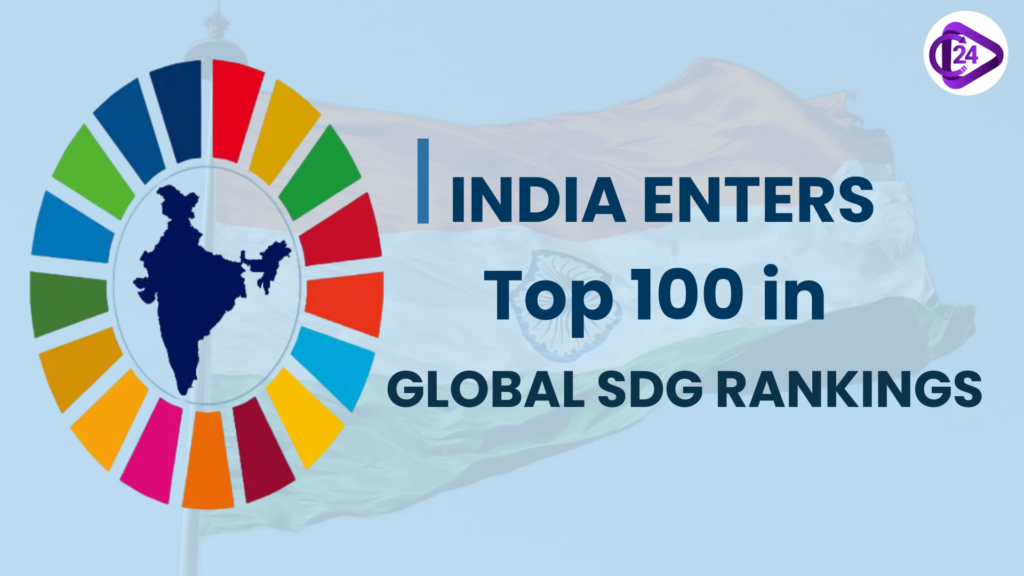
For the First Time, India Breaks into Top 100 in Global SDG Rankings

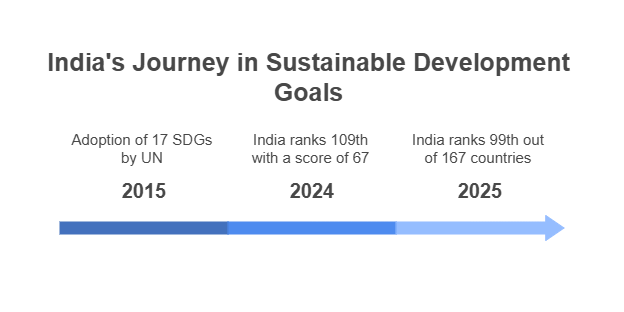
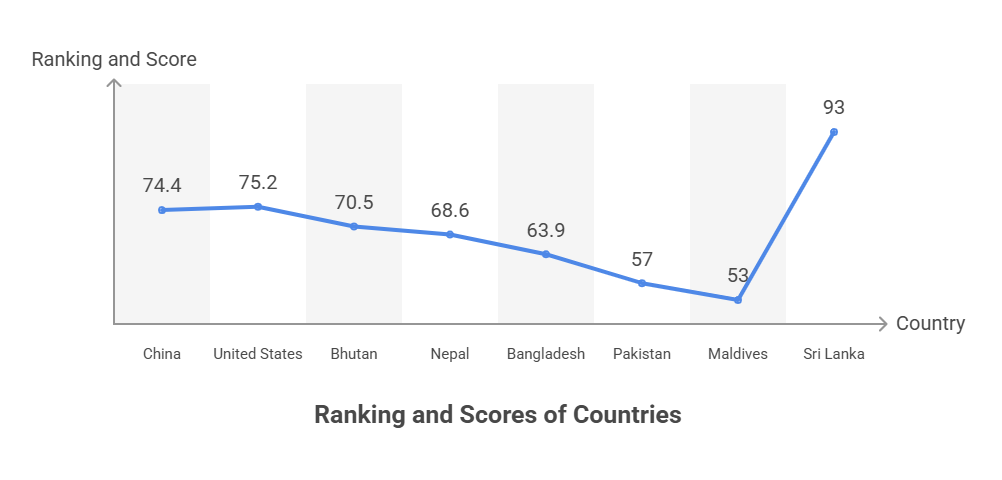
India has improved very well in the Sustainable Development Goals (SDG) Index as it ranks 99 th out of 167 countries in the 2025 version of Sustainable Development Report (SDR). It is a significant milestone because India has improved its ranking in 2024 although it ranked 109th and the score was 67. The report was published by the UN Sustainable Development Solutions Network and follows the implementation of the 17 SDGs that were adopted in 2015. The improvement of the ranking of India is commendable as it ranks higher compared to its nearby states such as Bangladesh and Pakistan but lower than China and the United States. Nevertheless, the report cautions that the path towards global SDG has been going relatively nowhere with just 17% of the SDG goals on course in 2030.

Context

  • Acquiring the 99 th position in the international SDG search rankings, India has gained entry into the top 100 in the list for the first time with a score of 67. 

  • Even though there are improvements, the report also outlines major problems in the SDG performance across the world.

Key Points

The ranking of India in the SDG:

  • This is the first time India is in the top 100 nations on the 2025 SDG Index which pegs it at place 99 of 167 countries.

  • India scored 67 which is also a tremendous improvement on the 109 th ranking of 2024.

Comparison to other Nations:

  • China is placed at number 49 with a score of 74.4 with the United States at number 44 with 75.2 points.

  • Among India’s neighbors:

    • Bhutan ranks 74th with 70.5.

    • Nepal is at 85th with 68.6.

    • Bangladesh is at 114th with 63.9.

    • Pakistan stands at 140th with 57.

    • Maldives and Sri Lanka are ranked 53rd and 93rd, respectively.

Global Climate and the Issues:

  • The SDG Index gauges the worldwide achievement of the 17 SDGs accepted by the United Nations in 2015, and a score of 100 demonstrates the full accomplishment of these objectives.

  • Global SDG movement has mostly stopped, and just 17% of all objectives are expected to be reached by 2030. 

  • The obstacles to meeting the goals on the basis of factors such as conflicts, structural weaknesses and constrained fiscal space have been pointed out.

European Nations hegemony:

  • The highest positions of the SDG Index are occupied by European countries, especially Finland, Sweden, and Denmark.

  • The leading 20 countries are in Europe with a display of high regional outlays in sustainable development efforts.

The Problems of the Ranking Nations:

  • Even the leading European countries are struggling, especially in terms of anthropogenic climatic changes and the concept of biodiversity most prominently caused by unsustainable consumption habits.

Conclusion

Since the country ended up in the 99th position in terms of SDG Index in the year 2025 it is evident that the country has made positive efforts in progressing towards giving off positive experiences towards attaining sustainability in the region. In spite of the progress, structural issues still hamper global SDG efforts and India should still pay attention to such signs as poverty eradication, climate action, and health care, to advance its performance further in connection with SDGs. The world trend shows that Europe is the innovative leader of sustainable development, but even they have to cope with difficulties.

Frequently Asked Questions (FAQs)

The current affairs cover recent national and international events related to UPSC, SSC, Banking, Railways, and State PCS.

You need to read about the current affairs daily, and revise them every week and every month to keep them longer in your memory.

Yes, Class24 provides free downloadable Daily Current Affairs PDFs for easy revision.

Yes, you can practice MCQs and quizzes to boost your exam preparation.

Absolutely. The content is written in simple, easy-to-understand bilingual language suitable for beginners.

Go to class24.com and click on the current affairs section directly, where you find everything that you need.

ssc-toppers

Start Learning Today with Class24

Related current affairs

Class24 offers free video lectures for smart preparation, covering CGL, CPO, CHSL, MTS, and GD exams. Learn from expert faculty, revise concepts easily, practice with PYQs, and improve speed and accuracy through high-quality, exam-focused video lessons anytime, anywhere.

Get success in your hand. Start study anytime anywhere.

The journey becomes simple and enjoyable when you start taking interest in it. And through our app “Class24”, we will be your trusted partners in developing that interest.

Daily Quizzes
Mock Tests
Ongoing

No ongoing tests right now.