
Day: June 18, 2025

Why is the Strait of Hormuz Critical for India’s Oil and Gas Imports?

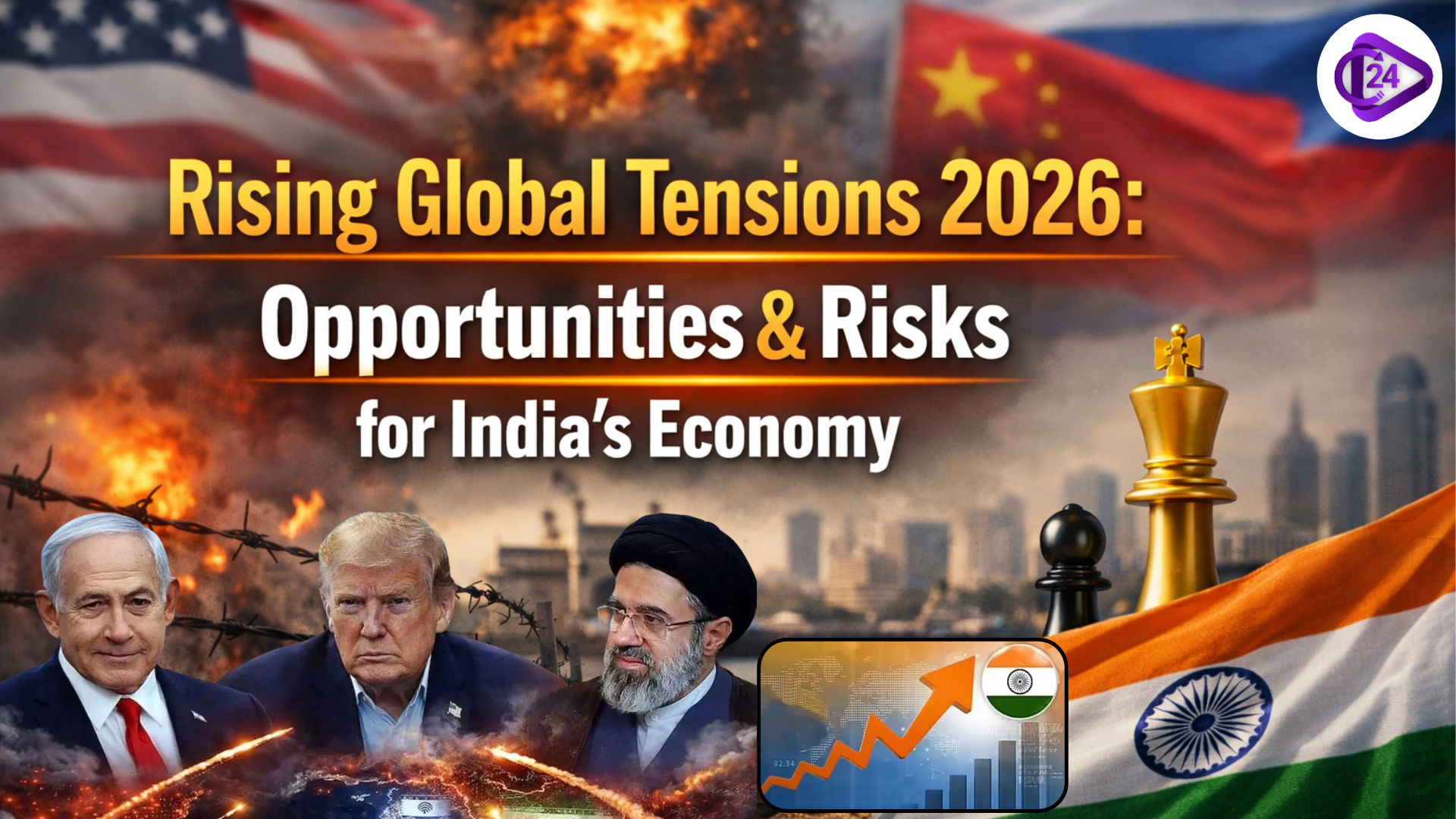
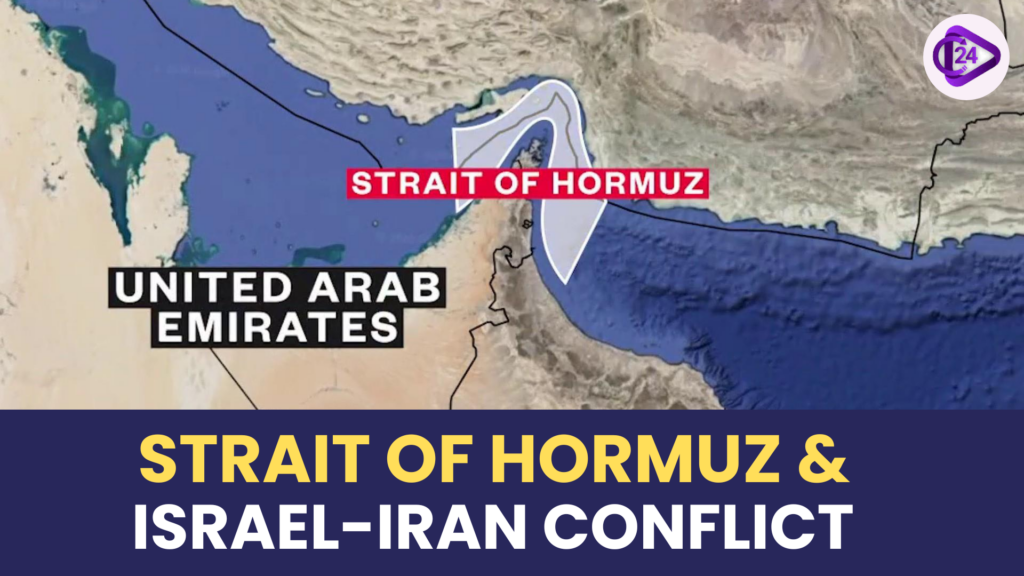
The Strait of Hormuz is a vital sea pathway of global oil and gas transportation; recent tensions in geopolitics, particularly the Israel crisis, have jeopardized the passage of energy sources. This could escalate the price of crude oil to even points higher than 120 dollars per barrel which will affect the Indian economy negatively. The issue which may be the problem in the world oil market is the closing of this conduit and it is hence mandatory that India should be able to continue its energy import opportunities in stable as well as secure channels.

Context:

The Strait of Hormuz is a major passage in moving of oil and gas, and this has major implications in the global oil and gas market. As India will be dependent on importation of energy, any interference or turmoil in this vital region can be disastrous to the energy security and economy of India.
Key Points:

Strait of Hormuz is Crucial:

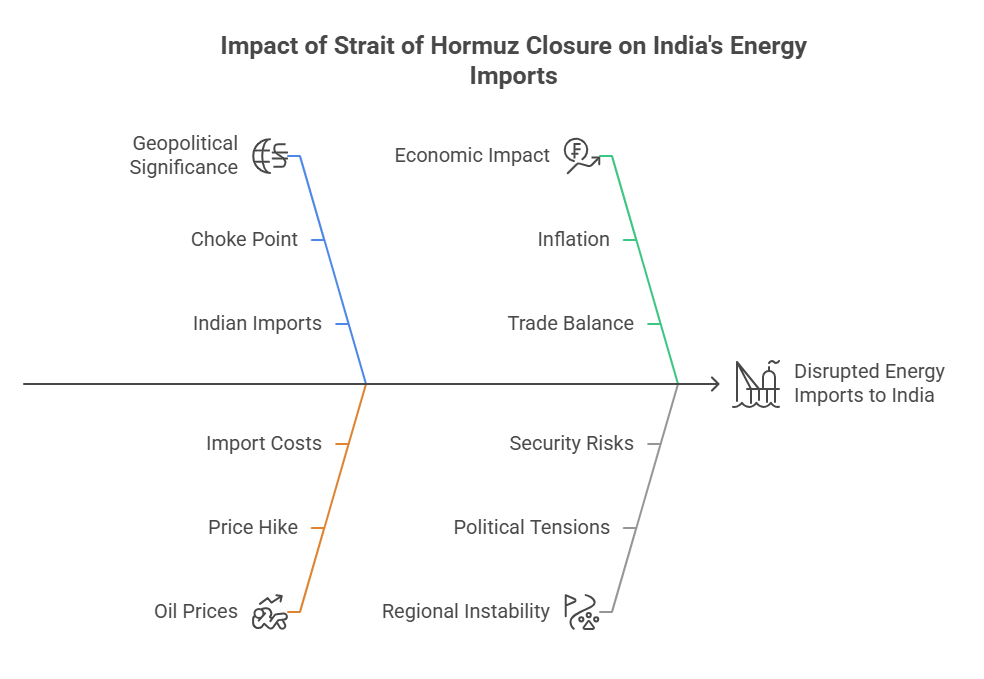
  • Geopolitical Significance: The Strait is an important choke point of the international oil and gas-flow, and especially to the Indian, due to the fact that the Strait contributes a major part of the Indian imports in its energy needs.

  • On Oil Prices:When the Strait is closed there will be a sudden hike in the world oil prices which might exceed $120 per barrel and that in turn would directly have a violent impact on the oil importation rates of India
New Pressures and Threat to Oil Transport:

  • Continuing Israel Conflict: The conflict in Israel and its nearness with the Strait is raising worries that there might be hindrance in the transportation of oil and gas.

  • Rerouting of shipping route: The shipping companies are reconsidering their routes in order to avoid the Strait, and that may add to their transportation treasures and also influence the global supply chain.

Possible Economic Effect on India:

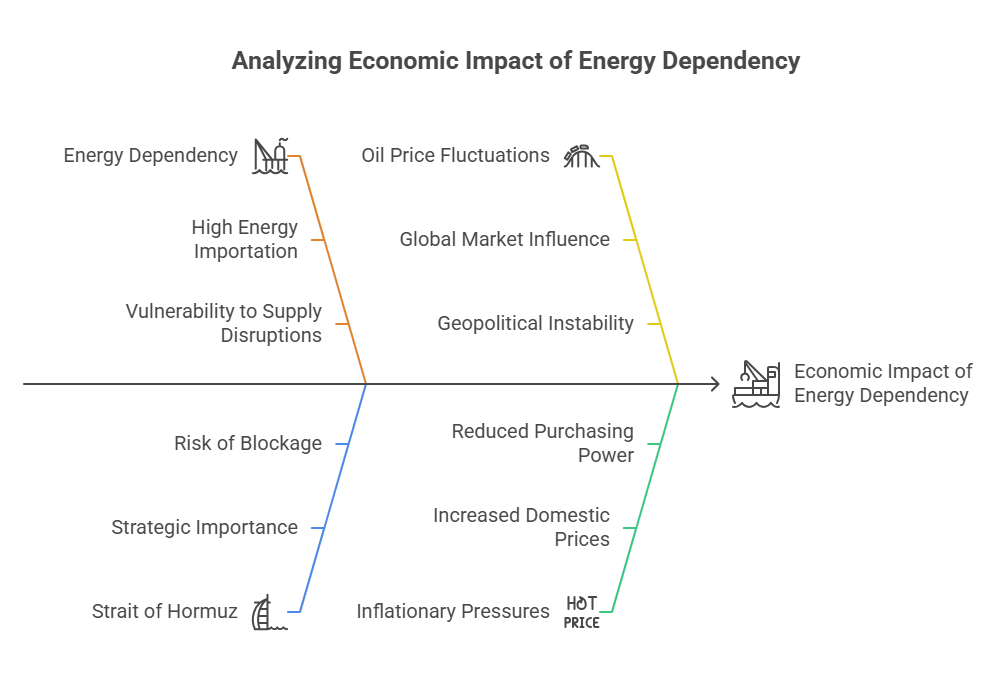
  • Energy Dependency: India is high on energy importation and any blockage in the Strait of Hormuz would result in a rise in energy prices that would affect the economy in a negative manner.

  • Fluctuations in the price of oil would have inflationary pressures, which would influence domestic prices on goods and services.
Efforts of the World to Maintain Stability:

  • Diplomacy: Countries, such as India, are monitoring the situation and have called upon diplomacy to be made before the situation escalates further given that energy infrastructure in the region has remained vulnerable.

  • The Influence of Iran: Iran already threatened to block the Strait, which shows the geopolitical advantage of the country in controlling the energy circulation. This risk is further increased by the civil clash that has been heating up in the Middle East.

About Strait of Hormuz

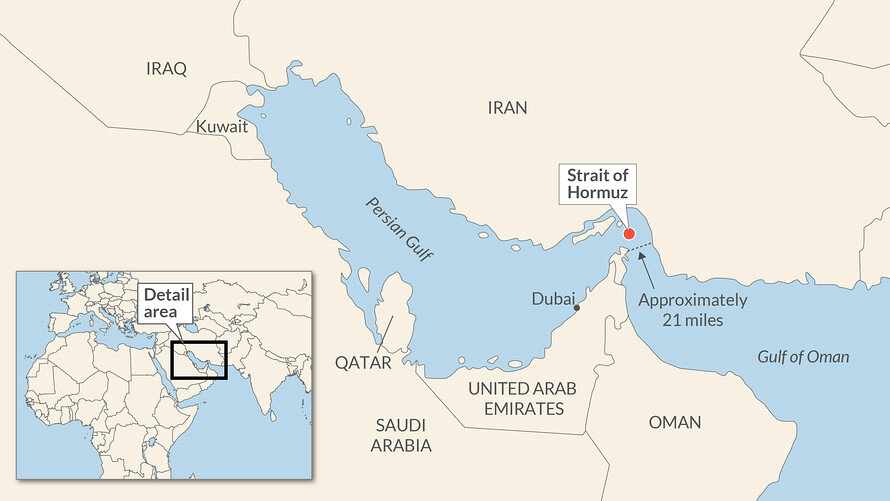
  • Location: A point interlinking the Persian Gulf and the Gulf of Oman and Arabian Sea.

  • Neighboring Countries: On the north: Iran and on the south: Oman and UAE.

Strategic Importance:

  • One of the world’s most crucial oil chokepoints.

  • It handles about 20 percent of the world's oil.

  • Width: The narrowest is approximately 33 km in width with a 2 mile shipping lane on the east and west side.

The Global Trade Impact:

  • Critical to the oil export of Saudi Arabia, Iran, UAE, Kuwait and Iraq.

  • Every suppression impacts on the internationally agreed price of oil.

Security Concerns:

  • Become a common subject of attention as a point of strained Iran-U.S. relations, military patrols, and block the passage threats.

International Law:

  • Within the UNCLOS (United Nations Convention on the Law of the Sea) – transit passage is possible.

Conclusion:

The Strait of Hormuz is a very important energy corridor of the world, in particular to Indian import of oil and gas. The increasing geopolitical tension especially in Israel further increases the risks of interference with the energy flows and it would result in skyrocketed oil prices. Other countries like India should be kept alert and strive to ensure that they have secured stable energy routes to avert any economic backlash that may occur.
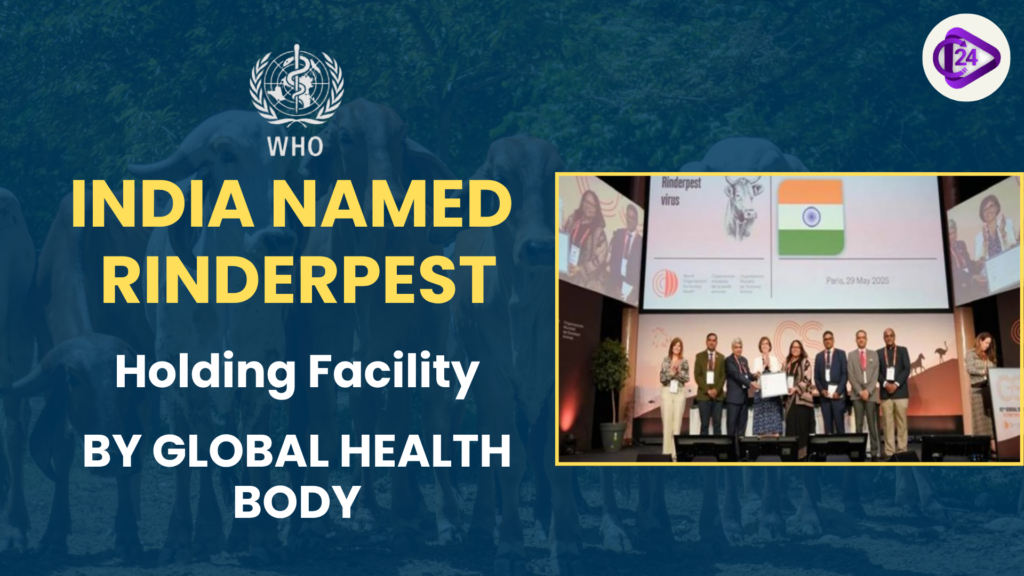
India Named Rinderpest Holding Facility by Global Health Body

The success of India in relation to animal health globally is observed with the declaration of the ICAR-National Institute of High Security Animal Diseases (NIHSAD) at Bhopal as Category A Rinderpest Holding Facility (RHF). The award, presented at the 92 nd General Session of the World Organisation for Animal Health (WOAH) in Paris, demonstrates the strategic role of India in biosecurity and animal health by the virtue of its signing of commitments to control and prevent diseases.

Context

  • The designation of ICAR-NIHSAD as a Rinderpest Holding Facility has made India an active participant in the world wide case to control and contain animal diseases. 

  • The recognition is after thorough checks and it serves to show that the country is keen on upholding the most appropriate biosafety standards in animal health.

Key Points:

Rinderpest Overview:

  • Highly Contagious Disease: Rinderpest, or also called cattle plague, is a viral disease affecting ruminants especially cattle and has in the past led to heavy loss of livestock as well as imminent threats to food security.

  • Eradication worldwide: In 2011 the disease was eradicated everywhere, thanks to the Global Rinderpest Eradication Programme started by the FAO in 1994.

Significance of Rinderpest holding facilities (RHF):

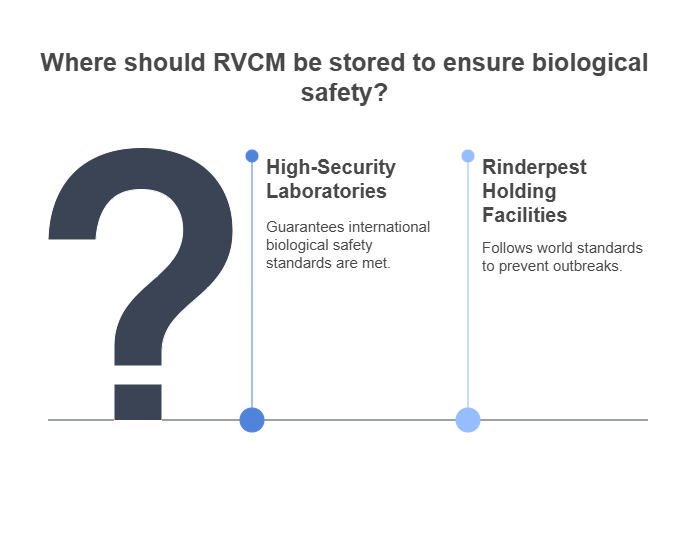
  • Critical Role: Rinderpest virus containing material (RVCM) is stored at RHFs strictly following the world standards to stop potential outbreaks.

  • Minor Infrastructure: RVCM can only be stored in a few high-security laboratories of the world, guaranteeing international biological safety.

ICAR-NIHSAD’s Role:

  • National Repository ICAR-NIHSAD has been the national repository of RVCM since 2012 in India.

  • High-Security Facility: It is a BSL-3 facility, also a reference laboratory of the avian influenza.

  • RHF App: India requested enrolment as RHF in 2019 and following an inspection by international experts in 2025, it was granted the status.

Global Significance:

  • Global Leadership: RHF India now becomes a member of a six facility exclusive club in the globe.

  • Standards Commitment: This status cements India commitment to standards in the global health and biosecurity of animals.

Future Prospects:

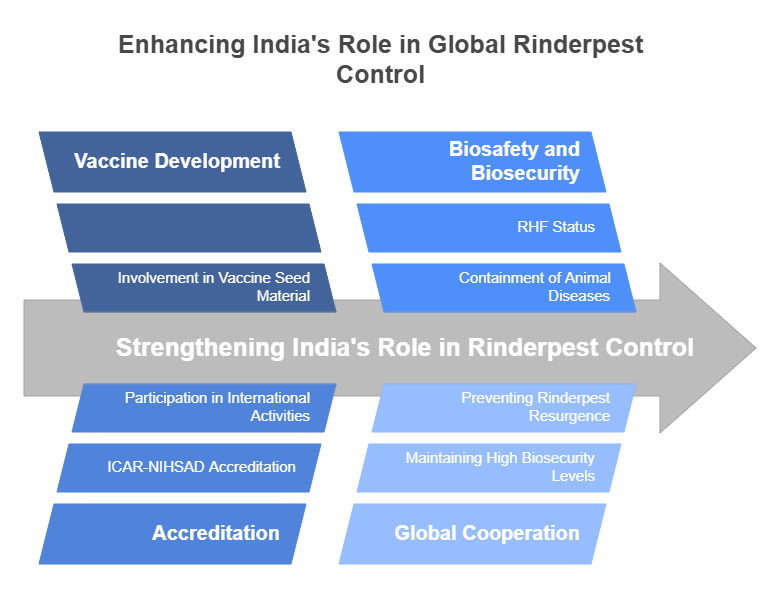
  • Involvement in Vaccine Development: WOAH committee has urged India to be involved in a vaccine seed material and in future it can even become a Category B status.

  • The ongoing efforts of India: The accreditation of ICAR-NIHSAD indicates that India has been in operation to secure international animal health and participate in the international animal disease control activities.

  • Biosafety and Biosecurity: RHF status is essential in enhancing the contribution of India to the establishment of the containment of the animal disease and security of livestock in the world.

  • Global Cooperation: India had the same tag as the rest of the world cooperating in maintaining high levels of biosecurity in order to ensure that the Rinderpest does not ever resurface.

Conclusion

As an example, the designation of India as a Rinderpest Holding Facility shows its burgeoning animal health and biosecurity leadership in fewer locations. Being able to meet the International standards of disease containment, ICAR-NIHSAD contributes a lot in securing the safety of the livestock as well as the prevention of the outbreak of diseases that would affect the global food security. The award also presents a future path leading to new developments in the field of vaccines and international partnerships in the management of animal health.

Historical importance of the Shipki La Pass: A historic trade, culture and tourism pathway

The Shipki La pass that runs between Himachal Pradesh and Kinnaur district has had its domestic tourism re-energized giving hope to rejuvenate the trade and tourism. In the past, it used to be a crucial trade pathway between India and Tibet. Although the geopolitical factors have stalled merchant activities, the reopening of the pass has a cultural, economic, and diplomatic implication especially in the creation of cross-border relationships and promotions of religious tourists.

Context

  • Shipki La has been a trade route between India and Tibet and this is how trade and culture is exchanged. 

  • Tourism the re-opening of the pass will mean an avenue to reconnect, help the local community in terms of livelihood and also to help the region at large in terms of diplomacy.

Key Points:

History of Shipki La

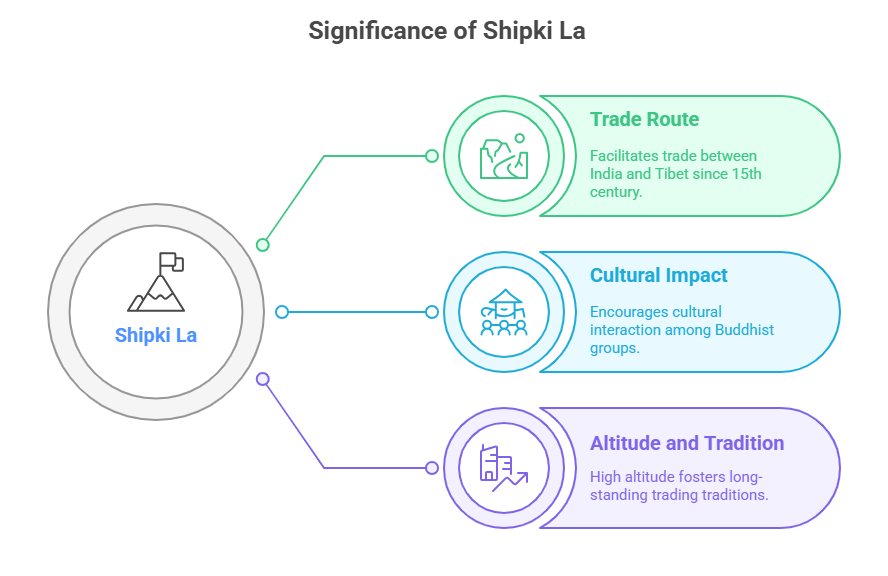
  • Important Trade Route: Has acted as an important trade route between India and Tibet since the 15 th century.

  • Cultural Impact: Shipki La is of cultural importance to the people in Kinnaur region and a reopened gateway will encourage cultural interaction across the border especially among Buddhist groups of both the sides.

  • Altitude and Tradition: However it was situated at an altitude of 3,930 meters above the sea level, which brought India in contact with Tibet, and it has formed years of tradition that has engaged in trading.

Causes of Closure of Trade:

  • Geopolitical Events: Trade via Shipki La was hindered after the Sino-India War (1962) and since the Doklam standoff and COVID-19, it got further irritated.

  • Effects The cross-border trade was disrupted and the trading route was closed even though there was a historical relationship.

New Reopening and Access to Tourists:

  • Chief Minister Intervention: The Chief Minister of Himachal Pradesh inaugurated the tourism activities in Shipki La removing the system of obtaining the permits and Indian tourists can visit here with minimum documents of Aadhar card.

  • Local Support: Local people, especially people of Scheduled Tribes and Scheduled Castes, are keen upon the move as they have cultural connections with Tibet.

Economic and Cultural relationships:

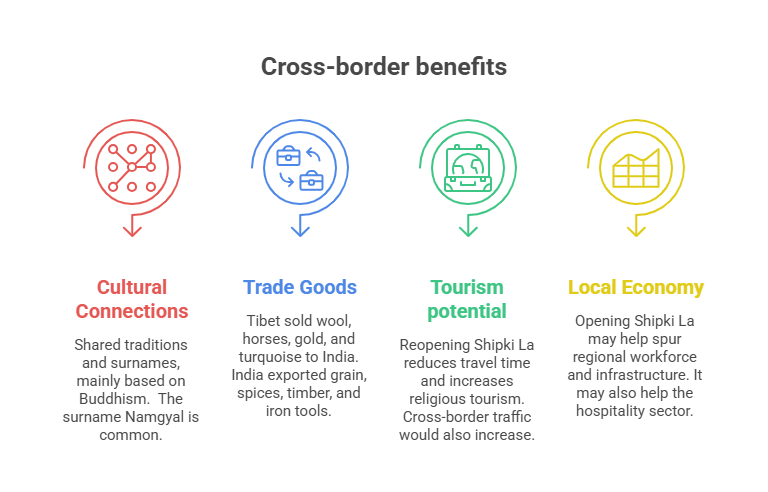
  • Cultural Connections: The two have a close connection in terms of traditions with them mainly being based on Buddhism and in terms of surnames most of them are similar like the surname Namgyal in both Leh and Tibet.

  • Trade Goods: Tibet used to sell wool, horses, goats, yaks, devotional items as well as precious materials such as gold and turquoise in India. India also exported grain, spices, timber, and iron tools in turn.

  • Tourism and trade potential:

  • Religious tourism Shipki La reopening would reduce travel time to Mansarovar by 14 days and increase religious tourism and cross-border traffic.

  • Local Economy: Opening may help spur regional workforce, regional infrastructure, and sector like hospitality and propriety.

Strategic / Diplomatic Value:

  • Soft Diplomacy: The decision can have a diplomatic effect, as it allows building trust on the grass-root scale, regardless of the state-level diplomacy.

  • Campaigns to Promote Regional Peace: Locally-based programs might contribute to developing peaceful corridors and promoting regional connections by means of development and preserving heritage.

  • Economic and Cultural Revitalization: The reopening of Shipki La could help renew economic activity especially in locally produced services and goods thus opening new opportunities to the people in the region.

  • Cross-Border Cooperation: The program also lays stress on significance of regional cooperation as well as the influence of a common culture and religion in developing international relations.

Key Points:

About Shipki La Pass:

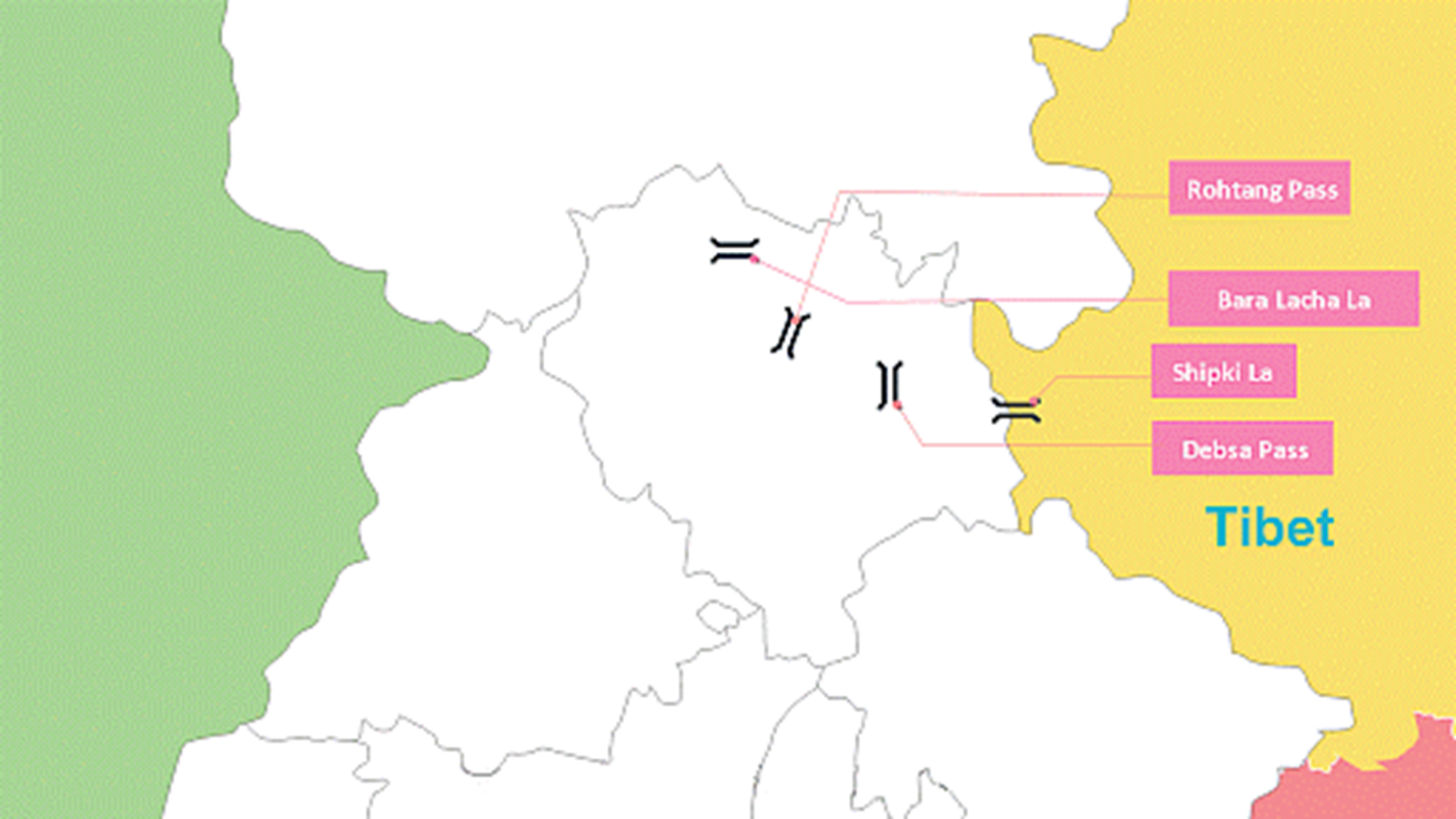
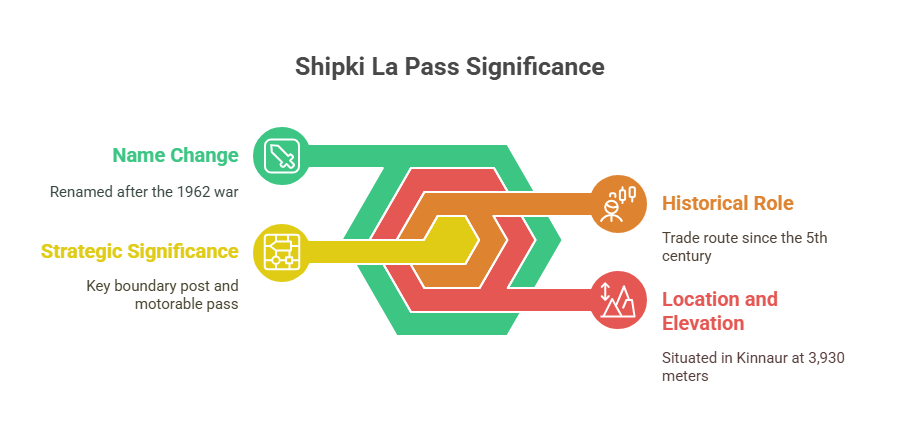
  • Considerations of Location and Elevation: Shipki La is situated in Kinnaur district of Himachal Pradesh at 3,930 meters above sea level that forms the Indo-China border.

  • Strategic Significance: An important ‘Line of Actual Control (LAC) boundary post and one of the highest motorable passes of India.

  • Historical Role: Shipki La had earlier been an important Indo-Tibetan trade route, by which goods could be transported between India and Tibet since the 5 th century.

  • Name: The pass was called Pema La or Shared Gate, but later changed by Indo-Tibetan Border Police (ITBP) to Shipki La after the Sino-India War of 1962.

Trade and Economic Significances:

  • Trade: Trade was very vital in the pass and imports to the pass were wool, animals, yak products, religious goods and minerals and exports were grains, spices, tobacco, lumber and metal tools. Sino Indian trade however came to a halt following the Sino-India war in 1962 and was later affected by the standoff in Doklam and the COVID-19 pandemic.

  • Tourism and Economic Development: Domestic tourism is likely to increase the economy of the region leading to increased local business, tourism, and occupation.

Geographic and Cultural Meanings:

  • Strategic Connectivity: In the strategic connectivity front, the pass enhances region connectivity, allowing access into remote border regions and improving civil and military traffic.

Mountain Passes:

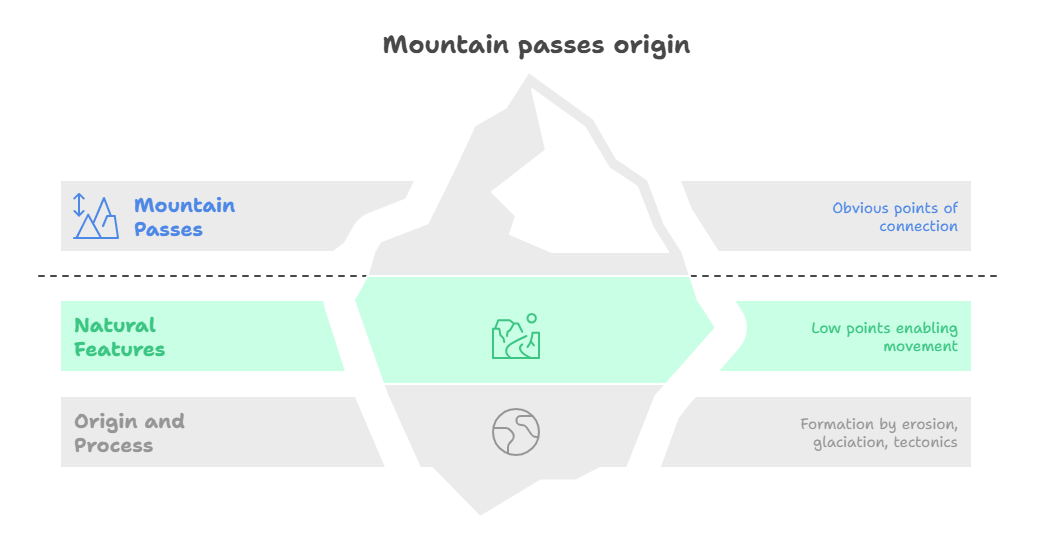
  • Natural Features: Some natural low points or passes in mountain ranges such as Shipki La, that cause movement of things, armies and people in the hard terrains.

  • Role in History: The passes have historical significance in that they were the means by which trade, migration, and military action occurred and therefore are of strategic, economic, and cultural value.

  • Origin and Process: Passes are formed either by erosion, glaciation or by tectonic formation and are the only points of connection between valleys or areas.

Conclusion

Not only will the re-opening of Shipki La be a move in the right direction of strengthening the local economies of both countries through tourism and trade but it is also a measure to conserve and promote the strong cultural and religious ties between the Indian and Tibet people. Reuniting these communities, the relocation would actually introduce larger amounts of cooperation, trust, and peace-building among the countries and states in the area.

U.K. to Decriminalize Abortion Over Prosecution Concerns

The U.K has proceeded to decriminalize the abortion after parliament voted to amend a crime bill that would have made it possible to prosecute the woman who terminated a pregnancy. This ruling is informed by the issue of criminalization of women and those who had gone through miscarriages due to natural causes or stillbirths. The amendment, which was passed vastly in the House of Commons to be effective in ousting women in the criminal justice system and to be more supported in times of need.

Context

  • The U.K. is reviewing the way it treats abortion laws to allow women to have abuse of the abortion laws without being prosecuted. 

  • This is in the wake of prosecutions of over 100 women over the past few years on suspicion of conducting illegal abortion and some of the women even experiencing miscarriage or still births.

Key Points

Decriminalization of Abortion:

  • Historic vote: Members of the British Parliament voted in favor of a vote to decriminalize abortion in England and Wales through an amendment of a wider crime bill.

  • No More Prosecution: The amendment means that women will not be prosecuted criminally because of terminating pregnancy, especially women who experience natural miscarriages or stillbirth.

Women Prosecution Apprehensions:

  • Police Investigatory Cases: In the last five years, more than 100 women were investigated because they were suspected in violating the rules of prohibited abortion, and many of them had experienced miscarriages or stillbirths.

  • The Case Made by Labour MP Tonia Antoniazzi, the proposer of the amendment, stated that the prosecution of women is cruel and women require assistance and not punishment.

Legislative Process

  • Passing of Amendment: Amendment was voted in the house of Commons with score of 379 to 137.

  • Next Steps: This crime bill, with the amendment, will come up to the vote in the House of Commons, then go to the House of Lords, to review.

Abortion Laws in U.K.:

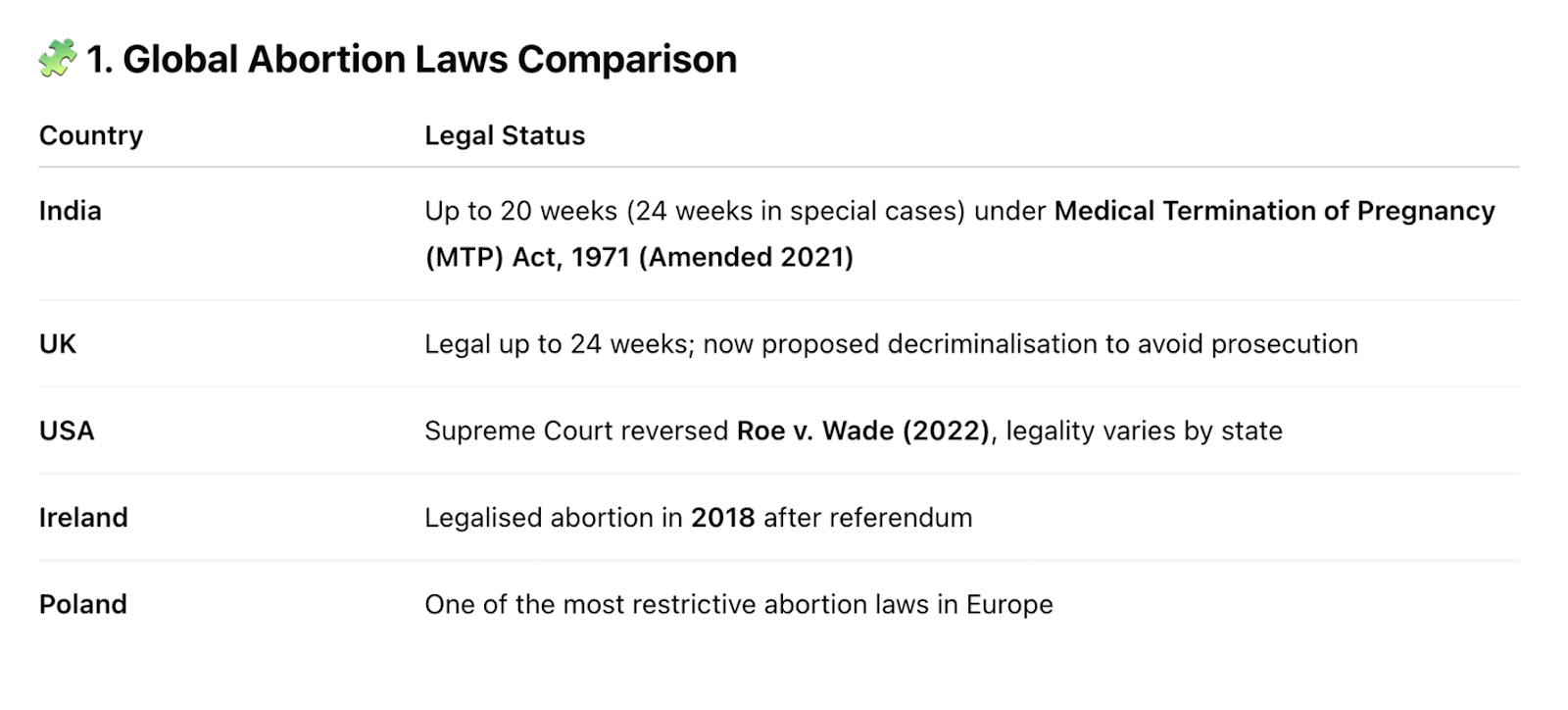
  • Status: In England, Scotland, and Wales, the current law allows abortion till 24 weeks with certain special circumstances above this limit.

  • COVID-19 Shifts: Now women have access to having the abortion pills via mail and self-perform their abortion at home during the first 10 weeks of pregnancy.

  • Northern Ireland: In 2019, abortion became decriminalized in Northern Ireland.

Political resistance of Decriminalization:

  • Anti-abortion groups: One of the key arguments being brought forward by the anti-abortion groups is that the decriminalization of abortion will enable abortion on demand at any point in time during the pregnancy and it would eliminate protection to unborn infants.

  • International Situation: This ruling goes along with a larger trend in certain nations to review abortion codes and ensure women have the freedom of reproductive health services without the threat of prosecution.

Conclusion:

The decriminalization of abortion in the U.K. is one step closer to the reproductive health laws becoming more patient-friendly and patient-oriented. This reform is aimed at keeping women out of criminal charges especially those who are vulnerable and rather focus more on care and support in an already hard time. Although the move has been met with a counter allegation by pro-life lobby groups, it is an indication of how abortion rights have continually evolved in the U.K.

India had boosted the number of nuclear warheads to 180 in 2024: SIPRI Report

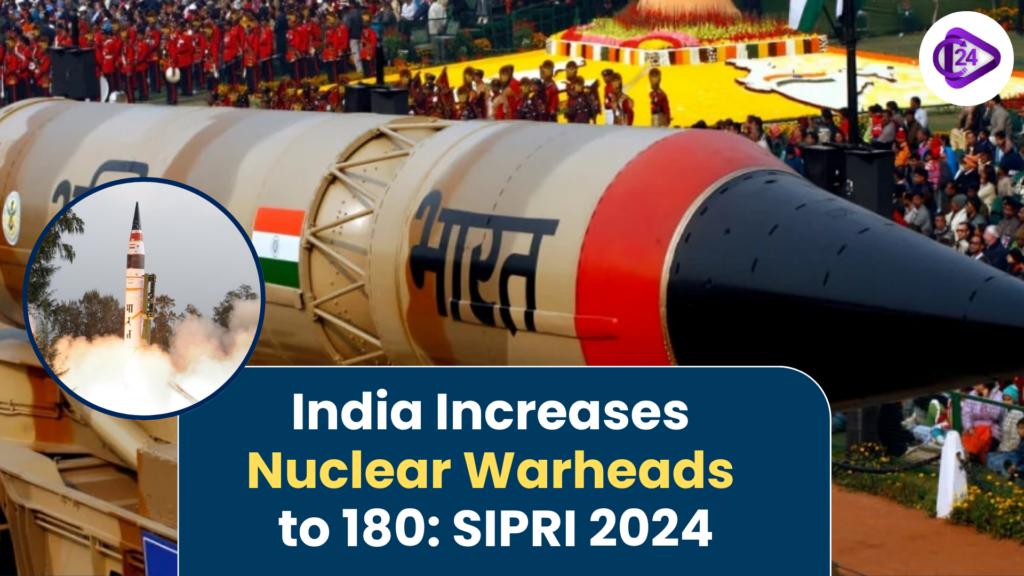
According to a Stockholm International Peace Research Institute (SIPRI) report, India had raised its nuclear warhead level to 180 by 2024. One global trend pointed out in the report is that of nuclear modernization by such countries as India and Pakistan. Even as India increases and improves on its nuclear weapons and acquisition of additional delivery systems, the fear of nuclear arms race and the decline of arms control regimes is being felt especially in the event of the escalating nuclear tensions particularly between India and Pakistan.

Context

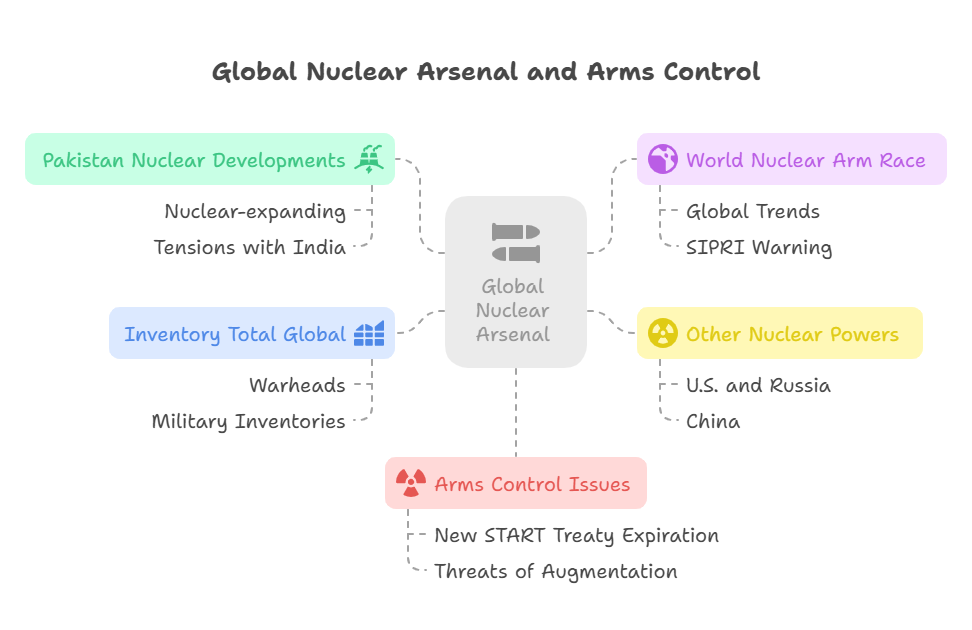
  • The 2025 SIPRI report highlights that the nuclear arms race is increasingly growing with most of the nuclear armed countries, including India and Pakistan, further developing their nuclear weapon system. 

  • The report offers a warning as a result of the escalating nuclear tensions and the expiry of important arms treaties..

Key Points

  • India's Nuclear Arsenal

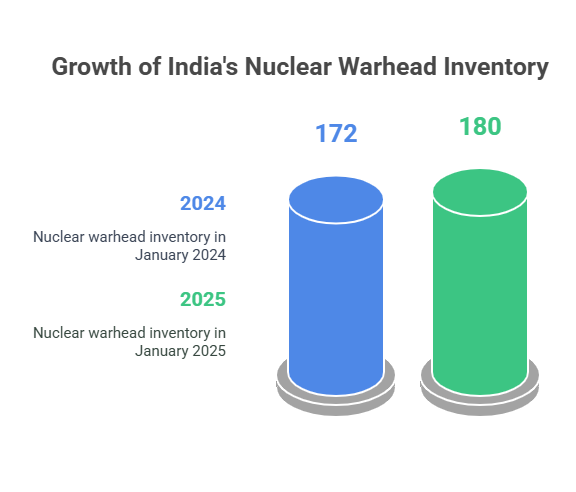
    • Enhancement of Nuclear Warhead: The nuclear warhead inventory of India grew to 180 in January 2025 as opposite to 172 in January 2024.

    • Canisterized Missiles: India, is also developing the new generation canisterized missiles that may carry nuclear warheads at peacetime and may well have multiple warheads on the missile.

  • The Pakistan Nuclear Developments

    • Nuclear-expanding: Pakistan is also perfecting new delivery methods and stockpiling of the fissile material which is an indication of the growth of their nuclear weapons within the next ten years.

    • Tensions with India: Early in 2025 the tensions between India and Pakistan briefly erupted into an armed conflict, and the risk of nuclear crisis became an issue of concern.

  • World nuclear arm race

    • Global Trends: Nine nuclear weapon states (U.S., Russia, U.K., France, China, India, Pakistan, North Korea, and Israel) are all modernizing their nuclear arsenals, and enhancing their arsenals with modern weapons and new delivery systems.

    • The Warning of SIPRI: The SIPRI report warns that there is a rising trend of use of nuclear weapons that may act as a further disruptor of global security.

  • Other Nuclear Powers

    • U.S. and Russia: The U.S. and Russia still are the most significant nuclear powers, and they have 5,177 and 5,459 warheads, respectively.

    • China:In the year 2025 China stockpiled its warheads to 600 compared to 500 in the previous year 2024.

  • Inventory Total Global

    • Warheads 12,241: The total world nuclear stockpile is 12,241 warheads of which 9,614 are in military inventories and can possibly be launched, and 3,912 deployed on delivery vehicles such as missiles or aircraft.

  • Arms control issues:

    • New START Treaty Expiration: With the end of the 2010 New START Treaty in 2026 in February, SIPRI cautions that unless there are new arms control deals established then there are threats of augmentation in the number of warheads on strategic missiles.

Nuclear Disarmament and India

Position of Nuclear Strategy in India; Deterrence vs Disarmament

The Indian nuclear policy is pegged on the maintenance of credible minimum deterrence but the robust support of the universal nuclear disarmament. With the increasing tensions across the world and new threats to peace, it can be assumed that the balanced stand allows India to make a positive contribution both in the maintenance of regional stability and in global disarmament.

Two-faced approach to nuclear in India

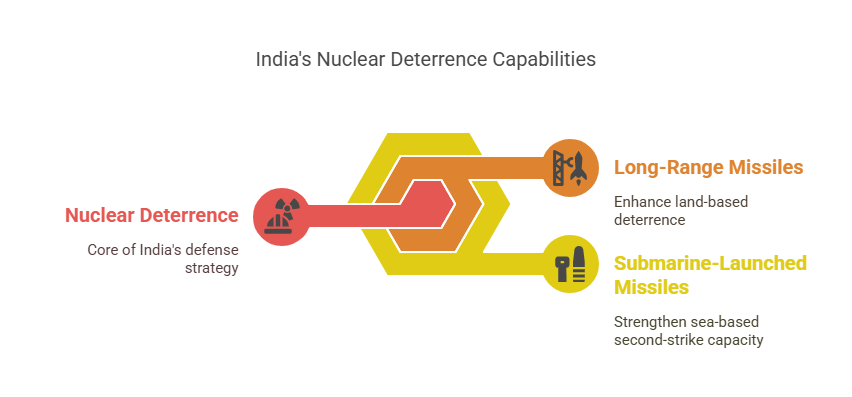
  • Nuclear Deterrence:

    • India has a plausible nuclear deterrent that relies on a stockpile of about 160 nuclear warheads (currently, as of 2023) to provide national security.

  • Disarmament Advocacy:

    • India has always voiced in favor of a nuclear-weapon-free world and demands a time-bound universal scheme on disarmament.

Superior Strategic Challenges

  • China-Pakistan Axis of Nuclear Confusion:

    • The strategic partnership between China and Pakistan such as the Chinese support in the nuclear program in Pakistan is a headache to India.

  • Arguments over the No First Use (NFU):

    • The NFU doctrine has been questioned by India because of the growing tactical nuclear weapons of Pakistan and the changing patterns in the region.

The Nuclear Capability Modernization

  • Submarine-Launched Ballistic Missile (SLBMs):

    • India has put into operation such systems as the K-4 SLBM, strengthening its second-strike capacity at sea basis.

  • Long-Range Missiles:

    • Agni-V (range >5,000 km) development adds towards deterrence notably against China.

Nuclear Security and Safety

  • Expanding Infrastructure:

    • Due to 23 nuclear reactors currently in operation, India is going to exponentially increase capacity by 2031, yet there still is an issue in terms of safety (e.g., 2010 Mayapuri incident).

  • International Commitments:

    • Direct involvement in such initiatives as the Nuclear Security Summit highlights the interest of India in ensuring nuclear security and non-proliferation.

Civil Nuclear Cooperation & Membership to NSG

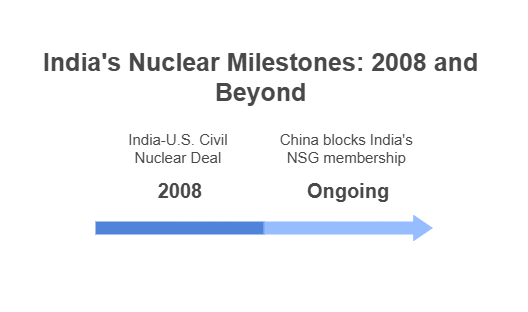
  • India-U.S. Civil Nuclear Deal (2008):

    • This breakthrough treaty accorded non NPT nuclear meaning to India.

  • NSG Challenges:

    • China blocks the NSG membership status of India and this is because it supports the parallel bid of Pakistan.

Nuclear Power Resource and Environmental Issues

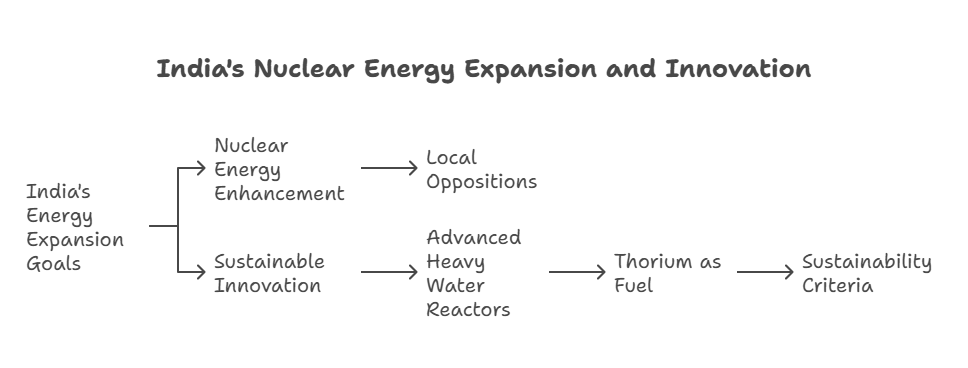
  • Goals of Energy Expansion:

    • By 2031, India is looking forward to the enhancement of nuclear energy to 22,480 MWe. Nevertheless, there are ongoing local oppositions at places, such as Kudankulam and Jaitapur.
  • Sustainable Innovation:

    • India is building Advanced Heavy Water Reactors (AHWRs) which use thorium as fuel harnessing nuclear power to the criteria of sustainability.

Policy recommendations: Deterrence Vs Disarmament

  • A. Reinforcing a Credible Minimum Deterrence (CMD)

    • Focus more on quality than on quantity in the arsenal.

    • Make the scope of CMD clear to eliminate vagueness.

  • B. Advance Region Stability Dialogues

    • Start negotiating risk-reduction talks with Pakistan.

    • Use the examples of U.S.- Russia crisis management.

  • C. Leadership in Global Disarmament

    • Support the feasible measures in disarmament at global forums.

    • Maintain and apply the No First Use policy throughout the world.

  • D. Pay into Verification Technologies

    • Create satellite over-watch monitoring and disarmament verification instruments.

    • Employ the capacities of India in space and AI to be transparent in nuclear matters.

  • E. Reinforce Domestic Levers

    • Exercise restrictions to nuclear exportation and tighten security of facilities.

    • Strengthen the faith of the rest of the world in responsible Indian ownership of nuclear weapons.

  • F. Enhance the Peaceful Use of Nuclear Energy

    • Explain the use of nuclear energy in the fight against climate change and sustainable growth.

    • Improve the frontiers and standards of civilian nuclear R&D and safety.

  • G. Promote Track and a half and Track 2 Diplomacy

    • Carry out some-semi-official discussions to exchange trailblazing notions on disarmament and crisis prevention.

Conclusion

The fact that India is upping the quantity of its nuclear warheads and continues to work on nuclear delivery mechanisms is an even more global trend of nuclear modernization. In light of the pressure to modernise arsenals and escalation of tensions, particularly between programs by the letter of nuclear powerhouse neighbors (such as those between India and Pakistan), SIPRI has warned grimly to look out that a nuclear threat is not created by the pursuit of a dangerous nuclear arms race, and that there should be a renewed arms control agreement.

Frequently Asked Questions (FAQs)

The current affairs cover recent national and international events related to UPSC, SSC, Banking, Railways, and State PCS.

You need to read about the current affairs daily, and revise them every week and every month to keep them longer in your memory.

Yes, Class24 provides free downloadable Daily Current Affairs PDFs for easy revision.

Yes, you can practice MCQs and quizzes to boost your exam preparation.

Absolutely. The content is written in simple, easy-to-understand bilingual language suitable for beginners.

Go to class24.com and click on the current affairs section directly, where you find everything that you need.

ssc-toppers

Start Learning Today with Class24

Related current affairs

Class24 offers free video lectures for smart preparation, covering CGL, CPO, CHSL, MTS, and GD exams. Learn from expert faculty, revise concepts easily, practice with PYQs, and improve speed and accuracy through high-quality, exam-focused video lessons anytime, anywhere.

Get success in your hand. Start study anytime anywhere.

The journey becomes simple and enjoyable when you start taking interest in it. And through our app “Class24”, we will be your trusted partners in developing that interest.

Daily Quizzes
Mock Tests
Ongoing

No ongoing tests right now.