
Day: June 16, 2025

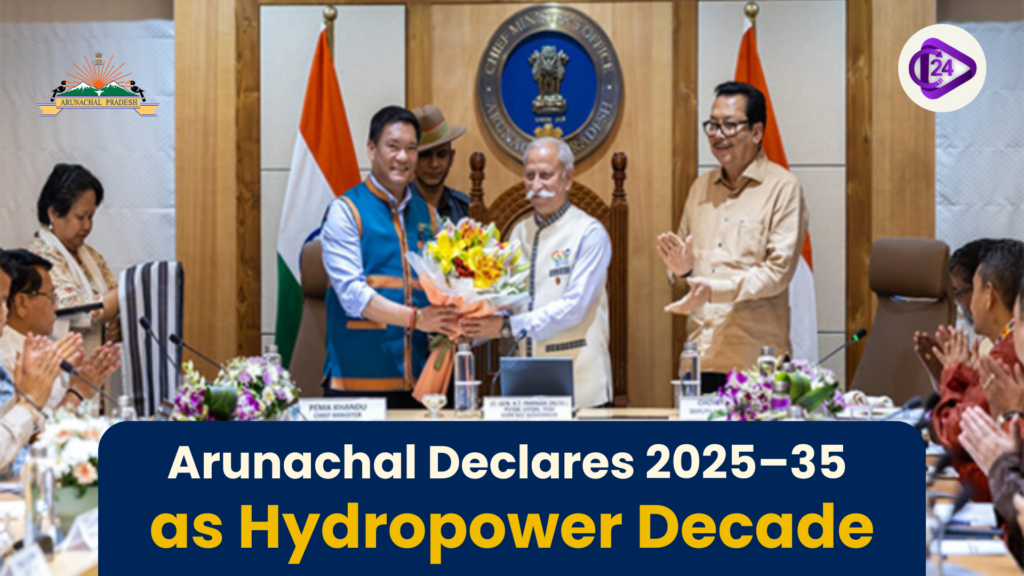
Arunachal Declares 2025-35 as the ‘Decade of Hydropower’

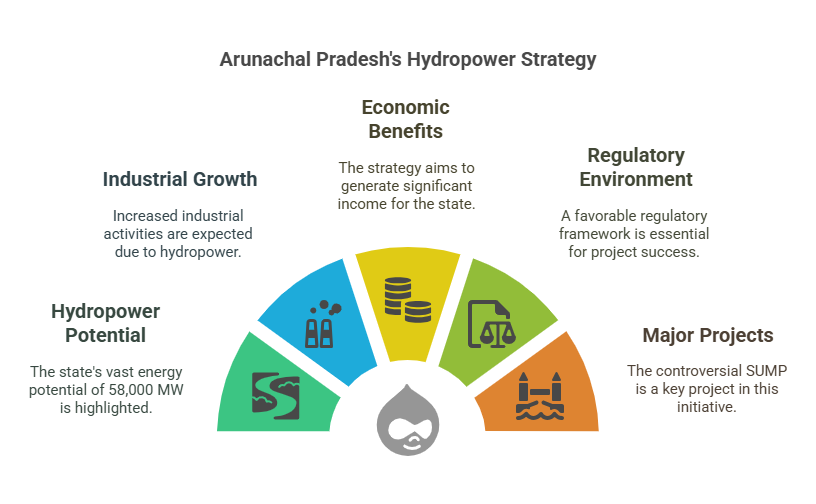
As part of its objectives, Arunachal Pradesh has declared the period of 2025-2035 as the decade of Hydropower, in view of taking advantage of the huge potential of 58,000 MW that it possesses. The State will utilize this source of energy to lead to increased industrial activities which will provide huge income and a favorable regulatory environment, and some of the major projects to be implemented are the controversial Siang Upper Multipurpose Project (SUMP).

Context: 

  • The state of Arunachal Pradesh has considered setting up the 2025-35 as the Decade of hydropower in order to tap the full potential of hydropower that is 58,000 MW. 

  • It is a potential that the State seeks to harness in terms of industrial development, revenue and economic growth and also be able to address local concerns of major projects such as hydropower.
Key Points

Strategic Goals:

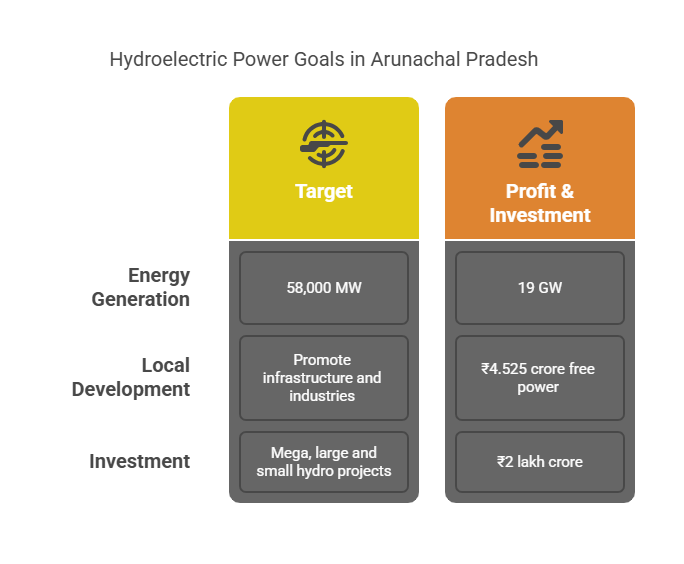
  • Target generation of 58,000 MW of energy by the use of mega, large and small hydro projects.

  • Use the free power income to promote local development, infrastructure and industries.

Profit and Investment:

  • By 2035, Arunachal Pradesh will receive 4.525 crore worth of free power every year.

  • The total investment is expected to go up to over 2 lakh crores in the next decade aimed at 19 GW of power-generation.
Policy and Governance:

  • Concentrate on a sound policy and regulatory framework to attract and control investments in hydropower.

  • Escrow accounts to be created with a strategic clear use of the revenue derived on free power.

Siang Upper Multipurpose Project (SUMP)

  • SUMP will produce 11,000MW, and it is a strategic response to China in the Yarlung Tsangpo River.

  • The government intends to consult with the local population, compensate where necessary and reduce opposition.

Rehabilitation and Urban Planning:

  • Establishment of the New Yingkiong and New Geku Development Authorities to deal with resettlement and City planning.

  • urban Development Department to consider the compensation policies and created a strategy of rehabilitation of families which are displaced.

Conclusion

The declaration of Arunachal Pradesh as the State as the place where the hydropower of 2025-35 is a place of power shows the thoroughness of the State to use its significant hydro sources in the development of the sustainable growth of the State. The State is seeking to invest strategically, make policy changes, and involve the community, all in a bid to deliver high rates of economic growth, and at the same time take care of the local issues revolving around large-scale hydroelectric projects.
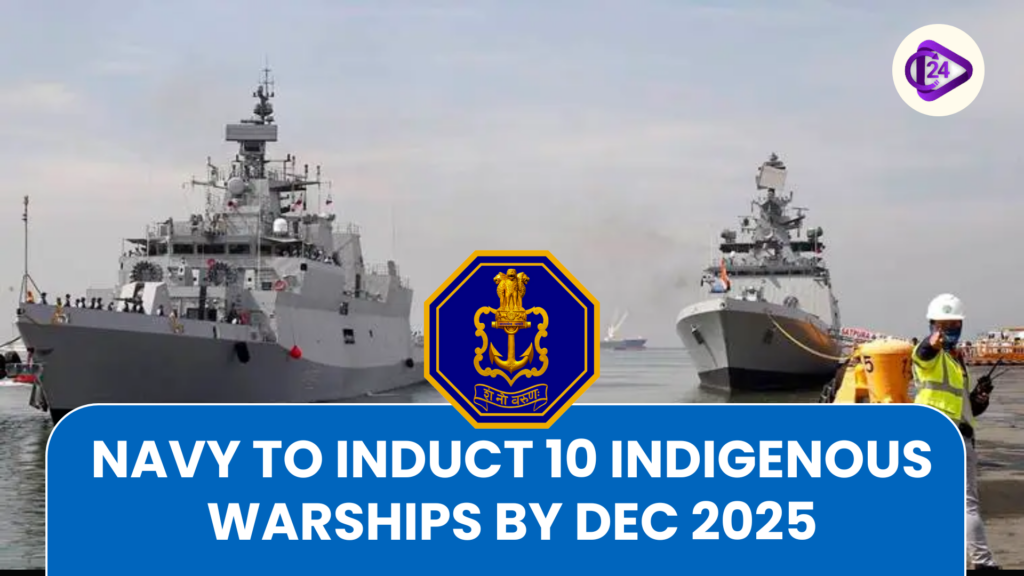
Indian Navy Set to Commission Up to 10 Domestically Built Warships by December 2025

The Indian Navy is preparing perhaps its largest single-phase program as it plans to induct up to 10 locally built warships by the end of 2025. This step highlights the Indian efforts in enhancing the indigenous production of defense products and attaining prowess in strategic naval capabilities. The move is an indication of India stepping up efforts to achieve self-sufficiency in the field of defense production and to develop naval capabilities.

Context

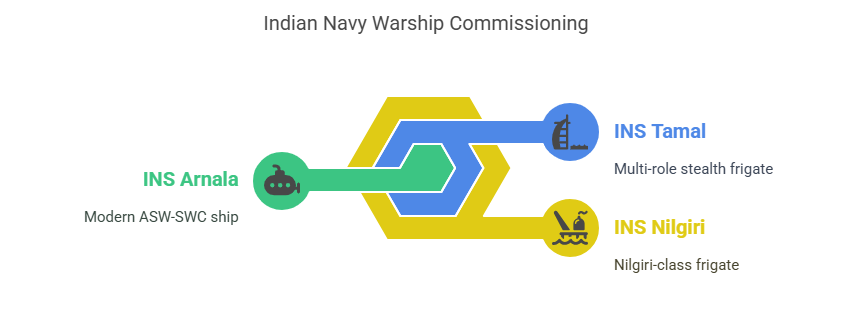
  • By December 2025, the Indian Navy is expected to launch as many as 10 warships, comprising the first Anti-Submarine Warfare Shallow-Water Craft (INS Arnala), and the second stealth frigate in the Talwar-class (INS Tamal). 

Key Points 

Other Significant Warships to be commissioned:

  • INS Arnala: The most modern is the first of 16 Anti-Submarine Warfare Shallow-Water Craft (ASW-SWC) ships that are used to patrol beneath the surface, counter submarines, and undertake rescues of any kind in littoral areas and shallow waters.

  • INS Tamal: The second ship in a series of multi-role warships that have been constructed under a technology transfer deal with Russia, the Talwar-class stealth frigates.

  • INS Nilgiri: A second frigate under Nilgiri-class should be introduced at the end of the year.

Development and Specifications of Warship:

  • This is the largest Indian naval warship to be powered both by diesel engines as well as waterjets constructed by Garden Reach Shipbuilders and Engineers (GRSE) Kolkata and L&T Shipbuilders.

  • The INS Tamal is an INS Krivak class frigate, purpose-built to the Indian Navy, forming part of the follow on program Project 1135 in addition to Project 1135.6.

  • It had been built with two in India and two in Russia.

Indigenisation and Technological Break-throughs:

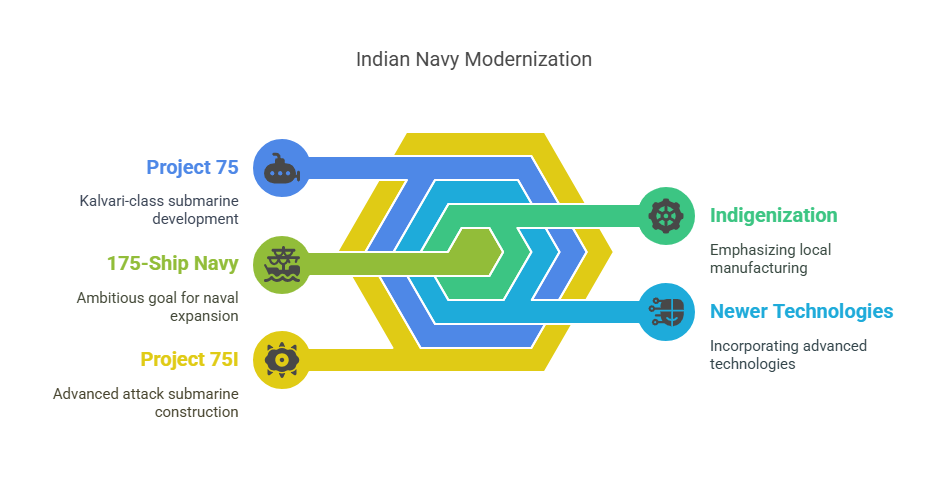
  • India is also going ahead with its ambitious plans to build a 175-ship Navy by the year 2035, emphasising on indigenizing the manufacture, newer technologies and intensive Navy input in design and production processes.

  • The recent commissioning of INS Vagsheer proves a step further in developing the prowess of the Indian Navy in terms of submarines as the project 75 builds a Kalvari-class, diesel-electric submarine.

  • The Indian Navy is also moving ahead with Project 75I where it attempts to construct six state-of-art conventional advanced attack submarines.

Aviation and Helicopter advancement:

  • On the air side, the U.S has been supplying the Indian Navy with MH-60R seahawk helicopters which have since supplied 13 out of 24 helicopters ordered to enhance maritime surveillance and anti-submarine warfare.

Conclusion

The construction of 10 domestically made warships by December 2025 can be seen as an important process in the current aims of the Indian Navy to develop domestically made defense strategies. Keeping a radical set of technological upgrade, indigenization, and tactical independence as the key agenda, India is soon to concretize its military in the marine in the forthcoming years to achieve an efficient and independent armed service personnel.

Indian Army Successfully Tests Rudrastra VTOL Drone for Precision Strikes

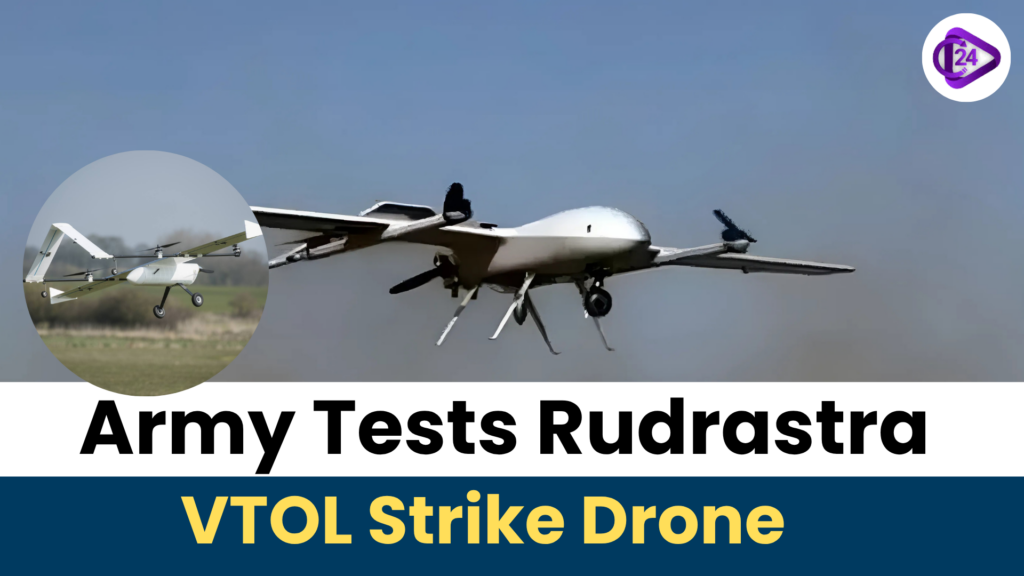
The Indian army has successfully tested a locally designed Vertical take-off and landing ( VTOL ) drone named the Rudrastra, a major milestone in the indigenization of the Indian defense. The drone has been designed by Solar Aerospace and Defence Limited (SDAL) which can undertake deep strike missions, precision attacks, thereby enhancing the military capability of a country.

Context

  • The Rudrastra VTOL drone was successfully tried by the Indian Army, which is meant to carry out precision strike missions in deep target missions. 

  • SDAL develops the drone that reflects the increased use of local tech in the fight against modern warfare, as the system will enable the Army to have better strategic potential.

Key Points

Tests and Examinations:

  • The testings were carried out on the Pokhran firing range where the precision targeting capability of the drone was proved.

  • It made successful automated returns, a target range of up to 50 km.

  • The targeting and efficiency of the drone were tested on the live feed relay system of the drone.

The Drone Capabilities of Rudrastra:

  • Range: 170 km, with loitering time.

  • Endurance: Flights of up to 1.5 hours.

  • Warhead: It has airburst munitions that can be used in anti-personnel missions.

  • Strike Mechanism: Deployment high above the ground so as to maximize the damage in a wide area.

  • Autonomous Operation: The drone can be operated autonomously, transmit real time video and can also be returned home.

Strategic Importance

  • The drone will have the capacity to take care of enemy artillery, terrorist camps and infiltration launch pads.

  • It elevates the ability of India to make a stand-off attack up to 100 km of territory of the enemy.

  • Rudrastra has been tested successfully which highlights how India is developing the ability to perform high-tech, strategic military activities.

Native Defense Interest

  • The Rudrastra is one of the products developed under the Make-in-India campaign where India is gaining self-sustainability over its own defense fired technology.

  • It involved several Indian manufacturers of drones, which also indicated the level of development of unmanned aerial systems (UAS) in the country.

Greater Purposes of Indian Army:

  • The demonstrated growth and test of the Rudrastra is in line with Indian movements to modernize battlefield processes using AI-based and autonomous systems.

  • It enhances tactical and surveillance infrastructural capabilities of India and equips the Army with high-tech, asymmetric warfare capabilities.

Conclusion

The passing of the Rudrastra VTOL drone is a clear indication of India achieving success in its quest to modernize its defense sector since the country continues to demonstrate its capability in unmanned aircraft related to technology. The drone improves the strategic presence of India and minimizes its foreign defense imports by increasing its strike capabilities and independence.

AviList: The First-Ever Unified Global Bird Species Checklist Launched

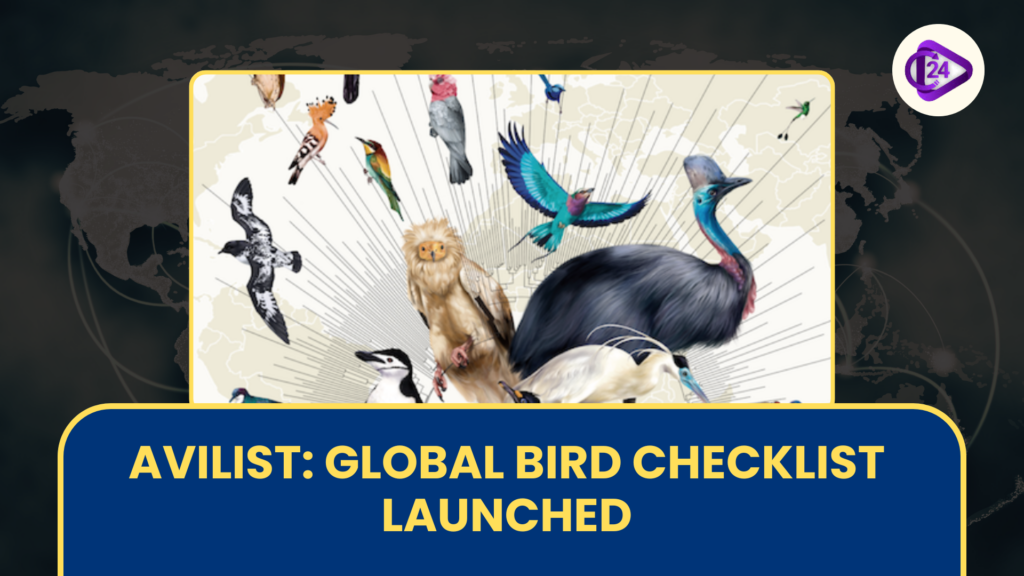
June 12, 2025 The inaugural unified world list of bird species, AviList, was published. Compiled over a four-year period of cooperation between several international ornithological societies, the list unites information on the species of birds worldwide and is supposed to facilitate the process of conservation and research. On June 12, 2025, a unified global checklist of bird species (AviList) was introduced as the first unified set ever. The list contains some 11,000 species and almost 20,000 subspecies providing an extensive database to enhance conservation policies and to shed some light on the taxonomy of birds.

Context:

  • AviList, the world's first unified list of bird species was launched on June 12, 2025.

  • It will be a historical course of international ornithology cooperation and code.

Key Points

Key Features

  • Comprises 11,131 species, 19879 subspecies, 2,376 genera, 252 family, and 46 orders.

  • Prepared by the Working Group on Avian Checklists, with the BirdLife International and the Cornell Lab of Ornithology.

  • Supersedes prior lists like the IOC and Clements checklists, offering a single, harmonized taxonomy.

Significance for Conservation and Research:

  • Removes the misunderstanding of the existence of various checklists.

  • Facilitates standard conservation planning and setting priorities of threatened species.

  • Offers reliable information to ecology research, field guides, policy structure and international biodiversity analyses.

  • It is updated annually in order to correspond with the new discoveries in taxonomy.

World Utility and Accessibility:

  • There at AviList.org to freely download in .xlsx and .csv formats.

  • It was created by scientists, bird watchers and policymakers and aims at improving the cooperation between the areas.

  • Advances data-sharing and shared scientific lingo in ornithology across the globe.

Conclusion

AviList is a landmark in the field of ornithology, in which a single source will allow the future streamlining of bird conservation as well as scientific studies and guidance to bird enthusiasts internationally. Its introduction will also remain to be associated with a significant effect in the way bird species are conserved and classified across the world.

New Jumping Spider Species Discovered in Southern India

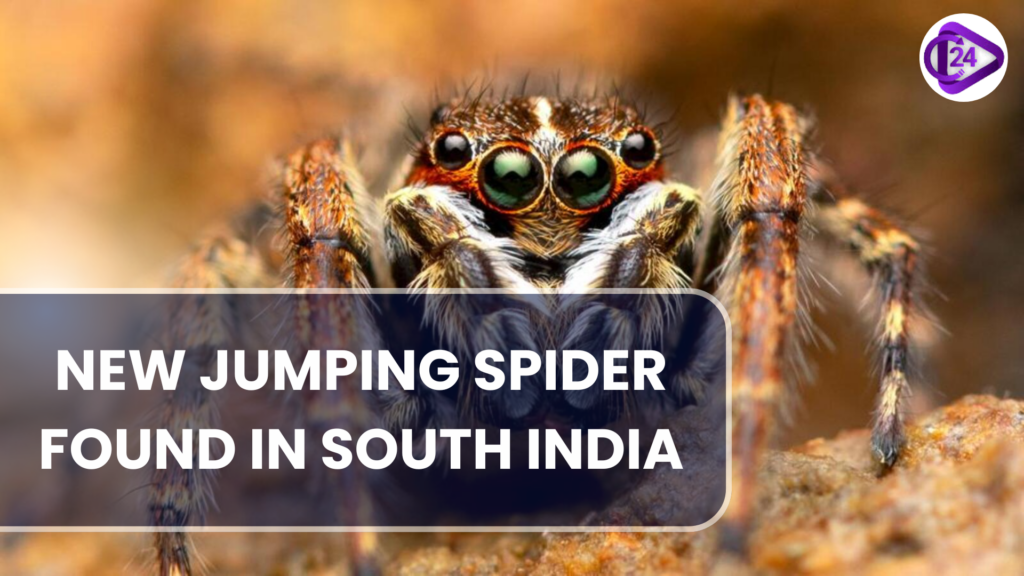
A group of scientists in southern India has discovered a brand-new species of jumping spider, Spartaeus karigiri, apparently the first occurrence of some specific genera in the country. Dubbed to have very good hunting strategies, these spiders were found in Karnataka and Tamil Nadu states and they posed an immense contribution to arachnology in India.

Context

  • Another jumping spider, Spartaeus karigiri was found in southern India and it may be the first discovery of Spartaeus and Sonoita genus in India. 

  • It is observed in Karnataka and Tamil Nadu and is known for its hunting skill and web-invasion techniques.

Key Points

  • Species Discovery

    • Spartaeus karigiri a cavity found in Karigiri, Karnataka.

    • It was named after Elephant Hill (Karigiri).

  • New Genera in India

    • The first report of Spartaeus and Sonoita genera in India.

    • Hitherto only recorded in Southeast Asia and Africa.

  • Trait and Family

    • Belongs to Salticidae (jumping spiders).

    • Has a reputation of good eyesight and energetic hunter.

  • Research Team

    • John Caleb T.D., (Saveetha Medical College, Chennai) was its head.

    • Illustrations Zoological Survey of India.

  • Habitat Behavior

    • Male in sunken rocks; female protecting egg nests.

    • They are also present in Tamil Nadu (Villupuram district).

  • Notable Finding

    • Sonoita cf. lightfooti IN Karnataka (was African).

    • A natural spread or introduced species.

  • Taxonomy Impact

    • Verifies Marpissa gangasagarensis( Phaeacius fimbriatus).

    • Adds to Indian spider biodiversity list.

Conclusion

Subsequent to Spartaeus karigiri and other species isolated in South India increases the insight of the spider biodiversity in this area. This discovery of hitherto undiscovered genera in India stresses that more work and exploration are required to study the various ecosystems in this country.

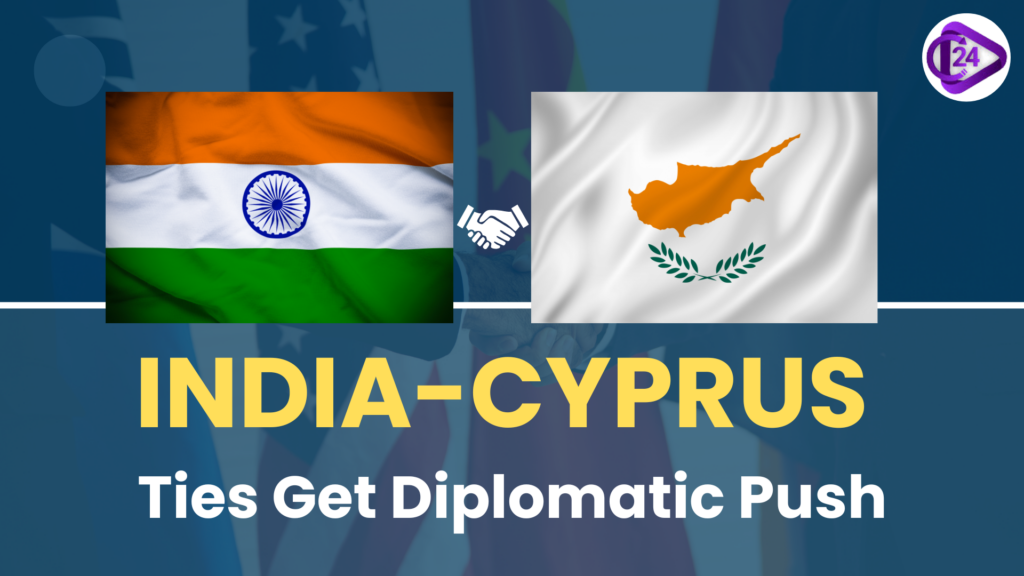
India Seeks to Strengthen Ties with Cyprus, Says PM Modi

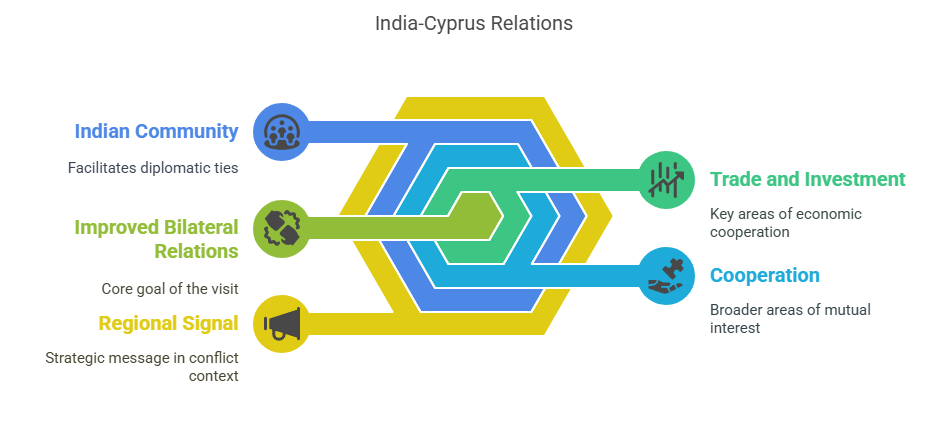
During a visit to Cyprus, the Prime Minister Narendra Modi pointed out that India is dedicated to improving bilateral relations, especially in trade, investment and cooperation. The visit of Modi is intended to give a push to diplomatic relations, which is also facilitated by a large Indian community in Cyprus. His trip is also a signal to the neighboring Turkey in case of the Israel-Iran conflict.

Context: 

  • The objective of the visit of the PM Modi in Cyprus is to enhance bilateral trade and investments and relations with Cyprus and to strengthen the relationship with the Indian diaspora. 

  • The visit also accords with the intensity of tension in the region as the plane of Modi flew the alternative route because of conflicts in Israel and Iran.

Key Points:

Reason of the Visit:

  • The concept of the visit aims at fostering the India-Cyprus relationship, in trade, investment and strategic relations.

  • The visit also conveys a diplomatic mission to the neighboring Turkey that is in the midst of regional tensions.

Political and Commercial Implications

  • A powerful diplomatic overture to Turkiye indicating the attitude of India on issues of regional security at a low decisive level.

  • Strengthens India in the case of cross border terrorism and also takes mention of how India stands on Jammu and Kashmir.

Benchmarking of Strategic Timing- EU Presidency

  • In 2026, Cyprus will hold the Presidency of the Council of the European Union.

  • Top-level diplomatic contact is revived by the visit, just before this is a leading position in the EU.

Stable Reports of India

  • Cyprus has always supported India at the international forums.

  • Firm endorsement of Indian membership campaigns and into international multilateral organizations, e.g, a permanent membership at the UN Security Council.

Historical Engagements

  • Supports a culture of executives level interactions:

    • In 1982, PM Indira Gandhi had visited Cyprus.

    • In 2002, PM Atal Bihari Vajpayee travelled there.

    • Frequent visits of Indian foreign ministers and dignitaries have ensured that the relationship did not cool.

Bilateral Meetings

  • Indian Prime Minister Narendra Modi will also be meeting the President of Cyprus Nickos Christodoulides.

  • Trade, digital finance, shipping, defence and geopolitical cooperation are some of the issues slated to be discussed.

Conclusion

The visit of PM Modi in Cyprus will be an important milestone in improving India- Cyprus relation in terms of trade, investment and cooperation with the region. The significance of the ties of the Indian community and the geopolitical importance of the visit complement that there is going to be a lot of importance in the future bilateral relations.

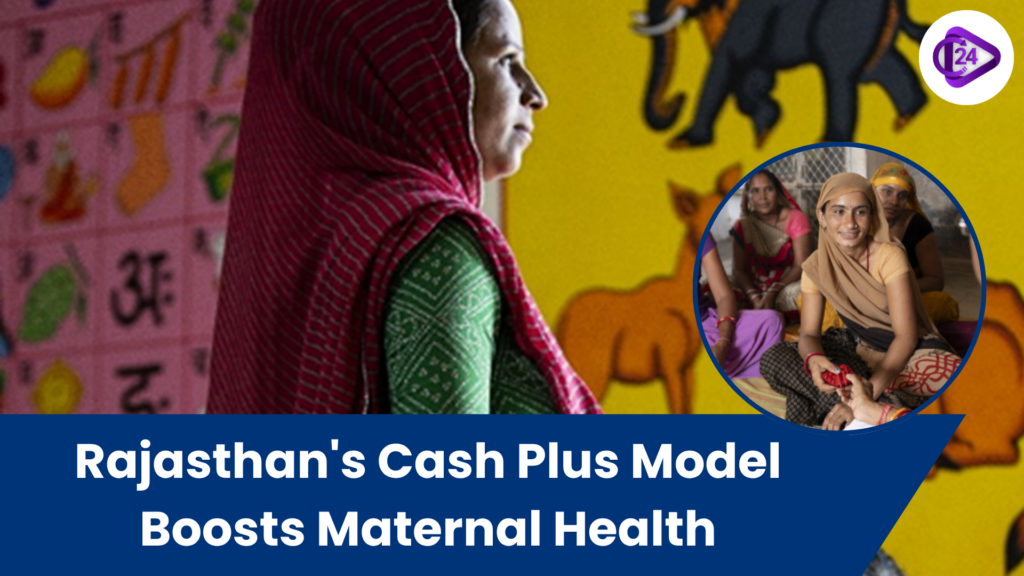
Rajasthan’s Cash Plus Model Enhances Early Breastfeeding and Maternal Nutrition

Rajasthan Cash Plus model which is the first state-driven effort on Direct Benefit Transfers (DBT) based on Social and Behavioral Change Communication (SBCC) in India, has dramatically increased the proportion of women initiating early breastfeeding and the diet of pregnant women. The scheme started as a pilot in 2020 but was expanded in 2022 to a statewide program serving more than 3.3 million women. It combines home-based counseling, community involvement, digital media works, and cash assistance to increase maternal and child health.

Context

  • In the Cash Plus model, early breastfeeding increased by 49% and dietary consumption by 49% in pregnant women. 

  • More than 3.3 million women across Rajasthan have been directly benefited which is evidence to the fact that finance with behavioral change interventions.

Key Points

  • The Cash Plus Way:

    • Cash Transfer (Janani Suraksha Yojana / IGMSY integration):

      • Conditional cash reward to pregnant and lactating mothers who receive antenatal visits, institutional births and immunization.

    • “Plus” Components:

      • Counseling and Behavior Change Communication (BCC): Attention is made to initiate early breastfeeding within an hour after delivery, exclusive breastfeeding in 6 months, and structured diets by mother.

      • Capacity Building: ASHAs, ANMs, and front workers training to provide systemic lactation and nutrition of the mother.

      • Community Engagement: Use of Self-Help groups (SHGs) and Panchayats as a tool of creating awareness and peer learning.

      • Strengthening of Service: to assure the availability of IFA pills, supplementary nutrition by means of Anganwadi Centres, quality care during presentation (during ante natal /post natal).

  • Program Scope 

    • Cash Plus model is an amalgamation of Direct Benefit Transfers (DBT) and Social and Behavioral Change Communication (SBCC).

    • It has contributed to a 49% rise in early breastfeeding with 90% of the new babies being breastfed early.

    • A large percentage of women have become open to the idea of home counseling, being 44.

    • Diversity in food supplies of pregnant women has increased by 49%.

    • The cash support is used by 54% of additional women to target nutrition.

  • Growth and scope:

    • This was piloted in 2020 in five districts and then extended to the entire state commencing in 2022, and that includes about 3.5 lakh second time pregnant women.

    • The scaled up version of the program is worth 210 crores.

  • Other support services:

    • Lactating mothers and pregnant women are advised in group and at home-based nutrition advice.

    • The program is inclusive of social participation involving community activities and digital media campaigns on increasing awareness of maternal health.

  • Effects and Consequences:

    • Better Indicators of Breastfeeding:

      • Increase in initiation of breastfeeding in lower end areas recorded in recent impact assessments.

    • Improved Maternal Food:

      • More intake of iron-rich foods and nutrition services consumption among pregnant women.

    • Special Assistance of High-Risk Populations:

      • Increased benefits to teenage mothers, tribes and low-income households to increase fairness.

    • The National Priorities:

      • Commends POSHAN Abhiyaan and National Nutrition Mission with the convergence of health, nutrition and sanitation.

      • Contributions to SDG-2 (Zero Hunger) and SDG-3 (Good Health and Well-being) as intergenerational malnutrition will be dealt with.

  • Challenges:

    • Delivery variations of the services offered between districts.
    • Losses or slow transmission of cash.

    • Real time data monitoring needs.

  • Recommendations:

    • Expanding the Cash Plus model to a national scale and with good MIS support.

    • Connection to digital sites such as RCH and Poshan Tracker.

    • Continuous capacity-building and monitoring of communities to maintain change in behaviors.

Conclusion

The innovative Cash Plus is an intervention to maternal and child health, developed by Rajasthan to integrate Cash and behavior change programs. Nevertheless it has achieved much in the area of breastfeeding, nutrition and health awareness and in general presents a good example that other states can follow.

Frequently Asked Questions (FAQs)

The current affairs cover recent national and international events related to UPSC, SSC, Banking, Railways, and State PCS.

You need to read about the current affairs daily, and revise them every week and every month to keep them longer in your memory.

Yes, Class24 provides free downloadable Daily Current Affairs PDFs for easy revision.

Yes, you can practice MCQs and quizzes to boost your exam preparation.

Absolutely. The content is written in simple, easy-to-understand bilingual language suitable for beginners.

Go to class24.com and click on the current affairs section directly, where you find everything that you need.

ssc-toppers

Start Learning Today with Class24

Related current affairs

Class24 offers free video lectures for smart preparation, covering CGL, CPO, CHSL, MTS, and GD exams. Learn from expert faculty, revise concepts easily, practice with PYQs, and improve speed and accuracy through high-quality, exam-focused video lessons anytime, anywhere.

Get success in your hand. Start study anytime anywhere.

The journey becomes simple and enjoyable when you start taking interest in it. And through our app “Class24”, we will be your trusted partners in developing that interest.

Daily Quizzes
Mock Tests
Ongoing

No ongoing tests right now.