
Day: June 10, 2025

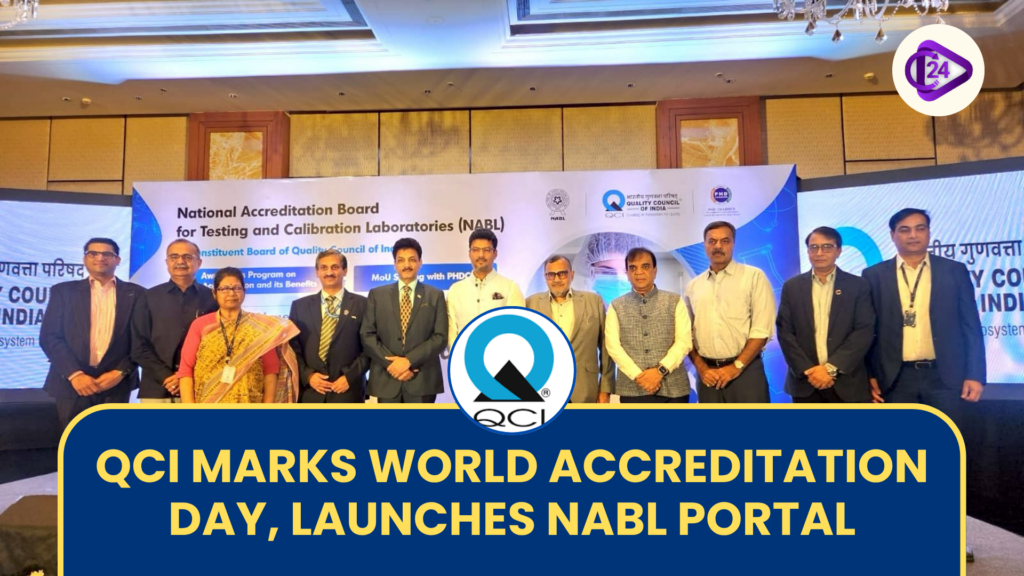
QCI Commemorates World Accreditation Day 2025 and Launches Revamped NABL Portal

In New Delhi, QCI, the Quality Council of India, celebrated World Accreditation Day 2025 at the India Habitat Centre by pointing out how accreditation benefits SMEs. There was a launch of the upgraded NABL Portal to provide better access to laboratories and MSMEs on the internet. This year’s theme promoted the advantages of accreditation for the competitiveness and market reach of small and medium enterprises (SMEs). The role of certification and putting standards in place to boost sustainable growth, innovation, and involvement in international commerce was also strongly considered.

Context

  • At QCI’s World Accreditation Day 2025, it was highlighted that accreditation assists small businesses by boosting their competitiveness and widening their chances to participate in the market. 

  • With the introduction of the new NABL Portal, establishing an accreditation is meant to be easier for MSMEs and labs.

Key Highlights 

About World Accreditation Day in 2025

  • World Accreditation Day 2025 happens on June 9 to make people aware of how accreditation helps improve quality, safety, and trade internationally.

Launch of Revamped NABL Portal

  • Objective: Improve the system of accreditation and make lab and MSME digitized activities more accessible.

  • The main goal is to reach higher operational efficiency and ensure the audience finds the software easily accessible.

“Accreditation: How It Benefits SMEs”

  • Emphasis here was on accreditation helping improve SMEs’ competitiveness, believability, and opportunities for being in the market.

  • MSMEs need relevance to follow international requirements and increase the possibility of export duties.

The Gunvatta Samarpan project

  • Certificate Description: A special undertaking that motivates companies to promise they will follow official standards in public.

  • This improves the overall effort to ensure quality products throughout the industry.

Importance of World Accreditation Day around the World

  • Each year on June 9, it is recognized to encourage countries to use accreditation in the process of trade, economic improvement, and setting up quality infrastructures.

  • QCI: It once more demonstrated that accreditation is crucial for creativity, good competition, and growth in our global world.

Conclusion 

On this day, QCI points out that accreditation is crucial for supporting Indian SMEs in maintaining quality and competing with entities from other countries. The updated NABL Portal and Gunvatta Samarpan scheme have an important role in helping SMEs follow quality assurance procedures, encouraging sustainable progress and growth within India’s Aatmanirbhar Bharat plan.
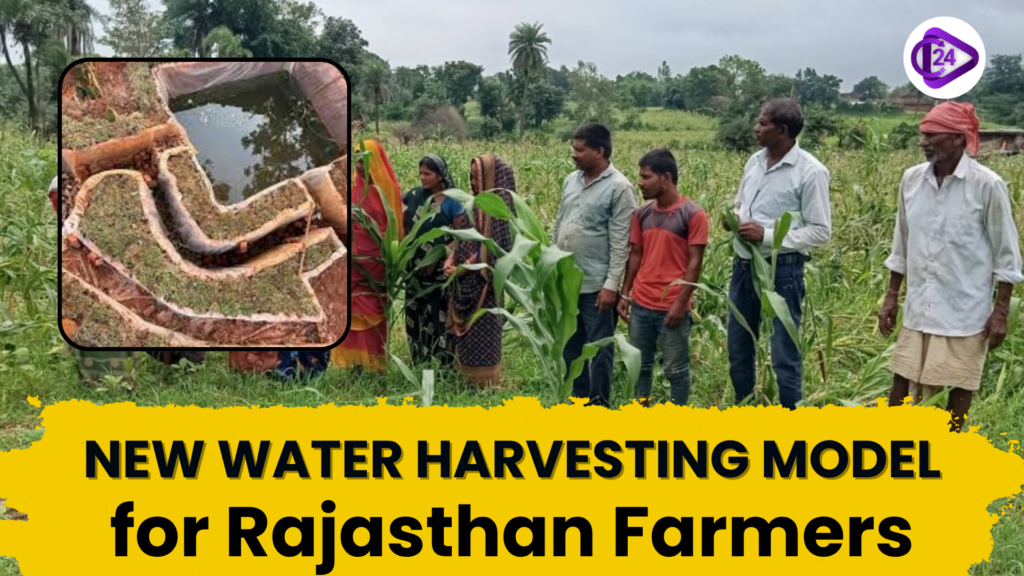
New Water Harvesting Model Promises to Revolutionize Farming in Rajasthan

The new model in rural Rajasthan farmers whose groundwater is dwindling find better hope. The placement of scientifically designed and weather-proof farm ponds around Kukas village near Jaipur is to save rainwater and make sure crops get water all year. In Dausa district, using the model has let farmers plant crops that can be harvested every year. As a result, this project could support better water provision for thousands of farmers in the region along with supporting their families.

Context

  • A new water collection system in Kukas village, Rajasthan, is meant to assure farmers have enough sustainable water and earn more. 

  • By adopting the initiative, millions of liters of monsoon runoff might be saved and agricultural activities could still be successful.

Key Points about the Water Harvesting Initiative

Project Overview

  • Kukas village, Jaipur district, Rajasthan is the site of this location.

  • The target includes 50 scientifically planned farm ponds with storage space for 10 crore litres of seasonal rains.

  • 5% of every farmer’s land is designated for the building of ponds.

Advantages for Farmers

  • Irrigation is needed all through the year to give rabi and kharif crops enough water.

  • Better financial situation: allows farmers to plant groundnuts and cowpeas, which are more profitable and take less water.

  • Helps create a sustainable environment where animals are cared for and quality fruits and vegetables are farmed.

  • Conservation of water and the increased recharge of groundwater are both important for the environment.

  • The ponds collect about 14-21 lakh litres of water during each season of monsoon rains per hectare.

  • Irrigation that never stops helps bring groundwater levels up and fixes the area’s dependence on groundwater for its crops.

Eco-friendly method

  • The project has been set up to secure adequate water for thousands of villagers in Kukas for a long time.

  • Working together with local officials, carrying out education campaigns, and offering help to farmers in technology.

Future Plans

  • The agriculture ministry is working on adding 25 new ponds so that farmers experiencing water shortages get adequate access to water.

  • There is a chance to develop dairy and food processing by using continuous water, together with market links for farm produce.

Conclusion

The method used to collect water at the Kukas village in Rajasthan is showing great results in dealing with water scarcity. By relying on farm ponds, participating farmers get a secure and efficient method for irrigation that leads to more diverse farming and self-reliance. Should it continue to grow and team up with other international agencies, this project may lead to more sustainable farming and better lives for citizens in rural Rajasthan.

Axiom-4 Mission Launch Postponed to June 11 Due to Weather Conditions

There was an unexpected delay of Axiom-4’s launch to the International Space Station as a result of bad weather conditions in Florida and the launch was rescheduled for June 11, 2025. Indian astronaut Group Captain Shubhanshu Shukla and three other members of the crew were about to launch the mission from the Kennedy Space Center of NASA. Monitoring activities and weather is still important, as the readiness for launch is evaluated and changed when necessary. This situation proves that forecasting weather accurately for space exploration is very important.

Context

  • The launch of Axiom-4 has been put back by a day because of inclement weather in Florida. 

  • Between a 20% and 30% chance of violating weather rules has been given, but the conditions look better for tomorrow’s launch.

Important Points about the Axiom-4 Mission Launch

Mission Details

  • Launch Vehicle: Falcon 9 rocket.

  • Launch Place: Kennedy Space Center in Florida.

  • Spacecraft: Dragon spacecraft carrying astronauts to the ISS.

  • Present status: At present, the launch team has completed their checklist and are ready to go; however, weather is a main factor.

  • The Dragon spacecraft built by SpaceX will carry the crew on their mission.

  • Schaub demonstrated in space for as much as 14 days during his mission.

  • The fourth private astronaut mission to the International Space Station (ISS) is called Ax-4.

  • Axiom Space works with NASA to put together this mission.

Weather Delay

  • The flight was delayed because of poor weather like thunderstorms and high winds in Florida.

  • The date when the renovations will officially start is June 11, 2025

  • Chance of weather issues is still 20% on June 11th, but things are set to get better for the upcoming launch.

Onboard Activities

  • Scientific investigations, technological explorations, and education work are included in the mission.

  • Subjects included in remote sensing are materials science, biology, Earth observation, and other sectors.

International Participation

  • As a part of NASA–ISRO agreement, India includes its first astronaut on the International Space Station.

  • It also took the first Polish and Hungarian astronauts to live on the ISS.

Conclusion

Axiom-4 being delayed because of weather shows the role of weather in all space missions. Although the launch needs to be delayed to June 11, the forecasts are good for that day. An incident like this highlights that it is important to plan well, monitor the mission, and adapt to any problems that come up for successful space missions.

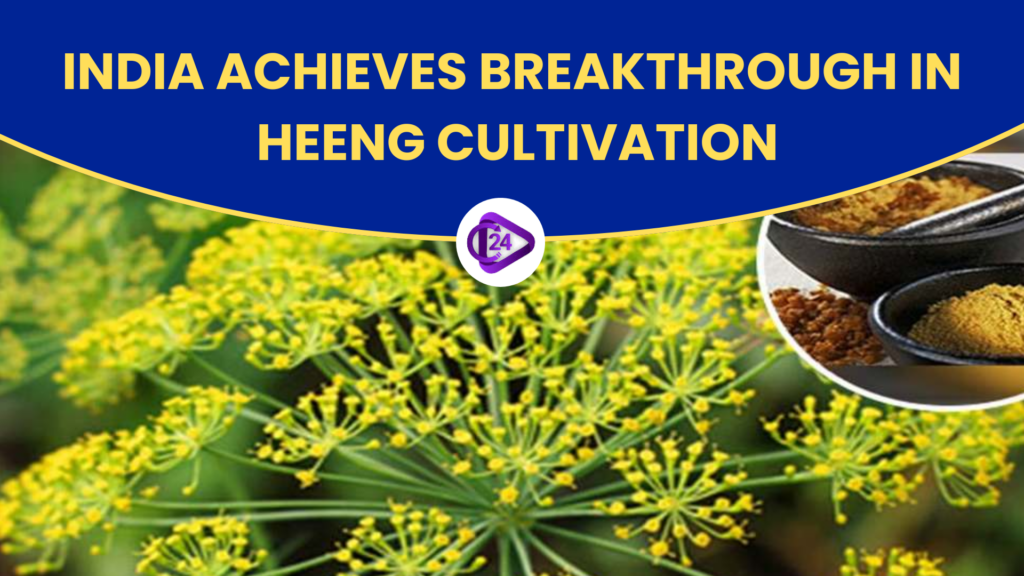
India Successfully Cultivates Heeng: A Breakthrough in Domestic Production

India’s farmers have managed to cultivate heeng (asafoetida), which was mostly imported from Afghanistan and Iran, indicating a major advance in the country’s food self-sufficiency. The institute posted news of the successful flowering and production of seed of heeng in Palampur, Himachal Pradesh on May 28, 2025. It was thanks to many years of research and experiments, beginning when heeng seeds were brought in from abroad in 2018 and cultivation trials began in high-altitude locations. Because of this breakthrough, India is likely to reduce the need for imports from abroad and increase the income of farmers thanks to an independent heeng supply chain.

Context

  • India managed to produce heeng, which is traditionally imported from Central Asia, a major achievement for the nation. 

  • It is believed that CSIR-IHBT’s achievement will result in India using less imported products and farmers in Himachal Pradesh will see benefits.

Key Highlights of Heeng Production in India

About Heeng (Asafoetida)

  • In Indian culture, Heeng is a necessary ingredient for food and is praised in old scriptures for its medical uses.

  • Traditionally, Iran, Afghanistan, and Central Asia were places where plants were grown, since they are cold, arid areas.

Climate conditions of hing

  • Climate Requirements: Heeng thrives in cold, dry environments, with temperatures ranging from 10-20°C and tolerant of highs up to 40°C and lows to –4°C.

  • Soil: Prefers well-drained, sandy soil with minimal rainfall (200-300 mm annually).

Timeline of the Process of Cultivation

  • 2018: The first import of heeng seeds to India was done by CSIR-IHBT from Iran and Afghanistan.

  • 2020: The first step in India’s heeng cultivation took place with the planting of a heeng seedling in Lahaul Valley.

  • 2025: The plant at Palampur starts producing flowers and seeds for the first time on May 28, 2025, a sign it has been domesticated.

Collaborative Effort

  • ICAR-NBPGR, Himachal Pradesh Government and CSIR-IHBT (Institute of Himalayan Bioresource Technology) all supported this initiative.

  • IHBT Palampur established a Germplasm Resource Centre for research activities, training purposes, and producing seeds.

Key Events of Growth

  • Field Trials: Cultivation expanded to Mandi, Kinnaur, Kullu, and Chamba districts in Himachal Pradesh, with farmer training programs conducted in these regions.

  • Demonstration Plots: Early adopter villages like Lahaul & Spiti, Mandi, and Kinnaur were instrumental in the field trials.

Developments in science and technology

  • Tissue Culture Unit: An area devised for increasing heeng plant propagation in large numbers.

  • Method used for identifying regions suitable for farming using GPS locations and aspects of the environment.

Conclusion

The positive results from heeng cultivation in India indicate that India is improving its agriculture and less reliant on foreign goods. Thanks to this development, farmers in Himachal Pradesh and in other regions now have more chances to make additional income. A successful heeng crop relies on research, help from the government, and support from the community in making farming more sustainable and secure.


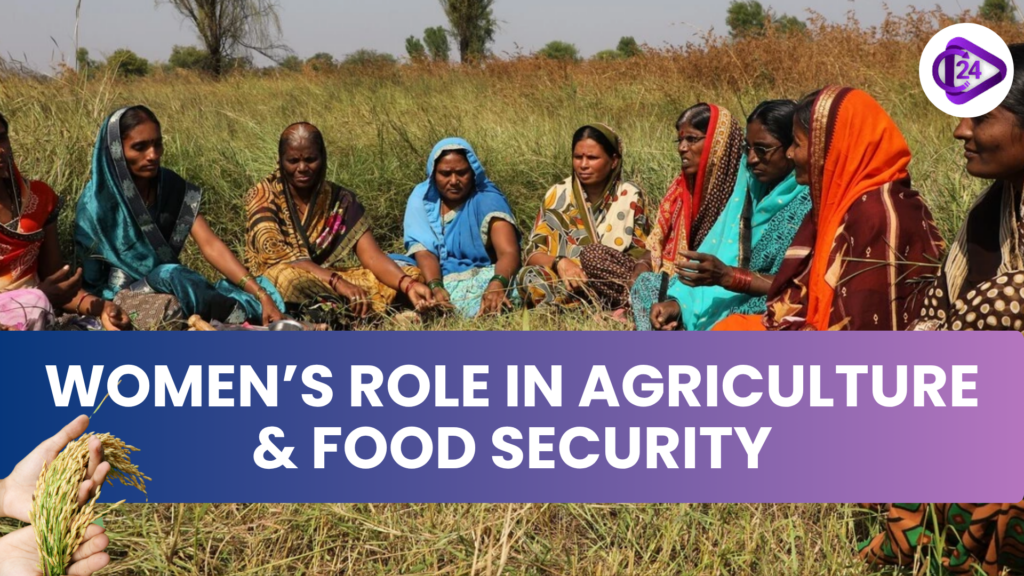
Empowering Women in Agriculture for Food Security

In 2023, the United Nations General Assembly decided that 2026 would be the International Year of the Woman Farmer to emphasize females’ key part in agriculture and the obstacles they have to overcome. Although women do most of the farming in India, their land holdings are much less than men’s. This article gives an overview of a discussion on women in agriculture held by the Royal Norwegian Embassy and the WFP, about topics such as owning land, obtaining important resources, and dealing with climate change. The highlight of the project in Assam is that it empowers women with tools to adapt to the climate and use new technologies.

Context

  • Food security in this field greatly depends on the important role women play, despite the difficulties for them, like problems with land ownership and insufficient resources. 

  • ENACT in Assam is giving women technology and skills for farming that can survive in changing climates, so they have better prospects.

Key Points

Importance of Women in the Agricultural

  • In developing communities, women do about 60-80% of the work related to food and in South Asia, about 39% of those working in agriculture are women.

  • More than 8 out of 10 women in India work in farming, whereas less than 1 in 7 landowners are women.

Challenges of women in agriculture

  • Women own less than 8% of farmland, which prevents them from using financial services.

  • Because women farmers do not have mobile phones, they are unable to use helpful technology and guidance in agriculture.

Government Initiatives

  • Mahila Kisan Sashaktikaran Pariyojana: The aim of Mahila Kisan Sashaktikaran Pariyojana is to boost the farming skills of women and to provide them with new resources.

  •  Agricultural Mechanisation: The Sub-Mission on Agricultural Mechanisation gives farmers up to 80% subsidies for modern farming machinery.

  • National Food Security Mission: 30% of the budget for the National Food Security Mission is given to female farmers in particular states.

Impact of climate change on women farmer

  • Unfairly, women are more affected by climate change, putting extra pressure on them at home and in farming activities.

  • As part of the ENACT project in Assam, women are given important climate details and crop types that can handle floods.

Technology and women empowerment

  • ENACT reaches the farmers via mobile phones, giving regular updates on climate and farming practices every week.

  • They make it possible to have video conferences on farming and sources of income.

Policy and Action taken to Address

  • The data collected should look in detail at the unique needs of women farmers to design the most effective policies for them.

  • Help Women in Farming: Assist agri-value chains that are run by women.

  • Better access to Financing and Networks: Grant more access to funds and support groups formed by women.

Conclusion 

Giving women opportunities in agriculture helps achieve gender equality and also ensures enough food for everyone and sustainable growth. Because of ENACT and other policies that care about gender in agriculture, as well as more access to resources and technology, women farmers in India can improve their lives. Concentrating on women’s roles in farming, providing them with information, and applying climate-smart techniques can greatly help India achieve a sustainable and all-inclusive agriculture.

India’s First E-Waste Recycling Park to Be Built in Delhi

The Environment Minister Manjinder Singh Sirsa has confirmed that the first e-waste (e-waste) eco park in India will be made in Holambi Kalan, North Delhi. The government will build the facility together with private companies following the Public-Private Partnership (PPP) arrangement on land that spans 11.4 acres. Set to manage up to 51,000 tonnes of e-waste every year, this project matches the E-Waste Management Rules from 2022. The park will address rubbish management and also train workers from the informal sector on safe ways to recycle. One purpose of the project is to contribute greatly to the circular economy in Delhi and make a significant amount of revenue.

Context

  • Delhi is set to have India’s first e-waste recycling eco park that will process 51,000 tonnes every year. 

  • Created under a PPP model, this facility will help informal workers learn new skills and encourage the circular approach in the capital.

Key Points of E-Waste Eco Park

 Location and Design

  • Location: Holambi Kalan, North Delhi.

  • Size: 11.4 acres.

  • Construction Period: Expected to be completed within 18 months.

Processing Capacity

  • 51,000 tonnes of e-waste can be processed by this plant each year.

  • All types of e-waste, including the 106 listed by the E-Waste Management Rules of 2022, are managed by it.

Economic Model

  • Public-Private Partnership (PPP): The DBFOT model is used for building it.

  • Concession period: 15 year

  • Revenue from the event may reach over ₹350 crore.

Worker Training

  • Training should be offered to workers dealing with hazardous e-waste as it’s critical for their skill growth.

  • Ensure that our recycling actions are safe and help us create a greener workplace.

Impact on the Environment and on the Economy

  • It expresses Delhi’s initiative to adopt circular economics principles, aiming at avoiding waste and reusing resources.

  • The facility will take care of hazardous electronic waste, making sure the surroundings are clean.

Conclusion 

Delhi hosting India’s first e-waste recycling park is a big achievement for building a sustainable circular economy. Through the use of advanced green practices and helping workers learn new skills, the park deals with waste and supports those who live in the community. Since India’s waste management policies are developing, this initiative matches its goals and can become a reference model for others.

Frequently Asked Questions (FAQs)

The current affairs cover recent national and international events related to UPSC, SSC, Banking, Railways, and State PCS.

You need to read about the current affairs daily, and revise them every week and every month to keep them longer in your memory.

Yes, Class24 provides free downloadable Daily Current Affairs PDFs for easy revision.

Yes, you can practice MCQs and quizzes to boost your exam preparation.

Absolutely. The content is written in simple, easy-to-understand bilingual language suitable for beginners.

Go to class24.com and click on the current affairs section directly, where you find everything that you need.

ssc-toppers

Start Learning Today with Class24

Related current affairs

Class24 offers free video lectures for smart preparation, covering CGL, CPO, CHSL, MTS, and GD exams. Learn from expert faculty, revise concepts easily, practice with PYQs, and improve speed and accuracy through high-quality, exam-focused video lessons anytime, anywhere.

Get success in your hand. Start study anytime anywhere.

The journey becomes simple and enjoyable when you start taking interest in it. And through our app “Class24”, we will be your trusted partners in developing that interest.

Daily Quizzes
Mock Tests
Ongoing

No ongoing tests right now.