
Day: June 9, 2025

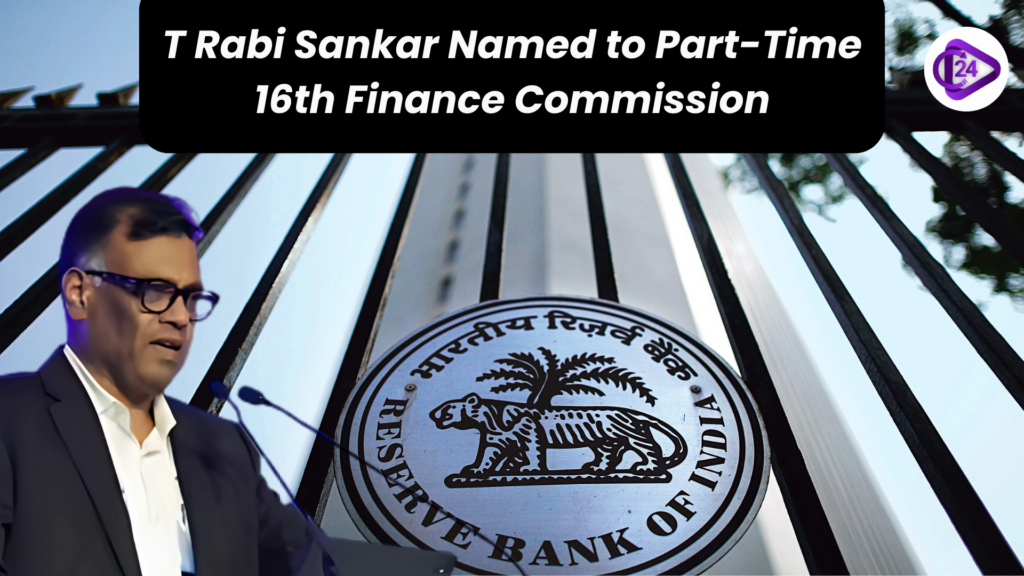
T Rabi Sankar Appointed Part-Time Member of 16th Finance Commission

At the request of Ajay Narayan Jha’s resignation on June 7, 2025, T Rabi Sankar, RBI Deputy Governor, was made a part-time member of the 16th Finance Commission. Under Arvind Panagariya’s leadership, the Finance Commission decides how tax money will be shared between the federal government and the state administrations. If the Commission’s report isn’t presented before October 31, Sankar will finish on that date. Thanks to his appointment, the Commission can continue performing its tasks smoothly. This step was confirmed by the Finance Ministry to guarantee institutional strength in the Commission’s functions.

Context

  • After Ajay Narayan Jha resigned, T Rabi Sankar was appointed as part-time member to the 16th Finance Commission. 

  • With the appointment, the Commission will give valuable advice about future finances in the weeks ahead.

Key Details

  • Appointment

    • The resignation of Ajay Narayan Jha as a full-time member for personal reasons led to his appointment

    • T Rabi Sankar was named a part-time member by the President.

  • Role and Tenure

    • He will hold the position until October 31, 2025 or when the final report is ready.

    • Depicts the RBI’s view on fiscal matters in the Commission.

  • 16th Finance Commission structure

    • The position of Chairman was held by Arvind Panagariya during the NITI Aayog’s formative years (this individual served as the NITI Aayog’s Chairman between 2015-2018 and later went on to be the Vice Chairman).

    • Besides, the team consists of Annie George Mathew, Manoj Panda, and Soumya Kanti Ghosh on a part-time basis.

    • Officers assisting the finance minister include Ritvik Pandey as secretary, two joint secretaries, and one economic advisor

  • Related Development: EAC-PM Appointment

    • S Mahendra Dev has been selected as the full-time Chairman of Economic Advisory Council to PM (EAC-PM).

    • After the passing of Bibek Debroy, Suman Bery was holding both positions until Rakesh Sarwal took over.

Conclusion

Because of the appointment of T Rabi Sankar to the 16th Finance Commission, fiscal policy making remains steady in the country and supports cooperative federalism. At the same time, these changes in the EAC-PM are part of an effort to strengthen economic advisory bodies with people who have experience.

UPSC Prelims Practice Question (MCQ)

Q. Who among the following was appointed as a part-time member of the 16th Finance Commission in June 2025, following the resignation of Ajay Narayan Jha?

A. Arvind Panagariya
B. S Mahendra Dev
C. T Rabi Sankar
D. Soumya Kanti Ghosh
UPSC Mains Practice Question

Q. Discuss the role and significance of the Finance Commission in India’s fiscal federalism. In light of recent appointments, how do part-time members contribute to its functioning?

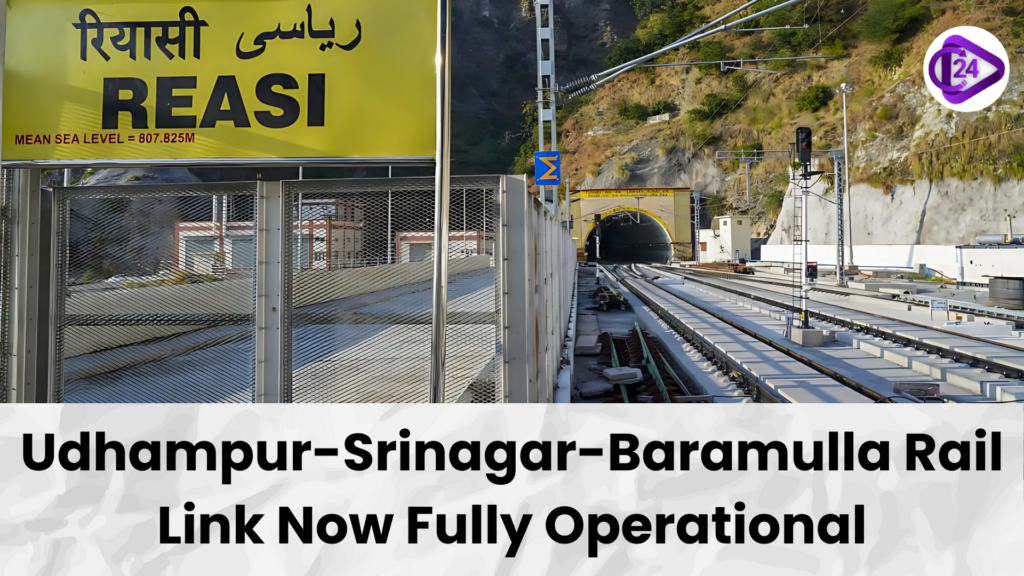
Udhampur-Srinagar-Baramulla Rail Link Fully Operational After 28 Years

On June 6, 2025, Narendra Modi, the Prime Minister, inaugurated the completion of the Udhampur-Srinagar-Baramulla Rail Link (USBRL), making the project fully work. Ever since 1997, the USBRL has been working to connect Jammu to the Kashmir Valley by linking them through one of India’s most hard-to-traverse routes. Because of the world’s highest Chenab Bridge and India’s longest Pir Panjal tunnel, the project simplifies movement and brings India together. This achievement demonstrates how the Indian Railways has grown and is recognized in the country.

Context

  • Now that the Sangaldan-Katra stretch has been opened, the USBRL project finished its work and Kashmir Valley is fully connected to the Indian railway. 

  • It greatly improves links among leading economies, countries, and their people.

Major Points of the USBRL Project

Project Overview

  • The trail is 272 km long.

  • Sanctioned Year: 1997

  • Date finished: June 6, 2025

  • The final part of the journey goes between Sangaldan and Katra.

Timeline of Major Phases

Year

Section

Length / Feature

2005

Jammu–Udhampur

55 km

2008–09

Anantnag–Baramulla (via Mazhom)

100 km

2013

Quazigund–Banihal

Includes 12.75 km Pir Panjal Tunnel

2014

Udhampur–Katra


2024

Banihal–Sangaldan


2025

Sangaldan–Katra

Final link operational

Engineering Marvels

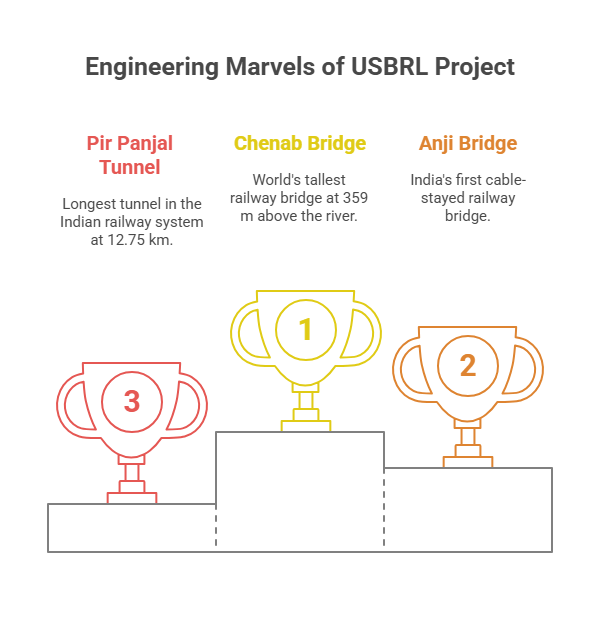
  • Chenab Bridge:

    • There is the world’s tallest railway bridge at 359 m above the river.

  • Anji Bridge:

    • The first cable-stayed railway bridge is found in India.

  • Pir Panjal Tunnel

    • The railway system of India includes its longest tunnel (12.75 km).

The aims of USBRL

  • Make sure all forms of connection between Jammu and Kashmir are available at all times.

  • Help with supply and transportation of troops.

  • Increase the economic links between countries, make tourism easier, and support employment.

  • Depending less on the highway that closes frequently because of bad weather.

Significance of Strategic and Socio-Economic Aspect

  • For the first time, it links areas that are remote and in the hills of Kashmir.

  • Backs military activities in a border area that requires careful treatment.

  • Assists with increased trade, tourism business, and local people’s employment.

  • Supports the country’s unity and equal development of its infrastructure.

Conclusion

Finishing work on the Udhampur-Srinagar-Baramulla Rail Link marks a major achievement in India’s infrastructural records. Besides transport, it demonstrates wise planning, advanced skills, and enthusiasm for the area’s improvement. Through the train route, Kashmir has a new opportunity to grow economically and link more easily to the rest of India.

800-Year-Old Pandya-Era Shiva Temple Found in Tamil Nadu

At Udampatti village, Melur taluk in Madurai district, Tamil Nadu, the foundation of a 800-year-old Shiva temple from the late Pandya dynasty was found during an archaeological excavation. In the year 1217 or 1218 CE, during Maravarman Sundara Pandya’s rule, the Thennavanisvaram temple was constructed. Many inscriptions uncovered at the site cover temple endowments, land sales, and the temple’s independence with money, clarifying aspects of the medieval Tamil community and its economy. We can appreciate this discovery since lots of similar temples have faded or disappeared as time has passed.

Context

  • Archaeologists have found a 800-year-old Shiva temple in Tamil Nadu that had Tamil scripts detailing the economy and running of the place. 

  • The knowledge about the culture and the organization of the Mongol empire in the 13th century comes from this discovery.

Key points of discovery

Discovery site:

  • Udampatti is the town where Sridevi Amman is located, in Melur Taluk of Madurai in Tamil Nadu.

  • The Region During Its History: Later Pandya Dynasty

  • This event happened between 1217 and 1218 CE.

  • The reigning king of that time was Maravarman Sundara Pandya.

  • The name for this temple is Thennavanisvaram.

  • Before it was changed, the village was known as Attur.

Inscriptions and economic details

  • Inscriptions include sale deeds involving a waterbody (Nagankudi) and adjacent lands.

  • The chieftain Alagaperumal sold the land to the Trust.

  • The name is Nambi Perambala Kuthan, some people know him as Kangeyan.

  • 64 ancient coins were the value of the transaction.

  • The temple leaders were in charge of spending the earnings on the temple deity’s daily expenses.

Cultural and historical significance

  • Showed that temples in the Pandya era did not rely on the help of others for their finances.

  • Clear boundaries are provided, as well as the way the government is organized.

  • The temple’s name connects it to Pandya kings because Thennavan means “king” in Tamil.

  • Also, it supports the use of endowment money by temples, which was widespread in medieval South India.

About Pandya Art and Architecture

Education and Literature

  • People went to temples to study and to recite Bhakti hymns.

  • Among the ancient texts there, the works of Sanskrit and Tamil were included in Kadigai, Salai, and Vidyastanam.

  • Some literary works are Tiruppavai, Tiruvasagam, and Tirumantiram.

Religion

  • At first, the Pandyas followed Jainism, then became believers in Saivism and Vaishnavism.

  • Among the Vedic rituals that were supported were Ashvamedha and Vajapeya.

  • Visited different temples that were dedicated to Shaivism and Vaishnavism.

  • Donated idols, for example, Sundarapandyan’s gift to Srirangam.

Temples

  • They built temples using the methods of rock-cut architecture (for Kalugumalai) and of structural construction (for Meenakshi Temple).

  • Medieval Pandyas attached gopurams and mandapas to their temples.

  • The architecture is distinguished by huge ornamental pillars.

Sculpture

  • Carvings made of a single piece of rock and with ornate features.

  • Many famous characters are, for example, Somaskandar, Nataraja, Vishnu, Durgai.

  • Sculptures around Kunnakudi, Kalugumalai have the same qualities as those discovered at Chola-Pallava sites.

Paintings

  • An entire series of Thirumalapuram caves is found in Sittannavasal.

  • Make deities, animals, and lotus tanks with colors that come from minerals.

  • The painting has a scene of Srivallabha king and his wife showing deity while offering respect.

Conclusion

Exploring the Thennavanisvaram Shiva temple from around 800 years back gives us more insight into Tamil Nadu’s past. It highlights, besides its religious meaning, the fact that the Pandya era was economically independent, well-administered, and culturally advanced. Such discoveries play a key part in saving India’s architectural and writing heritage, as well as helping with research and planning conservation.

UPSC Prelims MCQ Question

Q. Excavations in Tamil Nadu have brought to light the Thennavanisvaram Shiva temple that dates from which dynasty and period?

A. Chola Dynasty, 9th century CE
B. Pallava Dynasty, 8th century CE
C. Later Pandya Dynasty, early 13th century CE
D. Vijayanagara Empire, 15th century CE

UPSC Mains Practice Question

Q. Recent archaeological findings, like the Thennavanisvaram Shiva temple in Tamil Nadu, offer insight into medieval South Indian society. Discuss the economic and cultural significance of temples during the Pandya period.

Andhra Pradesh Partners with NVIDIA to Establish India’s First AI University


To set up India’s first AI university, the The government of Andhra Pradesh has committed to the MoU with NVIDIA, a major chipmaker. The motive is to establish advanced infrastructure, focus on AI research, and give students engineering skills in the whole state. The project is presented as moving toward creating a powerful and inclusive AI system within the goal of creating a golden age for Andhra Pradesh. AP announced this company’s project after earlier tying up with IBM and TCS for its Quantum Valley Tech Park in Amaravati. The AI university project is an important step forward for India’s aim to become a leader in modern technology.

Context

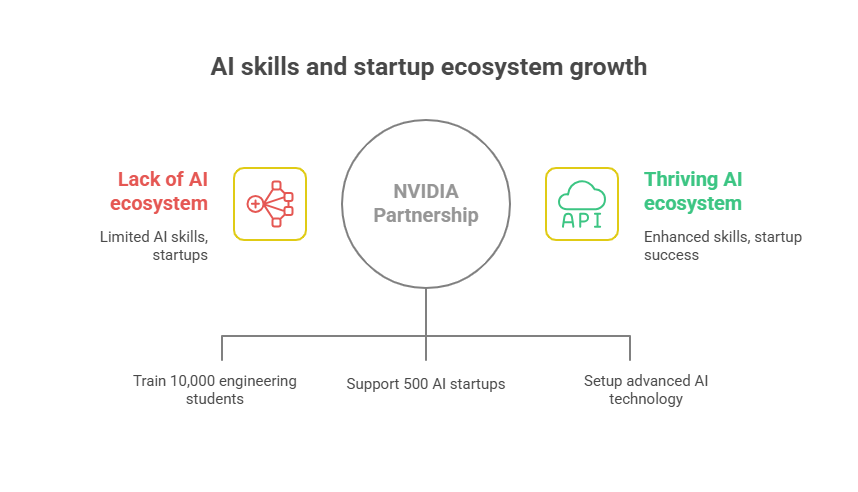
  • Andhra Pradesh plans to start the country’s first AI university together with NVIDIA and train 10,000 engineering students while advancing AI research. 

  • Besides, the initiative is helping 500 AI startups and goes well with the state’s shouldering ambitions in technology.

Key Points of  AI University Initiative

  • Collaboration Partners

    • Andhra Pradesh Government

    • The Global leader in both GPU and AI computing is NVIDIA.

  • Setting Skilling and Training Targets

    • During two years, 10,000 engineering students will receive AI training.

    • NVIDIA offers curriculum and training support right from its experts.

  • Building the startup ecosystem

    • NVIDIA will help 500 AI start-ups from AP by joining the Inception Program.

    • Supports founders by giving them tools, advice, and connections around the world

  • Developing Infrastructure and Doing Research

    • Set up advanced AI technology for your company.

    • Foster research efforts, new ideas, and ties between educational institutions and private companies

Complementary Tech Initiative: Quantum Valley Tech Park

  • The Tripartite Pact has IBM, TCS, and AP on board.

  • IBM Quantum System Two will be put in operation in Amaravati.

  • Co-creation of quantum algorithms and applications will be a part of the deal.

  • Users of quantum computing aim to address big challenges in the country and with industrial operations.

Conclusion 

With NVIDIA’s support for a first-of-its-kind AI school, Andhra Pradesh is set for a big advance in education and new technologies. Through linking strong academic programs with industry experience, the initiative turns the state into a famous AI center nationwide, while investments in quantum computing give the state a platform to lead the nation’s new tech growth.

UPSC Prelims Practice Question

Q. Andhra Pradesh recently partnered with which global tech company to establish India’s first Artificial Intelligence University?

A. IBM
B. NVIDIA
C. Intel
D. TCS

UPSC Mains Practice Question

Q. Discuss the significance of Andhra Pradesh’s collaboration with NVIDIA to set up India’s first AI university. How can such initiatives shape India’s technological future and education landscape?

Extreme Poverty in India Falls to 5.3% in 2022–23: World Bank Report

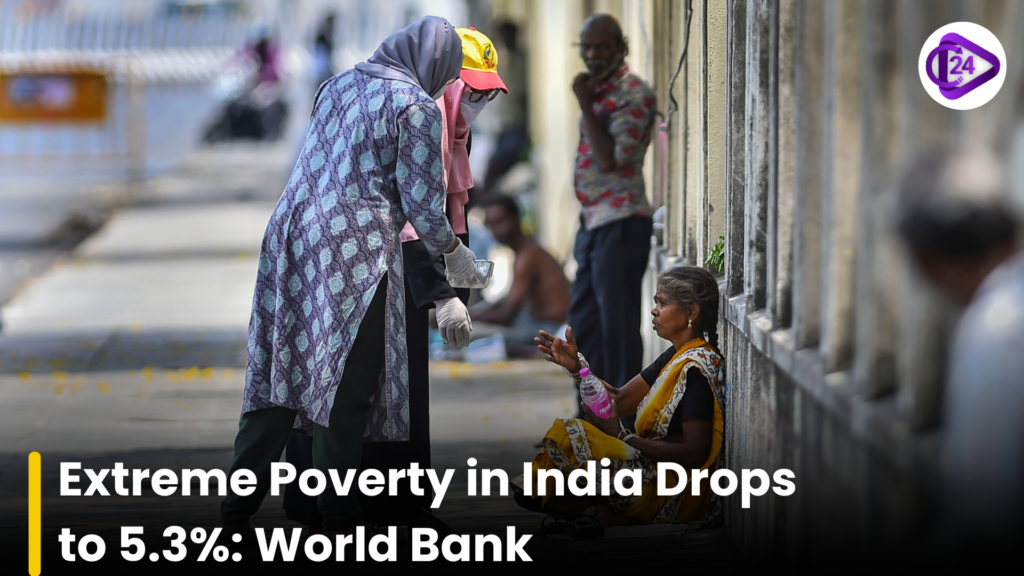
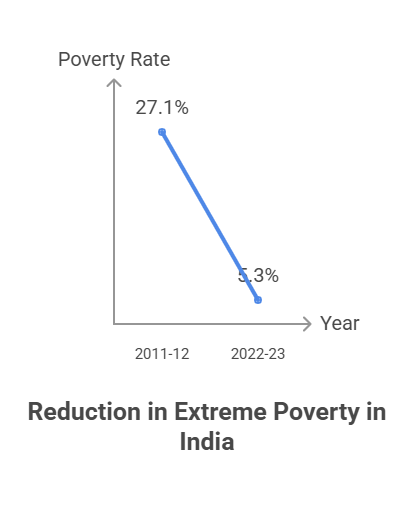
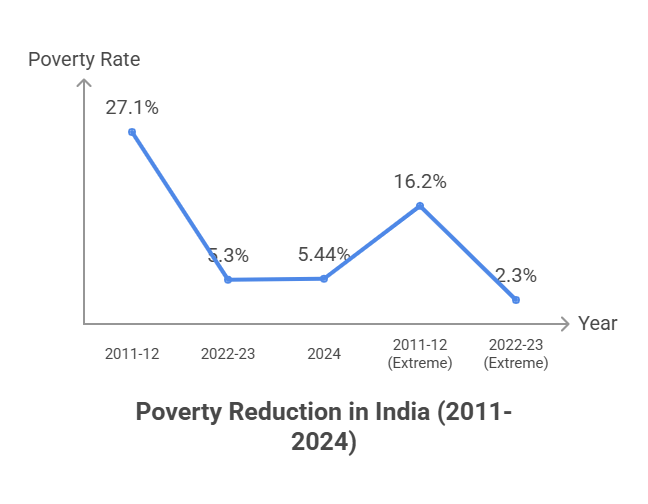
It has been noted by the World Bank that India’s rate of extreme poverty reduced from 27.1% in 2011–12 to 5.3% in 2022-23. At the same time, the poverty line for the entire world was increased 15%, going from the previous $2.15 daily to $3. The reduction demonstrates how India’s economy and social welfare system have developed during the last ten years. Regardless, more than 54 million Indians remained poor in 2024 even after all the growth. This proves that poverty among lower middle-income people is decreasing.

Context

  • India’s poverty rate decreased to 5.3% in 2022–23 from 27.1% in the previous period, 2011–12, stated the World Bank. 

  • Because of inflation and changes in people’s buying power, the new poverty threshold is now set at $3 per day.

Key Points from the World Bank Report

  • Revised poverty line

    • According to 2021 rankings, $3 each day is now the new benchmark.

    • Before, the daily minimum wage was $2.15; now, the new level is 15% higher.

  • A big decline in extreme poverty.

    • 2011–12: 27.1%

    • 2022–23: 5.3%

    • The number dropped by about 22 percent during the past decade.

  • Current number of people living in poverty

    • In 2024, over 54 million Indians had an income that was less than $3 a day.

    • By 2024, it is expected that the poverty rate will be 5.44%.

  • The Overall Picture of Poverty

    • The term extreme poverty is used for the most serious level of deprivation.

      • There was a decrease from 16.2% in 2011–12 to 2.3% by 2022–23.

    • Poverty at  lower-middle income line

      • This part of GDP declined by 33.7 percentage points.

About poverty in India

  • Poverty in India is still a big and many-sided issue, despite the country’s fast economic progress. 

  • It means people are deprived of adequate education, health care, housing, and respect as well as income. 

  • As per NITI Aayog, showed that about 15% of India’s people are multi-dimensionally poor, but this number has decreased significantly during the last decade.

Types of poverty

  • Absolute Poverty: It is described by a certain amount of income needed (in this case, $2.15/day from the World Bank).

  • Relative Poverty:  Where there are differences in the earning power among people in a society.

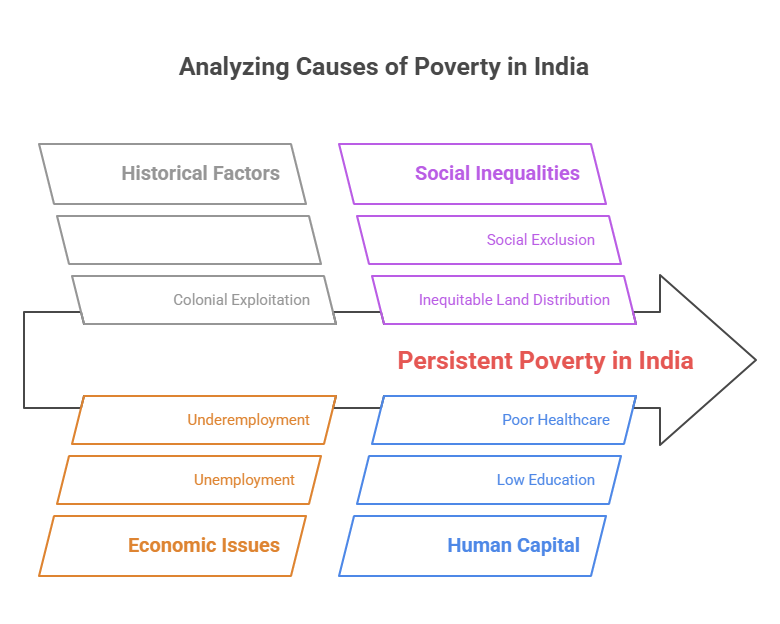
Reasons of poverty in India

  • Historical Factors

    • Because there was colonial exploitation, deindustrialization, and the economy stayed low on farms, the base was not strong.

  • Unemployment and Underemployment

    • The main feature of the informal sector is low pay and lack of job security.

    • Workers have to deal with unemployment as employers look for skills they do not possess.

  • Inequitable Land Distribution

    • The process of distributing land among poor farmers is not finished; majorities of rural poor farm only a little land.

  • Population Pressure

    • A big increase in population can reduce benefits and income that society receives.

  • Social Exclusion

    • Being discriminated against because of one’s caste, gender, or region keeps many people from accessing opportunities.

  • Low Human Capital

    • Lacking education and healthcare makes it difficult for people to get jobs and do their tasks well.

Government Initiatives to reduce poverty

Program

Objective

MGNREGA

Guaranteed 100 days of rural employment

PM Awas Yojana

Housing for all by 2022

National Food Security Act (NFSA)

Subsidized food grains to 67% of population

Ayushman Bharat (PM-JAY)

Health insurance for the poor

Deendayal Antyodaya Yojana (DAY-NRLM)

Self-employment and skill development for rural poor

PM Garib Kalyan Anna Yojana

Free foodgrain distribution during COVID-19

Challenges in poverty alleviation

  • Targeting Errors: The last obstacle is when the targeted beneficiaries are not correctly identified.

  • Corruption: Many of the welfare benefits reach certain middlemen rather than the actual recipients.

  • Urban Poverty: When cities grow unexpectedly, it causes the formation of slums and access to basic amenities is lost.

  • Climate Vulnerability: Weather to Climate Vulnerability Poor people are more likely to suffer from disasters.

  • Digital divide: Many digital initiatives do not include the people who are not connected to the internet.

Way Forward

  • Inclusive growth: Government should pay attention to agriculture, MSMEs, and the education and training sector.

  • Direct Benefit transfer: Allow Aadhaar-based payments so that everyone knows the money received through DBT is correct.

  • Universal Basic Services: Everyone deserves access to immigration, education, health, housing, and sanitation as their rights.

  • Social Safety Nets: Provide better pensions, paid maternity leave, and aid for unemployed people.

  • Urban Employment Guarantee Scheme: To assist more impoverished people living in cities.

Conclusion

The World Bank’s new data on India’s poverty means that economic reforms, schemes for social benefits, and better rural networks have succeeded. Still, because millions are below the $3/day line, continuing to work on job growth, inflation, and fair development is important for eradicating poverty.

Bihar Records Sharpest Decline in Sex Ratio at Birth: CRS 2022 Report

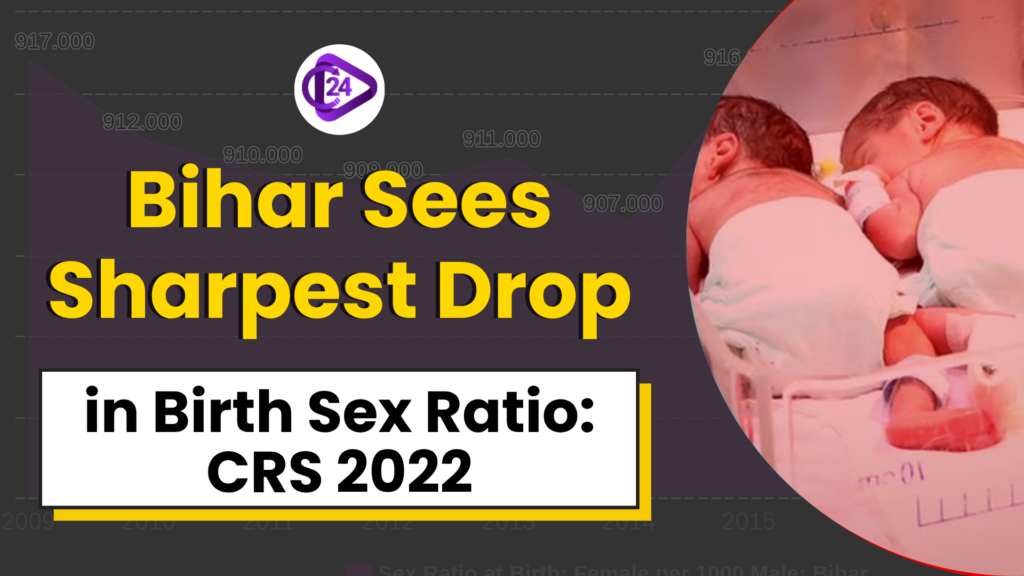
In the latest report by India’s Registrar-General, Bihar is reported to have the lowest SRB in the country at 891 girls for every 1,000 boys. 2023’s figure is far less than 964 reported in 2020 and 908 reported in 2021. The report is released before the Bihar Assembly elections due to happen this year, and it concerns gender equality. Low SRBs were reported in Maharashtra, Gujarat, and Telangana, but northeastern India did very well. Besides birth and death data, the CRS report is included in a comprehensive demographic report.

Context

  • In the past two years, Bihar has seen a big drop in its sex ratio at birth, from 964 in 2020 to 891 in 2022, the lowest for India as a whole. 

  • The CRS 2022 report also shows national increases in birth registrations and reductions in stillbirths.

Key highlights of CRS 2022 report

  • Reduced sex ratio in Bihar

    • Bihar’s SRB:

      • 2020: 964

      • 2021: 908

      • 2022: 891 cases (the lowest level ever recorded in India).

      • Bihar saw a steady decrease in disability only in the last 3 years.

  • States with Low & High Sex ratio 

    • Low SRB States (2022):

      • Maharashtra: 906

      • Telangana: 907

      • Gujarat: 908

    • High SRB States (2022):

      • Nagaland: 1,068

      • Arunachal Pradesh:1,036

      • Ladakh: 1,027

      • Kerala: 971

  • Patterns in Children’s Birth Registration

    • The number of registered births has gone up across the country.

      • 2021: 242 lakh

      • 2022: 254.4 lakh

  • State-wise trends:

    • Rising: UP, Bihar, MP, Telangana, Uttarakhand

    • Declining: Tamil Nadu, Kerala, Punjab, Himachal Pradesh, Delhi

  • Birth Share by Gender

    • Male: 52.4%

    • Female: 47.6%

  • Rural and urban areas distribution

    • Births:

      • Rural: 43%

      • Urban: 56.5%

    • Deaths:

      • Rural: 59.5%

      • Urban: 40.5%

  • Stillbirths and deaths

    • Stillbirths:

      • 2021: 1.24 lakh

      • 2022: 1.15 lakh

      • Total deaths in 2022: 86.5 lakh (drop from 102.2 lakh in 2021 — a pandemic year)

Important Points about Sex Ratio

  • One thousand males were recorded for every 940 females in India’s population in 2011.

  • As for CSR, 914 boys existed for every 100 girls in the state.

  • The number of females in birth data is more than 9 million because of gender-based abortions during that time (2000–2019).

Factors Contributing in lower sex ratio


  • A. Factors related to social environments

    • In patrilocality, women live at their husband’s house after they get married.

    • In some societies, a father’s property and family position is given to his son.

    • People tend to see daughters as a cost due to the system of dowry.

    • As they become older, children are expected to look after their parents.

    • In some societies, sons are given priority to look after last rites.

  • B. Improvements in technology

    • In the 1980s, new ultrasound technology made early discovery of the sex of a baby possible.

    • Each year, more than half of all legal abortions in India are performed for sex-selection even though it is not allowed by law and is illegal.

  • C. Issues caused by poor management.

    • Enforcing the law and the schemes is not strong.

    • It Is Hard to Track: Illegal diagnostic centers are usually left undetected.

  • E. Lack of political will

    • BBBP suffered due to ineffective and poor execution of the program.

    • Gender equality is not given priority by the government in a number of states.

Negative Impact on society

  • Less number of women means that fewer women are available to marry.

  • Levels of Gender-based violence and crimes are going up.

  • Because the ratio is unfair, many women and girls are exploited in various ways.

  • Unmarried men can experience more loneliness and high levels of stress.

  • Disturbance in gender equality undermines the progress of all people in the community.

Ways to Strengthen sex ratio in india

  • Beti Bachao Beti Padhao: This new scheme started in 2015 with the goal of changing people’s perception toward girls and their education.

  • Sukanya Samruddhi Yojana offers a tax saving plan for people saving money for their girls.

  • National Girl Child Day: Every year on 24th January, National Girl Child Day helps to achieve gender justice.

  • The Pre-Conception and Pre-Natal Diagnostic Techniques (PCPNDT) Act: This act was passed in 1994 and forbids sex selection, as well as controls diagnostic technology.

  • As per NFHS-5 (2019–21), there was a drop in sex-selective abortions and CSR increased to 929.

Conclusion 

Bihar’s declining ratio shows a big issue in society that is difficult to fix, despite the many rules put in place to change attitudes. As birth registration increases, and death rates have gotten back to normal after the pandemic, it is important to keep attention on gender imbalance by improving laws against sex-selective abortion, raising awareness about it, and helping to support women in the country.

UPSC Prelims Practice Question (MCQ)

The report by the CRS for 2022 revealed which state recorded the lowest Sex Ratio at Birth in India?

A. Gujarat

 B. Maharashtra

 C. Bihar

 D. Telangana

UPSC Mains Practice Question

Q. Despite policies like Beti Bachao Beti Padhao and legal safeguards, India continues to struggle with a skewed sex ratio at birth. Discuss the key reasons behind this trend and suggest corrective measures.

India’s New EV Policy 2025: Scheme to Promote Manufacturing of Electric Passenger Cars

MHI has released the details for the Scheme to Promote Manufacturing of Electric Passenger Cars in India, which people were waiting for. The purpose of this policy is to grow local EV manufacturing as it also allows some import exemptions for global electric vehicle players. It mainly involves mixing foreign investment as well as domestic manufacturing. Many experts are questioning the guidance on technology sharing, the environment, and the main focus on cars instead of affordable and public transport. Today, people are debating how to grow industry without harming the environment or reducing Turkey’s ability to make important decisions on its own.

Context

  • India waives import duties on electric vehicles as long as businesses invest and make them locally. 

  • Legal changes may hurt the local manufacturing industry unless they are accompanied by the necessary research and training, officials say.

Key Points

  • Reducing the import duty rate

    • The customs duty on SUVs and passenger cars priced more than $35,000 was lowered to 15% (from 70–100%) for five years.

  • Investment Requirements:

    • Any foreign company needs to invest ₹4,150 crore over a period of three years.

  • Localization Targets:

    • Vehicles made in Serbia have to increase to 25% within 3 years of the agreement being reached.

    • Close to half of hearings should be concluded within 5 years.

  • Import Cap:

    • At most, 8,000 vehicles can be imported into Thailand using the reduced duty system.

  • Duty Forgone Cap:

    • Customs duty under the scheme is limited to ₹6,484 crore.


Industry’s Shift & Changes in the International Scene

  • Foreign Capital-Centric Approach:

    • Some say that the approach puts too much importance on foreign capital without boosting the country’s own tech systems.

  • Comparison with global EV policy

  • Europe (EU, EFTA, UK)

    • Plan of Action: Use tax policies, make certain areas emission-free.

    • In India, it is important to keep supporting finances and enforcing new rules.

  • China

    • The government helps new startups a lot while competitors between them grow.

    • Increase internal competition and make sure policies are well coordinated in India.

  • USA

    • Approach: Tesla and GM come up with new ideas, and funding from the government.

    • India is advised to develop R&D infrastructure and decrease its use of subsidies little by little.

Benefits of EV

  • Urban air quality and health concerns decrease as there are no emissions coming out of electric cars.

  • Electricity is more efficient to use and costs less per Kilometer than gasoline/diesel.

  • Makes cities and towns less noisy by running smoothly.

  • Electric motors are able to use electricity more efficiently than engines that run on gasoline or diesel.

Important Challenges Related to the Use of EVs

  • Financial issue

    • It costs virtually double to buy a Tata Nexon EV compared to its ICE variation.

    • Expensive items are squealing demand in the market.

  • Lack of charging stations

    • Most development is in cities, little is being done outside of urban areas.

    • Causes certain buyers to worry about not being able to finish their trips.

  • Battery import dependence

    • India gets its lithium-ion batteries mostly from China, Japan, and S. Korea.

    • Over 1 billion US dollars’ worth of batteries was imported into the country in 2022.

  • Grid Emissions

    • Depending on coal makes it difficult for cars to be greener in India.

    • For our emissions to go down, we need cleaner grids.

  • Skill Gap

    • Not enough skilled people to service and check EVs.

  • Climatic Constraints

    • When it is really hot outside, car’s battery efficiency can drop by up to 17%.

  • Problems in battery recycling

    • No one system has been established for handling used lithium-ion batteries.

  • Range Anxiety

    • It is hard to be confident about long trips because many chargers are not available and electric cars have limited range.

Steps to Speed Up the Adoption of Electric Vehicles

  • Battery Lease-to-Own Scheme

    • Reduces the initial cost of an EV by 30- 40%.

    • Recycling or buying new batteries does not require users to spend a lot of money.

  • Battery research and development.

    • Develop batteries that are strong and yet light, made from alternative energy systems.

    • Make use of the National Mission on Battery Storage (2019).

  • Increase Charger Density

    • As per CII, India needs 1.3 million chargers by the year 2030.

    • In urban areas, “Charge-as-You-Park” models should be used.

  • Standardized Fast-Charging Protocols

    • A common charging system makes it easy to use electric vehicles.

  • The program for EV Rural Entrepreneurs

    • Smaller loans provided to people who want to install chargers in their rural areas.

  • Electric highways made for battery swapping

    • Support dhaba owners so that they can add battery swap stations to what they offer.

    • The use of online booking systems to solve the problem of high travel during peak seasons.

  • Equal Subsidies for EVs and Hybrids

    • It affects the environment and how much energy they help save.

    • Helps people transfer to new brands in a market that concerns prices.

  • Second-Life Battery Bazaar

    • Resell the used EV batteries to make microgrids, solar systems, and e-rickshaws.

    • Encourages recycling and limits the amount of e-waste.

Conclusion 

Although the EV manufacturing policy is important for India’s green objectives, its success depends on making sure foreign investments match with the growth of domestic players. Transferring new technologies, enhancing research and training programs, and promoting electric buses will help the country become environmentally friendly and self-sufficient.

UPSC Prelims Practice Question

Q. As stated in India’s (EV policy), this is what it means:

  1. It is estimated that ₹4,150 crore must be invested in 3 years.

  2. People buying EVs over $35,000 are now subject to customs duty of 15%.

  3. The duty rate is reduced when less than 8,000 electric vehicles are imported.

  4. 3 years from now, half of the workforce is expected to be local.

Select the correct code:

A. 1 and 2 only
B. 2 and 3 only
C. 1, 2 and 3 only
D. All of the above

UPSC Mains Practice Question

Q. Briefly discuss the main challenges in EV adoption in India and suggest short-term solutions to support both industry and environment.

Frequently Asked Questions (FAQs)

The current affairs cover recent national and international events related to UPSC, SSC, Banking, Railways, and State PCS.

You need to read about the current affairs daily, and revise them every week and every month to keep them longer in your memory.

Yes, Class24 provides free downloadable Daily Current Affairs PDFs for easy revision.

Yes, you can practice MCQs and quizzes to boost your exam preparation.

Absolutely. The content is written in simple, easy-to-understand bilingual language suitable for beginners.

Go to class24.com and click on the current affairs section directly, where you find everything that you need.

ssc-toppers

Start Learning Today with Class24

Related current affairs

Class24 offers free video lectures for smart preparation, covering CGL, CPO, CHSL, MTS, and GD exams. Learn from expert faculty, revise concepts easily, practice with PYQs, and improve speed and accuracy through high-quality, exam-focused video lessons anytime, anywhere.

Get success in your hand. Start study anytime anywhere.

The journey becomes simple and enjoyable when you start taking interest in it. And through our app “Class24”, we will be your trusted partners in developing that interest.

Daily Quizzes
Mock Tests
Ongoing

No ongoing tests right now.