

Day: May 31, 2025

Launch of ‘Know Your DIGIPIN’ & ‘Know Your PIN Code’: Boosting India’s Digital Addressing

The Department introduced two new digital platforms, known as ‘Know Your DIGIPIN’ and ‘Know Your PIN Code,’ to promote the country’s geospatial and addressing infrastructure. Working with IIT Hyderabad and ISRO’s NRSC, these portals offer quick geolocation of any address for better digital services, logistics and responding to emergencies. These projects are in line with the National Geospatial Policy 2022, working to update India’s address system for secure and correct service delivery in both urban and rural areas. Both citizens and organizations play a part in reviewing information, ensuring the government’s Digital Public Infrastructure is always accurate and equitable.

Context:

  • “Know Your DIGIPIN” includes a digital address that organizes itself into a grid and corresponds to location coordinates.

  • ‘Know Your PIN Code’ makes it easier to locate postal areas using a map, as well as get user comments on the PIN process.

  • Through these portals, Digital India’s services are improved, emergencies are managed more effectively and government processes are simplified.

Key Points

About “Know the DIGIPIN” Portal

  • Developed by: IIT Hyderabad and NRSC, ISRO helped build an open and interoperable digital address system.

  • Objectives: 

    • Users can acquire the DIGIPIN code at their location by typing in coordinates from latitude and longitude.

    • Offers basic logistics, emergency aid and quick neighborhood services where they are badly needed.

    • Designed to be used by ministries, states and institutions in presenting GIS-based digital services.

About “Know Your PIN Code” Portal

  • Objectives: 

    • Improves the previous six-digit PIN code system by connecting each postal zone to GPS data via satellite technology.

    • People can view their area’s accurate codes and give feedback to help make the data more precise.

    • PIN code data with boundaries is available on the Open Government Data platform in geo-json format.

Changes in Digital Governance and Public Services

  • Accuracy and Development: They demonstrate India’s dedication to digital change, improving the accuracy of public services.

  • Better management: By using geospatial data, organizations can organize their operations, manage things better and act fast.

  • Connectivity: Help brings about the “World is Family” mentality by promoting people to take part across the country.

Keeping Applicants Involved and Additional Learning

  • Feedback is included in government portals to help citizens, developers and institutions provide improvements to the data.

  • Being part of the process helps to keep digital addressing correct for various local uses.

Conclusion:

The creation of the ‘Know Your DIGIPIN’ and ‘Know Your PIN Code’ portals has greatly enhanced India’s geospatial and addressing infrastructure. They make sure that service delivery is more accurate and convenient, plus every citizen can be reached using technology. Continuous public participation and advanced technology in running the country are helping India create a more effective, connected and responsive Digital Public Infrastructure.
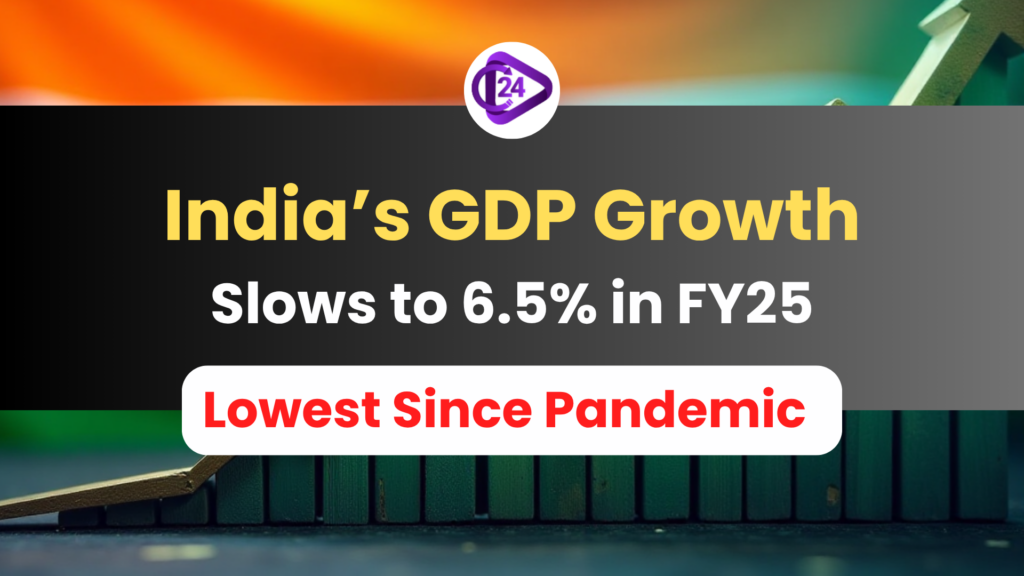
India’s GDP growth drops to 6.5% in 2024-25, slowest since the pandemic

India’s GDP growth in 2024-25 slowed to 6.5% since the pandemic year of 2020-21 which was due to both global and domestic problems. While the economy grew by 7.4% in the fourth quarter (Q4), it is still slower than what was seen in Q4 2020. The agriculture and construction sectors did well, yet manufacturing displayed weaker growth. Spending by households increased which helped drive the economy forward. The economy is slowing down thanks to worldwide turmoil related to trade friction and international concerns.

Context:

  • India’s GDP growth slowed to 6.5%

    • In 2024-25, India’s GDP growth slowed to 6.5% which was its lowest since the pandemic.

    • It was the strong showing of agriculture and construction that helped Q4 growth reach 7.4%.

Key Points:

  • Quarterly Change in GDP:

    • Q3 growth reached 6.4%.

    • The economy grew by 7.4% in the 4th quarter which was the fastest in 2017 yet below last year’s 8.4%.

  • Sectoral Performance:

    • Agriculture: continuing to grow which adds to the strength of the economy.

    • Manufacturing: Grew by 4.8% in Q4, down from 11.3% last year’s Q4.

    • Construction: Returned to double-digit growth at 10.8% in Q4, highest in the fiscal year.

  • Household Consumption:

    • An improvement in economic activity that grew from 5.6% to 7.2%, showing consumers are spending more.

  • Expert Opinion

    • The Chief Economic Adviser pointed out that India’s economy handled growth well in a tough global climate which was different from advanced economies.

Common Economic Terms

Definition of Gross Domestic Product(GDP)

  • Gross Domestic Product (GDP) is the overall value of goods and services made by the country within its borders during a specific time, commonly measured over one financial year.

  • It counts all products made by companies, foreign or local, inside the country.

  • The GDP figure is built up by Consumption (56%), Investment (32%), Government Spending (11%) and Net Exports (exports – imports).

Nominal GDP vs Real GDP

Basis of Comparison

Nominal GDP

Real GDP

Definition

GDP measured at current market prices

GDP measured at constant prices, adjusted for inflation

Inflation Effect

Includes the effect of inflation

Excludes the effect of inflation

Indicates

Change in both price and quantity of output

Change in only quantity of output

Used For

Comparing current economic size

Measuring real economic growth over time

Example

Higher Nominal GDP can be due to price rise

Higher Real GDP shows actual increase in production

Formula: Nominal GDP = Real GDP × (Price Index / 100)

GVA (Gross Value Added) vs GDP (Gross Domestic Product)

Basis of Comparison

GVA (Gross Value Added)

GDP (Gross Domestic Product)

Definition

Measures value of goods/services after subtracting input costs

Measures total market value including taxes and subsidies

Formula

GVA = GDP – (Taxes – Subsidies)

GDP = GVA + (Taxes – Subsidies)

Focus

Shows sectoral output efficiency

Reflects overall economy’s performance

Used By

Analysts for sector-wise analysis

Governments for budgeting, policy, and national accounting

Key Component

Pure production value

Production + Net tax revenue

Formula: GDP = GVA + Taxes – Subsidies

FY25 Economic Projections:

  • Nominal GDP: ₹324 lakh crore (increase about 9.7%).

  • Real GDP at market prices: ₹184.9 lakh crore (adjusted for inflation).

  • Sectoral Growth:

    • The agriculture sector experienced a growth of 3.8% (which is 2.4 points higher than before).

    • Manufacturing fell to 5.3% in 2022, from 9.9% in 2020.

    • Construction contributed 8.6% of the economy this year, a drop from last year’s rate of 9.9%.

    • The services sector expanded by 7.2% mainly driven by the activities related to public administration and financial services.

Challenges:

  • Private consumer and investment spending has grown more slowly since FY20.

  • Tight management of government budgets reducing demand for new spending.

  • Trade deficit is still a problem, even though it has narrowed in some months.

Conclusion:

A GDP growth of 6.5% might raise concerns, but solid agriculture, construction and growing spending show that India’s economy is still stable. If India focuses on further boosting manufacturing and infrastructure development, it might recover and enjoy future sustainable and inclusive growth.

UPSC Prelims Practice Question

Q. Which of these two makes the best explanation of the distinction between Nominal GDP and Real GDP?

  • A) Nominal GDP is affected by inflation, but not Real GDP
  • B) Taxes and subsidies are part of Real GDP but do not affect Nominal GDP.
  • C) Current prices are used to find Nominal GDP, while constant prices are used for Real GDP
  • D) Real GDP measures inflation, whereas Nominal GDP looks at how much output is available.

UPSC Mains Practice Question (for GS Paper III)

Q. "A slowdown in India’s GDP growth to 6.5% this year is due to problems both internationally and within the country." Analyze how different sectors are faring and propose ways to support both inclusion and growth. (250 words)

FAQs

Because of international trade issues, a decrease in manufacturing and careful spending by governments.

Higher agriculture and construction activities had a strong effect on the quarterly GDP which reached 7.4%.

Manufacturing expanded by just 4.8% in April which slowed the economy’s overall movement.

GVA represents worth generated with input resources; GDP adds taxes and subsidies on top of GVA.

The growth rate was supported by more spending by households of 7.2% which was higher than last year's 5.6%.

17th India-Mongolia Joint Military Exercise NOMADIC ELEPHANT

From 31st May to 13th June 2025, Indian Army personnel went to Ulaanbaatar for the Nomadic Elephant, the 17th India-Mongolia Joint Military Exercise that was held there. The event held every year in turn by India and Mongolia helps improve their armies’ ability to work together by training in semi-conventional operations under a UN mandate. The exercise has members from the Arunachal Scouts and Mongolian Special Forces participating and features many types of tactical exercises as well as cyber warfare.

Context:

  • Participating in the 17th Nomadic Elephant Exercise, four types of Indian Army formations will join the exercise in Mongolia along with the Mongolian Military.

  • It promotes cooperation and skills in operating together in hilly and semi-urban areas.

Details:

Objective for this Exercise:

  • Improve the ability of Indian and Mongolian teams to collaborate as part of joint tasks.

  • Carry out missions in scenarios of semi-conventional warfare under UN orders.


Main Activities for Training:

  • The platoon-level Field Training Exercise (FTX).

  • Endurance training, close-range shooting, dealing with rooms, working in small teams and rock training.

  • Use of Cyber Warfare to make operations more complicated.

Participants:

  • Most of the Indian group was made up of soldiers from the Arunachal Scouts (45 personnel).

  • Mongolian forces feature about 150 Special Forces members.

Significance:

  • Helps advance defence cooperation between India and Mongolia, leading to more regional stability and safety.

  • Helps connect military experts and enables cultural sharing.

  • Shows the two countries trusting and cooperating with one another.

Other military exercise participated by India and Mongolia together

  • Khaan Quest:

    • Kind of exercise: Worldwide peacekeeping operation.

    • Mongolia, India, the United States and several others networking here.

    • Five Hills Training Area, near the capital of Mongolia.

    • Ways to improve peacekeeping and better collaborate with different countries. 

  • Vostok 2022:

    • Type: Russian military exercise which involved a large number of troops.

    • Among them are: Russia, India, Mongolia, China and a number of other countries.

    • The incident took place in the Russian Eastern Military District.

    • Attention: Joining of powers by nations for carrying out joint operations.

Conclusion:

India and Mongolia are strengthening their defence ties through exercise NOMADIC ELEPHANT which supports regional peace and stability. It helps with working jointly, promotes shared connectivity and shows India supports teaming up on security in Asia. Such training helps India confirm its position as a responsible player in regional defense working with fellow partners.

UPSC Prelims Practice Question

With regard to the joint India-Mongolia military exercise Nomadic Elephant, look at these statements:

  1. Every year, the exercise is organized in India.

  2. It mainly prepares forces for carrying out semi-conventional missions according to a United Nations mandate.

  3. The Scouts from Arunachal and Mongolian Special Forces were part of the 2025 competition.

  4. In this training, teams only build up their strength and shoot with tactics; there is no involvement in cyber warfare.

Which of the statements given above are correct?

A) 2 and 3 only
B) 1 and 4 only
C) 1, 2 and 3 only
D) 2, 3 and 4 only

FAQs About Exercise Nomadic Elephant

As a bilateral exercise, India and Mongolia practice coordinating semi-conventional operations under UN supervision.

From the 31st of May to the 13th of June 2025, Ulaanbaatar, Mongolia.

An Arunachal Scouts team consisting of 45 members.

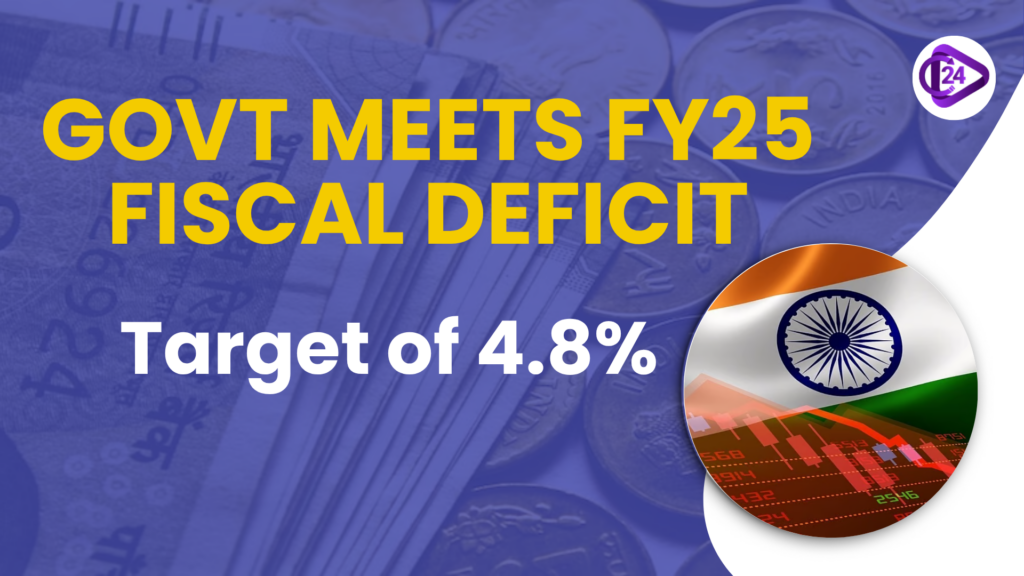
Government Meets Fiscal Deficit Target of 4.8% of GDP for FY25 Amid Revenue Shortfalls

The Government of India achieved its fiscal deficit goal of 4.8% of GDP for financial year 2024-25 as per preliminary data from the Controller General of Accounts. Fiscal responsibility was upheld despite total revenue being lower than expected, mainly because of missing capital receipts and less tax money. Total spending and total revenue by the government were roughly equal to 97.8% of what was set in the revised budget. The government plans to gradually cut the deficit to 4.4% of the GDP in the financial year 2025-2026.

Context

  • Government meets  fiscal deficit goal of 4.8%

    • Despite reduced revenue, India fulfilled the fiscal deficit goal of 4.8% of GDP in FY25.

    • Income tax collections were down by 6%, but corporate tax collections came in above the targets.

Key Points

  • Fiscal Deficit and Expenditure

    • For FY25, the fiscal deficit came to ₹15.77 lakh crore or 4.8% of GDP.

    • A total of ₹46.55 lakh crore (97.8%) was spent for the year which was slightly greater than the budgeted amount.

    • Total revenue amounted to ₹30.78 lakh crore (97.8% of the estimated figure).

  • Revenue Shortfalls:

    • Money received from miscellaneous capital resources (such as disposals from investments) added up to ₹17,202 crore, sharing just about half (52.1%) of the target for the year.

    • Disinvestment Earnings: ₹10,131.32 crore

    • Revenue from income taxes:  ₹11.83 lakh crore which is about 6% less than what was forecasted by the government.

    • Corporate Taxes: ₹9.87 lakh crore in corporate taxes which was just 0.7% more than the government estimated.

  • Plan for Fiscal Consolidation

    • The Finance Minister aims for the fiscal deficit to decrease again, going down to 4.4% of GDP in FY26.

    • The government is making sure not to raise spending too much above income.

About Fiscal Deficit

What does Fiscal Deficit mean?

  • When the government spends more money than it makes, through expenses and revenue (and excluding loans), there is a fiscal deficit. 

  • It shows how much debt the government has to incur to pay its bills.

  • Simple Definition:

    • Fiscal deficit = Total Expenditure – Total Receipts (excluding borrowings)

Formula of Fiscal Deficit

  • Fiscal Deficit = (Revenue Expenditure + Capital Expenditure) – (Revenue Receipts + Recoveries of Loans + Non-Debt Capital Receipts)

Alternate Form (used in budget documents):

  • Fiscal Deficit = Total Expenditure – Total Revenue (excluding borrowings)

  • It is generally expressed as a percentage of GDP to assess the size of deficit relative to the economy.

Components of Fiscal Deficit

Component

Details

Revenue Receipts

Tax revenue (GST, income tax, etc.) + Non-tax revenue (dividends, interest)

Capital Receipts

Recoveries of loans + Disinvestment proceeds (excluding borrowings)

Expenditure

Revenue expenditure (salaries, subsidies, etc.) + Capital expenditure (infrastructure, asset creation)

How is Fiscal Deficit Financed?

Source

Explanation

Borrowing

From market, commercial banks, foreign sources (like IMF, World Bank)

Deficit Financing

Borrowing from RBI in exchange for government securities (RBI prints new currency)

Formula: Total borrowing = Fiscal deficit for the year

The main framework behind India’s Fiscal Policy

  • A Finance Commission is set every 5 years to advise on how to divide funds between the Centre and the States.

  • Tax rates and government spending are announced in the Union Budget by the proposal must be approved by the Parliament.

  • FRBM Act, 2003 requires the government to act fiscally responsible and to bring down its deficits over time.

  • Plans are in place for the fiscal deficit to be 4.4% of GDP in the 2025-26 financial year.


Fiscal Deficit vs Revenue Deficit

Feature

Fiscal Deficit

Revenue Deficit

Definition

Excess of total expenditure over total receipts (excluding borrowings)

Excess of revenue expenditure over revenue receipts

Formula

Total Expenditure – Total Receipts (excl. borrowings)

Revenue Expenditure – Revenue Receipts

Indicates

Government’s borrowing requirement

Government’s inability to meet routine expenses with revenue

Nature

Includes both revenue and capital expenses

Only revenue transactions involved

Implication

Indicates overall fiscal imbalance

Indicates operational inefficiency

Conclusion:

Hitting the fiscal deficit goal even with revenue collection problems shows the government’s determination to keep its fiscal and economic situation stable. There are areas, as shown by lower revenue from income tax, where states should strengthen their plans for bringing in income. Keeping on the consolidation path is key for the economy to grow sustainably and for investors to be confident.

UPSC Prelims Practice Question 

Q.1 Let’s examine the statements given on India’s finances and GDP in the upcoming FY 2024-25:

  1. The growth of India’s GDP in FY25 was the biggest since the pandemic year of 2020-21.

  2. The 4.8% fiscal deficit was met in spite of revenue not meeting its mark.

  3. Growth in the manufacturing sector was greater than growth in construction during Q4 FY25.

  4. Cash taken from corporate taxes was not as much as authorities projected in FY25.

Which of the above statements are correct?

A) 2 only
B) 1 and 3 only
C) 2 and 4 only
D) 1, 2 and 3 only

UPSC Mains Practice Question (GS Paper III)

Q. “Even though the fiscal deficit was reached in FY2024–25, slow growth in the Indian economy is caused by imbalances within sectors and difficulties from the world outside.”

Comment on the economic impact the current trend has on India’s economy in the next few years and put forward advice on achieving fiscal stability with the same growth strategy. (250 Words)

FAQs

Since there has been poor manufacturing, trouble in global markets and a decline in private spending and investment.

Construction and agriculture played big roles and Q4 saw construction expand by 10.8%.

By watching how much was spent and earning less income tax than expected.

Fiscal deficit is aimed to decline to 4.4% of GDP in FY2025–26.

Both fiscal deficit and revenue deficit happen when the government spends more than it earns, but only the latter relates to spending only on regular income.

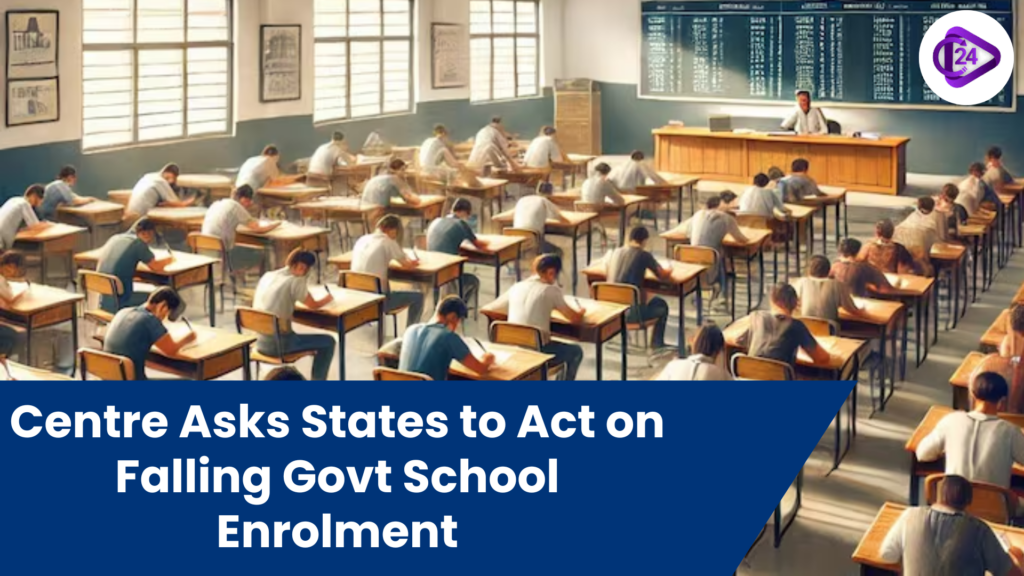
Centre Urges States to Address Declining Enrolment in Government Schools

It has come to the attention of the Union Education Ministry that enrollment in government schools has decreased year after year in 11 States and Union Territories, among them Uttarakhand, Telangana, Tamil Nadu, Andhra Pradesh, Maharashtra and Kerala. Even though the government spends a lot on programs like Samagra Shiksha, students are turning more to private unaided schools. Because of this shift, both inclusive education and fair access to schooling are facing threats. The Ministry requests that States find out what leads to this scenario and apply measures to correct it and uplift the image of government schools.

Context

  • Despite big investments from the government, several States are seeing a consistent drop in students going to government schools.

  • States have been asked by the Centre to work out what is stopping students from enrolling in government schools and to improve enrollment by taking action.

Key Points

Enrollment of States

  • Telangana: Most schools in Telangana (70%) are run by the government, but only 38.11% of students choose them.

  • Uttarakhand: Schools in Uttrakhand are largely government (71.84%), however, only 36.68% children enroll.

  • Tamil Nadu: Most of the students in Tamil Nadu are in government schools which make up 64% of the schools and have 37% of the enrollment.

  • Andhra Pradesh :This state has 73.32% government schools with 46.33% students and 52.09% of them are unaided schools.

  • Maharashtra & Kerala: Students were not enrolled because their details matched those in the Aadhaar system.

Concerns Raised:

  • In spite of spending a lot of money, the number of students in government schools is decreasing.

  • States should properly analyze issues like how children are educated, available infrastructure, the number of teachers and what the public thinks.

Policy Recommendations:

  • Create a well-known brand for your government school to draw more students.

  • Work on school facilities, teacher skills and achievements of students.

  • Stronger ways to supervise and inspect activities.

  • Involve families and neighborhoods in building trust back into public schools.

Reasons for declining enrollment in government schools 

  • Low quality education

    • Because of accountability issues, under performing learners and teachers rarely attending school, many parents do not choose government-run schools for their children.

  • Infrastructure Deficiencies

    • In many govt schools, things like clean toilets, clean drinking water, electricity and usable classrooms are scarce.

  • Rise of affordable private schools

    • Lower-cost private schools teach in English and provide better discipline in class which brings in families with low incomes.

  • Lack of skilled teachers

    • Having fewer teachers and mixed-grade classrooms decreases the attention and impact of teaching.

  • English-medium Preference

    • Most govt schools do not teach in English and parents are now more interested in this kind of education.

  • Lack of Extracurricular and Modern Facilities

    • A lack of digital tools for learning, sports facilities and guidance about careers in govt schools.

  • People moving to cities

    • When people migrate to cities, their children often attend government schools nearby, while the ones left in the villages might not have enough students, causing inequality in the system.

  • Social Perceptions and Status

    • Many consider govt schools to be a last choice for those who cannot afford private schools which plays into social stereotypes.

  • Mid-Day Meals issues

    • Bad or irregular mid-day meal services negatively influence whether or not students come to school and how many are enrolled.

  • Policy implementation issues

    • Frequent shifts in policies and bad implementations like for the RTE Act weaken the effects in the long run.


Ways to improve enrollment in government schools

  • Strengthen the quality of teaching.

    • Frequently train teachers and use performance as a basis for their incentives.

  • Improve the facilities at schools.

    • Maintain safe and clean toilets, provide clean water to drink, ensure there is electricity and set up smart technology in all schools.

  • Encourage teaching in English language

    • A good place to start is to provide early English/bilingual teaching led by prepared teachers with the necessary tools.

  • Focus on basic education.

    • Make NIPUN Bharat the basis for literacy and numeracy with the use of local languages as supporters.

  • Encourage People to Get More Involved

    • Give power to School Management Committees and invite parents to participate in enrollment events.

  • Improve the quality of the mid-day meals.

    • Deliver meals that are both healthy and safe by inviting NGOs and private firms to help in providing food.

  • Introduce technology into schools and classes.

    • Make use of DIKSHA and supply tablets/laptops so students get digital learning in schools and at home.

  • Identify, track and review student achievement.

    • Carry out NAS and give extra help after reviewing student achievements.

  • Give Scholarships and Help Struggling Families Economically

    • Provide free uniforms, books, bicycles and scholarships to help those who might leave school.

  • Make use of Public-Private Partnerships (PPP).

    • Team up with NGOs and businesses to find new ways to teach and reach students.

Government Initiative for School Education 

  • Samagra Shiksha Abhiyan.

    • A scheme for school education helping kids from pre-primary to Class 12 achieve more access, fairness and improved quality of education.

  • NIPUN Bharat Mission

    • Initiated to make sure that all children in Classes 1 to 3 have fundamental literacy and numeracy skills by 2026–2027.

  • PM SHRI Schools

    • Hopes to construct over 14,500 model schools in India that are equipped with current facilities and new education approaches.

  • Beti Bachao, Beti Padhao

    • Supports education for girls and tries to improve the number of girls compared to boys in schools.

  • Mid-Day Meal Scheme (PM POSHAN)

    • Supplies free healthy food in government schools to boost attendance, lower the risk of dropping out and increase learning.

  • Vidya Samiksha Kendra (VSK)

    • Enables real-time monitoring of student learning and school performance through data analytics.

  • Digital Initiatives (DIKSHA, e-Vidya, PM e-Vidya)

    • Allows teachers and students to use many textbooks, recorded lectures and other e-content at no charge.

  • The role of the School Management Committee (SMC)

    • Supports parents and citizens in the neighborhood becoming engaged in decisions about the school and its progress.

  • Distribution of free uniforms, books and scholarships

    • Helps children from SC/ST/OBC/EWS groups overcome financial problems that prevent them from getting an education.

  • The National Achievement Survey (NAS)

    • Regular nationwide data collection that reviews learning outcomes and supports both policy and teaching in schools.

Conclusion:

A decrease in government school enrolment makes it harder to give all children access to decent and affordable schooling. The Centre and State governments should take rapid action to make government schools more attractive and effective through targeted efforts that they provide. Public education being strengthened is essential to reaching universal education goals and achieving social equity as outlined in the Right to Education Act.

UPSC Prelims Practice Question

Q. Explain why enrollment in government schools in India has lowered.

  1. Problems with pure drinking water and proper sanitation

  2. Private schools make use of strong digital infrastructure.
  3. Parents often prefer to have their children educated in English.

  4. Teachers tend to move often between schools in the private sector.

Pick the correct answer

  • (a) Only 1 and 2 are true.
  • (b) Only 1 and 3 are true
  • (c) Only 2 and 4
  • (d) 1, 2 and 4 only

UPSC Mains Practice Question (GS Paper II)

Q. “Investments made through Samagra Shiksha Abhiyan do not seem enough for school enrolment to stay high in many areas.”

Look into the factors behind this trend and offer solutions in the form of policies. (250 words)

Frequently Asked Questions about Declining School Enrolment

Many students are no longer enrolling because there are poor educational facilities, not enough classes taught in English, little teacher oversight and cheaper private schools are now available.

The Centre called for states to improve how schools are seen, increase investments in facilities and training of teachers and work with communities to restore their trust in public schools.

Many parents now want their kids to learn English, as government schools usually don’t have English classes which urges them to attend private schools.

The NIPUN Bharat Mission seeks to ensure all kids in Classes 1–3 learn the basics by 2026–27.

Government schools are frequently regarded as a backup option and the low confidence that many have in the government results in students not enrolling.

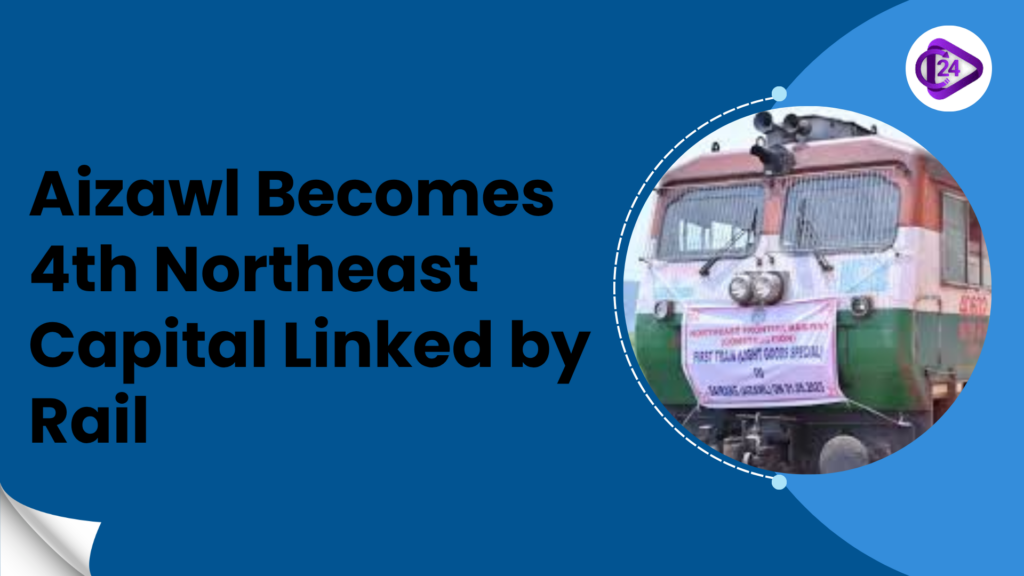
Aizawl Becomes Fourth Northeast State Capital Connected by Rail

Aizawl, the capital of Mizoram has now become the fourth Northeast state capital to join the national railway network, along with Dispur (from Assam) and the two from Arunachal Pradesh- Itanagar and Naharlagun. The Bairabi-Sairang rail project which took Rs 5,021 crore to build over 51.38 km, links Aizawl to Sairang, a neighboring town 20 km from the state capital. The government is making infrastructure in Northeastern India a priority and connectivity is a key part of this push. A number of other capitals such as Gangtok, Imphal, Kohima and Shillong, are yet to get railways.

Context:

  • Connecting to the national railway network with the establishment of the Bairabi-Sairang rail line, Aizawl has made an important step forward in Northeastern infrastructure.
  • A number of rail schemes are ongoing in the region such as significant lines heading to Sikkim and Manipur which boost both regional networks and strategic connections.

Key Points

  • Bairabi–Sairang Rail Project was launched as part of the development project worth Rs 5,021.45 crore.

  • The drive goes for 51.38 km, connecting Bairabi in Kolasib district to Sairang close to Aizawl.

  • A trial run took place on 1 May 2025, and the the expected inauguration date is on 17 June 2025, subject to passing safety checks.


How Railways Reach Northeast:

  • The capital cities linked by railways are:  Dispur (Assam), Itanagar and Naharlagun (Arunachal Pradesh), Aizawl (Mizoram).

  • The capital cities not yet linked by railways are: Gangtok (Sikkim), Imphal (Manipur), Kohima (Nagaland) and Shillong (Meghalaya).

Major Current Rail Projects:

  • Sikkim and West Bengal will be connected by rail by December 2027 through the Sivok-Rangpo Rail Line (Sikkim).

  • The line connecting Jiribam to the capital Imphal in Manipur (the Jiribam-Imphal Rail Line) is under construction and stretches for 111 km.

Strategy and Challenges

  • Because of its valued strategic position, especially near the border, development of rail links takes priority in the Northeast.

  • Local protests are keeping Meghalaya projects from moving ahead.

  • Double-tracking and the building of new lines is being carried out in many states by the government.

Northeast Frontier Railway Zone

  • It was established in 1958.

  • The headquarters is in Guwahati.

  • Covers 8 Northeastern states including Sikkim, Assam, and Mizoram

  • Divisions: Katihar, Alipurduar, Rangiya, Lumding, Tinsukia.

Conclusion

Having Aizawl added to the national rail network greatly supports economic growth and offers more strategic transport options throughout Northeast India. The region needs more rail infrastructure to solve geographical problems, help the region grow and give a boost to national security along this sensitive border.

UPSC Prelims Practice Question

Q. From the list below which Northeast Indian state capitals have access to the national railways?

  1. Itanagar

  2. Aizawl

  3. Gangtok

  4. Naharlagun

Pick the correct option using the line of code below.

(a) Only 1, 2 and 4 are correct

(b) Only 1 is correct

c) Only 2, 3 and 4 are correct

d) All of the above are correct

FAQs

Q1. How important is the Bairabi–Sairang rail line?

The city is now added to the national railway system, making it the fourth Northeast capital to do so and improving how the region is linked.

Q2. What is the distance of the Bairabi–Sairang railway line?

It connects Bairabi in Kolasib district with Sairang which is near Aizawl and is 51.38 km long.

Q3. In which Northeast state capitals is there not yet a railway connection?

Further, Gangtok (Sikkim), Imphal (Manipur), Kohima (Nagaland) and Shillong (Meghalaya) have not yet been connected.

Q4. What is the Northeast Frontier Railway Zone?

The railway zone was created in 1958, has its headquarters in Guwahati and looks after all eight Northeast states.

Q5. What big railway projects are being planned for the Northeast?

Included among these projects are the Sivok–Rangpo Rail Line in Sikkim and the Jiribam–Imphal Line in Manipur which are aimed at linking more capitals up by rail.

Frequently Asked Questions (FAQs)

The current affairs cover recent national and international events related to UPSC, SSC, Banking, Railways, and State PCS.

You need to read about the current affairs daily, and revise them every week and every month to keep them longer in your memory.

Yes, Class24 provides free downloadable Daily Current Affairs PDFs for easy revision.

Yes, you can practice MCQs and quizzes to boost your exam preparation.

Absolutely. The content is written in simple, easy-to-understand bilingual language suitable for beginners.

Go to class24.com and click on the current affairs section directly, where you find everything that you need.

ssc-toppers

Start Learning Today with Class24

Related current affairs

Class24 offers free video lectures for smart preparation, covering CGL, CPO, CHSL, MTS, and GD exams. Learn from expert faculty, revise concepts easily, practice with PYQs, and improve speed and accuracy through high-quality, exam-focused video lessons anytime, anywhere.

Get success in your hand. Start study anytime anywhere.

The journey becomes simple and enjoyable when you start taking interest in it. And through our app “Class24”, we will be your trusted partners in developing that interest.

Daily Quizzes
Mock Tests
Ongoing

No ongoing tests right now.