
Day: May 12, 2025

India to become the 4th Largest Economy by 2025, says World Economic Outlook Report, IMF

According to the International Monetary Fund’s (IMF) April 2025 World Economic Outlook (WEO), India will rise past Japan to become the world’s fourth-largest economy by 2025. Despite the slight downward revision on the growth outlook, India remains the most dynamic of major economies. The WEO provides analysis of recent changes in the world economy, with emphasis on lower expansion and outcomes of population ageing. With active domestic expenditure, a well-established macroeconomic stability, and ongoing policy fixes, the Indian economy holds on staunchly. These projections throw light on the rising importance of India in the world economy.

Context:

  • The IMF’s most recent April 2025 World Economic Outlook forecasts that India will rank fourth in the world in 2025 based on GDP estimate of USD 4.187 trillion and surpassing Japan.

Key Highlights of World Economic Outlook 2025:

  • Global Trends:

    • Global Growth Forecast: 2.8% in 2025 and 3.0% in 2026.

    • US Economy: The US is expected to expand at 1.8% this year, hampered by policy and trade complications.

    • Emerging Markets: In terms of forecast, there is 3.7% growth, which surpasses the global average.

    • Inflation: Proceeding in slow motion downwards, with sustained trade and the volatility of markets posing a concern.

    • Demographic Shift: The effect of an aging population on growth is debatable, but healthy aging could add another four-tenths of 1% to global GDP over the next couple of decades.

  • India-Specific Insights:

    • Growth Rate: An upward revision moves the forecast for 2025 to 6.2%, pushing India into the place of fastest growth for the economy among the major economies.

    • GDP Size: Estimated to total USD 4.187 trillion, will surpass Japan in terms of GDP.

    • Comparison with China: China’s growth forecast has been cut by 4.0%, but India continues to lead the way.

    • Consumption: The growth, even as the global economy slows, continues to be driven by rural spending.

About World Economic Outlook:

  • Biannual publication (April and October).

  • Supplys predict about the economy and provide issues to policymaking.

  • Provides a global and area-wise analysis of dynamics, inflation, and risk of financial stability.

  • Useful to policymakers, researchers, and investors.

What is the IMF?

  • In 1944, the IMF was established with 190 member countries, all having representation on their executive board consistent with its financing role. 

  • The core of the IMF’s mission is to support global stability in monetary affairs, support global trade, and promote sustainable growth in the global economy. 

History of the IMF:

  • Bretton Woods Conference (1944): As a result of this UN conference, the IMF started as an instrument of developing a global arrangement for economic coordination.

Factors of India’s Economic Growth

  • Private Consumption:

    • Increased by 96% to ₹1.83 lakh crore in 2024.

    • Forecast estimates India to be the 3rd largest consumer market by the year 2026.

    • Increasing middle class and increased per capita income are anticipated to increase consumer spending.

  • Macroeconomic Fundamentals:

    • Strong fiscal management; debt-to-GDP at 56.8% (vs. US at 124%).

    • Structural reforms support economic stability.

  • Infrastructure Development:

    • Digital economy at 11.74% of GDP (2022–23).

    • Major projects: Bharatmala, Sagarmala, Smart Cities Mission.

  • Government Reforms:

    • The Jan Dhan Yojana, Make in India, and Production Linked Incentive (PLI) schemes are increasing the capacity and inclusiveness in manufacturing.

    • Persistence in improving infrastructure, both traditional and virtual networks.

  • Demographics and Labor Force:

    • Young workforce, female labor participation increased to 41.7%.

    • It is expected that the number of the workforce will increase by 33.89 million by 2028.

  • Technological Innovation:

    • Invest in artificial intelligence and renewable energy at the top of your priority list.

    • Startup initiatives want to have generated 50 million jobs and added USD 1 trillion to economic growth by FY30-end.

  • External Demand and Trade Diversification:

    • Greater integration into global trade.

    • Between 2005 and 2023, the share of international services exports of India more than doubled, reaching 4.3%.

Conclusion:

The impressive rise of India to a projected fourth-largest economy is based on strong growth drivers, a youthful population, and sound policy making. In an atmosphere of global vacillations, India’s economic robustness and endeavor to enact reforms reinforce India’s authority as one of the rapidly emerging global economic giants. If this global economic trend is to continue, India will increasingly become a serious player in global economic trends in the coming decades.

World Economic Outlook 2025 UPSC Prelims Questions

Q.1 According to the World Economic Outlook (WEO), you should understand the following statements:

  • Every year, the World Bank makes the WEO report available.
  • It delivers predictions about economic development for both the global economy and the economies of particular countries.
  • Forecasts from the 2024–25 WEO show that India is poised to be the 4th most economically powerful country according to nominal GDP by 2025.

Please indicate which of the given statements is/are true.
A. 1 and 2 only
B. 2 and 3 only
C. 1 and 3 only
D. 1, 2 and 3
World Economic Outlook 2025 UPSC Mains Practice Questions

Q.1 As the World Economic Outlook forecasts, India is expected to reach the fourth position among the world's largest economies by 2025. Analyze why India is on track for this growth, as well as the obstacles that may prevent further progress.

FAQs: India’s Economic Growth and IMF’s Projections

India will become the 4th largest economy by 2025 with a GDP of USD 4.187 trillion, surpassing Japan.

India’s growth is fueled by strong private consumption, macroeconomic stability, government reforms, and a young workforce.

India’s economy is expected to grow at 6.2%, while China’s growth forecast is revised down to 4.0%.

India is set to become the 3rd largest consumer market by 2026, driven by rural spending and an expanding middle class.

EOS-09 Satellite to be Launched on 18th May to enhance India’s Border Monitoring

India intends to increase its capabilities in terms of enhancing its satellite monitoring on account of the planned launch of EOS–09 (RISAT-1B) on May 18, 2023, using PSLV-C61 from Sriharikota, India. Its sun-synchronous orbit, EOS-09 (RISAT-1B) will significantly enhance India’s sensitive borders and coastline monitoring. It is possible to attain high-resolution images at any point of time and under any weather conditions due to the use of C-band synthetic aperture radar. With border clashing intensifying, whereas the need for unswerving and reliable information gathering is increasing, this is happening. Its applications range from defense readiness to civilian fields.

Context:

  • On May 18, 2025, ISRO plans to launch EOS-09 ( RISAT- 1B) to reinforce India’s border surveillance and earth observation structure.

Key Points:

Launch Details:

  • Launch Vehicle: PSLV-C61

  • Date & Time: May 18 at 6:59 AM IST

  • Location: Satish Dhawan Space Centre, Sriharikota

Key Features of EOS-09 (RISAT-1B):

  • The latest satellite on schedule to be launched on May 18 is EOS-09 (RISAT-1B), which makes use of C-band synthetic aperture radar (SAR) technology.

  • All-weather, day-night high-resolution imaging capability

  • Five imaging modes include a sub-metre resolution imagery mode.

Strategic Importance:

  • Builds up monitoring capability of India’s frontier with China and Pakistan.

  • Supports anti-infiltration and counter-terrorism operations

  • Allows security forces to access live, detailed imagery in the support their operations.

Civil Applications:

  • Promotes the observation of agricultural lands, forest resources, soil moisture, geological activities, and flood risks.

  • Multi-functional in coastal areas observation and sea ice, and object detection.

Relation to Previous Satellites:

  • Follows the RISAT-1 satellite

  • Enhances data by gaining information from Resourcesat, Cartosat, and RISAT-2B

  • RISAT-2’s ability to monitor was useful in the 2016 surgical strike and the 2019 Balakot air strike.

Conclusion:

With the launch of EOS-09, India put an important milestone in its dual-use space program by advancing national security through strategic surveillance as well as encouraging development using earth observation technologies. India’s development of these domestic space technologies in the face of changing security threats and expanding environmental imperatives is evidence of its increasing competent status and commitment towards making itself self-sufficient.

EOS-09 satellite UPSC Prelims PYQ-style MCQs

1. With reference to the EOS-09 (RISAT-1B) satellite launched by ISRO in 2024–25, consider the following statements:

  • It is a radar imaging satellite capable of all-weather and day-night Earth observation.

  • EOS-09 uses a Synthetic Aperture Radar (SAR) in the X-band frequency.

  • It is primarily meant for communication services over remote and border areas.

Which of the statements given above is/are correct?
A. 1 only
B. 1 and 2 only
C. 2 and 3 only
D. 1, 2 and 3
EOS-09 satelliteUPSC Mains Practice Questions

Q.1 Evaluate the role of Synthetic Aperture Radar (SAR) satellites like EOS-09 in enhancing India’s preparedness for natural disasters and agricultural planning. (15 Marks)

FAQs: EOS-09 (RISAT-1B) Satellite Launch

EOS-09 (RISAT-1B) is a satellite equipped with C-band SAR for high-resolution, all-weather imaging. It will be launched on May 18, 2025, using PSLV-C61 from Sriharikota.

It offers day-night, all-weather imaging with five modes, including sub-meter resolution, enabling detailed surveillance in any weather.

It enhances border surveillance, especially with China and Pakistan, providing real-time imagery for counter-terrorism and anti-infiltration operations.

The satellite aids in monitoring agriculture, forest resources, soil moisture, flood risks, and coastal areas, supporting environmental and developmental projects.

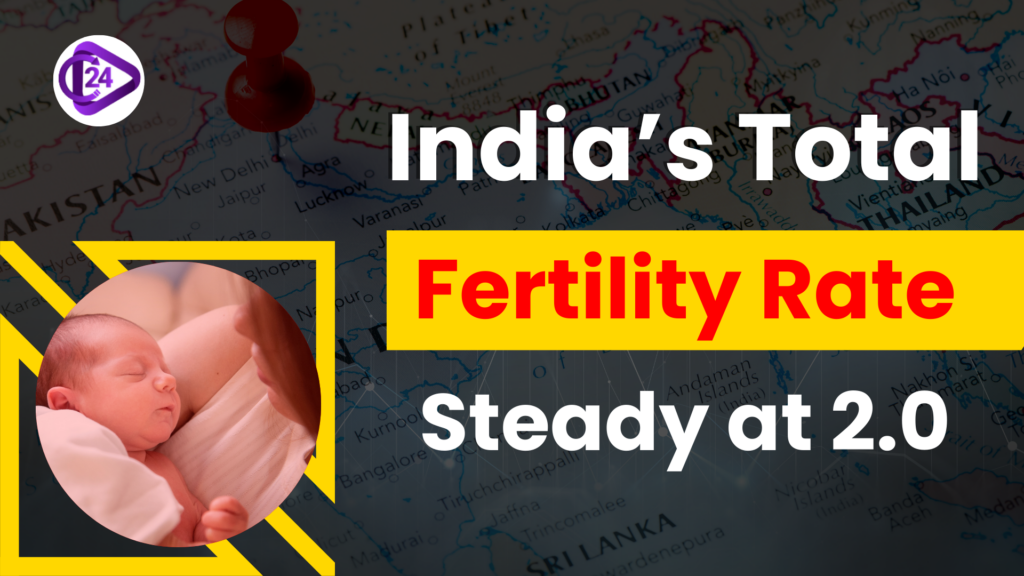
India’s Total Fertility Rate Steady at 2.0: Sample Registration System (SRS) Report 2021

Based on the Sample Registration System (SRS) Report 2021, which was released by the Registrar General of India (RGI), India’s Total Fertility Rate (TFR) stands at 2.0, below the required replacement level of 2.1. This is the start of an era when India’s population increase is expected to decrease. However, Bihar’s fertility continues to be high; Delhi, on one hand, however, and West Bengal, on the other hand, have slipped past sustainable limits. The document highlights an increased aged population and reduced youth population representation. The population trends in the present allow one to draw significant conclusions regarding the need to develop adaptive strategies to prepare for the future economic and demographic tensions.

Context:

  • According to the SRS 2021 Report, India’s TFR is at 2.0, whereas Bihar has the highest (3.0), and Delhi/West Bengal the least (1.4), which should raise alarms for both ageing and the adequacy of future

Key Highlights of the Report:

  • Fertility Trends:

    • National TFR: Stable at 2.0 in 2021 (same as 2020).

    • Replacement level TFR: Most states have the replacement level; the overall replacement fertility rate of the country is 2.1.

    • Lowest TFRs: In Delhi and West Bengal, a crude rate is 1.4, whereas Tamil Nadu, Andhra Pradesh, Jammu and Kashmir, Kerala, and Maharashtra have a TFR of 1.5.

    • Highest TFR: Bihar – 3.0.

  • Demographic Shifts:

    • The rate of population between the age bracket of 0 – 14 years declined from 41.2% in 1971 to 24.8% in 2021.

    • The economically active group (15–59 years) rose from 53.4% to 66.2% of the population.

    • The proportion of age 60 and above population rose from 6% to 9% in 1990 and 2021 respectively. 65+ now 5.9% of the population.

  • Elderly Population:

    • Kerala is a clear winner when it comes to old age population, with 14.4% of its population being over 60 years, Tamil Nadu and himachal pradesh close the ranks at 12.9% and 12.3% respectively.

    • Lowest elderly population: Bihar (6.9%), Assam (7%), Delhi (7.1%).

  • Marriage Trends:

    • Meaningful female marriage happens with a delay of time of 22.5 years (2021) from 19.3 years in 1990.

    • TFR and the stability level of growth in a population.

    • TFR Definition: Total number of children a woman will bear in her lifetime.

    • Replacement Level: A TFR of 2.1 is required for the population to remain at its current level, increasing or decreasing.

Consequences of Low Fertility Rates:

  • Aging Population:

    • India has 149 million elderly (60+ years); projected to reach 347 million (20.8%) by 2050.

    • Evolution from a demographic advantage to a demographic issue.

  • Economic Impact:

    • Higher old-age dependency ratio.

    • Increasing pressures on resources as a result of higher health, pension and welfare needs.

    • Possible middle-income trap because economic burden is increasing with no commensurate productivity gains.

  • Labor Market Strain:

    • Reduced workforce participation.

    • Demographic changes cause pressure on productivity and innovative growth.

Global ways to counteract low birth rates

  • Germany: Flexible working, increased parental leaves and family support.

  • Denmark: State-funded IVF for women under 40.

  • Russia & Poland: The introduction of grants for the parents of many children to increase the fertility rates.

Way Forward:

  • Policy Adjustments:

    • Translate the flexible labour rules and strong support systems for parents adopted by states like Germany and Denmark.

    • Provide education subsidies, tax benefits, and an affordable kind of baby care.

  • Health and Nutrition Focus:

    • Foster programs such as Saksham Anganwadi and Poshan 2.0.

    • Supplement activities such as the Telangana pregnancy kit for promoting maternal support.

  • Support for Reproductive Health:

    • Making IVF, surrogacy, and fertility treatments affordable for all helps facilitate access to them.

  • Demographic Planning:

    • Establish a departmental expertise in the form of a High-Powered Committee to address the demographic transition stated in the Interim Budget 2024.

    • Accelerate the ongoing activities of the Census to provide accurate data for strategic planning.

Conclusion:

Persistent sub-replacement fertility levels in India indicate a great demographical turn, though the opportunities created and challenges introduced are still uncertain. Stagflation in population growth alleviates pressure on resources, but the nation is in a position to face such enduring issues as increasing aging and a shrinking workforce. Installed successfully, widespread, and ‘future-oriented’ policies are needed to ensure that India does not stall its pace of development and does not waste its demographic potential.

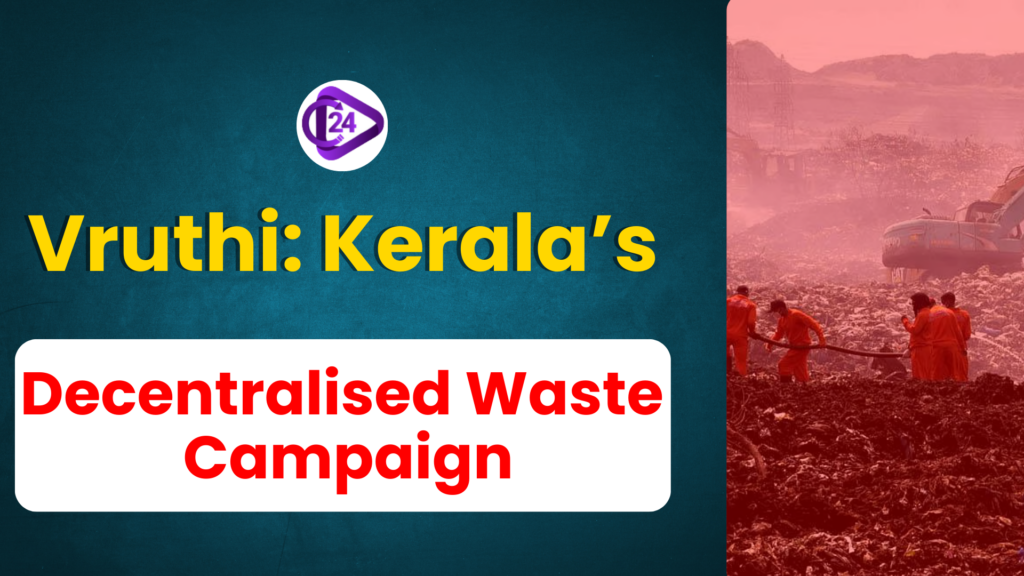
Kerala’s ‘Vruthi’ Campaign: A Decentralised and Participatory Approach to Waste Management

The government of Kerala has announced ‘Vruthi’, an initiative to create awareness and encourage community risk for a cleaner Kerala. achieving a collection rate of 75% for household waste, the initiative illustrates how the program moves away from the old authority dominated approach. The growing urban lifestyle and consumption patterns for retail in Kerala requires more decentralisation in ways of managing waste. This campaign is the integration of governmental action, public participation, and grassroots community systems. Its purpose is to promote the change of long term activities pertaining to waste management, as opposed to relying all on technological innovations.

Why in News?

  • The ‘Vruthi’ campaign was launched in Kerala, with the infusion of a massive conclave which helped support garbage-free Kerala, and made a tremendous improvement in household waste collection and civic participation.

What is the ‘Vruthi’ Campaign?

  • Launched today: October 2, 2024 with the objective of enhancing cleanliness both external and internal.

  • Its purpose is to create long-term lifestyle changes and guarantee an environment free of waste in Kerala (Malinya Muktham Nava Keralam).

  • Mass participation is promoted from politicians, public figures, students, local authorities, and non-governmental organizations.

  • Promotes adoption of flexible and decentralised measures, which fit local particularities.

Why Was This Campaign Necessary?

  • The surge of non-biodegradable refuse following liberalisation was occasioned by household consumption.

  • Since cities grew and people developed different lifestyles, the makeup and quantity of the waste underwent tremendous changes.

  • Question marks on zoonotic disease and sanitation worker deaths scandals called attention to the urgent nature of the challenge.

How Is It Different from the Swachh Bharat Mission (SBM)?

Aspect

Swachh Bharat Mission

Vruthi Campaign (Kerala)

Approach

Top-down, supply-driven

Bottom-up, behaviour-driven

Focus

Infrastructure (toilets, plants)

Civic participation, decentralisation

Technology Use

Technology-specific

Technology-neutral, localised choice

Governance

Central planning, state execution

Local government-led, participatory

Decentralised waste management systems v/s Centralised systems

Aspect

Centralised Systems

Decentralised Systems

Success Example

Guruvayur’s centralised waste plant

Local community-based initiatives in various panchayats

Failure Example

Kochi Brahmapuram fire due to severe mismanagement

Inconsistent implementation due to lack of capacity/funding in some areas

Key Features

Large-scale processing units, managed by municipal/corporate authorities

Localized processing (e.g., composting, segregation) managed by communities/local bodies

Advantages

Economies of scale, centralized oversight

Customised, community-specific solutions; better public participation

Challenges

Mismanagement risks, logistical issues in waste transport

Dependent on local capacity, funding, and training

Kerala's Preferred Model

A balanced approach combining both systems for sustainable waste management


What Lies Ahead?

  • Sustainability Concern: As it is far from reasonable to believe the campaign will flourish outside of sustained state leadership.

  • Need for Behavioural Change: The slogan, “My waste my responsibility” should support the households and institutions.

Conclusion 

The ‘Vruthi’ campaign marks a transformative shift in Kerala’s approach to waste management by prioritising decentralisation and public participation. It encourages citizens to take ownership through the motto “My waste, my responsibility.” Unlike traditional models, it relies less on technology and more on behavioural change. For long-term success, consistent government backing and community engagement are crucial. If sustained well, Vruthi can become a blueprint for other states aiming for sustainable civic reform.


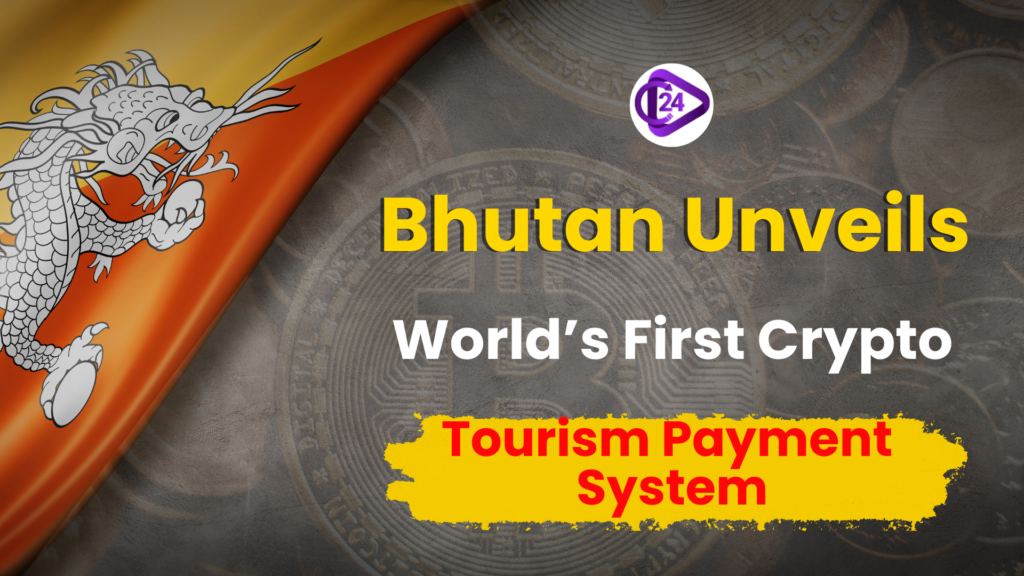
Bhutan Unveils World’s First Crypto Tourism Payment System

Bhutan has become the first country to introduce a cryptocurrency-based payment model for tourism, partnered with Binance Pay and DK Bank. Tourists will now be able to make payments based on Cryptocurrencies for the hotel, traveling, and local purchases. To boost its tourism wise, Bhutan will need to increase its financial inclusion and also offer more user-friendly payment options. Guaranteed, almost instant payments at minimal costs, all over Bhutan’s remote areas. This initiative aligns with Bhutan’s strategic plans of toiletising digital technology as well as driving sustainable economic development.

Context:

  • In collaboration with Binance Pay and DK Bank, Bhutan launched the world’s first national crypto tourism payment solution, which offered cryptocurrency payment for tourists on various tourism activities.

Features of the Crypto Payment System:

  • Technology Integration:

    • Embedded within the Binance app.

    • Supports transactions in more than 100 various cryptocurrencies, including BNB, BTC, and USDC.

    • Uses dynamic/static QR codes for immediate transactions.

  • Transaction Advantages:

    • Currency conversion of cryptocurrency payments to Bhutanese Ngultrum in real-time by DK Bank.

    • Lower charges on payments and eliminates the need for currency exchanges.

    • Allows you to travel without cash, seamlessly with instant cardless payments.

Economic Impact:

  • Inclusion of Remote Vendors:

    • Remote vendors and local artisans can now process crypto payments using their smartphones.

    • Brings regions heavily visited by tourists opportunities.

  • Empowerment and Opportunity:

    • Encourages micro-entrepreneurship.

    • Increases knowledge about digital finance and makes banking a more inclusive activity.

Role of DK Bank:

  • Pioneer in Digital Banking:

    • Its name is borne because it is licensed by the Royal Monetary Authority and is Bhutan’s first digital bank.

  • Fintech Enabler:

    • Allows trade of cryptocurrencies to the local Bhutanese currency.

    • Strives to provide the same opportunities for financial inclusion and achieve improvements in digital infrastructure.

Benefits for Tourists:

  • Simplified Transactions:

    • Makes the tourists not need to exchange currencies.

    • Reduces the need to pay in cash or cards when traveling.

  • Enhanced Experience:

    • Promotes an easy transition for tourists with regard to local customs and establishments.

    • Faster transactions and approvals without delay mean travelers pay less.

Future Prospects:

  • Model for Global Adoption:

    • It may be used as a model for other countries to align cryptocurrencies with their tourism models.

Conclusion:

Bhutan’s crypto tourism payment system is a nice idea to marry digital finance to essential public amenities. The system encourages access in rural communities while creating streamlined tourist experiences, which promote equal economic growth. The way Bhutan did things could provide valuable insights to countries that look for additional solutions how to bring digital finance and travel together.

Frequently Asked Questions (FAQs)

The current affairs cover recent national and international events related to UPSC, SSC, Banking, Railways, and State PCS.

You need to read about the current affairs daily, and revise them every week and every month to keep them longer in your memory.

Yes, Class24 provides free downloadable Daily Current Affairs PDFs for easy revision.

Yes, you can practice MCQs and quizzes to boost your exam preparation.

Absolutely. The content is written in simple, easy-to-understand bilingual language suitable for beginners.

Go to class24.com and click on the current affairs section directly, where you find everything that you need.

ssc-toppers

Start Learning Today with Class24

Related current affairs

Class24 offers free video lectures for smart preparation, covering CGL, CPO, CHSL, MTS, and GD exams. Learn from expert faculty, revise concepts easily, practice with PYQs, and improve speed and accuracy through high-quality, exam-focused video lessons anytime, anywhere.

Get success in your hand. Start study anytime anywhere.

The journey becomes simple and enjoyable when you start taking interest in it. And through our app “Class24”, we will be your trusted partners in developing that interest.

Daily Quizzes
Mock Tests
Ongoing

No ongoing tests right now.