

Day: March 20, 2025

US Overtakes UAE as India’s Largest Source of Remittances in 2024

The Reserve Bank of India (RBI) published the sixth round of India’s Remittances Survey (2023-24) which showed a change in the origin of remittance flows. The United States now leads the United Arab Emirates (UAE) in providing India with remittance inflows which supports skilled migration to developed nations. The worldwide data shows India keeps its position as the top remittance destination and digitalization has improved money transfer speed.

Context: 

  • The RBI Remittances Survey (2023-24) provides essential findings about remittances to India which show that the United States has surpassed the United Arab Emirates as the main source country for remittances.

Leading Source Countries for Remittances

  • Total Indian remittance inflows in 2023-24 received 27.7% of their value from the United States as the major sending nation.

  • Total remittances received by the United Arab Emirates have declined to 19.2% since it previously held the top position.

  • Remittances received by India mainly come from four countries among the UK, Singapore, Canada and Australia that together represent more than 50 percent of the entire inflow.

  • Gulf Cooperation Council (GCC) nations have sent less money to India during 2023-24 which reduced their share to 37.9% from 46.7% in 2016-17.

Shift in Migration Patterns: Blue-Collar vs. White-Collar Jobs

  • The United Arab Emirates serves as a principal employment center for workers from India who perform tasks in building construction along with medical care provision and hotel services and travel services.

  • A vast majority (78%) of skilled Indian professionals in management and business sectors along with science and arts follow work in the United States.

  • Although they have lower numbers of Indian immigrants, the United States provides larger remittances because its Indians earn more money.

India as the Largest Recipient of Remittances in 2024

  • In 2024 India received the largest volume of remittances worldwide projected to amount to $129 billion.

  • Beyond India there are four other nations obtaining big remittance amounts namely Mexico, China, Philippines and Pakistan.

  • Low- and middle-income countries (LMICs) will receive remittance money of $685 billion during 2024.

  • Remittance growth for 2024 will rise at 5.8% after remaining at only 1.2% in 2023.

Growth and Importance of Remittances

  • The three countries Bangladesh, India and Pakistan together with South Asia will likely experience the fastest remittance growth (11.8%) in 2024.

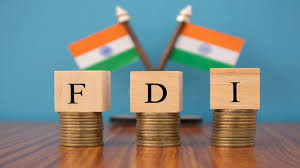
  • The flow of remittances surpasses Foreign Direct Investment (FDI) by a large margin because FDI decreased 41% since the last decade but remittances grew 57% during that period.

  • High-income OECD countries led by the United States have regained their employment markets resulting in this growth. Since the pandemic split, international workers obtained 11% more employment positions compared to their pre-pandemic statistics.

  • The recent trend has achieved a substantial rise of remittances which flow into Latin America and the Caribbean.

State-Wise Remittance Distribution

  • The state of Maharashtra now leads Kerala in receiving remittances based on the 20.5% share of total remittances.

  • Kerala maintained its position as runner-up for foreign remittances after Maharashtra took over as the leader in 2016-17 with 19% of total remittances.

  • In Tamil Nadu the remittance sector expanded which elevated its portion from 8% during 2016-17 to 10.4% for the period of 2023-24.

India’s Global Share in Remittances

  • Between 2001 and 2024 India’s contribution to global remittances has risen from 11 percent to 14 percent according to World Bank statistics.

  • Jeremy in the World Bank projects that remittance flows will reach up to $160 billion during the 2029 period.

  • The distribution of global remittances includes Mexico and China as main recipients in addition to the Philippines together with France and Pakistan and Bangladesh.

Role of Digitalization in Remittance Transfers

  • Digital payment system advances have reduced the expenses involved in sending money to India.

  • More than seven out of ten total remittances entering India during 2023-24 were received digitally through various payment methods including fintech platforms alongside money transfer operators.

Going forward, India should:

  • The country needs to use remittance flows as a tool for developmental purposes by targeting poverty reduction through funding healthcare and education.

  • Financial institutions should promote access to financial services which allows beneficiaries to make development-oriented investments into strategic economic sectors.

  • The government should create policies that simplify digital transactions to provide faster money transfers at lower costs.

  • India maintains its position as the world's largest remittance recipient because its diaspora demonstrates critical economic importance to the nation which reshapes financial conditions.

Conclusion

Residence and study patterns of Indian migrants towards advanced economies have triggered substantial changes in India's international remittance activities according to RBI survey results. The rising amount of money sent to India stems from Indian professionals working at high earnings levels abroad particularly in US workplaces and other developed nation jobs. The reduced role of GCC nations in India’s migrant workforce financial streams demonstrates a transition in the sector. Digitalization serves as a fundamental force which optimizes the process of remittances while minimizing expenses and improving operational efficiency. The economic influence of India’s diaspora on the nation’s financial structure is confirmed by India’s position as the world leader in receiving remittance flows.
Watan Ko Jano Programme: Promoting National Integration Among Kashmiri Youth

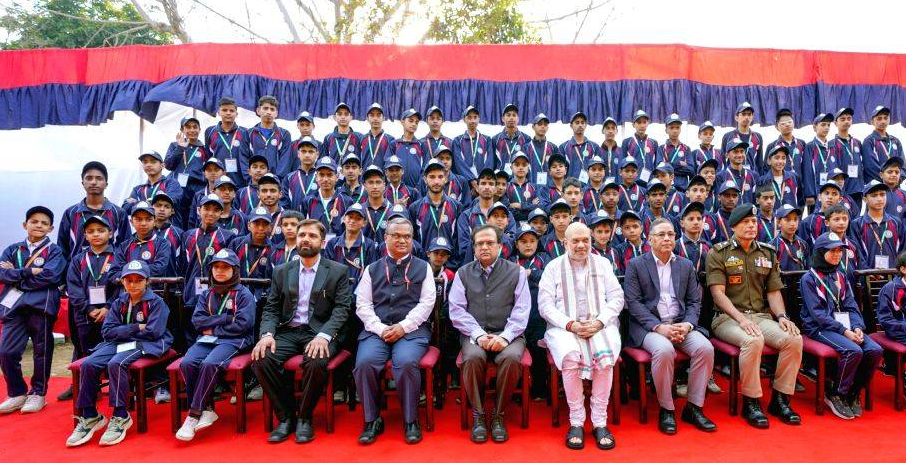
The “Watan Ko Jano” program has been developed through Jammu & Kashmir Government collaboration with Ministry of Home Affairs funding to support underprivileged children in government facilities about India's culture and history and technological advancements of the country. The program facilitates cultural and educational touring experiences nation-wide with the intention of nurturing Kashmiri youth patriotism and national pride while strengthening their unity with India.

Context

  • The “Watan Ko Jano” program has been developed through Jammu & Kashmir Government collaboration with Ministry of Home Affairs funding to support underprivileged children in government facilities about India's culture and history and technological advancements of the country.

Introduction to ‘Watan Ko Jano’ Programme

  • Through this program Kashmiri youth have the chance to discover the various facets of Indian heritage.

  • Participation in this program creates national framework integration with emotional connections to the country.

  • Offers educational and cultural exposure to children under 18 years from government-run homes.

Objectives of the Programme

  • The national integration effort aims to teach Kashmiri youth about the cultural diversity spreading across India.

  • Educational Exposure: Visiting historical landmarks, educational institutions, and industries.

  • Technological Awareness: Familiarizing students with advancements in science, technology, and innovation.

  • Personality Development: Enhancing communication skills, leadership qualities, and confidence.

  • Promoting Harmony: The Country Should Promote Harmony by Developing Better Relations Between Different Indian Regions Despite Their Geographic Separations.

Government’s Vocational Training and Skill Development Initiatives

The Government of Jammu and Kashmir implements 'Watan Ko Jano' besides establishing vocational training and skill development initiatives

  • Mission Youth

    • The program enables young people to discover professional future possibilities inside different industrial sectors.

    • The initiative supports both entrepreneurial development along with skill education while offering financial backing.

    • Bridges the gap between academic knowledge and industry requirements.

  • Mission Yuva

    • The initiative helps to improve both technical knowledge and everyday abilities of young people.

    • They teach industry expertise together with monetary awareness and expert career development services.

    • The initiative gives young people help to obtain lasting job opportunities.

Kashmiri Youth Exchange Programme (KYEP)

Nehru Yuva Kendra Sangathan organizes the Kashmiri Youth Exchange Programme (KYEP) to advance youth engagement as well as national integration while serving vulnerable communities.

Key Activities under KYEP

  • Cultural and Educational Exchanges – Interactive sessions, panel discussions, and seminars.

  • Skill Development Workshops – Training in entrepreneurship, career guidance, and personality development.

  • Industrial Visits – Exposure to different industries, businesses, and local enterprises.

  • Exhibition of Kashmiri Artefacts and Products – Promotion of traditional handicrafts and food from Kashmir.

  • Food Festivals and Cultural Programs – Showcasing Kashmiri culture to other states.

  • Patriotism and Nation-Building Events – Engaging youth in activities that instill a sense of unity and national identity.

Conclusion

As part of several youth programs the 'Watan Ko Jano' initiative demonstrates the government of India's dedication to unite the Kashmiri youth through national integration. These initiatives strive to strengthen Kashmiri youth through educational experiences along with cultural education together with skill learning and professional development which aims to decrease regional separation and foster peace and inclusivity. National unity receives enhancement through these efforts which simultaneously drive socioeconomic development in the region.

National Wildlife Health Policy: Safeguarding Ecosystems and Public Health

The National Wildlife Health Policy (NWHP) serves as an Indian governmental initiative to create systematic approaches for wildlife health surveillance and management. The policy follows directives from both the National One Health Mission and implements preventive measures against zoonotic diseases while improving both disease detection and sector cooperation. The extensive protected area network of India requires Wildlife health management because protection of biodiversity and public health safety depends on it.

Key Points: 

  • The National Wildlife Health Policy includes three essential parts to advance its implementation.

  • Comprehensive Wildlife Surveillance System: Establishing disease monitoring across terrestrial, marine, and avian ecosystems.

  • Integration with National One Health Mission: Coordinated pandemic preparedness and disease control efforts between wildlife, livestock, and human health sectors.

  • National Referral Centre for Wildlife (NRC-W): Acting as a referral body for wildlife disease investigation, diagnostics, and treatment.

  • National Wildlife Health Database operates as a monitored database containing time-specific data and past records from wildlife components along with animal farming and human health domains.

  • Wildlife Health Information System: Streamlining disease surveillance and facility-level reporting with spatial-temporal data integration.

  • Satellite Diagnostics Laboratories will develop laboratories adjacent to vital forest regions which enable regular disease detection procedures during critical forest administration periods.

  • The prevention of zoonotic spillovers in national parks and sanctuaries occurs through Livestock Vaccination Programs that target vaccinations for domestic animals located near these areas.

Need of National Wildlife Health Policy 

  • Today 56% of human developing infectious diseases begin as animal pathogens.

  • The vast network of protected areas in India reaches 1,014 locations that cover 5.32% of the national territory requiring constant wildlife health monitoring.

  • Preventive wildlife surveillance systems function as a tool for reducing potential pathogens that can transfer between wildlife and human and livestock populations.

Challenges in the Current Framework

  • Fragmented Disease Surveillance: Lack of coordination across ministries handling environment, agriculture, and animal husbandry.

  • A centralized wildlife health database does not exist which prevents timely disease monitoring.

  • The absence of sufficient wildlife disease laboratories creates long delays between diagnosis and treatment processes.

  • Field staff members managing wildlife diseases demonstrate poor capacity because they lack proper training and available resources.

  • The spread of zoonotic diseases becomes more likely because of unrestricted human contact with wildlife which results from black-market wildlife sales and agricultural animals inhabiting forest areas.

  • The Wildlife Protection Act mainly concentrates on conservation activities without establishing proper disease prevention measures or wildlife health management strategies.

  • Limited Community Involvement: Low awareness and participation of local communities in vaccination and disease prevention initiatives.

National One Health Mission

  • Launched: In 2022 to strengthen inter-ministerial coordination for pandemic preparedness

  • Objective: The initiative aims to unite human medical strategies with those of animal disease control throughout both human and animal health domains.

Key Focus Areas:

  • 22 BSL-3/4 operational laboratory facilities exist throughout the country for outbreak detection and prevention functions.

  • One Health principles require institutional establishment to promote understanding between human health and animal health alongside environmental health.

  • Research and surveillance: The system requires further development of research operations as well as surveillance improvements alongside stronger involvement from community members for data sharing initiatives and innovative progress

  • National Institute for One Health in Nagpur: Serving as a central coordinating body for national and international One Health activities.

Conclusion

Implementing the National Wildlife Health Policy as a fundamental measure to protect long-term wildlife health in India and stop zoonotic diseases from spreading. The policy advances biodiversity conservation efforts through its disease surveillance programs and diagnostic infrastructure development and inter-sectoral collaboration improvements which create public health security. Through integration with the National One Health Mission India will strengthen its pandemic readiness by adopting a total health framework that manages people along with animals and ecological systems.

India’s Net FDI Declines to $1.4 Billion in 2024-25 Amid Rising Outward Investments

From April 2023–January 2024 India received $11.5 billion in FDI which reduced to only $1.4 billion during the period from April 2024–January 2025. The decreased FDI flow comes from investor repatriation combined with fast-growing Indian company overseas investment. Gross FDI inflows demonstrated a growth of 12.4% which reached $67.7 billion during this period. Greenfield FDI projects ranked India as the second most attractive destination for foreign investment throughout the global market despite its present economic downturn. Three major FDI-receiving industries in India consist of manufacturing together with financial services and renewable energy.

Key Points

India’s Net FDI Decline: An Overview

  • Net FDI: Declined from $11.5 billion to $1.4 billion.

  • Gross FDI: Increased by 12.4% to $67.7 billion.

  • Repatriation/Disinvestment: Increased from $36.9 billion to $46.1 billion.

  • Outward FDI (by Indian firms): The volume of foreign investment initiated by Indian companies increased from $20.2 billion to $11.8 billion.

  • The overall decrease in net FDI happens because Indian firms invest more outside the country along with rising capital repatriation.

Sectoral Breakdown: Top Industries Receiving FDI

  • Manufacturing became the sector which acquired the largest amount of FDI equity inflows.

  • Other key sectors:

    • Financial services

    • Electricity and energy

    • Communication services

    • Infrastructure

Top Investing Countries

  • The Indian market absorbed FDI investments overall of 75% from various sources: 

    • Singapore

    • Mauritius

    • United States (US)

    • United Arab Emirates (UAE)

    • Netherlands

  • These countries have established continuous support for India's economic development.

India’s Global FDI Ranking: Greenfield Investments

  • Greenfield Investments put India in the 2nd position globally among FDI receivers.
  • The country achieved the runner-up position in greenfield FDI projects during 2024 after the United States.

  • The country elevated its global ranking to the second-place position during 2024.

  • India received $100 billion greenfield FDI which made up 6% of the $1.8 trillion total global FDI activities.

Emerging Sectors: FDI Trends

  • Globally, key FDI sectors in 2024 were:

    • Renewable energy

    • Communication services

    • Semiconductors

    • Metals

  • The Indian market received most Foreign Direct Investment (FDI) into 3 main sectors:

    • Metals

    • Renewable energy

    • Semiconductors

  • The 3 sectors represented 60% of the total FDI projects that were announced throughout 2024.

Conclusion

The steady decline in net FDI does not affect India's position as an influential market for foreign investment transactions. The nation holds a strong position with investors because it positions as the world's second-largest recipient of greenfield investment and also welcomes increased gross flows of foreign direct investment. The rising amount of funds sent home by investors combined with growing outward foreign direct investment demonstrates a fundamental change in worldwide business practices. The government needs to implement strategic policy measures that will preserve foreign investment and achieve balanced capital flows to maintain long-term economic development.

Aurangzeb: His Reign, Legacy, and Modern Controversies

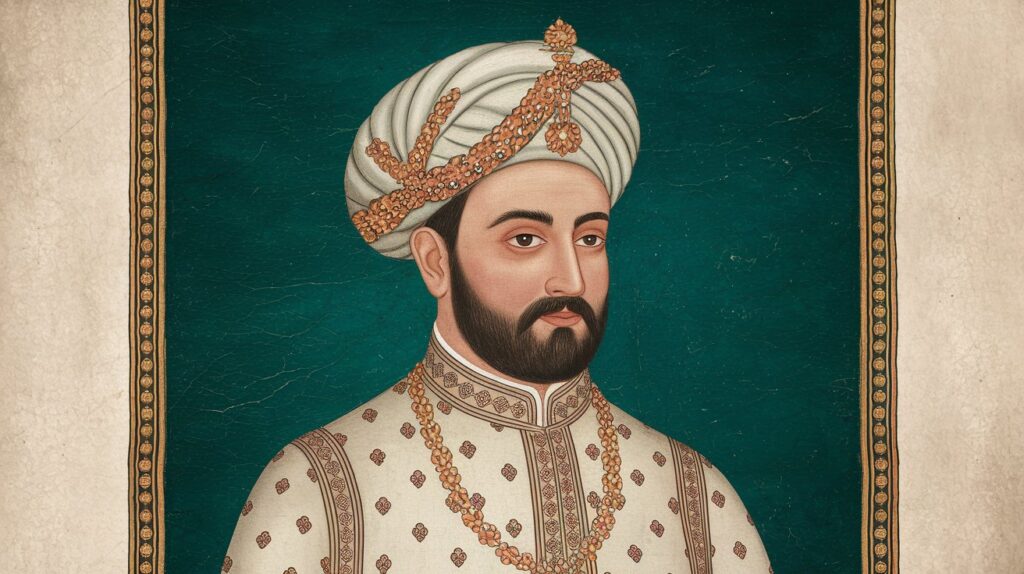
Aurangzeb took power as a Mughal sovereign who doubled the territory under his domain though his reign introduced religious constraints and severe enforcement measures. His royal leadership brought progress through architecture and literature as well as administrative reforms to Mughal India but religious dogma in his rule caused frequent conflicts. History along with contemporary politics in India continues to strongly divide opinions about the lasting influence of Aurangzeb.

Context:

  • A controversial right-wing movement to destroy the Mughal mosque triggered religious riots in Nagpur which demonstrates how people in present-day India continue to disagree about the legacy of Aurangzeb.

  • District Collector of Chhatrapati Sambhajinagar established a drone flight prohibition which will continue until April 18 because of rising protests from Hindutva organizations wanting Aurangzeb's tomb in Khultabad to be taken away.

  • The local government imposed restrictions through a temporary red zone declaration which they used to manage law and order disturbances happening during the protests. About Aurangzeb

Early Life & Background

  • Muhi-ud-Din Muhammad Aurangzeb (Alamgir I) ruled as the sixth Mughal overlord through profound military kingdom growth as well as rigorous Islamic sect observance.

  • Born: November 3, 1618, in Dahod, Gujarat.

  • Parents: Shah Jahan and Mumtaz Mahal.

  • Reign: During his 49-year reign Aurangzeb became the longest-ruling Mughal emperor while rapidly increasing Mughal dominion while enforcing strict Islamic principles.

  • Death:  Aurangzeb passed away on March 3, 1707 when he remained in Ahmednagar during Deccan military operations.

Administration & Governance

  • Centralised Administration: The administration during his rule operated directly under his supervision thus diminishing ministerial independence.

  • Revenue system: Revenue farming under Aurangzeb introduced widespread decay through corruption that caused inefficiency throughout the administration.

  • Legal reforms: The Mughals established positions of Muhtasibs who carried out Sharia enforcement alongside public morality standards.

  • Military Expansion: Through military expansion Mughal rule grew to cover its maximum extent which surpassed 4 million square kilometers.

Contributions

Art and Architecture

  • Badshahi Mosque (1673): The Badshahi Mosque at Lahore showcases its imposing structure which was built during 1673.

  • Bibi Ka Maqbara (1678): The Aurangabad mausoleum honoring his dead wife that imitated Taj Mahal design.

  • Idgah in Mathura: The Mughals built the Idgah in Mathura as nothing more than a statement of power after suppressing the local Jats who remained rebellious.

Literature & Education

  • Fatawa-e-Alamgiri: A compilation of Islamic laws guiding governance and personal conduct.

  • Patronage to Scholars: Through his sponsorship of Persian and Arabic literary works the emperor enabled the distribution of Islamic teachings.

  • Quran Copying: Represented his spiritual commitment through his dedication to manually write the Holy Book.

Religious Policies

  • Jizya Tax (1679): Reintroduced the tax on non-Muslims for revenue and religious assertion.

  • Temple Destruction: The Muslim ruler authorized targeted temple demolitions although select scholars considered these actions to hold political motives.

  • Execution of Guru Tegh Bahadur (1675): During the year 1675 Aurangzeb issued the death order for Guru Tegh Bahadur because the Sikh religious movement had expanded in strength while the guru refused conversion.

Conclusion

This era under Aurangzeb demonstrated both the advantages and deficiencies of Mughal central control as well as its approach to religion and territorial growth. His governance has portrayed him as both an effective religious leader and a capable ruler to some observers but other groups hold the belief that his administration was the main reason behind the fall of the empire. People of contemporary India keep struggling over his memorial sites and places of worship because of his lasting influence on society and politics.

The PEPSU Muzhara Movement: Agrarian Struggle for Land Rights

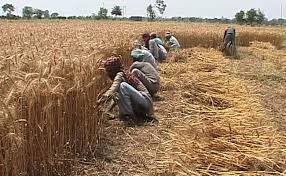
Landless tenant farmers called muzharas staged the historic PEPSU Muzhara Movement through their struggle for ownership rights over farmed lands on March 19. During the 1940s and 1950s the movement against oppressive landowners reached its height after mobilizing thousands across different districts. Prominent activists leadership directed the movement to achieve land reforms in 1952 which granted ownership rights to tenants. The movement stands today to symbolize persistent resistance and every year people commemorate its leaders and participants to remember their sacrifices.

About the PEPSU Muzhara Movement

What was the Muzhara Movement?

  • Intending to claim their rights to land ownership, tenant farmers fought collectively.

  • The movement fought against exploitative landlord practices at the biswedari level in Punjab.

Year and Region:

  • The Patiala princely state hosted its first small protests that sparked this movement back in the 1930s.

  • Reached its peak between the 1940s–1950s.

  • The PEPSU Muzhara Movement spread throughout 784 villages which today make up the states of Punjab and Haryana particularly in Patiala, Barnala, Mansa, Sangrur, Bathinda, Mohali, Fatehgarh Sahib, Faridkot, and Jind.

Causes of the Movement

  • Because of feudal exploitation Muzharas lost a third of their produce which left them hopelessly poor.

  • Governors paid their revenue to the princely rulers who taxed the British government while both groups maintained exploitative practices.

  • Ancestral lands passed to the control of landlords making numerous small property owners rent their property to landlords.

  • The post-1947 period saw feudal landlords continue to extract agricultural produce and this practice led farmers to demonstrate against them.

Key Leaders of the Movement

  • Jagir Singh Joga: Organized and united tenant farmers through mass mobilization.

  • Buta Singh: The political leader Buta Singh promoted both the redistribution of lands and the protection of rights that belonged to tenants.

  • Teja Singh Sutantar: Through his leadership Teja Singh Sutantar added revolutionary ideas to the peasant movement and linked it with struggles throughout peasant communities.

  • Sewa Singh Thikriwala: Provided inspiration through anti-feudal activism.

Forms of Resistance

  • The beginning stage of demonstrations began when protesters made peaceful demands for their land rights.

  • The increasing repression led tenant farmers to start using weapons for their defense.

  • Through mass mobilization the movement planned large public forums as well as group actions to fight against exploitation.

Outcome and Legacy

  • The 1952 land reforms legislation gave tenant farmers the right to own their land properties.

  • As a sign of endurance the movement solidified its place as the main symbol which peasants used to fight feudal oppression.

  • Every year on March 19 the members of the movement observe both the victims' commemoration and celebrate the achievements of their battle.

Conclusion

Historians consider the PEPSU Muzhara Movement an essential part in India's agricultural history because it showed how people united to fight against their feudal masters. The land reforms that resulted from the movement brought substantial victory to tenant farmers through guaranteed security and improved dignity in their farming professions. India uses the Muzhara movement stories to motivate ongoing movements fighting for just land distribution and fair agricultural rights throughout the country.

Rashtriya Gokul Mission: Strengthening Indigenous Cattle Breeds

The Union Cabinet has approved ₹3,400 crore revised funding for Rashtriya Gokul Mission (RGM) and an additional ₹1,000 crore regarding the 2021–22 to 2025–26 period. Under this mission objectives include increasing milk production along with enhancing productivity of cows and protecting native bovine breeds. RGM started its operations in December 2014 through the Ministry of Fisheries, Animal Husbandry, and Dairying as a flagship program to support dairy farming via contemporary scientific practices.

Context:

  • The Union Cabinet has approved ₹3,400 crore revised funding for Rashtriya Gokul Mission (RGM) and an additional ₹1,000 crore regarding the 2021–22 to 2025–26 period.

About Rashtriya Gokul Mission (RGM)

What is Rashtriya Gokul Mission?

  • The government has implemented a project that focuses on both the development and preservation of native cattle populations as a part of their national program.

  • The plan targets to strengthen milk output while enhancing beneficial animal genetic features for cattle.

  • The program safeguards outstanding genetic bulls which will produce offspring for future breeding programs.

Implementation and Funding

  • Launched: December 2014

  • Ministry: Ministry of Fisheries, Animal Husbandry, and Dairying

  • Funding:

    • The initiative receives full grant funding with the exception of particular components.

    • ₹5,000 subsidy per IVF pregnancy.

    • 50% subsidy on sex-sorted semen cost.

    • The scheme provides half of project costs up to ₹2 crore to install new breed multiplication facilities.

Objectives and Benefits

  • The productivity of milk increases when indigenous breed genetics undergo improvement processes.

  • The Ministry should promote Artificial Insemination (AI) implementation as a means to establish scientific breeding practices.

  • The government needs to safeguard indigenous livestock groups including Gir, Sahiwal, Rathi, Tharparkar, and Red Sindhi.

  • The Gokul Grams project will serve as integrated cattle breeding centers to properly preserve breeds.

  • The enhancement of dairy farming operations alongside better farmer livelihoods depends on the practice of cattle rearing.

Conclusion

The Rashtriya Gokul Mission functions as a vital program to enhance dairy attributes while championing conservation efforts of Indian cattle biodiversity. Funding increases along with scientific animal-breeding methodologies make this mission well-positioned to provide major benefits for sustainable dairy farming together with rural economy development. Additional financial support will enhance the existing work in both breeding enhancement and native breed preservation programs which will create sustainable food security for Indian farmers with better economic opportunities.

Is the APAAR ID for Students Mandatory?

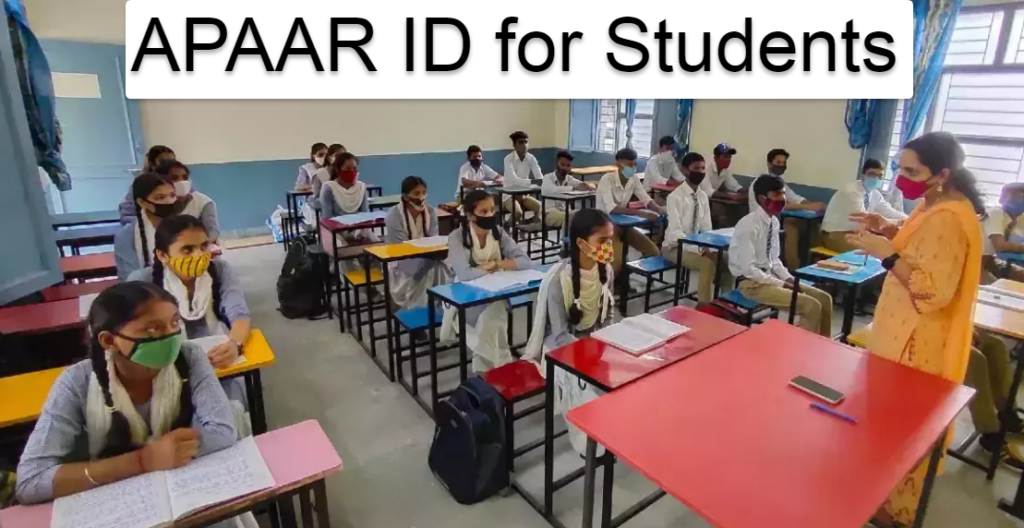
APAAR ID functions as the student identification system of NEP 2020 which enables digital storage of academic records. There exists official voluntary enrollment but multiple schools and state governments try to compel students to join. Multiple doubts exist regarding data protection alongside the legal authority and duplicate record management systems. Uttar Pradesh alongside other States keeps exerting administrative pressure on parents even though they have the option to decline this system's implementation. Expert analysts express concerns regarding the unprotected use of children's data information. Before the widespread adoption of this system, clear policy directives must be established along with legal security measures and the option for self-regulation.

What is APAAR?

  • APAAR stands for Automated Permanent Academic Account Registry. The ‘One Nation One Student ID’ system represents a key element of the National Education Policy (NEP) 2020. 

  • Through the link between APAAR ID and Aadhaar and its storage in DigiLocker students can let educational institutions verify their academic records. 

  • UDISE+ generates the IDs through its Unified District Information System for Education Plus platform.

Is APAAR Mandatory?

  • The official website declares that APAAR availability exists without mandatory requirements.

  • Schools together with State governments are using pressure tactics on students to create their ID.

  • Both CBSE and Uttar Pradesh authorities have demanded students to perform compulsory registration.

  • Many parents still do not know about APAAR even though the Union government explained that participation is optional when appearing in Parliament during December 2024.

Concerns About Data Security

  • Research Institute for the Internet Freedom Foundation could not obtain proper information from The Right to Information (RTI) request process.

  • Legal authorization is required to collect mass data because it poses constitutional issues.

  • Education experts claim that APAAR operations create duplicate data entries because the system contains the same information found in UDISE+.

  • According to Digital Personal Data Protection Act, 2023, Section 9(3) establishes rules for tracking as well as sharing information related to children.

  • Multiple experts point out that unprotected APIs used for data sharing represent a potential threat to the release of children's information to outside entities.

How is an APAAR ID Generated?

  • Student demographic requirements (name and date of birth along with other information) are verified through the school system.

  • Parents have to complete the consent form.

  • The educational institutions receive student information for authentication then create an APAAR ID.

  • The correction process mandates parents to repeat the submission after fixing any detected mismatched data.

Can Parents Opt Out?

  • Parents can use a written declaration to prevent their children from participating in the APAAR ID program.

  • Users can find an opt-out template through the Software Freedom Law Centre (SFLC) website.

  • The Uttar Pradesh district administration is intensifying their demand as they have started issuing penalties to schools not respecting the current policy.

Conclusion

Widespread confusion exists about APAAR ID because its formal status as voluntary has not been properly communicated despite bureaucratic pressure along with little parental understanding. The implementation of a massive scale needs robust privacy and policy safeguards because privacy and data security concerns along with duplication of records persist.

NASA Astronauts Sunita Williams and Butch Wilmore Return to Earth

Astronauts Suni Williams and Butch Wilmore successfully returned to Earth after spending 286 unplanned days at the ISS. NASA executives started with a week-long basic evaluation of the Boeing flight but were forced to keep astronauts Suni Williams and Butch Wilmore on board because Boeing's Starliner thrusters malfunctioned. The SpaceX Crew Dragon vehicle transported them to a successful return when it touched down off Florida’s coastline. Their extended ISS mission revealed various obstacles in spacecraft durability together with astronaut wellness problems during lengthy spaceflight operations. NASA continues developing private partnerships while advancing spaceflight technologies because these advances will be essential for space exploration missions to Mars and beyond.

Mission Overview

  • Astronauts: Sunita Williams, Butch Wilmore, Nick Hague (USA), Aleksandr Gorbunov (Russia)

  • Original Plan: One-week stay at ISS

  • Actual Duration: 286 days (due to Boeing Starliner failure)

  • Return Vehicle: SpaceX Crew Dragon

  • Splashdown: Florida coast, 5:57 p.m. ET

Causes of the Delay

  • Technical Malfunction: The Boeing Starliner spacecraft encountered different technical problems that included thruster defects alongside Helium leaks occurring in these thrusters.

  • Alternative Return vehicle: NASA chose SpaceX's Crew Dragon as the alternative return vehicle after Starliner failed to resolve its unresolved issues for the flight scheduled in February 2025.

  • Crew Dragon Reliability: Crew Dragon continues as the sole American spacecraft able to transport humans to orbital space (for personnel missions to orbital space).

  • Boeing Starlink Background: At the beginning of its development Boeing established CST-100 or Starliner as the commercial spacecraft through NASA's Commercial Crew Development initiative for SpaceX's rival vehicle Crew Dragon.

Unusual Mission Duration

  • Williams and Wilmore spent an unplanned lengthy amount of time on their space station mission. 

  • The mission was designed for brief testing but became 286 days long which far exceeded the standard ISS rotation period of six months. 

  • NASA ranks their mission as one of the longest that involves a single stretch of time. 

  • Frank Rubio obtained the record for the most extended U.S. spaceflight duration at 371 days but Valeri Polyakov maintained the world record at 437 days.

Challenges Faced

  • The technical issue with Boeing's Starliner space shuttle prevented the space mission from returning.

  • Physical Effects: Muscle loss, bone density reduction from prolonged space exposure.

  • Psychological Impact: Extended isolation and mission uncertainty.

The Return Journey

  • Re-entered Earth’s atmosphere, enduring 2,000°C heat.

  • The spacecraft deployed parachutes that enabled a safe water touchdown.

  • Experienced rescue personnel extracted astronauts from the spacecraft after touchdown.

Recovery Process

  • The astronauts traveled to Houston where they could finally meet their family members.

  • Healthcare professionals kept me in rehabilitation to recover my muscles and bones.

  • Long-term psychological assessments determine ongoing space-related effects on individuals.

Key Takeaways for Future Missions

  • Reliability requirements must be updated for Boeing’s Starliner spacecraft to move forward.

  • Humans can depend on SpaceX Crew Dragon systems when sending missions to the ISS.

  • Risk factors during prolonged missions will be necessary for Mars exploration goals.

  • Through its partnership with private companies NASA maintains reliance on improving spacecraft technology developments.

Conclusion

Williams and Wilmore's extended mission provided essential information about the obstacles that come with traveling in space for lengthy periods. This mission proved both unexpected but it revealed astronaut endurance along with the necessity for dependable spacecraft systems to undertake deep-space missions.

Frequently Asked Questions (FAQs)

The current affairs cover recent national and international events related to UPSC, SSC, Banking, Railways, and State PCS.

You need to read about the current affairs daily, and revise them every week and every month to keep them longer in your memory.

Yes, Class24 provides free downloadable Daily Current Affairs PDFs for easy revision.

Yes, you can practice MCQs and quizzes to boost your exam preparation.

Absolutely. The content is written in simple, easy-to-understand bilingual language suitable for beginners.

Go to class24.com and click on the current affairs section directly, where you find everything that you need.

ssc-toppers

Start Learning Today with Class24

Related current affairs

Class24 offers free video lectures for smart preparation, covering CGL, CPO, CHSL, MTS, and GD exams. Learn from expert faculty, revise concepts easily, practice with PYQs, and improve speed and accuracy through high-quality, exam-focused video lessons anytime, anywhere.

Get success in your hand. Start study anytime anywhere.

The journey becomes simple and enjoyable when you start taking interest in it. And through our app “Class24”, we will be your trusted partners in developing that interest.

Daily Quizzes
Mock Tests
Ongoing

No ongoing tests right now.